
Translated material
UAE vs OPEC+
What threatens the rupture of the world oil alliance?

Photo: Egor Aleev / TASS
Until recently, the world of big oil money seemed orderly and predictable, with the oil states of the Persian Gulf demonstrating almost unconditional unity. But in the spring of 2026, this structure cracked: the United Arab Emirates announced its withdrawal from OPEC and OPEC+ on May 1. This happened against the backdrop of a conflict with Iran, which has already affected shipping in the Strait of Hormuz and rocked oil markets.
From the UAE’s perspective, formally we are talking about “national interests” and the desire to respond flexibly to demand. But, in essence, we are witnessing a demonstrative break with the coordination model in which Saudi Arabia sets the rules of the game. Context is more important than wording here. Long-term disputes over quotas in OPEC+, growing differences between Riyadh and Abu Dhabi on regional policy, erosion of unity within the Gulf Cooperation Council (GCC) - all this coincided with a moment when markets and security in the Gulf require, on the contrary, maximum coherence. This is no longer just a story about production and market share. Rather, it’s about the limits of ambition in a system where balance rests on hierarchy and agreements.
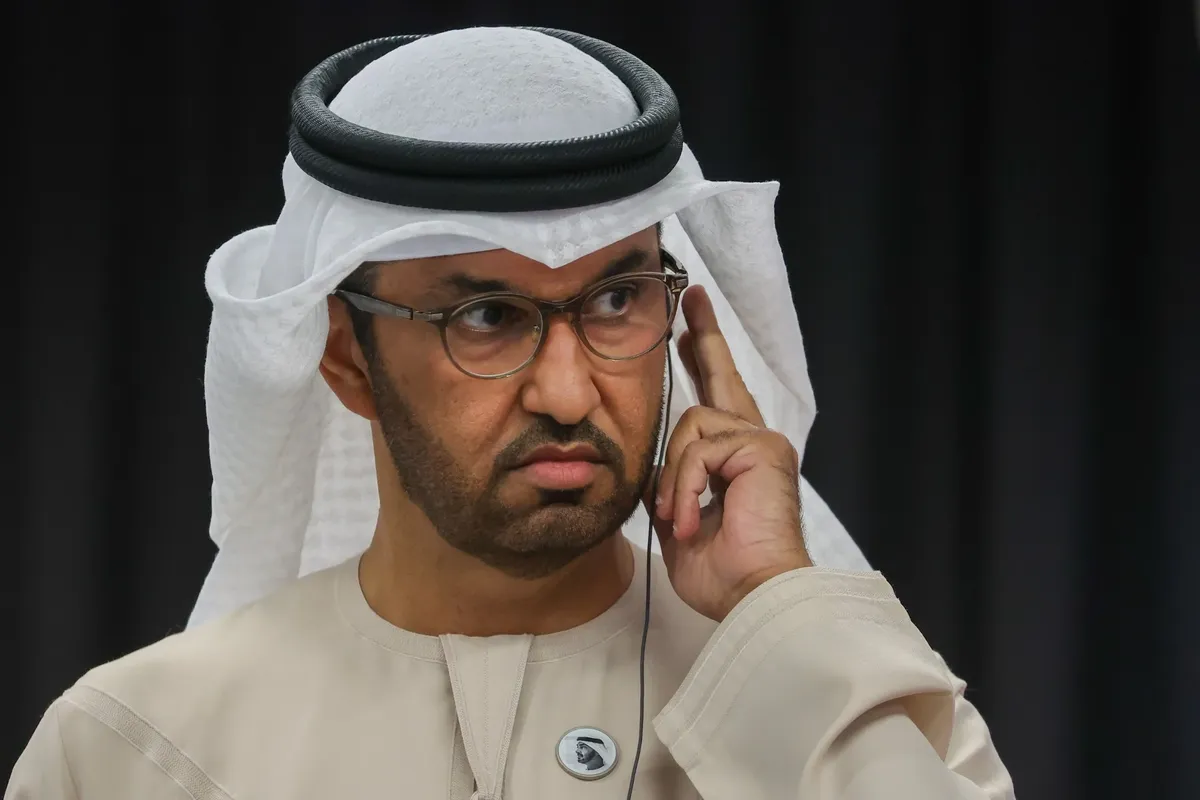
The UAE, one of the cartel's largest oil producers, announced its withdrawal from OPEC through state media and official channels. The formal justification was the protection of those very “national interests”. There is also the need to bring production in line with the country’s expanded capacity (created through large-scale investments in the oil sector) and respond to changing global energy demand. State oil company Abu Dhabi National Oil Company (ADNOC) head and UAE Minister of Industry and Advanced Technology Sultan Al Jaber presented it as a “sovereign long-term strategic decision.”
Formally, it is difficult to find fault with this logic. The UAE has invested billions of dollars to increase production capacity to about 5 million barrels per day. OPEC+ quotas have long been a source of irritation in Abu Dhabi, where it is believed that Saudi Arabia (the de facto leader) is holding back production to maintain tight supply discipline in the market to maintain higher prices. Now that, due to threats to shipping in the Strait of Hormuz, oil prices are heading into space, Abu Dhabi, of course, would like to sell more.
And previously, the Emirates have repeatedly tried to revise existing restrictions. In particular, in 2021, Abu Dhabi sought an increase in its base quota, from which production cuts are calculated, citing an increase in its own capacity. Then negotiations with Saudi Arabia stalled and almost derailed the entire OPEC+ deal: the UAE insisted that the current restrictions were unfair and did not reflect their investment in the industry. A compromise was eventually found, but tension remained - and the issue of “fair share” was never actually resolved.
In these circumstances, the current move by the Emirates seems to be expected: if the restrictions are systemically unsatisfactory, and it is not possible to agree on their revision, why stay within the framework of the agreement if you can sell more oil at high prices in conditions of supply shortage?
However, external circumstances largely nullify this logic. The UAE's withdrawal from the deal to coordinate oil production comes at a time when the region is shaken by the escalation around Iran. Gulf producers are facing export difficulties, security risks have increased, and a coordinated OPEC+ response could stabilize the situation and demonstrate unity against external threats. But this is precisely the moment the UAE chooses to signal independence and vent its dissatisfaction with restrictions from its larger neighbor, Saudi Arabia.
In general, the rift between Saudi Arabia and the UAE is not only a matter of oil quotas. At the center of the drama is the deepening rivalry between Riyadh and Abu Dhabi for regional leadership and influence in the Gulf and beyond.
Until recently, the Emirates and Saudi Arabia were allies - in the most literal, military sense of the word. In March 2015, a Saudi-led coalition that included the UAE launched Operation Decisive Storm against Iranian-backed Houthi rebels in Yemen. Formally, the operation began at the request of the internationally recognized Yemeni President Hadi, who was ousted by the Houthis from the capital Sanaa. The goal was to restore his power.
In practice, even then the tasks of the parties diverged. For Saudi Arabia, this was an attempt to prevent the appearance of a pro-Iranian player on its southern borders and to keep Yemen in its zone of influence. For the UAE, it was important to gain a foothold in the south of the country, where key ports are concentrated and one of the most important world trade routes passes through Bab al-Mandeb, as well as to build a network of loyal forces on the ground and directly influence critical infrastructure. For the time being, this difference in strategies and tactics was not evident.
In June 2017, Riyadh and Abu Dhabi again acted as a united front - already in the blockade of Qatar. Then Saudi Arabia, the UAE, Bahrain and Egypt broke off diplomatic relations with Doha and imposed a land, sea and air blockade. Qatar was accused of supporting Islamist movements, including the Muslim Brotherhood*, rapprochement with Iran and undermining regional stability through media resources, primarily Al Jazeera. The crisis lasted until January 2021 and seriously complicated relations within the Gulf Cooperation Council.
However, the positions of the Emirates and Saudi Arabia have increasingly diverged in recent years. Saudi Arabia, under the leadership of Crown Prince Mohammed bin Salman, is promoting Vision 2030, a major economic transformation program aimed at reducing dependence on oil, developing non-resource sectors and strengthening the role of the state in economic management. In foreign policy, Riyadh seeks to consolidate and institutionalize its leadership in the region, including through reducing involvement in protracted conflicts and stabilizing key areas.
The UAE, on the contrary, pursues a more active and even bold foreign policy, often relying not on formal state institutions, but on a network of partners and proxies on the ground. In Yemen, for example, this manifested itself in support for the Southern Transitional Council (STC) and other separatist forces, which in Riyadh was perceived as undermining the unity of the anti-Houthi coalition and an additional risk to security on Saudi Arabia's southern border.
After the outbreak of the war in Sudan in April 2023, the same Emirati logic emerged even more clearly: the UAE relied on unofficial support for the Rapid Reaction Force, while Saudi Arabia and Egypt supported the regular army as a more predictable institution of power. Taken together, all these differences have increased tension between Riyadh and Abu Dhabi:
In Saudi Arabia, Emirati actions are increasingly perceived as risky, undermining regional stability and challenging Saudi leadership.
Tensions over quotas in OPEC+, where the UAE has repeatedly sought to increase base production levels, eventually escalated into a break between the Emirates and the alliance. But the problem here is not only in political gestures - but in their consequences.
For the oil market, this means a weakening of the mechanism that in recent years has kept prices under relative control. OPEC+ works through discipline: countries voluntarily limit production so as not to collapse the market. The exit of one of the major manufacturers undermines this logic.
Other participants may begin to act in the same way, increasing production, and then there is a risk of a price war. A similar scenario already happened in 2020: after the failure of the OPEC+ deal, Saudi Arabia and Russia sharply increased production in an attempt to increase market share. Combined with a drop in demand amid the pandemic, this led to a collapse in prices to unprecedented levels.
But how will the current move by the Emirates affect Russia’s interests? In the short term, Russia may actually benefit from this situation: weakening discipline within OPEC+ means more oil on the market, but also greater freedom for individual players to bypass restrictions and maintain export revenues even under sanctions.
However, over the long term, the breakdown of coordination affects all producers - due to high volatility and the risk of falling prices. When everyone tries to sell more, overall revenue ends up shrinking.
For the Gulf countries, the consequences are also sensitive. Weakening coordination means that Saudi Arabia will either have to hold back the market alone, reducing its own production and losing revenue, or, conversely, enter into fierce competition. In both cases, tension within the region will only increase.
Finally, this decision carries risks for the UAE itself. Increased production is effective only when prices are stable. If the market becomes more chaotic, additional volumes may be sold for less than expected. Plus, the deterioration of relations with Saudi Arabia, a key political and economic player in the region, creates additional costs that are difficult to compensate for with short-term benefits.
That is, this is not so much a demonstration of independence as a step that makes the market less predictable, the region more fragmented, and the UAE’s own position more vulnerable.
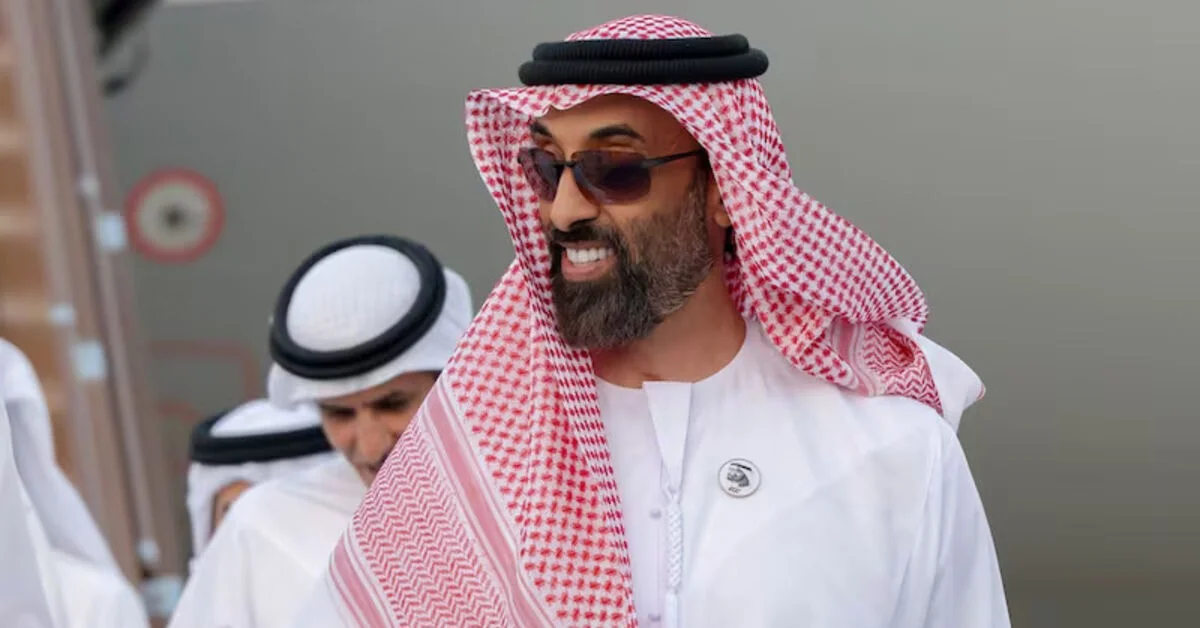
However, not everyone in Abu Dhabi fully supports this confrontational course. National Security Adviser Sheikh Tahnoun bin Zayed (brother of President Mohammed bin Zayed) is known for his pragmatism and penchant for building practical relations with Saudi Arabia. According to some information, he advocates de-escalation and distancing from risky steps. Its participation in agreements with Ukraine on the development and use of drones - including technology to combat Iran's Shahed drones - can be seen as an attempt to diversify security partnerships and take a more balanced position.
Such conflicting signals could point to hidden divisions within Abu Dhabi's ruling family, the Al Nahyan dynasty, from which UAE President Mohammed bin Zayed and key figures shaping the country's foreign and economic policies come. The decision to withdraw from OPEC, promoted by influential people associated with ADNOC and the government's energy bloc, could weaken the position of the more cautious part of the Emirati establishment and hit hard the interests of the Emirates themselves at a time when the entire Middle East region is experiencing a moment of turbulence.