
Original Material
Putin has heightened security and limited travel amid coup fears, leaked EU intelligence report alleges
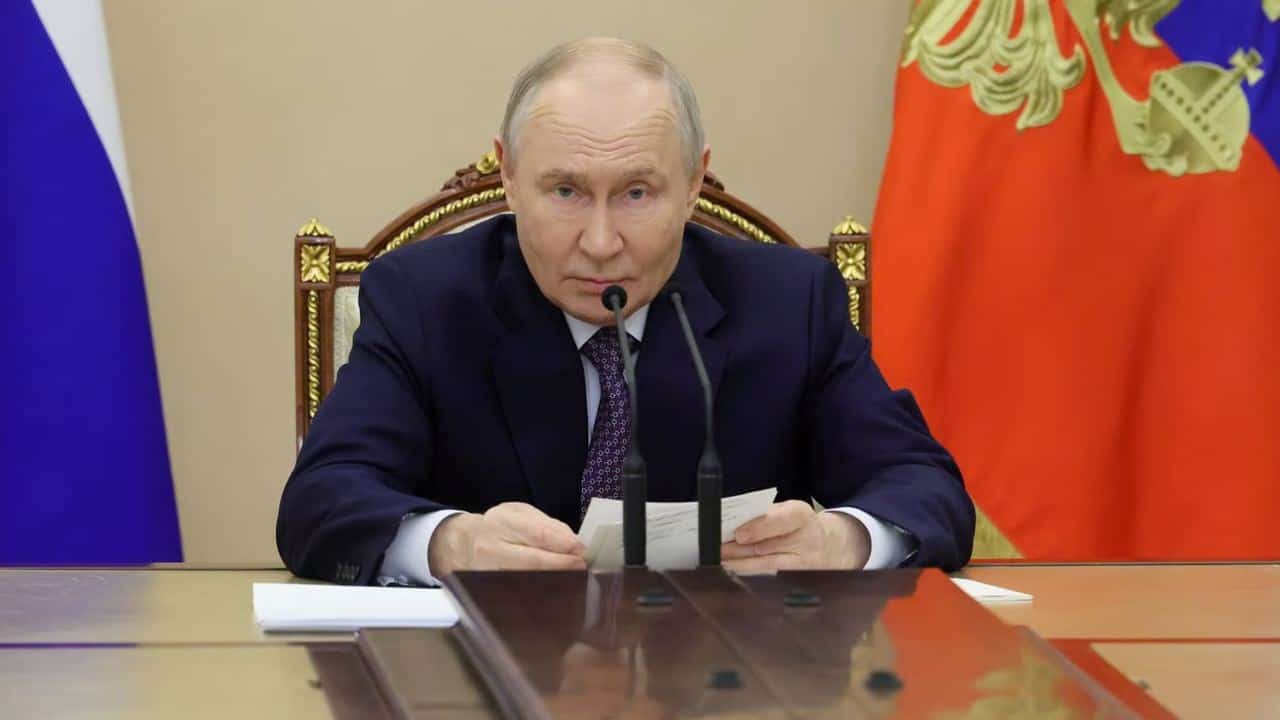
Since early March, the Kremlin has significantly expanded Vladimir Putin's personal security, according to an intelligence document from an unnamed European country obtained by CNN, the Financial Times, and the independent Russian outlet iStories, which published it in full.
The document alleges that Putin has grown concerned for his personal safety, including the possibility that members of Russia's political elite could attempt to use a drone to assassinate him, and points to internal tensions within the security establishment as a contributing factor. In particular, it says the Kremlin associates former Defence Minister and current Security Council Secretary Sergey Shoigu with the risk of a coup attempt.
In response to the perceived threats, Russia's Federal Protective Service (FSO) has introduced a range of new protocols. Putin and his family members have reportedly stopped visiting presidential residences in the Moscow region and at Valdai, and he has ceased travelling to military infrastructure sites. Staff working in close proximity to Putin are barred from using internet-connected devices or public transport. Security cameras have been installed in the private homes of his chefs, photographers, and bodyguards. Visitors to the presidential administration now undergo two rounds of screening, including physical searches by FSO officers.
FSO personnel are also said to be conducting large-scale inspections using canine units and deploying officers along the Moskva River in anticipation of potential drone attacks, while communication networks in parts of Moscow are periodically shut down for security reasons.
Additionally, the document alleges that since the start of Russia's full-scale invasion of Ukraine, Putin has spent much of his time in modernised bunkers, sometimes for weeks at a time, while pro-Kremlin media uses pre-filmed footage to suggest he is moving freely.
The new measures appear to have been prompted in part by the December 2025 car bombing that killed Lieutenant General Fanil Sarvarov, head of the General Staff's Operational Training Department, whose vehicle was destroyed in a parking lot outside his Moscow home.
Three days later, Putin convened a meeting of security agency heads at which, according to the document, Chief of the General Staff Valery Gerasimov criticised FSB director Alexander Bortnikov for failing to protect senior officers. Bortnikov cited insufficient resources and personnel in response. Putin closed the meeting by instructing agency heads to deliver "concrete solutions to the problem" within one week. The outcome was an expansion of the FSO's jurisdiction: previously limited to Gerasimov among top military officials, its protection has since been extended to 10 additional commanders.