
Translated material
The end of demographic exclusion? What is happening to the birth rate in the North Caucasus
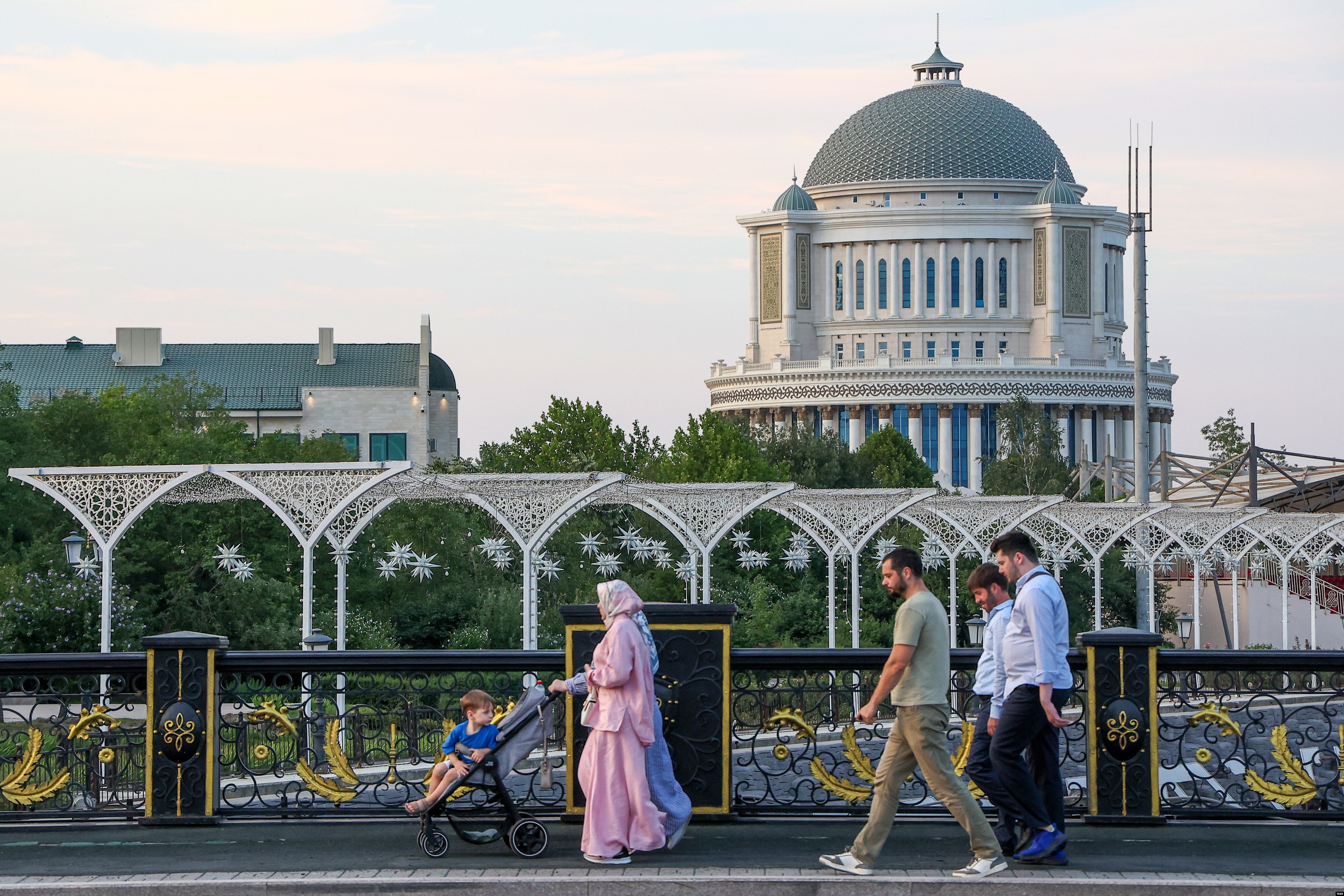
The republics of the North Caucasus - Chechnya, Dagestan and Ingushetia - are traditionally considered a demographic exception in Russia: significantly more children are born here than the national average. However, recent data show that even in these regions negative trends are gradually beginning to appear.
According to data for the beginning of 2026, the average fertility rate has decreased in all regions of Russia, but most of all in Chechnya . The top five outsiders also included Dagestan and Ingushetia.
Later, Rosstat adjusted some of the indicators. After the recount, it turned out that the decline in the birth rate in Chechnya turned out to be less sharp than previously thought: the republic ranks only 19th among Russian regions in terms of the rate of decline. However, updated data indicates a continued decline in fertility. Thus, in February 2026, compared to February 2025, the total fertility rate in Chechnya decreased from 2.67 to 2.56 children per woman (by about 4%), in Ingushetia - from 1.80 to 1.74 (about 3.6%), in Dagestan - from 1.82 to 1.76 (by about 3.2%).
Even after this decline, the North Caucasus republics maintain some of the highest birth rates. On average, there are still more children per woman here than in any other federal district.
Rosstat statistics show that the decline is primarily due to a decrease in the number of second births. For example, in February 2026, compared to February 2025, the corresponding coefficient in Chechnya decreased from 1.40 to 1.33 children per woman (by about 5.4%), in Ingushetia - from 0.98 to 0.94 (about 4.2%), in Dagestan - from 0.74 to 0.71 (by about 4.5%).
Fertility and payments
It is the dynamics of the birth of a second child in a family that largely determines the overall birth rate, so a reduction in the number of second births can significantly affect demographic statistics even in regions with a traditionally high large number of children. One possible explanation for this relates to changes in the social benefits system. According to a Russian demographer who wished to remain anonymous, previously in some republics fictitious divorces were recorded, after which women formally received the status of single mothers and the right to additional benefits. As the number of such divorces declined, the additional births associated with the practice may have disappeared.
The fall in the birth rate comes as Russian authorities call demography one of the key government priorities. President Vladimir Putin previously stated that demographic development remains a national task for the years ahead, and from 2025, fertility rates are included in the system for assessing the performance of regional leaders.
At the same time, the state is strengthening control over demographic statistics. Starting in March, Russia should launch a unified register of pregnant women - a database that will collect information about women expecting a child. It is expected that such a system will allow authorities to more accurately monitor the demographic situation and coordinate measures to support families.
However, these statements and initiatives were not very effective. The total fertility rate continued to decline in 2025, dropping to approximately 1.37 children per woman—well below replacement level.
Against this background, demographic changes are becoming noticeable in the North Caucasus, a region that has long remained a demographic exception.
High Fertility Regions
Real birth rates in the republics of the North Caucasus may be even higher than the official ones, notes the demographer mentioned above. This is especially true for Ingushetia, as well as Dagestan, Kabardino-Balkaria and Karachay-Cherkessia.
The decline in the birth rate in the district has been observed for many years and, according to the expert, is likely to continue. He believes that this is part of a general demographic trend characteristic of Russia as a whole, although the North Caucasus retains its own characteristics. According to him, the traditional family model here persists longer: early marriages and large families remain more common than in most other regions of Russia. Therefore, even with declining rates, the birth rate in the republics of the North Caucasus still remains one of the highest in the country.
“What is officially published on EMISS is the moving average of the total fertility rate for the last 12 months. Now there is no other data and it is impossible to verify this data, and for this reason alone they should be treated with caution and suspicion,” the demographer clarifies.
Last summer, it became known that Russia had classified demographic data - the reason given was losses in the war against Ukraine. At the same time, the demographer interviewed by the editors considers the connection between the invasion and the decline in the birth rate in the Caucasus unlikely.
“The number of war deaths per capita in the North Caucasian Federal District is almost the lowest in Russia, especially in Chechnya - almost as few men died per capita from there as from Moscow, and even less than in St. Petersburg,” the expert said.
According to his estimates, among men aged 18–60 years, on average in Russia, about 0.5% died in the war. In Chechnya this figure is about 0.12%, in Ingushetia - about 0.2%, in Dagestan - about 0.25%. For comparison, in some other regions of Russia the proportion of deaths is much higher: for example, in Bashkortostan - about 0.8%, in the Perm Territory - 0.86%, and in Buryatia - about 1.6%.
According to the editorial interlocutor, such data suggest that the impact of the war on the demographic situation in the republics of the North Caucasus is much less than in many other regions of the country.
Sociologist Dmitry Dubrovsky draws attention to the fact that the North Caucasus cannot be considered as a single demographic region. According to him, anthropologists have recorded different models of family relationships there, which can have different effects on the number of children in families. This also applies to second births: in some groups their number may decrease markedly, while in others it remains stable or even increases.
According to the sociologist, the birth rate in the region is traditionally influenced by early marriages, government financial support for families and cultural characteristics. He also considers it unlikely that the war will have a direct impact on demographics.
“Rather, it can influence indirectly, for example, instead of payments for children, high salaries of contract workers can be used. Finally, taking into account the influence of the level of urbanization, it should be noted that the North Caucasus is the least urbanized region in Russia, and in recent years the level of urbanization has been slowly growing - which can also affect childbearing. This is a global trend,” says Dubrovsky.
- In Russia, they decided to classify data on demography: the Federal State Statistics Service stopped publishing the relevant information. The “Demography” section disappeared from the Review of the Socio-Economic Situation in the Russian Federation for May. The data is also not available in the section on the Rosstat website, which was last updated in March. This applies to information about natural population growth or decline, the number of births and deaths, marriages and divorces, migration and the total population.
- Human rights activists helping residents of the North Caucasus criticized President Vladimir Putin’s proposal to “take an example” from the family of the head of Chechnya and marry children at an early age. They pointed out that Ramzan Kadyrov himself had previously spoken out against early marriages and that in the North Caucasus, girls, including minors, are often married off against their will.
 Caucasus.Realities application for your smartphone Install
  Caucasus.Realities on Telegram Read