
Translated material
The mystery of two states
How and why Russia and Azerbaijan made peace and what does the criminal cases of citizens involved in the conflict have to do with it?

Meeting of Russian President Putin and Azerbaijani President Aliyev in Moscow, February 22, 2022. Photo: Alexey Nikolsky / TASS
The statement by Moscow and Baku about the end of the crisis in bilateral relations associated with the crash of an Azerbaijani plane in the skies over Grozny confirms that it is not the peace itself that is important, but the conditions for its conclusion. When these conditions are a secret between two states, then peace does not even look like a truce, but a formula of symbiosis. And then not a single coincidence looks random. On the eve of a joint statement by the Foreign Ministries of both countries, the court in Yekaterinburg added nine more years to the 22 years to which the head of the Ural Azerbaijani diaspora Shahin Shikhlinsky was sentenced. A few days later, Baku sentenced Alexander Vaissero, one of the Russians detained at the peak of the crisis, to four years for money laundering.
Between war and disaster
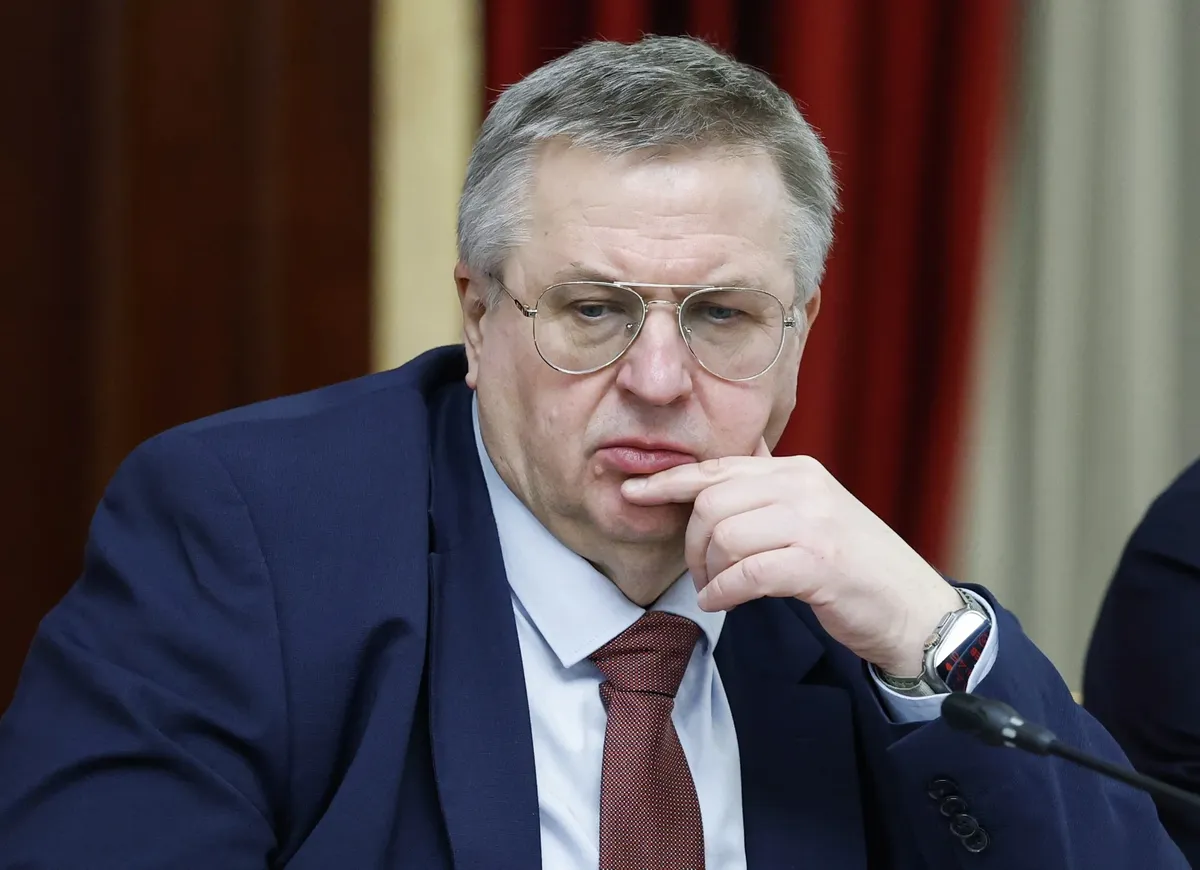
But any formula has two parts. After the equal sign - confident, official optimism. Just a few hours after the announcement of normalization, a Russian-Azerbaijani intergovernmental commission meets in Azerbaijan. Against the backdrop of the hosts' relative restraint, Russian Deputy Prime Minister Alexei Overchuk looked especially inspired. Expressing hope for a quick restoration of the pace of cooperation, which in itself was an indirect recognition of significant discomfort from a long quarrel,
Overchuk assured the host of the demand for studying the Azerbaijani language in Russia, and it is difficult to remember when and to whom Moscow made such advances.
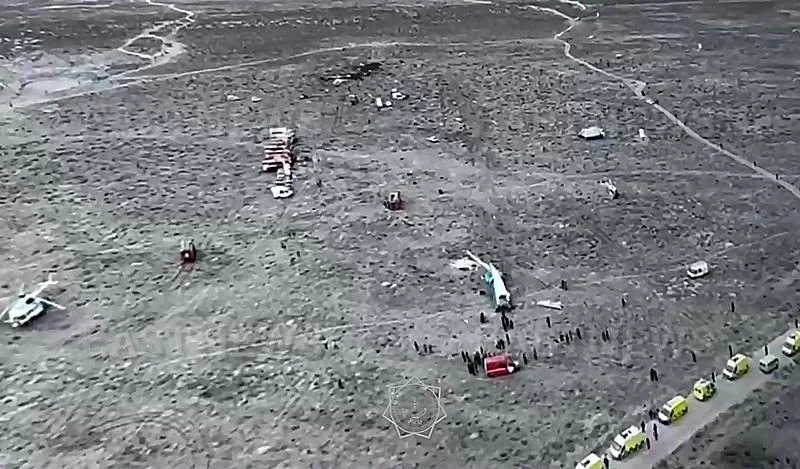
In short, the crisis is ending in the same coordinate system in which it began. On the one hand, Ilham Aliyev was almost the last to visit the Kremlin at the end of February 2022. On the other hand, by December 2024, when the Embraer of AZAL airlines crashed near Aktau, Baku, if not looking for a reason to distance itself from Moscow, was ready to take advantage of any of them.
Azerbaijan, having closed the Karabakh page of its modern history, did not simply break the main thread of its dependence on Russia. The very process of overcoming birth trauma was part of leaving the post-Soviet world. The complex spectrum of emotions and calculations that connected Azerbaijan with Russia always included Soviet ressentiment, the influence of the Moscow-oriented elite that Ilham Aliyev inherited from his father, and fear of Moscow’s active unfriendliness. Now, having strengthened its brotherhood with Turkey, Azerbaijan has convinced Moscow that it now needs to be dealt with not as an ordinary partner in the post-Soviet dialogue, but as part of the force that lays claim to leadership in the region, which is much more extensive and strategic than the usual South Caucasus. And finally, in 2022, another factor appeared, which Baku did not abuse, but kept uncovered. Zelensky’s visit to Baku is an undoubted event and a sign. But against this background, Aliyev’s hints were a little forgotten after hits on SOCAR (Azerbaijani state oil company) facilities in Odessa and the Azerbaijani embassy in Kyiv: Baku has not yet sold lethal weapons to Ukraine, but nothing is dogma...
At the same time, Azerbaijan strengthened its position in infrastructure projects independent from Russia. And if for the time being the Middle Corridor (a logistics route connecting China with Europe through Kazakhstan, the Caspian Sea, Azerbaijan, Georgia and Turkey), for example, was talked about more as a geopolitical movement of strata, now this issue for Moscow is increasingly becoming a matter of pressing politics.
Pressure pipe
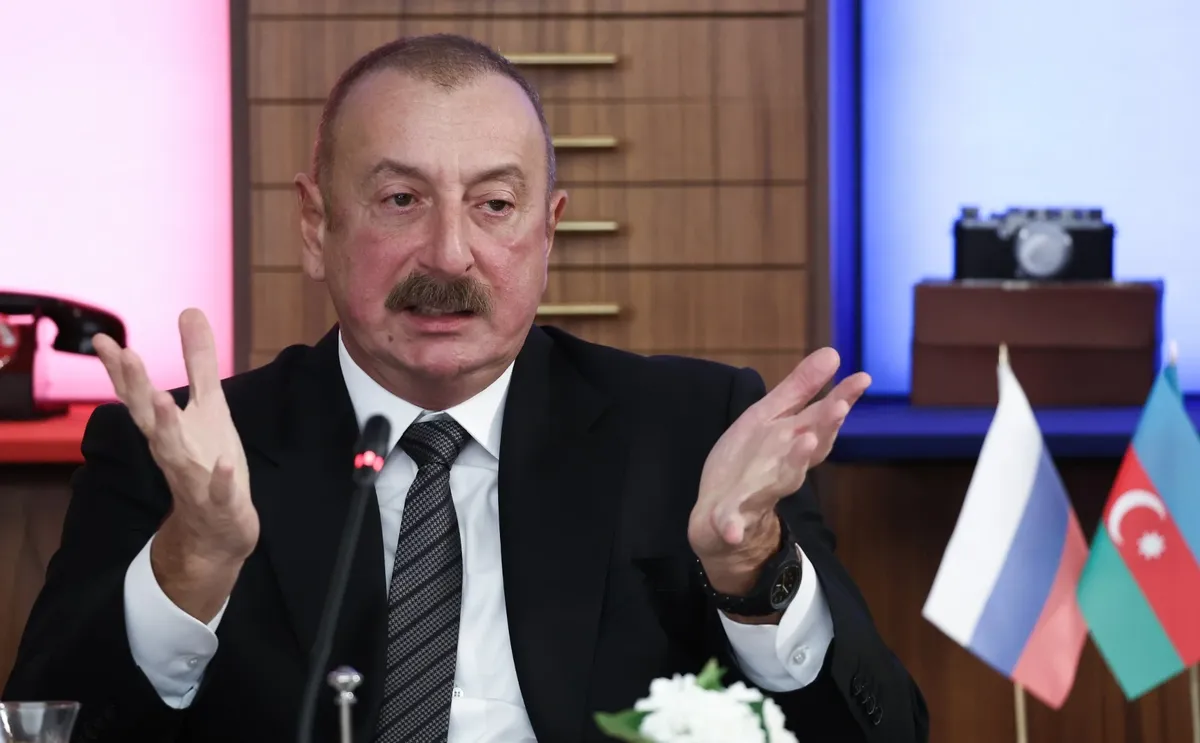
A week before the reconciliation, Ilham Aliyev flies to Tbilisi to visit Bidzina Ivanishvili. The event is unprecedented by Georgian standards - it seems that in our open spaces there is no more closed person than the actual leader of Georgia.
What could Aliyev and Ivanishvili talk about so delicately that they could not be trusted with anyone else? There are no answers even in official language.
Perhaps the only projects with Russian participation could be more sensitive than the topic of Russia. On the same days, the Minister of Foreign Affairs of Kazakhstan visited Tbilisi, who then, just in case, stopped by Armenia, and also without comment. Around the same time, Moscow shuts down the Druzhba oil pipeline for Kazakh transit to Germany. And a few days later, the Minister of Industry of the Czech Republic notes with satisfaction that Azerbaijan, for whose gas Europe is lining up, has included Prague in the premium league of buyers, and Prime Minister Andrei Babis is received in Baku with all honors. The Czech Republic intends to purchase 2 billion cubic meters from Azerbaijan - about 28 percent of its consumption, which makes it one of the most active buyers: Azerbaijani gas so far accounts for a little more than three percent of all-European gas imports. But its share is gradually growing. In January of this year, Baku began supplying gas to Austria and Germany, from which, by the way, it partially flows back to the Czech Republic. At the same time, the European Commission says that they intend to increase purchases of Azerbaijani gas from approximately 12 billion cubic meters to 20.
But there is another arithmetic. Azerbaijan’s resources in the near future may not be enough for this triumph.
Baku uses “swap schemes”: it replaces its exported gas with Russian or Turkmen gas, which gives everyone logistical savings. But this has other advantages: under the guise of replacing Azerbaijani gas, Russian gas can also be exported.
For such delicate and highly mutually beneficial arrangements, normalization of relations may not be necessary, but it is desirable. But the symbiosis formula may just begin with gas. And according to this agenda, you can study all current policies.
He who interferes will help
The war in Iran has disrupted Russian logistics along the North-South route to the Persian Gulf, and a time of paradoxes is coming. Russia has always treated the Baku–Tbilisi–Kars (BTK) railway as a competitor. Now, perhaps, it could be the one that could partially compensate for existing limitations and future risks. For example, the highway through Belarus, through which the main cargo volumes today pass, including transit, including from China. Occasional precedents for the joint use of Russian railways and BTK have already happened; there have been reports of Russia using Azerbaijani and Georgian railways to access Georgian ports, one of which, Batumi, belongs, by the way, to the Kazakh KazMunayGas.
Diversification, of course, is temporary, but today, more than ever, temporary looks like a form of permanence. Moreover, the Zangezur corridor through Armenia to Turkey and Europe is not expected in the near future. Why is all this not a topic for discussion between Aliyev and Ivanishvili? And then with Overchuk after the declared peace? Moreover, the experience of BTK’s own financing hardly adds optimism to Baku, and if Moscow offered its services in this regard, it would suit everyone. Except, of course, Armenia, which, in its request to Russia to repair sections of the railway necessary to restore communications with Turkey, received, if not a refusal, then probably such harsh conditions that within a few days Yerevan took the initiative to transfer the concession of the Armenian railways to someone else. For example, Kazakhstan. Kazakhstan, however, refused.
After all, Astana is perhaps another participant in this whole game, an episode of which was the Russian-Azerbaijani truce.
It was announced precisely at a time when there is a clear revival in the regional logistics market. BTK is just one example of what may be the context. Especially against the backdrop of lowering the bar for strict European demands in conversations with Moscow, including because of Iran.
Therefore, another parameter is introduced into the equation in brackets: increasing the importance of those who have learned to monetize their neutrality. One of the pioneers in this is Baku, Kazakhstan is organic in this role and Tbilisi has clearly waited for its luck.
Everyone is a participant in the action being described.
In a word, the symbiosis of Moscow and Baku from a geographical point of view turns out to be somewhat broader. But this is why it is a symbiosis: old misunderstandings can be declared resolved, but it is no longer possible to do anything about their systemic causes. From the point of view of the usual ideas about the benefits, blocking the Druzhba oil pipeline to Kazakhstan for transportation to Germany is a mystery. Pressure on Germany? Hardly, the wrong volumes. And you can’t surprise Kazakhstan with this - about three percent of Kazakhstan’s exports go through Druzhba, and the increase that Astana planned in this direction is also uncritical. And in general, Moscow hardly needs a conflict with Kazakhstan more than complications with Azerbaijan.
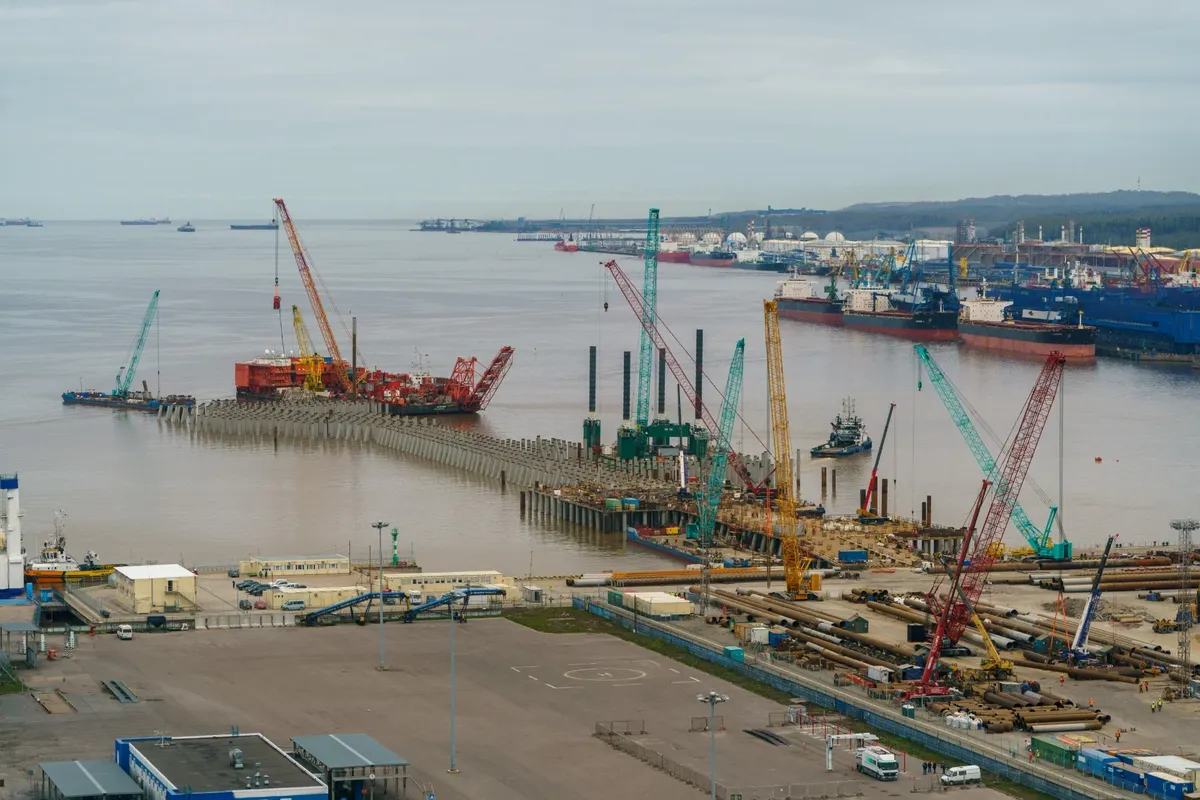
But there may be no conflict, at least not a public one. Russian Foreign Minister Lavrov is traveling to Kazakhstan to prepare Putin’s visit, during which Russia’s proposal to redirect oil from the pipeline to the port of Ust-Luga and to the main Kazakh export route, the Caspian Pipeline Consortium (CPC), will clearly be clarified. Astana has always considered the first option to be more of a force majeure option. And in Ust-Luga itself, 100 thousand tons will not make a revolution in transshipment. Even more so to the CPC, where it is proposed to transfer 160 thousand tons. It's probably about something else:
Kazakhstan is invited to become a symbolic shield of Ust-Luga from intense attacks by Ukrainian drones. However, in Novorossiysk, through which Kazakh oil flows in global volumes, this did not work.
One way or another, the volumes that Astana was denied are so small that it is perhaps not the fact itself that is important, but the negotiations regarding it. And here there is a theme. Astana, even without this embarrassment, is gradually increasing the volume of transportation through the Caspian Sea, that is, again, through Azerbaijan. For Baku, Kazakhstan’s participation is a dream that it has been living with since the launch of the BTK, which, without Kazakh oil, is loaded at less than half its capacity. But President Tokayev himself admitted that the transition to the Caspian Sea is a project that will take years. Moscow is interested in much shorter deadlines. In short, the desynchronization is so far in favor of Moscow, and one could say that everyone has to proceed from this.
But perhaps here too the world is losing its former monochrome. The days of monopolies are gone. The Zangezur corridor in the form that Moscow was counting on most likely will not happen, and for reasons more systemic than Nikol Pashinyan’s pre-election motives. Moscow may have to agree to participate in projects it considered competing. Now Russia will not be allowed to pass its oil through the BTC, as sometimes happened in small volumes before, under any circumstances - Aliyev has no need to take risks. But no one is stopping you from refining it in Turkey at a refinery owned by SOCAR and selling petroleum products as Turkish or Azerbaijani. The best allegory of such a symbiosis is the peace between Baku and Moscow.
South Caucasian prisoner
By the way, another coincidence - this time, probably accidental, but symbolic: the decision to stop the transit of Kazakh oil was announced on the day when Alexander Vaissero, the first of the Russians detained at the peak of the crisis, was sentenced in Baku. But the fact that the trial of the first group of Russians began in April, when the text of the joint statement of the Foreign Ministries was probably already being typed up, can hardly be attributed to chance. As in the case of the verdict against Shahin Shikhlinsky. The methodology is the same, the practices are different. Moscow comes in straight away with a knockout blow - 22 years, and then finishes it off - nine more. In total, nine people have already been sentenced to significant terms in Russia in cases of murders 20 years ago, including the son of Shahin Shikhlinsky Mutvala - for eight years.
In Azerbaijan, seven more are awaiting sentencing, where justice began with lighter charges of computer fraud, and here the negotiating position is evolving towards more severe charges of drug crimes, and this is already up to 15 years. There are no details, but the synchronicity of judicial proceedings leads to optimistic suspicions about a unified logic of mutual coordination. The only question is the agenda of those negotiations, one of the arguments in which, apparently, are people, in approximately equal numbers on both sides. Judging by the fact that seven Russians have not been sentenced, negotiations are in full swing.
So there is no contradiction.
This is the formula for symbiosis: the time to collect stones profitably does not exclude the possibility of continuing to scatter them somewhere without even a loss