
Translated material
Bite of the State
About the arrest of Novaya journalist Oleg Roldugin and the search in the editorial office. And about the reasons for repression regarding “personal data”

Oleg Roldugin in court, May 6. Photo: Evgeny Kurakin
Today, May 6, Novaya Gazeta journalist Oleg Roldugin’s detention was extended for another two months. And on Monday, May 4, the Moscow City Court rejected his appeal against arrest.
TEXT OF MAY 6, 2026
“The Tverskoy Court of Moscow extended the arrest of Novaya Gazeta journalist Oleg Roldugin in the case of illegal use and storage of personal data allegedly committed by a group of persons (clause “c” of Part 3 of Article 272.1 of the Criminal Code of the Russian Federation).Judge Alexandra Lashina granted the investigation's request, leaving Roldugin in custody for another two months. The investigator insisted that there were no grounds for mitigating the preventive measure, and referred to the need for additional time to conduct investigative actions. The preliminary investigation period has been extended until July 10. Prosecutor Zlobin fully supported the position of the investigation.
Roldugin objected to the extension of the arrest. According to him, all materials on the case have already been confiscated, which means he cannot influence the course of the investigation.
“I do not agree with the investigation’s request: all materials have been confiscated, there is no information about accomplices or witnesses in the case. Taking into account my marital status, I cannot hide. There is no reason to believe that I am capable of influencing anything - all documents have been confiscated from me,” he said in court.”
And what Oleg says is exactly so. His phone and computer were taken away, studied, all questions about what was found there were asked, the accused is not able to remove anything from there - and in general, nothing new in the seized equipment can appear on its own, just like it can disappear.
Oleg did not deny that he used chatbots when preparing publications, did not deny that he published notes in his tg channel - he spoke about this in court, and in this part he admitted his “guilt” (if the work of an investigative journalist as such can, in principle, constitute a crime). The extent to which Roldugin’s professional activities fall under the new and very strange article of the Criminal Code will be assessed by the court.
What then is the point of extending the guard?
Well, practice shows that there can only be one sense in keeping a person in a pre-trial detention center under such circumstances -
to put pressure on the accused or his relatives, to weave some kind of “operative combination” so that where nothing can appear, something does appear.
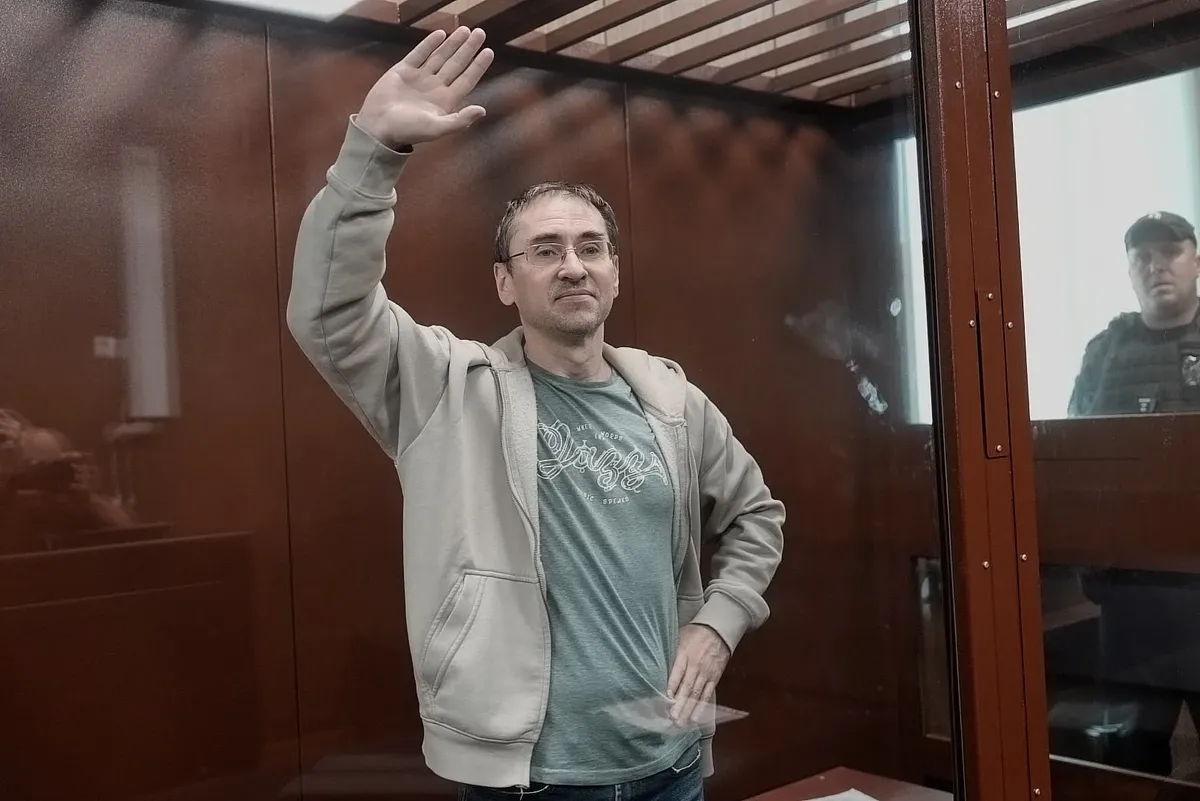
On April 9, Novaya Gazeta journalist, former editor-in-chief of Interlocutor*, which was destroyed by the state, Oleg Roldugin was detained.
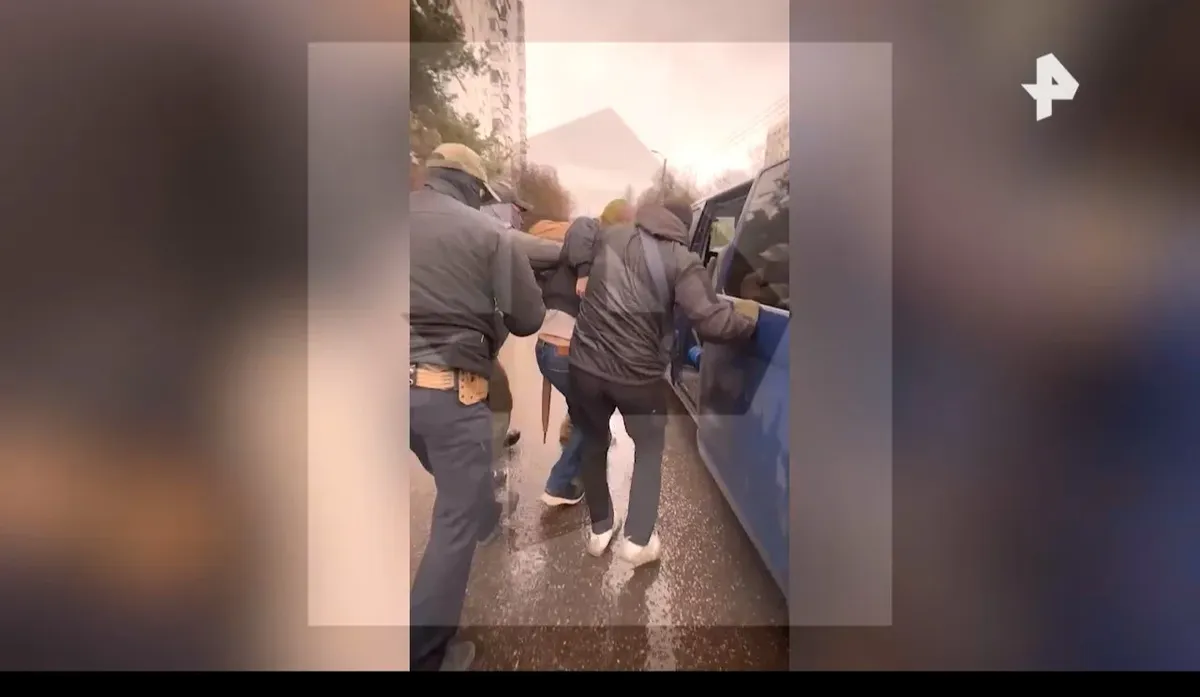
On April 9, immediately after the search in Oleg’s apartment, they came to the Novaya editorial office with an investigator’s order to conduct an urgent search. And Roldugin was brought to the investigative unit of the Moscow Main Internal Affairs Directorate.
The lawyer was not allowed to see the detainee for a long time; only in the late afternoon they interrogated him as a suspect. Please remember his procedural status - suspect .
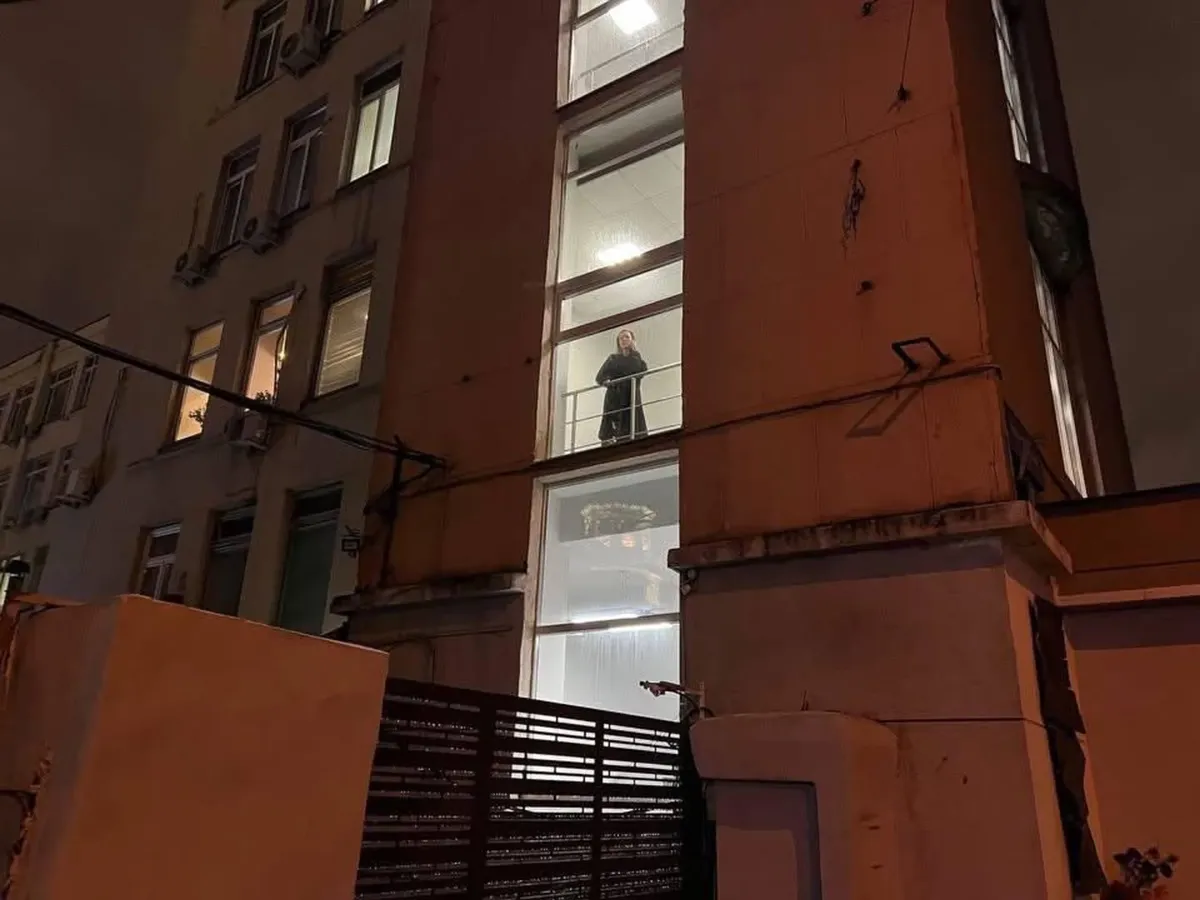
Lawyers were not allowed in at all for the search at Novaya, which lasted 13 hours; they stood outside the door under the supervision of operational officers.
On April 10, Oleg Roldugin was arrested by the Tverskoy Court of Moscow for one month. We emphasize: arrested as a suspect.
After this, having barely understood what was actually happening, Novaya published a statement from the editors. I'll quote it in full.
TEXT DATED APRIL 11, 2026
Uncharged
"Firstly. A person - so far only suspected of committing something not related to a particularly serious or serious crime - cannot be twisted and broken like that in front of specially called cameras of propagandists. This is unprofessionalism, meanness, demonstrative aggression, weakness and senseless cruelty, which has become state policy.
Police officers verbally love “Soviet times” - and back then, in such cases, it was enough for two plainclothes operational officers to say “let’s pass.”
Now - about the essence of events. All these two days - April 9 and 10 - we tried to figure out what Oleg was actually accused of.
We couldn't. Despite the open trial in the Tverskoy court to select a preventive measure, Oleg Roldugin was arrested not on any charge, but on suspicion of something.
What exactly was not clear in court. It did not become clear what the crime was, nor when it was committed, nor by whom, nor who was the victim of this crime, unknown even to the investigation.
Essentially, Oleg Roldugin, as we can assume, is suspected of working as an investigative journalist and publishing texts of important public importance - about corruption among high-ranking officials (including in the law enforcement system).
Oleg himself said so in court: he doesn’t know what they are accused of, but he assumes that the detention and initiation of some kind of criminal case could probably be related to the implementation of professional activities. And in Sobesednik, where he was editor-in-chief, and after the editorial office, under pressure from the authorities, was forced to suspend its activities, and in Novaya.
His lawyer also spoke about this during the court hearing - that he and Oleg could not even develop a defense position, because no one reported what actually happened and what to defend against.
The arrest of a suspect for some crime that no one can name is absurd.
From the category: a computer was found in the house, maybe some kind of harm was done with it - on this basis we will arrest the owner of the apartment, and then we will figure it out: we will find the victims, we will understand when it happened, who is the accomplice...
We cannot say more about the essence of the criminal case. Neither can lawyers. And, obviously, the investigators too. Not because they signed a non-disclosure agreement (editorial staff during a search on the premises of Novaya Gazeta), but because there was nothing to disclose.
Likewise, we do not understand the reason for the thirteen-hour search of the editorial office by a large number of plainclothes employees. What could they be looking for if the nature of the crime is unknown to anyone?
But we can say the following: whatever the charge that may someday be brought against Oleg Roldugin, it most likely can be connected with his professional journalistic activities, during which he brought to the public information that became known to him regarding the very brazen corruption of high-ranking officials and security forces. And the harsh detention of Oleg and the search in the editorial office, as we can assume, were aimed, among other things, at forcing Novaya Gazeta to suspend its activities.
We continue to work.
The editors of Novaya will do everything in our power to achieve the release of Oleg Roldugin from custody.”
What happened next
Oleg Roldugin was charged on Monday, April 13. Until this time, he was in a temporary detention center (IVS) on Petrovka, 38. And, at least until the 17th, he remained there awaiting an involuntary transfer to one of the Moscow pre-trial detention centers.
Since he was arrested for a month, the investigation, apparently, went to court with an extension of the period of detention a little earlier - in the period between the May holidays.
Oleg's lawyer Marina Andreeva presented arguments in court why his preventive measure should not be related to his arrest. Oleg suffers from a number of serious illnesses; he is dependent on his wife and two minor children, one of whom requires careful and constant care and treatment; Oleg's dependents include very elderly and sick parents. Roldugin had not previously been brought to criminal responsibility, but to hide - where can you hide from your loved ones who need help and, with his arrest, were left without a livelihood?

The court turned a deaf ear - which is not surprising in our time. But these arguments will be repeated at the new meeting to select a preventive measure, and they should have been taken into account. And here's why. If previously not only Oleg himself did not understand what they wanted to accuse him of, but also the court, now the charge has been brought. And the article written in the resolution allows us to choose a different measure - this is not a particularly serious crime, it is not related to crimes against the life and health of anyone, does not involve multi-billion dollar thefts, etc., which can justify detention.
This article is 272.1 part 3: “Illegal use and (or) transfer, collection and (or) storage of computer information containing personal data, as well as the creation and (or) ensuring the functioning of information resources intended for its illegal storage and (or) distribution.” A group of people.
Article
This formulation and this article deserve special attention. It was introduced into the Criminal Code in November 2024 and amended in February of this year. And until the spring of 2026, it was “sleeping”; practically no cases were initiated on it, and if this happened, they concerned, first of all, the facts of the sale of certain data by police officers to bloggers and journalists.
(In this regard, the question is: how did those footage of the search in Novaya that ended up on the website of the Izvestia newspaper, how did they end up there?)
So the case of Oleg Roldugin may become a precedent. Because he took advantage of the same opportunities that any journalist who knew how to work on the Internet could take advantage of. Telegram bots.
This article of the Criminal Code is closely related to the law “On the Protection of Personal Data,” which has been rewritten countless times and has turned into something that is impossible to understand. And most importantly, don’t even try to understand: what personal data is, when something becomes it and under what circumstances, when it is subject to disclosure (and which ones) and when it is not, what you can write and what you can get jailed for.
For example, a phone number with a last name and a link to social networks - what is this? Don't ask lawyers, because they will answer: depending on the situation. And the situation in our country is determined by those who plant, which gives them the opportunity to interpret any action in a way that is beneficial to them. And the article of the Criminal Code will not clarify anything either - it is just as “rubbery” and unclear.
Remember the phone number? I quote the Criminal Code: “Acts provided for in parts one , two or three of this article, involving the cross-border transfer of computer information containing personal data, and (or) the cross-border movement of information carriers containing personal data, are punishable by imprisonment for a term of up to eight years with a fine of up to two million rubles <...>.” We went abroad with a phone and then we arrived.
This is something that concerns not only journalists and bloggers. But if you read the article of the Criminal Code, it becomes clear that if someone wishes, any work of a journalist can turn into this article.
What's the matter? Why did they suddenly wake up and awaken this “crime”? It's simple - the redistribution of property that has begun in the country.
The arrival of previously inaccessible opportunities for new and very hungry people who do not at all want the shape of their bite on someone else’s or the state’s to be recorded.
And preparations for this have been going on for a long time - in recent years, all data that could indicate corruption has been cleared from the public sphere: both registry data, and declarations of officials - and almost everything.
And it is no coincidence that someone asked a little-known deputy from the Tatarstan parliament in a very cunning way to launch a bill in the State Duma stating that any data about a crime can be published only when the verdict has entered into legal force.
I understand that it’s unpleasant when they closely watch how you eat, especially someone else’s, and even when you eat...
Here is the answer to all your questions.
This material was published in the eighteenth issue of Novaya Gazeta. Magazine". You can buy it in the online store of our partners.