
Translated material
To the summit with your own drum
How the Armenian opposition knocked on the door of the EU

Protest march participants. Photo by the author
(18+) THIS MATERIAL (INFORMATION) IS PRODUCED, DISTRIBUTED AND (OR) SENT BY FOREIGN AGENT NOVASHOV ANDREY VALERIEVICH OR CONCERNES THE ACTIVITIES OF FOREIGN AGENT NOVASHOV ANDREY VALERIEVICH.
On May 4, an anti-Pashinyan march took place in Yerevan to the sports complex, where the summit of the European Political Community opened that day. The main message of the protest action: the EU should interact not with Pashinyan, but with the political forces opposed to the prime minister. Novaya's correspondent found out what the opposition wanted to tell the summit participants.
“...during the blockade we were happier than now”
It’s been a long time since I’ve had the opportunity to write about those whose picture of the world is so strikingly different from mine. I do not share most of the statements and value judgments of the march participants. I want to argue with almost every statement they make. We seem to attach different meanings to the words “democracy”, “dictatorship”, “political prisoners”. I started with this disclaimer so that I wouldn’t repeatedly write “allegedly” and “according to words” in every sentence.
The gathering of march participants is scheduled for 14.00 in the park named after Sergei Margelyan near the Druzhba metro station. The park is almost always crowded: teenagers, mothers with strollers, pensioners. Half an hour before the start, I look at those walking and sitting on benches and don’t really understand who came to protest and who to relax.
—Are you going to the march or just walking? — I ask a group of men.
- We're just walking. “But let’s go to the march,” they answer and make it clear that they are not inclined to communicate.
Judging by the concentrated faces of the pensioners on the next bench, I guess that they are definitely going to the rally. But they don’t want to answer questions.
“We were told not to talk to journalists.”
- Who said?
— The authorities.
Russian flashbacks are rolling in. This is how they answered me at any public rallies in my homeland, including some completely non-protest City Days. I cope with the obsession and clarify:
-Where are the authorities?
An elderly woman shows very roughly.
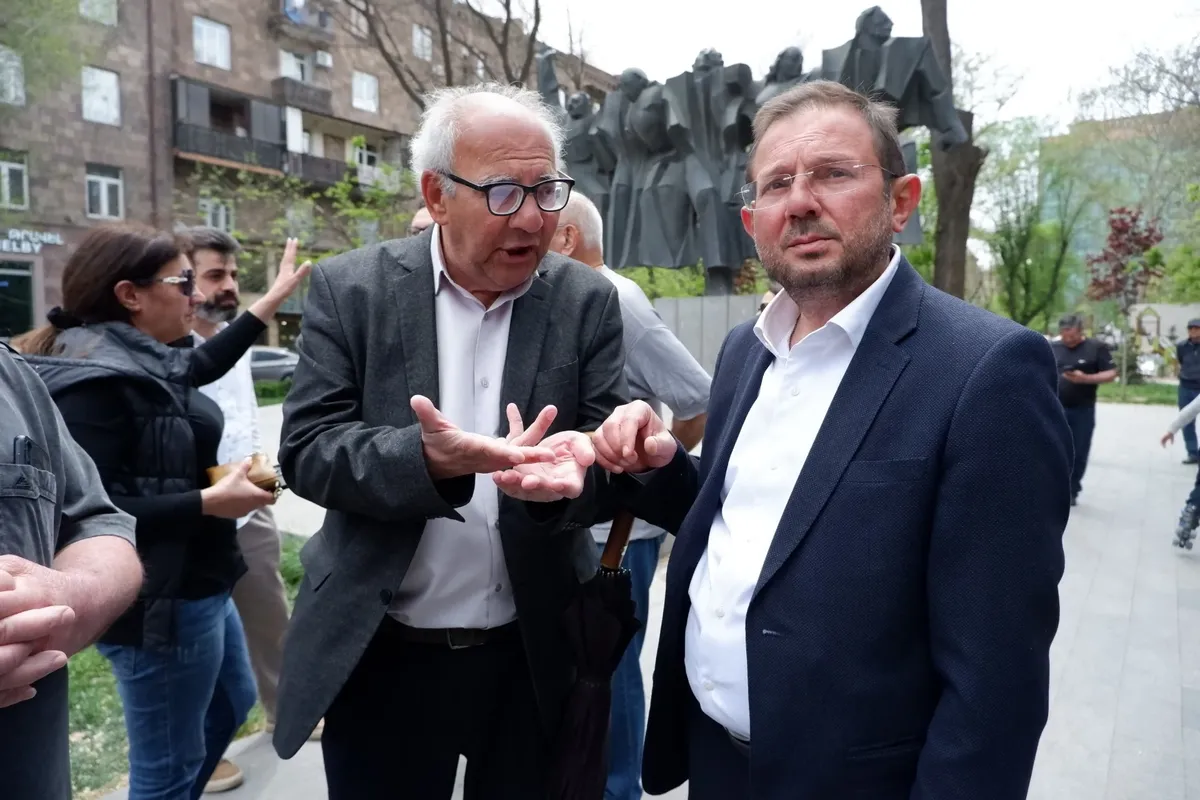
I decide that the gray-haired man in glasses, a formal suit and a white shirt, whom someone constantly approaches, is probably the “boss.” Gegan Manukyan - that’s his name - is a member of parliament, a member of the Armenian Revolutionary Federation Dashnaktsutyun faction, and is part of the Aistan (Armenia) coalition of the second president of the republic, Robert Kocharyan, who is again running in elections this year. This coalition, as Manukyan explains, organized the march.
— We demand the release of political prisoners in Armenia and the Armenians who are in Baku prisons. We demand that European countries do not unilaterally support Pashinyan and his party in the elections in Armenia. Now European countries are turning a blind eye to the anti-people, anti-democratic processes of the government and Nikol Pashinyan himself, who is waging an open war against the Armenian Apostolic Church, political opponents and everyone who thinks independently. Pashinyan is the leader of the country, under whose heel are law enforcement agencies, the prosecutor’s office, and the national security service, which wiretap almost all citizens of Armenia, says Gegan.
Manukyan says the marchers are demanding that democracy be restored in Armenia and that Artsakh residents be given the right to return to their homes.
Despite his belligerent rhetoric, he communicates politely and doesn't mind having his photo taken. In this, he is not at all like the Russian “boss,” and it is unlikely that it was Manukyan who forbade pensioners from talking to reporters.
There are more and more participants. Many with posters and photographs. These people can no longer be confused with ordinary passers-by.
Marina holds the Artsakh flag in one hand and a portrait in the other.
“I’m from Stepanakert, from Artsakh,” she explains.
In the photograph with which I came, Archbishop Bagrat is the leader of the “Holy Struggle” movement. Two years ago, he demanded Pashinyan’s resignation and organized a procession of thousands from the border village to Yerevan “Tavush in the name of the homeland.” Now under arrest. In Armenia, he is accused of preparing terrorist attacks and riots and attempting to seize power.
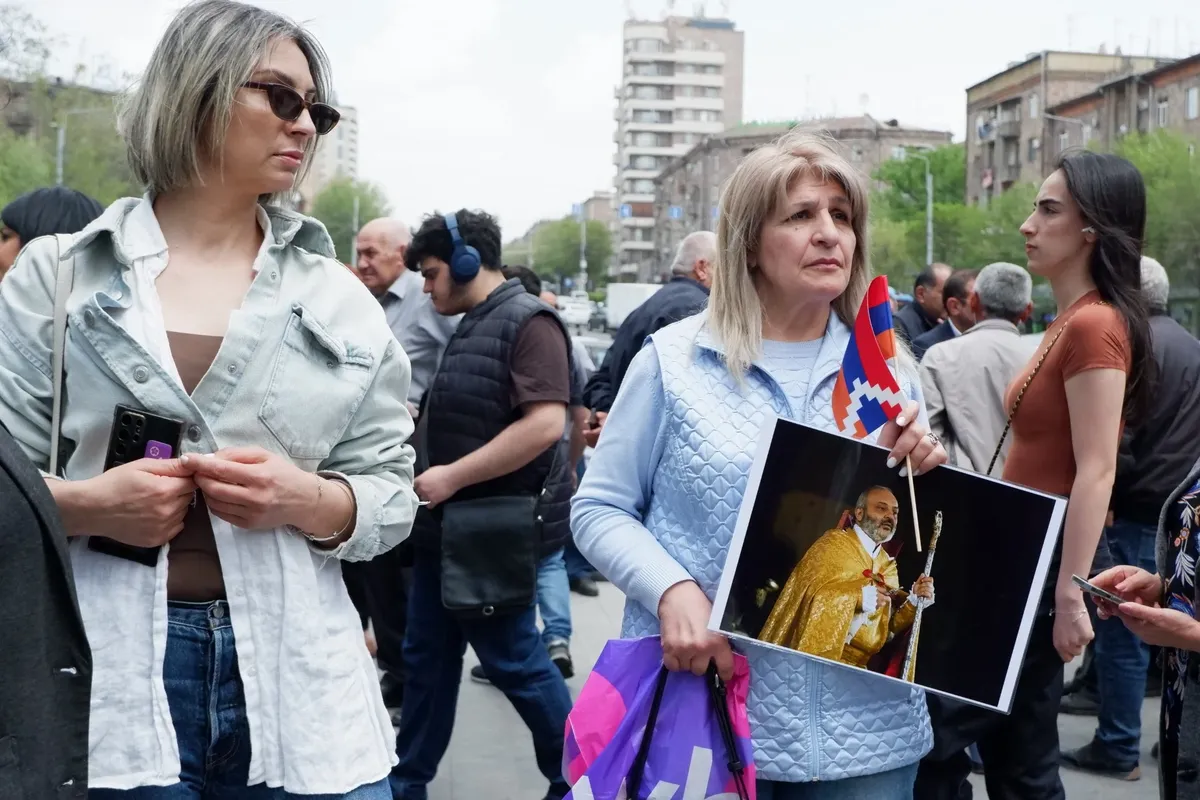
Marina took part in the Bagrat procession and does not believe in the official accusations.
- He loves his homeland. “He loves me very much,” the interlocutor is sure. “And when they began to surrender the territory of Armenia piece by piece to Azerbaijan, he began this movement together with our people.
Her ancestors lived in Artsakh for many centuries. Marina's family in Stepanakert had a spacious house, an apartment and a small business - a children's toy store. In September 2023, I had to leave the city.
- We left everything. Before leaving, I called all the neighborhood children to our store and said: “Take what you want,” Marina recalls. — I don’t think about housing and property. We have lost our land. Our cemeteries, churches, and our centuries-old culture remain there. Even during the blockade we were happier than now. There was no bread then, but there was a homeland. We are fighting to return.
Marina's family - six people - now lives in a rented three-room apartment. At first, they paid benefits that were enough to cover rent, but a year ago the payments stopped. There are two disabled people in the family. The daughter is disabled since childhood, and the husband lost his leg in the first Karabakh war.
In Artsakh, the son worked as the head of the technological department of the gas department; in Yerevan, at first he could only get a job as a taxi driver. A few months ago I found a job servicing terminals. The daughter-in-law in Stepanakert was an employee of the tax service, now she works at Wildberries. Marina herself is not working now - she is caring for her grandchildren.
He communicates only with people who understand, and compares those Armenians who did not respond to the tragedy of the Artsakh people to zombies.
Many Artsakh residents chose to leave Armenia. Marina says that if after the elections, which will take place in a month, Pashinyan’s party remains in power, even more will leave the country.
She believes that Artsakh can be returned through diplomatic means, but, according to her, “the current government is doing everything to prevent this from happening.”
Marina’s friends hold portraits of those arrested, whom they also consider political prisoners - Vahagn Chakhalyan and deputy Artur Sargsyan. Both participated in Bagrat's "Holy Struggle" movement and are accused of preparing for a violent takeover of power.
“First it is necessary that Pashinyan does not win”
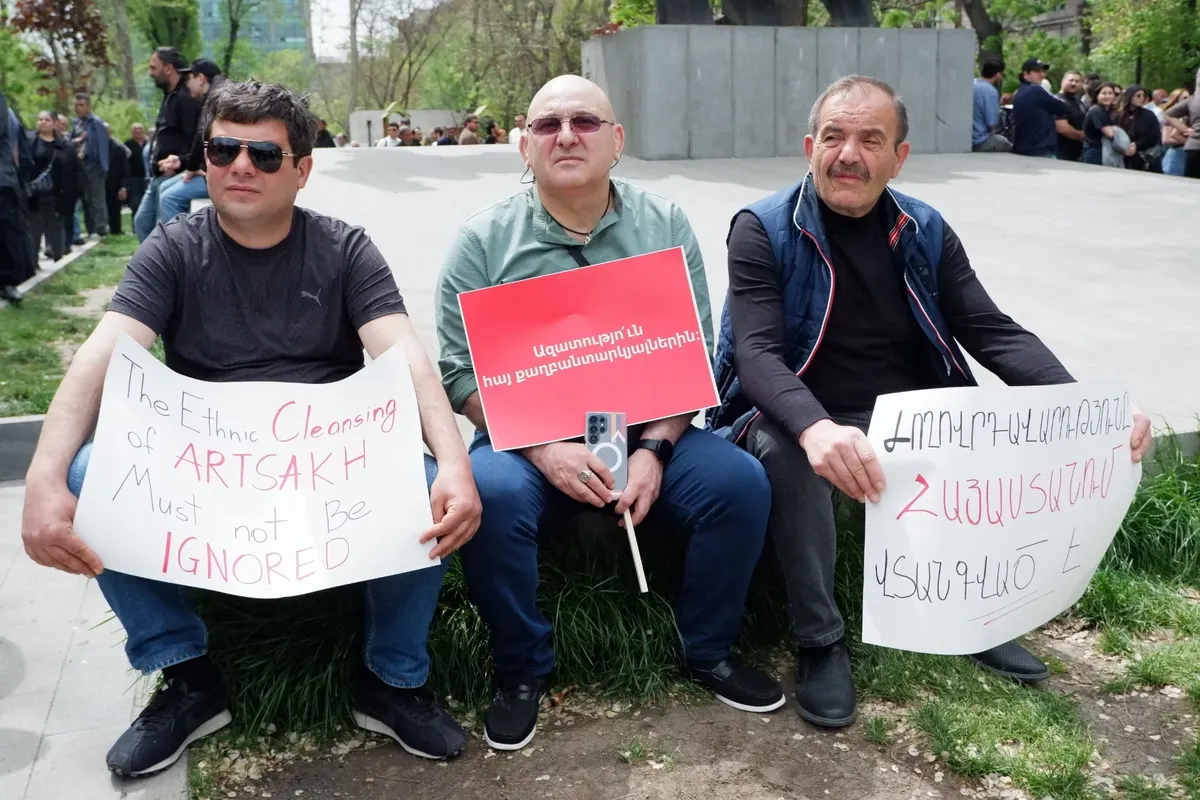
Three men with posters sat down near the sculpture “Dance of the Highlanders” installed in the park. One poster reads in English: “The genocide in Artsakh cannot be ignored.” The other two have Armenian letters.
The activist, who introduced himself as Edik, explains that his poster contains the words: “Freedom for Armenian political prisoners.”
— Why are you participating in this action?
- To free our friends - political prisoners. To liberate Artsakh. First, it is necessary that Pashinyan does not win the elections. Secondly, Artsakh must be returned. Without him, Armenia cannot exist. Artsakh is the heart of Armenia. In Armenia, everyone is ready to fight for Artsakh,” says Edik, a war veteran.
“It depends on what Armenia you mean,” Ashot, sitting next to him, joins the conversation. — If Pashinyan’s Armenia, it will not fight.
Ashot’s poster says in Armenian: “No to dictatorship in Armenia.”
“It will probably be broadcast all over the world, and everyone will see what’s going on, what our demands are,” says Ashot about the significance of today’s march. — In Europe, we have large diasporas in almost all countries, and they will lobby our interests through their parliaments.
“The democracy of Armenia is in danger,” Edik believes. “Pashinyan himself fought for democracy, but came to power, and everything became doubly, triple worse. Now we don’t have any room in prisons, do you understand? There are priests in prison, young guys who fought for Artsakh, our generation that liberated Artsakh. The leadership of Artsakh is in prison in Baku. And Pashinyan’s government does nothing. Doesn't even let me talk about it.
I was just going to listen to the participants, but I couldn’t agree with the last statement at all. Why “doesn’t let us talk” if we’re at a protest right now? Edik replies that Pashinyan keeps silent about the Artsakh issue in his speeches.
In fact, preparations for the march quietly turned into a political rally. But this is just a warm-up. Ahead is the actual procession. Participants gather in a column to walk along Kievyan Street to the sports complex where the summit opened. In front of the column are two activists - one with a pipe, the second with a large drum, which he beats rhythmically as he walks. An activist with a megaphone chants chants and the name of the political force that organized the march: “Dashnak-tsutyun!” The column looks impressive - several hundred of Pashinyan’s opponents are marching in it. It starts to rain, but no one leaves the column. New participants join the action near the sports complex. Some quickly rise from the underground passage in which they were hiding from the rain. Among them is a woman in a blue jacket with a poster “Free Ruben Vardanyan!”
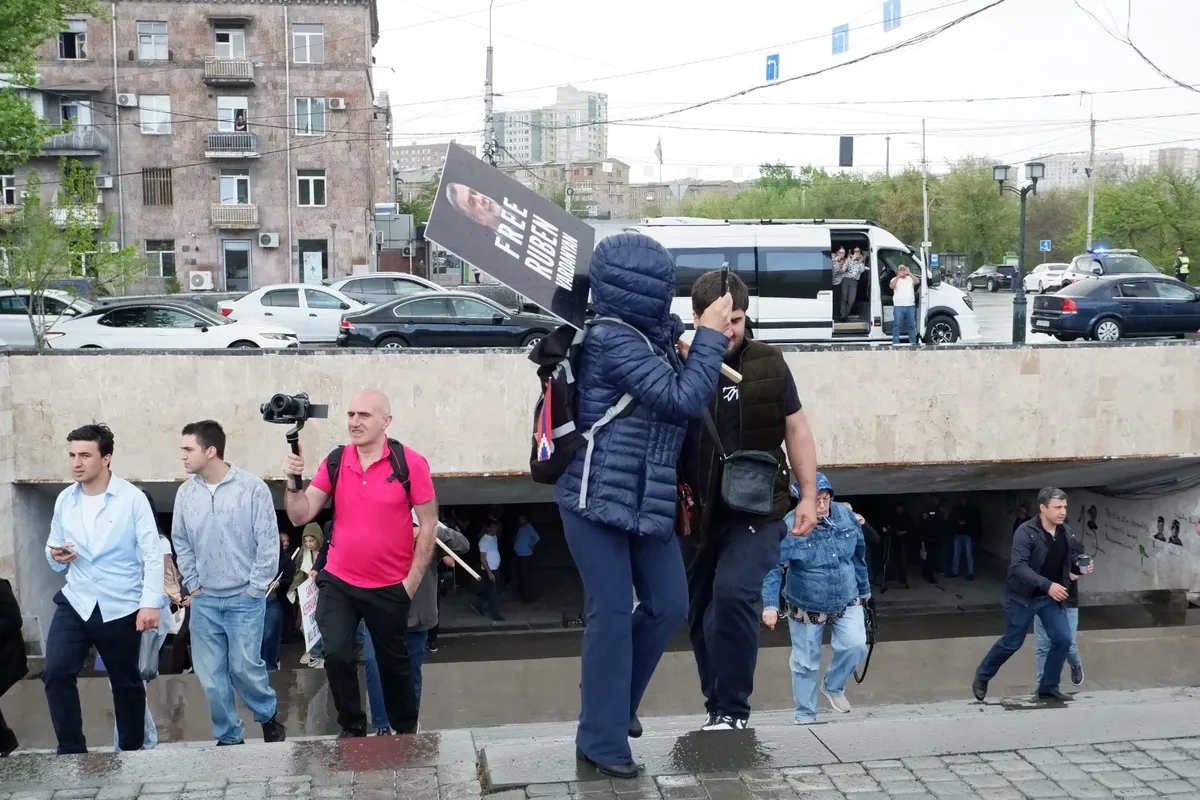
Her name is Shogik. He is not a member of any parties or movements, but shares today’s demands of the opposition. He says that there are many non-partisans at the protests. In addition to the demands that all participants spoke about, Shogik focuses on one more problem.
“Azerbaijan talks about peace, but at the same time destroys Armenian monuments, churches, and graves that are on its territory. If there is to be peace, then it should be not in words, but in deeds,” she says.
In 2018 I was for Pashinyan, but quickly became disappointed.
“Due to his lack of professionalism and capitulatory policies,” the interlocutor clarifies.
Shoghik has Armenian and Canadian citizenship. Lives in two countries. In 2018, I was in Canada and learned about the events in Armenia from the media. He says that the foreign press wrote something completely different from the Armenian press. I didn’t have time to ask which publications we were talking about. Shogik hurried to the square near the sports complex, where the protest leaders were making speeches under the video cameras of journalists.
A member of parliament from the opposition bloc “Armenia” and a member of the Dashnaktsutyun party, Artur Khachatryan, spoke into a megaphone that Pashinyan’s government is dictatorial and is using the summit in Yerevan to enlist European support. Khachatryan would like Europe to build a relationship with the people of Armenia, and not with the Pashinyan government. In his speech, Arthur called what happened in Artsakh ethnic cleansing and demanded that Azerbaijan release all political prisoners of Armenians.
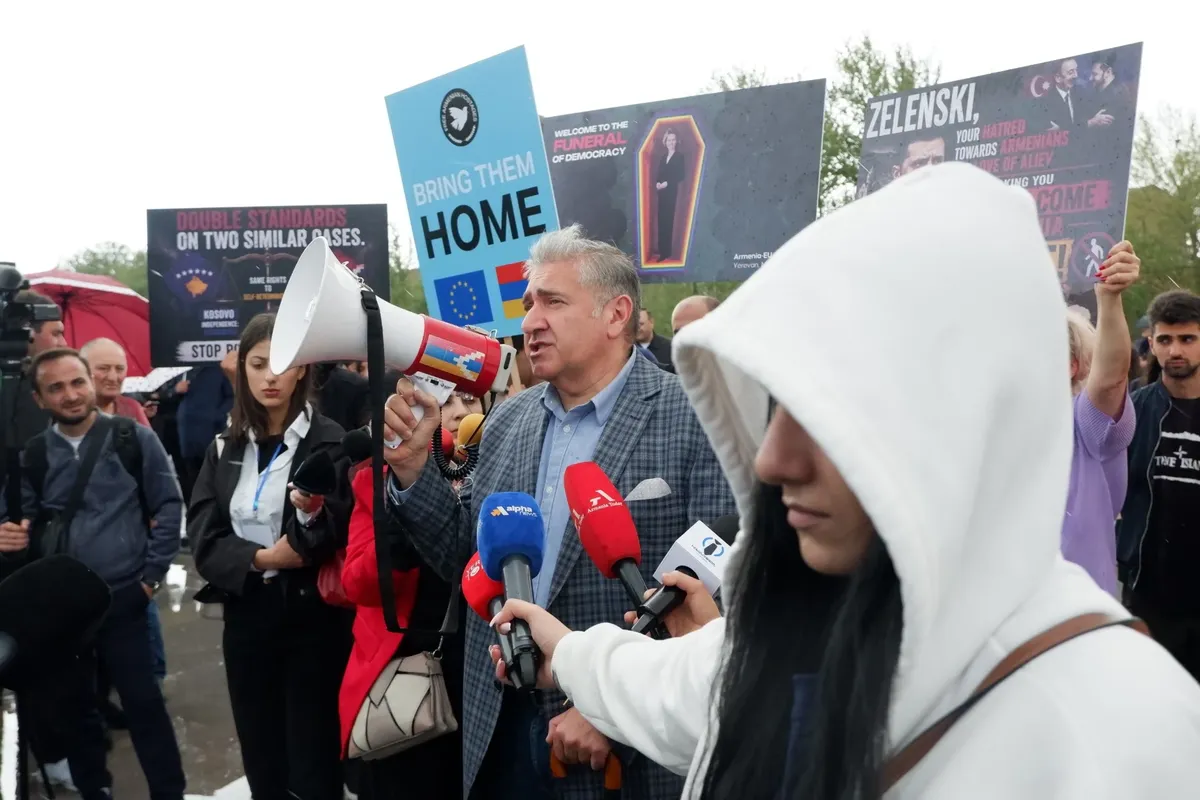
After the speech, Khachatryan briefly answered Novaya’s questions.
— Is it possible to resolve the Artsakh issue in the near future?
— The people of Artsakh have the right to self-determination, have political rights. No one has the right to prohibit a nation from determining its own destiny. In the near future, the return of Artsakh people to their historical homeland must be guaranteed.
— Should Artsakh gain autonomy?
- It’s not for you to decide and not for me. It is up to the people of Artsakh to decide.
— Did the summit participants you addressed today hear you?
— Physically, of course not. But the message will reach them. We will send the petition to the office of the European Union Delegation to Armenia.
As the performances continued, the rain intensified. After Khachatryan’s speech, many took refuge in the underground passage. The most persistent remained to get wet on the street and chant: “Dashnaktsutyun!”
Near the sports complex I saw more visual propaganda. Not only small, sometimes handwritten posters and portraits of prisoners, but also large-scale works. Clear design. High quality printing. Pashinyan, in the image of an evil giant, destroys the church like a toy house. Ursula von der Leyen inside a very coffin-like geometric figure. A poster with a photo of the meeting between Zelensky and Aliyev and an explanatory inscription: the leader of Ukraine is no longer welcome in Armenia.
The march participants seemed to be planning to build a dialogue with the EU, but they decided to troll the guests properly.
Human rights protection for our own
It is difficult to get rid of Russian optics. At the Yerevan march I experienced cognitive dissonance: people who are called oppositionists are replacing concepts like Russian propagandists loyal to the Putin regime. I’m unaccustomed to the fact that the opposition is not only democratic.
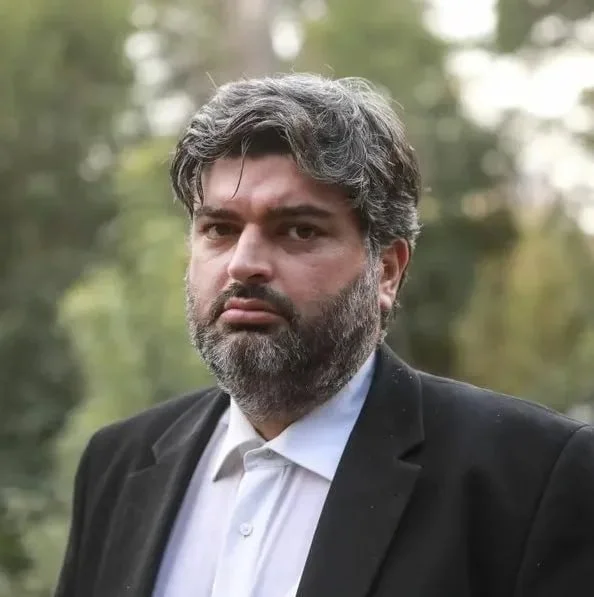
After the march, I asked for comments from Yerevan political scientist Mikael Zolyan, who currently does not belong to any political party or parliamentary faction.
— Today’s demonstration was organized by people close to the old government, which was in Armenia before the 2018 revolution. Just before the revolution we did not have democracy. Their position in those years: “Why are the Europeans interfering in our internal affairs? Let them give grants and keep quiet.” It is good to see that representatives of these political forces are now talking about democracy. But overall, this is demagoguery hiding a pro-Kremlin orientation. It is clear that today’s summit in Yerevan does not please Moscow, which considers Armenia its territory of influence and the European Union its enemy. Not to mention that Zelensky flew to Yerevan for the first time and practically opened the summit meeting. The Kremlin and pro-Russian forces in Armenia will not directly say that they are against the visit of European leaders to Yerevan. These forces are pressing on the pain points of Armenian society: defeat in the 2020 war, loss of Artsakh, ethnic cleansing in Artsakh in 2023. These topics are used for manipulation,” explains the political scientist.
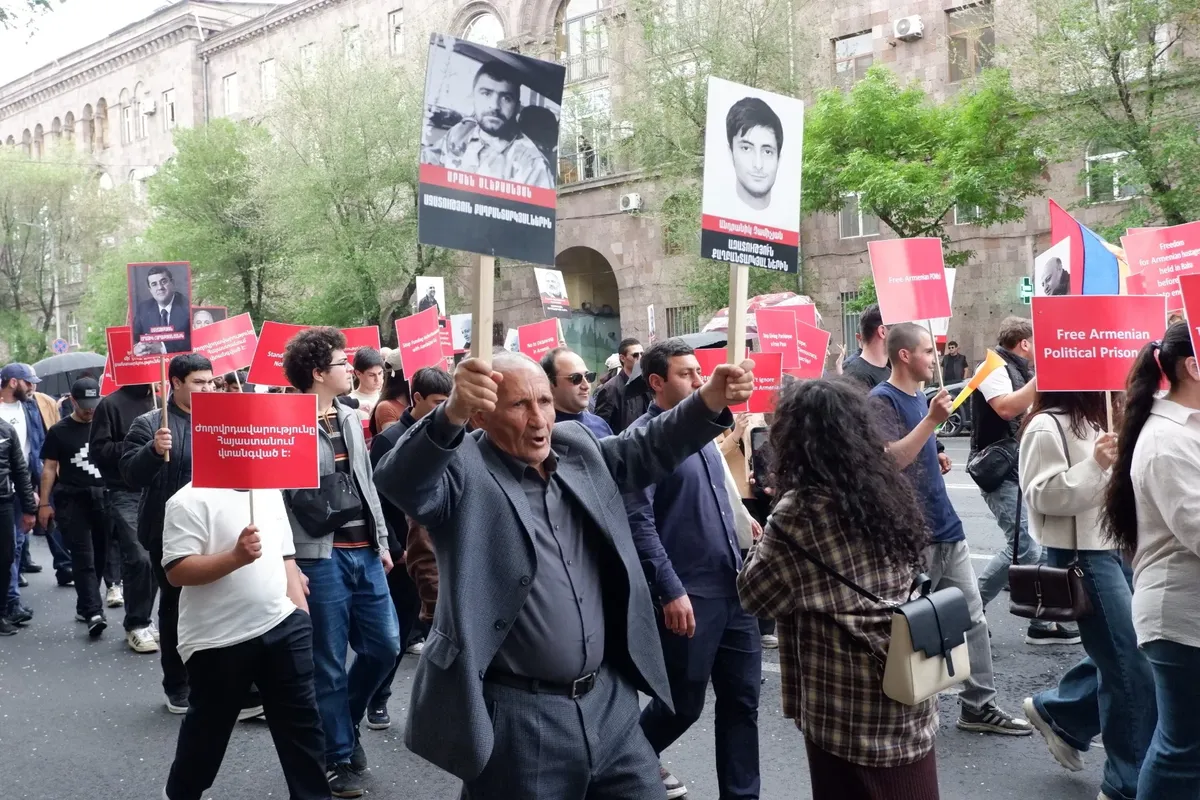
According to him, those whom the march participants call political prisoners are in fact accused of either attempting a coup or corruption. Criminal cases are initiated for such crimes in any democratic country.
- Of course, there is a presumption of innocence. I cannot say that they actually did everything that they are accused of. But, in any case, they are not accused of criticizing Pashinyan and not for “spreading fakes about the army,” like Russian political prisoners, says Mikael Zolyan.
According to the political scientist, the current opposition, while in power, rarely remembered democratic values and human rights. She uses human rights discourse only when protecting her own people.
Mikael says that it would be more correct to call Ruben Vardanyan and other leaders of Artsakh prisoners, like the Armenian military personnel captured by Azerbaijan.
“The Armenian government is working to free them. He is criticized for not doing enough. But the fact is that the tactics of pressure on Azerbaijan lead to the opposite result. Aliyev does not care at all if his regime is accused of deviating from democratic norms. Cases when Azerbaijan has released prisoners of war are most often the result not of pressure, but of negotiations, sometimes behind the scenes, says Zolyan.
According to the political scientist, any talk about the return of Artsakh people to their homeland is speculation.
“There are no real prospects here, and the Armenian government speaks directly about this. Some people find this unpleasant to hear and choose to ignore reality, says Mikael.
Related to this theme is a common myth that marchers believe. Marina, who previously lived in Stepanakert, and combat veteran Edik were indignant that Pashinyan was going to return 300 thousand Azerbaijanis who lived in Armenia. As Mikael explains, such a number of Azerbaijanis did not live in Armenia in the 1980s. The most important thing is that Pashinyan, on the contrary, said that the people of Artsakh cannot return to their homes, because in this case Aliyev will demand that the Azerbaijanis who once lived in Armenia return. Pashinyan’s words were distorted by unscrupulous media, and a very tenacious fake was born.
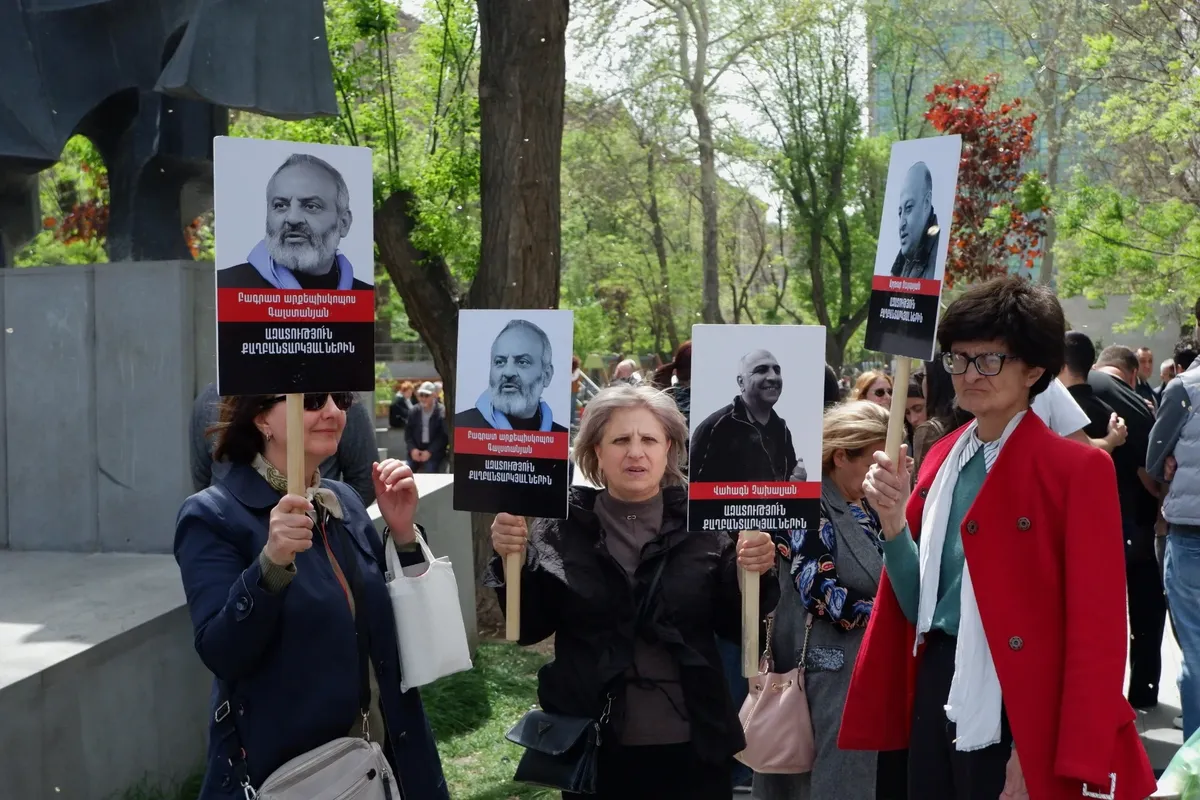
Mikael Zolyan admits that the social policy towards the people of Artsakh has caused their fair discontent. The reason is the low efficiency of government agencies. The promised assistance was not provided in full. In addition, there were problems in the field of communication.
“Many Artsakh residents do not understand what happened to them and why. They are not political scientists or international relations specialists. The explanatory work was carried out poorly or too late, so some Artsakh residents followed the demagogues who promised absolutely unrealistic things,” says Mikael.
How many Armenian citizens share the views of the march participants? Zolyan reminds that if in today’s Russia any public protest means that behind the dozens of people who spoke out there are hundreds of thousands who, due to repression, are afraid to speak openly, then Armenia, with all its shortcomings, is a democratic country where rallies are held by a variety of political forces. There is no point in exaggerating the number of Armenian citizens who share the agenda of the march.