Translated material
The US has suspended escorting ships in the Strait of Hormuz
Iran calls Trump's decision a 'retreat'
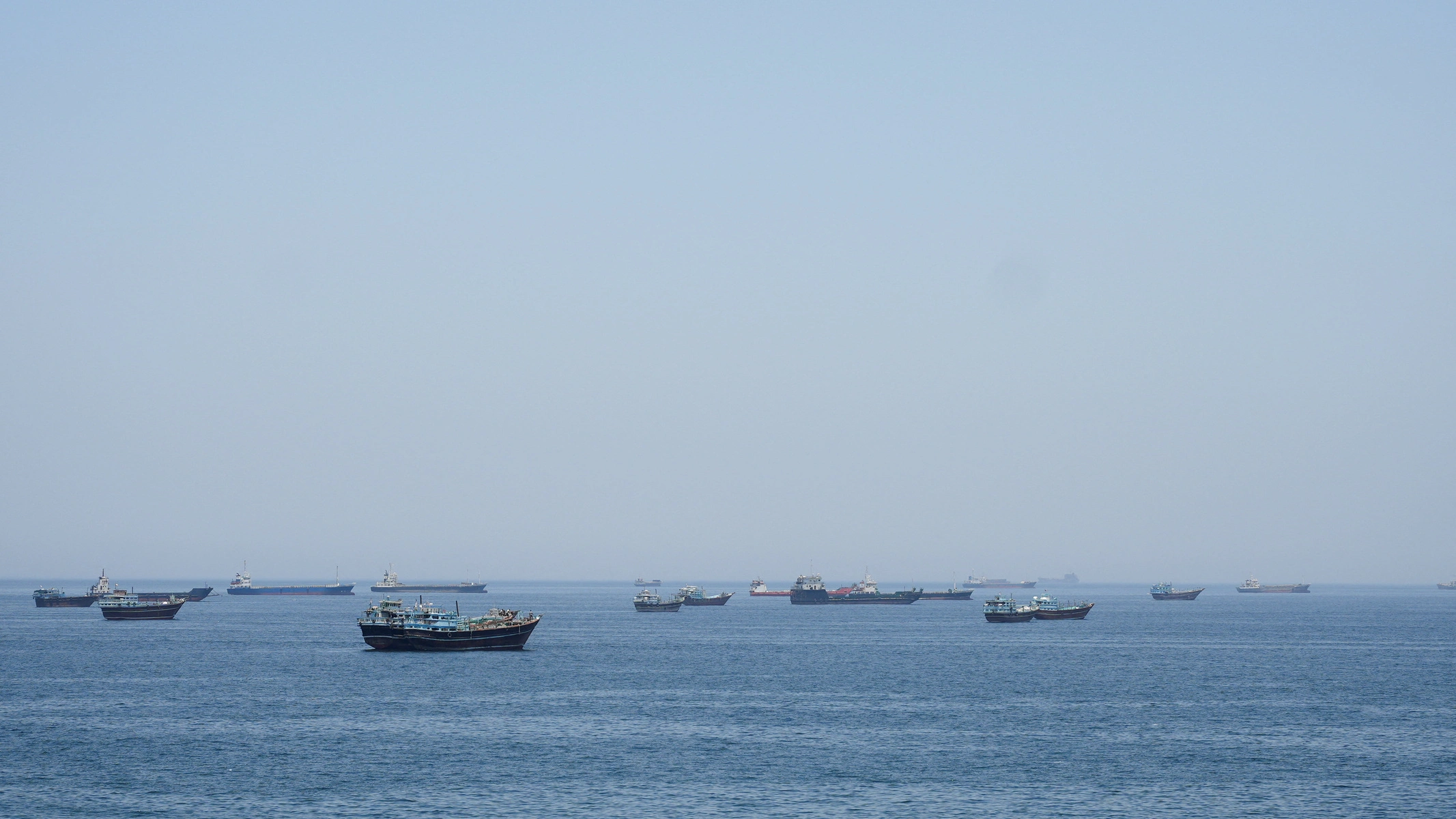
The United States suspended Operation Freedom to ensure the safety of navigation in the Strait of Hormuz just two days after it began. Donald Trump stated this, explaining the decision by negotiations around a possible agreement with Iran.
What is Project Freedom for the Strait of Hormuz?
The operation, called Project Freedom, was launched after a series of incidents in the Persian Gulf and attacks on commercial ships. According to Iran, several Iranian boats were attacked during the clashes, killing five people. Washington, in turn, claims that the US military was able to guide two merchant ships through the Strait of Hormuz.
“Due to the request of Pakistan and other countries, the tremendous military successes we have achieved in the campaign against Iran, and the significant progress in reaching an agreement with Iranian representatives, we have mutually agreed that the blockade will remain in place and Project Freedom will be suspended for a short period of time to determine whether the agreement can be completed and signed,” Trump wrote in Truth Social.
The International Maritime Organization, the UN agency that regulates shipping, estimates that about 20,000 sailors and approximately 2,000 ships have been effectively stranded in the Persian Gulf since the start of the war over Iran.
The commander of US Central Command, Admiral Brad Cooper, previously said ships from 87 countries had been detained in the region and the US was contacting "dozens of shipping companies" to encourage traffic through the Strait of Hormuz.
In order not to miss new texts from “Layout”, subscribe to our telegram channel
What Secretary of State Marco Rubio said about Trump's decisions
Hours before Trump's announcement, Secretary of State Marco Rubio asserted that the United States would continue to escort merchant ships despite the end of Operation Epic Fury, launched against Iran on February 28.
Rubio said 10 civilian sailors were killed in incidents in the Strait of Hormuz. According to him, the United States is strengthening its military presence in the region and expanding defensive control in the Persian Gulf region.
“US Operation Freedom is aimed at rescuing approximately 23,000 civilian sailors from dozens of countries caught in the tension zone,” he said.
Rubio stressed that the operation is purely defensive in nature, and US forces will only respond in the event of an attack.
In addition, the Secretary of State said that about 90% of Iranian trade is now effectively stopped due to the crisis over sea routes and the blockade of the region .
He also said that US special envoys Steve Witkoff and Jared Kushner are working on possible channels of negotiations that could lead to “recovery and prosperity for Iran.”
In order not to miss new texts from “Layout”, subscribe to our telegram channel
Iran calls US decision a 'failure'
Iranian state media portrayed Trump's decision as a defeat for Washington. Thus, the ISNA agency stated that the United States “failed to achieve the objectives” of the operation, and the decision to suspend it was made after “firm warnings from Iran.” Islamic Revolutionary Guard Corps-affiliated Tasnim wrote on social media X: “Trump has backed down.”
Iranian Foreign Minister Abbas Araghchi said during a visit to Beijing that Tehran would only agree to a “fair and comprehensive agreement.”
This is Araqchi's first visit to China since the outbreak of the war over Iran and comes amid preparations for Trump's visit to China on May 14-15.
Chinese Foreign Minister Wang Yi said that Beijing is ready to continue mediation efforts and considers direct contacts between the United States and Iran necessary.
Rubio, in turn, publicly called on China to put pressure on Tehran.
“I hope the Chinese will tell [Araghchi] what needs to be said, which is that your actions in the Strait are leading to your isolation on a global scale,” he said.
China may supply Iran with drone components
In turn, The Wall Street Journal, citing data from Chinese customs, writes that Chinese companies supply components for the production of UAVs to Russia and Iran - despite US sanctions.
We are talking about motors, chips, gyroscopes and fiber optic cables.
According to the newspaper, previously, exporters from China hid the destination of their cargo, but now deliveries are increasingly being made directly.
The British organization Conflict Armament Research also announced an increase in the number of Chinese components in Shahed-type drones.
China categorically denies such accusations.
In order not to miss new texts from “Layout”, subscribe to our telegram channel
UAE shelling and new UN resolution
On Tuesday, the United Arab Emirates Ministry of Defense said the country's air defense systems had once again repelled missile and drone attacks from Iran. Tehran denies this and claims that the actions of the Iranian military were aimed solely at “repelling American aggression.”
The UAE became the first country to come under attack from Iran since a ceasefire was announced in April.
Against this background, the United States, together with Bahrain, is preparing a new UN Security Council resolution. Kuwait, Qatar, the UAE and Saudi Arabia are also participating in the discussion.
The document is expected to require Iran to stop attacks on commercial ships, abandon attempts to collect tariffs for passage through the Strait of Hormuz, and disclose the location of installed sea mines.
Previously, “Verstka” looked into why the United States started a war with Iran . Donald Trump's critics say he doesn't have a plan for what to do next.
Photo: Strait of Hormuz, Oman, May 6, 2026. REUTERS/Stringer
You can support “Layout” from any country in the world - it is still safe and very important. We really need your support now
How to help us