
Translated material
Time in prison
Lev Shlosberg* - about how prison deprives a person of time and forces him to relearn how to live within his absence

Photo: Alexey Dushutin / Novaya Gazeta
18+. THIS MATERIAL (INFORMATION) IS PRODUCED, DISTRIBUTED AND (OR) SENT BY FOREIGN AGENT SHLOSBERG LEV MARKOVITCH OR CONCERNES THE ACTIVITIES OF FOREIGN AGENT SHLOSBERG LEV MARKOVITCH.
A man in prison loses his sense of time. A person needs two constant supports to determine his place in everyday life: knowledge of time and understanding of space.
Defining oneself in time and space allows a person to understand what is happening to him, calculate forces, make decisions and act.
The support of knowing the exact time is taken away from a person in prison. Staff are not allowed to tell a jailed person what time it is. No one can clearly explain the origins of this ban, but most likely it is part of a large system of restrictions that do not allow a person deprived of freedom to coordinate their actions with someone inside or outside the prison. The prisoner cannot know the location of the clock hand on the dial.
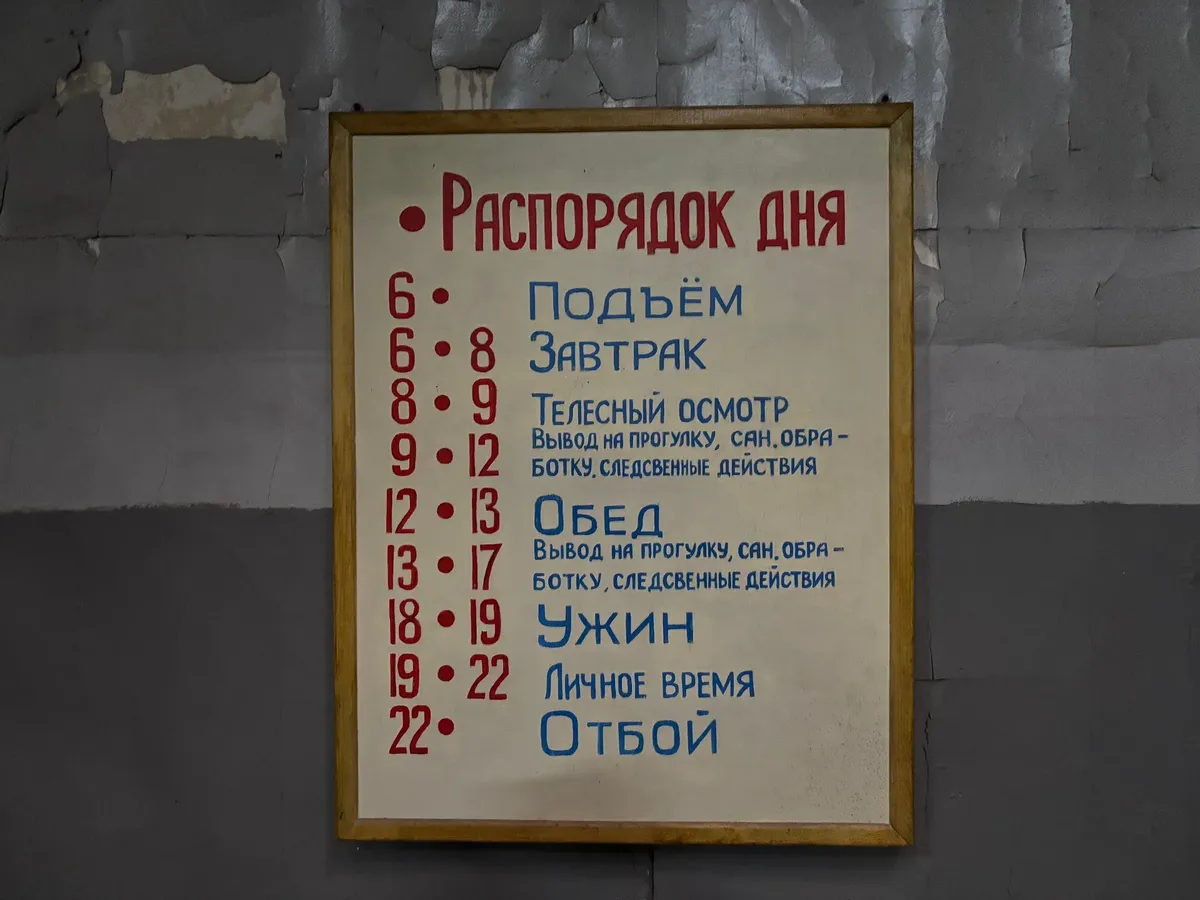
The exact time twice a day, through the voice of an announcer, enters the prisoner’s life: at 6 am you hear: “Attention, wake up!”, and at 22 o’clock: “Attention, lights out!” At 21:45 a warning sounds indicating that there are 15 minutes left to get ready for bed.
There are approximate time markers in the prison: breakfast at about 7, lunch at about 12, dinner at about 16. You could see the exact time on the electronic clock in the corridor in front of the walking “glasses”; along this corridor you are led for a walk, to the bathhouse, to a meeting with a lawyer or to investigative actions. But one night after Christmas, the hands of this clock froze at 3.25 and have stood there ever since: the battery was tired. It is impossible to guess how many days, weeks or months it will take to replace it.
The same clock (while working) hangs on the wall of the corridor in the administrative building, where you are taken to meet with your family, lawyers, or for investigative actions.
One way or another, a prisoner can look at the time at an unexpectedly convenient moment, but a person in prison does not have constant access to knowledge of the exact time.
The lack of precise knowledge of time seems to push the prisoner to realize a situation in which you yourself do not have to plan, calculate or do anything: the system with the schedule included in it has determined everything for you - sit and don’t think.
We are accustomed to not only knowing the exact time, but constantly seeing it in front of us: watches, smartphones, computers, household appliances and almost any gadget include a time display. Everyday knowledge of exact time has become the background of the life of modern man. An addiction occurred, which turned into a need and even a kind of addiction.
In prison, a person's connection with the current time is severed. The task arises: to live fully every day, without knowing the exact time and - moreover - without paying attention to this ignorance.
The fixed unit of time for a person imprisoned is the day. You switch to enlarged time - a kind of approximate time, within which you need to maintain a sense of time - without information about the exact time.
You need to learn to do everything that needs to be done in a day, focusing on the internal instinct of time and those approximate markers that the prison itself provides.
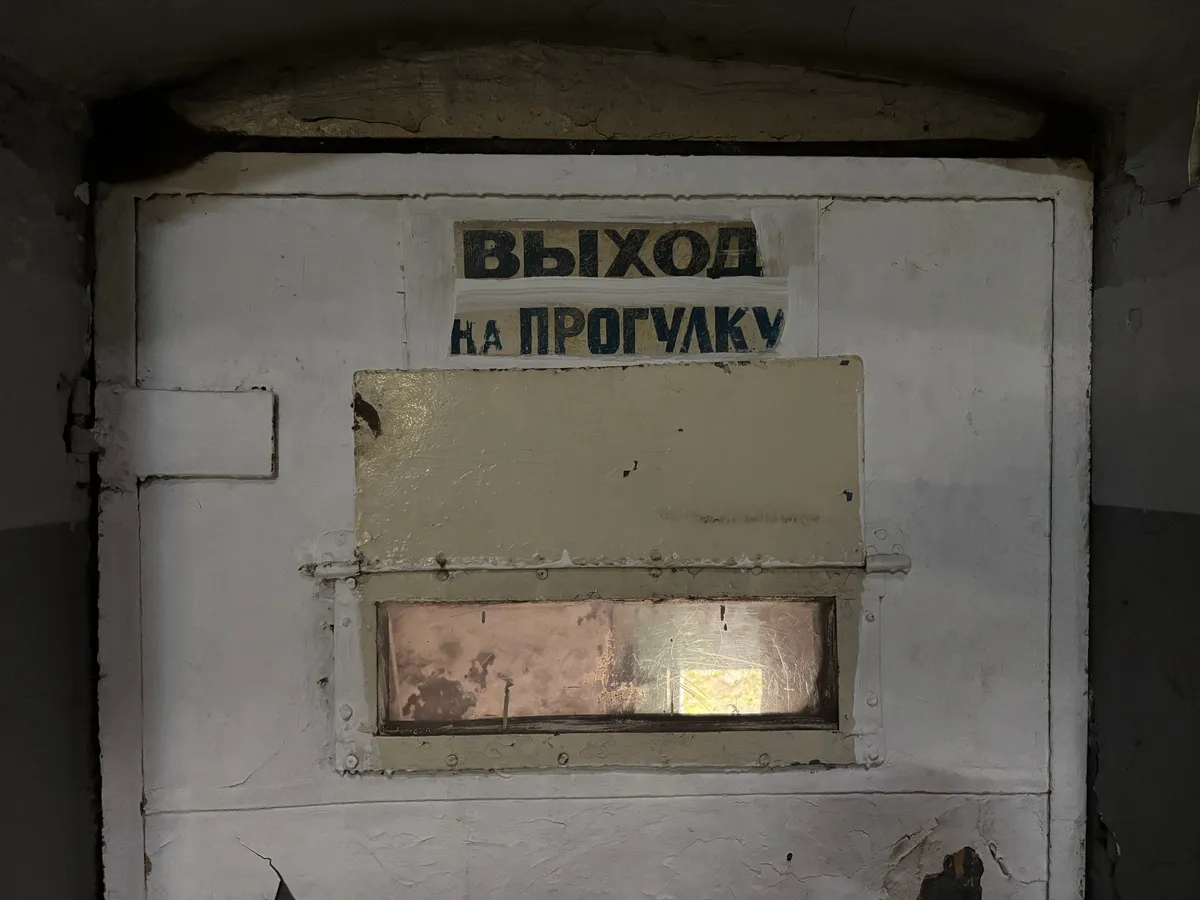
In such a situation, you have new, nowhere else unthinkable, units of time that can be called conditional, but they are quite specific: from getting up to breakfast, from breakfast to morning check, a walk (taken immediately after the morning check for an hour), from completing the walk to lunch, from lunch to dinner, from dinner to evening check, from evening check to lights out. During these periods of time you plan your entire life every day: writing letters, reading books, preparing for work with a lawyer and a court hearing, personal notes, cleaning, laundry.
Enlarged units of time, as it turns out, do not interfere with anything: if you understand what to do with this time.
In prison you learn not to pay attention to the exact time, because knowing it is not vital for organizing your life in prison.
Socrates is credited with saying: “There are so many things in the world that I don’t need at all.” Prison teaches a person that there are actually many such things. The relativity of the familiar can only be realized in a situation where the familiar becomes inaccessible.
The clock on the dial gives way to an internal clock, the setting of which depends only on you. You check these clocks every day, connecting the conventional units of time in prison with what you want to do during this time.
An old news journalistic cliche is surprisingly suitable for describing the passage of time for a prisoner: one day at a time. The day becomes the main measure of a person’s time in prison, a solid unit of account.
For a suspect or accused person in jail, there is another time factor: not knowing how long you will be there. The investigation goes to court with a petition to extend the preventive measure, usually every two months. The maximum periods of detention are known, but there are many ways to circumvent them; loopholes are left in the law.
Every two months you hope that you will be able to achieve a mitigation of the preventive measure (you cannot help but believe in what you are asking the court for), but the practice of the Russian judicial system shows that it is much easier to refuse a prisoner and his lawyer than an investigator or prosecutor (which in most cases is now the same thing in our country).
Life in prison teaches you not to focus on a certain period of your stay here. This is more difficult than learning to manage your time during the day, because understanding that there is no time limit is much more dramatic for a person than not knowing the exact time.
It is human nature to want to know the limits and timing of time. This helps make decisions, allocate time and energy, as if cutting off strips of tape with scissors. It is psychologically difficult to distance yourself from this need, but it is necessary to come to the development of your attitude towards infinity.
There is only one way out here: plan your life time over these floating limits, without tying your calculations in life to the possible timing of changes in the preventive measure. Figuratively speaking, you need to learn to overcome, cross limits, without shredding your life with these, by and large, periods of time independent of you, without stumbling over them.
And there is the most fundamental dimension and understanding of time in prison: it is the time of deprivation of freedom, the time of lack of freedom in your life. You need to place and accept a piece of unfreedom into your life and not break.
Until a verdict is rendered, that time remains completely uncertain.
You and your defenders are fighting for complete acquittal (the statistics of acquittals in Russia today is a verdict on Russian justice), but in order to withstand a possible blow, you need to accept the idea that the content of the life of a person in physical unfreedom depends not only on the conditions of unfreedom, but also on what you fill this time of unfreedom with, regardless of how long it lasts. This is especially difficult. This requires a person to realize the value of his decisions about the content of life in unfreedom.
Time constantly reminds us of the limits of human life. Unfreedom creates for a person a forced, but vitally necessary opportunity - to learn to live on top of time, overcoming its utter limitations through the work of the mind, which does not depend on a person’s place in space and time and which a person cannot control, but can manage his time, literally - manage himself.
Overcoming dependence on time, a person remains free in the space of unfreedom.
Pskov Prison Castle