
Translated material
Can't get away from the laundry
Moldovan oligarch Plahotniuc, a defendant in the Laundromat, collects verdicts in his homeland and in Russia. But no one is interested in the origin of the money

Vladimir Plahotniuc was extradited to Chisinau. Photo: AP / TASS
A regular hearing was scheduled for April 28 in the Tverskoy Court of Moscow to consider the criminal case against Vladimir Plahotniuc, once the richest and most influential citizen of Moldova.
The former head of the Democratic Party of Moldova, a former deputy of the parliament of the republic of two convocations, and in 2010–2013 also the first vice-chairman of the Moldovan parliament, is accused in Russia of creating and leading a criminal community (Part 1 of Article 210 of the Criminal Code of the Russian Federation). This group of persons is accused of withdrawing more than 220 billion rubles from Russia through “illegal currency transactions” (clauses a), b) of Part 3 of Art. 193.1 of the Criminal Code of the Russian Federation).
The materials of this criminal case were received by the Tverskoy Court of Moscow for consideration in absentia back in February last year. In 15 months, only two dozen court hearings took place. The case is being processed slowly. And why rush if there is no prospect that the sentence, no matter how severe it may be, will be carried out. Because even Interpol refused to allow Russia to search for and detain the accused in the case, citing the fact that the criminal prosecution of Plahotniuc in Russia has all the signs of being politically motivated.
But Interpol did not refuse Moldova. On July 22, 2025, Plahotniuc was detained in Greece and was soon taken to Chisinau, where he appeared in court.
The trial of Vladimir Plahotniuc in Chisinau passed quickly. On April 22, he was sentenced to 19 years in prison on five counts.
Plahotniuc received 12 years of imprisonment in a closed prison for creating and leading a criminal organization. For two counts of complicity in bank theft, he was sentenced to 13 years each. For two episodes of money laundering, they added another 8 years for each episode. In total, by partial addition of the terms, we got 19 years in prison.
The convict's lawyers promised to appeal the harsh sentence after thoroughly studying the text of the court verdict, which contains more than 700 pages.
The key charge brought against Plahotniuc in Chisinau is complicity in the “theft of a billion.” The court found it proven that out of the stolen billion dollars, Plahotniuc personally “fell” $39 million and €3.5 million, which the court ordered to be returned to the state budget.
The naive question “Where is the rest of the stolen money?” remained unanswered.
Billion
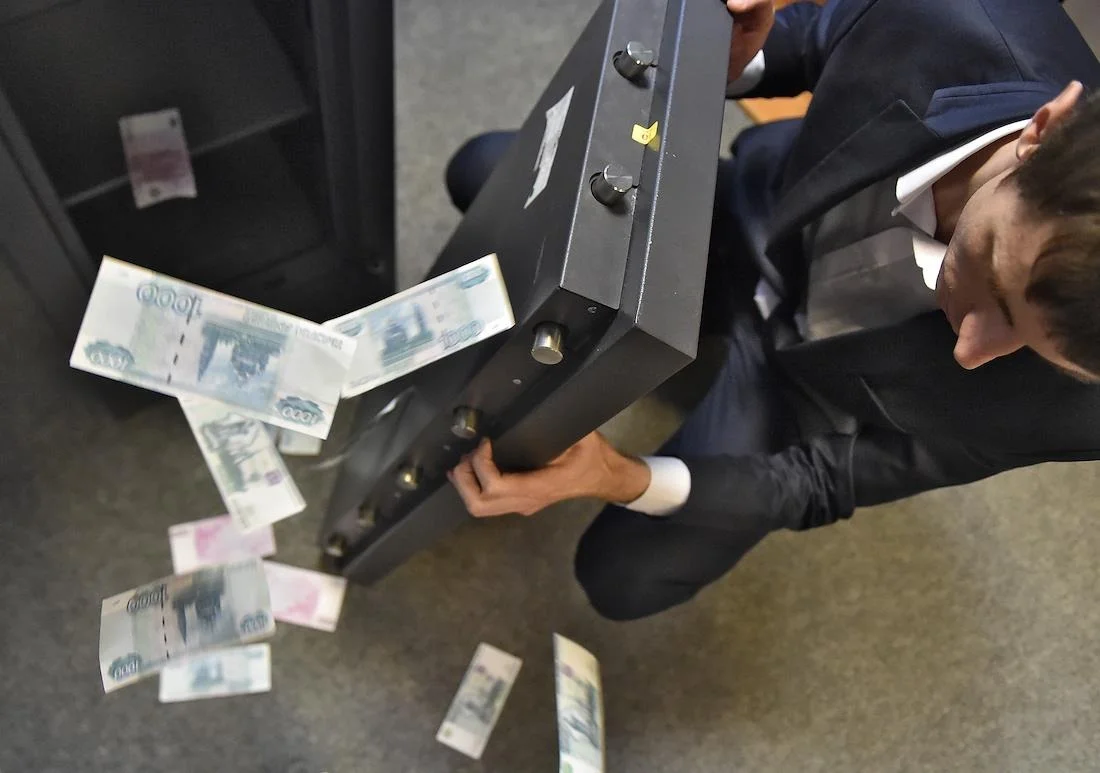
The question “Where is the billion?” was first heard in Chisinau at the end of 2014, when it became known that a billion dollars had been stolen from three Moldovan banks - Banca de Economii, Unibank and Banca Socială. Moreover, about $750 million was withdrawn from these three banks in just three days, between November 24 and 26, 2014, a week before the parliamentary elections in Moldova.
On November 27, the Moldovan government unanimously voted during a secret meeting to provide emergency loans to all three banks in the amount of $870 million. The state reserve was named as the source of covering these loans. But emergency injections did not help the three banks. This money was also actually stolen.
A political scandal broke out. The Prime Minister and a number of the country's top officials resigned.
Realizing that Moldovan law enforcement agencies alone may not be able to cope with the investigation of such a large-scale crime, on January 28, 2015, the National Bank of Moldova hired the private American audit and detective company Kroll Inc. to allow US specialists to conduct a parallel independent investigation into the “theft of a billion.”
Kroll
This is not a unique practice. Kroll's history, for example, includes a contract with the Russian government in March 1992 to recover tens of billions of dollars smuggled out of the Soviet Union on the eve of the August 1991 coup.
Kroll specialists found that until August 1991, more than $14 billion was transferred to New York from the accounts of Soviet enterprises in Switzerland alone.
The final report of the Kroll company provided “passwords, addresses, appearances” of banks around the world and accounts to which the CPSU, under the patronage of the KGB, withdrew more than $40 billion from the USSR.
Yegor Gaidar, who served as the acting chairman of the Russian government from June to December 1992, wrote in his memoirs in 1997:
“By May 1992, the effort had produced a lot of interesting details, but nothing definitive that would give hope in the near future to recoup the costs. By May 1992, I finally realized that I didn’t have enough strength to force the Ministry of Security to seriously deal with this. And then the work of the Kroll company is simply a senseless waste of public money. It is with a heavy heart that I have decided not to renew my contract."
Settled with Kroll. Within two months of operation, the company received $900 thousand from the Russian government. But the American company's report was sent to the archives, where it apparently still collects dust.
A similar fate seems to have been destined for the Moldovan contract of the Kroll company. Chisinau decided to classify the reports of investigative specialists from the United States. Because the information discovered and provided by the Kroll company looked like a knockout blow, including to the government of Moldova, which was also covered in theft.
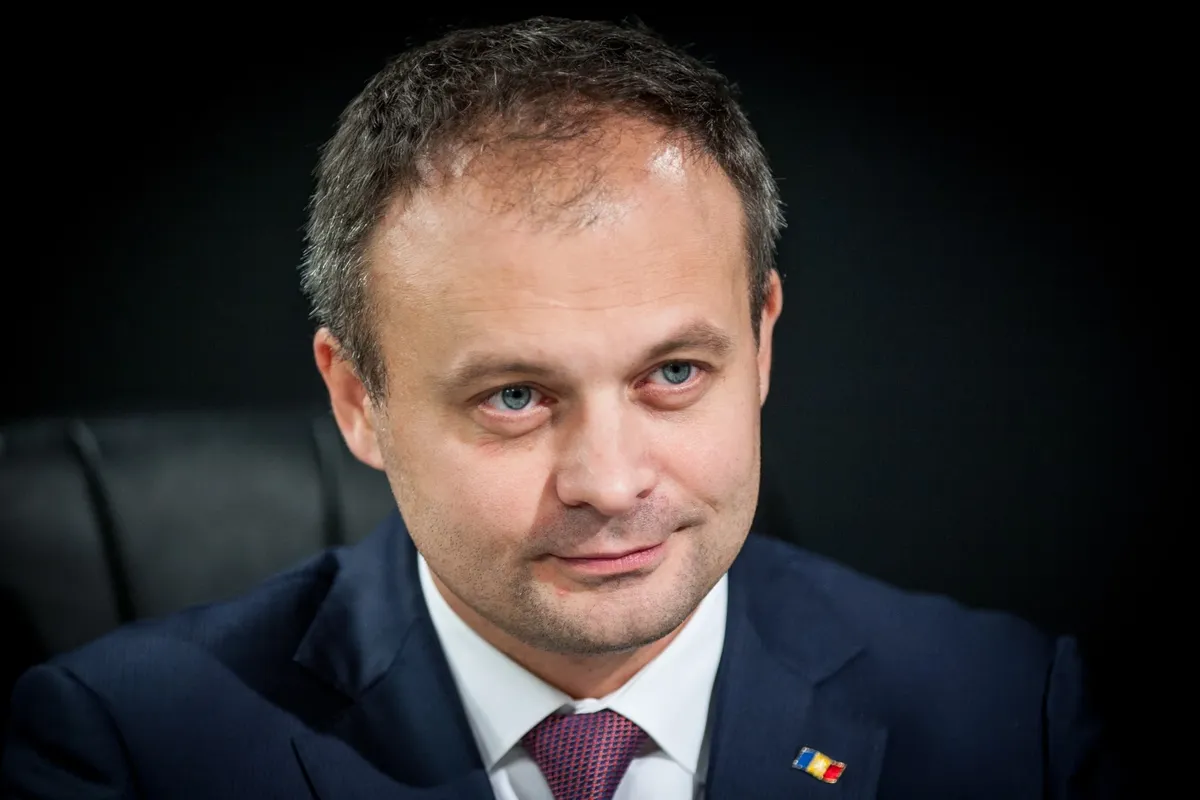
The report was classified, but in May 2015, the then Chairman of the Moldovan Parliament, Andrian Candu, published a confidential Kroll report on his personal website. True, with banknotes. But even from the castrated report it was possible to understand where the threads of the “theft of a billion” stretch. Specifically to the government and politicians advocating European integration of Moldova.
Laundromat
Meanwhile, since the spring of 2015, mass protests against corruption and legal arbitrariness have not stopped in Moldova, among the participants of which were tens of thousands of victims of three Moldovan banks, from which a billion dollars were stolen.
In the wake of anti-corruption protests, in the fall of 2016, Igor Dodon was elected president of Moldova. Dual power was established in the country. A pro-Russian president and a Europe-oriented parliament. The country was actually split. On supporters of maintaining friendly relations with Russia and those who advocated a complete break with Moscow and forcing Moldova’s entry into the European Union.
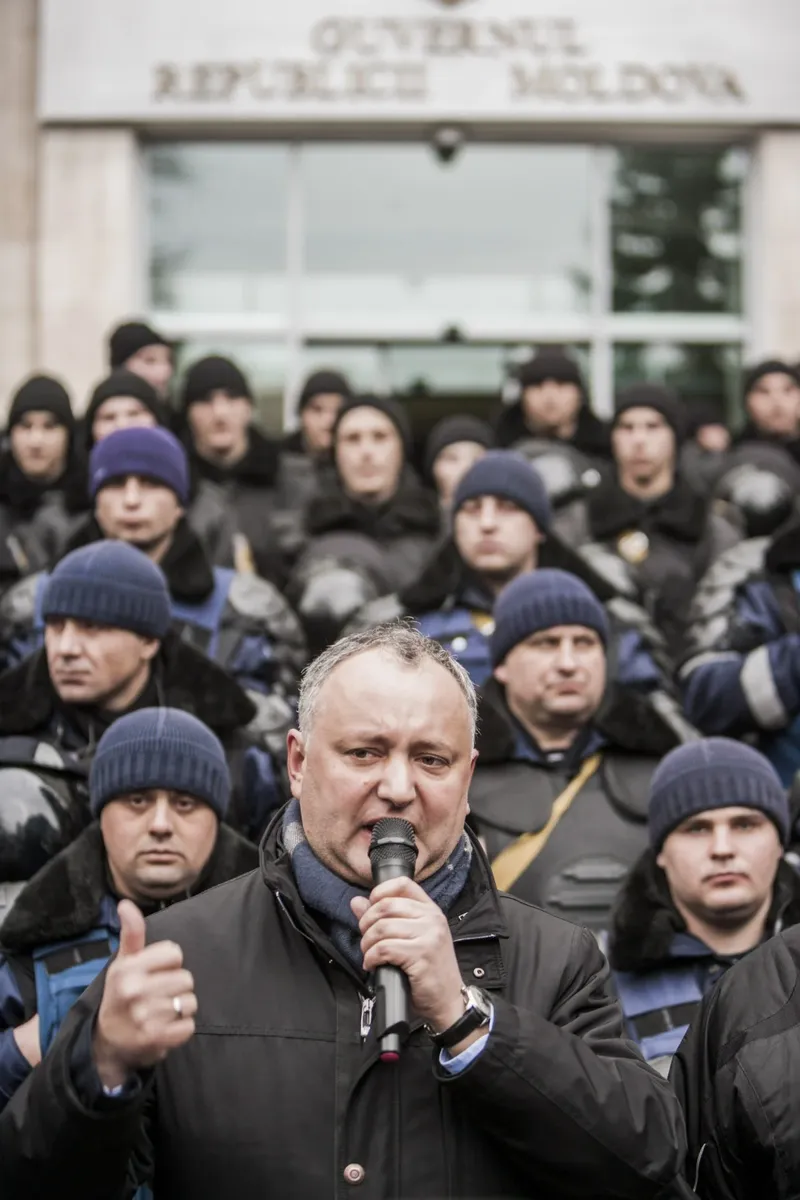
Supporters of the pro-Russian course constantly recalled the “theft of a billion,” focusing public attention on the fact that the commission of this crime became possible precisely thanks to the pro-European government of Moldova.
It was then that the media empire controlled by Plahotniuc, which included the television companies Publika TV, Prime, Canal 2 and Canal 3, as well as the radio stations Publika FM, Maestro FM and Prime FM, joined the story of the “Moldovan Laundromat”, which was based on an investigation by an international group of journalists, published in August 2014, including in Novaya Gazeta. Plahotniuc launched a powerful information and propaganda campaign - as a result, the “laundromat of criminal origin”, or “laundromat”, very quickly pushed the story of the “theft of a billion” to the margins of both the Moldovan and world information field.
The Moldovan authorities have put the actual owner of Moldinkombank, Vyacheslav Platon, on the international wanted list. This happened on July 25, 2016. On the same day, Platon was detained in Ukraine and extradited to Chisinau.
On April 20, 2017, Platon was sentenced to 18 years in prison. But not for complicity in the “theft of a billion,” but for organizing just a “laundromat” to launder more than 20 billion dollars of “criminal origin” taken out of Russia. And they “forgot” about the stolen billion.
Plato might still be in a Moldavian prison. But in 2019, the “Plahotniuc era” ended in Moldova. The incredible happened. Pro-Russian and pro-European forces were able to unite against the oligarch. Which ultimately lost control over the parliamentary majority, government and law enforcement agencies of the country. And a criminal case was immediately opened against him.
Escape and arrest
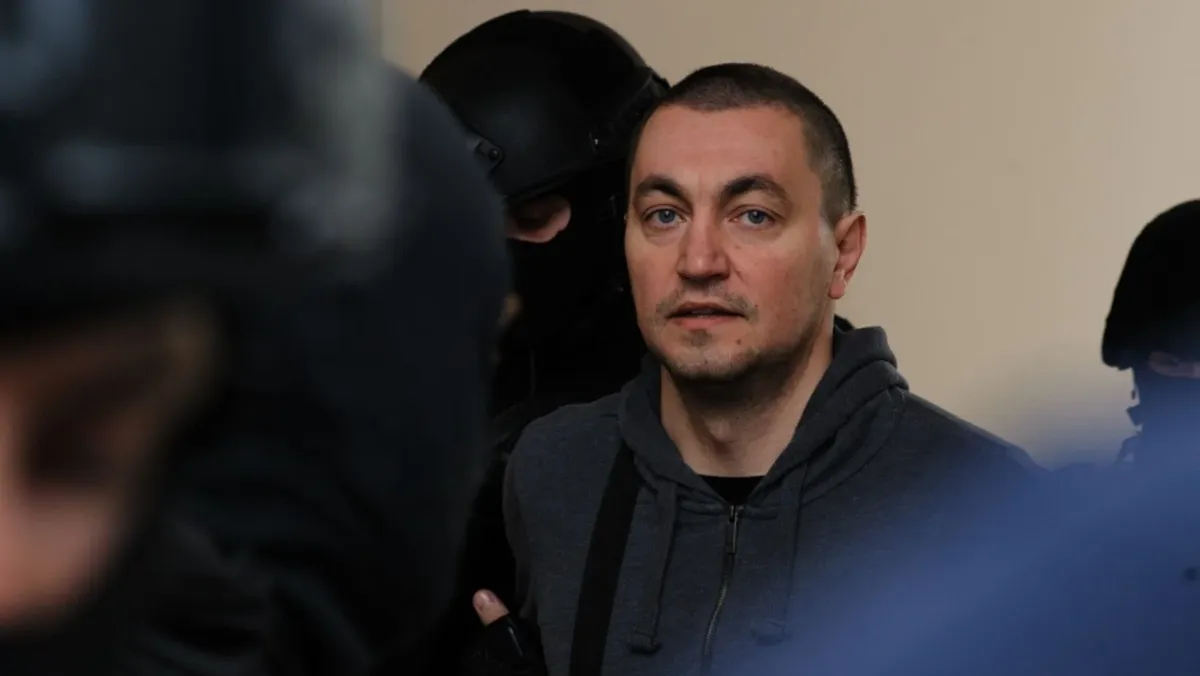
As a result, the ex-eminence grise of Moldova fled to the United States, where he asked for political asylum, but was refused. Moreover, it was included in the sanctions lists of the USA, Canada and the European Union.
Plahotniuc was forced to leave the United States and hide from Interpol under false passports for almost six years until he was arrested in Greece and extradited to Chisinau.
And in the year when Moldova got rid of Plahotniuc, changes began in the country. A new prosecutor general of Moldova, Alexandre Stoianoglo, was appointed. In May 2020, he reported that Platon’s case was completely fabricated, because allegedly there was and is no information that the Russian billions that transited through Moldincombank are of criminal origin. In June 2020, after four years spent in a prison cell, Platon was released and left Moldova.
Around the same time, information leaked that the American company Kroll was not only investigating the “theft of a billion,” but was also looking for evidence of the criminal origin of billions taken out of Russia. However, in this case I found nothing. Russia did not provide information about the criminal nature of the money. Moreover, it was reported, as investigators found, that most of the billions withdrawn from Russia allegedly returned... to Russia. In the form of building materials, cars, computer and household appliances, food, medical equipment and medicines.
But by that time, Russian law enforcement agencies had already decided to use the information and propaganda campaign carried out by Plahotniuc’s media empire in 2015–2018. He himself fell into this hole...
Laundromat cover
As a result, a whole series of so-called “Laundromat” criminal cases were initiated in Russia. During the trials, however, it never became clear where Russian money came from in Moldovan banks. Apparently, the story with the Laundromat in Russia could be used in exactly the same way as in Moldova - as a cover: there is a lot of noise, there is no substance.
Dozens of founders, managers and employees of Russian and Moldovan banks have already been convicted in these cases in Russia. For example, in July 2023, the already mentioned owner of Moldinkombank, Vyacheslav Platon, was sentenced in absentia by the Tverskoy Court of Moscow to 20 years in a maximum security colony, and in July 2025, the Preobrazhensky Court added another 4 years, bringing the sentence in absentia to 24 years in a maximum security colony.
Moldinkombank shareholder Alexander Korkin and lawyer Alexey Sobolev were sentenced to 19 years in a maximum security colony, the head of Baltika Bank Oleg Vlasov and bank employee Lev Pakhomov were sentenced to 17 years in a maximum security colony, Rinat Yusupov was sentenced to 16 years, Venera Sharipova was sentenced to 16.5 years in prison.
But here's what's interesting.
None of the sentences already passed contain a word about the origin of the billions. There is not a single grain of information about the further fate of these billions that ended up in transit through Moldova in the accounts of foreign enterprises.
Moreover, in these criminal cases neither the term “Moldovan Laundromat” nor the accusation of “money laundering of criminal origin” was ever heard.
In the Laundromat case against Plahotniuc, which is currently being considered in the Tverskoy Court of Moscow, there is also no information about the origin and further fate of 220 billion rubles withdrawn from Russia.
This is despite the fact that this criminal case contains more than 200 volumes, and among the documents included in the case is a huge number of bank transactions, constituent and accounting documents of hundreds of enterprises.
Here is just one episode of the charge against Plahotniuc, which was established by Russian operatives and investigators as part of a criminal case (it is now being considered in the Tverskoy Court of Moscow).
The investigation established that in the period from March 28 to May 21, 2014, that is, in less than two months, 1,189,630,162.70 rubles were transferred to the account of Montazhkom LLC.
About three billion rubles each “fell” into the accounts of Ertan LLC and Stroy Industry LLC.
Someone transferred more than four billion rubles to the Lakki company.
In total, over these less than two months, 26 billion 851 million 169 thousand 039 rubles and 66 kopecks were transferred to the accounts of dozens of companies identified by the investigation.
Of this money, 21,403,900,000 rubles were credited to a special account at the National Clearing Center for participation in MICEX trading. And with them, 603,248,000 US dollars were purchased on the Moscow Interbank Currency Exchange. They were credited to correspondent accounts of Russian banks in the Moldovan Moldincombank.
And then this money was written off according to court decisions of Moldovan courts and transferred to the accounts of enterprises registered in Western jurisdictions. Because the companies “Montazhkom”, “Ertan”, “Stroy Industry” and “Lakki” received multi-billion dollar loans received from these same Western companies. And the guarantors were both Russian legal entities themselves and Moldovan citizens, which made it possible to consider claims in Moldovan courts.
Russian enterprises did not refuse their obligations and agreed to return every penny, even with interest. As a result, the money was debited from the correspondent account of the Chisinau Moldinkombank and transferred to the accounts of enterprises registered in the UK, Germany, the Baltic states and other countries. This is the “Moldavian scheme”. But in the West it was never recognized as criminal. Because, I repeat, there was and still is no information about the origin of the Russian billions that ended up in Europe.
A completely reasonable question involuntarily arises. What kind of money went into the accounts of legal entities registered in Russia? Whose money is this?
These billions of rubles and hundreds of millions of dollars were not transported around Moscow in trucks. These were non-cash, yet completely legal banking transactions.
But there were still no answers to these questions. And the “Moldavian Laundromat” lives its own independent life, although more than 12 years have passed since the first mention of it appeared. And over these years, information about the origin and further fate of the 22 billion dollars allegedly laundered through the “Moldavian Laundromat” has not appeared.
But there is a lot of fiction in the “laundromat” criminal case against Vladimir Plahotniuc. For example, according to the plot of the accusation, Plahotniuc “... agreed to head and manage <...> an international channel for the withdrawal of funds from the Russian Federation in order to strengthen his influence on the state and financial institutions of Moldova, pursuing the goal of personal material enrichment by obtaining a constant and stable income from this criminal activity.”
Or here’s another quote from the indictment explaining why Plahotniuc was involved in this criminal enterprise: “... being the first vice-chairman and de facto leader of the Democratic Party of Moldova, as well as a deputy of the 8th (eighth) convocation of the parliament of this country <...>, driven by the desire for personal gain, lust for power and extraordinary thinking, which made it possible to successfully implement the set political, commercial and managerial goals, to achieve trusting relationships with business partners and high-ranking officials of the country, using personal strong-willed qualities and perseverance in implementing what was planned.”
***
The hearing on April 28 in the Tverskoy Court of Moscow did not last even ten minutes. It turned out that Vladimir Plahotniuc’s lawyer sent a petition to the Tverskoy court to postpone the consideration of the case due to the fact that he was on a business trip.
Federal judge Marina Bagrova respected the lawyer's request. And announced a break until June 4.
We will monitor developments both in this trial and in two other criminal cases brought against Plahotniuc in Russia.
Thus, on June 26, 2019, the Russian Ministry of Internal Affairs charged Plahotniuc in absentia with organizing a criminal community and 28 counts of drug smuggling.
The third criminal case in Russia, in which Vladimir Plahotniuc is involved, is about organizing an attempt on the life of Moldovan politician Renato Usatii. This case was initiated on August 11, 2017 by the Main Directorate for Investigation of Particularly Important Cases of the Investigative Committee of Russia. On November 29, 2017, the accused Plahotniuc was put on the international wanted list.
In Russia, in these three criminal cases, Vladimir Plahotniuc - either by his nickname or by the nickname Plakha - faces up to capital punishment - life imprisonment.
In Moldova, investigations are also ongoing against Plahotniuc in two criminal cases. One is about theft in the state-owned company Metalferos, the second is about forgery of documents.
It seems that Vladimir Plahotniuc will attract attention to his person for a long time. Both in Moldova and in Russia.