
Translated material
To be Alexander Ragulin
The most titled hockey player in Russian history would have turned 85 years old
If you try to very briefly characterize Alexander Ragulin, it might sound like this: the charm of good power. Then you can list the awards: ten gold medals at the World Championships, three for winning the Olympic Games - together with nine “Europes” this is 22 gold. You can go crazy, there are enough medals for a whole team. There are countless other prizes, including those received after retirement. I think that Alexander Pavlovich himself did not know their exact number.
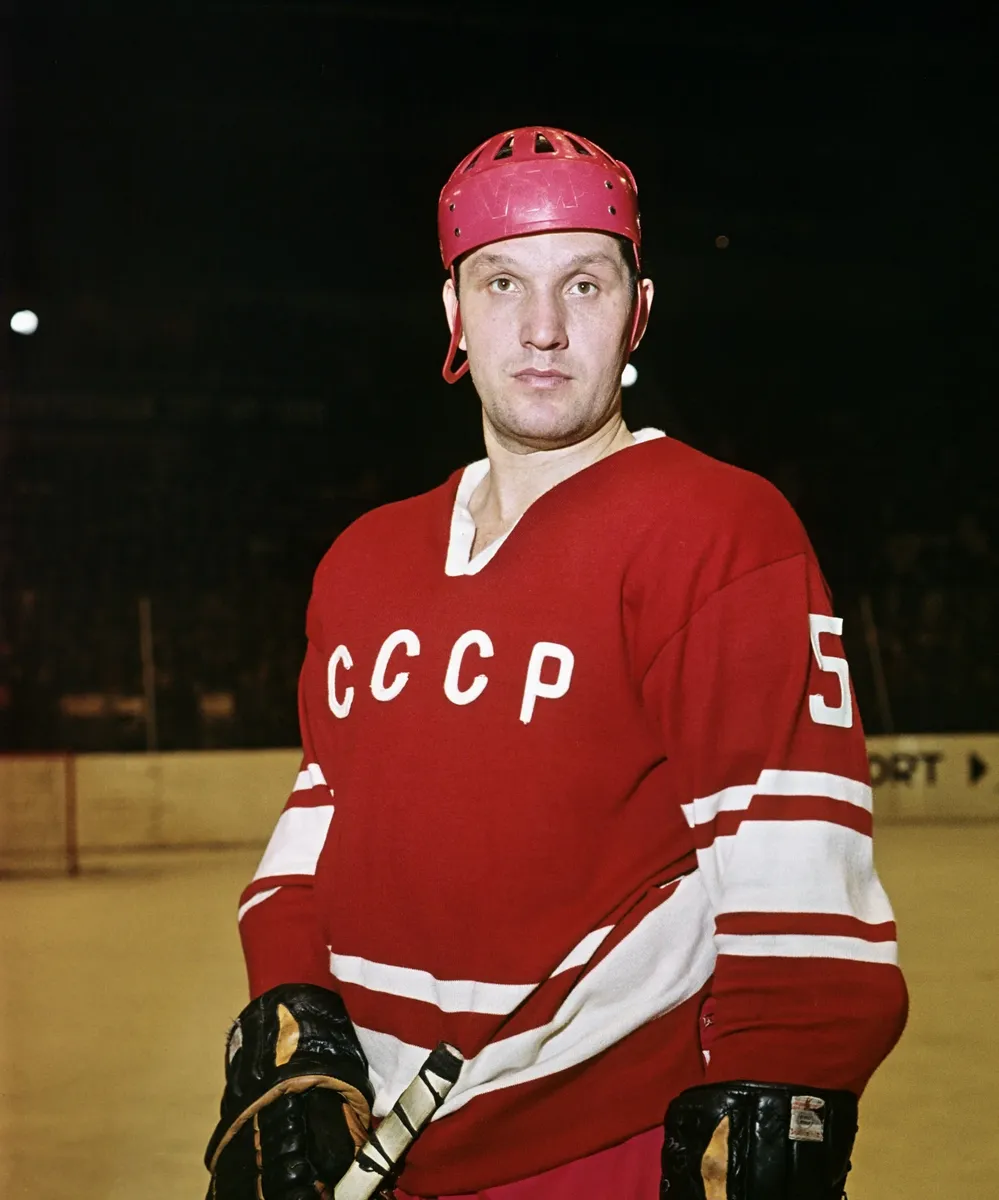
In fact, there are three Ragulin twins, hockey players, born into a family of architects in Moscow a month and a half before the start of the Great Patriotic War, it’s just that the country knows Anatoly and Mikhail less than Alexander, in whom the people saw the ideal “hero of ice battles,” an epic hero, a knight without fear or reproach. And I still didn’t fully believe that Palych was leaving this life as a disabled person of the second group. A heroic build is not always synonymous with heroic health: the greater the talent, the heavier the burden, and fame has its own price.
He could make fun of his monumental image, reminding him of his former self at these moments. It’s hard to imagine, but at the dawn of his foggy youth, Palych was thin, funny and the fastest in our hockey - his first serious coach, the legendary founder of the Voskresensk “Khimik” Nikolai Semenovich Epstein, can be trusted. The twin brothers would look good in a jazz trio (Sasha, naturally, on the double bass), but they, already playing in the orchestra, did not even go to a music school to get a diploma - hockey, to the displeasure of the intelligent mother Sofia Viktorovna, had already finally won. All the brothers traded musical instruments for hockey sticks - I don’t know about music, but hockey undoubtedly won.
In the year of Alexander’s debut at the 1961 World Championships in Switzerland, Anatoly was included in the top four goalkeepers in the country. Mikhail also showed great promise as a striker; it was no coincidence that the great Tarasov lured him to CSKA along with Alexander. Anatoly moved to CSKA a little later and became the champion of the USSR. In the mid-60s, when the careers of Anatoly and Mikhail were in decline, Alexander was already an Olympic champion and was not inferior in popularity to the first cosmonauts.
He was included in the symbolic team of the World Championships a record five times in a row, queues lined up for his autograph in any country, and Anatoly Ragulin went into the shadows for more than twenty years in the late 60s, but what - he became a leading specialist in the training and post-flight rehabilitation of cosmonauts, rising to the title of “Honored Trainer of the USSR.”
Alexander received immeasurably more fame than his brothers, but he also paid a considerable price, passing away at the age of 63. 12 years after him, Anatoly left this world. Family traditions of longevity were embodied only in Mikhail Pavlovich Ragulin, who worked as a coach for a long time and successfully.
...At the beginning of the century, I was lucky three times to talk in detail, for several hours at a time, with the most famous of the brothers - in the hospital in Sokolniki, in the veteran’s office in the CSKA Ice Palace on Leningradsky Prospekt, in an apartment in the “general’s” house on Sokol. Alexander Pavlovich did not take stock and did not philosophize on the topic of the frailty of life. In general, he was going to live a long time - not as long as his old friend (and very distant relative), the famous figure skater Oleg Protopopov, at whose doctrine of “correct life” Ragulin laughed good-naturedly, but “for a normal long time.”
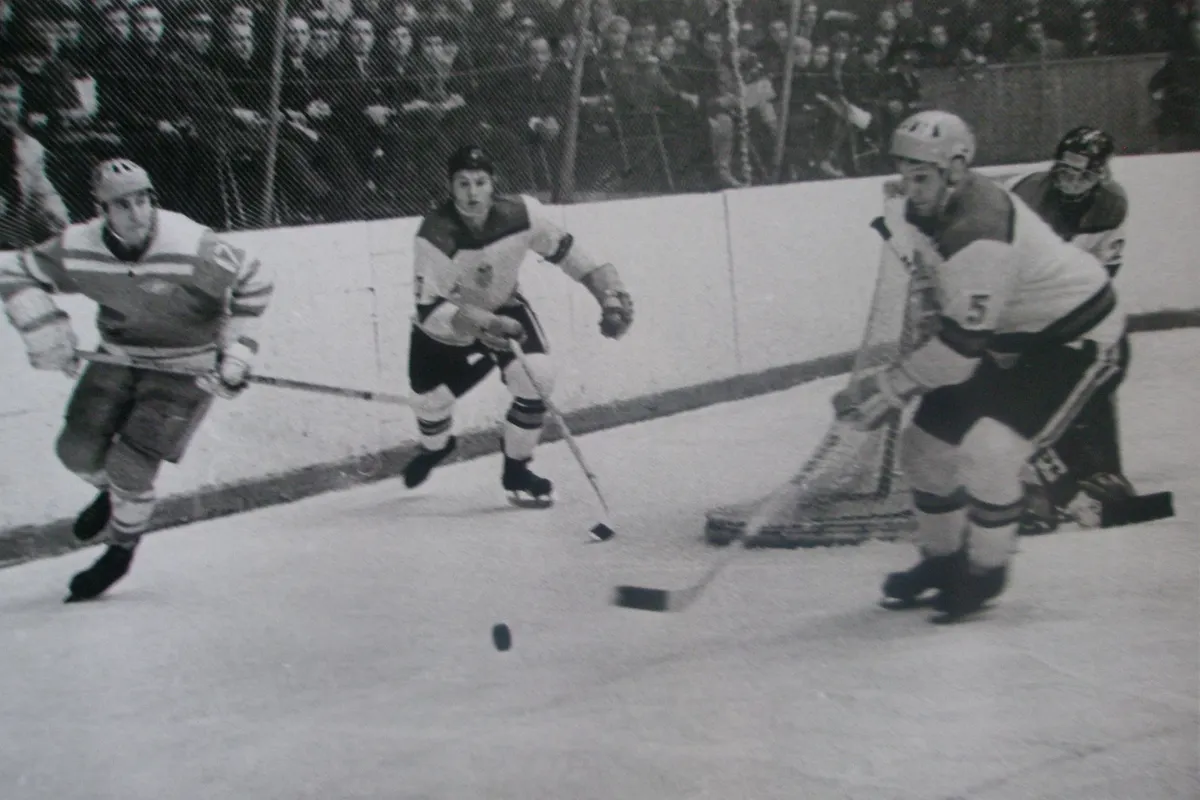
And in the echoing corridors of a military hospital, and in his office, and at home in a room that dangerously resembled a museum - with a full-length picturesque portrait of the owner, where there was not enough space on the walls for medals, photographs and paraphernalia - he invariably made fun of his own classical image. Ragulin's humor was unique - not blunt, with a slight dose of self-irony, despite the fact that he knew his worth, took his mission in hockey quite seriously and did not treat awards as trinkets.
He never had any reputable offices. He didn’t move smoothly from the playing locker room to the coaching room; he didn’t have a smooth transition to “peaceful” life at all, which he didn’t really like to remember. I played - everyone carried it in my arms, when I finished it, it turned out to be of no use to anyone. He happily avoided tragedy (unlike some of his friends), but he couldn’t exactly avoid drama. That’s why he understood “comrades in misfortune” so well, and that’s why he dealt so much with veterans.
He knew the value of trouble, and did not forget about it even in his fairly comfortable (in recent years) existence. He was not ashamed of the fact that during the years of his greatest popularity he earned extra money by bringing medical bracelets and watches from abroad for sale. For a long time he searched for his place in his new life. Coaching work “didn’t sit well with my soul” - for it he was too gentle and not too demanding. Although there was enough knowledge and experience, not to mention authority.
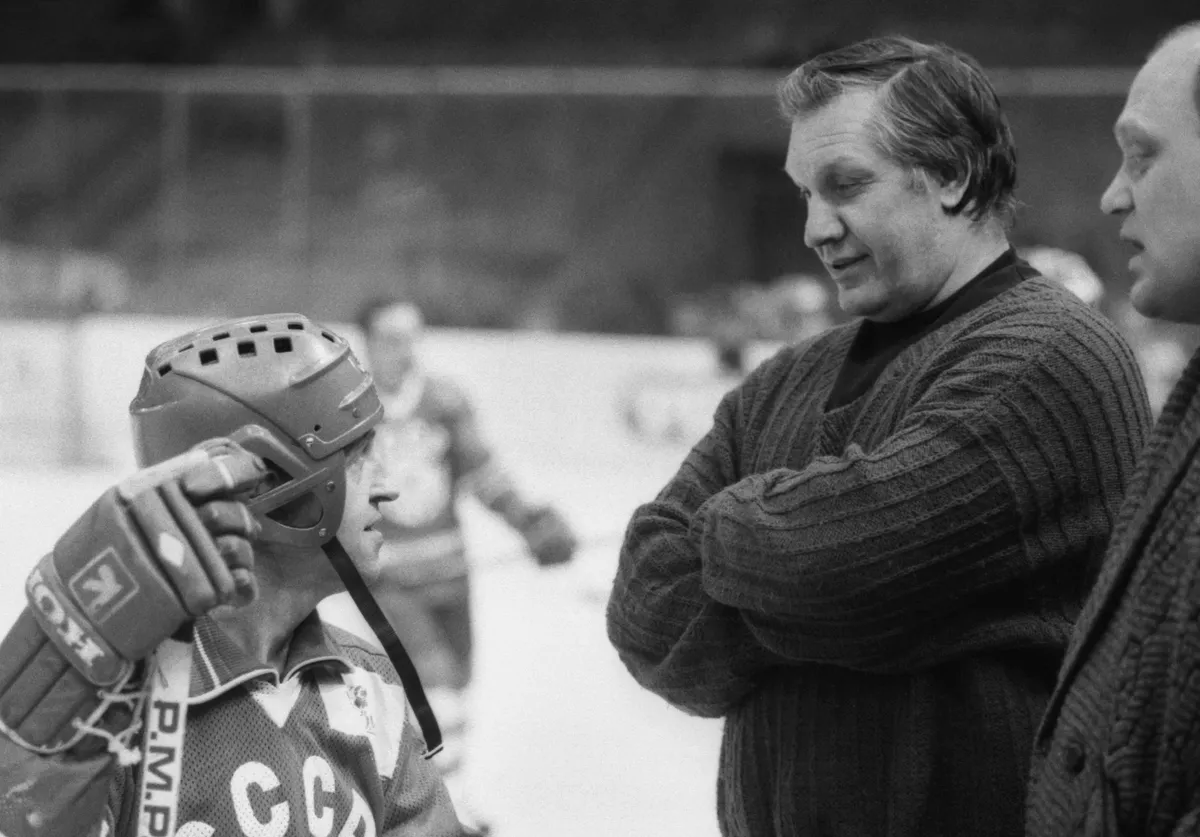
Armchair “lieutenant colonel” positions were also not suitable due to their independent nature, dislike of ranking people, inability to write correct reports and to powder their brains when and where needed
He lived carelessly; He maintained the ideal image as best he could, and only those closest knew what it cost him to “be Ragulin.”
— I finished a bit early, I won’t hide it. Not myself - Anatoly Vladimirovich Tarasov rounded me up, and that’s how it all ended at 32 years old. Nowadays, forwards play until they are forty, not to mention defenders. Back then, however, rarely did anyone live to be 33 in big-time hockey. I could very well not spoil the weather for another three or four years - but since “he himself” decided to get rid of me, then nothing could be done to break through this. The most annoying thing is that they didn’t kick me out of the team - Vsevolod Mikhailovich Bobrov, who took over the team after Sapporo, treated me very well. In the spring of ’72, he became an Olympic champion for the third time, in the fall he participated in the historical USSR-Canada super series and only missed two matches (including the last one, by the way). In the spring of 1973, the World Championship was held in Moscow, we won it with a fantastic 100% result (I think we scored a hundred goals during the tournament) and regained the title of champions. There were no complaints against me regarding my performance; it was not because of my past merits that I was kept in the national team; it was not without my help that Gena Tsygankov, Volodya Lutchenko, and Sashka Gusev emerged. With excess weight - yes, there were problems, but until the summer of ’73, somehow CSKA didn’t pay too much attention to them, well, it never bothered me! And then... They announced that they were ill-prepared and that they were no longer counting on me. They didn’t let me return to the Voskresensk Khimik, which raised me, and I myself didn’t go to the Leningrad SKA.
The farewell was nothing special to remember. Tolya Firsov and I were sent into “retirement” - at the Izvestia Prize, according to tradition. I was going to play on it... I was awarded the rank of major. They handed over the gifts, picked them up in their arms - and ciao, bambino, sorry! At least they didn't drop it. Who from our generation played to the end? No one. Perhaps Vitya Kuzkin, but this is a rare exception.
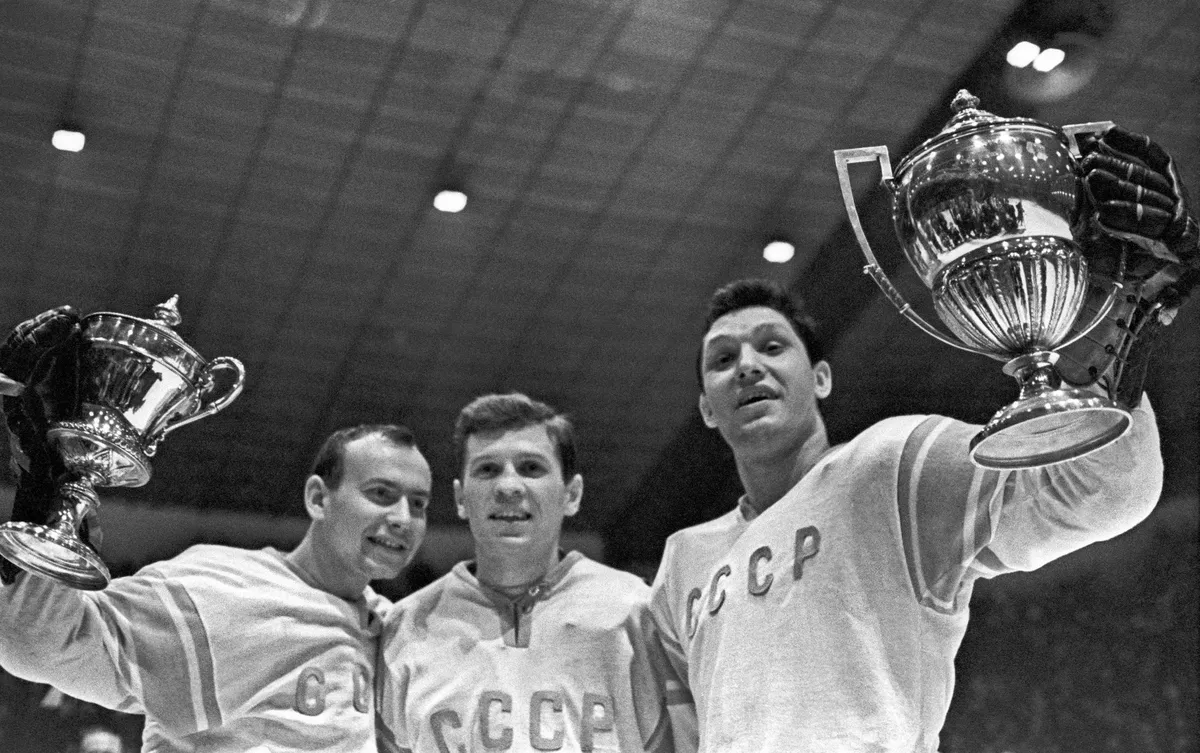
...I was not ready for a “peaceful life.” That's why there were enough problems. CSKA sent me everywhere to perform. The “banquet” lasted several years, living, so to speak, in “free flight.” I got a lot of trouble from my bosses, and in the end I pulled out, but... It’s not hockey itself that takes away your health (although it does too) - it’s mainly the lifestyle after your career ends. I learned this very well from my own experience, as a disabled person of the second group, I speak with knowledge of the matter. However, coaching does not add health. When I was training an army team in Novosibirsk, I made a lot of “discoveries”... and, of course, it was no accident that I had a heart attack...
In terms of career, I wasn’t particularly eager to go anywhere. I was so “full” of hockey that coaching work with its constant responsibility quickly began to become a burden.
To be a Coach (that’s right, with a capital T), you have to work 25 hours a day - like Tarasov, like Chernyshev, like Tikhonov. And I've never been a fan of this business. It worked out better with young people, but it’s not enough to lead boys to gray hairs!
Although I can only remember good things about my work at the CSKA school. He raised smart young people, the guys won the Union championship. I hope they remember me with kind words.
Now I work a lot with veterans. The point is not only that you want to help people stay in shape and somehow diversify their lives - many people are driven to the ice by basic need. I’m talking about those who played hockey before making big money, did not manage to earn anything and were not in demand in today’s difficult life.
It’s about them that my soul hurts the most.
...“Alexander Palych”, or simply Palych, they didn’t immediately start calling me at CSKA. This is one of the legends of Anatoly Vladimirovich Tarasov, he knew how to present the story beautifully. What kind of “Palych” is there, if I still have a couple of Sologubs in the team - Tregubov found, and my first partner was Genrikh Sidorenkov - legendary people, one of the pioneers?
I joined the cohort of greats back in 1961 from Khimik. I was shaking terribly. We were playing a test match in Moscow with the Canadians, and the blade on one of my skates fell out. I think if I say that, I’ll sit on the bench, and then, God forbid, they’ll completely take me out of the squad. The competition is terrible! So I finished the game on one skate - it was good that we won easily, it relieved my heart. They valued their place on the team. Boris Mayorov still laughs, remembering how I was late for the bus leaving the base in Arkhangelskoye. I ran across the entire field and waved my arms until they saw me...
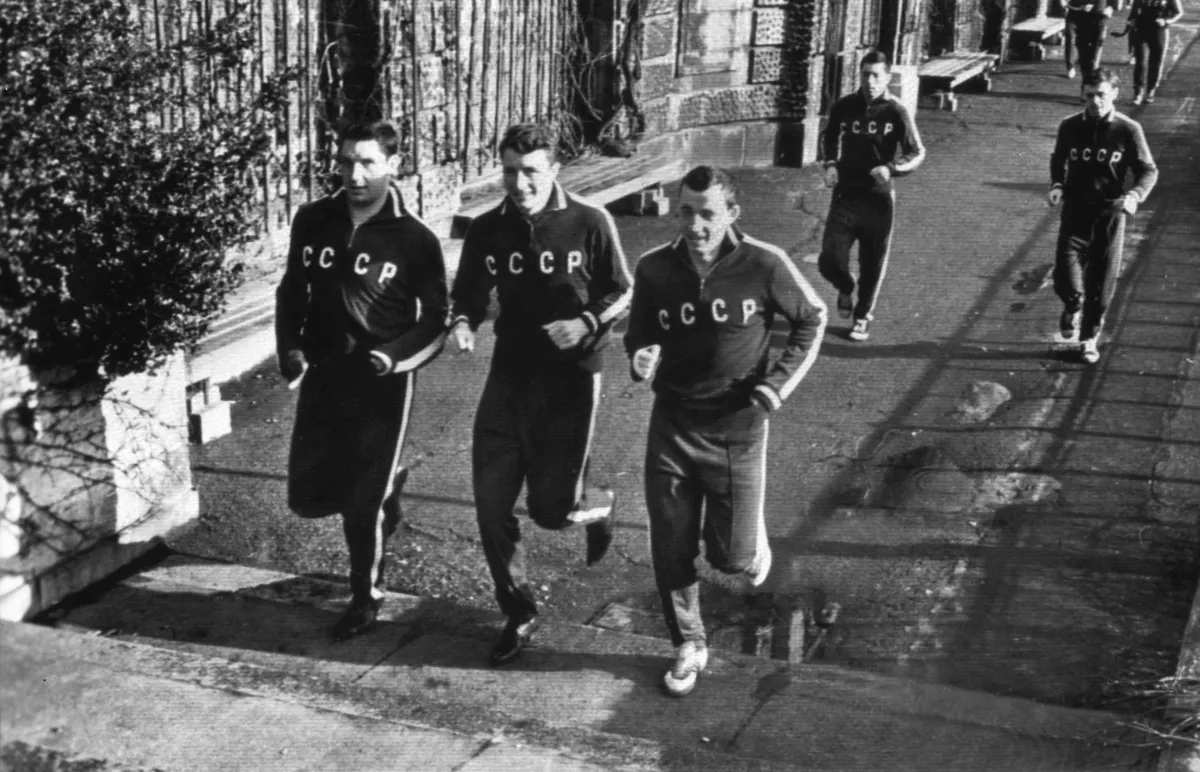
There was no hazing. There was professional hazing, when even the most deserving or over-deserving could be punished for a mistake. Without any rudeness, but tough. We, the defenders, got it especially hard - try to pass the ball off the hook to Loktev or Almetov! They won’t publicly shame you, but they will stop noticing you if you don’t try to do it right. Train in such a way that it is comfortable for your partner in the game - much was built on this in the USSR national team during its golden era and explained a lot. All the defenders mastered the famous first pass: some a little better, some a little worse, but most importantly, they mastered it. Nowadays there is no need to be too clever; no one pays attention to such trifles. Played over the board - and that was it.
From Khimik I had two roads - to CSKA on the ice in a hockey uniform or to the Far East in an army uniform. This was explained to me very clearly when I wanted to take back my application - it was very awkward in front of Epstein (Nikolai Semenovich accidentally found out about my transfer when we met on the beach in Yalta in the summer). But everything was predetermined and decided at the highest level.
...In my youth, one might say, we rested to the fullest. We didn’t know the Canary Islands or the Maldives. Khosta and Yalta, Alushta and Gurzuf were enough for us. We are army people, there were no problems with vouchers to departmental sanatoriums, so after the season - the sea, the girls (while we were single), the month flew by like one day. The company we had with Vitya Kuzkin and Alik Zaitsev was glorious...
You are having a blast as best you can, and then you find a note in your pocket: “Don’t drink more than a liter!” Although Tarasov gave individual assignments for the summer, outlined some recommendations...
But we didn’t really need them; we didn’t spend time on the beaches. A little football, volleyball, tennis - all for fun. And, as a rule, it was necessary to undergo medical treatment. And we knew very well that upon our return the hardest part would begin - pre-season preparation, the hardest work. So it was necessary to have time to use the vacation to the fullest. In the family version, the sea also remained the main point of the vacation program.
There are legends about Tarasov’s training, but in many ways he created and supported them himself. Cross country, for example, did not run at all. Four hundred meters - “well, Anatoly Vladimirovich, give me... What are we, track and field athletes?!” Short segments, and even with weights, and even uphill - that was it. But I don’t remember crosses. The emphasis was on intensity and variety. Tarasov was a master at all sorts of branded things, but they weren’t something completely impossible and unfeasible. Especially when you get used to it and get involved. Athletic basketball, running up the stairs (it happened that you carried someone on your shoulders, or sat on your own, which was not easy for the “bottom” with me, as you understand), wrestling “one against two”, athletic exercises - you can’t remember everything. Much has been included in the arsenal, which is still in use today. The same training before the match is also Tarasov’s experience.
I don’t hold any grudges against him - he was a man of his time. Hockey has moved forward very strongly, both ours and the world’s. I created, experimented, searched. Yes, he didn’t spare anyone, he walked over bones and corpses, but Soviet hockey reached unprecedented heights, this is an indisputable fact.
It is very important that next to him in the team was Arkady Ivanovich Chernyshev - also a great coach and a completely different person in character, who knew how to smooth out corners and not be foolish.
God saved me from serious injuries, although I was not protected from any such dangerous (and especially conflicting) situations on the court (this is all again Tarasov’s “invention”, like the one that I “resolved” intra-team problem situations and determined who and how to punish; whatever it is - I myself, having been fined, fell under the hot hand more than once or twice). Of course, bruises and cuts of all sorts happened, I got hit with a puck, I got hit under the eye with a stick, my teeth were knocked out, I had a concussion - but all these are minor things. In those years, people played hockey, and did not fight or maim each other. Sven Johansson “Tumba” somehow knocked out my teeth “as a friend” - but not out of malice, of course. They didn’t particularly bother me about this. They knew: if anything happened, I’d twist it into a ram’s horn. The biggest rest during the season came before the Olympics in Sapporo in 1972, when I broke my little finger. I was without hockey for a month, I was terribly sad.
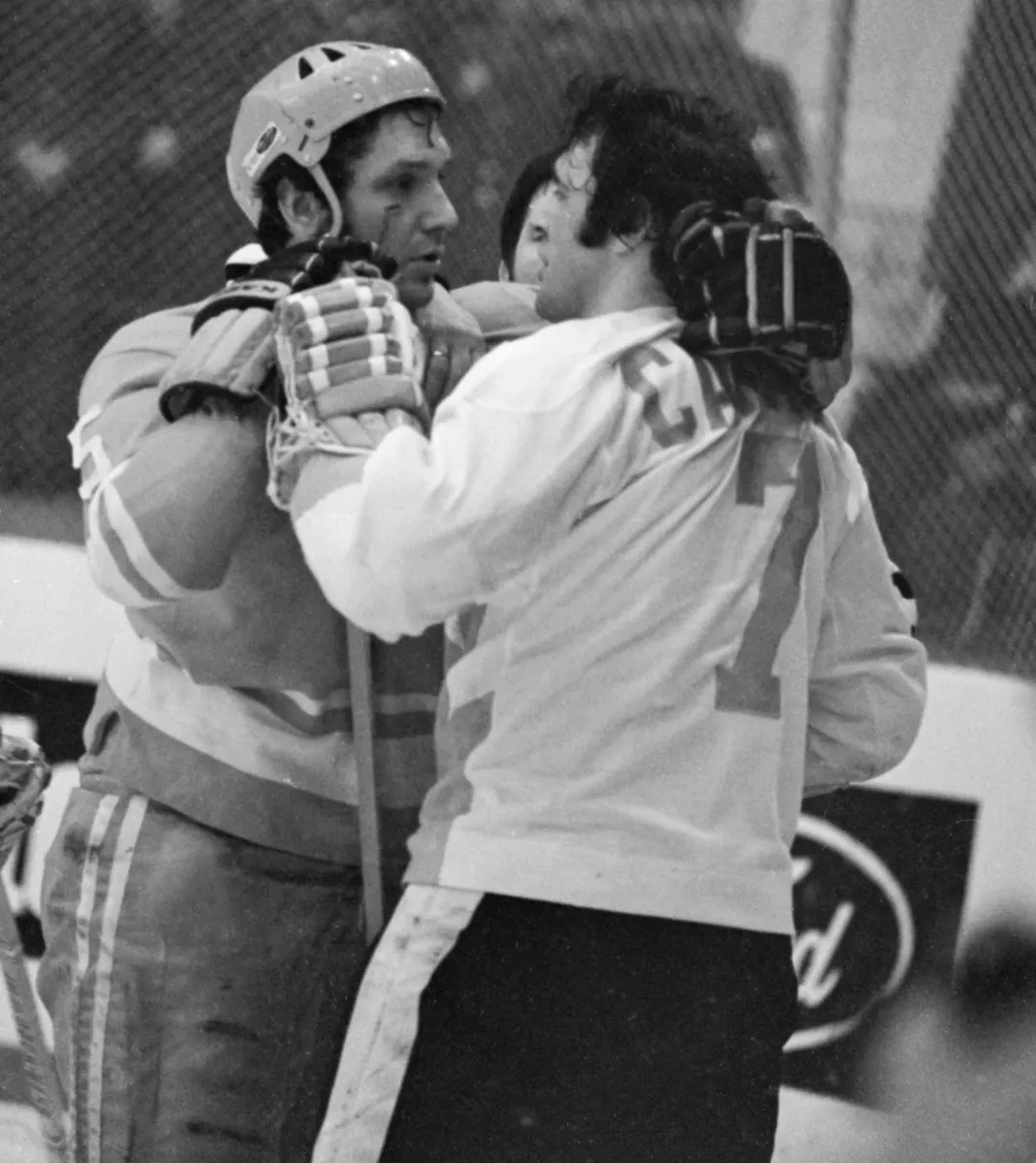
The Canadians and Americans knew that it was useless to fight us. The exception is the 72 Super Series, when in the Moscow part they went all-in and just went crazy. Because there was no other choice - one might say, the fate of their main sport was at stake. They understood that if they lost the series, their hockey would receive a terrible blow from which they might not recover. And so they received a huge incentive and took full advantage of this incentive. Unlike us.
...The fact that Ragulin could not be passed is also a legend. But of all the others, it is the closest to the truth. Dimensions, of course, mattered (in my time, there were probably no more powerful defenders than me) - but this is more “for export”, for international matches. For many of our forwards, incredibly fast and technical, the “big” defenders were simply a gift. But not me! Evgeniy Zimin sometimes remembers how he once outwitted me - he remembered it for the rest of his life.
Seriously speaking, we prepared and played to the limit. I restrained, for example, in a match with Dynamo Sasha Maltsev, the best striker in the world at that time - that’s it, any Canadian or Czech can go to the World Cup in the morning.
He maintained friendly relations with Ulf Sterner for the longest time. The Swedish striker was smart; he had to not only be beaten, but outplayed. I can’t count how many times we went against each other, but we fought, so to speak, intelligently. After that, they always found a reason for communication. When I'm in Sweden, we usually meet. Have you seen the plastic “diplomat” for a set of glasses with Absolut vodka in my “veteran” room at CSKA? So he gave this to me during the World Cup, just for my birthday. The bottle, naturally, was empty; it did not survive until evening that same day.
I don't have any video recordings left. True, they gave me something, but I didn’t look at it. It was and is past. Anyone who has seen it knows. And I have all my games before my eyes, from the first to the last time on the ice.
Going through the archives means taking stock. And I don’t want to let them down yet.
...Our last meeting was in the summer of 2004. Palych was in a great mood and seemed to be in good health. I was making plans for the fall, getting ready for another important trip - “I don’t like to sit at home for a long time.” He knew that hockey needed him - his very presence in it inspired calm and confidence that everything would work out.
Actually, that’s what happened on the ice.