
Translated material
Ukraine and Russia declared ceasefires. The parties did not agree on the date of the “truce” among themselves. “New Europe” has collected a chronology of the latest shellings
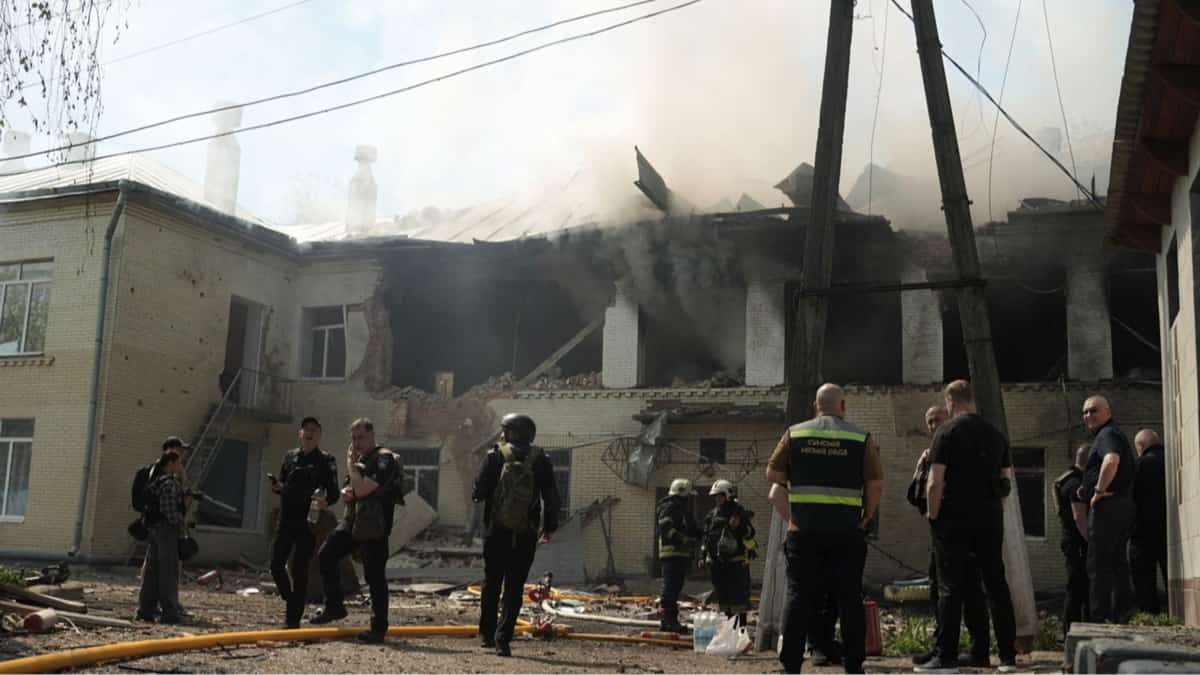
“New Europe” has collected a chronology of the latest shellings
Ukraine declared a truce in anticipation of May 9, which began on May 6. Russia also declared a truce starting May 8. The countries did not agree on these decisions among themselves, and also repeatedly broke promises in recent days.
New-Europe tells everything you need to know about the current situation.
On May 4, the Russian Ministry of Defense unilaterally declared a truce for May 8 and 9 in honor of the Victory Day celebrations. “We hope that the Ukrainian side will follow this example,” the statement said.
In the same message, the department threatened missile strikes on Kiev and advised “the civilian population of Kiev and employees of foreign diplomatic missions” to “leave the city in a timely manner.”
On the same day, Ukrainian President Vladimir Zelensky said that he had not received “a single official appeal to Ukraine regarding the conditions for the cessation of hostilities, which are mentioned in Russian social networks.”
“We believe that human life is of incomparably greater value than the “celebration” of any anniversary. In connection with this, we are announcing a regime of silence, starting from 00:00 on the night of May 5-6,” he wrote in the Telegram channel.
According to him, “starting from the specified moment” Ukraine will act in a mirror way.
On the morning of May 6, Zelensky said that “the Russian army continued active military operations and terrorist attacks on this day.” In particular, attacks were carried out on the Dnieper, Zaporozhye and Kramatorsk. A woman was killed in the attack on Sumy.
“Assault operations continue in all key sectors of the front, and just since the beginning of this day, the Russian army has already carried out almost 30 assault operations. More than 20 air strikes using more than 70 air bombs have been recorded just this night and morning,” the politician said.
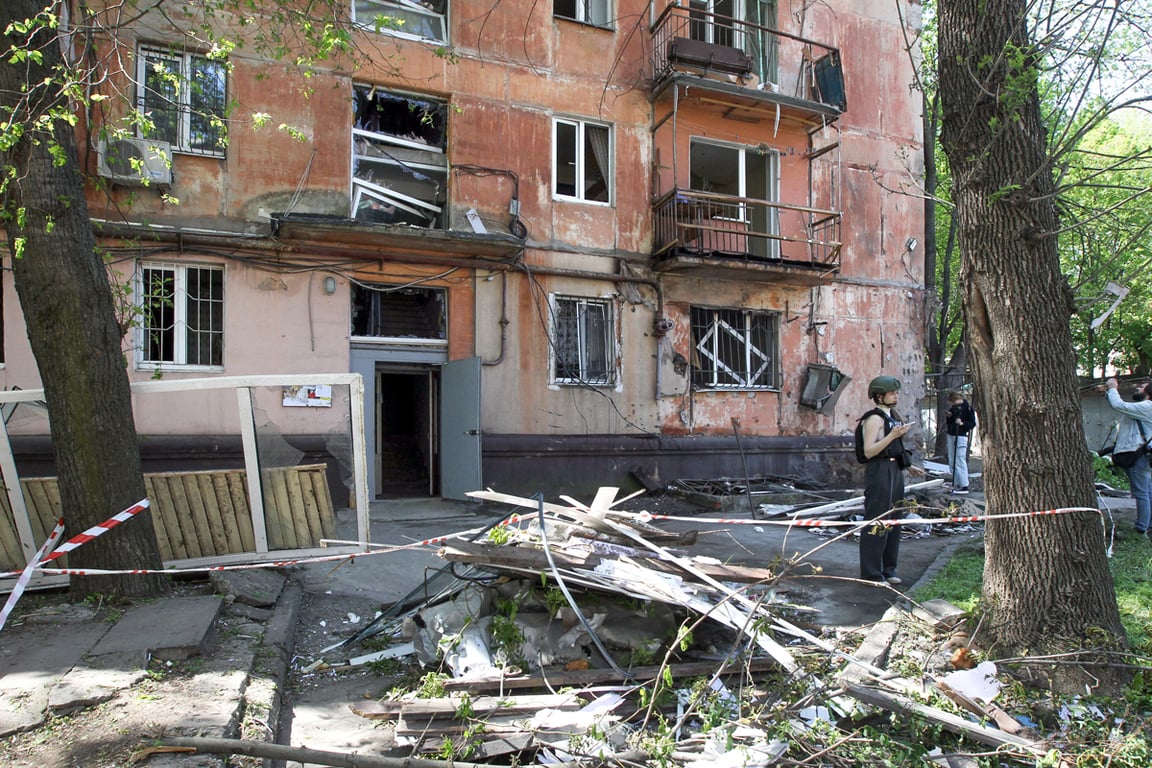
He also indicated that the Russian army carried out drone and missile strikes throughout the night:
“In total, as of 10 a.m., the Russian army committed 1,820 violations of the silence regime - shelling, attempted assaults, air strikes, and the use of drones.”
The Russian Ministry of Defense stated that from 21:00 Moscow time on May 5 to 7:00 Moscow time on May 6, air defense intercepted 53 Ukrainian drones “over the territories of the Belgorod, Bryansk, Kursk regions, the Moscow region, the Republic of Crimea and over the Black Sea.”
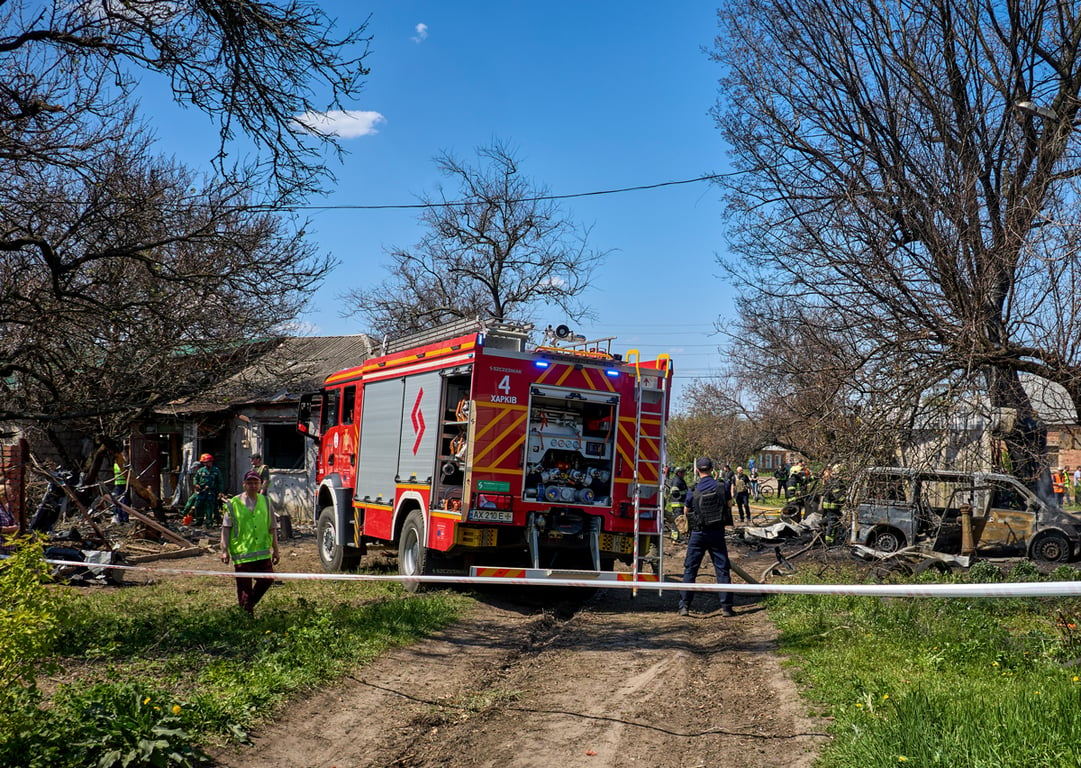
On May 7, Zelensky reported that the Russian army continues to carry out strikes on Ukraine: “About 100 attack drones were recorded, dozens of assault operations in key areas of the front, as well as dozens of airstrikes.” According to him, significant damage to civilian facilities was recorded in the Kharkov, Sumy, Donetsk and Kherson regions. Locomotives and infrastructure of Ukrzaliznytsya were also attacked in several regions.
“Ukraine will act fairly - day after day. We proposed a ceasefire from midnight on May 6th. Yesterday and today this regime is being violated by Russia. In response to Russian strikes, we are introducing our long-range sanctions; in response to Russia’s readiness to move to diplomacy, we will follow the path of diplomacy,” said the President of Ukraine.
At the same time, the Russian Ministry of Defense stated that during the night the air defense intercepted 347 Ukrainian drones in 21 regions. On the morning of May 8, another 127 UAVs were intercepted . Separately, the department noted an attempted drone attack in St. Petersburg, some of which eventually fell on the territory of Latvia. Then the Ministry of Defense reported the downing of another 183 drones.
By the morning of May 8, Kiev recorded more than 140 shelling of positions on the front, more than 850 drone strikes, as well as 10 assault actions during the night, most of all in the Slavic direction.
Zelensky also published a video with the consequences of the attack on the oil refinery in Yaroslavl. He thanked the Ukrainian Armed Forces and military intelligence “for such a manifestation of justice.” Governor of the Yaroslavl region Mikhail Evraev said that the fire at the industrial facility had already been extinguished.
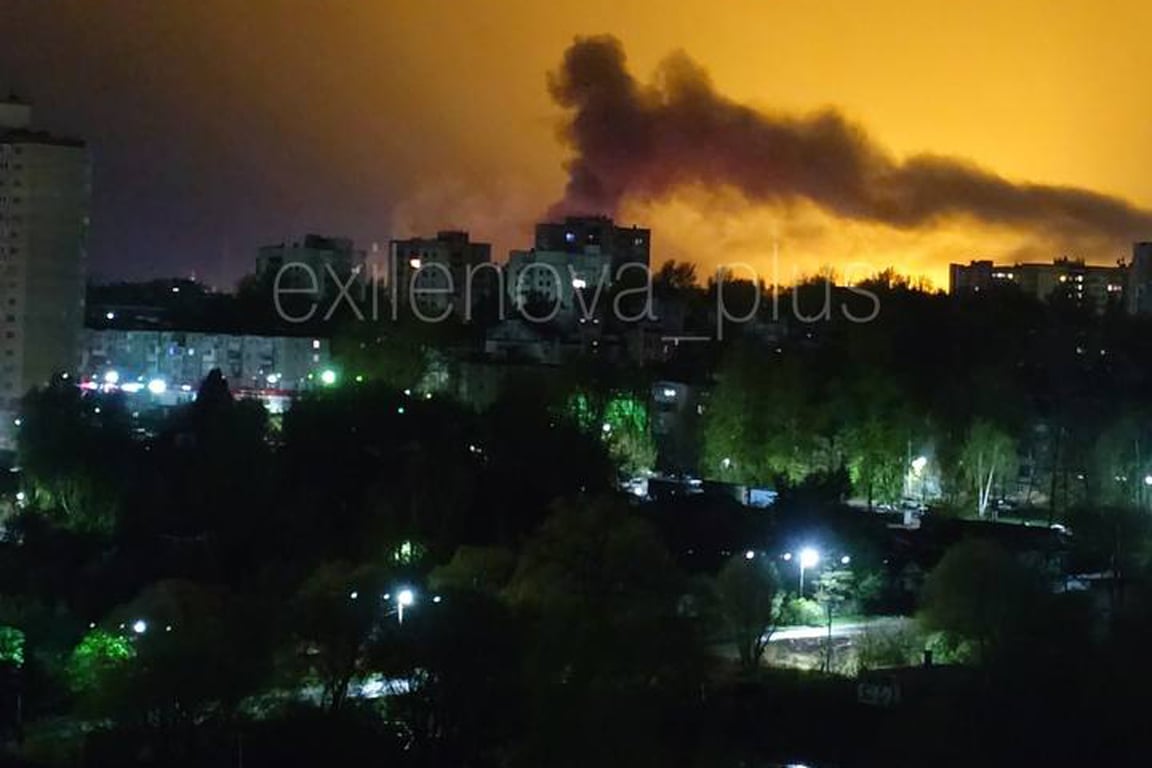
On the morning of May 8, the Ministry of Defense announced the destruction of 359 Ukrainian drones. The department later announced that “from zero hours on May 8, all groups of Russian troops in the special military operation zone completely stopped conducting hostilities and remained at previously occupied lines and positions.” The ministry accused the Ukrainian Armed Forces of striking military positions, as well as border areas of the Belgorod and Kursk regions.
“The Armed Forces of Ukraine carried out 153 attacks on the positions of our troops from artillery guns, MLRS, mortars and tanks.
There were also 887 UAV strikes, including 394 FPV drone strikes, 107 octocopter strikes, 171 aircraft strikes, and 215 UAV munition drops. In total, 1,365 ceasefire violations were recorded in the special military operation zone,” the statement said.
The Ministry of Defense reported that they “reacted in a mirror way to violations of the truce”: they carried out retaliatory strikes on the firing positions of MLRS, artillery and mortars, hit control points and UAV launch sites.”
Military analysts and active-duty military personnel interviewed by New Europe were divided in their assessments of how the announced truce was going. Military-political observer of the Information Resistance group Alexander Kovalenko believes that “although the Russian side did not fully observe the truce, it reduced its activity.” At the same time, he admits that “there was no real regime of silence.”
“Facts of ceasefire violations took place on many sectors of the front and in peaceful settlements. In total, more than 200 battles took place over the past 24 hours,” he said.
A CIT analyst, who agreed to speak with Novaya-Europa on condition of anonymity, believes that “Ukraine has begun to respect its truce.” He clarified that on May 6 in the Russian Federation and in the occupied territories, experts recorded “only three injured civilians” in the Belgorod region. According to him, this is “noticeably less than what is usually recorded per day.”
“The Russian Federation did not observe any ceasefire. As a result, the number of dead and injured in the territories controlled by Kyiv is significant, and no particular de-escalation has been observed. By the seventh, Ukraine refused to further support the truce and began striking at night, including Perm, Moscow, and the Tver region,” he noted.
As for the front, according to the analyst, there is no de-escalation there either. This is confirmed by active Ukrainian military personnel who spoke with Novaya-Europa.
Ukrainian Armed Forces officer Sergei L., who is fighting in the Donetsk direction, said that “the ceasefire was practically not felt”:
— The Russians launched drones all night—reconnaissance and, probably, attack drones. To avoid losses, personnel did not go out into the open. We did not try to take advantage of the truce in any way and did not even carry out rotation and supply of ammunition. I know for sure that a similar situation has developed in Zaporozhye in the area of Orekhov and Gulyai-Polye, as well as here in the Donetsk region near Konstantinovka and near Liman. We received command orders not to open fire first. But we have the right to shoot back.
Sergei said that their UAV crews control the gray zone, but do not attack the enemy. He also emphasized that “the Russians have not yet made any attempts to infiltrate” their defenses.
At the same time, some military personnel note that the intensity of the fighting has decreased slightly. Armed Forces of Ukraine serviceman Alexey “Sniper,” fighting in the Kharkov region, shared that, according to drone pilots on the front line, “the enemy is using the ceasefire to evacuate the wounded and transfer reserves.”
“The Russians have brought cargo vehicles into position and are actively unloading ammunition and food. At the same time, there were no shellings or even launches of attack drones in our direction on the night of May 8. My colleagues and I do not believe in the Russian peace plans and are preparing for the fact that a serious mess will begin on May 9. Our commanders require increased attention and constant alertness,” he said.
An officer of the Armed Forces of Ukraine, who wished to remain anonymous, said that they have “no “Putin’s truce” at all”:
- The only thing is that there are no assaults in our direction, but our neighbors have them - in the Pokrovsky direction. And we regard the relative calm here as preparation for something large-scale.
Alexander Kovalenko also suggests that “on May 9, certain work on Russian territory can be carried out”:
“I believe that it would be logical and rational for the Ukrainian Armed Forces to take advantage of the weakening of air defense in the Russian regions, from where the anti-aircraft systems were relocated to Moscow, and to strike military units, strategic oil refining facilities and military-industrial complex enterprises.
Also, according to Kovalenko, Russia has accumulated ammunition over the past two weeks, which it can use to attack Kyiv on May 9–10–11. He points out that the last massive combined strike was carried out by the Russian army on April 25.
Military researcher Kirill Mikhailov points out that “Ukraine decided not to join the truce declared by Russia on May 8, because Russia did not respect the truce declared by Ukraine on May 6.” In his opinion, “on May 9 we can expect a continuation of Ukrainian strikes,” but he considers a deliberate attempt to strike Red Square during the Victory Parade to be unlikely.
“The fact is that Moscow’s air defense is already the strongest in Russia, and according to Ukrainian data, on the eve of the holidays it was even more strengthened, so most of the drones will be shot down in any case without causing any damage. We can rather expect continued attacks on military and infrastructure facilities in other regions of Russia,” he shared in a conversation with Novaya-Europa.
At the same time, according to the expert, one can expect “harassing” raids on Moscow with a limited number of drones in order to “stimulate the Russian authorities to leave various air defense systems in Moscow, and not send them to other regions.” Military analyst and former SBU employee Ivan Stupak also suggests, “The Armed Forces of Ukraine can take advantage of the window of opportunity caused by the pull of many air defense systems towards Moscow.”
“Both enterprises of the military-industrial complex and key oil infrastructure facilities remain exposed - oil depots, refineries, export terminals, etc. I think that the Ukrainian Armed Forces will take advantage of this opportunity and attack Rostov-on-Don, Taganrog and other Russian regions,” he emphasized.