
Translated material
“Time will pass, we will show”
“You can’t come here, it’s closed,” a policeman blocks my path from one of the central streets to the monument to 1200 guardsmen. In front of the monument there are frames of metal detectors, each with a security officer on duty. There are no people in civilian clothes to be seen.
This monument is the main memorial in Kaliningrad dedicated to the Great Patriotic War. But in the early morning of May 9, the passage to it was blocked.
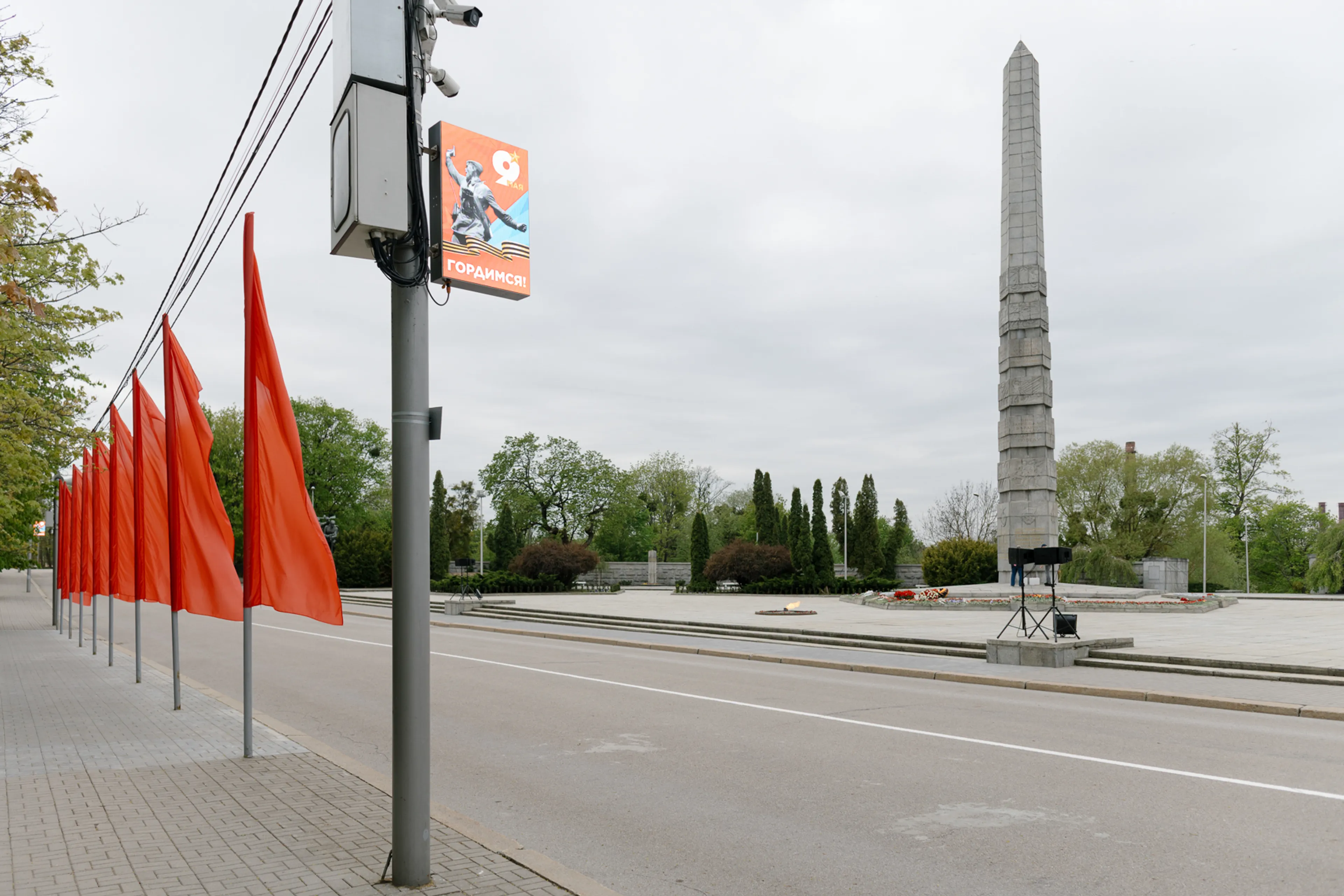
“How long will it be closed?” - I ask the policeman. He narrows his eyes and looks at me with disbelief. Finally he answers: “Until evening.”
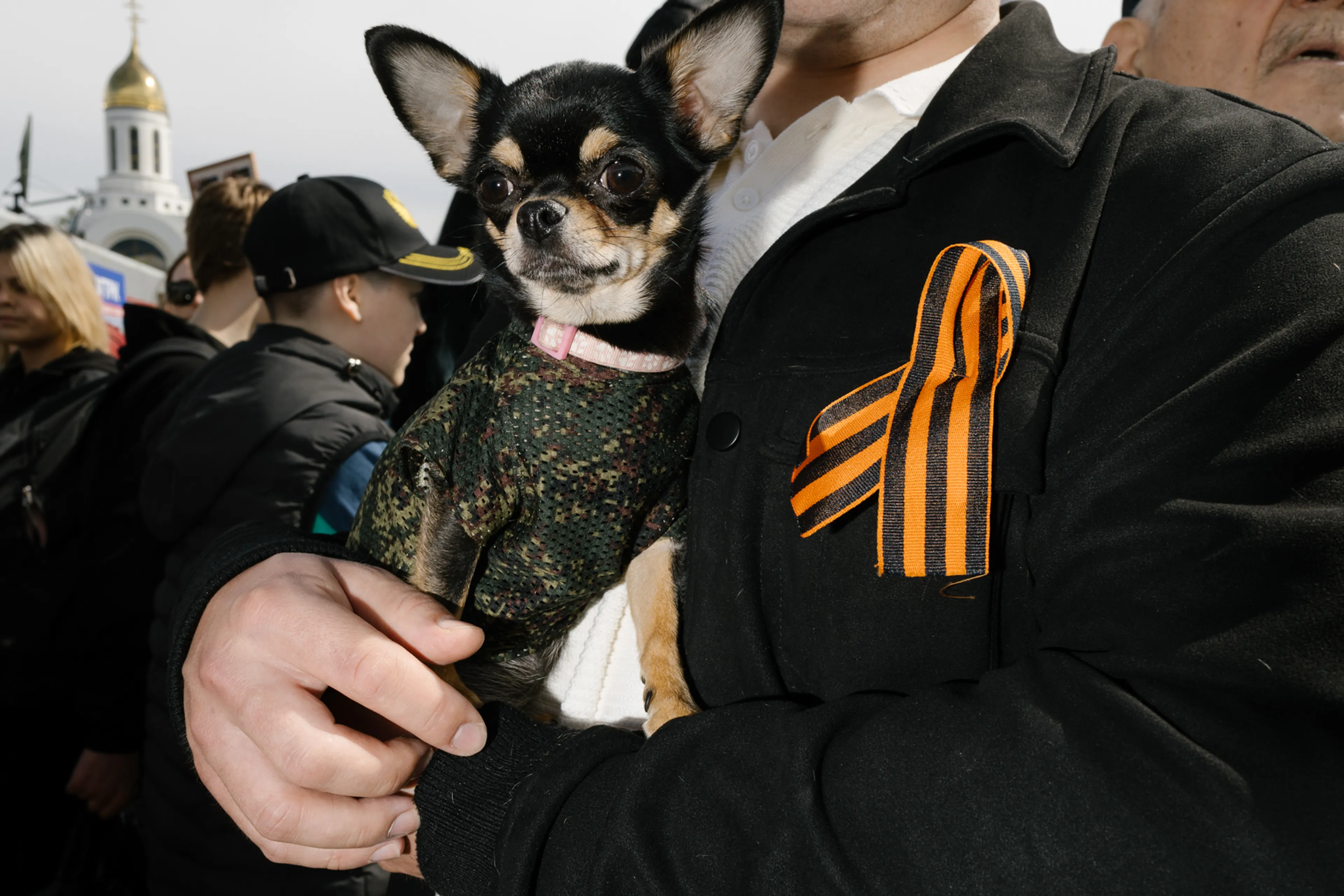
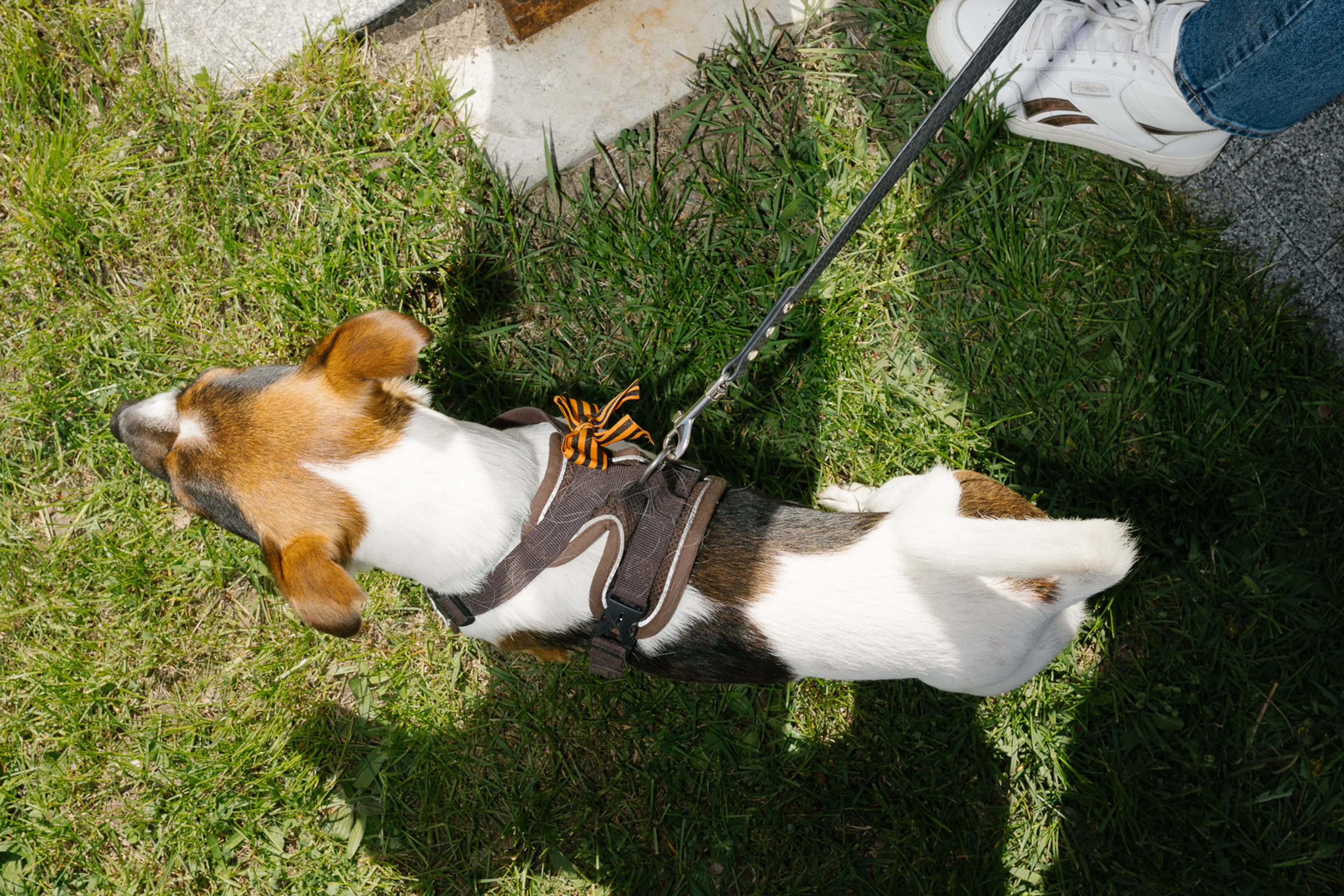
A few minutes later, a young couple with a boy of about five approaches the frames. All three have St. George ribbons on their chests, a Soviet cap on the child’s head, and three red carnations in their hands. The policeman who just turned me around smiles at the family, nods and lets me through without even looking in the bags. Following them through the frames comes a group of students, also with flowers.
Perhaps the Kaliningrad security forces are afraid of protests. A few days before the 81st anniversary of the Victory, the publications “Important Stories”, Delfi Estonia and the Lithuanian television and radio company LRT talked about one of the actions that was hushed up by regional authorities. On the third anniversary of Russia’s full-scale invasion of Ukraine, Kaliningrad resident Alexander Okunev self-immolated at the monument to 1,200 guardsmen. Journalists learned about this from the February report of Estonian intelligence.
There is another way to get to the memorial - through the adjacent Victory Park. It's usually open 24 hours a day, but this morning the main entrance gate is locked and secured with a bicycle lock.
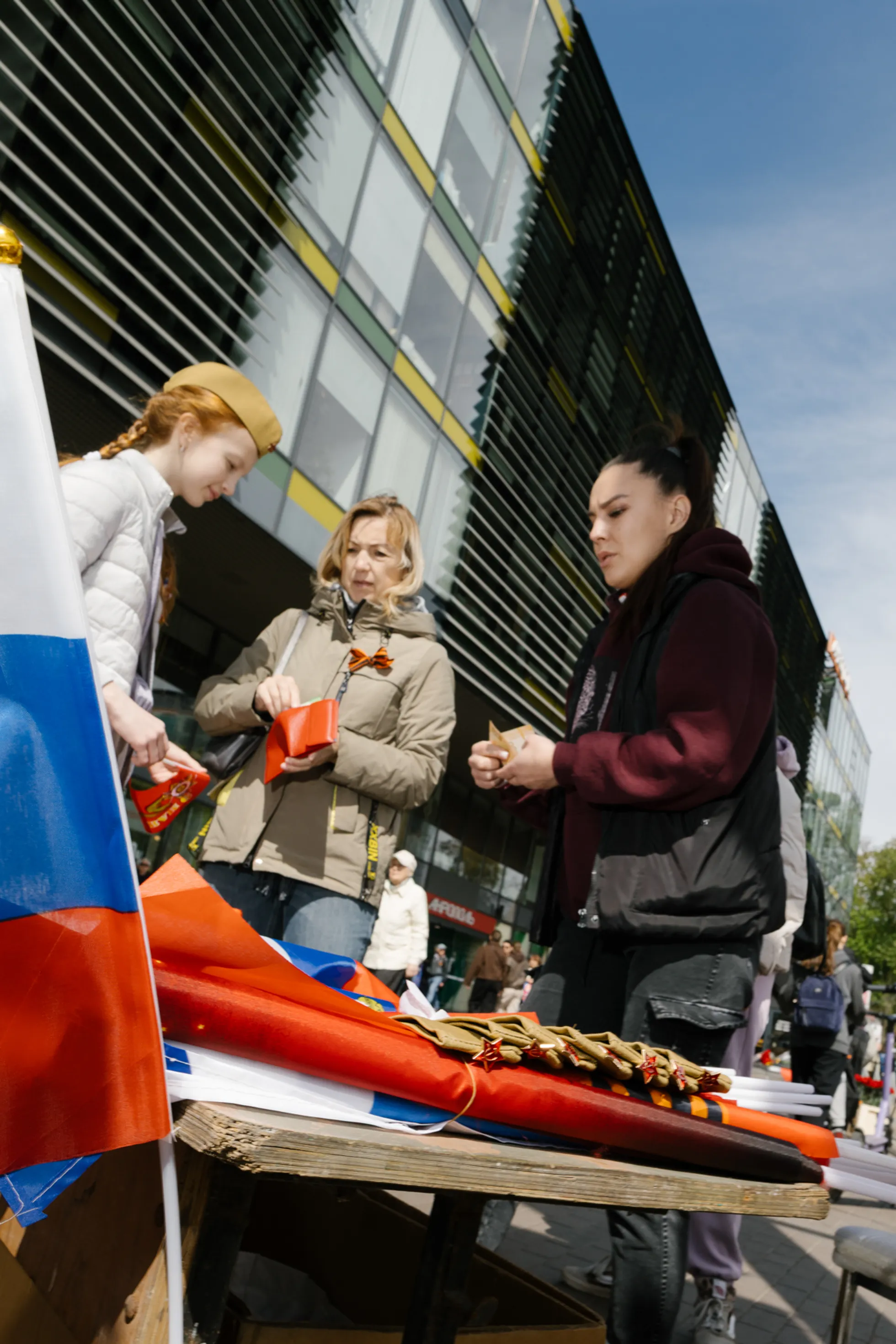
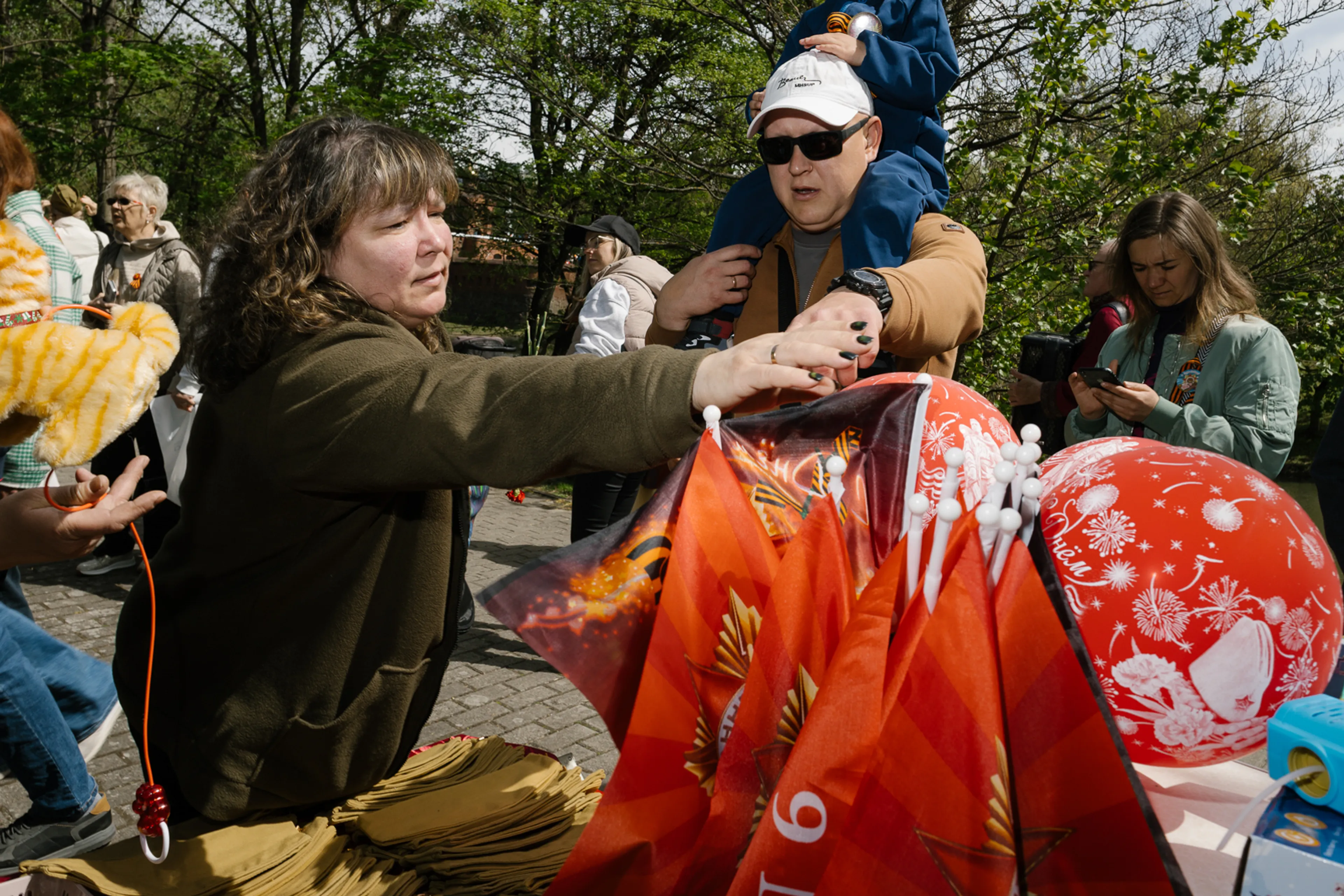
In a few hours the parade should begin on Victory Square. On the sidewalks leading to the square from the park, vendors place red carnations in vases. There are dozens of such points in the city center; flower sellers stand every few meters.
The prices are the same for all - 150 rubles per piece. You can pay in cash or by transfer. The city has already introduced a “white list” regime for several days; almost no one’s payment terminals work. But there was no shutdown like in Moscow.
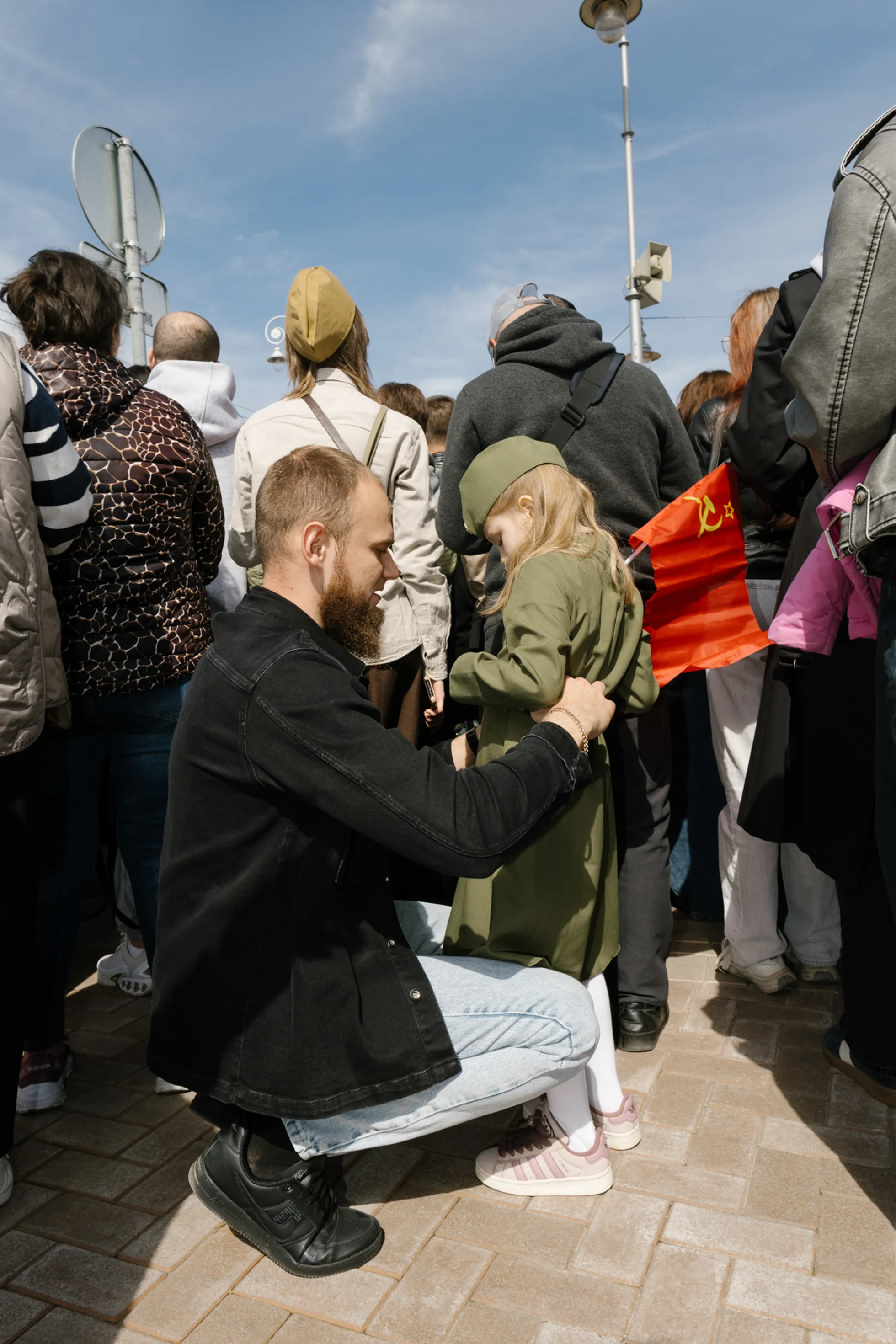
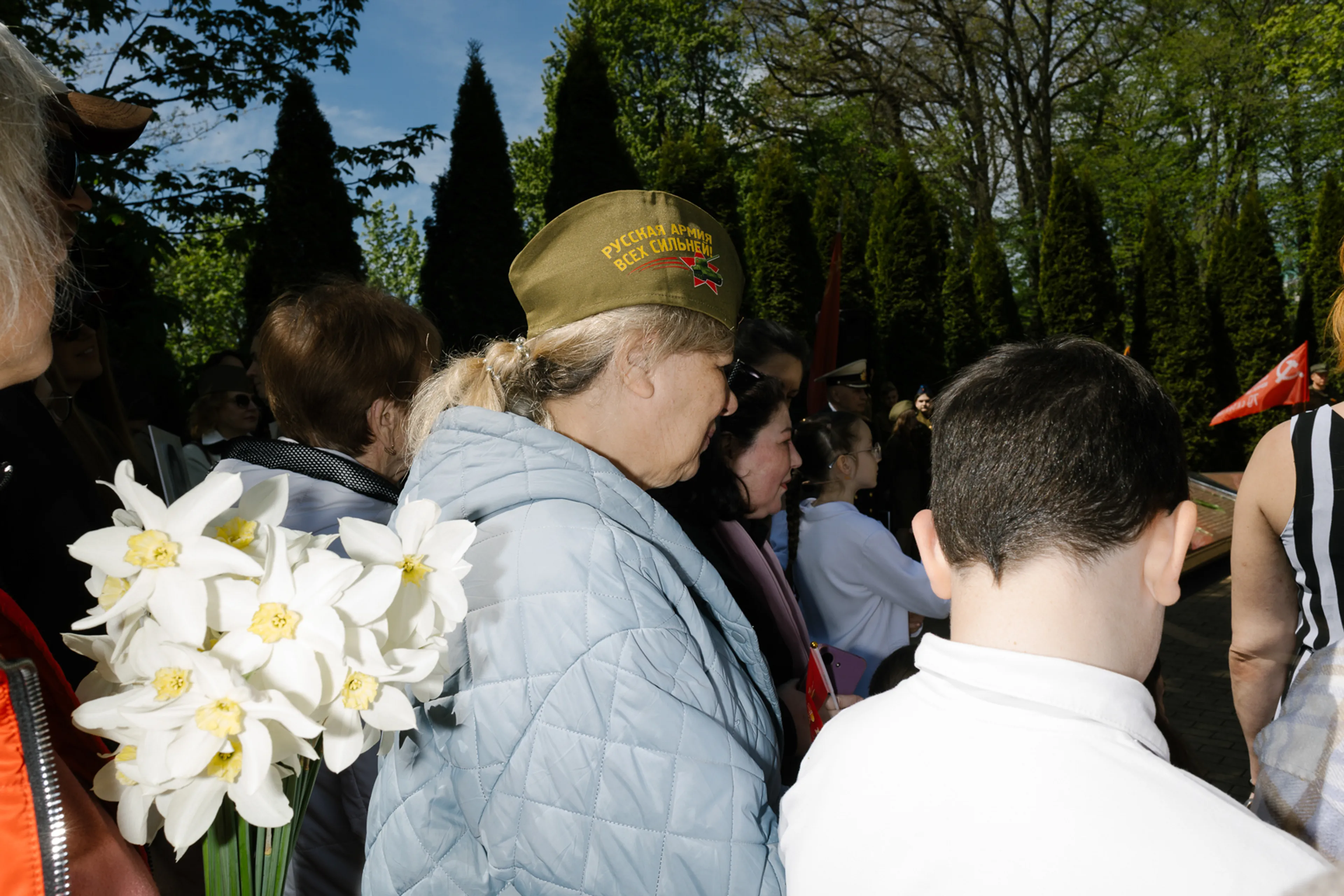
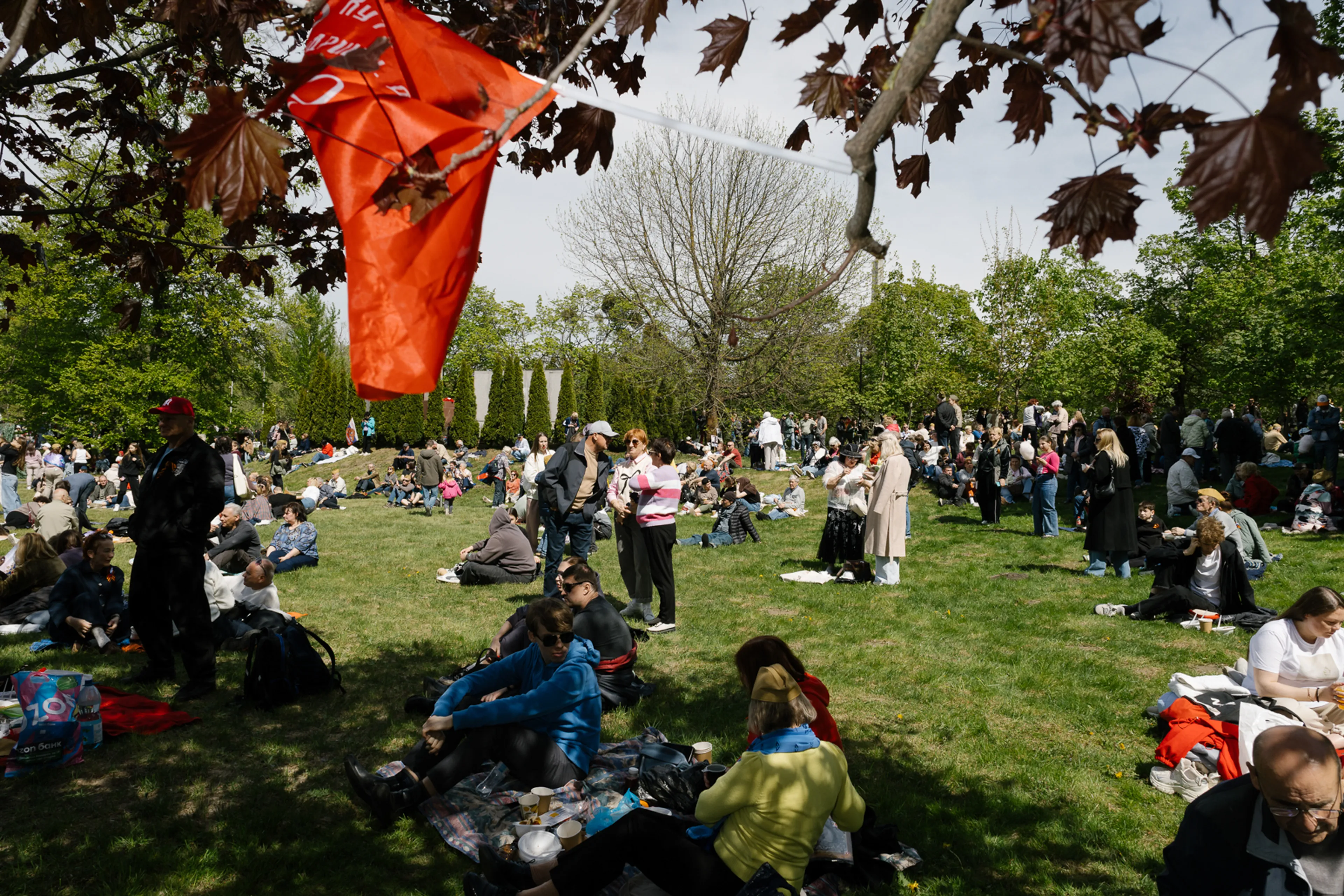
Closer to nine in the morning, with only an hour left before the parade, the streets begin to fill with people. Many are holding flowers and portraits of relatives who took part in the Great Patriotic War. The Kaliningrad authorities announced in advance that they would not hold the “Immortal Regiment” action in 2026, but people prepared anyway. “Suddenly they’ll change their mind,” an interlocutor in her fifties explains to Bereg. Some of the townspeople, both adults and children, put on Soviet caps.
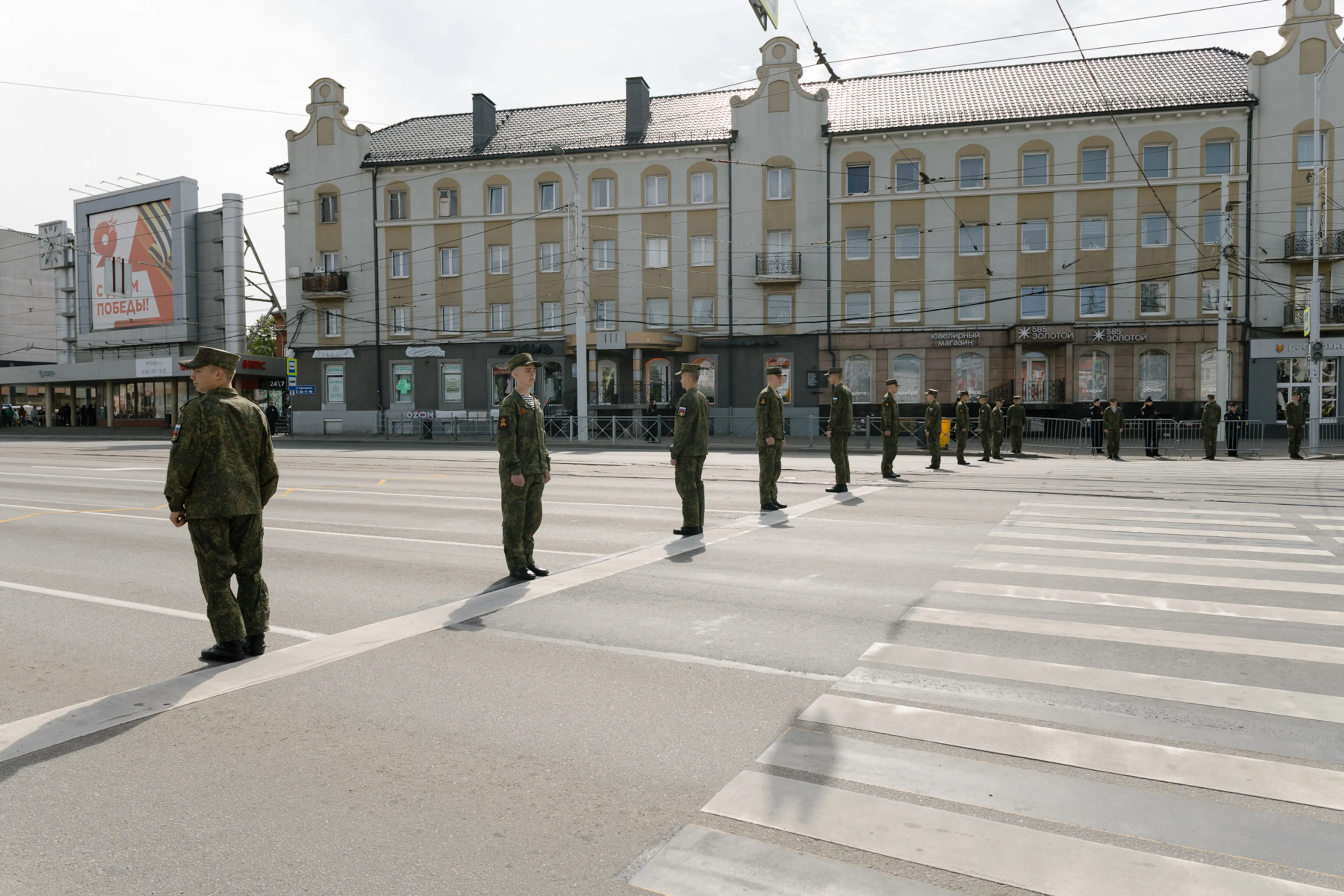
The central streets of the city are blocked - retro vehicles will drive along them and military personnel will march along them. According to state publications, the parade will be attended by parade crews of Baltic Fleet headquarters officers, military personnel of military units and formations of the army corps, surface ships of naval aviation and air defense, marines and cadets of the Baltic Higher Naval School.
In Kaliningrad, as in other Russian cities, they did not bring modern equipment to the square this year.
Along the curbs there is a cordon of police officers, riot police officers, vigilantes, Cossacks, cadets and conscripts. Several thin, stooped young men, dressed in a summer soldier's uniform, rub their hands, red from the cold, and look longingly at passers-by with cups of coffee: in the morning it is only +10 in the city.
There are many active military personnel in camouflage on the streets. Some limp, others walk on crutches.
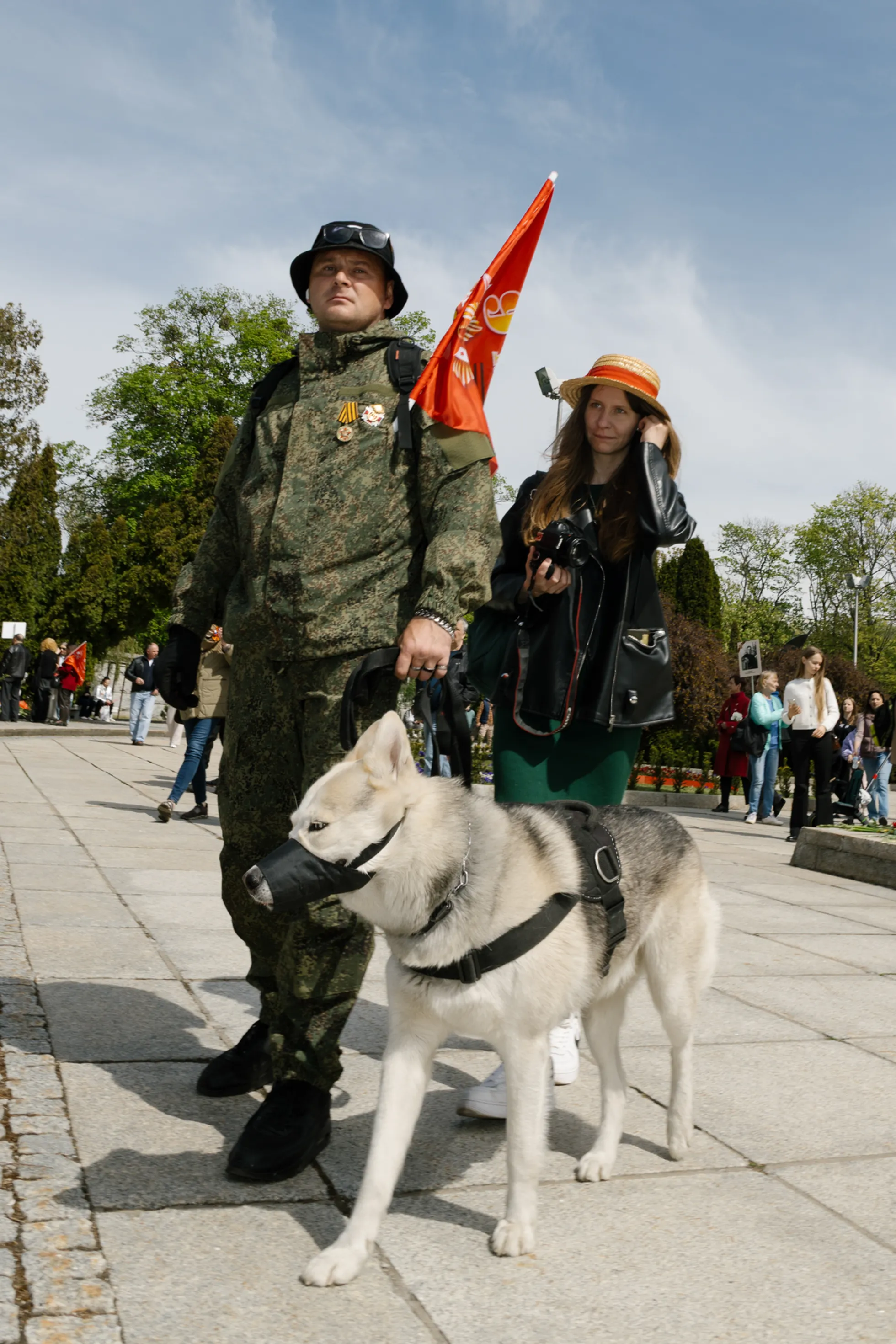
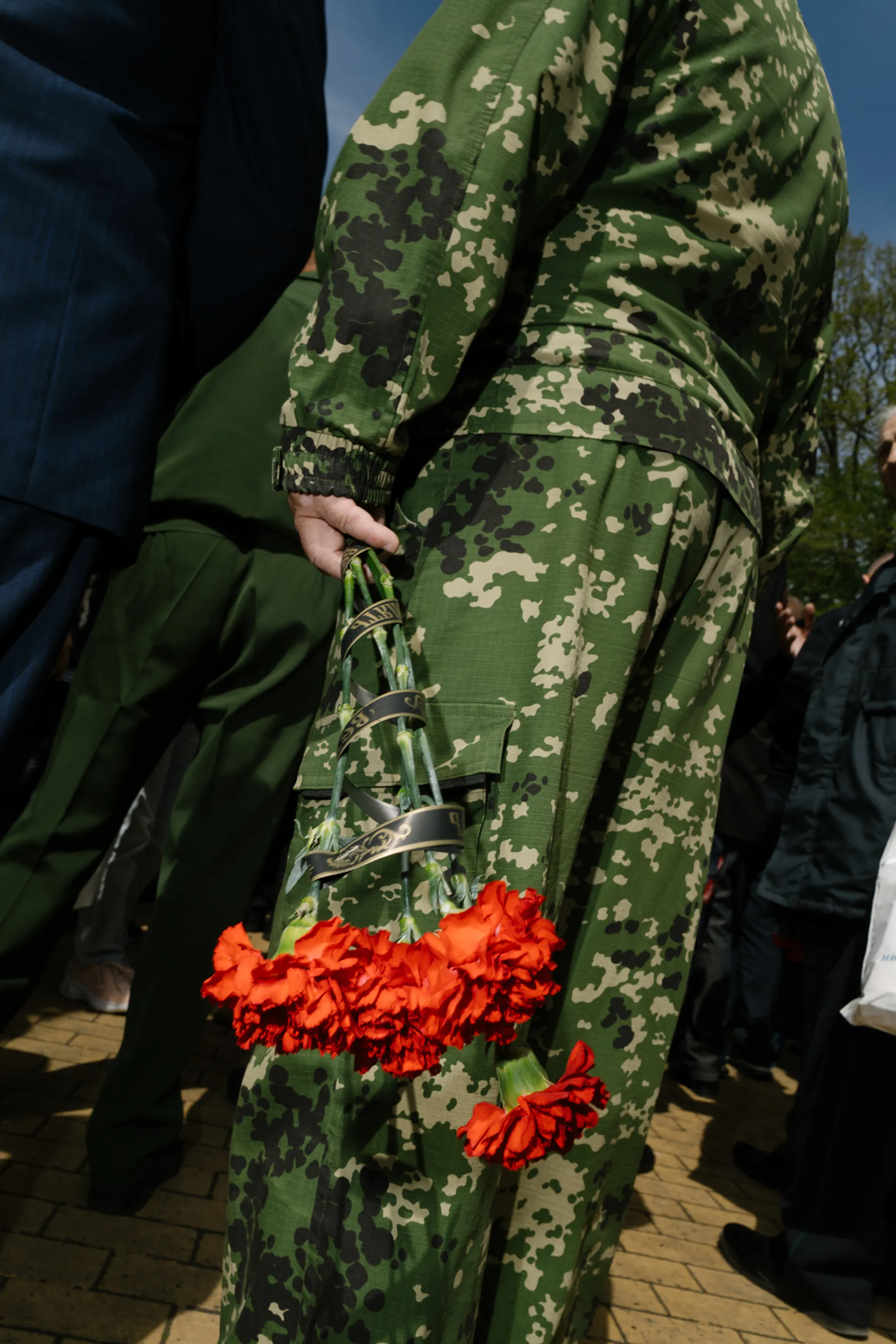
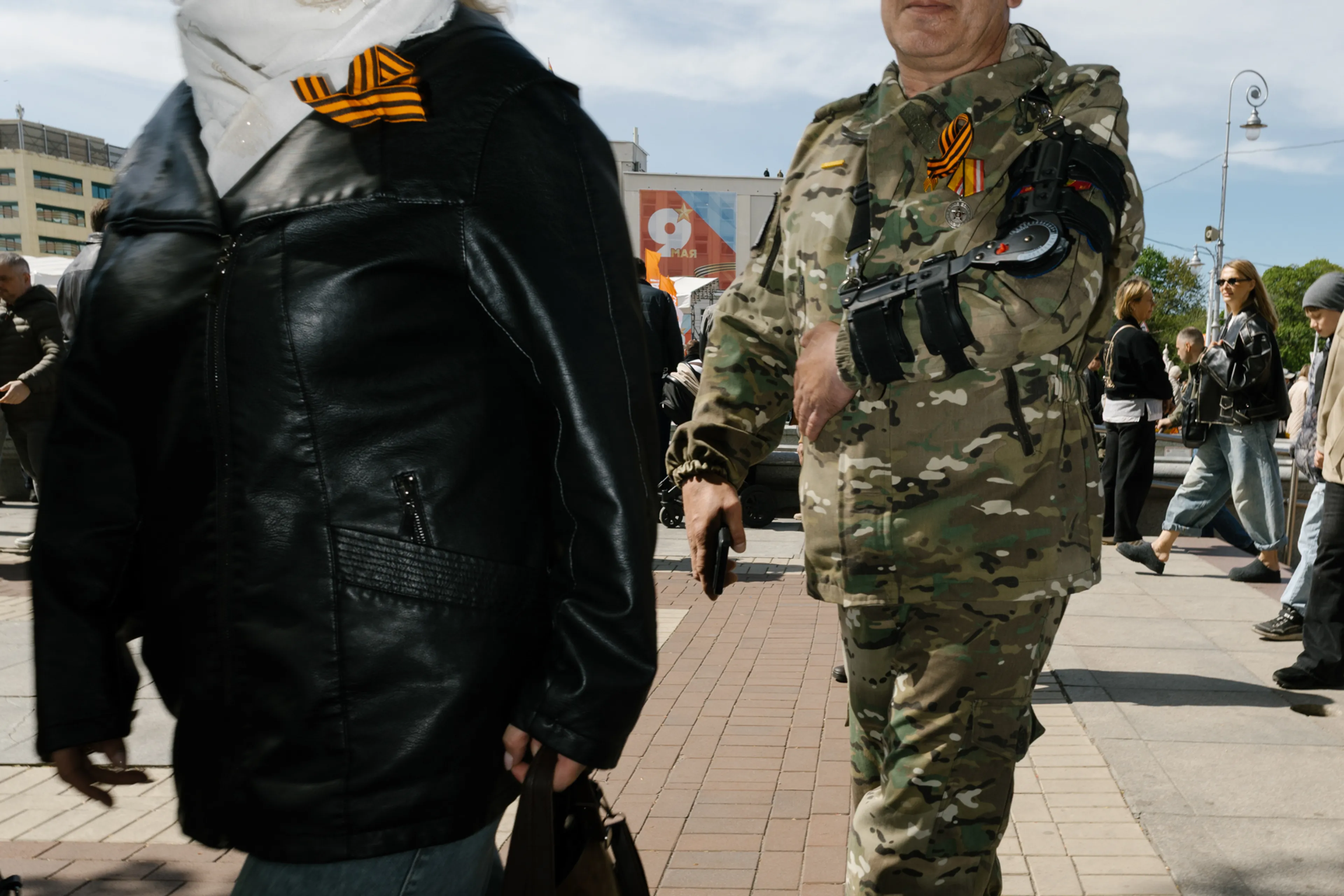
There is a crowd at the Europe shopping center in the city center, people are outraged: they are gesticulating and looking sideways at the police with displeasure. Because of the parade, at which Governor Alexei Besprozvannykh is scheduled to speak, employees of the shopping center are not allowed inside. The building borders Victory Square, and security forces fear for the safety of parade participants.
“Just like that, paralyze the work of a shopping center because of some…” blurts out a brunette in a leather jacket, but decides not to finish the thought because of the policeman standing next to her. She turns to the security officer:
— Once again: do you have orders not to let anyone in until one o’clock?
“I’ll clarify now,” he answers patiently and steps aside to make a call.
He soon returns and allows the employees who took their passes with them to enter the building. The crowd filters through the service entrance doors. Some workers take schoolchildren so they can watch the parade from the windows of the shopping center.
“Maybe we’ll see tanks today?” — a Kaliningrader with a St. George ribbon and a “For Victory” patch on his chest turns to his companion. Both are making their way through the crowd near the Europe shopping center. It is impossible to get to the square directly because of the cordon, but the Kaliningrad resident, according to him, knows how to go through the courtyards and leads to a place from which a small part of Victory Square can be seen. There are about a hundred more people waiting for the parade to start.
Two schoolgirls look displeased at the clock on their phone screensaver: they are tired of standing, they are bored and cold. “This will all last half an hour maximum, then to McDonald’s!” — their friend encourages the schoolgirls. She came to the parade to see a guy - a cadet at the Naval Academy. I took a friend for company.
A gray-haired naval colonel, about 70 years old, with a dozen medals on his chest, glances displeasedly at the schoolgirls.
Two soldiers in camouflage walk past the crowd, one holding a khaki suitcase, the other holding a device that resembles either a mine detector or a locator for searching for hidden electronic devices. Using the device, the soldier carefully scans every few centimeters of paving stones.
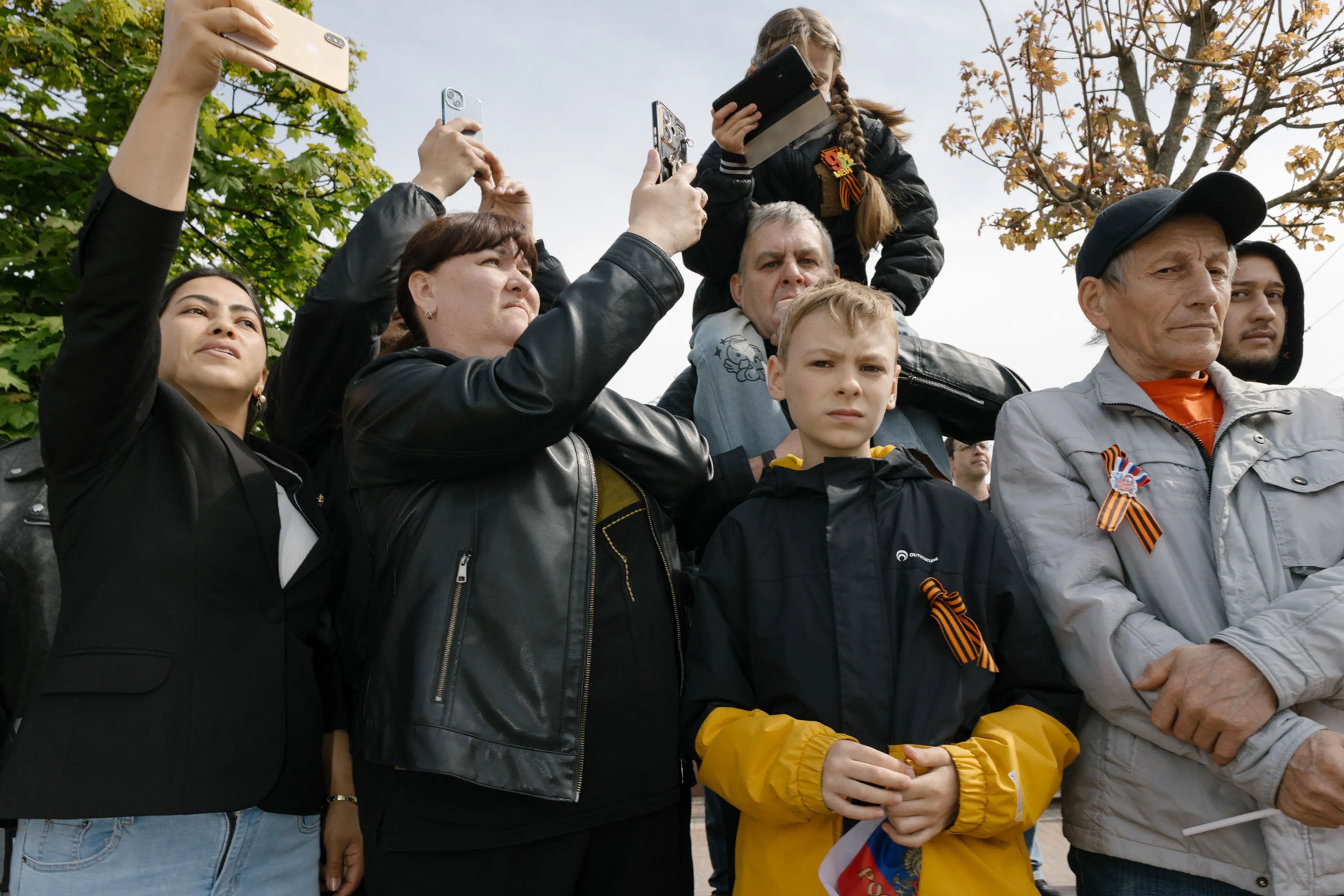
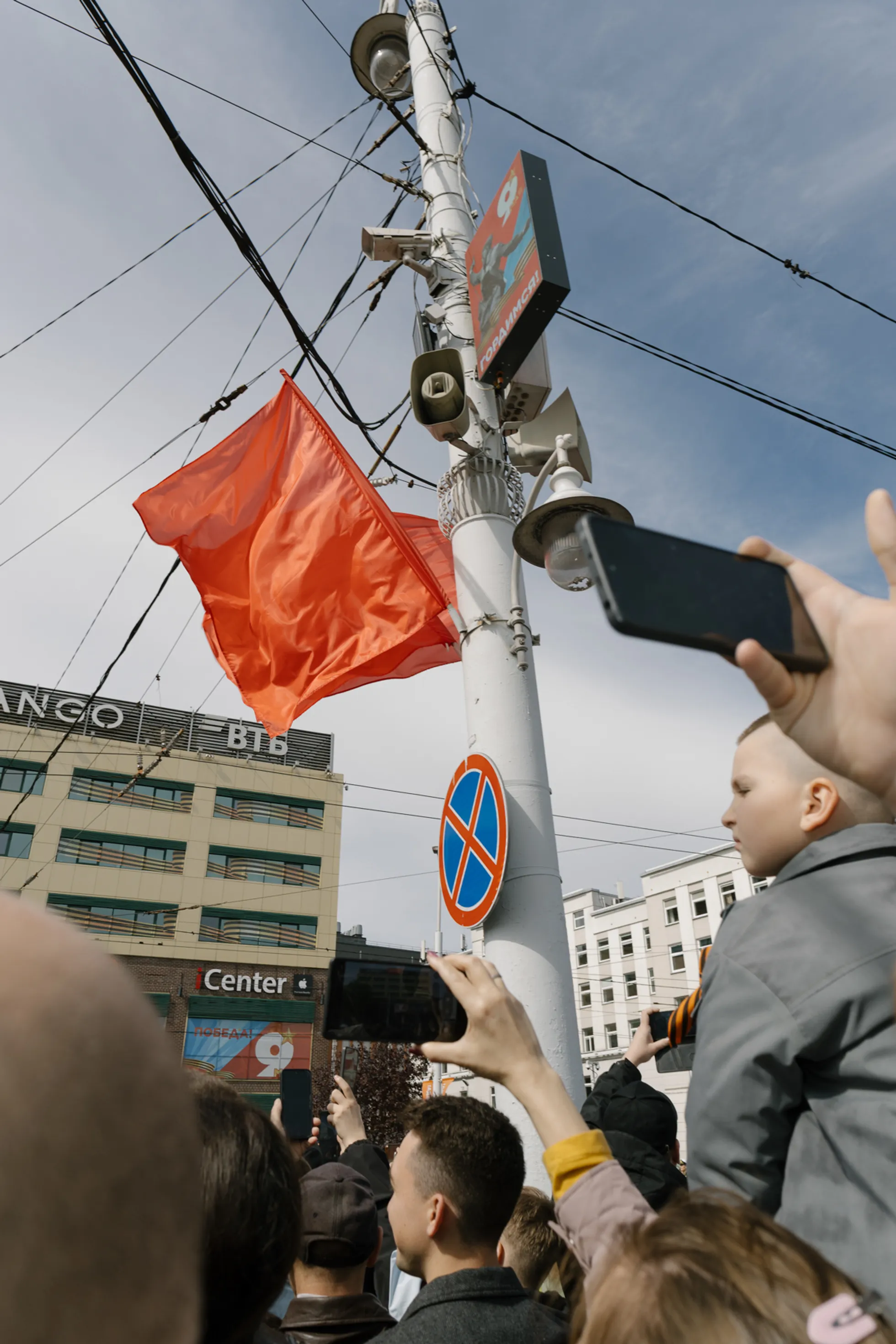
Taking advantage of the fact that the military has cleared the passage, a blonde woman of about 45 and her two children - a young man and a schoolgirl daughter - make their way closer to the fence. They made it just in time for the start. The mother says that in her youth she herself participated in parades as part of a military band, and asks the children to respect the participants in the event.
- The cordon has been here since six in the morning, the boxes ( ceremonial crews - note from Berega ) - since seven. And you only have 40 minutes [to be patient]. Don't overwork yourself.
— Why couldn’t you watch the parade at home? - the daughter is capricious.
- Because you won’t watch anything at home.
- So here, too, you can’t see or hear anything! - the son is having fun.
The already poor view of the square is obscured by the heads of people standing in front. The speakers installed along the road broadcast out of tune, so the voices of the speakers merge into a hum.
“Then I’ll turn on the broadcast for you at home in the evening,” the mother snaps. “Anything is better than watching these stupid bloggers.”
Just behind her is a family with a five-year-old girl, dressed all in pink, sitting on her father's shoulders. On the child’s head is a bandage with pins with Instagram and TikTok logos pinned to it. A child waves a fabric flag with a picture of a tank and the words “To Berlin” on top.
The Governor of the Besprozvanny speaks to the participants and guests of the parade:
We will always remember the military and labor feats of our fathers, grandfathers and great-grandfathers. Following their example, we continue to develop our region, build our common well-being, despite the challenges from unfriendly countries, their threats and attempts to intimidate us. We know and feel that there is great power behind us: our president and our great Russia.
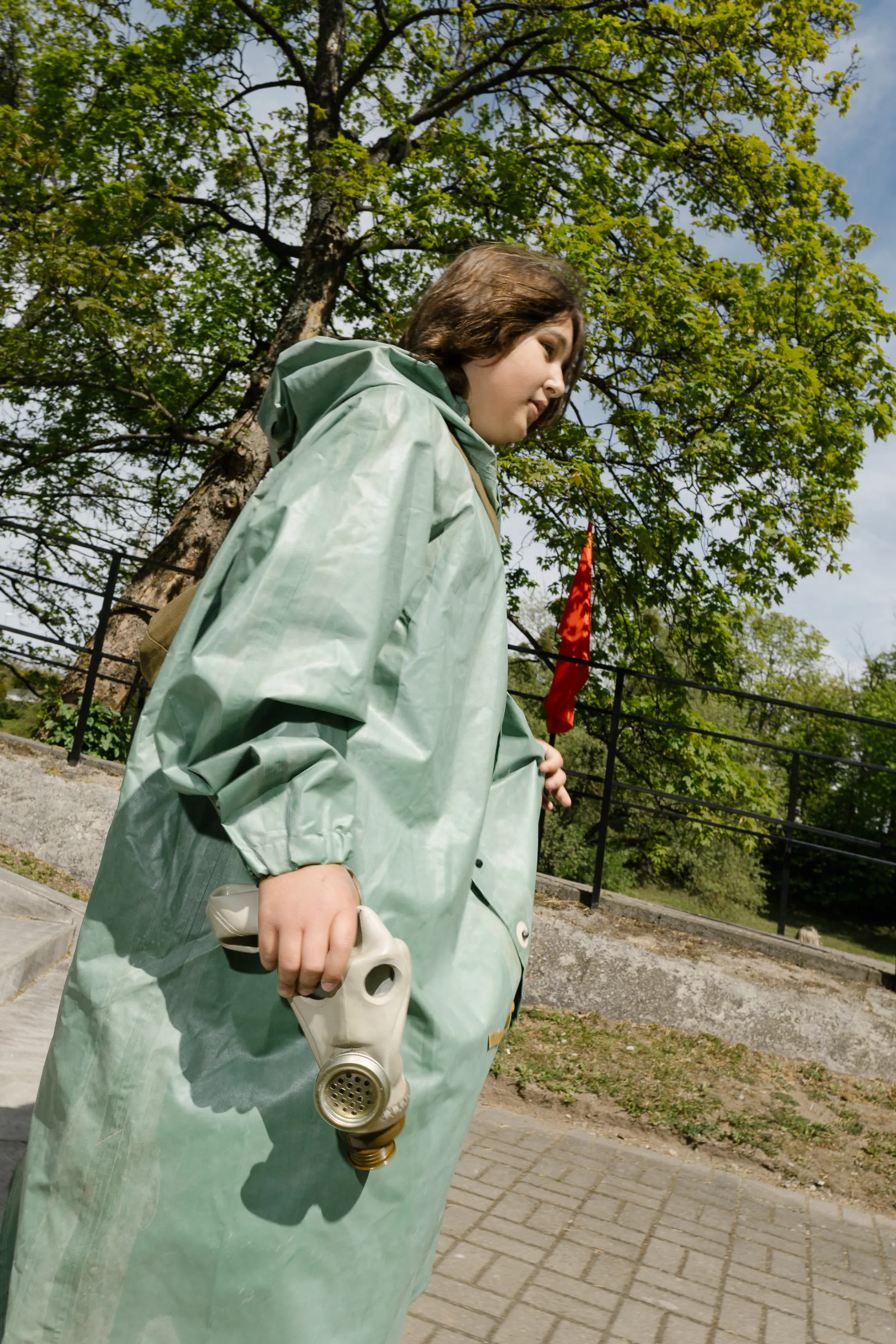
While the official is glorifying the Russians who are at war with Ukraine, a boy of about ten in an orange beret and camouflage with Emergencies Ministry stripes, a student of one of the cadet classes, squeezes towards the fence. He boasts of his knowledge of the Great Patriotic War and mentions Stalin.
“Your grandparents probably haven’t seen Stalin yet,” an elderly woman in a lilac raincoat says sadly.
- No, we caught it! And I found it! - the child blurts out. The crowd laughs.
“I didn’t even find Stalin,” the brunette of about twenty-five smiles condescendingly. “I was born under Putin, and maybe I’ll die under him.” Although this may not be a bad thing - in fact, he raised Russia from its knees.
The conversation about politics is interrupted by three cheers from the speakers. The anthem sounds and the military parade begins. To entertain the bored children, the blonde begins to comment on the parade. She expertly explains to which branch of the military each company that she manages to examine belongs.
“You see, in black berets, these are saboteurs,” she says with respectful intonation.
— Do you mean saboteurs? - the son doesn’t understand.
- Well, they conduct all sorts of operations on enemy territory.
-What are they really called?
The mother shrugs.
Marines march in black berets - these troops actually have reconnaissance and sabotage units.
“For some reason there are no border guards,” the blonde gets upset.
“Yes, they probably have something to do,” the son answers.
Ten units of military equipment are passing behind the military, including two T-34 tanks and a Katyusha.
The parade ends and the crowd splits in two. Some are waiting for the security forces to lift the cordon in order to go directly to the eternal flame at the monument to 1,200 guardsmen. Others go around.
By 11 o'clock in the afternoon, the passage to the memorial was already open - apparently, increased security measures were introduced only for the duration of the parade. The metal detectors ring incessantly, but the police do not respond to them.
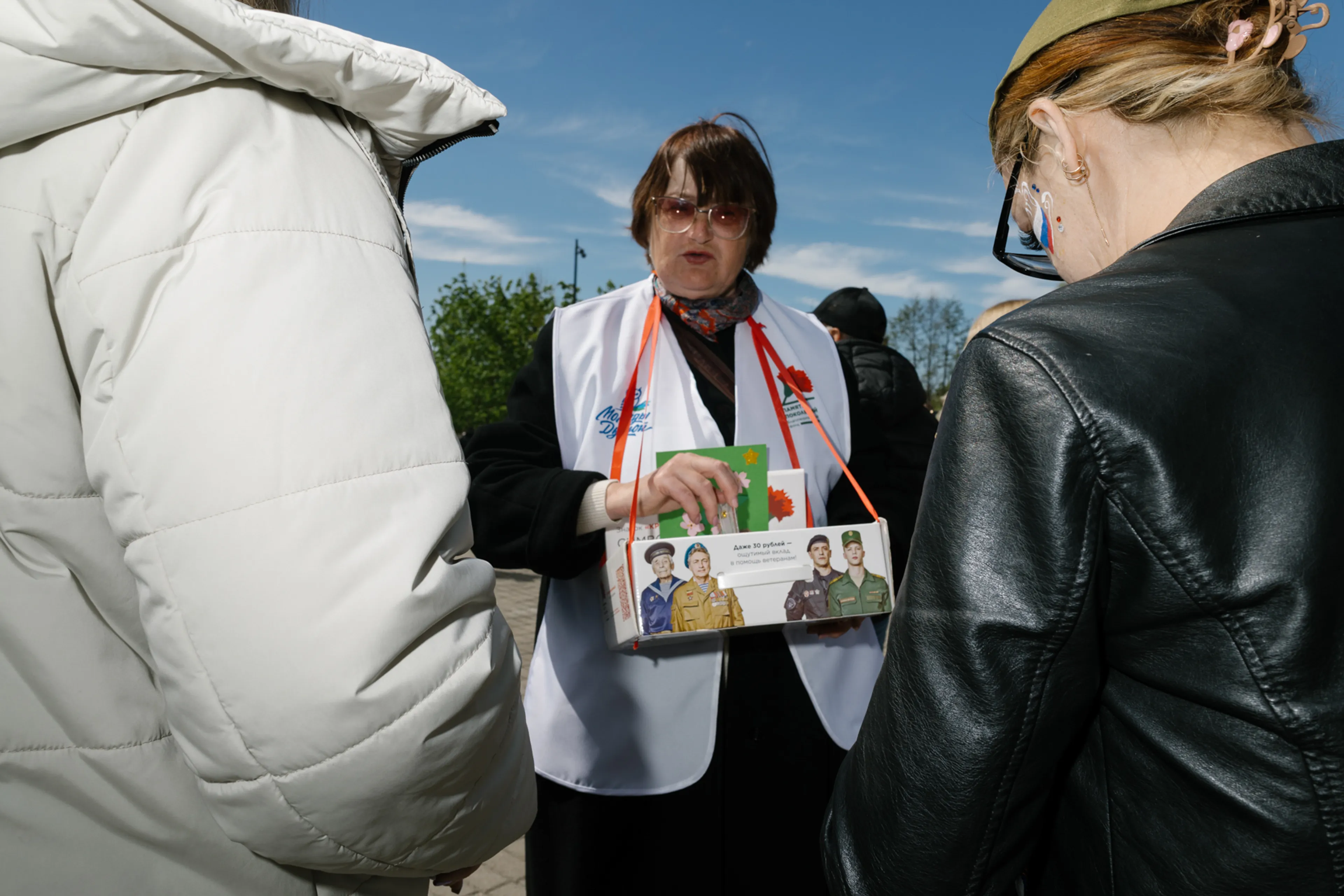
Next to the Eternal Flame and at the 26-meter obelisk dedicated to the Soviet soldiers who fell during the assault on Konigsberg, there are already armfuls of flowers. Volunteers of the Memory of Generations charity foundation are loudly calling on Kaliningrad residents and city guests to donate money to veterans in exchange for a badge in the form of a red felt carnation.
— Who exactly will the money go to? — a brunette with a bright pink manicure asks incredulously.
“We help veterans of all wars,” the volunteer answers dryly, emphasizing the word “all” with her intonation.
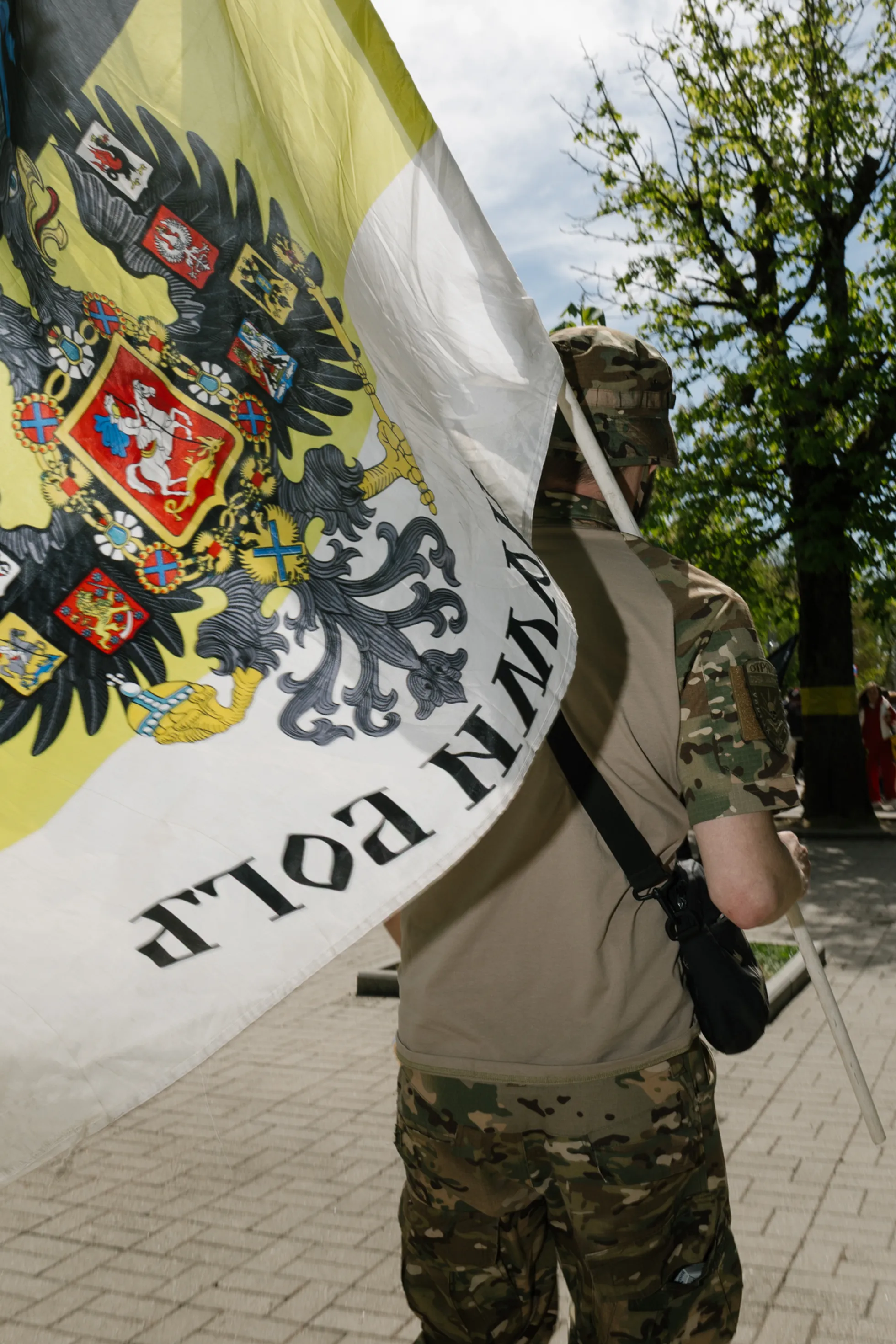
A young man passes by, wrapped in an imperial flag with the inscription “We are Russian, God is with us.” Since 2014, the flag of nationalists has also become the flag of supporters of the so-called “Russian world” and the invasion of Ukraine.
In front of the stairs leading from the memorial down to Victory Park, a woman of about fifty stands and looks around. She accompanies a veteran of the war in Afghanistan - he sits in a wheelchair and hardly reacts to the people around him. The stairs are not equipped with a ramp; the only way to get into the park is if someone carries the man in their arms. But people pass by.
Finally, the volunteers notice the Afghan - it turns out that he is their long-time ward. “Guys, someone, help - the guy miraculously survived, miraculously! - one of the volunteers commands and leans towards the veteran. “I would never have thought that you would get here!” Hold on!”
Four strong young men take hold of the chair and lower the veteran down the stairs, taking breaks at each flight.
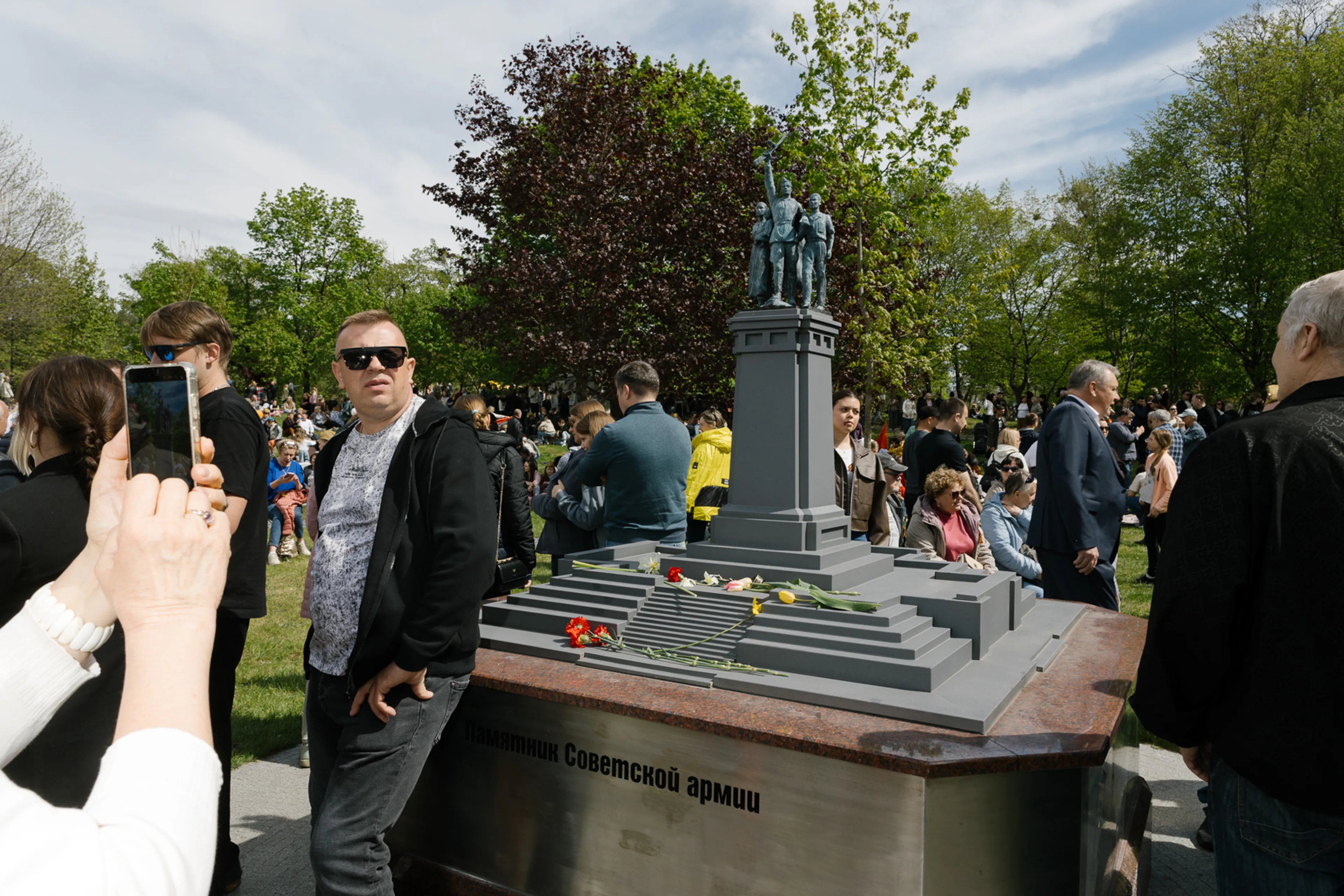
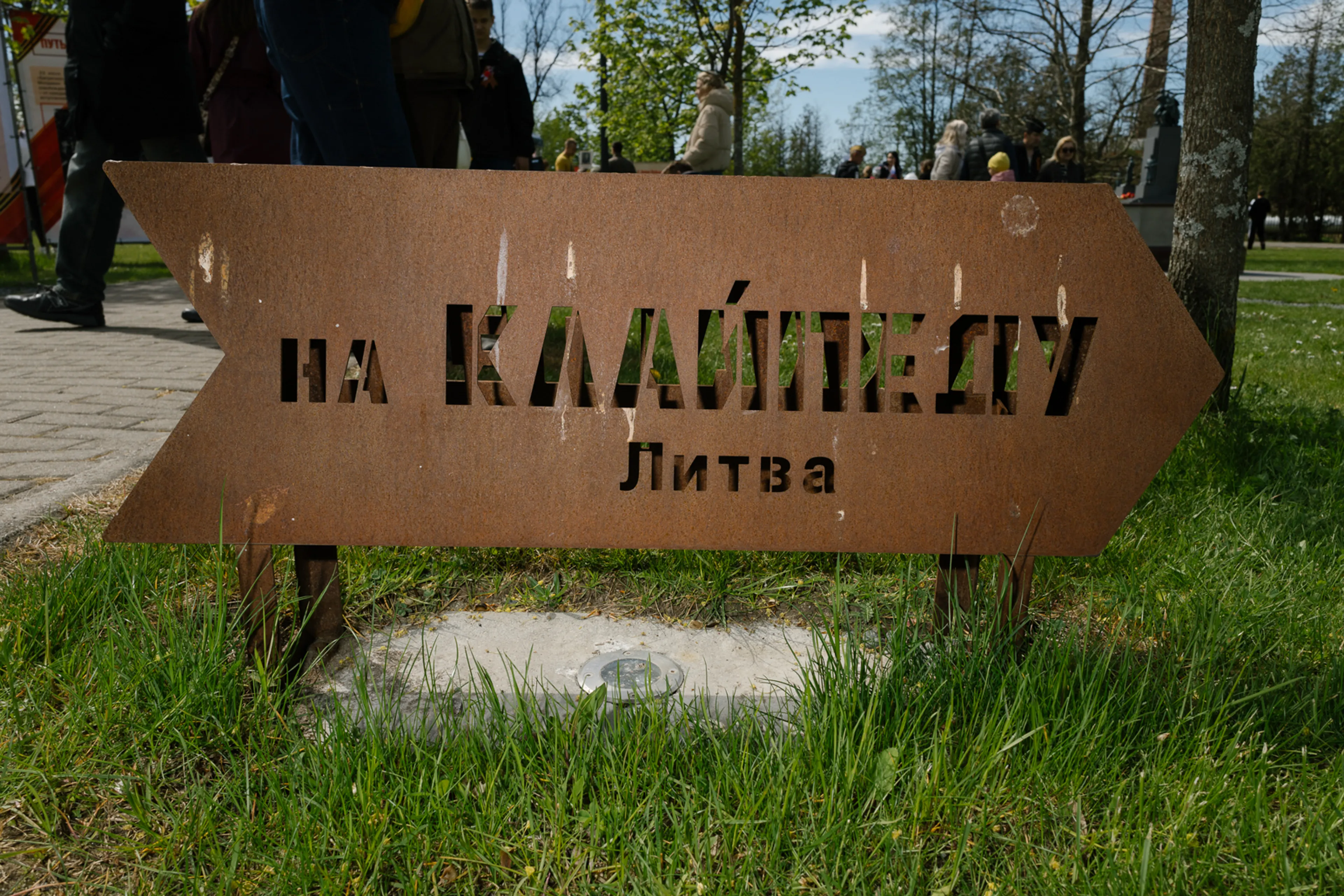
The main area of attraction for visitors in Victory Park is a complex called “Saved Europe,” which for some reason is also called a park. In the fall of 2025, seven small copies of monuments to the Soviet soldier were installed here. The originals in Warsaw , Kiev , Klaipeda , Prague , Riga , Sofia and Tartu were demolished by the authorities of these countries after the start of the full-scale Russian invasion of Ukraine.
The “Saved Europe” park was opened on September 1, 2025 by the governor of the Kaliningrad region, Alexey Besprozvannykh, and the children and grandchildren of Soviet military leaders Ivan Konev and Nikolai Vatutin (monuments to their memory were demolished in Prague and Kiev). The opening was timed to coincide with the anniversary of the start of World War II.
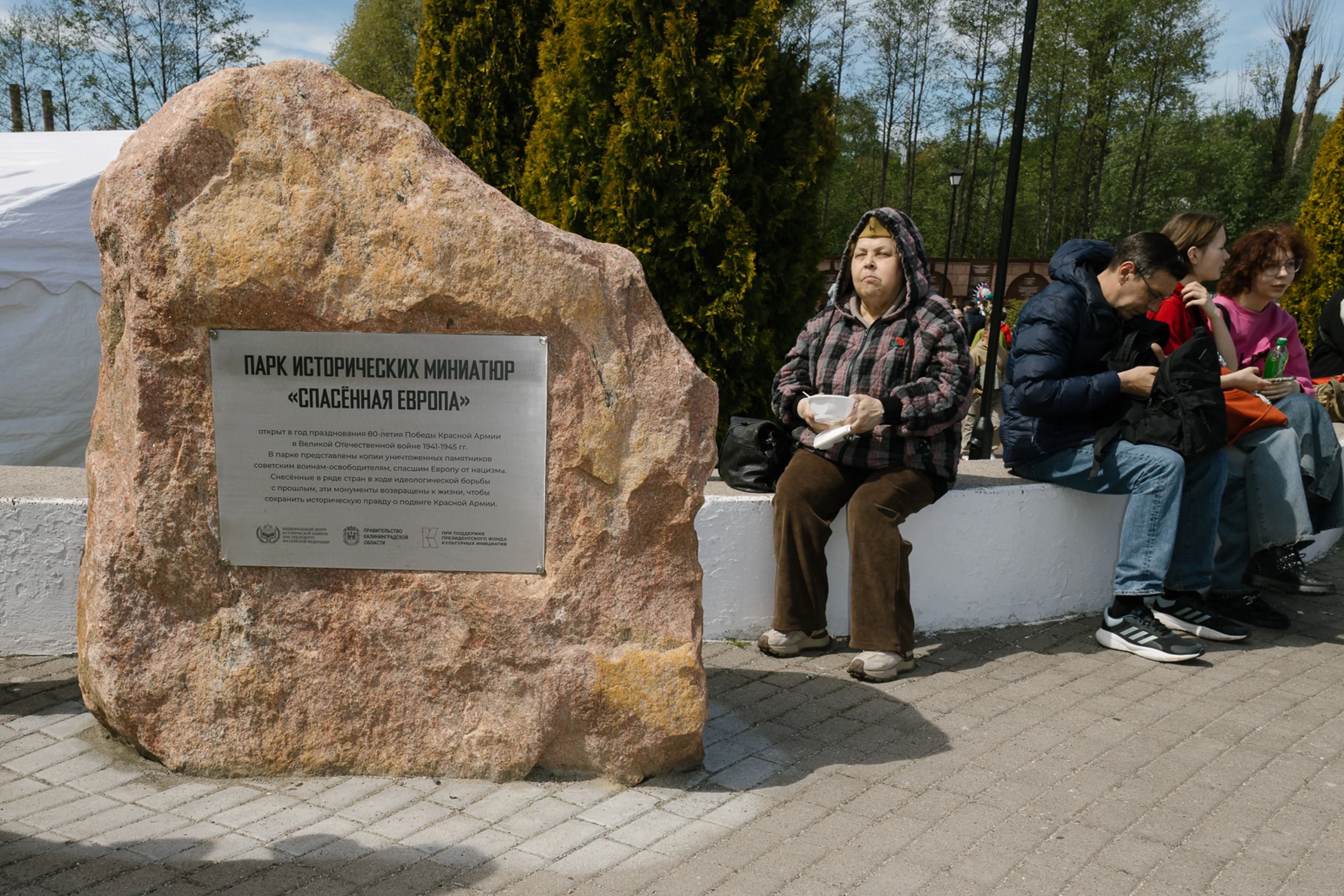
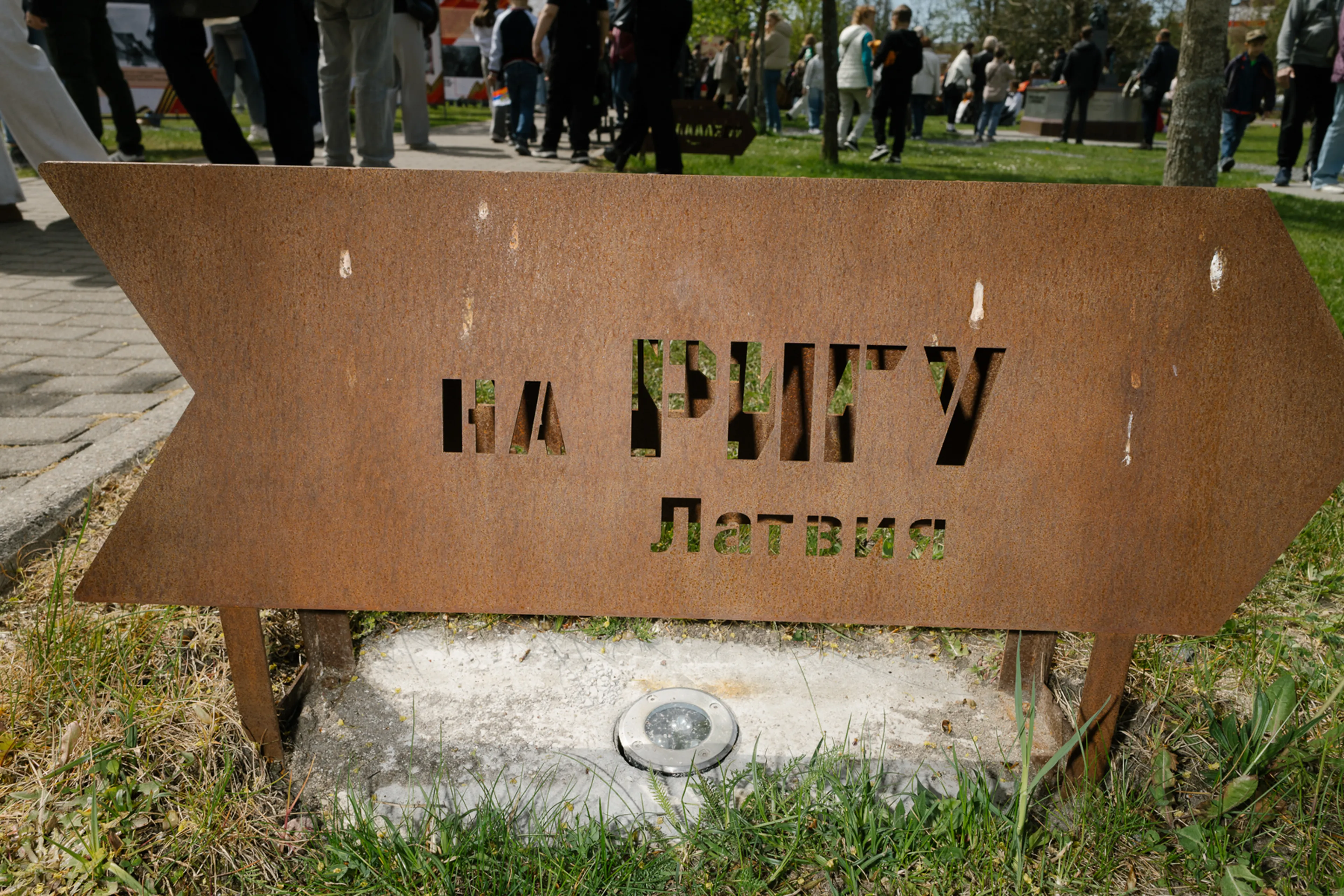
The paths leading from one miniature to another are covered with gravel, but visitors prefer to walk on the lawn. Instead of signs, rusty metal arrows with embossed inscriptions “to Kyiv” or “to Warsaw” are driven into the ground.
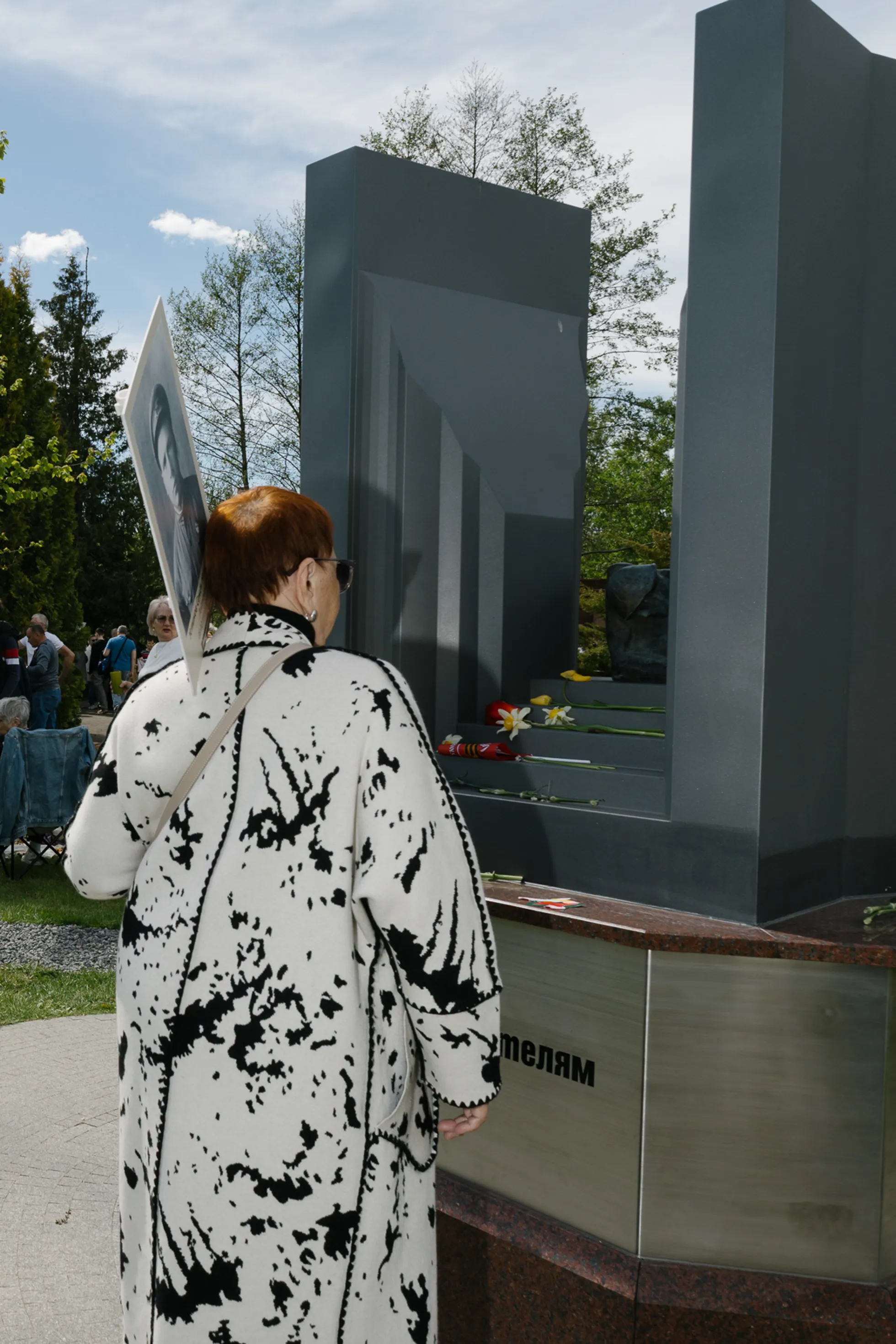
People linger silently in front of the miniatures, studying plaques with the history of the liberation of cities during World War II. Following the historical background, it is explained when and where the original monument was demolished. Some park visitors lay flowers at the memorials.
Some Kaliningrad residents cannot contain their indignation. The most rudeness can be heard at the monument to General Nikolai Vatutin, which was demolished in Kyiv in 2023. “During the course of the policy of the Ukrainian authorities, aimed at rewriting history and rehabilitating Nazism, the monument was repeatedly desecrated , and on February 9-10, 2023, it was dismantled,” the accompanying plaque says.
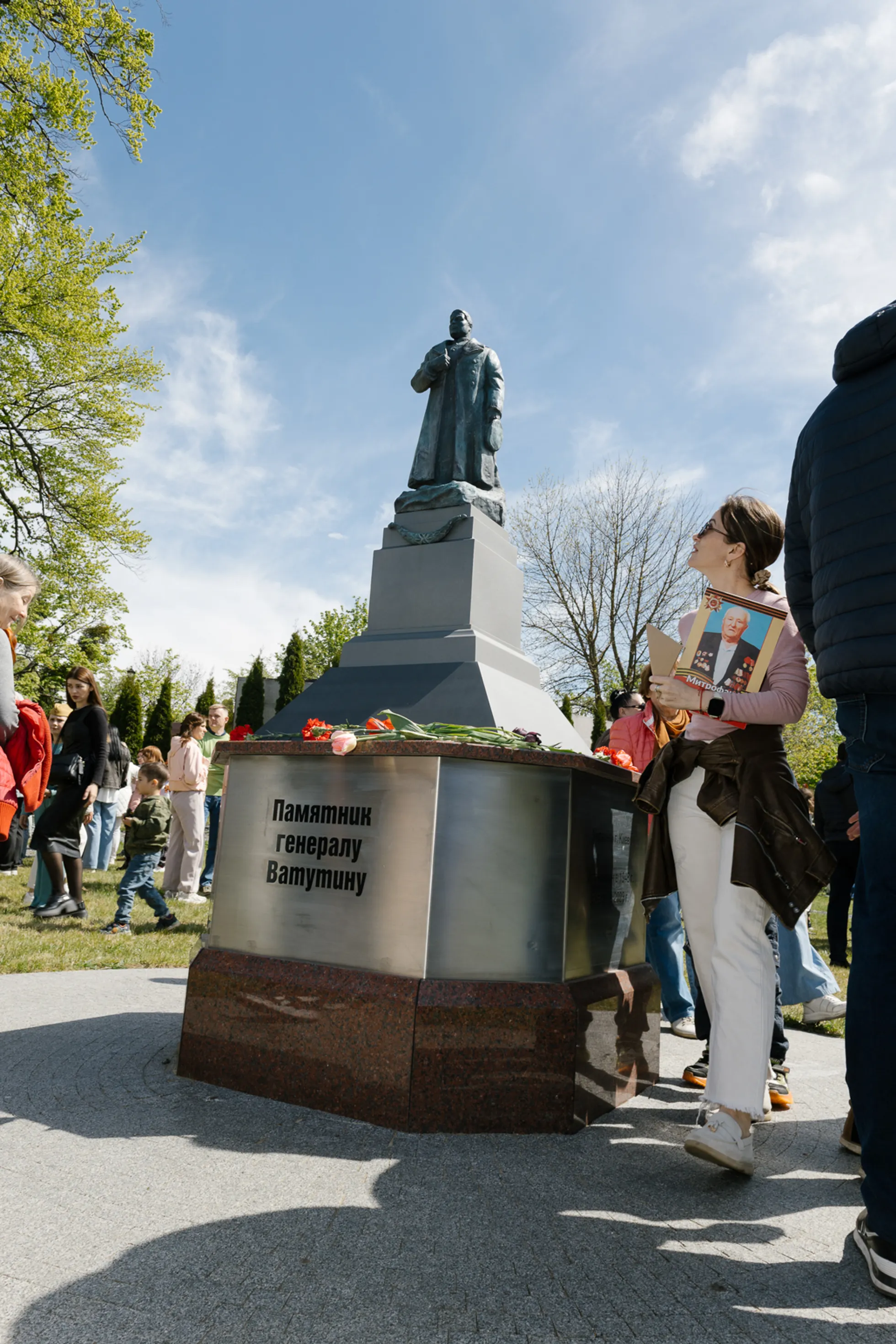
On the day of the demolition of the monument, adviser to the mayor of Kiev Dmitry Belotserkovets wrote on Facebook:
There cannot be a monument in the center of Kyiv to a man who, before World War II, actively participated in the establishment of Soviet power on the territory of Ukraine and participated in battles against Ukrainian rebel units.
It is no secret that many historians write about his significant role in the persecution of supporters of independent Ukraine. In addition, some historians note that Vatutin won his victories by throwing unarmed and untrained soldiers (among whom a significant part were Ukrainians) under enemy tanks. We are talking, in particular, about the crossing of the Dnieper and the battle for Kyiv in 1943.
- We freed them, and they! Goats! - a large woman with bright red lipstick swears, having barely finished reading the description on the copy of the monument.
- Yes, that's who we're dealing with. Bandera! - her friend agrees.
“Fucking Poles!” - a male voice comes from where a group of visitors is studying a miniature of the monument to the Soviet-Polish brotherhood in arms, which from 1945 to 2011 stood on the Wilno Station Square in Warsaw. “Well, Slavic brothers, they mixed their own people with shit!” - someone else echoes him.
- Look, Riga! Our! — a tourist of about forty-five in a turquoise sweater rejoices. “Ours, ours!” — the friend nods with a smile.
They stand at the Monument to the Soldiers of the Soviet Army - the liberators of Soviet Latvia and Riga from the Nazi invaders.
— When they demolished it, remember how everything flew ! By the way, people bring flowers there out of habit.
- Yes, he was great, agree!
A long-haired brunette in a blue dress walks past her friends. She feels not nostalgia, but anger.
- People collected money! They built a monument on their own , and they! - she says to her friends.
“Yes, it’s terrible...” they agree.
- We freed them, and they! And what is happening in Ukraine now! — the brunette does not calm down.
“Well, it’s okay, time will pass, we’ll show you,” a male voice interjects into the conversation.
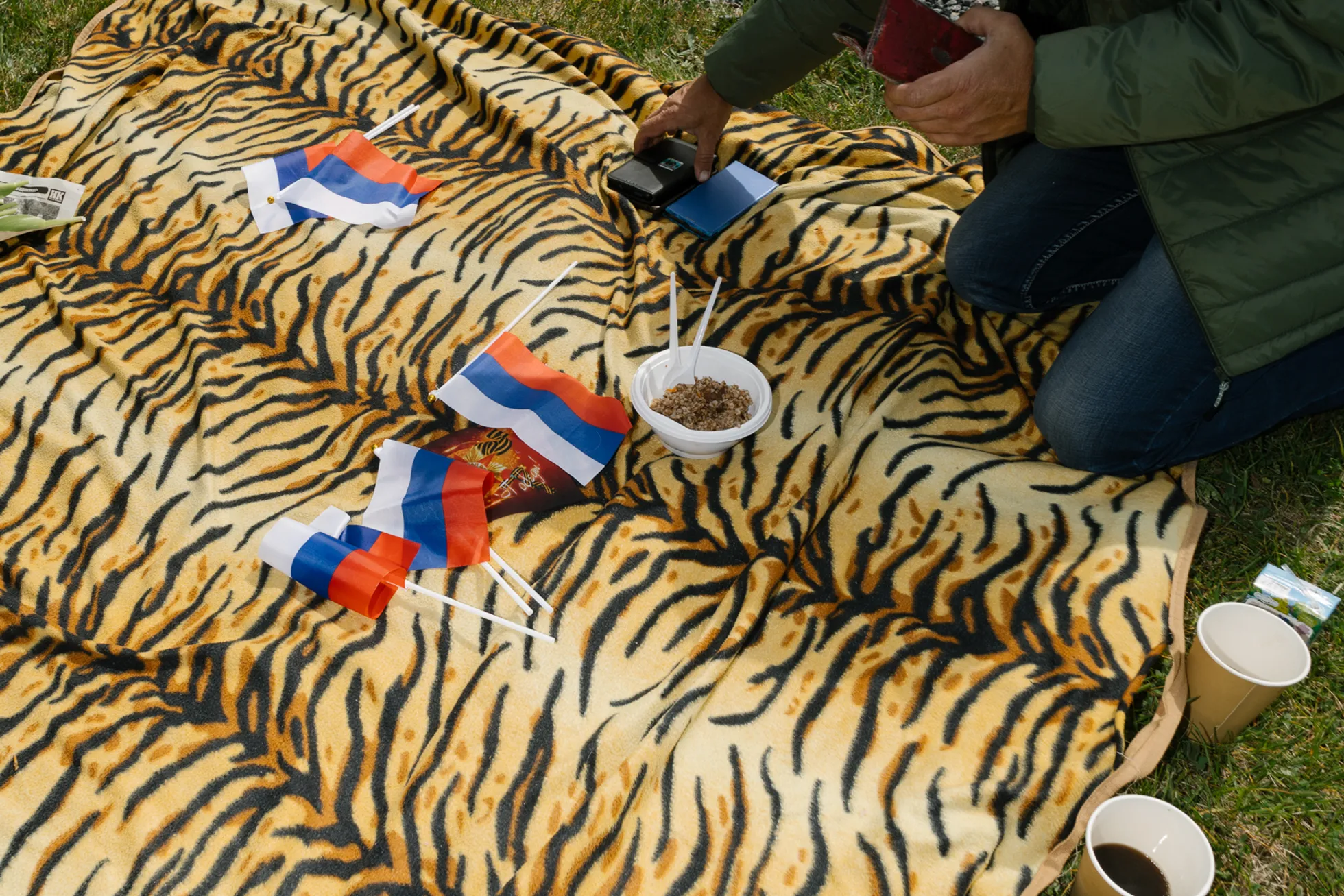
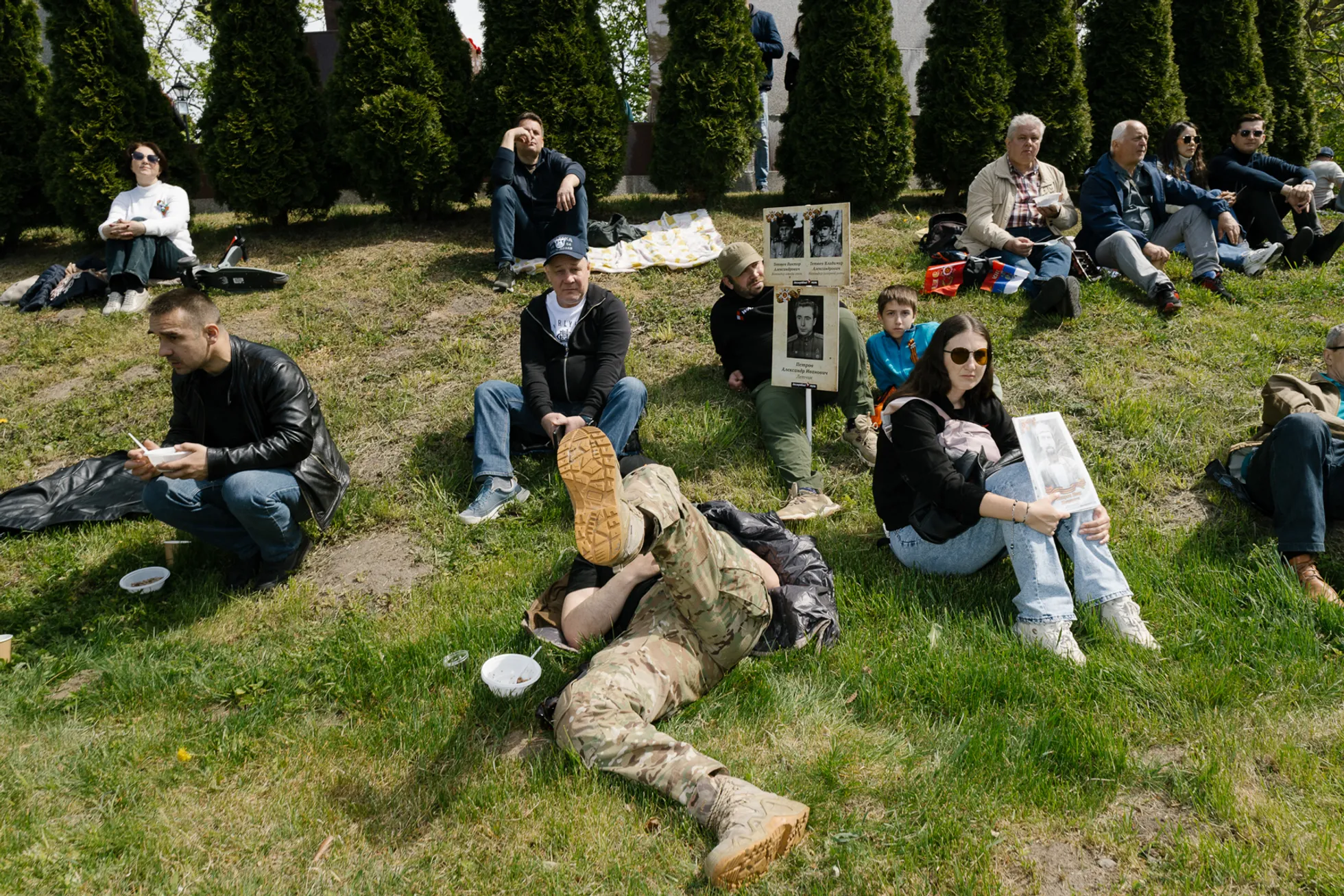
Overwhelmed by resentment, visitors leave the Saved Europe complex and go to the exit of Victory Park - there is a field kitchen where buckwheat porridge and sweet tea are distributed free of charge. Here the townspeople have a different mood: despite the fact that the queue stretched for about twenty meters, people look friendly and joyful.
After finishing their porridge, they leave the park - there is nothing else to do here. Behind the fence, people slow down - an exhibition of children's drawings called “We and the World 2045” attracts attention.
At least a hundred drawings are hung on the metal lattice: some drew a spaceship, some a rainbow, some a tank.
“Peace to the world!” - a schoolgirl about ten years old reads the inscription on one of the drawings and turns to her father.
He sadly shakes his head and replies: “That’s very, very questionable.”
"Shore"