
Translated material
Drum for Aznavour
How Moscow talked to Yerevan about Europe

8th Summit of the European Political Community in Yerevan. Photo: AP/TASS
The reaction of official Moscow to the summit of the European Political Community (EPC) in Yerevan, which ended in early May, turned out to be unpredictable only in part because it was somewhat belated. The Kremlin, as if deciding to save money on statements, included the Armenian theme in the general thematic presidential package for Victory Day. The essence of the reaction: in order to decide on the Armenian-Russian future, Yerevan should hold a referendum on relations with Moscow and the European Union. And although the divorce based on the results of the referendum may have to be carried out, as was said, intelligently, the Russian side still mentioned Ukraine, where everything also began with the desire to join the EU. And Dmitry Peskov asked Yerevan for an explanation regarding Vladimir Zelensky’s speeches at the summit.
Some internal inconsistency and belatedness of these reactions would have been understandable if Yerevan had taken Moscow by surprise with its initiatives. But that's not true. This means that we can only assume that this is the genre, and the question is in the addressee - and it is not so much in Armenia as in Russia itself. This means that it was not necessary to respond to Yerevan. But he answered anyway.
Pale red lines
It should be clarified: if it all started somewhere, it was not with Ukraine’s desire to join the European Union, but with the refusal of its then President Viktor Yanukovych to sign an association agreement with it. And not only Ukraine was invited to this association, but also other countries of the Eastern Partnership, a format created by the EU for the European part of the post-Soviet region, including Belarus. Ukraine, by the way, was not an excellent performer in that process. Moldova and Armenia remained the leaders, to which Moscow treated with demonstrative indifference. But as the “Ukrainian issue” worsened, the Kremlin also remembered Armenia. In September 2013, Yerevan literally changed its vector overnight and, abandoning the European association, joined the EAEU. So once Yerevan already answered for Ukraine, which, by the way, a month later also refused the European proposal, and that’s when, really, it all began.
At that time, Armenia and Russia created a unique form of strategic brotherhood, in which the imitation of dependence on Russia allowed the then Armenian government to get rid of any responsibility for what was happening in the country and mutually beneficially delegate it to Moscow. Including, as was believed, responsibility for safety. It was precisely about the “red lines” associated with it that then-President Serzh Sargsyan reminded his opponents when they asked him completely uncomfortable questions about Europe, and the questions died down.
It was this system of relations that Nikol Pashinyan began to destroy immediately after coming to power, first gradually, and after the Karabakh disaster openly. This is not to say, of course, that Moscow is holding on to it with all its might, especially after what happened in Karabakh. Moreover, the political reality has become different - much more harsh, objective and systemic, against the background of which Pashinyan’s attempt to demythologize the “brotherhood” and, accordingly, his efforts to create a myth about Armenia’s departure to Europe faded. And besides, during each of his 32 visits to Moscow, despite all the offensive words about the CSTO, even when talking about revising the concession of the Armenian railways, Pashinyan remained a completely constructive partner. But now we must take into account the complex configuration that has developed in the region.
One step forward, two steps to the side
It was not necessary for Moscow to respond, but Yerevan decided not to abuse this right.
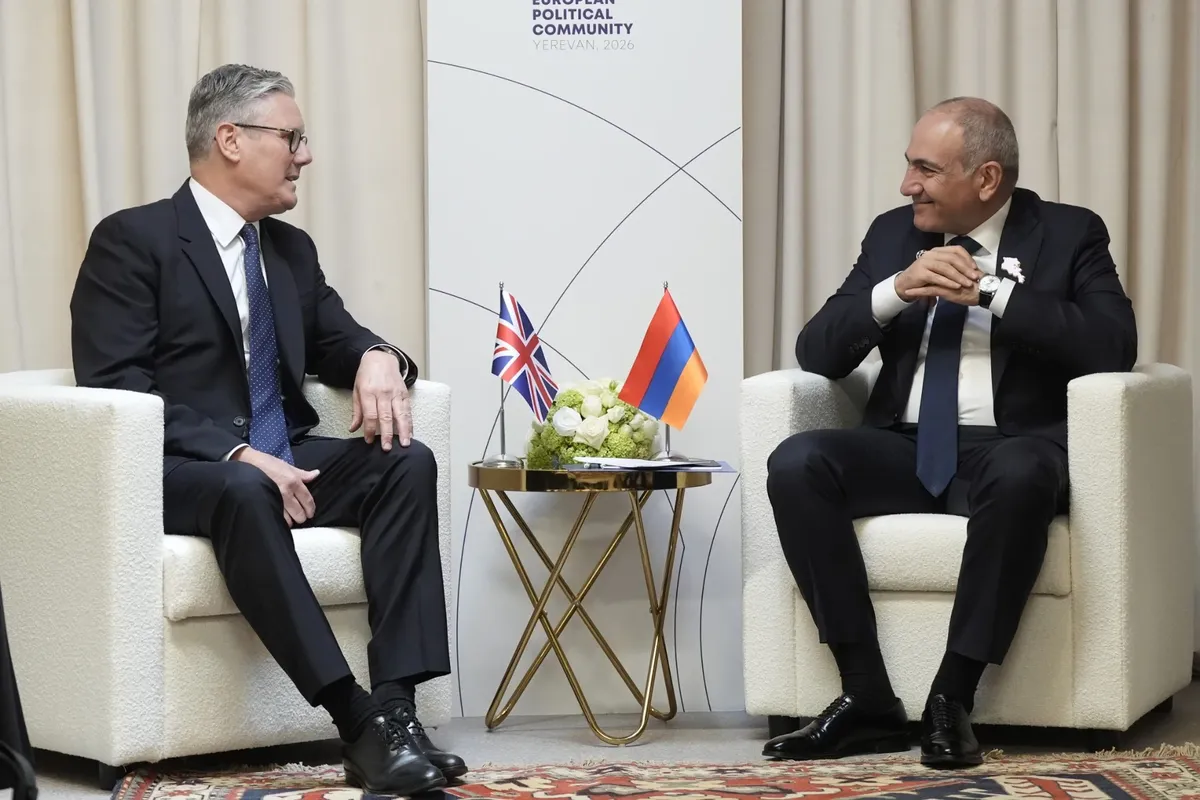
“...It is no secret that the people of Armenia have European aspirations. When the time comes for decisions, we will decide. Today we are members of the EAEU, no one said that we were leaving,” Foreign Minister Ararat Mirzoyan said in response to Moscow’s claims, making it clear that he understood where Moscow was really aiming. And Pashinyan just recently added: Armenia will not leave the EAEU suddenly, it will be a planned step.
Indeed, hasty disruption of synchronization itself can make any device vulnerable. But only on the issue of what Yerevan intends to stretch over decades, Moscow asked to decide here and now. Pashinyan is true to himself - he is again trying to turn what looks like his weakness into a bonus. And it works.
Pashinyan’s speech to European leaders did not spread around the world like the video of his joint musical performance with Emmanuel Macron at La Boheme, but in vain - it contains the key.
“Once Armenia meets the membership criteria, filing an application will depend on whether the EU is ready to accept the country. If yes, Armenia will apply to join as a full member...” That is, Yerevan is not rushing anyone and is not in a hurry itself. And therefore, the lower the pace of readiness or the less ready the European Union is, the more time and opportunities Yerevan will have not to make a choice.
And everyone remains with their own - Moscow, Yerevan, and Brussels.
Despite all the non-obviousness of such a position, Pashinyan cannot afford another one. On the one hand, on the path that Yerevan has declared European, a certain number of steps have already been taken. The old system of relations with Moscow has been dismantled, although after the defeat in the Karabakh war it itself would hardly have remained the same under any other prime minister - although under someone else this defeat, like the war itself, might not have happened. The settlement with Azerbaijan is taking place in an increasingly bilateral format, which would previously have been unthinkable. Through the joint efforts of Baku and Yerevan, Moscow did not gain control over the Zangezur corridor (although, however, it does not and is not expected to do so in the near future). Again, Armenia has effectively ceased its participation in the CSTO. However, all these steps are either connected not only exclusively with the position of Armenia itself (there are also other interested parties), or are still in the nature of signals. The question is not so much whether Yerevan is ready for Europe, but how interested Europe is in hearing these signals.
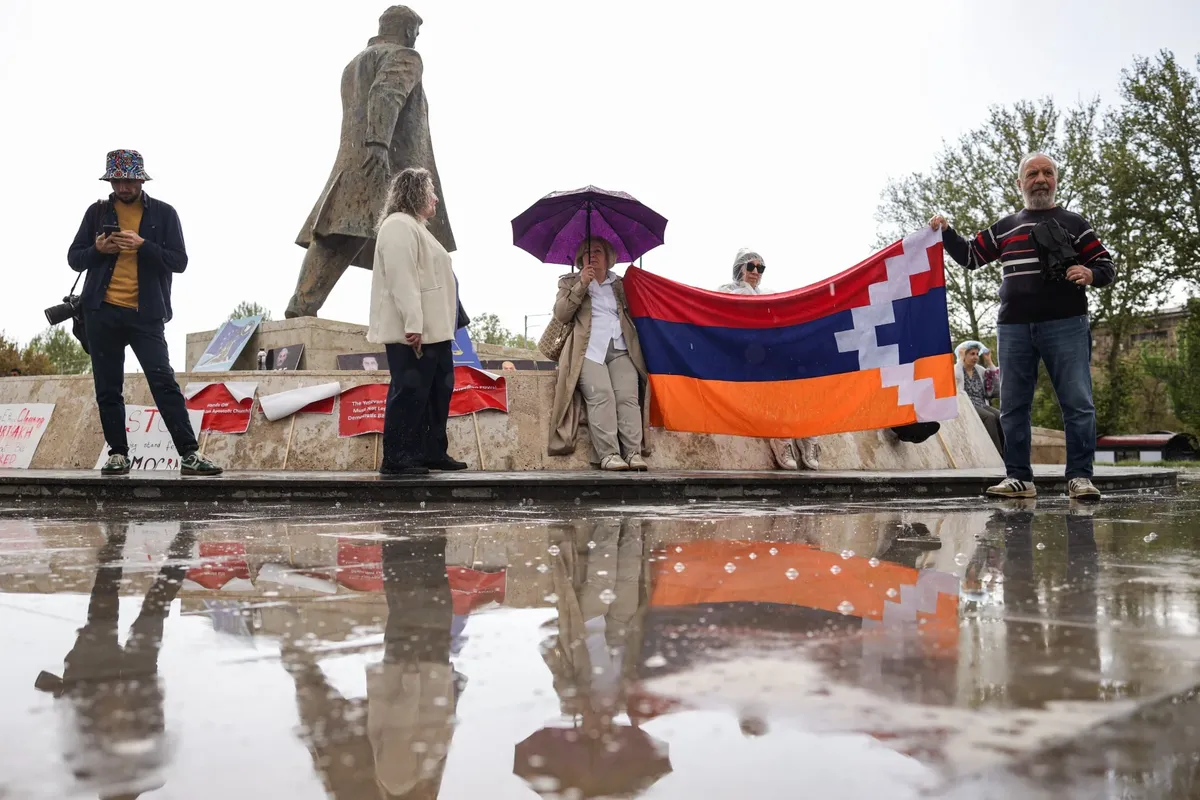
On the other hand, Pashinyan cannot increase the pace of moving away from Russia. Not for objective reasons - so far no steps have been taken to change the commodity-money balances, and this is a vicious circle: as long as there is no alternative, there will be no changes. Not subjectively - the opposition is sensitive to any excess in the impulses of power, and the anti-Moscow resource from the time of defeat in the war, actively cultivated by Pashinyan, has been practically exhausted, and the pendulum has slowly but steadily moved back, in search of a new balance.
The energy of moving away from Moscow now has to be used not so much towards Europe, but along the perpendicular.
Everyone came to the front
But Europe is forced to accept the signal sent by Yerevan.
The ENP summit in Yerevan was planned last year, and even then it was clear how synchronized it would be with the June parliamentary elections in Armenia. But the result exceeded all initial assumptions.
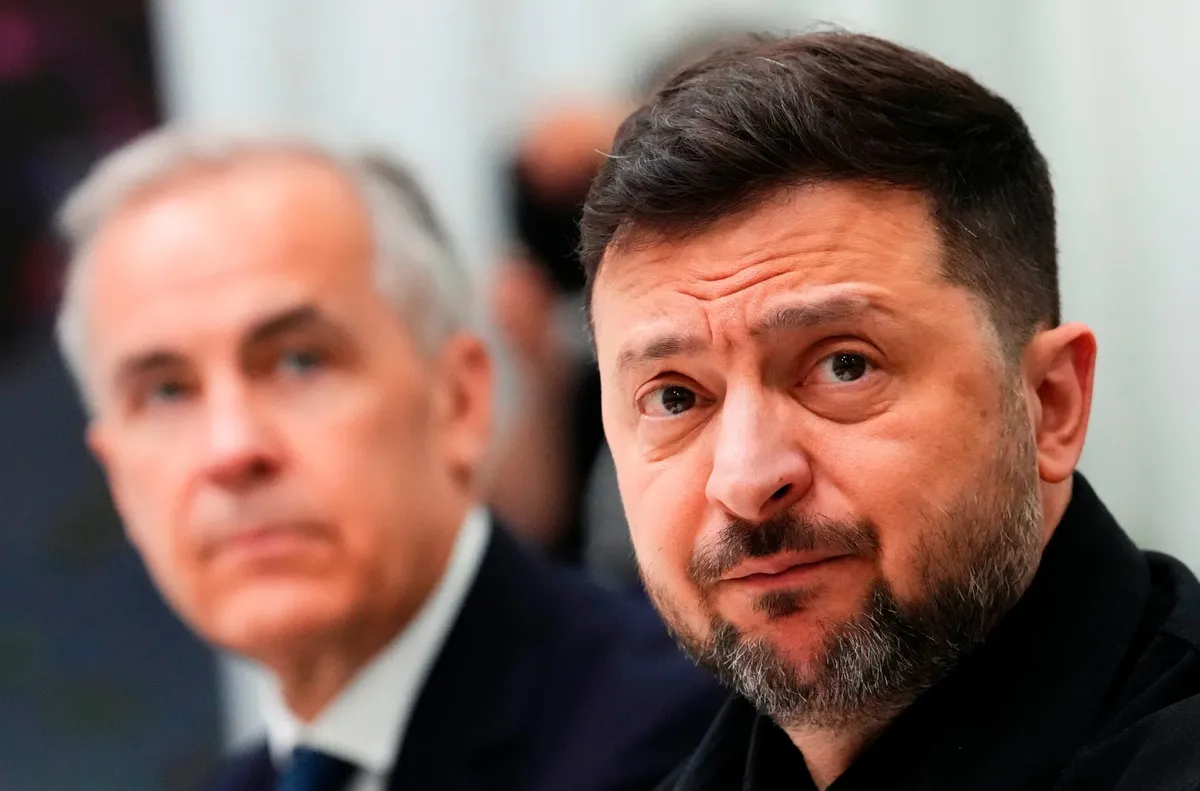
At first, however, it might seem that Zelensky could challenge Pashinyan’s laurels as the main character. However, perhaps the summit turned out to be not so much his benefit as a dress rehearsal for a new format being worked out by Brussels. A few days before the summit, Zelensky holds a difficult, but with an understanding of the future, conversation with the Hungarian triumphant Peter Magyar. Literally on the eve of the summit, he calls Robert Fico, and at the summit he meets with him personally, after which Fico goes to Moscow. If not to bury, then to bury the hatchet, Zelensky is also trying to bury the hatchet in a conversation with Georgian Prime Minister Irakli Kobakhidze. In a word, the President of Ukraine spoke with everyone who has learned to monetize their neutrality, especially since Zelensky met separately with the leader of this movement, Ilham Aliyev, in Baku. And whatever it was, preparation for a Pax non americana model or a signal to Moscow, the Kremlin clearly reacted to all this with interest, perhaps greater than Pashinyan’s demonstrative statements about a new post-Soviet unification without Russia, or his meetings with Zelensky. And even more so - the latter’s performances, mentioned by Peskov.
Zelensky remained in the role of a guest star, and Pashinyan more than took advantage of all the advantages of the home team. Including the search for a new edge of permissible foul in relations with Moscow.
The pre-election logic he chose makes this search even more decisive.
Its primary message is peace with Azerbaijan, and all continuations grow from this. Thanks to peace, Pashinyan completely replaces the inexpressive domestic political agenda with an external one and declares the system-forming choice between Russia and the West. For some this is indeed important, but for many this choice is a continuation of the theme of peace. And the point is not only that Pashinyan, being in power, is doomed to become its monopolist. It’s unlikely that anyone else would dare to take such a risky game, especially in a country where a fair portion of it considers Pashinyan to be the culprit of the disaster. But as a bonus, the current prime minister not only managed to add to the election agenda the thesis that if not him, then there is a war, and everyone who is not him is its instigator. He pushes those who challenge his world into a political niche in which even those who were not seen as sympathizing with it yesterday are forced to bet on Moscow to one degree or another.
Ideological polarization, as a rule, works for the current government, including because it is they who dictate the rules and topics of discussion. Pashinyan is recklessly deepening the lines of all possible internal fronts. Whether on a church issue or on national mythology. At least in relation to the West and Russia, which in fact for a significant part of citizens is not as civilizational as optimists would like, but exclusively instrumental in nature.
This is also why the ENP summit became a pre-election gift from the European wise men for Pashinyan. Well, and at the same time, of course, Macron, “La Marseillaise” on the streets of Yerevan and Aznavour, for some reason with Pashinyan personally playing drums.
Moscow without Jermuk
By the way, it was Macron who proposed the ENP format four years ago, and Armenia’s traditional sympathy for France made him, perhaps, the third beneficiary of the summit, which reflected light on Pashinyan himself. But other leaders also readily agreed to support the Armenian prime minister in the home stretch of the election campaign.
It is unlikely that the European Union seriously considers today’s Armenia to be a replacement for Georgia, which has decided to become an analogue of Orban’s Hungary in the Caucasus. But this is the case when image is really, if not everything, then a lot. Europeans have to proceed from the logic that Pashinyan offers, simply because the alternative to him is those who have always taken the position of “Forever with Russia!”, or those who are forced to identify with them today because of Pashinyan’s rejection.
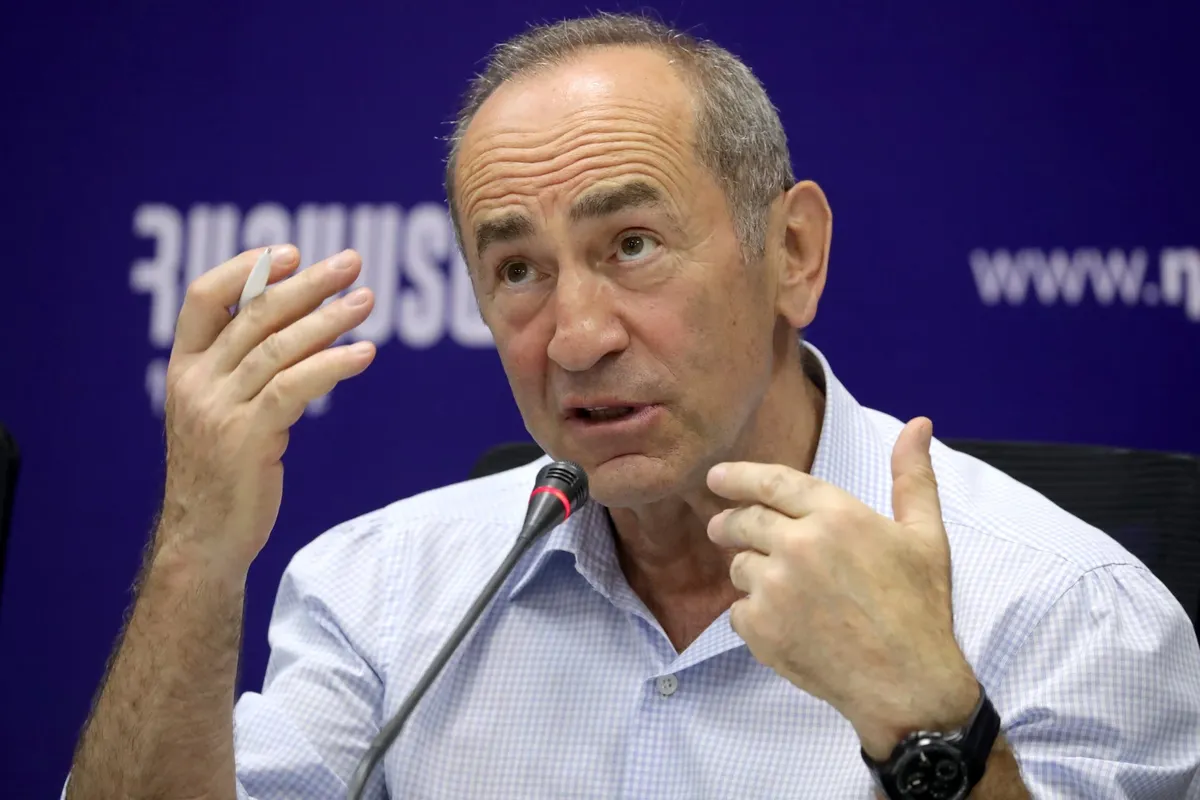
It is unlikely that Samvel Karapetyan, the Russian oligarch who challenged Pashinyan, or the former leader of Armenia Robert Kocharyan will radically change the new balance of forces and motivations of the participants in the action. After all, even under Kocharyan, Yerevan had quite extensive and intense relations with the West. But a possible change in the coordinate system could make the situation much less predictable than it is today, when for the first time everything here for Europe became, if not ideal, then at least tolerable. Especially today and here, next to Iran.
In a word, the context in which the Yerevan summit was inserted is different for everyone. Including Moscow. She already had to somehow react to such events; the only question was the nature of this reaction. Previously, individual broadcasters or second-line political characters were enough to answer. Today the reaction was at the highest level.
For Yerevan, the summit became a pre-election apotheosis, for Brussels - a political and image event. For Moscow, the summit happened in the midst of a clear crisis of goals in Ukraine, and therefore in the entire political process.
And if Yerevan, for its own political reasons, must be insolent, and on the verge of such a foul, and perhaps already beyond it, then Moscow has to look for answers, attracting the main calibers in conditions of limited pressure resources. It is, of course, possible to ruin the life of Armenia - through difficulties for carriers on the border with Georgia in Upper Lars or the vigilance of Rosselkhoznadzor. But, as practice shows, this cannot be done over a long period of time. Threats of gas pressure or restrictions on other economic benefits of an allied nature also did not help Moscow in such conflicts.
But Yerevan is clearly not going to seriously cross the line in relations. A real insult for Moscow would be, for example, not allowing those whom it considers its supporters to participate in the elections, and the Kremlin has already clearly warned about this. One must assume that Yerevan knows which proposals from Moscow cannot be refused, especially since there are no fatal risks for the Armenian government in such participation. And so far there have been no complications between Moscow and Yerevan that would not have ended in some kind of personal contact between the top officials, and the summit is unlikely to change anything in this regard. Although now, probably, after the elections. But it’s probably time for Yerevan to get used to the fact that after the Armenian “Jermuk” something else will be banned in Russia.