
Translated material
"Most likely he will start a revolution." Maine Oyster Lord

With six months left until the US Congressional elections, both parties are campaigning aggressively. A historical pattern is on the side of the Democrats: the presidential party, as a rule, loses the first midterm elections after the election of the president. On the Republican side are administrative opportunities in many problem states.
Until recently, it was believed that Democrats had a high chance of winning a majority in the lower house. But now it is possible that they will gain control of the Senate. Analytics site VoteHub puts that probability at 46 percent, and a scenario in which Republicans retain the majority in the upper chamber but lose the lower chamber at 32 percent. The probability that they remain in the majority in both chambers is 22 percent, according to VoteHub.
The state of Maine in the northeastern United States is one of those facing a close battle for a Senate seat. It is a large but sparsely populated state. Its population density is 16 people per square kilometer. The economy is based on paper and wood products, electronics, seafood, textiles and biotechnology, as well as two shipyards that supply orders to the US Navy. There are few large companies in Maine; 99% of the state's economy is small business.
Maine has voted only for the Democratic Party candidate in presidential elections since 1992. Of the four members of the lower house of the US Congress from this state, two are Democrats, one is an independent and one is a Republican. Democrats control both houses of the state legislature. The governor of Maine is also a Democrat. One of the state's two senators is an independent, but the other is Republican Susan Collins. She was first elected to the Senate in 1996 and has been re-elected every six years since then. This is her sixth campaign.
People vote for Collins in Maine because she takes a flexible position and often deviates from the general party line. In America such politicians are called maverick - schismatic, renegade. President Trump has repeatedly called her a “disaster” and tried to find her replacement. During the Obama presidency, it was locked in with Democrats more than 70% of the time. She voted to acquit Trump in the first impeachment but to convict him in the second. Under Biden, she voted with Democrats 67% of the time. She is against the ban on abortion, for same-sex marriage and for much else on the democratic agenda. But its resource is coming to an end. Collins is 73 years old. She announced her intention to run for a new term with a video in which she unboxes a new pair of Nike sneakers and says with a smile: “Ideal for 2026, because I'm running.” But even in this video it is clear that her health is not all right.
Close on her heels is the Democratic candidate, 41-year-old Graham Platner . He is running for the first time in elections, starting his political career from scratch (Collins, before becoming a senator, worked for many years in the Congressional apparatus). But his media presence may be the envy of another seasoned politician.
Establishment candidates lose battle to neophytes
The media attention he receives is due to a generational change in the Democratic Party. Professional party functionaries are being replaced by people of a completely different background. They bring the energy of outsiders, mobilize the party's "base" - and at the same time inspire fears among centrists: will these candidates be able to attract the independent voters who decide who wins? Axios columnists call this intra-party confrontation a "civil war." Establishment candidates are losing the battle for the party nomination to neophytes.
Although Platner cultivates the image of a hard worker, he does not come from such a simple family. His grandfather Warren Platner was a renowned modernist architect and interior designer. His father is a lawyer, his mother owns a restaurant. His parents divorced when Graham and his younger brother were young. Even in school he was an activist. When President Bush flew into Bangor Airport in October 2002 and spoke to locals in the Bush family home of Maine, Graham Platner was in the crowd and shouted, "Don't attack Iraq! If our best generals say we shouldn't go to war, why should we do it?" Secret Service agents escorted him out of the event, but the remark ended up in a local newspaper report. Platner told a reporter: "Bush looked right at me and people started screaming at me to shut up, but he saw me."
He was then 18 years old. In the yearbook of the school from which he graduated in 2003, young Platner is depicted holding a poster that reads: “Freedom for Kosovo, Chechnya, Kashmir, Palestine, Kurdistan, Tibet.” Next to him stands a girl, also with a poster, and under the photo there is a caption: “Most likely they will start a revolution. Natasha Groh and Graham Platner.” (By tradition, such “titles” are awarded to graduates through voting.) Natalya Ivanovna Grokh, the adopted daughter of an American family, now works at the State Department.

A classmate says : Platner always broke stereotypes and behaved unpredictably. He was captain of the wrestling team and at the same time played Henry Higgins in the school play My Fair Lady.
I wanted to play toy soldiers
Despite his anti-war sentiments, immediately after graduating from high school, Platner enlisted in the Marine Corps, completed training, and was sent to Iraq in 2005. Subsequently, when asked why he went to war if he was against it, he answered : “I thought I could be useful. And I wanted to play with toy soldiers. Perhaps I read too much Hemingway.”

The geographical names mentioned in his service record - Fallujah, Ramadi - create the impression that he fought not just in hot spots, but in hot spots. But this is not entirely true. He ended up in Fallujah after the battle for this city, one of the most difficult in the Iraq war. “Our first few months there were relatively quiet, mainly because the Battle of Fallujah had ended shortly before, and during that fighting, insurgent activity in the area was almost completely suppressed.”
The first combat in which Platner participated occurred while he was on patrol duty in the Abu Ghraib prison near Baghdad - the same one “famous” for torturing prisoners, but again this happened two years before Platner was assigned there. “I loved infantry combat,” Platner told the New Yorker. “It was like an incredibly high-stakes game, where your every action matters, and where you have to make decisions under enormous pressure—decisions that affect not only your own life, but, more importantly, the lives of your fellow soldiers.” The stay in Ramadi was an endless series of skirmishes: “From the moment we disembarked from the helicopters, eight months of essentially continuous fighting began. Looking back on it now, I honestly don’t quite understand how we managed to survive it all and not break down.” The third deployment was much calmer: “We cruised the Indian Ocean: we went ashore for exercises in Kuwait and Djibouti, and called at holiday ports - for example, the Seychelles. We also participated in anti-piracy operations off the coast of Somalia.”
For injuries received in Iraq (a mine exploded three meters from him), Platner was nominated for the Purple Heart medal.
After four years of service, he attended George Washington University, with his tuition paid for by the government under the GI Bill, the GI Bill passed after the September 11 terrorist attacks. But apparently he lacked adrenaline. He attempted to rejoin the Marines, but was rejected because of the tattoos on his forearms (in 2010, new rules were issued prohibiting Marines from having tattoos on their arms; Platner's tattoos will be discussed later). Then he joined the Army and went to war again, this time to Afghanistan. But he didn't like it there: "I'm in Afghanistan and I'm watching my unit doing the same stupid crap that I saw at Fallujah in 2005. And this is six years later."
In 2011, he returned to Washington and resumed his studies at the university. According to him, he couldn’t find a place for himself then: “I turned thirty, and I was faced with all the consequences that usually come after hard combat service: depression, anxiety, a feeling of worthlessness.” Not knowing where to turn, Platner moved from place to place and got a part-time job as a bartender at the famous Tune Inn on Capitol Hill, where congressmen like to hang out. He suffered from post-traumatic stress disorder, but had not yet been diagnosed with it.
He had several more hectic business trips until finally, in 2016, he dropped out of university and returned to Maine for treatment for PTSD and other ailments received in military service (“...a couple of herniated discs. A broken shoulder. Knees are bothering me”). In 2018, Platner returned to Kabul for six months as an employee of a private security company working under a contract with the State Department. He says that he began receiving full treatment only in 2017. The Department of Veterans Affairs gave him a 100 percent disability rating (this does not necessarily mean total disability; military doctors determine the degree of loss of function of individual organs or body parts and add up the data). Thanks to this qualification, he now receives a $4,800 monthly pension in addition to free treatment.
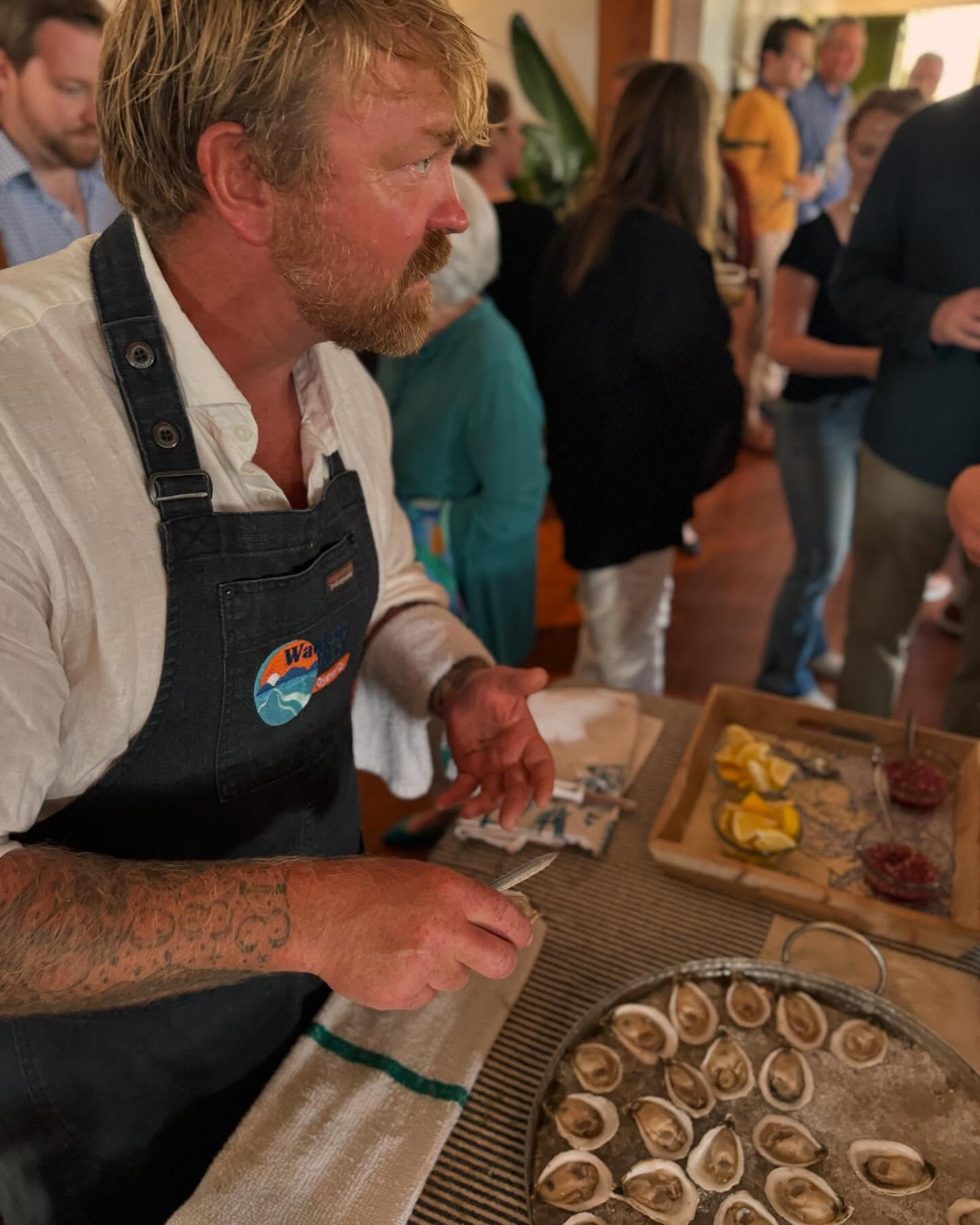
In civilian life, the seasoned Platner, having smelled gunpowder, began to look around, wondering what to do. At that moment Jock Crothers called him. In small coastal towns, everyone knows each other. Crothers was an old acquaintance of Platner's parents. At one time, he founded the Waukeag Neck Oyster Company oyster farm, but as the years took their toll, it became increasingly difficult for him to manage without an assistant. And then he came across an article that said that oyster farming was an ideal job for a veteran. “This is not a nine-to-five job,” he convinced Platner. “You have to constantly monitor the tides and the weather. You work with your hands, and this work is in the fresh air.” Platner thought about it and agreed.
Maine oysters are famous all along the East Coast. The business is profitable, but long-term: in the cold water of Frenchman Bay, an oyster grows for 3-5 years. This task is not so simple and very labor-intensive. But Platner got involved. He took out the soft loan he was entitled to as a veteran and bought a house on the street where he grew up. Through the dating site Bumble, he met his current wife, Amy, a high school art teacher. Today he is the owner of the company. His wife also works on the farm.
The Platners are a childless couple. They tried to conceive a child in vitro, traveling to Norway for this, where the procedure costs five times less than in the USA, but in April Amy had a miscarriage.
I won’t put on a show to please
Last August, Platner decided to try his luck in the Senate elections. His decision was a big event for the entire neighborhood, which knew him from the cradle. More than a hundred people gathered in the church where he announced this. Another five hundred watched on Zoom. Before the event, a New Yorker reporter asked him if he was going to stop swearing during his campaign. “I know where not to express myself,” he replied. “But what I definitely won’t do is deliberately change my personality or put on some kind of performance to please.”
Platner was introduced to the public by his mother Leslie Harlow. Among other things, she said she and her husband were confused when Graham enlisted in the military. It turned out that Platner’s father was sitting in the hall. He immediately shouted: “I wasn’t shot down! I was just against it!” The audience laughed.
His consultant and producer of his first campaign video was Maurice Katz, who had previously worked with Zohran Mamdani in the New York mayoral election. In the video, Platner takes cages of oysters out of the water, stands at the helm of a motor boat, scuba dives, chops wood, lifts weights and says in voiceover:
What I love most about Maine is its people. I have never met people who are more persistent and persistent - even in the region, where sometimes you have to work two or even three jobs at once. We have seen first-hand how this state is becoming virtually uninhabitable for working class people. And this makes me deeply angry. My name is Graham Platner and I am running for the U.S. Senate from Maine to defeat Susan Collins... I have completed four combat rotations in the Marine Corps and Army. I'm not afraid to call the enemy by name. And this enemy is the oligarchy. These are the billionaires who pay for all this, and the politicians who betray us. And yes, this also applies to politicians like Susan Collins... People understand: the system is screwing them. They feel it with every cell of their being. None of my friends here can afford to buy a home. Healthcare is a disaster. Hospitals are closing. We saw how all this was taken away from us - one after another. And everyone is just trying to stay afloat. Why can't we have universal health insurance like every other first world country? Why can't we take care of our veterans when they come home? Why do we finance endless wars? Why do corporate executives have more power than unions? I don't pretend to have all the answers, but I do know that I'm asking the right questions.
In the first 24 hours, the video received two and a half million views. In the first nine days of his campaign, Platner raised a million dollars in donations and received 2,700 volunteer requests. His candidacy was supported by prominent left-wing politicians at the federal level: Senators Bernie Sanders, Elizabeth Warren, Ruben Gallego, unions of health workers, auto workers, engineers and technicians.
In mid-October, state Governor Janet Mills, who is finishing her second and final term in office, entered the race. Party bosses, scared off by Platner's populism, relied on her. Mills, now 78, has vowed not to serve more than one term in the Senate. As her calling card, she recalled her conflict with Donald Trump last year. The state of Maine then refused to implement the presidential order to exclude transgender people from women's sports. Trump retaliated by depriving the state of federal funding for child nutrition programs. The state sued the government and won .
Mills' candidacy was supported by Senate Democratic leader Chuck Schumer and a number of other legislators who did not believe in Platner's ability to defeat Collins. Two other Democratic candidates abandoned their plans and urged voters to vote for Mills. In the fight for the party nomination, she moved to the left : in particular, she supported the idea of a tax on millionaires, which she had previously opposed, and a moratorium on the construction of data centers for artificial intelligence in the state.
But voters still liked Platner.
This is where the scandal broke out.
Last October, quotes from old Platner posts on the Reddit platform appeared in the press. He did not register there under his own name - he was identified based on his biography, place of residence and other details. Judging by the chronology, CNN was the pioneer in this investigation, followed by other mainstream liberal media.
I grew old and became a communist
In one now-deleted comment from 2021, Platner countered a blogger's remark that people become more conservative as they age with the phrase, "I got old and became a communist." In another post that same year, Platner said that after eight years of military service, he had become a "vegetable-growing, psychedelic-drug-taking socialist." And he added: “After the war, I practically stopped believing in all the patriotic nonsense that brought me there in the first place; now I am firmly convinced that the best thing a person can do is to help his neighbors and live a life of love.”
Platner often wrote about his disillusionment with American ideals: "My time in these American imperialist wars has certainly radicalized me further; my views today are much more to the left than they were then. It is difficult to see all this horror, as well as the widespread embezzlement and corruption, and not come to the conclusion that the whole system is absolutely untenable."
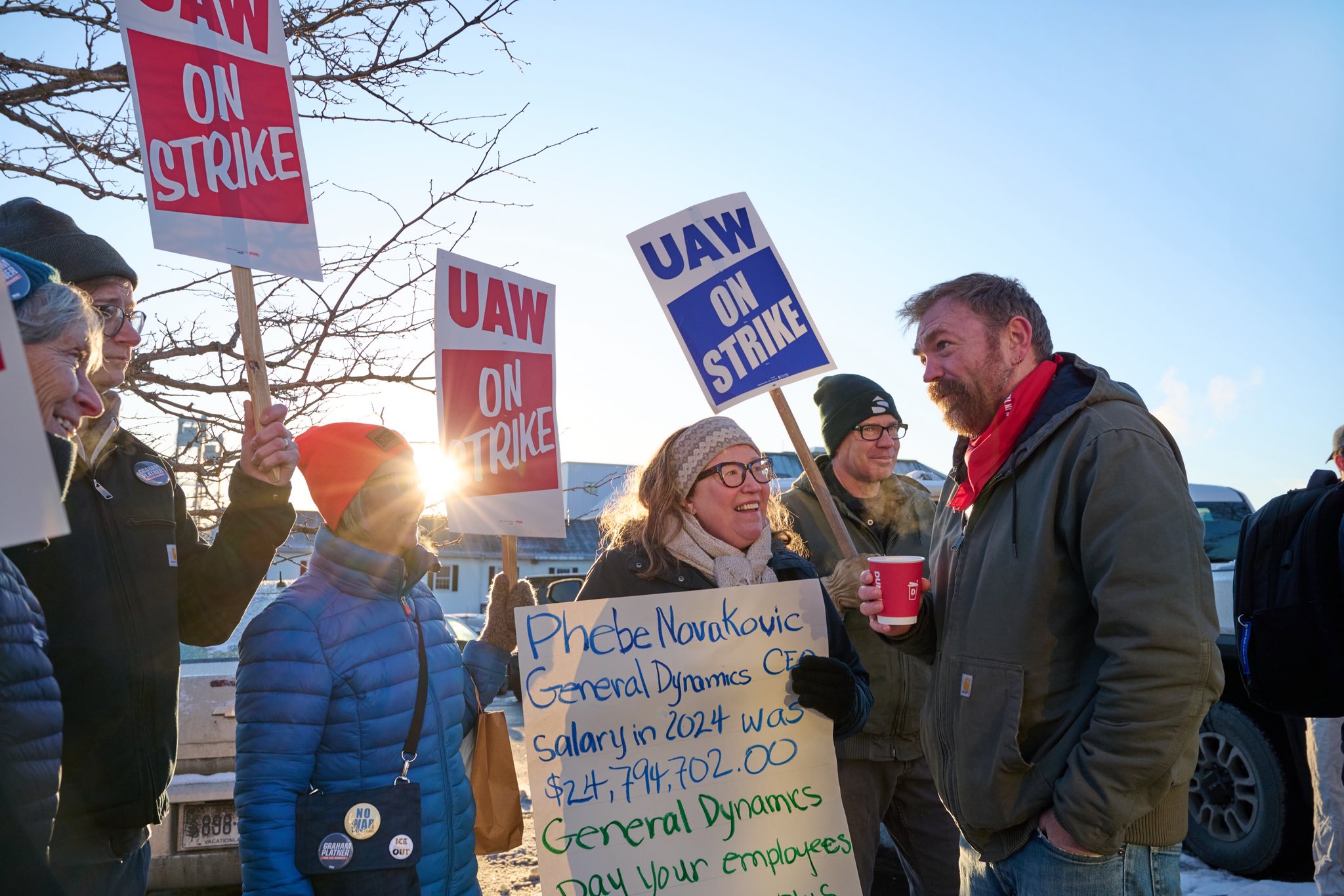
Finally, he called on workers to fight for their rights “if necessary, with the fist, if necessary, with the weapon” and said that “an armed working class is a necessary condition for achieving economic justice,” while quoting the leader of the American socialists, presidential candidate in the elections of 1904, 1908, 1912 and 1920, Eugene Debbs. And in September 2018, when Democratic candidate for the state Senate Rebekah Cranston was shot at in Colorado (the crime remained unsolved), Platner issued a call: “Arm yourself! Organize! The other side, damn it, is already doing it!”
Just fooling around on the Internet
It is clear that Platner had difficult periods in his life, he was tormented by depression and restlessness, after all, everyone has the right to make mistakes and change their point of view. But when you go into politics, they give you all kinds of criticism. Naturally, his competitors Janet Mills and Susan Collins immediately took advantage of this incriminating evidence. His campaign committee was empty, with key staff leaving. Platner had to make excuses. Responding to the accusations, he said that then he was “just fooling around on the Internet” and that now he is not at all the same as he was 12 years ago. According to him, at that time he was struggling with post-traumatic disorder and was wallowing in the consciousness of his uselessness. And cops are not bastards at all - he has a lot of friends among the police, he noted, commenting on another of his old posts. And now he doesn’t consider all whites racist: “I’m white myself and I don’t think I’m a racist. Back then I was just angry at everything around me.”
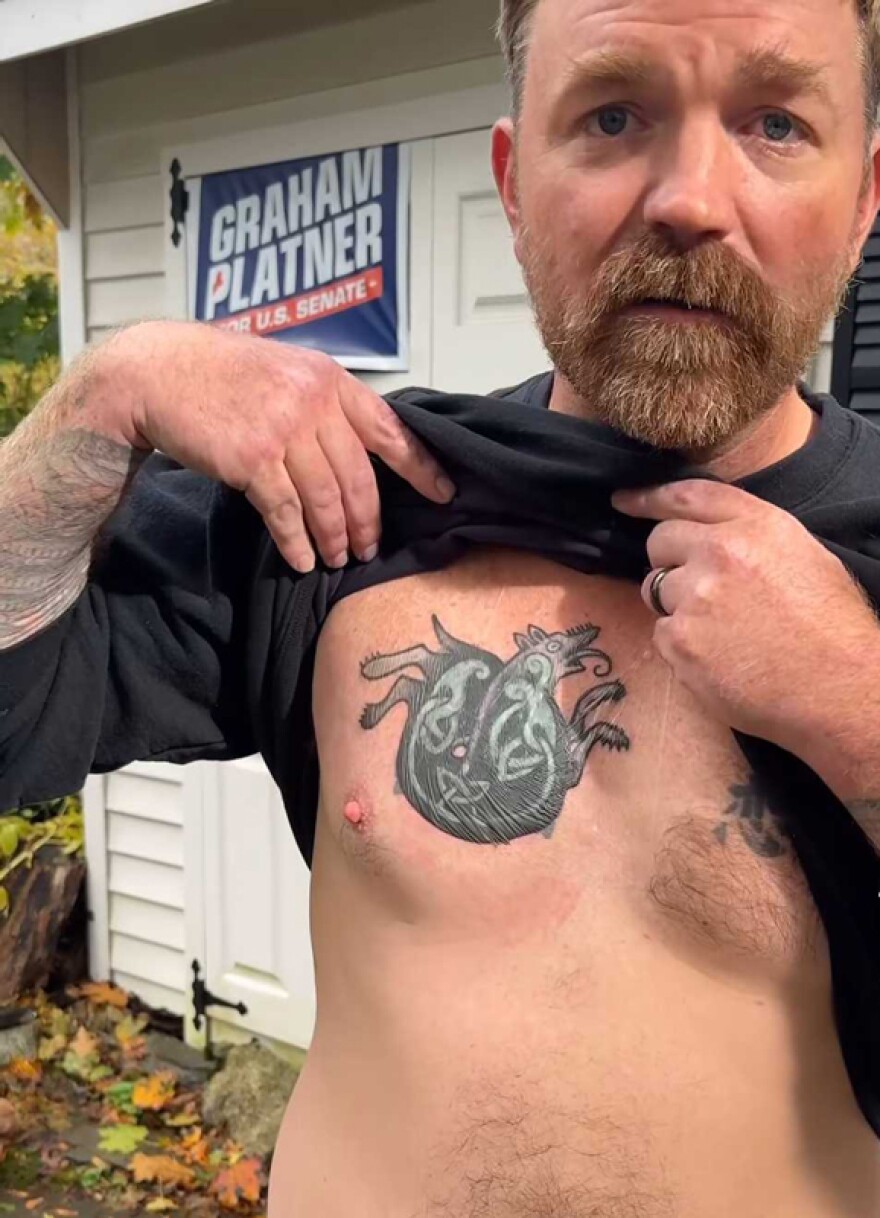
But besides the old posts, something else was discovered. It turned out that he has a tattoo on his chest in the form of a skull and crossbones. They began to say that this was the SS Totenkopf ("Death's Head"). He replied that, together with other colleagues, he made it while drunk in 2007, while on vacation in Croatia, and did not see any symbolism in it, and now he completely filled another one on top of it. And he showed, lifting up his shirt, this other drawing.

Be that as it may, Platner did not leave the race and did not lose his ranking. And in April, Janet Mills withdrew from the election, citing a lack of money. But in fact, she was simply hopelessly losing to Platner. Mills was 2-3 percentage points behind him in the polls at the start of the race, but by April the gap had widened to 35.
Well-known public opinion researcher Nate Silver considers this just one of the manifestations of the fact that voters are tired of voting for boomers, and Biden’s example has become a lesson for them: if in 2018 the median age of Democratic Party candidates was 63 years, then in the current election cycle it is 45.5. There is no doubt that Platner will win the Democratic primary, just as Collins will win the Republican primary. In a one-on-one fight, Platner is ahead of Collins by 7-9 points.
Nate Silver called Platner's candidacy risky, but recognized it as promising. He questioned the "authenticity" of the pushy oyster farmer. Where is it genuine, and where is it playing to the public? Why did he go to war if he was against it? In a correspondence conversation with him, another columnist, Matthew Yglesias, said that he met Platner at his mother's hotel "and was struck by his sense of humor and sincerity. Sometimes I think that 'authenticity' is an overrated quality in politics; but if this is what voters are looking for, then Platner has more than enough of it."

We don't live in a broken system.
Graham Platner has been called a populist and a progressive, but he himself refuses to wear any labels: “If I belong to any type of Democrat, then I am a New Deal Democrat.” He cites as an example Frances Perkins , Secretary of Labor in the Franklin Roosevelt administration, who played a key role in creating the social security system in the United States. "I think it's stupid to think that thinking that thinking people deserve health care makes you a leftist." He positions himself as a defender of ordinary people and an enemy of the establishment. It's hard to imagine him in a jacket and tie. He advocates limiting the political influence of the "oligarchy" and US involvement in "senseless" wars, abolishing ICE (Customs and Immigration Enforcement) and prosecuting its agents accused of crimes. At one of the rallies he said :
We don't live in a broken system. We live in a system that functions exactly as it was designed to. We live in a system that the political class has built to enrich and support billionaires, placing this burden on the shoulders of working people.
On foreign policy issues, Platner also disagrees with the position of both the Trump administration and the leadership of the Democratic Party. He condemns the war with Iran, calls the Israeli military operation in Gaza “genocide” and promises not to accept contributions from the pro-Israel lobbying organization AIPAC (as do other Democratic candidates), earning him the nickname “Maine’s Mamdani”, in imitation of the current mayor of New York. He is against eliminating USAID and stopping American aid around the world. He also supports providing military aid to Ukraine: "I support the Ukrainians in their fight. They were attacked. They are resisting with all means available. And I personally believe that we should support them."
In his opinion, a “new Gilded Age” had arrived in America. This is a reference to the famous series, named after the novel of the same name by Mark Twain and Charles Warner, and a contrast to the promises of Donald Trump, who promises America a “golden age.” And when asked about his attitude towards LGBTQ rights (his old posts also included comments aimed at gays), Platner today declares : “I will fucking stand in the way of anyone who encroaches on the freedoms of the LGBTQIA+ community.”
It's too early for Platner to think voters will hand him a Senate seat on a silver platter. A lot can still happen in the time remaining before the election. Susan Collins is also known for the fact that six years ago she lost the entire campaign in the polls to the Democratic candidate, but won the elections quite convincingly. But today, presumably, he has the same feeling that is described by the English idiom, borrowed from Shakespeare: “The whole world is your oyster” (“Everything is in your hands”, “you can handle everything”). Surely he knows how to open oysters.
Read Freedom on Telegram Make Freedom a priority source on Google  Install the Mobile application
Radio Liberty "Most likely he will start a revolution." Maine Oyster Lord