
Translated material
Near zero again
Why the Ministry of Economic Development rewrote the economic growth forecast. They say everything will grow. But not like that

Photo: Dmitry Dukhanin / Kommersant
In 2026, the Russian economy may grow by 0.4% - this figure is included in the updated baseline forecast of the Ministry of Economic Development of the Russian Federation. 0.4 is almost a statistical error (although last fall the government used completely different arithmetic - 2.4% in 2026, for example). And in the conservative version of the new forecast, a drop of 0.5% was recorded - that is, a full-fledged recession.
Where did almost two percentage points of growth go? And why is now the very fact of near-zero economic dynamics presented as an achievement?
...According to official comments, nothing happened. It’s just that the key rate turned out to be a little higher than we would like, and the consumer became a little more careful in spending.
True, when the forecast is reduced not by tenths, but by several times, as experts say, this is not a story about the caution of buyers, but about how the economic structure began to creak at all points at once.
This is significant because quite recently, in 2023–2024, the Russian economy actually demonstrated high growth rates. But the special economic boom fueled by large-scale government orders and extreme commodity revenues in 2022, judging by official statistics, is a thing of the past. And it was replaced by not just a recession, but a recession with a very complex structural filling. And it’s not a fact that the government is trying to stop it; rather, it deliberately redistributes the remaining resources where it sees fit, and does so quite successfully (from its, the government’s, point of view).
Decline with the unknowns
In the first quarter of 2026, the Russian economy switched to negative dynamics, which was officially recorded by the preliminary assessment of the Ministry of Economic Development: GDP decreased by 0.3% by the first quarter of 2025. Alarmists from the Institute of National Economic Forecasting of the Russian Academy of Sciences assumed that the decline in GDP in the first quarter could generally be as much as 1.5% (although they later increased their estimate to minus 0.4%).
One way or another, the fact of negative (at best near-zero) dynamics is recognized, but a correct assessment of the scale of the decline is a task with many unknowns. Therefore, the leadership of the Central Bank, for example, proposed not to rush to conclusions, but to wait for the results of the six months: the calendar failure at the beginning of the year would have to be compensated for by additional working days in May - June.
But even if we accept this logic, the qualitative picture remains unchanged: growth is over.
An analysis of the dynamics of the first quarter in the breakdown of sectors and industries gives a very clear picture of further deterioration in several directions. Industry, the main driver of recent years, not only slowed down, but began to present surprises that almost no one expected from it.
Cleavage with reduction
The deterioration in dynamics at the beginning of the year was provoked by stagnation of industry, a sharp decline in construction and a more gradual decline in transport freight turnover.
Perhaps the main news was that the manufacturing sector, which pulled out economic growth last year, for the first time since 2022 itself found itself in the negative zone (-0.7% by the first quarter of 2025). The positive result for industry as a whole (+0.3%, according to official data) was ensured by only a small increase in mining production, and then, most likely, temporary.
Throughout 2025, the dynamics of the manufacturing sector were determined by its division into two segments: shrinking civilian production and production maintaining relatively high growth rates, working for priority government orders - that is, the defense industry and everything connected with it. This discrepancy continues to grow. Output in the “civilian segment” in the first quarter of 2026 is estimated to be at levels perhaps even lower than those of the end of 2021.
And here’s what’s fundamentally new: the zone of “priority” growth itself began to shrink. The growth rate of the sub-industry “production of other vehicles” decreased from 39% in the first quarter of 2025 to 25% in the first quarter of 2026. Its locomotive - the production of aircraft - is growing at the same pace (66% in annual terms), but the civil production of the sub-industry (carriages, locomotives) is plunging into recession: -25% after -10% a year earlier.
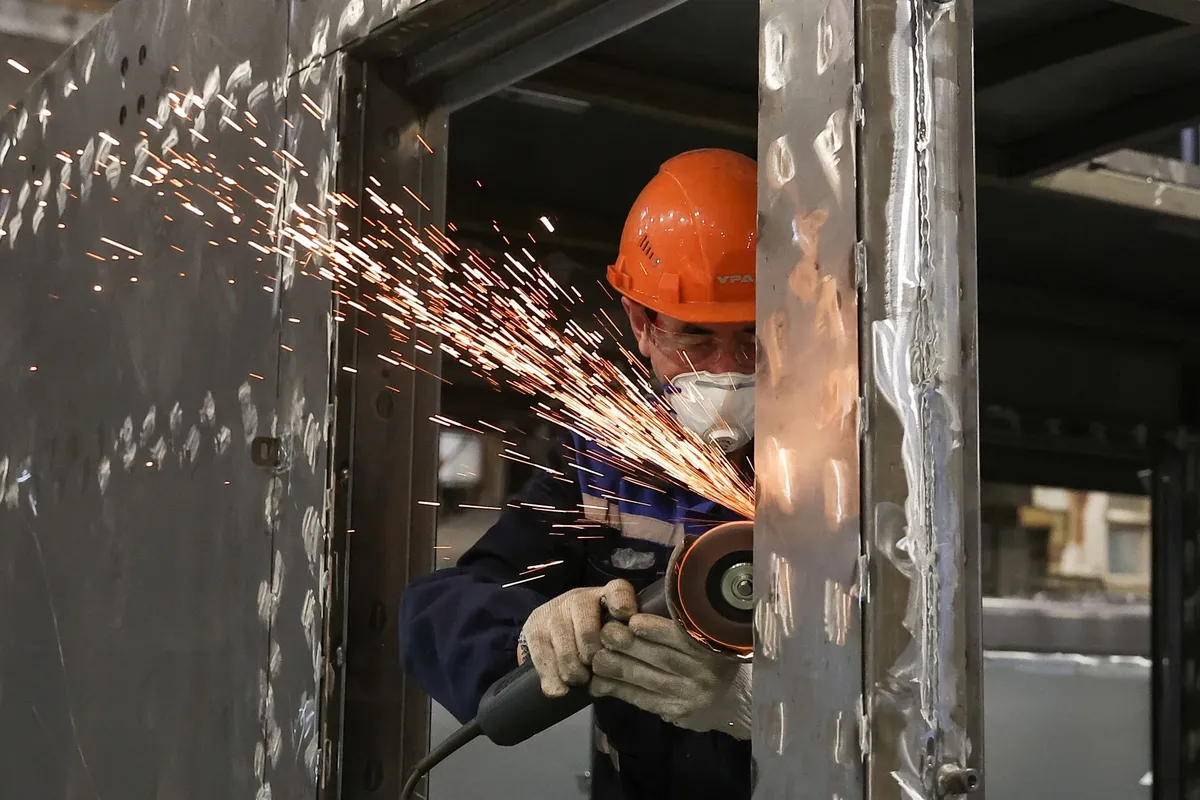
Another key area - the production of finished metal products, which was the locomotive of the dynamics of the manufacturing industry during the period of “high” growth in 2023-2024 - has completely slowed down: -0.8% in the first quarter of 2026 after growing by 23.4% a year earlier.
This is partly due to a change in the nature of government demand, and partly due to a deterioration in civil orders (boilers, tanks, other metal products). The growth rate in the production of computers, electronic and optical products has also decreased - from 12% at the beginning of 2025 to 5% in the first quarter of 2026, and this slowdown is also due to the civilian component.
The decline in metallurgy is deepening (-10% versus -1.5% a year ago), in wood processing (-7% versus -2%), growth or stagnation has given way to a pronounced decline in chemical and textile production. Industry is losing its drivers, and the civilian sector cannot compensate for the beginning slowdown in the priority segment of industry.
High stakes
If industry structure shows where the economy is losing momentum, then monetary conditions explain why this is happening.
The Ministry of Energy in the new forecast directly writes: macroeconomic parameters are calculated based on the average key rate of 14–14.5% in 2026. And in the fall of 2025, when the previous scenario was being drawn up, 12–13% were pledged. The difference of one and a half to two percentage points is not a technical detail. At the macro level, this is a fundamentally different value of money.
The Ministry of Energy records: investment in fixed capital in 2026 will decrease by 1.5% - after in previous years they grew at an average rate of close to 10% per year. This is a consequence of “relatively expensive borrowings” and shrinking corporate profits.
HELP "NEW"
According to the Ministry of Energy, the balanced financial result in 2025 decreased by 3.9% after a fall of 6.9% a year earlier. And according to the results of the first two months of 2026, the balance of profits and losses of organizations (3.35 trillion rubles) amounted to only 67% of the level in January - February 2025. In the mining sector - 68%, in the manufacturing industry - even 55%. For comparison: in the previous two years, the indicator showed growth: by 16% in 2024 and by 23% in 2025. Own financial resources are the main source of both working capital and investment. When profits fall by a third and the loan costs 20%, the business does not expand.
The high rate also puts pressure on the consumer. In 2025, the savings rate reached a historical high of 16.6%. People take money to deposits, not to stores. In the new forecast, the Ministry of Energy expects that the savings rate will drop to 14.3%, but at the same time, the growth of real disposable income will slow down significantly - from 7.4% in 2025 to 0.8% in 2026.
The consumer loses both income and the desire to spend. As a result, the total turnover of retail trade, catering and paid services will grow by only 1.2% - after 4.0% a year earlier.
Bottom of an oil barrel
Oil prices, which until recently looked like a reliable insurance policy for the budget, upon closer examination turn out to be a source of additional risks. Yes, formally the expected income figures are impressive. But Minek himself stipulates that this grace, not yet received, is temporary. And it is connected with the foreign policy situation.
HELP "NEW"
The Ministry of Economic Development in its May forecast sets the average annual price of Urals in 2026 at $59 per barrel, and the Central Bank of the Russian Federation in its April forecast even targets $65, but this is the price for taxation, which may differ slightly from actual export quotes.The trade balance in 2026 is projected to be $133.6 billion—$16.5 billion more than a year earlier. Russia's revenues from the export of oil and petroleum products in March, according to the International Energy Agency, reached $19.04 billion, which is almost double the February figure. Outwardly, all this creates a feeling of abundance.
But the Ministry of Energy in its forecast stipulates that already in 2027 the value of exports of goods will decrease by 17.5 billion - mainly due to the oil and gas sector. The Brent price in the base scenario decreases from $81 per barrel in 2026 to $61 by 2029. The current price surge, when Urals briefly rose above $100 in the spring, is considered temporary and caused by the conflict in the Middle East.
At the same time, the structural problems of the Russian oil industry have not gone away. From January 1, 2024, as part of the completion of the tax maneuver, the oil export duty was completely zeroed out, and this deprived the budget of a significant portion of revenue. The discount of the Russian Urals grade to Brent remains significant: in May 2026 it is almost $24 per barrel. Damper payments to oil workers, tied to world fuel prices, are growing along with quotations: in March they were estimated at about 240 billion rubles against the usual 60–65 billion, which eats up a significant part of potential budget revenues.
Thus, the peak of oil revenues has passed, and even with formally high prices, oil and gas revenues remain below 2022 levels.
The share of non-oil and gas exports in the forecast is planned to increase to 56.3% by 2029. These are certainly good intentions, but it remains unclear exactly which sectors such exports can grow from if the ruble remains strong, global demand is sluggish, and the profitability of civilian industries is falling.
The external environment, which until recently seemed like a safety net, in fact turns into a complex balance of contradictory factors, where each plus immediately generates a minus somewhere else.
The budget accelerates inflation, not growth
This whole structure would be even more shaky if it were not for government spending. The budget in the first quarter of 2026 was executed with a record deficit: in four months it already amounted to 5.9 trillion rubles. The Ministry of Finance actively advanced government contracts, and this temporarily supported the corporate sector.
But there is a flip side to the coin: it is this budgetary impulse that the Central Bank of the Russian Federation calls one of the main pro-inflationary risks. And it cannot lower the rate faster precisely because of fears that government money poured into the economy will accelerate inflation to levels incompatible with the target 4%.
As a result, the deficit will remain high, and non-oil and gas revenues (especially VAT and income taxes) will grow more slowly than the Ministry of Finance expected.
The tax burden will likely continue to increase, simply because there are fewer and fewer other ways to finance the gap between liabilities and revenues.
Tariff trap: when goals conflict with each other
Now comes the fun part. The Ministry of Energy's forecast includes an inflation target of 4% (December to December) starting in 2027. But at the same time, it spells out the indexation of regulated tariffs (gas, electricity, housing and communal services), which systematically exceeds this level. We are talking about a tariff increase of 7-9 percent.
HELP "NEW"
Wholesale gas prices: 9.1% in 2027, 7% in 2028–2029.
The final price of electricity for the population: 8.6% in 2027, 9.1% in 2028, 5% in 2029.
Total payment for utilities: 8.7% - in 2027, 7.1% - in 2028, 6.1% - in 2029.
Basic tariffs for freight rail transportation: 8.3% in 2027, 6.0% in 2028, 4.9% in 2029.
With such an increase in tariffs, it is possible to keep overall inflation at 4% only through deflation in other sectors - for example, through a fall in import prices when the ruble strengthens. But the ruble in the forecast, on the contrary, is weakening (87.4 rubles / $1 in 2027, 96 rubles / $1 in 2029), and demand, according to the Ministry of Energy, is being restored.
Something is wrong here: either inflation will be above 4%, or the Central Bank will be forced to maintain a tight monetary policy, which will slow down investment growth, which is also included in the forecast.
At first glance, this contradiction seems to be a technical error - well, the ministry cannot help but see that tariffs are growing twice as fast as the inflation target. But there is no contradiction here if you look at the situation from the point of view of real priorities. This is not chaos, but a systemic policy of redistributing resources in favor of a narrow group of sectors that the government considers critical.
Even the government cannot simply transfer trillions of rubles to Gazprom or Russian Railways - this would be too noticeable and would raise an immediate question: why raise tariffs with such infusions?
But we can do it differently: allow monopolies to increase tariffs at a rate twice the inflation target.
As a result, resources (end-consumer money) are pumped from civilian sectors (consumer goods, small businesses, households) to infrastructure monopolies. And they, in turn, spend it on fulfilling priority government tasks: turning logistics to the East, modernizing the energy system, ensuring the delivery of resources for “critical imports.”
Yes, in order for a Chinese manufacturer to receive Russian raw materials at a reasonable price, someone must provide the infrastructure, and this someone is financed through increased tariffs.
The Central Bank sees that tariffs are rising and understands that this is accelerating inflation. His reaction is to maintain a high key rate (currently it is 14.5%, but recently it was 21%). The rate should cool demand and dampen inflation expectations. Demand is cooling, but in the civilian sectors. Housing construction in the first quarter of 2026, for example, decreased by 28%, the auto industry and metallurgy are declining.
In the priority sector, demand does not respond to the rate, because it is financed from the budget and through tariffs. As a result, the rate is high, but inflation is not in a hurry to reach 4%, because administrative pricing continues to spur it. The regulator is publicly dissatisfied, but its instrument is powerless against administrative price increases, which generate a significant part of inflationary pressure. Hence the constant complaints about the “budget impulse” and “monopoly tariffs.”
What's the point for the government? Simple: reallocate resources from “regular” industries to priority ones.
Economic growth and low inflation are sacrificed to the interests of a narrow group of sectors that the government considers critical.
Investments in “regular” industries are declining (-2.3% in 2025, -1.5% according to the forecast for 2026). Real incomes of the population in 2026 will grow by only 0.8%, and taking into account the rapid growth of tariffs, they will most likely fall. But at the same time, mechanical engineering for priority tasks grew by 25% in the same quarter. Banks lend to this sector under government guarantees, not paying attention to the key rate. Russian Railways is modernizing the Eastern range, despite the drop in freight turnover.
This is a systemic effect of priorities. Of course, no one sets out to bankrupt an ordinary business. It’s just that now the government is focused on tasks that are considered more important than economic growth and inflation, and everyone else is paying for the “structural transformation of the economy.”
Tariff policy is one of the tools of redistribution. It does not require changes in legislation, does not directly increase the budget deficit and does not irritate people too much because they are used to rising prices.
Two scenarios, and “everything is complicated”
The basic version of the Ministry of Energy's forecast assumes that the key rate will begin to gradually decline, allowing investment to recover from 2027 (+2% per year), and the consumer to revive somewhat as credit conditions soften. GDP growth in 2027 is 1.4%, by 2029 - 2.4%. Inflation will return to the target level of 4% and consolidate there. Unemployment will rise from the current 2.1% to 2.4% and stabilize. This is a “soft landing” scenario - without a recession, but without much acceleration. In fact, per capita GDP will stagnate.
The conservative scenario is essentially a slow-crawling recession. A fall in GDP of 0.5% in 2026, growth of only 0.7% in 2027, and cumulative growth over the three-year period 2027–2029 of only 3.9%. Industry will shrink by 1% in 2026, investment by 3.5%. The oil price is $9 per barrel below the base price. The ruble exchange rate is weaker. Unemployment - 2.5%.
And here’s what’s important: the conservative scenario no longer looks purely hypothetical. It fits too well with the picture painted by leading indicators: the CMACP fixes the composite indicator of entering a recession at 0.54 with a critical threshold of 0.18. Sberbank worsened its forecast to 0.5–1%. TsMAKP reduced it to 0.5–0.7%, noting that the positive contribution of high oil prices will be offset by the risks of reduced production and exports...
Everyone is gradually moving towards the lower end of the range, which until recently was considered overly pessimistic.
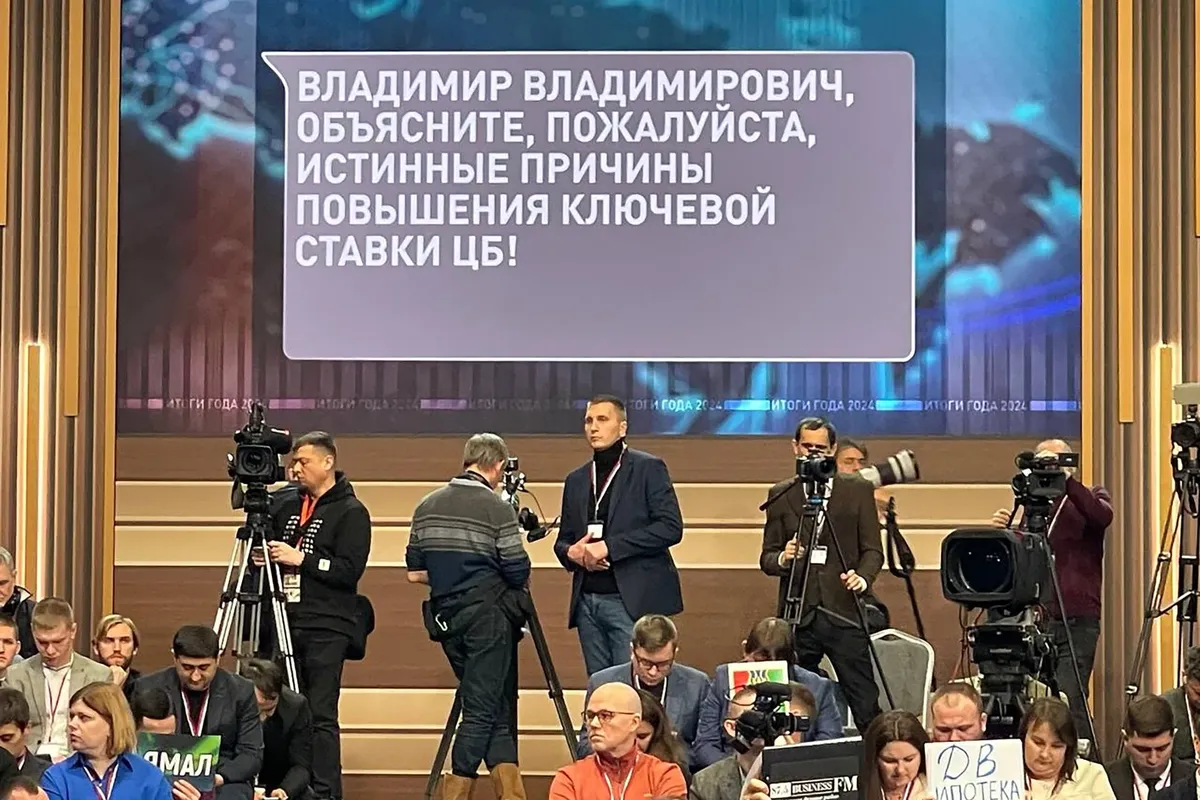
So what exactly went wrong?
The Russian economy entered 2026 bearing the consequences of two overheats at once.
The first is the overheating of demand in 2023–2024, which the Central Bank of the Russian Federation tried to cool with high rates, and, in general, it succeeded.
The second was an overheating of fiscal obligations, with government spending continuing to rise amid a slowdown in private sector spending. As a result, the key rate, while remaining high, forced two main engines of growth into a dead end: investment and consumer. Industry, with the exception of a narrow segment provided by government orders, is stagnating. At the same time, this segment itself is slowing down, and civilian industries cannot pick up the baton due to expensive money, weak demand and falling profitability.
But on top of this was superimposed a third thing - a conscious policy of redistributing resources through tariffs. The government not only does not interfere with this process, it actively supports it, forecasting an increase in tariffs that is twice the inflation target. This means that high rates and inflation are not temporary difficulties, but structural elements of the model.
The Central Bank will be forced to keep the rate high as long as the budget impulse and tariff indexation accelerate prices. And the civil sector will continue to shrink - not because it is ineffective, but because it has found itself on the periphery of priorities.
The Ministry of Economic Development lowered the forecast not because it “suddenly” saw these problems. They have been noticeable since the fall of 2025, when company profits began to decline. But the official forecast is a document that clings to optimistic premises until the last moment, because behind it are budget projections, social obligations and political inertia. When even this document admits growth of 0.4% and includes a recession in the conservative scenario, this is a signal. The signal is that the old model has exhausted itself, and the new one - based on redistribution in favor of priority sectors - is deliberately relegating economic growth to the background.
The bottom line: the consumer is slowly becoming poorer (income growth is 0.8% with tariffs growing by 7–9%), non-priority businesses are being phased out, investments are falling, and the only steadily growing segment remains that which is financed from the budget and through tariffs.
Even if the baseline scenario holds and a recession is avoided, it will be stagnation with a gradual decline in living standards and the persistence of structural imbalances. And the next time we are told that the forecast has been revised due to “temporary factors” or “external conditions,” it is worth remembering: the main reasons that something went wrong are located within the decision-making perimeter. They are simply not a mistake, but a conscious choice.