
Translated material
Respect your Constitution
Half a century of the Moscow Helsinki Group - MHG
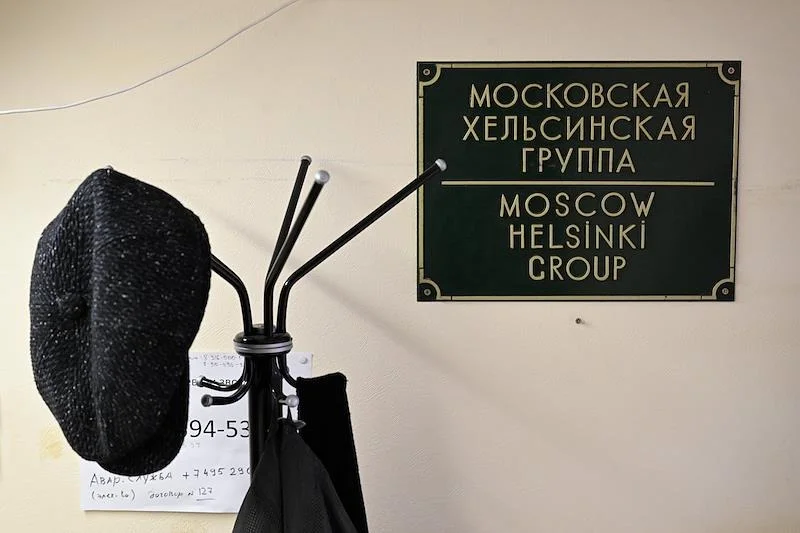
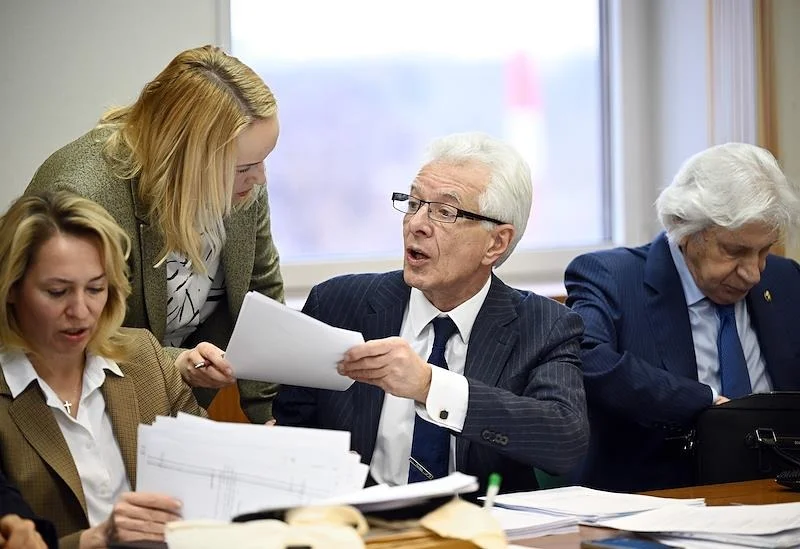
The remnants of the Moscow Helsinki Group, liquidated by decision of the Moscow City Court in January 2023, held a “semi-clandestine” meeting dedicated to the 50th anniversary of the formation of the MHG on May 12, 1976. Some of the participants gathered in Moscow in a room provided by like-minded people, while others joined via Zoom.
Does the human rights movement have a future? This is the question that worried those gathered (mostly elderly people).
The term “human rights activist” is not directly translated into other languages: it arose after the rally at the monument to Pushkin on December 5, 1965 - Constitution Day of the USSR. One of the main slogans was: “Respect your Constitution.” A variety of Soviet dissidents, who held a wide range of beliefs (from monarchist to anarchist), were able to unite under this slogan and around the idea of human rights.
Until its liquidation, the Moscow Helsinki Group was considered the oldest and most respected of human rights organizations. It was created in response to the USSR signing the Final Act of the Conference on Security and Cooperation in Europe (OSCE) in 1975.
The Helsinki Agreement, along with military, political and economic issues, also provided for the “third basket” - the obligations of the signatory states to respect human rights and freedoms.
The MHG included physicist Yuri Orlov, biologist Sergei Kovalev, its future chairman Lyudmila Alekseeva and others. The group was engaged in supporting political prisoners, which regularly included its members, and publishing a typewritten “Chronicle of Current Events” - a regular monitoring of political persecution. In 1982, the group members were forced to announce its self-dissolution, but in 1989, in the wake of perestroika, the MHG resumed its work.
The 50th anniversary of the MHG forces us to compare the situation of human rights defenders during the period of the group’s emergence and today. The frequency of political repressions compared to the Brezhnev USSR has become an order of magnitude higher. That and this government equally do not accept the doctrine of human rights - Russia has left the Council of Europe and rejects it both at the theoretical and practical level.
On the other hand, the idea itself, which took shape as a guarantee against totalitarianism after the Second World War and placed human rights and freedoms above the sovereignty of states, remains valid. This is one of those concepts that, once invented, never disappear from human civilization—along with, for example, the concept of democracy.
The priority of human rights is enshrined in the Constitution of the Russian Federation, in Article 2:
“Man, his rights and freedoms are the highest value. Recognition, observance and protection of human and civil rights and freedoms is the responsibility of the state.”
Despite the repression, the possibilities of the human rights movement today are wider than they were in the USSR.
The idea of human rights, which penetrated into the USSR and Russia, became entrenched in the mass consciousness. Today this is reflected in protests against restrictions on the Internet, but even the last drunkard on the threshold of the sobering-up station will appeal to human rights.
The USSR did not pretend to be a democracy to the same extent as today's Russian Federation does. In the fall we are facing the next elections to the State Duma, but electoral democracy without the free exchange of information at least about candidates and parties is not democracy.
The Union signed the OSCE Helsinki Act to improve economic ties with other states. In the future, the same motivation is inevitable for the Russian Federation. If a leak from the presidential administration is to be believed, amnesty for political prisoners may be included in the action plan after the purported victory in the SVO.
The human rights movement is currently in crisis, and those gathered on May 12 had few ideas. But the lack of ideas is also noticeable at the other pole - among opponents of the doctrine of human rights and supporters of the crafty “statehood”.
Perhaps today only the doctrine of human rights is capable of producing an attractive image of the future. The MHG has been liquidated, but the movement itself has not disappeared. Despite the repression, demonstrations in support of political prisoners in various forms appear here and there. The problem is how to find a common language between generations and unite these disparate initiatives in the face of severe pressure from the state.