
Translated material
Say "recession." The authorities admitted for the first time that there will be no economic growth in Russia in the near future.
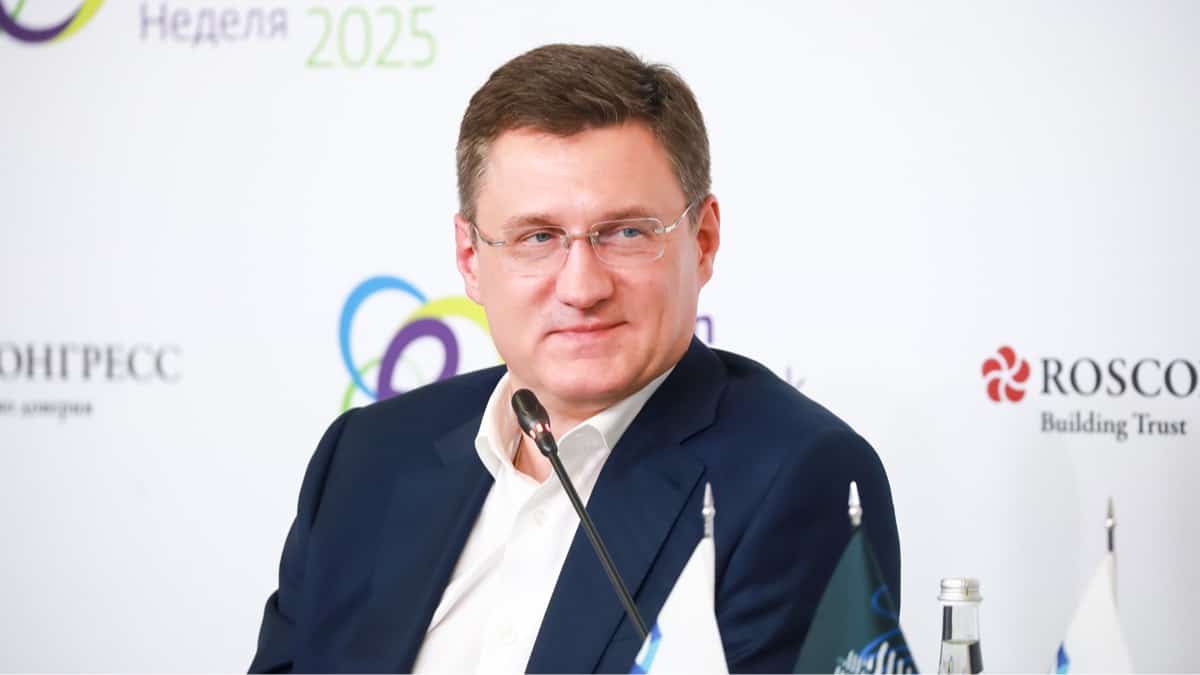
The authorities admitted for the first time that there will be no economic growth in Russia in the near future.
Russian Deputy Prime Minister Alexander Novak was the first high-ranking official to admit that economic growth is not expected this year, which means that a recession could become a reality - and life for Russians will be worse. According to his logic, one of the culprits for this is the Central Bank with its high key rate, with the help of which Elvira Nabiullina and her subordinates are trying to curb inflation. Now I wonder who the Kremlin will blame for the lack of economic growth: the government, which publicly admitted that there will be no growth, or the head of the Central Bank, whom only the lazy do not scold.
Novak made his diagnosis in a huge interview with the Vedomosti newspaper a month after Vladimir Putin quite sharply scolded the ministers of the economic bloc, as well as the Central Bank, for the fact that the economy stopped growing. He then ordered the ministers to take action. And so the curator of the government’s economic bloc sent Putin a detailed answer: the Kremlin is in vain hoping for growth.
Novak does not directly use the term “recession.” Let us remind you: it comes when GDP falls for two quarters in a row and Russia has already “successfully” passed half of this path with the economy declining by 0.5% in the first quarter of 2026. According to the government’s new macro forecast ( published on May 12), the economy will grow by 0.4% in 2026, and such growth can hardly be distinguished from a statistical error. Especially after the economy grew by an equally inconspicuous 1% in 2025, and only due to military spending; civil industries are falling by 4–5 percent or more. But “a significant part of the regions, even “military-industrial complex” ones, no longer show growth,” says economic geographer Natalya Zubarevich in an interview with the “Bild in Russian” channel. “The ceiling of what we could achieve has already been reached,” she sums up.
Oil, which has doubled in price due to the war, will also not save Russia: the government does not consider it “as an additional source for solving budgetary and macroeconomic problems,” Novak admitted. According to his assessment, the Gulf War is hitting the global economy, destroying demand for oil, so in the medium term it may cost even less than before the war.
Experts have been saying since last year that this is exactly what will happen to the Russian economy in 2026. For example, economist Dmitry Polevoy has long predicted growth at 0.3% and warned that “the risks of near-zero GDP growth or even recession are high, and in 2026 they can no longer be ignored.” At the time, the government insisted that GDP would grow by 1.3% this year. Now this figure has smoothly moved to next year: Novak expects that growth will resume then, but still at a meager level of 1.4%. But economists don’t believe that tomorrow will be much better:
“Most likely, we will indeed see significantly lower economic growth rates next year compared to government expectations,”
— writes BCS World of Investments analyst Ilya Fedorov.
The Deputy Prime Minister, to his credit, is not trying to turn a blind eye to the huge elephant in the room that is weighing on the Russian economy. True, as one of the Russian economists noted in a conversation with Novaya-Europa, Novak “hides the war in the middle of the list of reasons.” Listing them to Vedomosti, he put in first place the critical shortage of labor, and only in second place unproductive expenses for the war.
At the same time, Novak did it cunningly. He first listed the budget expenditures from which the economy, in theory, should grow: “Funding for education, healthcare, social protection, economic development, and strengthening technological sovereignty has increased.” And only then did he name the economic slowdown factor: “Expenditures on defense, security, including military defense, support for our soldiers and members of their families.”
At the same time, he “forgot” to list that budget investments in drones, missiles and the FSB are many times greater than everything that he listed before them. It is possible that this interview and the government’s new macro forecast are a harbinger of the resumptionof the conversation that has already begun that it is time to cut costs, Raiffeisenbank analysts write .
Novak understands well what he is saying: if expenses are not cut, then in an economy on the verge of recession, almost the only way to finance the war and social services is to increase taxes. And this will completely finish off the economy - all experts warn about this. “Company profits continue to fall in 2026, many private companies no longer have a margin of safety, small businesses are holding on with all their strength, so any additional fees will only aggravate the situation, worsening the dynamics of investments and wages due to the inevitable reduction in labor costs, and some will face bankruptcy,” writes economist Dmitry Polevoy.
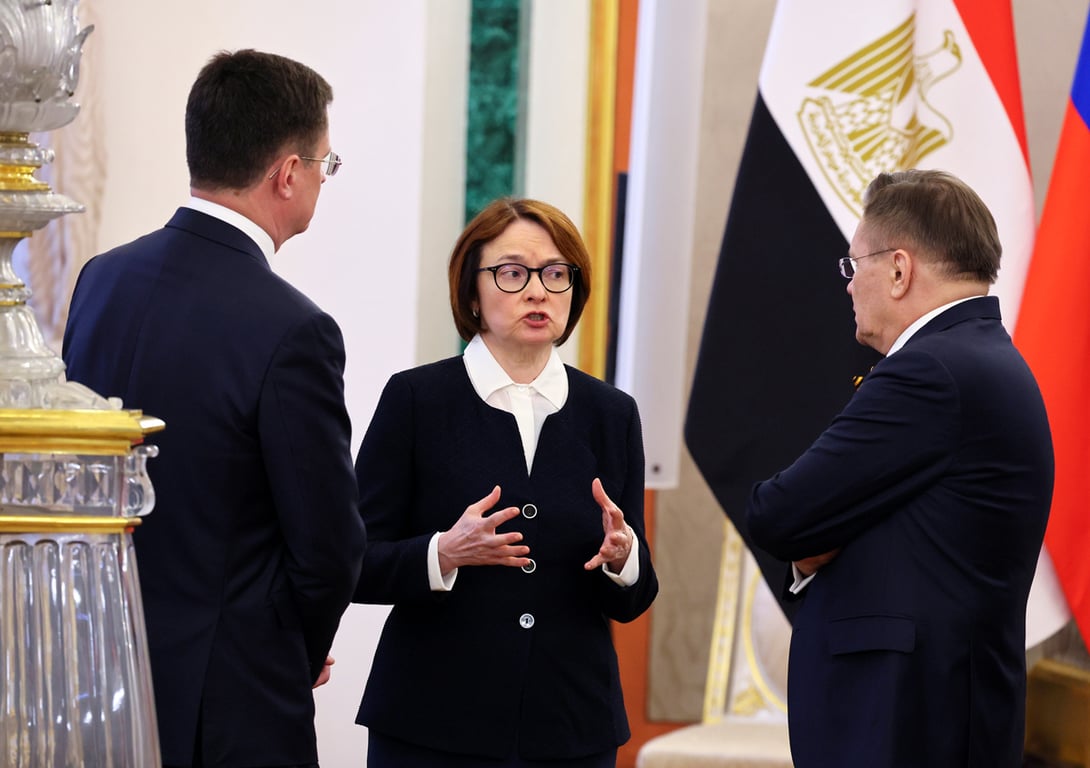
In third place in the top threats from Novak, of course, are sanctions and “unfriendly actions for political reasons.” But the fourth point is especially interesting here: criticism of the Central Bank’s strict monetary policy.
At first, Novak praised Nabiullina for managing inflation, and then scolded her: “It is equally bad to go to the inflation target at any cost, including at the cost of a significant reduction in economic output, and to “accelerate” the economy with the risk of going into an uncontrolled increase in inflation.” That is, the government joined numerous voices that were already calling Nabiullina to blame for the slowdown in the economy. In recent years, members of the “trade union of billionaires” - the Russian Union of Industrialists and Entrepreneurs, as well as separately - tycoon Oleg Deripaska and the head of the VTB state bank Andrei Kostin , and State Duma deputies have been talking a lot about this in recent years.
It’s interesting that now we are witnessing a skirmish between the government and the Central Bank. And Nabiullina’s team, whose five-year term as head of the regulator expires in 2027, in turn, each time increasingly harshly criticizes Mikhail Mishustin’s cabinet for the explosive growth of the deficit: in the first four months of the year it grew to 6 trillion rubles - a third more than the plan for the whole year. The Central Bank warned just a few days ago: the sharp increase in expenses at the beginning of the year will lead to the fact that “fiscal policy in 2026 may not give the expected disinflationary effect.”
As a Russian economist noted in a conversation with Novaya-Europa, Novak is trying to proclaim the obvious by “slipping between the trickles.” “It proceeds from the preservation of the current model: continuation of isolationism, mythology about import substitution, and so on. But he understands that it leads to nowhere,” the expert added.
And his colleague, the head of a Russian research center, is sure that after Putin’s demands for the economy to take up and grow, “they will look for some kind of scapegoats.” For now, of course, this is the collective West and NATO, he notes. But if a real recession does happen in 2026, as many experts warn (for example, the chief economist of Alfa Bank Natalya Orlova and the former deputy chairman of the Central Bank Oleg Vyugin ), the culprits may be found among those who manage the economy.
For ordinary Russians, Novak’s statement is a warning that life will become more difficult. From the macro forecast published on May 12, it follows that the real disposable income of citizens in 2026 will grow by an indistinguishable 0.8% after a jump of 7.4% last year. This will greatly impact another important source of economic growth: consumer demand:
real consumer spending is now below last year's levels.
Because of this, in turn, goods manufacturers and retail chains will suffer, which are already closing production facilities and stores and placing staff on idle leave or reducing employees along with salaries. At the same time, a slowdown in price growth is not expected: this year inflation will be higher than forecast - 5.2% instead of the previously expected 4% (Central Bank target), Novak admitted.
It is impossible not to notice that the government and the Central Bank promise year after year that next year the inflation target will definitely be achieved, and each time these deadlines, as officials say in Newspeak, “shift to the right.” “It is their inflation that is decreasing, but ours that is increasing,” the head of the Russian economic research center told New Europe.