
Translated material
Equilateral triangle. Trump arrived in China, where Putin will soon arrive. The US President promised to “separate” Beijing and Moscow, but, it seems, he only brought them closer. What to expect from these visits?
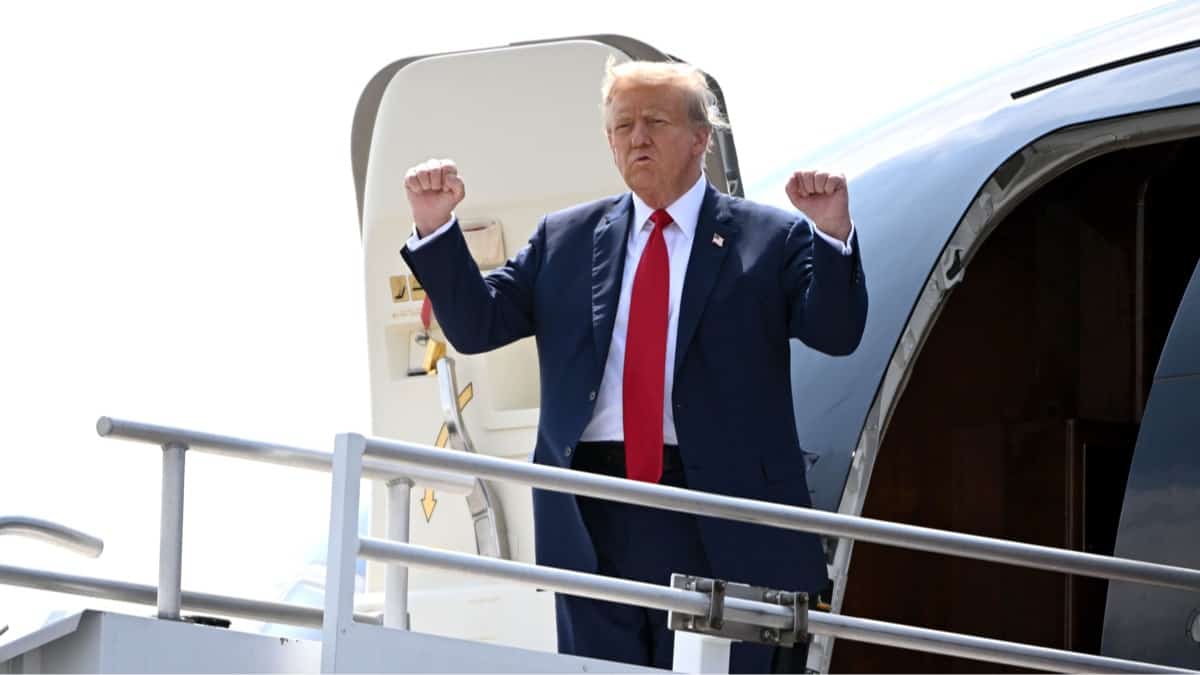
Trump arrived in China, where Putin will soon arrive. The US President promised to “separate” Beijing and Moscow, but, it seems, he only brought them closer. What to expect from these visits?
The US President is traveling to China for the first time since 2017. Donald Trump's visit, scheduled for May 13–15, is an attempt to find mutual understanding with America's main military, technological and economic rival. At the same time, experts note that Trump now looks “the weakest in all of his two terms,” while Beijing feels the strength to confront Washington on key issues on an equal footing.
One of the possible topics for discussion is the friendship between China and Russia, which Trump has repeatedly promised to “disconnect.” De facto, instead of driving a wedge between Xi Jinping and Vladimir Putin, the US President’s actions only strengthened their tactical partnership. Or, more precisely, a relationship that involves Russia’s steadily growing dependence on China. Xi and Putin will personally conduct an audit of bilateral ties in the next few days: the Russian leader will visit Beijing immediately after Trump.
About what to expect from these two visits, as well as about the present and future of relations in the triangle “Washington - Beijing - Moscow” - in the material of Novaya Gazeta Europe.
Results of the meeting between Trump and Xi Jinping. The US and China have suspended the trade war, but have not yet made any progress on Ukraine: Trump suggests “letting the sides fight”
Results of the meeting between Trump and Xi Jinping. The US and China have suspended the trade war, but have not yet made any progress on Ukraine: Trump suggests “letting the sides fight”
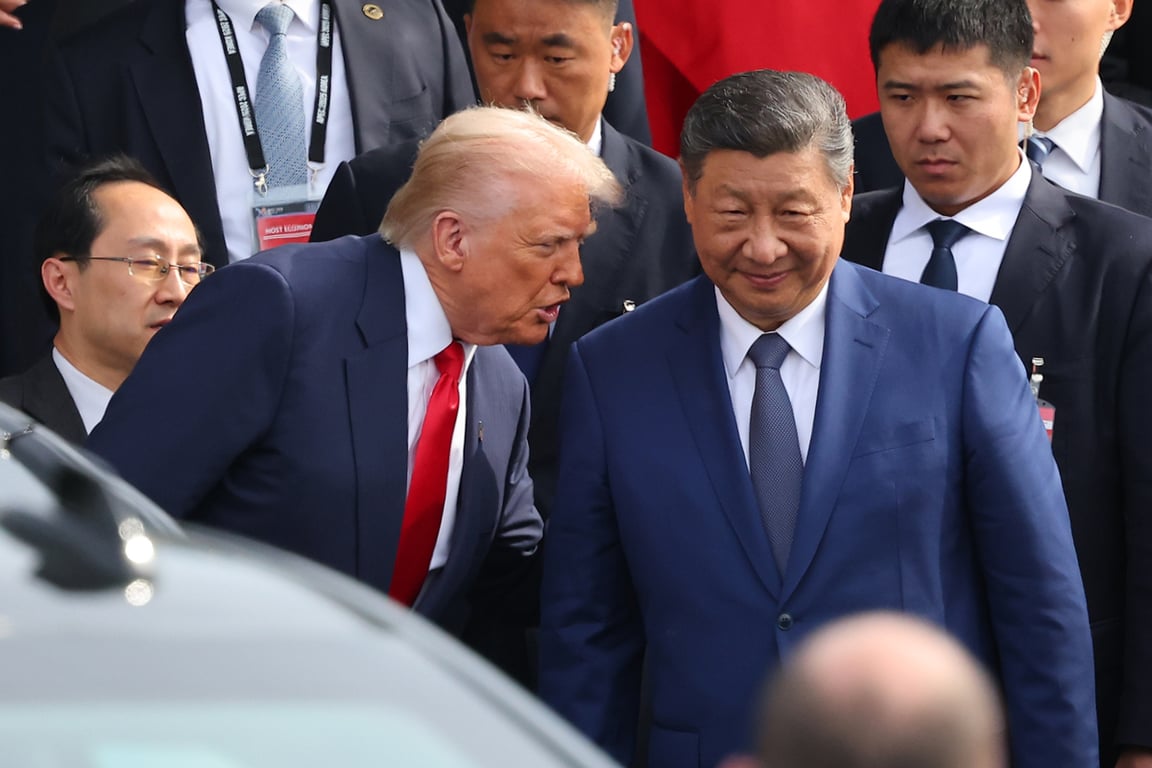
Donald Trump and Xi Jinping agreed on mutual visits to each other last October at a meeting in South Korea. The head of the White House rated those negotiations as highly as possible - “12 points out of 10.” And now the time has come to consolidate the success. “Our meeting in China will be special and perhaps historic. I look forward to meeting President Xi – a lot will be achieved!” — the head of the White House promised in advance. And then he returned to the topic : “Chairman Xi will give me a big hug when I arrive in a few weeks. We work together smart and very well! Isn’t this better than fighting???”
The meeting agenda is as broad as possible. In particular, the focus will be on issues of bilateral trade and economic interaction. As Alexey Chigadayev , a sinologist and expert at the NEST think tank, suggested in a conversation with New Europe, both sides will try to “reduce the risk of a new spiral of tariffs, sanctions and export restrictions, without conceding on fundamental issues.”
The previous meeting in South Korea took place against the backdrop of a trade war, with the US imposing triple-digit tariffs on Chinese goods and Beijing threatening to cut off global supplies of rare earth metals. As a result, Washington decided to temporarily - until October 2026 - suspend the increased duties. Experts agree that an extension of the moratorium is likely. However, no major breakthroughs should be expected.
“We will talk about conflict management, not its resolution,” predicts Alexey Chigadayev.
One explanation was given to The Hill by Jonathan Jin, who was responsible for relations with China at the National Security Council under Joe Biden: Beijing is unlikely to offer major breakthroughs in trade or other areas, since it “is based on the logic of the approaching midterm elections for the US Congress,” which will be held on November 3, and believes that “the closer the election day, the more leverage it will have.”
And Politico looked at the situation from the other side:
Chinese officials may offer lucrative deals, but in exchange for some steps that run counter to decades-long bipartisan efforts to limit Chinese investment in the United States and American investment in China.
According to the publication, some advisers in the Trump administration are urging the president to maintain restrictions on Chinese imports such as cars, as well as on US exports of high-tech semiconductors and related technologies.
Foreign Affairs magazine argued that the fate of a number of high-profile transactions may depend on whether US authorities agree to ease restrictions on the export of advanced American technologies, including AI chips and aircraft turbines. First of all, we are talking about a contract for the supply of approximately 500 Boeing 737 MAX aircraft to China, as well as, according to Reuters, “dozens of wide-body aircraft.” Such a deal would be one of the largest in Boeing history, and for Trump it would be another success that could be “sold” to voters as the election approaches.
However, as Foreign Affairs has emphasized , the downside could be more serious: China would gain tools to bolster its long-term technological self-sufficiency, while the United States would be limited to short-term gains. And it is not guaranteed: China could subsequently refuse the order, the completion of which would take years. This is confirmed by what happened after the 2017 visit. Trump then announced $250 billion in trade deals, but the agreements were not binding and many ended up remaining on paper.
Alexey Chigadayev also drew attention to the prospect of creating an “alternative platform for negotiations between the United States and China” - a bilateral Board of Trade.
“This is like an attempt to institutionalize trade: to determine what can be traded without threatening national security, what volumes are considered acceptable and how to maintain a balance of purchases,” explained the interlocutor of New-Europe. — The idea could be to create a narrow working corridor for trade in soybeans, food, consumer products and, possibly, certain industrial goods. At the same time, conflicting topics will not be addressed: semiconductors, AI, critical minerals, Taiwan, sanctions issues.
Chigadayev is confident that this will be politically beneficial to both sides:
— Such a mechanism will give Trump the opportunity to present the result: China is buying more American agricultural products, trade is becoming “more balanced,” and the administration is allegedly imposing manageable rules on Beijing. For China, this is a way to gain predictability, limit the risk of new tariff hikes, while not making structural concessions on industrial policy, technology or government subsidies.
Beijing is also proposing the creation of a Board of Investment and would like an agreement to lower barriers to investment in the United States. But the creation of this structure at the current stage is unrealistic for political reasons.
In general, as Alexey Chigadayev said, in the Chinese media before Trump’s visit there were almost no articles with detailed forecasts of how the negotiations would go, and this is no coincidence:
— The goal is not to raise expectations from the meeting and leave space to save face. If there are significant results, Chinese experts will say that everything was heading towards this, and they, of course, knew about the impending breakthrough.
If there are no big results, articles will be published with an emphasis on symbolic rather than substantive things: about the very fact of the resumption of dialogue and the first visit of an American president to China since 2017. But in any case, China will look like a winner in its own media.
However, there is also no doubt about Donald Trump’s ability to present any outcome as his triumph.
Of course, the matter will not be limited to trade issues. Thus, the Chinese Foreign Ministry pointed out the Taiwan issue in advance. Experts suggest that Beijing will seek a change in American official rhetoric - ideally a direct statement that the United States opposes Taiwanese independence, rather than simply “not supporting” it.
Donald Trump will certainly pay a lot of attention to the war against Iran, which he has already listed among his successes. Let us remember that Trump’s trip was supposed to take place in March, but was postponed due to this conflict. Washington initially expected that the war would be fleeting and would be a demonstration of American strength and US global capabilities. However, these calculations were erroneous. And although Trump notified Congress on May 1 that the war was over, the situation remains uncertain: there are still no formalized agreements between Washington and Tehran, and hostilities could resume at any time.
As a result, as The Hill noted , Trump went to the meeting “with fewer trump cards in his hands,” so that the visit began to look “not like a show of force, but like an attempt to minimize the damage.” First, the newspaper claims, the campaign “revealed the systemic vulnerabilities of the American way of war,” such as the difficulty of countering swarms of drones and cheap missiles, in order to fight off which Washington was rapidly expending incomparably more expensive high-precision interceptor missiles. Beijing suddenly had the opportunity to analyze in real time how these vulnerabilities could be exploited in the event of another conflict—primarily around Taiwan. Second, The Hill continued, the war has created an energy shock that is “accelerating inflation and eroding the political capital of the Trump administration.” This means that Trump’s negotiating position turned out to be related to his need for a respite, which “Beijing is able to provide almost single-handedly, whether through influence on Iran as the main buyer of Iranian oil or through the central role of the PRC in global supply chains.”
For Beijing, the Iran campaign was mixed news. On the one hand, as Mikhail Korostikov, a sinologist and visiting researcher at the Belgrade Center for Security Policy, reminded New Europe, Iranian oil, like Venezuelan oil, “went to China with a significant sanctions discount”:
— The business model of a significant part of independent Chinese refineries in the south of the country was based on the processing of this heavy and fairly cheap oil.
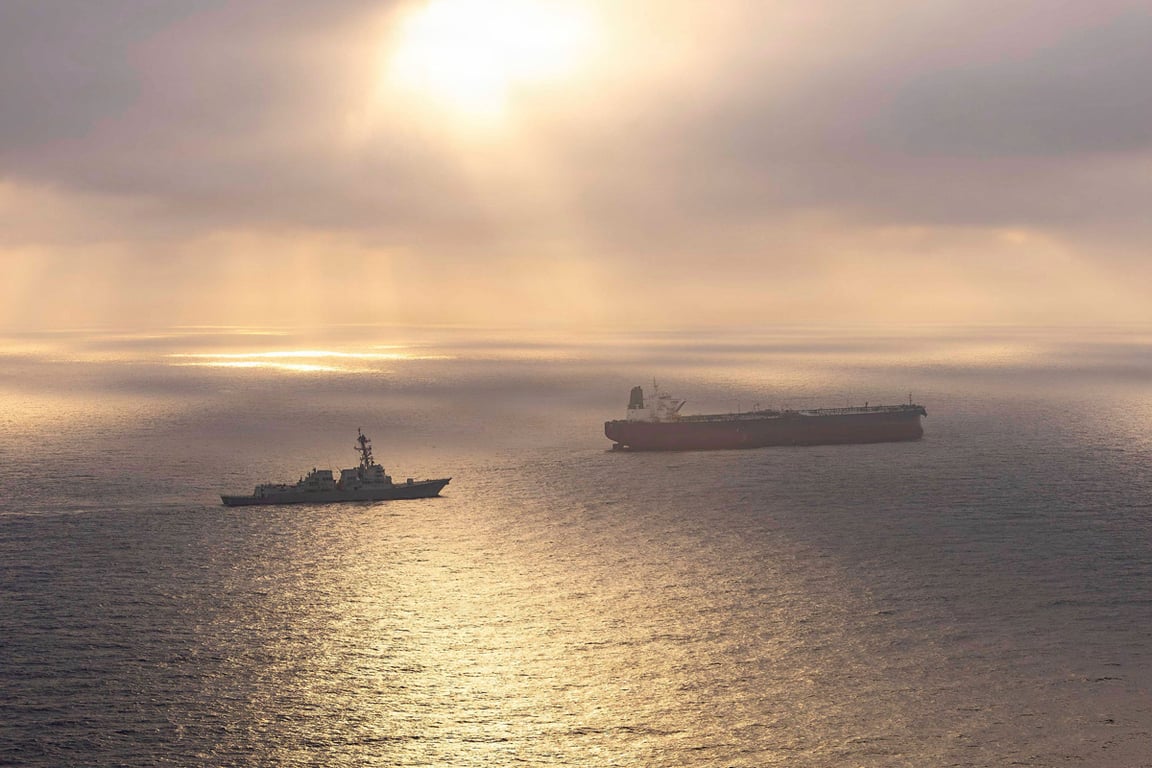
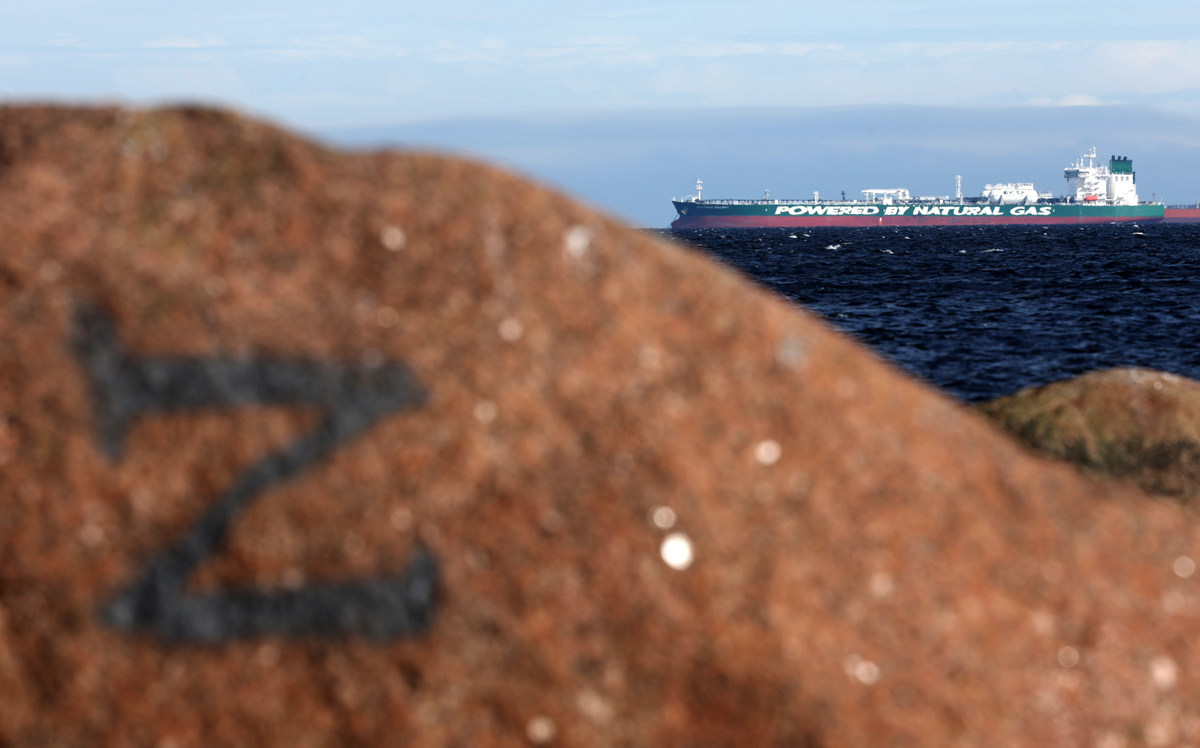
In order to maintain these flows, a complex infrastructure for circumventing sanctions was built, from the use of a shadow fleet to transshipment from ship to ship in neutral waters and the subsequent legalization of cargo through the ports of Malaysia, the UAE and Oman, the expert said.
And he added that prolonging the conflict could “break the price model on which entire segments of the Chinese economy, such as those small refineries, are built.” As the Financial Times reported , Iran provided 13% of China's oil imports, while Beijing received another 42% from other countries in the Middle East, almost all of which passed through the Strait of Hormuz.
On the other hand, the blockade was not a disaster for Beijing: the Chinese strategic reserve at the end of 2025 was estimated at 1.4 billion barrels - this is a “safety cushion” for more than six months in the conditions of a complete lack of supplies through the Strait of Hormuz. And this is much more than the US strategic reserve, which stood at 398 million barrels at the end of April.
As a result, the United States found itself in the role of supplicants. Donald Trump was forced to call on Beijing to contribute to resolving the crisis around the Strait of Hormuz, and Chinese officials played the role of peacekeepers, persuading their Iranian colleagues to accept the terms of the ceasefire, something Trump himself admitted .
“The war with Iran, obviously, is not going according to the original scenario (if there was one) and clearly demonstrates the limitations of the United States,” concluded Mikhail Korostikov.
Continuing the idea that “the initial positions of the Beijing negotiators cannot be called equal,” and Donald Trump now looks “the weakest in his entire two terms,” the expert pointed to a number of other factors. Firstly, “attempts to impose a trade war on China ended in failure, since most of the goods subject to duties were subsequently quietly removed from them by special exemptions, and now a court in the United States has generally ordered the state to return all this money.” Secondly, Korostikov is sure, “participation in the Palestinian-Israeli conflict has put Washington on the same level as Tel Aviv, which most countries in the world accuse of war crimes.”
In this situation, the expert concluded,
“China, which essentially did nothing, can literally sit on the edge of a waterfall and watch both the international reputation of the United States and the myth of its omnipotence fly past it into the abyss.”
Informed sources of the Hong Kong newspaper South China Morning Post confirm that the Chinese authorities are confident that Beijing, in the event of a new escalation, is capable of responding harshly to Washington and withstanding any pressure.
Alexey Chigadayev, meanwhile, pointed out that “being the president of the first economy in the world, a country with a large number of military bases, nuclear weapons and leading technology companies, is already a strong position, and current domestic political problems in the United States and foreign policy problems related to Iran cannot radically undermine it.” According to the expert, “Trump is indeed approaching the meeting in a less advantageous negotiating position than he could have done without the Iranian crisis, but that is why there is a chance for a practical result: both sides now benefit from not another escalation, but temporary stabilization.”
Life without censorshipCreating an antidote requires resources. Make “New Europe” with us! Support our common cause. By clicking “Support”, you accept the terms of the transfer ⟶ Other ways to support usBut who has clearly benefited from the Iranian crisis is Russia. First, the fighting pushed up world oil prices. Against this background, the US Treasury temporarily eased oil sanctions against the Russian Federation back in March, allowing the purchase of oil and petroleum products already loaded onto tankers. For now, this measure is valid until May 16, but may be extended. According to the International Energy Agency, Russia's revenues from exports of oil and petroleum products increased from $9.75 billion in February to $19 billion in March.
Secondly, the closure of the Strait of Hormuz further convinced Beijing of the need for closer cooperation with the Russian Federation in a key area - energy supplies. As Alexander Gabuev, a sinologist and director of the Carnegie Berlin Center, noted in a conversation with New Europe, given the current conflict and the 12-day war that preceded it last June, “Beijing now has to prepare for a scenario in which instability in the Middle East becomes the new normal.”
“In a world where the physical availability of energy resources is becoming increasingly important, Russia looks like the most obvious insurance option for Beijing,” the expert believes.
Therefore, according to Gabuev, it is not surprising that the five-year economic development plan adopted by the Chinese authorities in March mentions the construction of a new gas pipeline, the Power of Siberia-2, a project that has been agreed upon for many years. As the expert notes, with the right desire, construction can be completed in less than five years, since the resource base consists of already developed deposits that previously supplied Europe. At the same time, Beijing can be sure that Russia will continue to sell resources below market prices: the Kremlin’s ability to use its growing share of the Chinese market to its advantage is limited by the fact that Moscow simply does not have other large buyers in the neighborhood. The other day, Vladimir Putin announced , without going into details, a new “serious, very significant step forward” in cooperation with China in the gas and oil sector.
In addition, Mikhail Korostikov added in a conversation with Novaya-Europa, “it is possible that increased attention will be paid to other infrastructure initiatives - for example, the joint program of Russian Railways and the Mongolian Railways, which should increase the throughput capacity of the corridor through Mongolia to 50 million tons per year by 2030.”
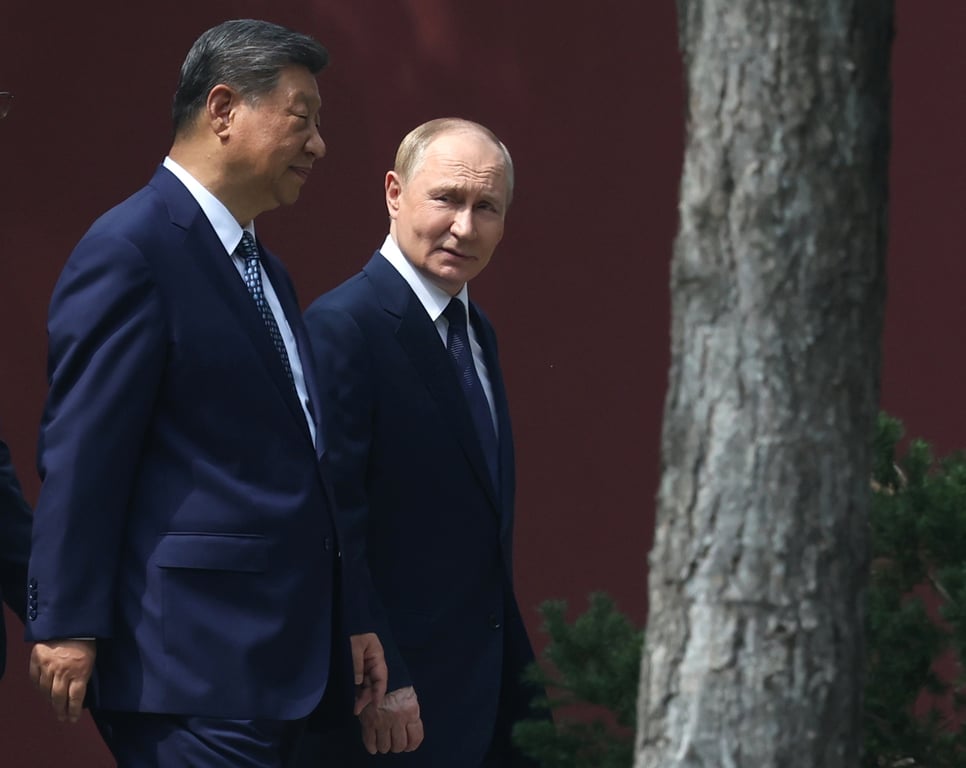
Such trends are not the best scenario for Trump, who even during the 2024 election campaign promised to “separate Russia and China.” Later, in March 2025, calling himself “a man who has studied history,” he noted : “The first thing you learn is that you don’t want Russia and China to be together.”
The US National Defense Strategy , released in January 2026, identifies containing China in the Indo-Pacific region as the second key regional objective (prioritizing the defense of the US homeland and activities in the Western Hemisphere). The document speaks of readiness to counter possible military actions of the PRC, as well as the growing influence of US adversaries, that is, also primarily China, from the Arctic to the Panama Canal. And in the section on the “problem of simultaneity” of threats, the Pentagon warns about the possibility of coordination of actions between several adversaries of the United States. The mention of Europe, the Indo-Pacific region and the Korean Peninsula hints at concerns about possible interaction between China and Russia, and with them the DPRK.
As Alexander Gray, former chief of staff of the US National Security Council (in Trump’s first term), explained to Politico, “There has long been an idea in American strategic political thought that cooperation between Russia and China does not serve the interests of the United States and that we need to look for ways to separate them, or at least tactically cooperate with the partner that poses less of a long-term threat.” We are talking about the so-called “Reverse Nixon” strategy, which New-Europe analyzed in detail in 2025.
One version is that he wants to “tear” Russia away from China, the “main geopolitical threat” to the United States. How realistic is this?
One version is that he wants to “tear” Russia away from China, the “main geopolitical threat” to the United States. How realistic is this?
Some experts are convinced that Trump is quite successfully working to weaken Beijing, as well as Moscow: he “isolates them from international partners, deprives them of key sources of external support” and, as a result, makes the Russian-Chinese alliance weaker.
As evidence, not only the weakening of Iran is cited, but also, for example, the change in the political course of Venezuela after the capture of Nicolas Maduro (the current authorities of the Bolivarian Republic are successfully cooperating with Washington, including in the field of oil supplies). As US Secretary of State Marco Rubio emphasized , the American operation eliminated the risk that China or Russia would control Venezuela’s oil reserves, the largest in the world.
In the same vein is Washington’s support for the new Syrian authorities after the fall of the regime of Bashar al-Assad, friendly to Moscow and Beijing, as well as harsh pressure on Cuba. Trump continues to claim that he will “deal with” it immediately after Iran.

Less noticeable, but also significant examples include Trump’s numerous statements about the Panama Canal (allegedly it is “under the malign influence of China” and should come under American control), as well as criticism of the Peruvian government for working too closely with China on the deep-sea port of Chancay. The State Department argued that Lima may be “unable” to control the port under the control of “predatory” Chinese owners, and the influx of “cheap Chinese money” could ultimately cost the Peruvians their sovereignty. Statements coming from Washington on these two topics invariably provoked “strong protests” from the Chinese Foreign Ministry.
“The regimes in Beijing and Moscow are gradually losing their main international partners. Their prospects are worsening and the cold winds of isolation are growing stronger,” says geopolitical expert Ross Babbage, author of The Next Great War: Can the US and Its Allies Defeat China?
The oil blockade has turned Cuba into a disaster zone. What is the Trump administration trying to achieve?
The oil blockade has turned Cuba into a disaster zone. What is the Trump administration trying to achieve?
Meanwhile, the big question is whether this will ultimately help “tear Russia away” from China.
“This idea was inherited by the Trump administration from its predecessors, but the Republican did not take a single real step towards its implementation. On the contrary, all the actions of the US President lead to a rapprochement between Russia and China, says Mikhail Korostikov. “From this we can conclude that either such a policy does not actually exist, or the strategy is very poorly thought out, and therefore is not a priority.
Representatives of Russia and China constantly talk about a “privileged strategic partnership” and relations that are not afraid of “clouds obscuring the view.” Many similar words were heard during Vladimir Putin’s visit to China in September last year. Without any doubt, his upcoming trip to Beijing will take place in the same vein. The Kremlin has so far refused to disclose the exact dates of the visit, but previously the end of May was mentioned as a guideline.
The SCO summit and military parade confirmed Beijing's claims to the role of world leader. I managed to make an impression. But how strong is anti-Western unity?
The SCO summit and military parade confirmed Beijing's claims to the role of world leader. I managed to make an impression. But how strong is anti-Western unity?
One of the arguments of those who talk about the “cloudless” relations is trade and economic statistics. According to the General Administration of Customs of the People's Republic of China, the volume of Chinese-Russian trade in January-March increased by 14.8% year-on-year to $61.25 billion. During this period, China increased supplies to Russia by 22.1% (to $27.66 billion), increasing imports from the Russian Federation by 9.5% (to $33.59 billion). True, in order to draw far-reaching conclusions, we must wait for statistics for the year: the last year, 2025, ended with a reduction in bilateral trade volumes by 6.9%, to $228 billion. The main reasons are the decline in oil prices and demand for Chinese goods among Russian households.
The matter is not limited to open trade and economic interaction alone. As Bloomberg reported,
Russia imports “more than 90% of the technologies subject to sanctions” through China. Such support allows Russia to increase production of many types of weapons, including missiles and drones.
A year earlier, this figure was approximately 80%, but Western countries are constantly tightening control over the routes through which Russia receives sanctioned goods, but Beijing still does not do this.
In addition, according to Bloomberg, Beijing transferred intelligence information, military satellite imagery and drones to Russia, although it stopped similar exports to Ukraine. And The Insider reported that China is actively penetrating the occupied territories of Ukraine. Thus, 6 thousand mobile communication base stations there operate on Chinese equipment, and about 80 bank branches in the Donbass trade in cash yuan. Although Beijing has never officially recognized either the occupation of Crimea or the incorporation of the “LPR” and “DPR” into Russia, Chinese companies are investing in the construction of factories in the Russian-controlled part of Donbass, and pro-Russian officialsare traveling from there to China to strengthen ties.

Theoretically, the United States could offer Russia some unprecedentedly large-scale economic incentives in exchange for a “divorce” with Beijing. And it seems that there really were such ideas in the Trump administration. In the article “There is one reason why Trump will not abandon the peace deal with Putin: China,” Politico, citing sources, argued that the Trump administration believes that by pushing Russia to end the war in Ukraine, return it to the global economy and attract American investment, this will over time change the world order, that is, simply put, China’s position will be weakened. And this idea of providing Russia with economic incentives to move closer to the United States raises alarm bells in Ukraine—at least, an anonymous Ukrainian official told Politico in March.
However, there is nothing to worry about yet. The Russian-Ukrainian settlement is de facto frozen . And all the talk that under Trump, Russia and the United States will begin megaprojects that will bring unprecedented benefits - like a tunnel under the Bering Strait - have led nowhere and are unlikely to lead to anything in the foreseeable future. By and large, Washington has little to offer Moscow.
— The Trump administration describes tools that it cannot fully control. American investments are investments of private companies, which, as we see in the Venezuelan example, are in no hurry to invest where they do not see real economic benefits, protection of investor rights and a stable political regime. The Russian market does not yet meet these criteria,” Alexey Chigadayev told Novaya-Europe.
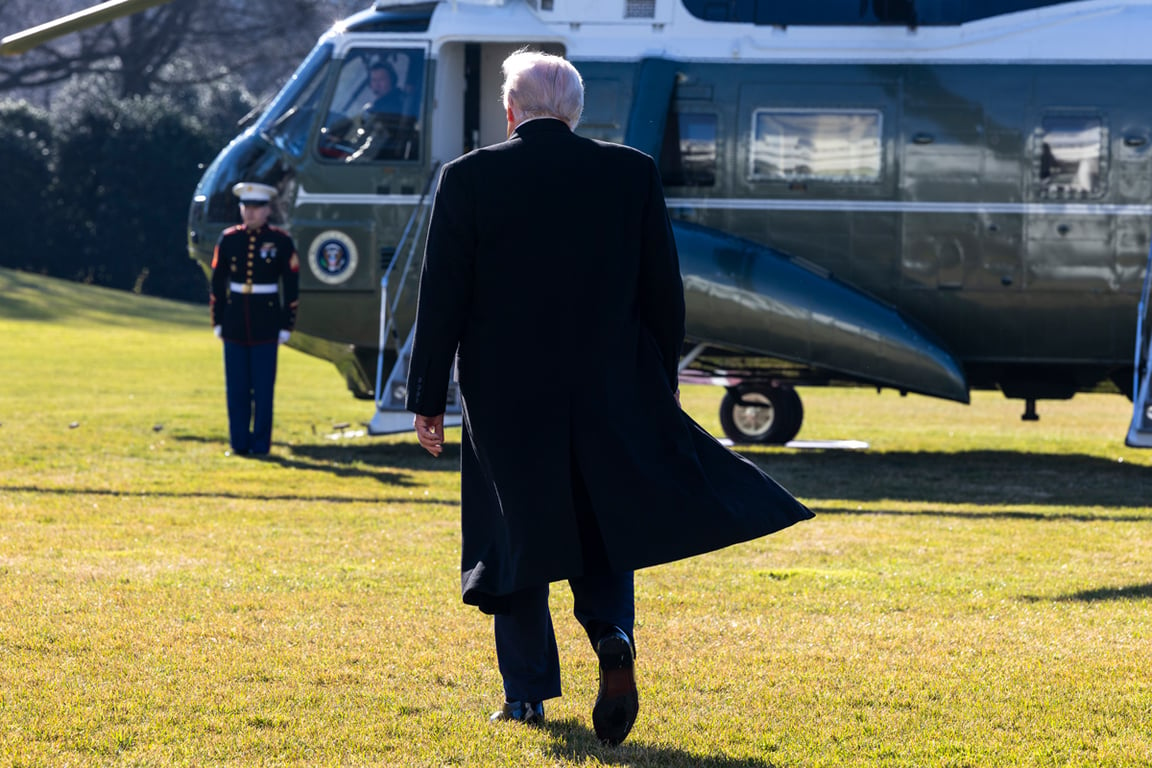
In the meantime, relations between Russia and China are beneficial to both parties. These two economies are complementary and ideal for each other, but the United States does not need Russian oil, gas, coal, timber, metals, fertilizers and other similar goods. Of course, the current colossal difference in trade turnover (Russia - China in 2025 - $228.1 billion; Russia - USA - $4.4 billion) can be somewhat reduced, but certainly not leveled out. In 2013, that is, before all the sanctions for Crimea and Donbass, Russia and the United States traded only $38.2 billion.
— The Russian economy is currently almost completely isolated from the American one and integrated with the Chinese one, and it will take upheavals on a planetary scale to change this,
— Mikhail Korostikov is sure.
There are other factors too. For example, China benefits from the fact that Moscow distracts the attention of the West with its destabilizing actions. In addition, Moscow and Beijing share a similar view of the problems of the modern world order: a common rejection of unipolarity and “US hegemony.” Sinologist Korostikov drew attention to another important factor - predictability.
— In absolutely any scenario, Russia benefits from rapprochement with China, at least because relations are based on a very simple logic and a fairly clear set of mutual interests. And in recent decades, the United States has proven itself to be a source of complete uncertainty, which cannot be included in any long-term strategy.
Donald Trump will leave the White House no later than January 20, 2029. Against this background, according to Alexey Chigadayev, “the main tactic of Russia and China is to endure Trump, minimizing losses and maximizing gains.” Both Xi and Putin are sure that they will be able to “endure” - leaders who, during the last meeting , had dreamy conversations about an active life up to 150 years.