18+ This material (information) was produced, distributed and (or) sent by a foreign agent Media project “New Tab” or relates to the activities of a foreign agent Media project “New Tab” Author Stasya Vladimirova May 13, 2026 read: 11 min.
One night Oksana had a dream. Her life was then bursting at the seams: a small child, fatigue, quarrels with her husband, a constant lack of money. And she dreamed of her late grandmother. In her dream she said one word: “Shay.” Now outfits from Buryat costume designer Oksana Alkhunsaeva are ordered all over Russia: from Moscow and St. Petersburg to Yakutsk and Kamchatka. Costumes for performances, ritual clothing for shamans, children's and adult traditional clothing. And that night it seemed impossible. Almost broken, Oksana faced a choice - give up or start over. This text was published in the publication “ Potok ”. "New Tab" publishes it in its entirety.
Root system
In her Khunkheyev family, Oksana was the youngest. She was born in 1984 in Ust-Ordynskoye, a village of 15 thousand people in the Irkutsk region. The girl was long-awaited; two boys were born before her. In her parents’ family, they observed traditional rituals and spoke Buryat, although this was not accepted in those days. Oksana recalls that since childhood “I saw everything Buryat” and “everyone did it as if it was just the way it should be.”
The Khunkheyev family still did not wear national clothes in everyday life, but their grandmother had real gutuls - Buryat boots. The craftswoman still speaks about them with regret: these gutuls were lost somewhere, as if a thread from the past had been broken. And Oksana, even as a child, paid attention to outfits and loved to sew. Don't just play with dolls, but imagine yourself as a fashion designer. Coming up with patterns and sewing dolls for friends. Watch the then popular series “Simply Maria,” in which a simple Mexican girl moved to the capital Mexico City from a remote rural province to become a designer. Little Oksana from Ust-Ordynsky dreamed of the same thing.
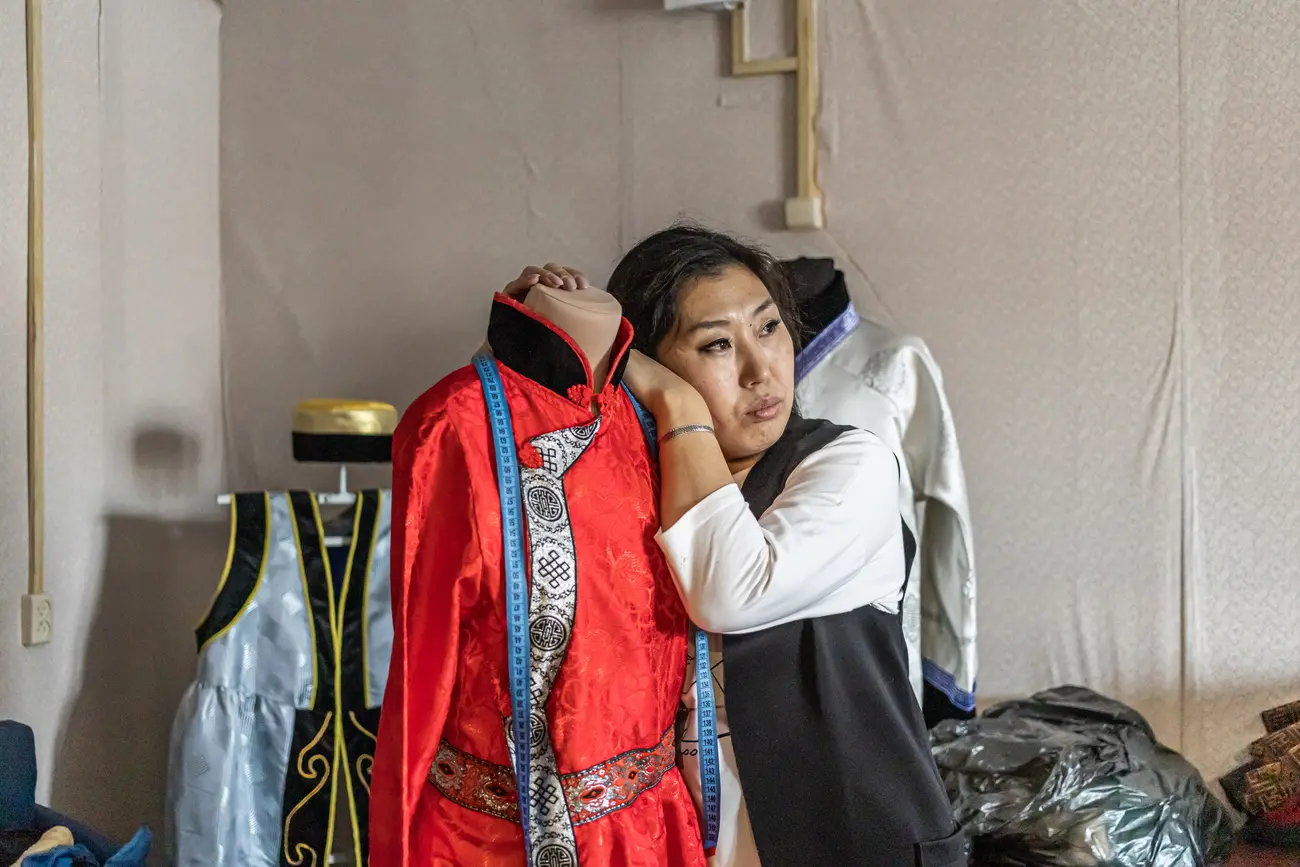
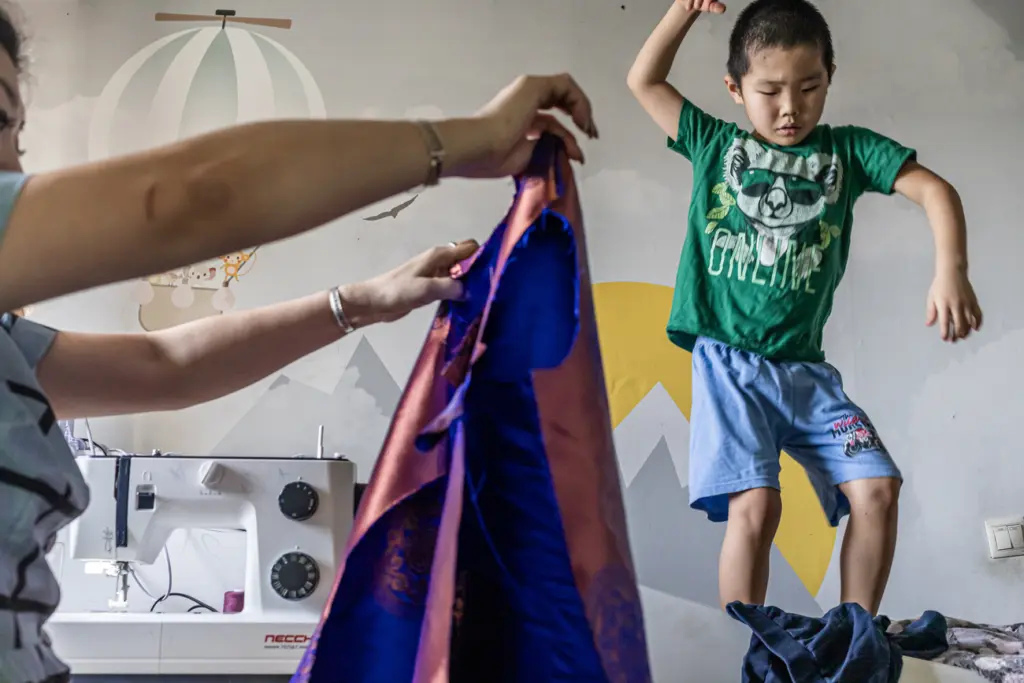
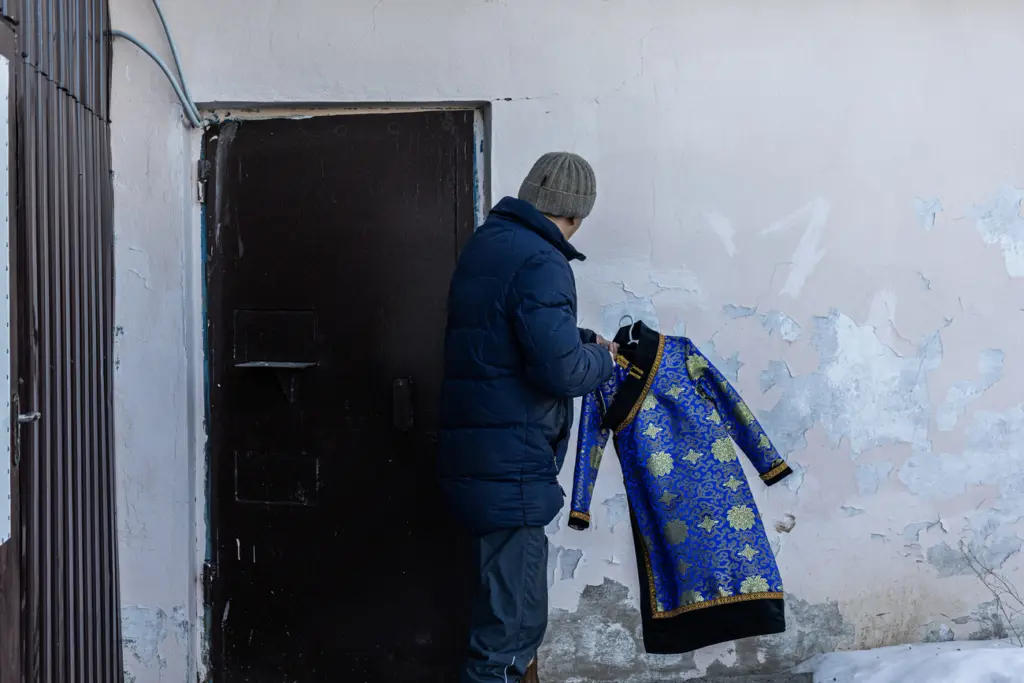
Children's national robe moves from the designer's home to the workshop
The teenage years turned out to be difficult. In eighth grade, the girl moved to a new school - and immediately became an outcast there. She is used to her brothers protecting her and her father calling her “his beauty.” But in class, the teenager was teased with “lip slap” because of his plump lips, his last name was distorted, and his school bag with textbooks was kicked along the corridors. Oksana says that she has learned to switch off, but she still experiences delayed reaction syndrome in any conflict. Pain and resentment do not come immediately, but after hours or days, and it is very difficult to live through. It was then that she wanted to understand: why do people do this? So she chose psychology and received higher education in this field.
But right after college, by chance, I got a job in the personnel department of the prosecutor’s office of my own district. The girl did not have a legal education, but she really liked the way investigators were treated: their status, the respect of others and the “obviously important cases” that they dealt with. Oksana began to dream of becoming an investigator herself. But I had to leave my job at the prosecutor’s office “due to life circumstances,” the woman says.
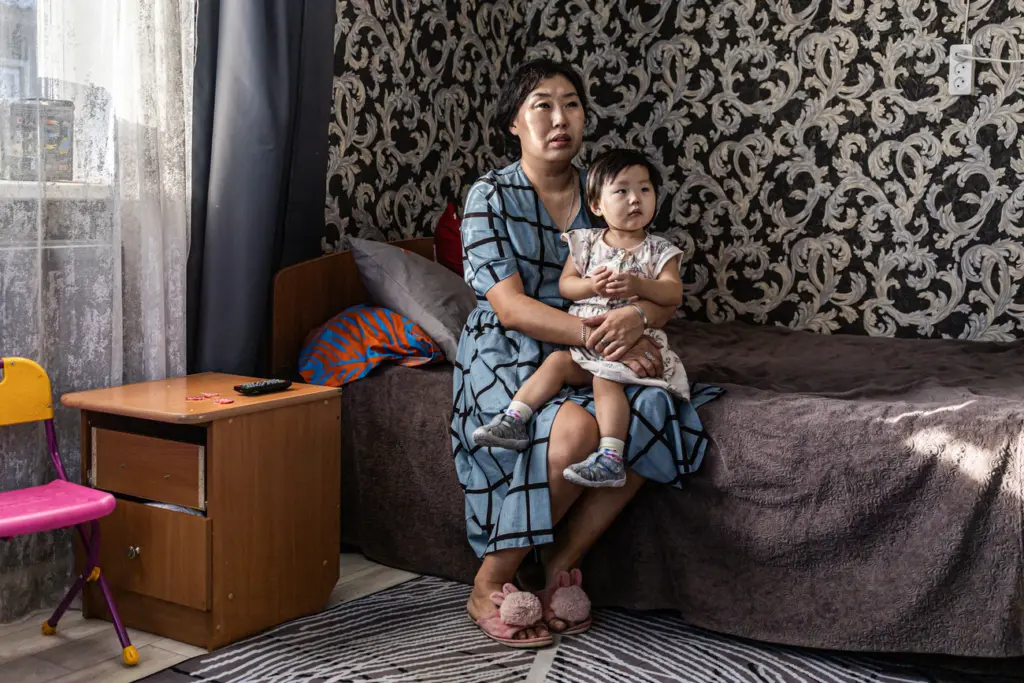
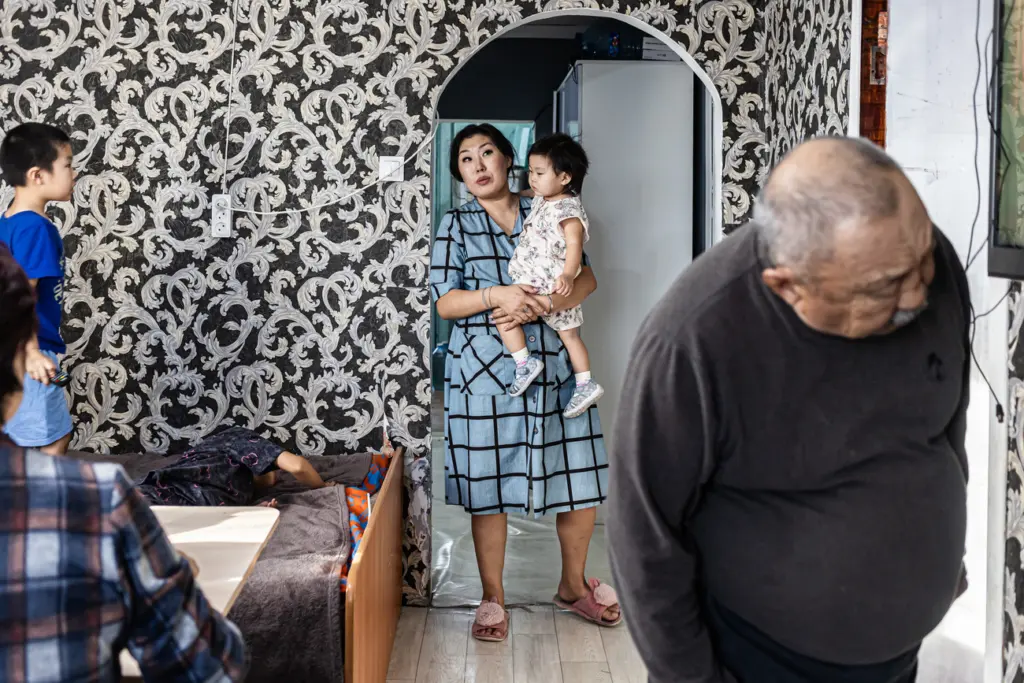
One and a half year old Sofia almost never leaves her mother’s arms
Alkhunsaeva, like in her time at the prosecutor’s office, got a job at the Center for the Preservation and Development of the Buryat Ethnicity by accident. In 2008, when Oksana came there, the Center was holding the Altargana festival in Irkutsk.
The festival of all Buryat communities in the world was invented in 1994 in Mongolia. It has since gone international and expanded to large-scale events, with people coming from all over the world, from Inner Mongolia in China to France. Oksana was completely amazed by the scale and how it looked.
“Before that, I practically hadn’t seen our national costumes. And at the festival - all the richness of Buryat traditions at once. “I looked and admired,” she recalls.
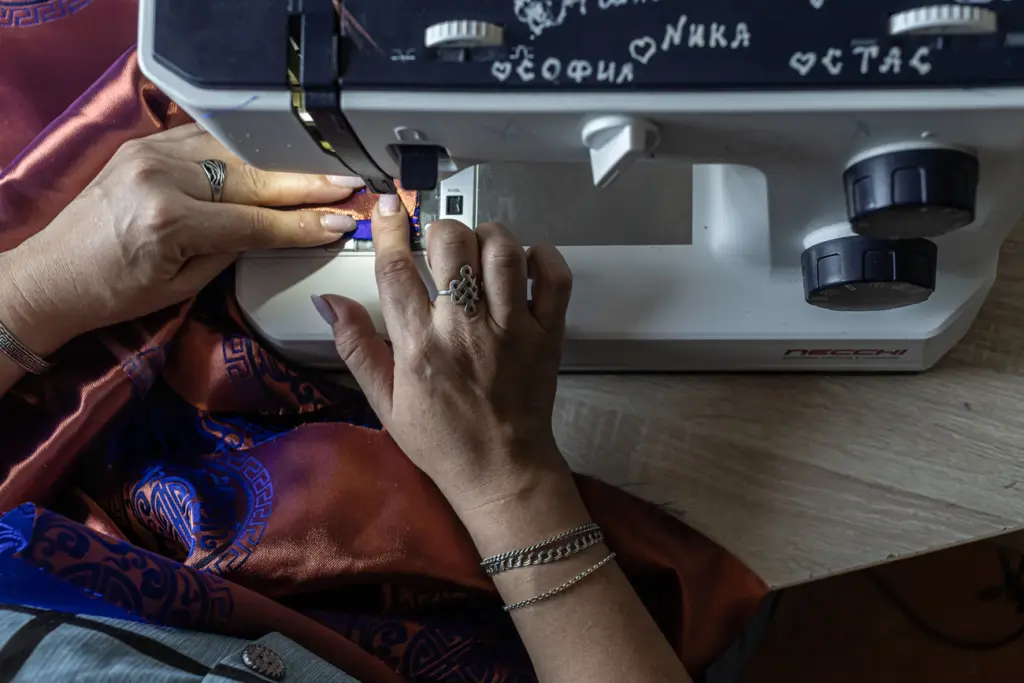
The names of her children are written on Oksana’s home sewing machine: Natasha, Nika, Stas and Sofia
The festival is named after the altargana plant. This shrub itself, with small leaves and medium-sized golden-yellow flowers, looks modest, but it has an incredibly strong and developed root system. Oksana thought a lot about her roots and then she understood and saw what exactly she wanted to create.
But that was still a long way off.
After the end of the festival, the girl again found herself at a crossroads. She changed several areas of activity and entered the Institute of the Prosecutor's Office. Then the idea came back to her - to work as an investigator. She asked to practice in the investigative department and was offered to be a public assistant. This position is often the starting point for obtaining investigative status.
Three generations of the Khunkheev-Alkhunsaev family
But reality put everything in its place. Oksana dreamed of working as an investigator for several years, but it took a couple of weeks to give up on this idea. In her capacity as a public assistant, she went to several crime scenes. I read a lot of cases about brutal reprisals. She examined mothers' allegations of child abuse. And she realized that, no, she couldn’t, it was unbearable. This is not for her.
Alone and not alone
In 2016, Oksana met her future husband, Dmitry. Now the craftswoman says that at the beginning they were so different that it’s even surprising how they immediately decided to live together, in a small wooden house in Irkutsk, on the banks of the Angara. A daughter was born, but life was not going well: there was always a lack of money and strength, the couple quarreled.
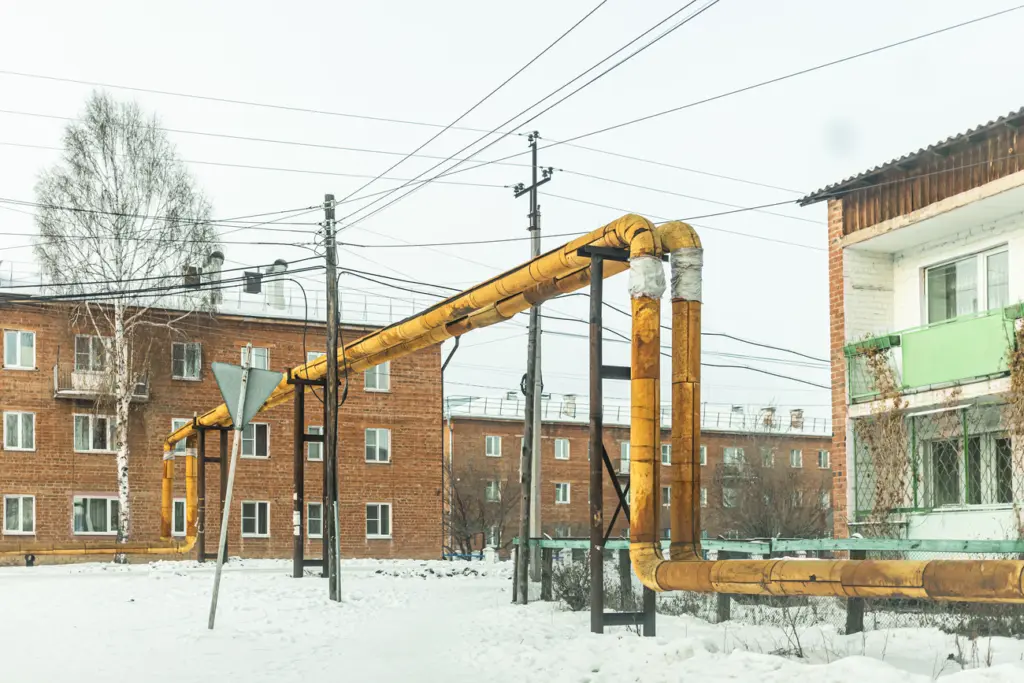
Ust-Ordynsky is Oksana’s native village
Oksana believed in shamanism, but Dmitry was always skeptical about it. Only then he had to become a “boo” - a shaman - himself. His daughter from his first marriage, Natasha, fell ill. The girl’s knee was aching and collapsing. They began to prepare her for a complex operation. Although Dmitry laughed at his wife’s beliefs, for the sake of the child he went to the shaman. She, looking at the girl, unexpectedly turned to him: she said that he was from a shamanic family and that it was the ancestors who “brought to their knees” the future boo. Dmitry canceled the operation. Soon the girl’s leg stopped hurting, and Dmitry underwent a special initiation rite and became a shaman at the age of 39.
However, this did not save their family then: they were plagued by lack of money, constant quarrels and problems. Now Oksana doesn’t really like to remember those times. In 2019, she left her husband while seven months pregnant. The woman recalls that she was afraid not to leave, not to remain alone, but to face “what people would say.” She was especially afraid that those closest to her would judge her, that “her parents would scold her,” she says.
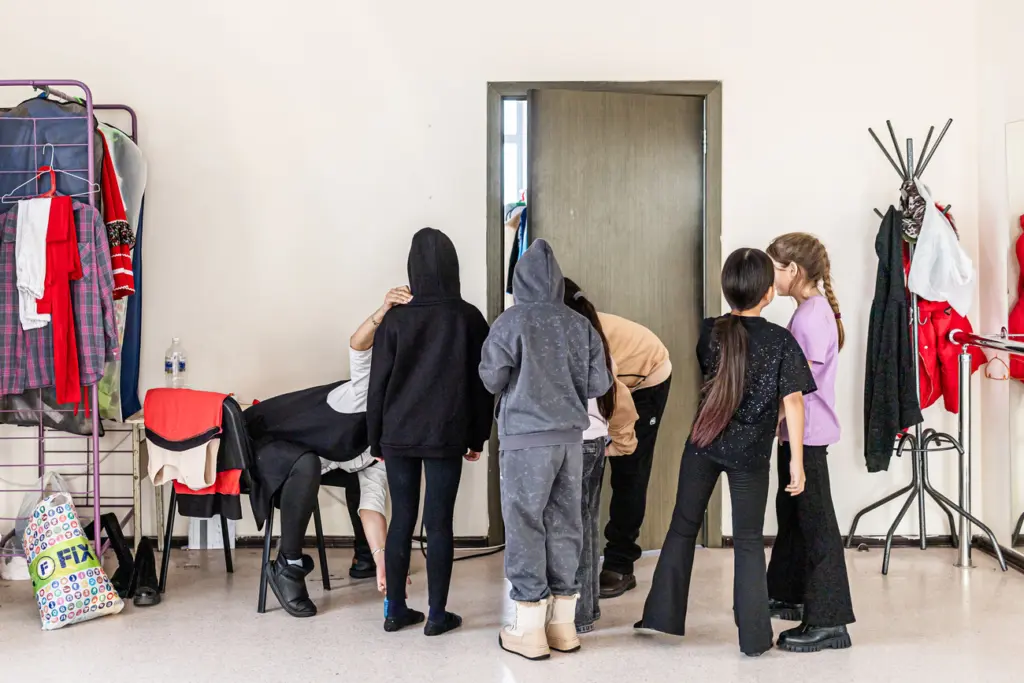
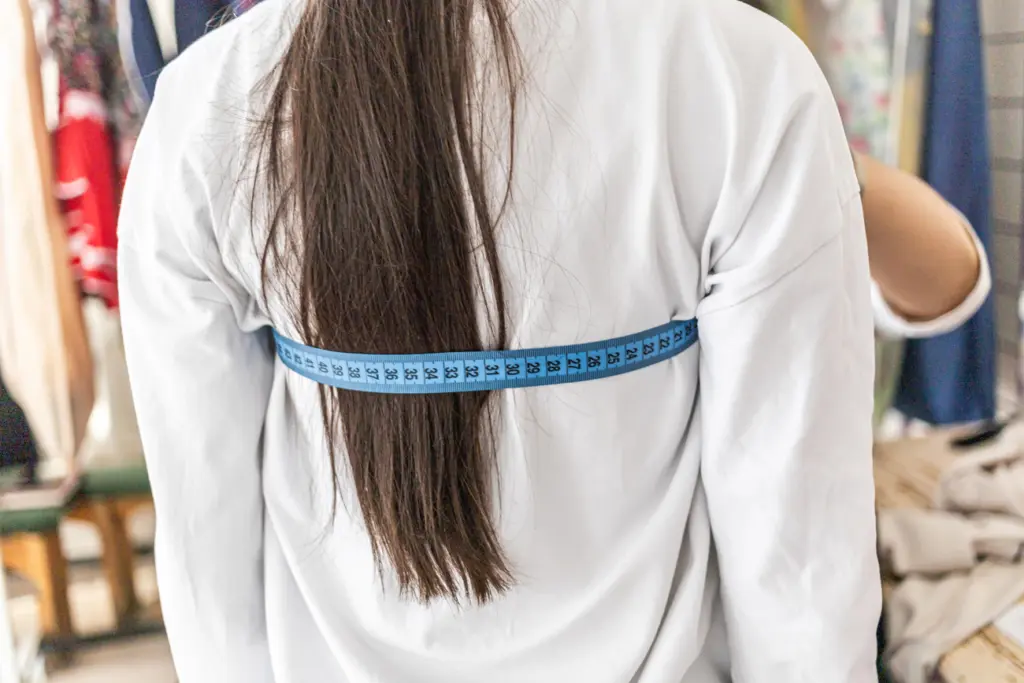
Oksana takes measurements of young dancers in the cultural center
But the family accepted the woman without any conditions. Without money, with loans and debts and two small children, Veronica and newborn Stas, she needed to start her life over. “That is, you just had to plow and not sleep at night,” recalls Alkhunsaeva.
After the second decree, Oksana began selling subscriptions to the GARANT reference and legal system and traveled from Ust-Orda to work 70 kilometers to Irkutsk, to the office. I got up at five in the morning and got on the minibus at six. “I worked in the office until 5 p.m. From there I rushed to the minibus to Ust-Orda. I arrived home at eight in the evening. I fed the children, talked to them and sat down to sew,” says the craftswoman.
For Oksana, the main thing is that people wear her clothes
If she had a free moment at work, she went to a special store to buy fabrics, because she wanted to sew not only for herself, but also for others. Often clients came to her directly at work to try on their orders. “They also measured it in stores, in toilets,” Oksana recalls. Not everything worked out right away - she still remembers one of the first clients who brought her own fabric for a dress. “This fabric was like oilcloth, but I had no experience, and the client also lost her gold earring,” says the designer.
Although five years have passed since that incident, Oksana is still looking for that woman and wants to reimburse all costs. And he jokes about the dress that someday he will exhibit it “in a museum named after himself” as an example of inept work, which, nevertheless, is where it all began.
Oksana says that for her dreams are not an abstraction, and she has always paid attention to what comes to her in this way. Her grandmother’s words were an undeniable sign for her: “as if the ancestors knew better.” There was a sewing machine, won at some competition, a piece of fabric was lying around, the children fell asleep at ten and she had some free time until late at night. Oksana knew that she needed to sew, but did not know how. I made my first costumes for my family and friends - I wanted my children and nephews to wear national clothes and be interested in their culture.
It started to look beautiful, but the result turned out to be too traditional: there was simply nowhere to wear the “canonical” outfits. She also wanted fame and recognition, so Oksana tried to participate in various modeling shows. At one of them, a journalist approached her and asked for an interview - it was exactly what she saw in the TV series “Simply Maria” as a child.
Oksana’s husband Dmitry did not believe in shamanism, but after his daughter’s illness he underwent an initiation rite and became a shaman himself.
Although the high podium, bright lights, and professional models looked like her childhood dream, Oksana now says that over time she came to the conclusion that the main thing is that people wear her clothes. But she immediately adds that she was also recognized as the best designer of the Ust-Orda Buryat District, this was in 2023.
“Pray that I fulfill the order”
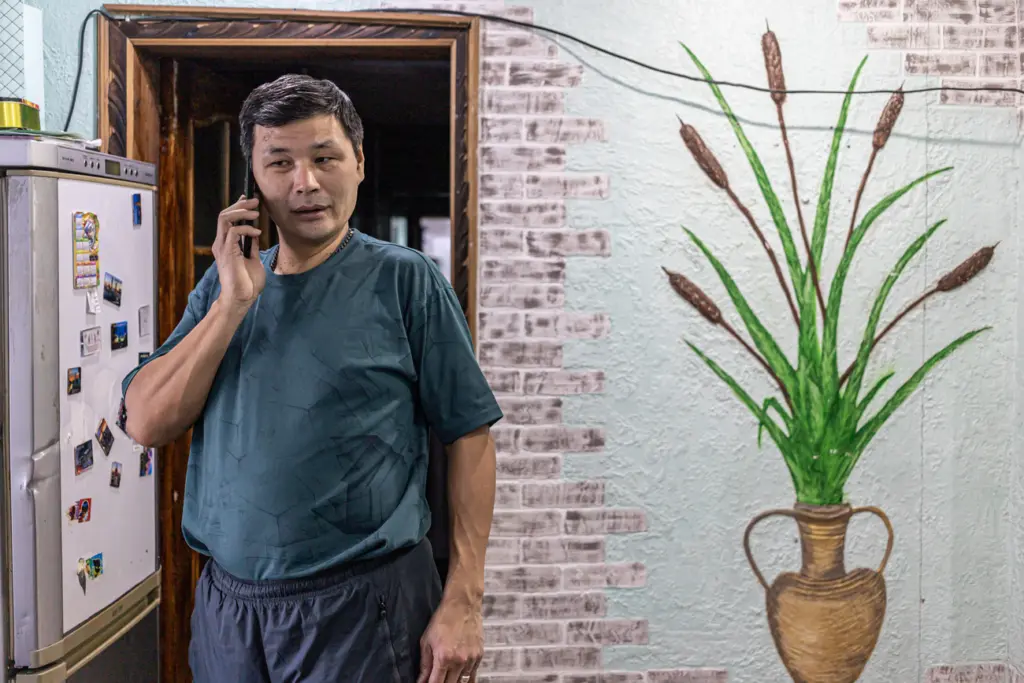
Despite the fact that the Alkhunsaev family broke up, Dmitry often came from Irkutsk to Ust-Orda and helped Oksana. Either to sit with the children, or to carry out the instructions of his ex-wife. In 2023, Dmitry came again - and stayed. A year later, another daughter, Sofia, was born into the family.
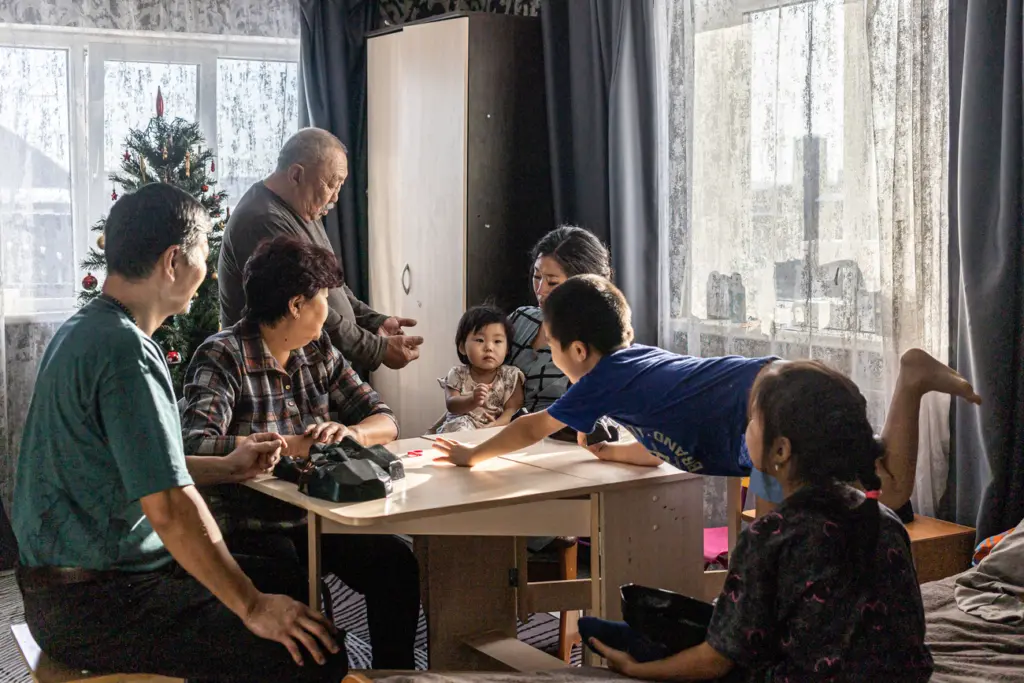
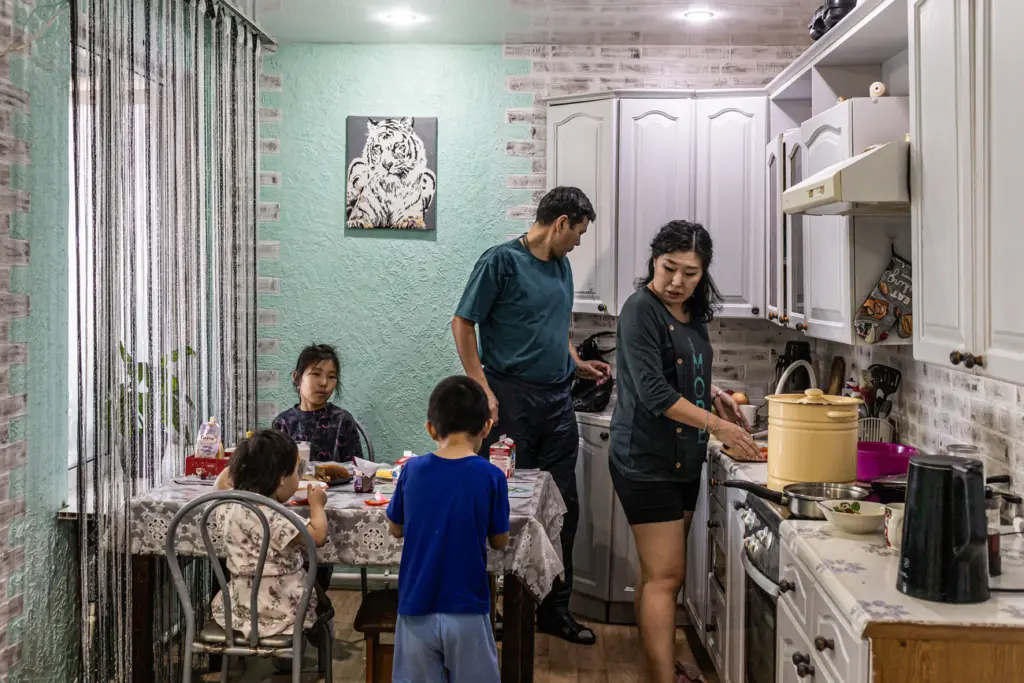
The Alkhunsaevs' kitchen is always crowded
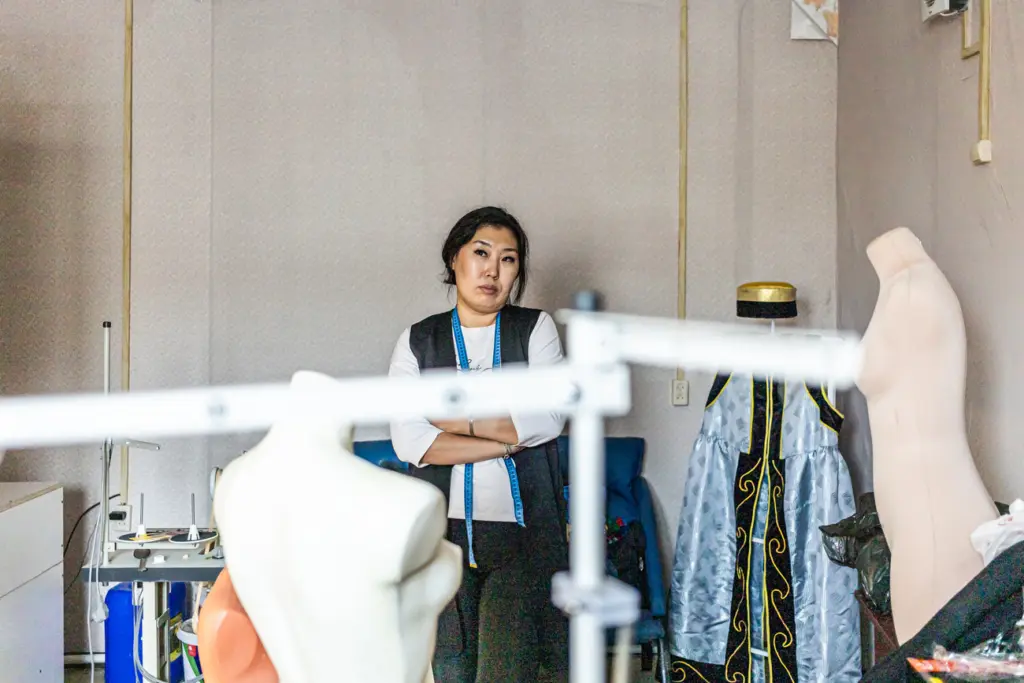
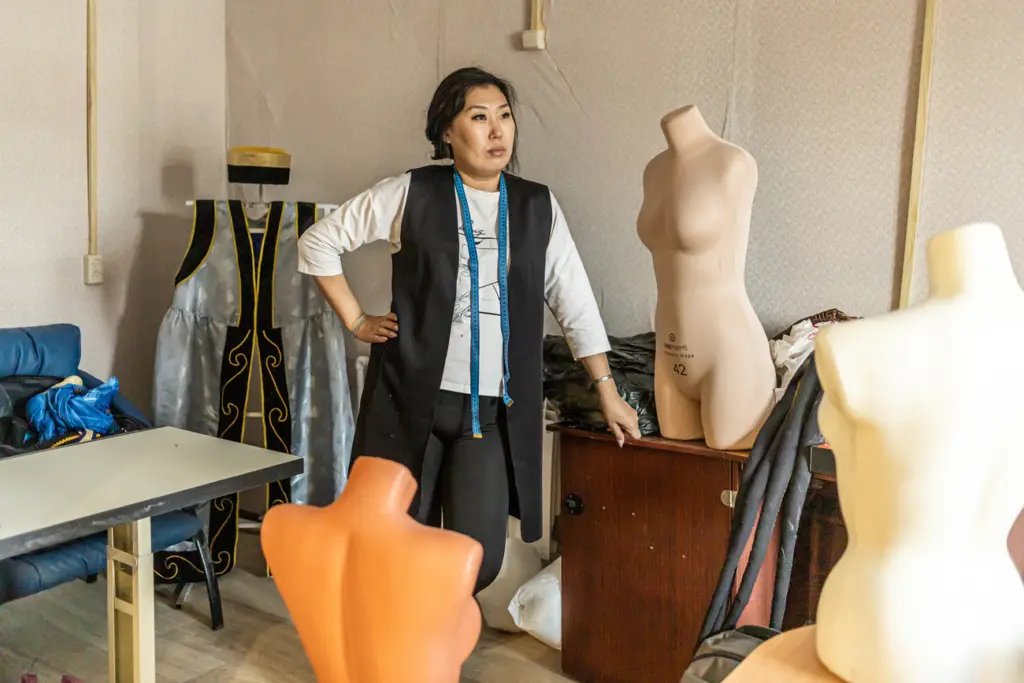
At first, Oksana sewed at home, and customers came to the apartment for fittings. But with Dmitry’s return, the apartment became crowded, and the designer realized that the workshop was no longer a dream, but a necessity. It was Dmitry who found the advertisement for the sale of the premises. Dilapidated, cold, with a huge crack in the wall - it was not expensive.
“Dima began to put it in order,” says Oksana. — I spent a whole year renovating everything: putting putty on the walls, doing interior decoration. Then we made suspended ceilings and bought everything we needed. They took out loans for this, used credit cards, and all the earnings from orders went there. Dima carried out all the repairs on himself.
While Oksana critically examines her work, her son Stas is jumping on the bed
Relatives and friends donated wall hangers, shelves and various small items. The Alkhunsaevs replaced their household sewing machines with professional ones and bought an industrial overlocker. Some were taken in installments, some by hand, some on credit. Sometimes Oksana’s husband helped her sew, then hired help appeared.
“I bought my first two mannequins from a man next door. More precisely, we gave him beads made of natural stones, and in exchange he gave mannequins. Each of them cost about 1–2 thousand rubles. For me it was a real miracle. Although these were the simplest plastic mannequins, not even tailor’s ones,” the craftswoman laughs.
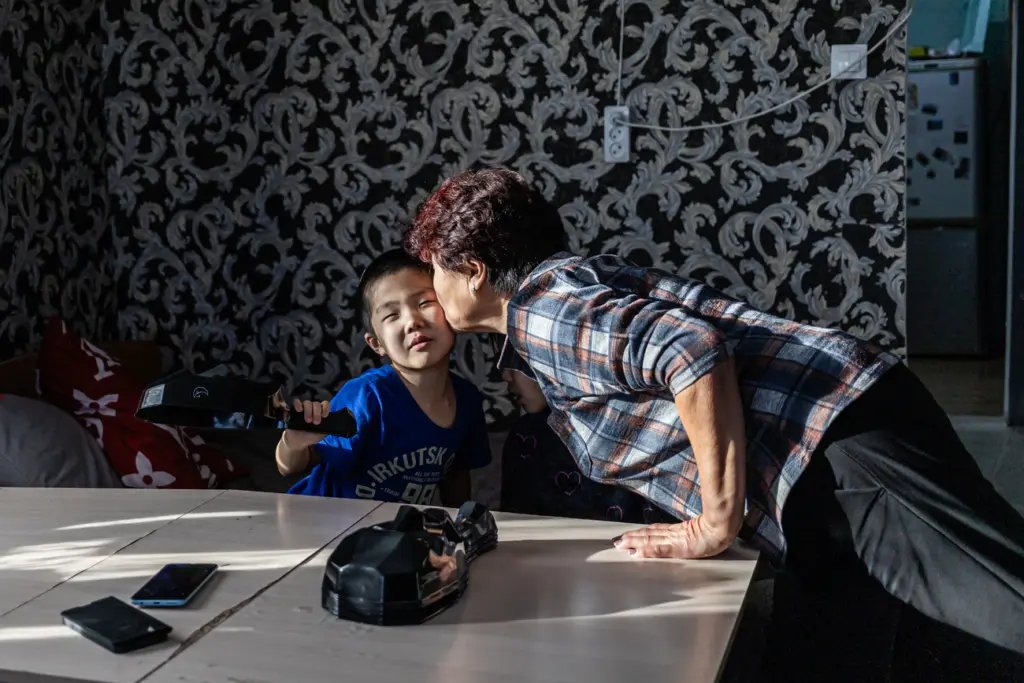
When Oksana returned to her parents’ home with debts and two small children, she was accepted without any conditions
Now Oksana's whole family works together. Her husband is an organizer, Oksana’s mother helps at shows, irons and finishes urgent work, her father makes special knives, and besides, she takes everyone on errands. Oksana is helped by both her mother-in-law and daughter-in-law.
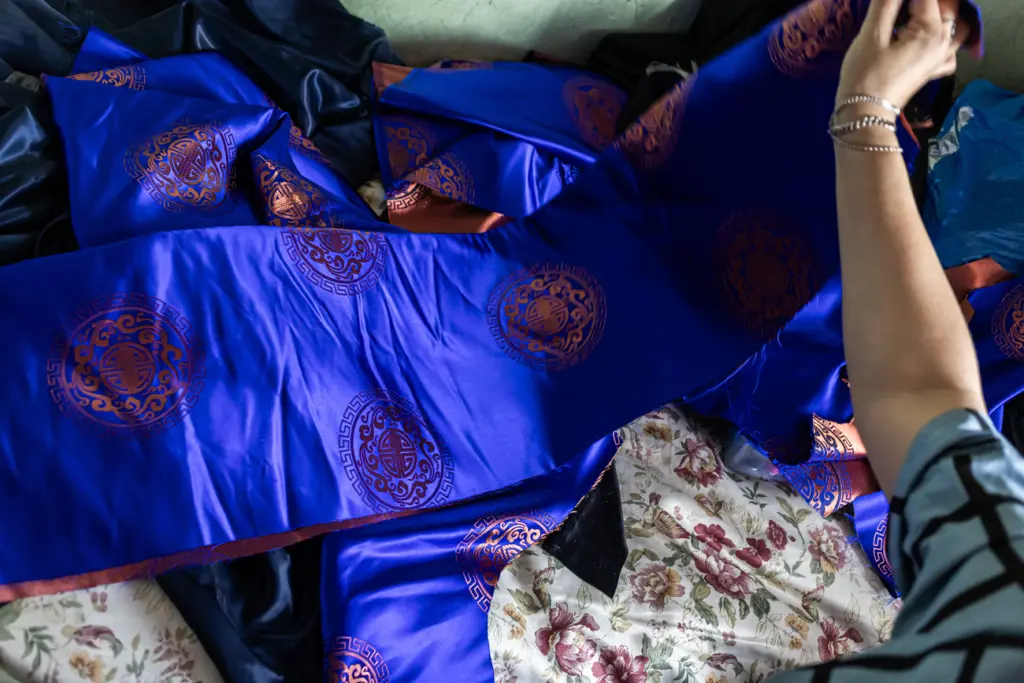
For a designer, a Buryat costume is not a museum exhibit. The craftswoman says that it is important to see the person and start working with him. Understand what shape and silhouette the client likes in ordinary clothes - and only then “translate” this into the language of the Buryat costume. Previously, she could sew “as beautifully as she wanted,” but it didn’t work.
Oksana also has her own rituals. If she is sewing a shaman costume, she can pray or “drip” milk so that the spirits will help her in her endeavor. In such cases, the shaman husband also comes to the rescue. “Even when we didn’t live together, she asked: “Dima, pray that I fulfill the order well.” And he prayed. I have a shaman mentor, she taught me to pray, and now I do it myself. But Dima also prays when I can’t deliver an order. He is my main support,” says Oksana.
Neither psychology nor jurisprudence became the work of her life, but they were very useful in the real work of life. The fashion designer says that psychology helps to talk with clients, and a legal education helps you not get confused in documents and understand your responsibility. Today Oksana knows the main thing: the craft gives her confidence. “I always know that I will survive,” the craftswoman assures. “Even if you have to go to another city and start from scratch.”
Oksana says with a laugh that sometimes, however, you want to give up everything and go to a quiet, stable office life. Tired after a night with capricious fabric, ready to call it a day, literally an hour later she received a message from a client from the Far East: “The parcel has arrived, everything is gorgeous, thank you!” Or people on the street came up and asked, “How can I find a suit like yours?” Oksana notes: every time thoughts about leaving arise in my head, life seems to throw up a special sign.
“It’s like someone won’t let me go and says, ‘Shay,’” she says quietly.
As a child, Oksana often imagined herself as a fashion designer - the heroine of the Mexican TV series “Simply Maria”
“When everything collapses, one word remains” • Novaia vkladka • RIMA — Russian Independent Media Archive