
Translated material
And the smoke of the fatherland
The premiere of Fatherland, a tense drama about the cost of moral choice in post-war Germany, premiered in Cannes.
I was really looking forward to the premiere of Fatherland in Cannes - for many reasons. Director Pawel Pawlikowski won an Oscar for his “Ida” in 2015, and three years later, at Cannes, his “Cold War” also lived up to expectations (a prize for directing). I think “Fatherland” is one of the contenders for the main awards this year.
Among the most recent bright literary impressions is the novel “The Wizard” by three-time Booker finalist Irishman Colm Tóibín, which is more than a biography: an attempt to paint the secret, complex landscape of the inner life of a genius, including his hidden desires and prohibitions. But at the same time, Toibin reveals the tragedy of an outstanding writer who was forced to be cut off from the roots of his “fatherland.”
Producer and director Edward Berger (“All Quiet on the Western Front”) approached Pawlikowski, an Eastern European director, about the project. This choice turned out to be strategically accurate: by maintaining an outsider's view, Pawlikowski avoids the pitfalls of demonstrating collective guilt or national nostalgia. He and co-author Hendrik Handlögten leave decades behind the scenes, capturing only one, perhaps the most vulnerable fracture: Thomas Mann's journey from prosperous America to post-war, ideologically torn, bombed and resentful Germany.
Through minimalist black and white aesthetics, the authors transform a documented historical episode into a tense drama about the cost of moral choice, the trauma of breaking away from one’s homeland and the inability to completely break away from it.
Cannes, 1949. Klaus Mann (August Diehl), writer, playwright, activist, son of a classicist, in a hotel room, completely devastated, tries to find out from his sister Erica (Sandra Hüller) why he and his father are going to this “terrible country with terrible people”? And he cannot accept his sister’s arguments, like the entire post-war world, where “Stalin and Mickey Mouse rule at the same time.” Their conversation ends mid-sentence...
“Fatherland” begins not with the ceremonial return of the great writer to his homeland, but literally with deadly silence.
Sixteen years of exile. For Mann, this is an opportunity to speak his native language again, to see his reader. To finally answer the question: does he have the right, being safe throughout the war, to teach those who survived among the ruins? Speak on behalf of a country with which it has formally broken ties?
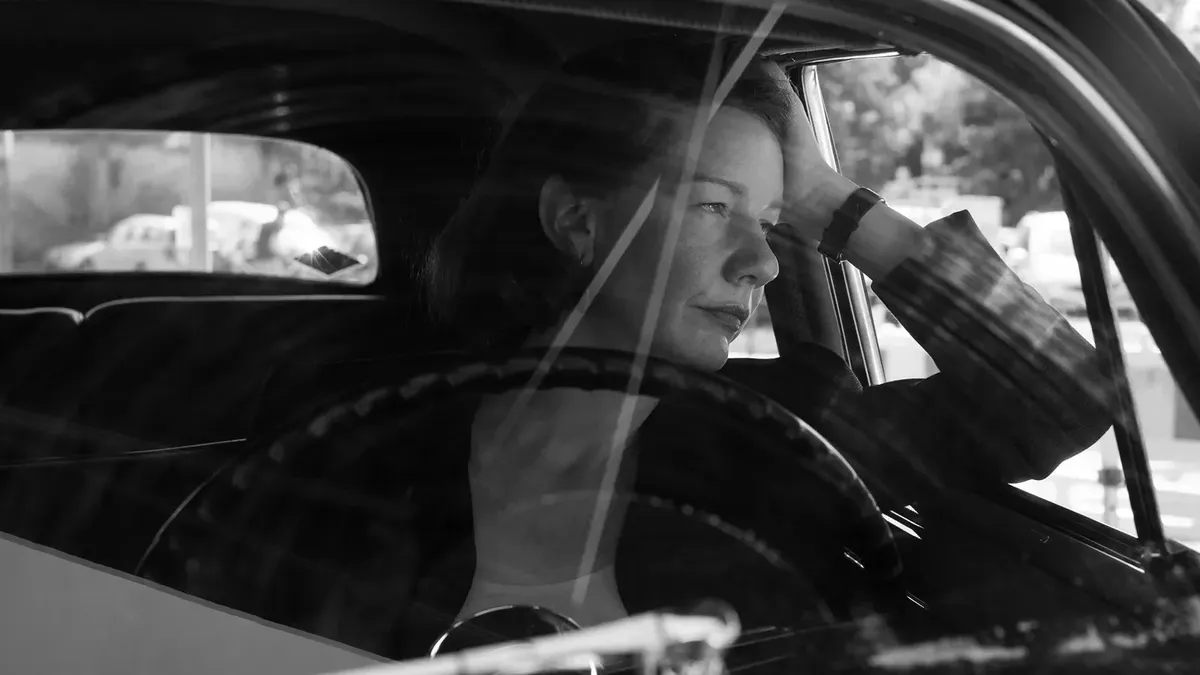
The director deliberately narrows the focus: Mann's wife, Frau Katja, without whom he literally could not breathe, remains at home. Only his daughter Erica (Sandra Hüller), a writer, left-wing activist, and irreplaceable assistant, is traveling to Germany with the classic. At first, the non-obvious, laconic, and at times silent discussion between Erica and her father gradually becomes the nerve center of the whole picture. We seem to see how this seemingly minor image is enlarged. And her reactions to the texts that Mann reads to her, to his speeches and actions, turns into a moral tuning fork for him.
The route is laid through the schism, the scar of Europe. First West Frankfurt: Mannu (Hans Zischler) is given a lavish reception and is greeted by a crowd of admirers. But, to the disappointment of the West Germans, the classic declares his intention to accept the award in eastern Weimar, where Goethe lived. Despite the resistance of his loved ones and warnings from State Department agents, he crosses the border and heads into the Soviet sector. Even after learning about the death of her son, to Erica’s amazement, she does not turn around. He needs to visit Goethe's apartment, look into the eyes of an unfamiliar homeland that has made a deal with the devil.
He is greeted warmly, if not enthusiastically, on both sides of the demarcation line.
But delight quickly reveals instrumentalization: in the West, the Nobel laureate is turned into a bourgeois trophy, in the East - into a Marxist symbol.
At the same time, Mann understands that the connection with Germany is both severed and indissoluble. He is accompanied by invisible companions: his beloved Goethe and the recently deceased Klaus, whom he and Erica always notice among the listeners. Wagner’s grandchildren turn to him, wanting to restore “from the ashes” the Bayreuth Festival, founded by the composer himself, and asking for assistance. He states that the festival theater should be burned to the ground.
And her ex-husband, who refused to leave Germany, and Goering’s favorite actor, talks to Erica from nowhere. This is Gustaf Grundgens (Joachim Mayerhof). The prototype of the hero of the famous novel “Mephistopheles” by Klaus Mann (and later the famous film “Mephisto”)
Filming took place in Poland, which became an ideal double of post-war Germany. A country torn apart is shown unvarnished. Bright daylight only enhances the picture of destruction. It is known that Mann urged America to enter the war with Germany, but could not approve of the destructive and aimless bombing of his native Lübeck and other German cities.
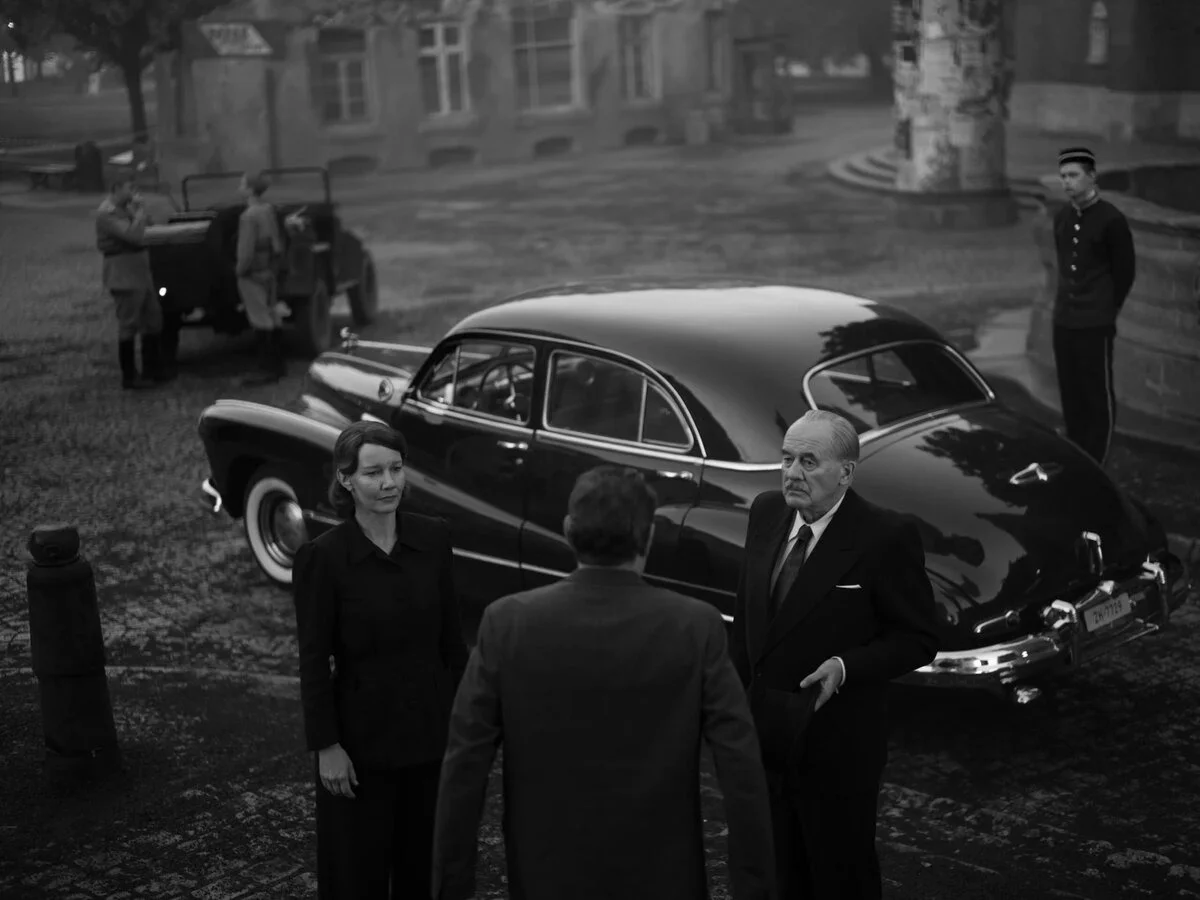
Mann, played by Hans Zischler, is a very reserved, diplomatic gentleman in starched shirts. Amazing acting precision. Using minimal means, he creates a three-dimensional character, in which there is vanity, wisdom, power and will, and submission to fate.
The authors focus the action of their film on key issues that troubled Mann all his life:
Why didn't the great culture become immune to barbarism? Why didn't Goethe and Bach, Heine and Beethoven stop the catastrophe? Why is “evil Germany is good Germany on the wrong path, kind in trouble, in crime and in death”?
Pawlikowski and his faithful cameraman Lukasz Žal create a black-and-white world, filming in a documentary style. Visual asceticism multiplies the pacifist impulse of the picture: the split is shown not through slogans, but through the geometry of space: the strict geometry of the halls (a few years ago they heard completely different speeches here), welcoming choirs singing about their homeland - and through the silence of an overgrown old German park, nature that lives without rules, not knowing ideological and political boundaries. In this rare combination of form, ethics and emotional restraint, "Fatherland" is established as one of the most powerful films of recent times
The authors do not offer journalistic solutions. Instead, they slowly lead the viewer to a quiet, almost everyday epiphany. In the most powerful scene in the destroyed temple, that same “saving conversation between Thomas Mann and Erica Mann with the celestial spheres” begins. And the irreplaceable music of Bach sets the only possible tone for life in an era where clear answers have long lost their force.
MORE ABOUT CINEMA
Larisa Malyukova runs a telegram channel about cinema and more. Subscribe here .