
Translated material
"Doctor Zhivago" with the stamp "Verified. FKU pre-trial detention center No. 1"
Lev Shlosberg* - about books that passed prison censorship, and writers whom the authorities tried to silence or erase from memory

Photo: Nikita Tsitsagi / Kommersant
18+. THIS MATERIAL (INFORMATION) IS PRODUCED, DISTRIBUTED AND (OR) SENT BY FOREIGN AGENT SHLOSBERG LEV MARKOVITCH OR CONCERNES THE ACTIVITIES OF FOREIGN AGENT SHLOSBERG LEV MARKOVITCH.
Chapter “Books in Prison” from the diaries of our own correspondent Lev Shlosberg* in the pre-trial detention center.
On the evening of December 30, 2025, a feeder opened in my cell door, hands appeared in it, and in their hands was a book. Boris Leonidovich Pasternak, Doctor Zhivago. “Here, I brought it,” said a male voice. I sat down in front of the door and saw in the feeder window the deputy head of the prison, to whom about a week ago I wrote a statement asking him to give me this book, bought by Zhanna and made it to the prison castle.
On the first inside page of Doctor Zhivago there were two stamps “CHECKED. FKU pre-trial detention center No. l of the Federal Penitentiary Service of Russia for the Pskov Region,” each with the signature of the inspecting member of the commission and the date: 12/30/2025. Nobel Prize winner in literature Boris Pasternak passed the inspection of the educational department of the Pskov prison, and Doctor Zhivago came to my cell.
In the center of Stockholm there is a museum of the Nobel Foundation and in it there is a stand dedicated to Boris Pasternak. If I could, I would give Doctor Zhivago with two “VERIFIED” stamps to this museum as a sign of the tragic roll call of the 20th and 21st centuries in Russia.
-1-
Prisoners of Pskov Pre-trial Detention Center No. 1 cannot be sent books in a parcel or given through a transfer. The only permitted method is to purchase a book via the Internet on the website of a publisher or store, indicating the person’s full name and prison address as the recipient. Upon receipt, the book is checked by the educational department (up to a week), receives an inspection stamp and is handed over to the prisoner. After a person leaves prison, the book remains in the prison library, this is the established order here.
But library is a bit of a strong word. There is a certain room where books are stored.
There is no catalog available to prisoners yet, so it is impossible to find out about the contents of the library, but you can write an application for a specific book, and if it is in the storage room, it will be brought to the cell.
Having learned about the Internet way of forming a reading circle, I decided to build a small personal library for myself and read exactly what I want to read in prison.
I made a list, according to which Zhanna and friends began to look for and buy books for me. The first on this list was Doctor Zhivago.
In addition to him, I asked to send me “The Master and Margarita” by Mikhail Bulgakov, “Life and Fate” by Vasily Grossman, a volume by Sergei Dovlatov (“Zone”, “Compromise”, “Ours”, “Foreigner”, “Suitcase”, stories and stories of 1960-1970), poems by Joseph Brodsky (“Stop in the Desert” and “The End of a Beautiful Era”), “Thoughts about life. Memories" by Dmitry Likhachev.
Next to them are “The Doomed City” and “Snail on the Slope” by Arkady and Boris Strugatsky, “Laurel”, “Aviator”, “Brisbane” and “Chagin” by Evgeny Vodolazkin and “The Gospel of Mikhail Bulgakov” by Alexander Zerkalov.
-2-
I realized already in December that in a Russian prison it was important for me to read, first of all, Russian literature, because a huge part of it, since the 19th century, has been the literature of spiritual resistance.
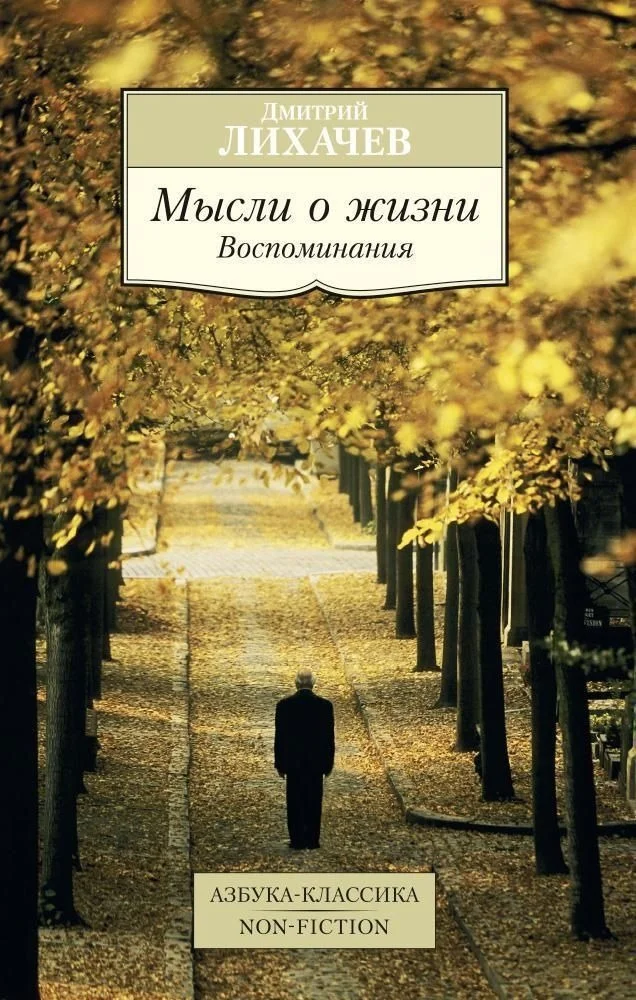
I want to say something special about the first six books from my prison collection and the fate of their authors, because all six authors are people whom the Soviet system wanted and tried to destroy morally and physically; it significantly shortened the lives of almost all of them, poisoned them for many years, and tormented their relatives and friends. But each of them was able to say their sacred word, which reached the reader years and even decades after writing, and in the cases of Bulgakov and Grossman, after their death.
Of the first six authors, only the fate of Dmitry Sergeevich Likhachev can be called happy. The fates of Mikhail Bulgakov, Vasily Grossman, Boris Pasternak, who lived and died in the USSR, as well as the fates of Joseph Brodsky and Sergei Dovlatov, who were expelled from the country and died abroad, are tragic:
Shocks, hardships and suffering took away years of their life and creativity; immeasurably much remained unwritten.
But everything created by Bulgakov, Grossman, Pasternak, Dovlatov, Brodsky and Likhachev, even on its most terrible pages, is filled with love and compassion for people. These great pages have outlived their time and forever entered the history of world culture precisely because the main strength of these brilliant books is their love for people.
Meanwhile, the fates of their authors are dramatic, tragic and, at some points, scary. Each of these destinies is a separate book, over which everyone who has a heart has cried and will cry.
-3-
Mikhail Afanasyevich Bulgakov began writing “The Master and Margarita” in 1928, completed the first edition in early 1930, but Glavlit rejected the novel.
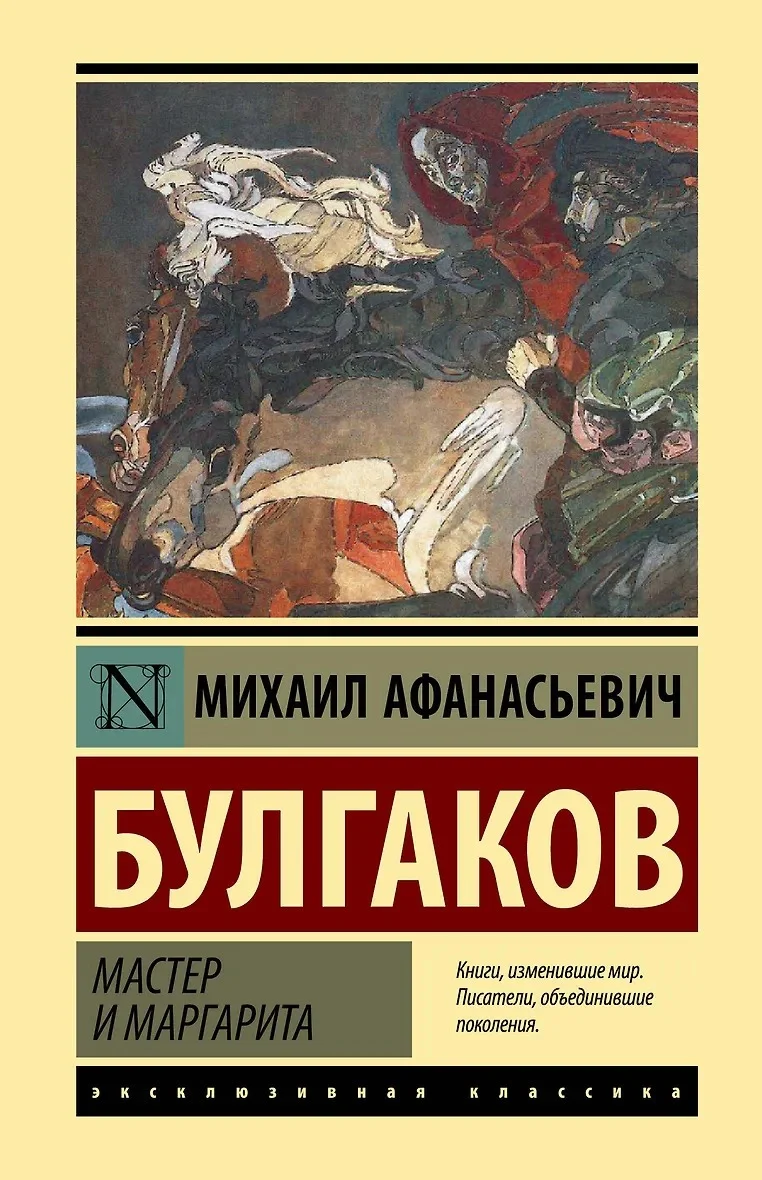
On March 28, Bulgakov wrote a letter to Stalin asking either for permission to emigrate or for the opportunity to work. Stalin called Bulgakov on April 18 and asked: “You asked to be expelled. Where would you like to live? Bulgakov replied: “In the USSR.” Stalin ordered Bulgakov to be returned to work in the theater, but the novel was banned.
In March 1930, during a period of acute internal crisis, Bulgakov burned the manuscript of an early version of The Master and Margarita (The Romance of the Devil).
The persecution continued. All of Bulgakov's plays were removed from the stage. Despite what was happening, Bulgakov returned to “The Master and Margarita” and began to write the novel again.
In 1939, Bulgakov was struck by nephrosclerosis (severe kidney disease). Blindness set in. Bulgakov made the last changes to the second edition of The Master and Margarita on February 13, 1940. On March 10, he died at the age of 48.
Alexander Zerkalov in his book “The Gospel of Mikhail Bulgakov. The experience of researching the Yershalaim chapters of the novel “The Master and Margarita” wrote: “The story about Pilate does not yield to analytical pressure, it cannot be reduced to a one-sided concept, be it religious or anti-church. To its extent it agrees with both and to the same extent it contradicts them, for it has one measure - rejection of spiritual violence. Bulgakov rejects the Christian canon insofar and to the extent that the canon is imperative. He rejects intransigence as a method of ideologically controlling people.”
The manuscript of “The Master and Margarita” was preserved by Bulgakov’s third wife, Elena Sergeevna, and reprinted for friends in 1940 and 1967. The first publication of the novel took place in the USSR: in 1966 and 1967. An abridged version was published in the Moscow magazine. The full text was first published in 1973 in YMCA.PRESS (Paris), 33 years after it was written.
“Listen to the soundlessness,” Margarita said to the Master, and the sand rustled under her bare feet, “listen and enjoy what you were not given in life - silence. Look, there ahead is your eternal home, which was given to you as a reward. I can already see the Venetian window and climbing grapes, it rises to the very roof. This is your home, your eternal home."
-4-
Vasily Semenovich Grossman began writing “Life and Fate” in 1950 and worked on the book for ten years of his life. Grossman wrote a piercing and ruthless epic about the victims and fate of the people who defeated Nazism, but did not receive freedom and remained in Soviet serfdom.
In 1960, the manuscript was completed, and Grossman sent it to Novy Mir, whose editor-in-chief was then the poet and front-line soldier Alexander Tvardovsky. Tvardovsky read the manuscript and wrote in his diary:
“Publishing this thing... would mean a new stage in literature, returning to it the true meaning of a truthful testimony about life, would mean a huge turn in all our literature, which has entered God knows what jungle of lies, conventions and premeditation. But this is hardly conceivable.”
Tvardovsky did not risk making a decision to publish the novel and handed it over to the CPSU Central Committee. In the same 1960, Grossman submitted the manuscript to the Znamya magazine, whose editorial board, headed by Vadim Kozhevnikov, at the end of 1960 unanimously rejected the novel as “ideologically untenable.”
On February 14, 1961, the KGB conducted a search in Grossman’s apartment in Moscow. They confiscate the author's typewritten manuscript, rough sheets and even typewriter ribbons - out of fear that using them (!) it will be possible to restore and resurrect the text. They took a receipt from Grossman stating that there were no other copies of the manuscript.
In the same February, copies of the manuscript were confiscated in Novy Mir and Znamya. Kozhevnikov handed over his copy to the KGB voluntarily.
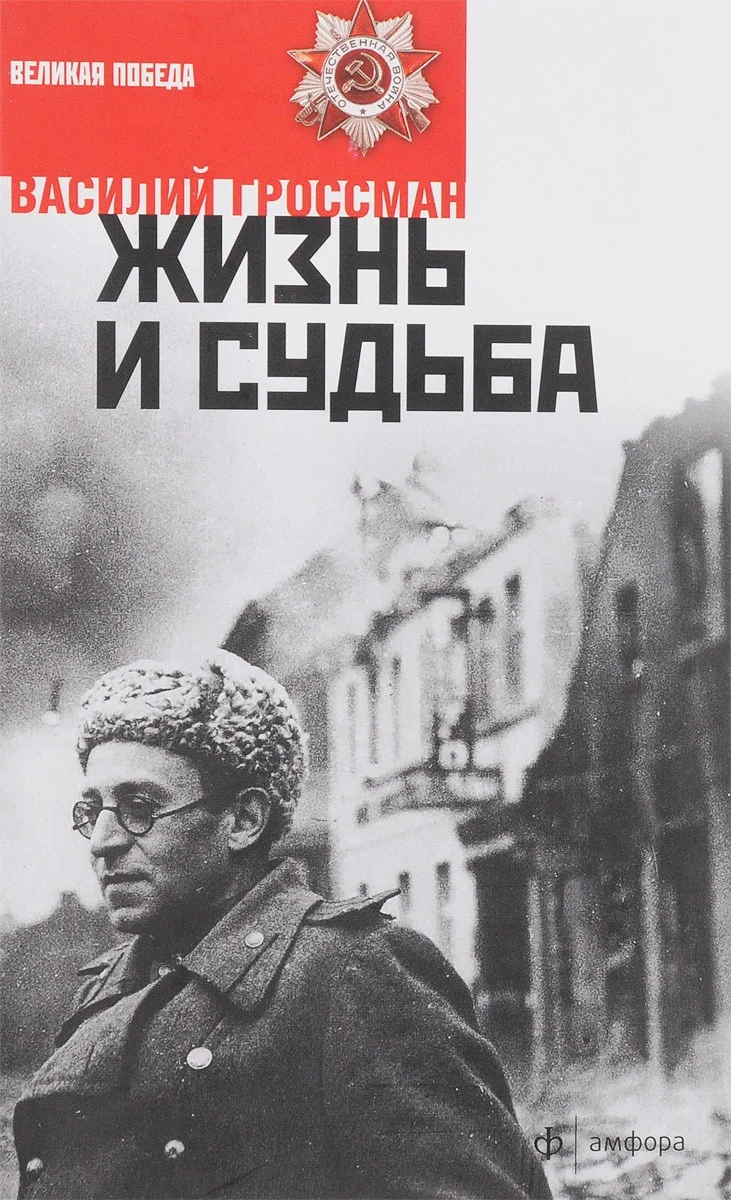
According to the recollections of Grossman’s interlocutors, at the beginning of 1961, after the search, a member of the Politburo of the CPSU Central Committee, Secretary of the Central Committee for Ideology Mikhail Suslov, in a personal conversation, told Grossman that “Life and Fate” could be published in the USSR “no earlier than in two to three hundred years.”
In his Novomirsky diary, Alexander Tvardovsky wrote that the confiscation of the manuscript of “Life and Fate” is like “the arrest of a soul without a body.”
Vasily Grossman died on September 14, 1964 in Moscow from kidney cancer at the age of 58.
A copy of the novel seized by the KGB was kept by the poet Semyon Lipkin. In the mid-1970s, with the assistance of Andrei Sakharov, Bulat Okudzhava and Vladimir Voinovich, a microfilm with the text of the novel was exported abroad, and philologists Efim Etkind and Shimon Markish were able to restore the manuscript. In 1980, “Life and Fate” was published as a separate book by the Swiss publishing house L'Age d'Homme.
In 1988, the first publication of the novel in the USSR took place in the magazine “October”, after which book editions were published. In 2013, the FSB transferred the manuscript confiscated from Grossman from its special storage facility to the Russian State Archive of Literature and Art.
“They entered the forest, under the shade of the first sentinel pines. Here the snow lay in a continuous, non-melting veil. On the pines, in the green wheel of branches, squirrels were working, and below, on the candy surface of the snow, gnawed cones and wood dust ground off with chisels lay in a wide circle.
The silence in the forest came from the fact that the light, blocked by multi-story pine needles, did not make noise or tinkle.
They walked as before in silence, they were together, and only because of this everything around became good, and spring came.”
-5-
Boris Leonidovich Pasternak began work on Doctor Zhivago in 1945–1946 and completed it in 1955. Ten years of his life were spent creating a broad and multi-level story about the Russian tragedy of the 20th century, in which the life of the main characters is shown from childhood to death in the maelstrom of terrible events over which man has no control. A few survive by chance and they themselves cannot believe that they are alive.
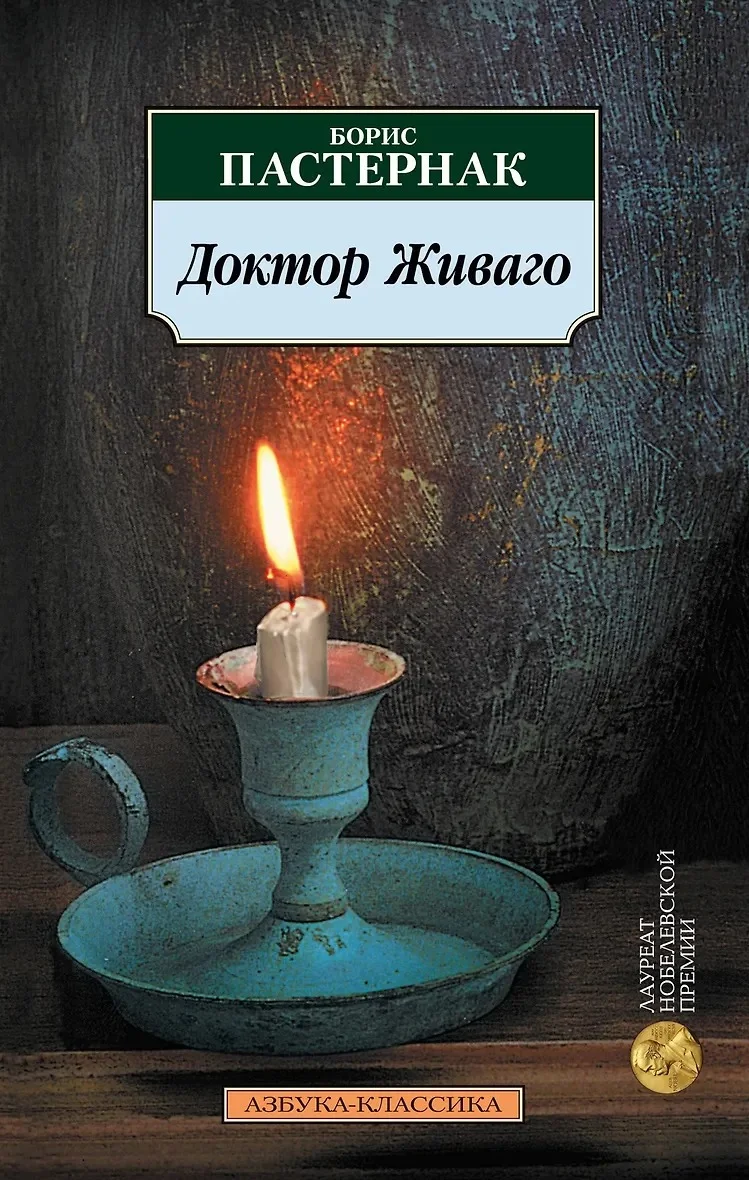
The first edition of the novel was published in Italian in 1957 by the Feltrinelli publishing house (Milan). The first edition in Russian was published in August 1958 in Holland (pirated, with a circulation of 500 copies). Feltrinelli published the first legal publication in Russian at the beginning of 1959.
On October 23, 1958, the Swedish Academy announced that it had awarded Boris Pasternak the Nobel Prize in Literature “for significant achievements in modern lyric poetry, as well as in the field of great Russian prose.”
It was time for a thaw, and few imagined what would follow next.
On October 23–27, articles appeared in the central Soviet press aggressively condemning Boris Pasternak - both for the novel itself, and for publishing it abroad, and for receiving the Nobel Prize. On October 27, Pasternak was expelled from the Union of Writers of the USSR by decision of its board, on the same day the secretariat of the CPSU Central Committee adopted a resolution “On the slanderous novel of B. Pasternak.”
Rallies and collective letters to the central party and Soviet bodies are organized throughout the country demanding that Pasternak be deprived of Soviet citizenship and expelled from the country.
“I haven’t read Pasternak, but I condemn him” - this is a quote from those days.
On October 29, Pasternak sent a telegram to Stockholm: “Given the importance that the award awarded to me has received in society, I am forced to refuse the award.”
On October 31, Boris Pasternak sends a letter to Nikita Khrushchev asking him not to expel him from the country.
On November 5, Pravda published Pasternak’s statement about his supposed voluntary refusal of the prize.
Boris Pasternak died on May 30, 1960 in Peredelkino from lung cancer at the age of 70.
The first official publication of Doctor Zhivago in the USSR took place in 1988 in the magazine Novy Mir, after which a wave of book publications began.
“...Although the enlightenment and liberation that were expected after the war did not come with victory, as they thought, the harbinger of freedom was still in the air throughout the post-war years, constituting their only historical content.”
-6-
Sergei Donatovich Dovlatov was expelled from the Union of Journalists of the USSR in 1976. On July 18, 1978, he was arrested for 15 days “for hooliganism” after publication abroad. Dovlatov was prohibited from publishing in the USSR until the 1980s; his texts were distributed through samizdat and emigrant publications.
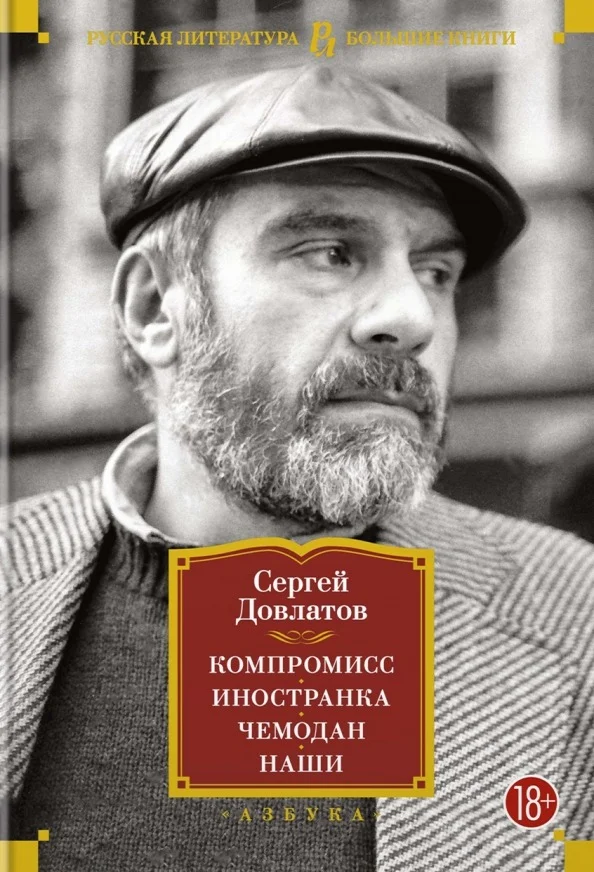
After Sergei Dovlatov’s publications in the magazine “Continent” (1978), direct pressure from the KGB began: first, arrest, immediately after - an offer to make a choice: emigration or prison.
Dovlatov chose emigration. On August 24, 1978, together with his mother on an Israeli visa, he flew out of the USSR. At first Dovlatov lived in Vienna, and on February 26, 1979 he flew to New York.
Dovlatov is perhaps the only Russian writer who found himself in a colony on the outside of barbed wire. From 1962 to 1965, being drafted into the internal troops of the USSR Ministry of Internal Affairs, Dovlatov served in the security of penal colonies in the Komi Autonomous Soviet Socialist Republic. The story “Zone. Notes of a Warden" was written by Dovlatov in 1965–1968 and reflected his personal experience. By making the warden the hero of the “Zone,” Dovlatov showed the customs of unfreedom through the eyes of a man who is part of the machine for suppressing freedom, while possessing obvious human qualities.
Man, as part of the inhuman through the eyes of Dovlatov, remains a man, feeling the absurdity and savagery of the unnatural system in which he himself works.
In New York, Dovlatov founded the newspaper “New American” for Russian emigrants and thereby tried to support people who had parted with their homeland.
Sergei Dovlatov died on August 24, 1990, exactly 12 years after emigrating from the USSR from acute heart failure at the age of 48.
“...I walked without looking back. I became huge. I blocked out the horizon. I heard the shutter click in the empty frosty silence. How the mainspring gave way, creaking. And now the chamber is full. I felt all nine circles of a standard army target under my tunic...
I stopped and looked at Fidel. I shuddered when I saw his face. (He held a fur mitten in his teeth.) Then he shouted something and went to meet him.
Fidel threw down the machine gun and began to cry. For some reason he pulled off his sheepskin coat. Tearing off buttons on a tunic.
I walked up to him and stood next to him.
“Okay,” I say, “let’s go...”
-7-
Joseph Aleksandrovich Brodsky, who began writing poetry at the age of 18, felt the pressure of the system very young - at the age of 23.
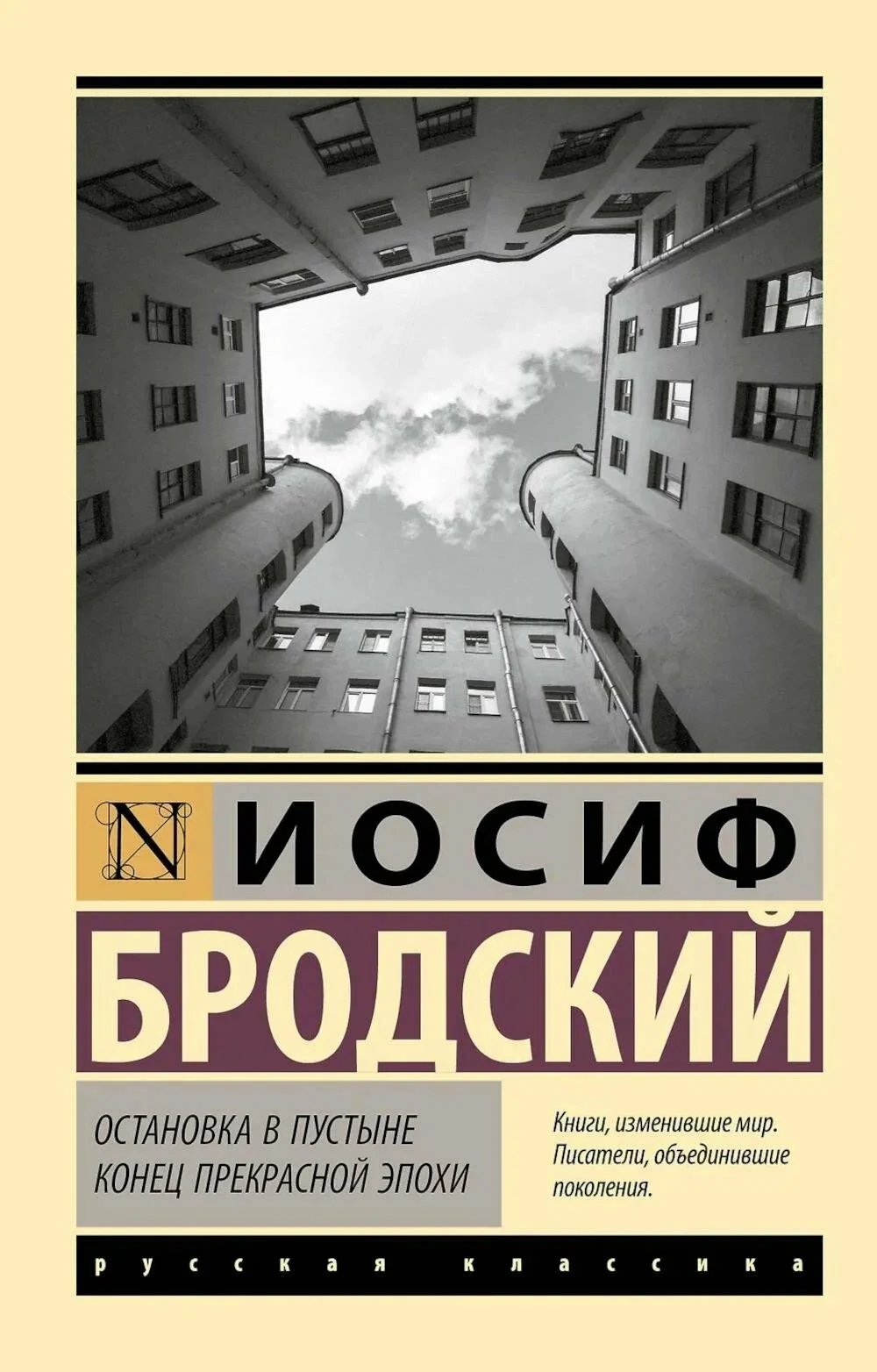
In 1963, persecution began in the Soviet press, the peak of which was the article “Near-Literary Drone,” published on November 29, 1963 in the newspaper “Evening Leningrad” on the eve of the trial “on parasitism.” Brodsky was called in this article an “anti-Soviet element.”
Public persecution has always accompanied trials of dissidents and political opponents in the USSR. The purpose of bullying was the moral destruction of a person, the destruction of his personal dignity and inciting hatred in society, creating an intolerable suffocating atmosphere of hostility around a person.
In early December 1963, Brodsky was arrested for the first time. After interrogation at the Big House, he was taken to the Leningrad Kresty prison and placed in solitary confinement.
At the end of December 1963, Brodsky's friends, with his consent, arranged for him to be admitted to a psychiatric hospital named after. Kashchenko in Moscow in order to obtain a psychiatric diagnosis and thereby exclude criminal prosecution.
On January 5, 1964, Brodsky left the hospital on his own initiative, fearing that the situation there would destroy his psyche. Upon discharge, he was diagnosed with schizoid psychopathy. Returning to Leningrad, Brodsky wandered for several weeks, spending the night at friends' dachas.
On February 13, 1964, Brodsky was arrested on the street in Leningrad for the second time on charges of parasitism and again placed in solitary confinement in Kresty. The next day, February 14, Brodsky had his first heart attack. From then on, Brodsky suffered from angina pectoris until the end of his life.
REFERENCE
On February 18, 1964, the first hearing of Brodsky's case took place. During the first hearing, the court decided to send Brodsky for a compulsory forensic psychiatric examination (contrary to the request of the defense, Brodsky was examined not on an outpatient basis, but in a psychiatric hospital). Brodsky spent three weeks at Pryazhka (psychiatric hospital No. 2 in Leningrad).That is, Brodsky was in a psychiatric hospital in February-March 1964.
On February 18, 1964, at the first meeting in the Dzerzhinsky District People's Court, Judge Savelyeva decided to send Brodsky for a compulsory forensic psychiatric examination. Brodsky was supposed to be released from custody to appear independently for an examination, but the judge left him in custody, and he was taken to the hospital under escort.
From February 18 to March 13, 1964, Joseph Brodsky was in psychiatric hospital No. 2 in Leningrad, known as “Buckle”, as it was located on the embankment of the Pryazhka River.
Brodsky called these days the worst of his life. They used the so-called trick on him: they woke him up in the dead of night, immersed him in an ice bath, wrapped him in a wet sheet and placed him next to a hot radiator; As it dried, the sheet cut into the body. Unlike all other patients, Brodsky was not allowed visits from relatives.
Brodsky described the experience gained in two Soviet psychiatric institutions and the torture of punitive psychiatry in the poem “Gorbunov and Gorchakov,” written in 1965–1968 and published in 1970.
On March 13, 1964, at the second meeting, the Dzerzhinsky District People's Court of Leningrad sentenced Brodsky to five years of exile with mandatory labor “for parasitism,” refusing to recognize free poetic creativity as work. Brodsky's lack of membership in the Writers' Union was regarded by the court as a lack of confirmation that Brodsky was in fact a poet. Brodsky fell under the Decree of the Presidium of the Supreme Soviet of the RSFSR “On strengthening the fight against parasitism.” The court stated that Brodsky “does not work constantly, lives on benefits, and is engaged in poetry without official status.”
When Brodsky was in a psychiatric hospital awaiting arrest in December 1963, Anna Akhmatova addressed him with a dedication in one of her collections: “To Joseph Brodsky, whose poems seem magical to me.”
At this time, Akhmatova, while defending Brodsky personally, also turned to Dmitry Shostakovich, Samuil Marshak and Korney Chukovsky, seeking their intercession for Brodsky before the authorities, and as a result, the sentence was commuted.
On January 16, 1965, the Presidium of the Leningrad City Court left the verdict unchanged. But on September 4, 1965, the Presidium of the Supreme Court of the RSFSR reduced the period of exile to one year and five months: the intercession of people of culture who wrote to the CPSU Central Committee had an effect.
From March 25, 1964 to September 4, 1965, Brodsky spent logging in the village of Norenskaya, Konoshsky district, Arkhangelsk region. He wrote poems on scraps of paper.
Four poems by Brodsky were published in Leningrad literary almanacs in 1966–1967. Subsequently, until 1989, the publication of his poems in the USSR was prohibited; Brodsky’s texts were distributed in samizdat, and abroad - since the 1960s.
Direct KGB pressure on Brodsky intensified in 1972: calls to the OVIR (Soviet authority for leaving the country) with a demand to leave, threats of placement in a psychiatric hospital.
On June 4, 1972, Joseph Brodsky was actually expelled from the USSR on an Israeli visa, flying from Pulkovo to Vienna with one suitcase. Mother remained in Leningrad.
Maria Moiseevna Volpert died on March 17, 1983; Brodsky was not allowed to come to his mother’s funeral. Alexander Ivanovich Brodsky died on October 15, 1984. Brodsky was not allowed to come to his father's funeral.
In 1987, Joseph Brodsky was awarded the Nobel Prize in Literature. In his Nobel lecture, Brodsky said: “I have no doubt that if we chose our rulers on the basis of their reading experience, and not on the basis of their political programs, there would be less grief on earth.”
Joseph Brodsky died on January 28, 1996 in New York from a heart attack due to chronic heart failure at the age of 55.
*No longer God, but only Time, Time
calls him. And the young tribe
the huge waves of his movements are a burden
to the very edge of the flowering fringe*
*easily lifts up and, saying goodbye, beats
Oh, the end of the earth, laughing in excess of strength.
And in January its bay juts out
on that dry land of days where we remain.*
(Poems on the Death of T. S. Eliot, January 12, 1965)
-8-
Dmitry Sergeevich Likhachev stands as a very special figure in Russian culture. Dozens of times his life could have been interrupted in the most barbaric way, but each time, as if an invisible angel had opened its saving wings over him.
On February 8, 1928, 21-year-old Likhachev was arrested following a denunciation for participating in the Space Academy of Sciences student group. The Leningrad Regional Court sentenced him to five years in the camps for “counter-revolutionary activities” (the ever-memorable 58th article of the Criminal Code of the RSFSR).
Likhachev first served time in the terrible Solovetsky special purpose camp (SLON) on the Solovetsky Islands - from 1928 to 1931, then in the White Sea-Baltic camp, and participated in the construction of the White Sea Canal (1931-1932). He was released on August 8, 1932 under an amnesty.
In 1930, Likhachev published an article “Card Games of Criminals” in the camp magazine “Solovetsky Islands,” which became his first scientific work. He compiled a catalog of icons of the Solovetsky Monastery for the camp museum. Once in the concentration camp, Likhachev remained a researcher. He became a researcher and describer of hell.
Hell in Solovki was created by executioners who wanted to prove that any person can be turned into a beast. It turned out that not from any.
Likhachev describes the minute-by-minute mortal horror of Solovki in impeccably precise, quiet language, when every word, every phrase, every sentence is the testimony of an eyewitness who has not lost his mind from horror, who pays a debt of memory to everyone who was swallowed up by this abyss.
Likhachev was supposed to be shot one day “as a warning,” but he was not in the company at the moment when they came for him, other prisoners told him that “they were coming for you.” On the night of the executions, Likhachev hid between the woodpiles in the wood yard and stayed there until the morning, listening to the shots, the screams of the people being killed and looking at the stars.
“To be on the safe side, a certain number of people were shot—either 300 or 400,” recalls Likhachev. - It is clear that someone else was “taken” instead of me. Since that terrible night, a revolution has happened to me. What I realized is this: every day is a gift from God.”
From 1938 to 1954, Likhachev worked at the Pushkin House (Institute of Russian Literature of the Academy of Sciences), and in the first deadly year of the blockade (1941–1942) - in the manuscript department of the library of the Academy of Sciences.
The chapter “Blockade” in the memoirs of Dmitry Likhachev is the most terrible, in many ways more terrible than the pages about Solovki. Hunger, cold and everyday all-consuming death appear there in every line. And again - impeccably precise, quiet language, evidence of a dying but surviving person.
Likhachev called the Leningraders martyrs.
In 1942, Dmitry Likhachev and his wife Zinaida were evacuated to Kazan. Death remained on the sidelines.
In Russia in the last quarter of the 20th century there were two people whose moral strength could change the country, leading it away from the plague of Bolshevism to freedom and human dignity - Andrei Dmitrievich Sakharov and Dmitry Sergeevich Likhachev.
Likhachev was a person absolutely not subject to moral corrosion. He called culture a “moral compass.” This compass never failed him even once in his life.
Likhachev was not broken by torture, the constant threat of death, or the loss of relatives, or the madness of the authorities, or the centuries-old lack of freedom of the country. His very name became a tuning fork of unbending nobility.
Likhachev began writing his memoirs in the 1980s; as he wrote, fragments were published; Thoughts on Life was published in its entirety in 1996.
“People are the most important thing in my memories... How many were there? How varied and interesting they were! What value is the human personality! Meetings in childhood, meetings during my school and university years, and then the time I spent on Solovki gave me great wealth. He couldn't remember the whole thing. And this is the biggest failure in life... When you think about how many good, mentally rich people did not leave any memory of themselves, it becomes scary.”
Dmitry Likhachev passed away on September 30, 1999 in his native St. Petersburg at the age of 92.
Dmitry Sergeevich Likhachev was a man of light of exceptional strength and purity. He was one of those people who can be called a saint. His whole life resembles the life of a saint.
At the end of the book of memoirs, Likhachev returns to Solovki.
“I will not describe the feelings that overwhelmed me when I realized the enormity of this common grave - not only of people, each of whom had their own spiritual world, but also of Russian culture - the last representatives of the Russian Silver Age and the best representatives of the Russian Church. How many people did not leave any traces of themselves, because whoever remembered them died...
One monument for all the hundreds of graves, ditches, pits in which thousands of corpses were buried, opened after my last visit to Solovki, should, it seems to me, further emphasize the depersonalization, oblivion, erasure of the past... We must call on our memory, because there is no one left to remember the past of Solovki.”
-9-
Here are six books on my prison bookshelf. Six great names in the host of culture. Even if we imagine that Russian literature left behind only these six books during the 20th century, reading and understanding them should have been enough for the 20th century, with its hatred and cruelty, with its inhumanity, to finally end in our country; so that Russian society would finally reject violence and lies, part with Bolshevism, mourn and bury its fallen, and swear - never again.
But no one apologized to these people, even posthumously, to their descendants on behalf of the state - for illegal persecution, for torture and mockery, for years of unfreedom torn from life, for the suffering of relatives, for public insults in the decisions of the ruling party and the courts at its side, for torture in silence, for forever unwritten pages. So that - never again.
It was the state that was obliged to take responsibility for all the executioners who operated on its behalf - both those who lived and those who did not live to see the days of freedom; It was the state that was obliged to initiate investigations and trials against the organizers and direct accomplices of the repressions; it was obliged to call everything terrible and vile by its proper name. And publicly declare: never again.
It didn't work out. The suffering endured by tens of millions of people did not grow into repentance of the entire society - not only before the fallen, but before themselves: “God, what have we done... How did we come to live like this?!”
Politicians have failed to do the job of humanizing the wounded country. In fact, such a task was not even set by the authorities. And she was the main one in creating a free society.
Re-reading six life stories, on the scale of humanity - six grains of a huge tragedy - you see how at almost every step the vile Soviet government and the bitchy “Soviet public” did everything to trample on the human dignity of these God-gifted people, uproot God’s gift from them, depersonalize them and destroy them - first of all, morally, and, if possible, physically.
Culture is the main enemy of totalitarianism, because culture is freedom.
Repression comes to culture simultaneously with the arrival of repression to politics, because humanistic politics is impossible without culture. Culture is the source of freedom.
Six great books transcended a time of lies and violence and became evidence of a moral resistance to misanthropy that seemed to have no limit in time.
Evil during the life of one person seems eternal, because it is enormous. But decades pass, and each time it becomes clear that evil is ultimate and finite. It fizzles out along with the source of evil, which is always mortal, because the source of evil is mortal people.
The atrocities of mortals bring suffering and shorten life. Only the person himself knows the full extent of the suffering he has experienced. And what is lost is irretrievable.
But what is written remains.
Pskov Prison Castle