
Translated material
Sakha of the XXI century
About the latest successes of the Yakut film industry: how young and independent animation is gaining popularity

Still from the film “Bull of Cold”
The successes of the Yakut film industry no longer look like an accident or interest in the “exotic” culture of the northern republic. Films from Yakutia win awards at major Russian and international festivals, are released at the federal level, and the total box office receipts are already approaching a billion rubles. Meanwhile, against the backdrop of interest in cinema, the achievements of Yakut independent animation remain in the shadows, which in recent years have produced several striking works that speak their own unique visual language. On the one hand, these films are thematically dedicated to the traditional cultural elements of the Sakha people, on the other hand, they are directly related to modern technologies. Especially for Novaya Gazeta, Vladimir Kocharyan looked at the works of the animation studio “Tundra” and the artist Kykyҥҥy Oyuur to understand where young Yakut animation is heading.
Tundra - a trilogy of northern tales
Alexander Moruo (Okhlopkov) founded the Tundra studio in 2023. A stop-motion animator who started out in the advertising business, he has built a successful career in New Zealand. Living in exile, where by this time he had achieved the position of art director in a large company, he could not abandon the idea of creating his own 3D animation studio in Yakutia itself. Initially created as an association of friends and like-minded people, the project team did not include professional animators and screenwriters. All of them were people from the field of advertising, but in one way or another they worked with 3D graphics.
Their first work was the short cartoon “Bull of Cold” . Executed in a three-dimensional manner, stylistically close to the works of DreamWorks or Pixar, “The Bull of Cold” takes us to the Yakut winter and introduces us to Tymnyy Okukha himself - the Bull of Cold. The appearance of this magical animal from ancient epics symbolizes the onset of two periods of cold. When its first horn grows, cold weather sets in, and at the moment when the second one grows, the time of severe winter comes. This epic is told by the elderly Bukke to the village boy Ayaal. However, the perspicacious young man is interested not only in ancient fairy tales, but also in Buokke’s skill, which lies in his ability to work with ice and use his knife to make sculptures out of it. The sculpture of the Bull of Cold was made by the old master, but something about this bull does not suit Ayaal, and he decides to make a few changes to the majestic ice statue.
A simple story on the surface about a child's interest colliding with dogma and tradition, in fact it has many keys to understanding the culture of the northern people. The Yakut knife, a sacred household item, turns the symbol of invincible winter into an artistic image and shows the harmony between man and nature as the basis for survival in harsh climatic conditions. Stylization and detailed elaboration, close to the best examples of Western animation, brought rural life to life in the frame and was able to convey the unique atmosphere of life in permafrost conditions. The studio's first work also became its first hit: a series of screenings at international festivals was followed by an online release, which collected a total of more than 300 thousand views on the YouTube platform. There was also a release on the republican channel “NVK”, which is especially important for the team - the cartoon was released in the Yakut language and addressed its audience directly, without dubbing or the need for subtitles.
The success of the first cartoon, and more importantly, recognition among the Yakut audience, prompted Tundra to continue working and prepare the next work, which was the animation “Mukha”.
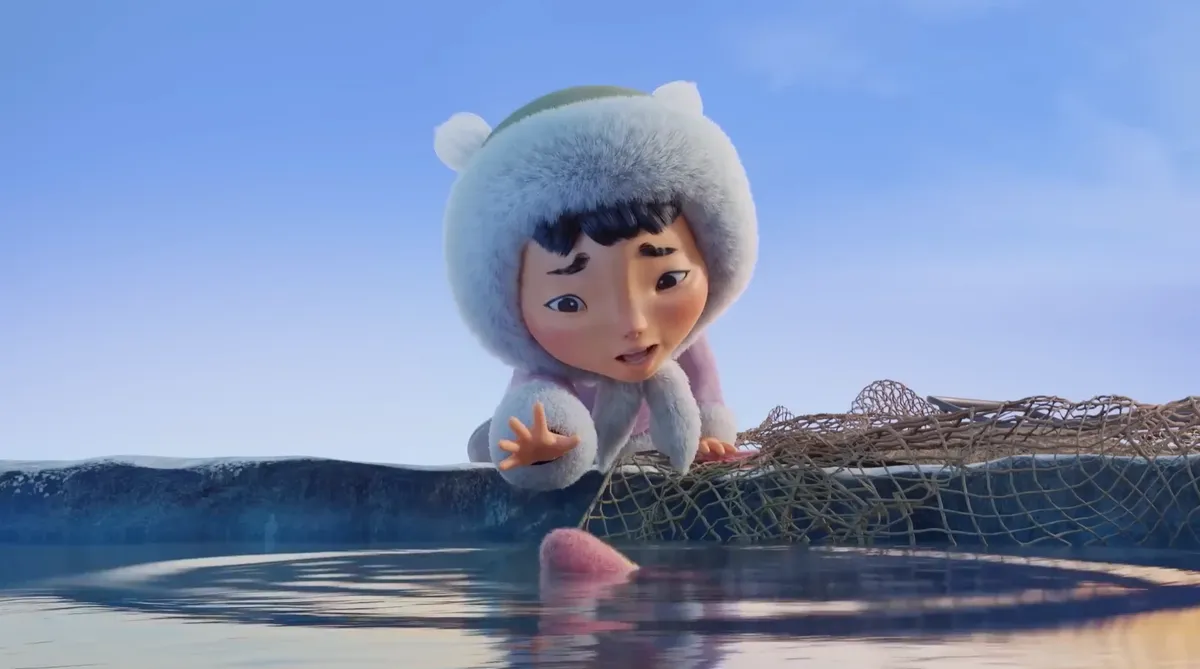
This time the main character was the girl Nyukku. Together with their father and older brother Michiel, they go on Mukha - winter fishing for crucian carp. On the road, Nyukku puts on new mittens given to her by her mother. Already on the lake, local residents first perform the ritual of feeding the fire, asking the spirits for blessings. The father tells his daughter that the “lake grandmother” protects them, and they, in turn, must protect the lake and live in balance with the outside world. However, this does not stop Nyukku’s childish curiosity, which in every possible way disrupts the traditional rhythm of fishing: either she eats pancakes stored for feeding the fire, or she begins to play with fishing gear. In her carelessness, she loses her new mittens. Frustrated, she still helps her father and brother so as not to stop the cycle of life on which the village depends. If technically this work was close to the first cartoon, then the director’s decision became even more authentic due to the musical design.
In “Bull of Cold” a more Western musical approach was used, in “Mukha” the music of the Yakut group Sobo sounds, adding a nostalgic touch of Soviet pop music with Yakut motifs to what is happening in the frame. The central theme of the cartoon was again tradition and its contact with the new generation. The authors avoided a moralizing line, but also skillfully avoided excessive adaptation to children's “content.” "Mukha" feels like both an entertaining children's film and a poetic parable about cultural memory, without dragging the viewer's attention into either of these narrative lines.
The third cartoon in the trilogy about the Yakut winter was “Tanha”, in which the main characters - Ayaal, Nyukku and Michiel - encounter mysticism. All the characters migrated straight from the previous films in the series: now they are having fun together in the village House of Culture, where games and Christmas fortune-telling are held. After the games, the company of heroes decides to find out their future from the local fortune teller Tuskulaana. Michil, as the eldest of the company, treats everything that happens with a grain of salt, while little Nyukku is serious. The fortune teller reveals to them a frightening picture of the future, foreshadowing trouble, but it can only be avoided by joining forces.
Having already reached home, the trio decides to continue communicating with the world of darkness and plans to summon the “devil”. Here the situation takes a frightening turn, because the naive children's game actually summons something from the shadows.
“Tanha” is the most genre-defining and dynamic work in the cycle, and it is also longer than the others in terms of running time. While adding elements of horror, the authors still do not forget about the target audience of the film - children. Their task is not to frighten or confuse in mystical twists: the film still talks about tradition, this time inviting the viewer to understand for themselves what the power of cultural memory lies. After all, it lies not only in rituals and contact with the otherworldly, but also in interhuman communication and the ability to interact with each other for the sake of a common goal.
The completed trilogy became a formative period for Tundra: their cartoons are already recognizable in the republic, and the audience response and citations in regional media confirm the growing interest in the studio. Against the backdrop of this success, the team announced the full-length film “Legends of the North,” which should go beyond the Yakut context and combine the myths and fairy tales of the indigenous peoples of the North.
Animation about nature and cataclysm: artist Kyһyҥҥы Oyuur
Kyһyҥҥы Oyuur (Winter Forest) is a modern Yakut artist, whose works represent an amazing combination of the heritage of the classics of Yakut graphics - Elley Sivtsev, Valerian Vasilyev, Afanasy Munkhalov - and at the same time include elements of mass Japanese pop culture, video games and animation. Together with his associates, he participated in the publication of samizdat "Kuluk", painted pictures and worked with different forms, including painting images on stones, using natural material as part of the visual solution.
Probably the main work of recent years has been his animated film “Supput Suruktar” (“Lost Letters”) , the official premiere of which took place in 2024 and is now available online.
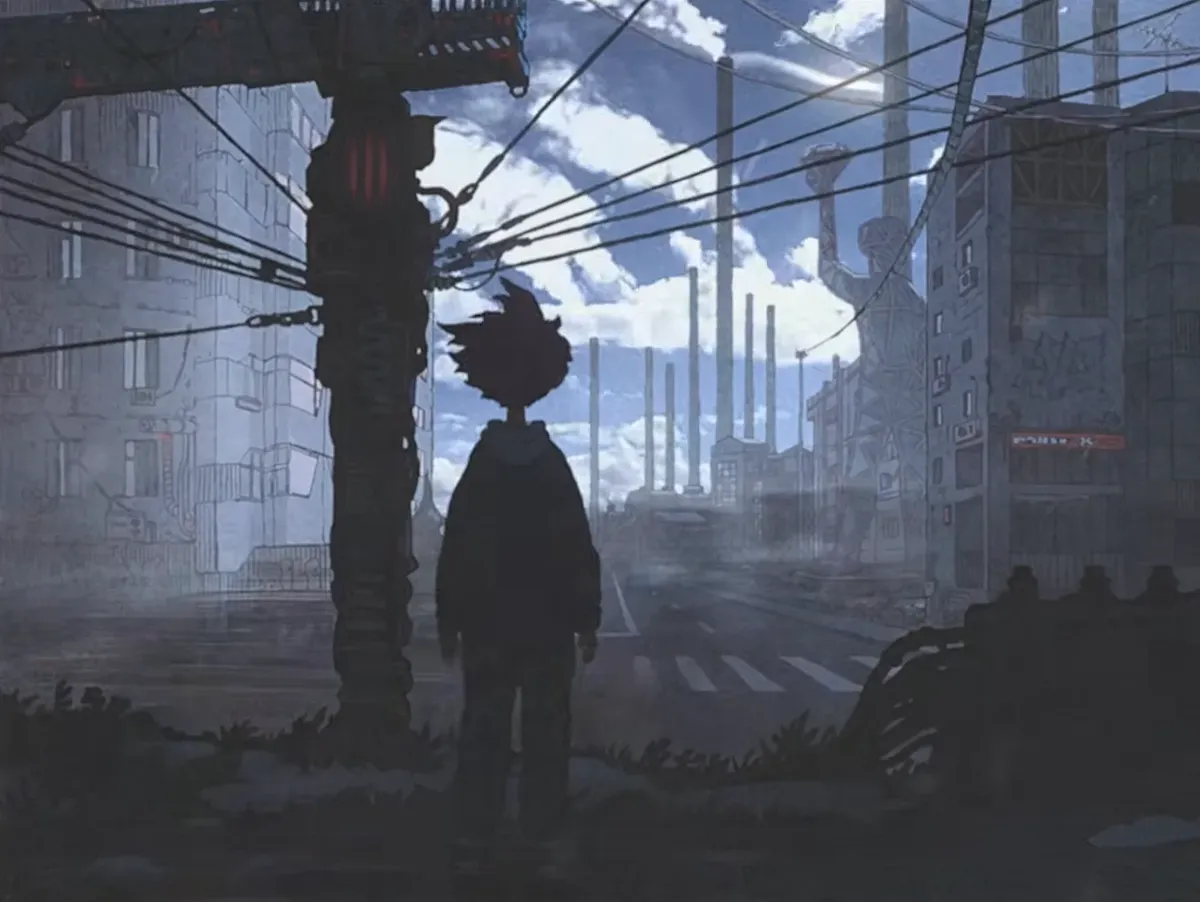
For two years, the film traveled to international film festivals - from the USA to Finland - and was finally released online. A multidisciplinary artist at his core, Oyuur brings his visual language into animation while maintaining its fragmentation. The narration in the film is conducted through monologues, as if reading messages recorded for an unknown addressee. These are the voices of teenagers who accidentally found themselves in another world - either a parallel reality, or the past. The heroes will have to go through a space filled with spirits, traces of a man-made disaster and, of course, memories.
The voices that guide us through the plot speak of nostalgia and regret that it is impossible to return to what becomes valuable only at a distance. The film has the effect of dream therapy, so important today for those who experience the experience of migration and loss of their roots, but also for those who remain in their land regardless of the circumstances. The director-artist literally paints fragmentary pictures in front of us, combining elements of reality and fantasy. By combining documentary chronicle and two-dimensional animation, the author evokes a deep emotional response that is difficult to explain by simple involvement in the plot or drama. According to Kykyҥҥy Oyuur himself, the basis for the script was his diary entries, which he kept from 22 to 30 years old. This is where the intimacy of the dialogue that develops between the work and the viewer arises. The author addresses the youthful energy that still lives within the generation of thirty-year-olds and continues to ask questions about nature, the future and their own responsibility to the surrounding reality.
In 2025, Kygygyky Oyuur released a computer game made using pixel art technique, “Irbet Ton” (“Permafrost”), it became a continuation of his artistic practice, this time transferred to the space of digital entertainment.
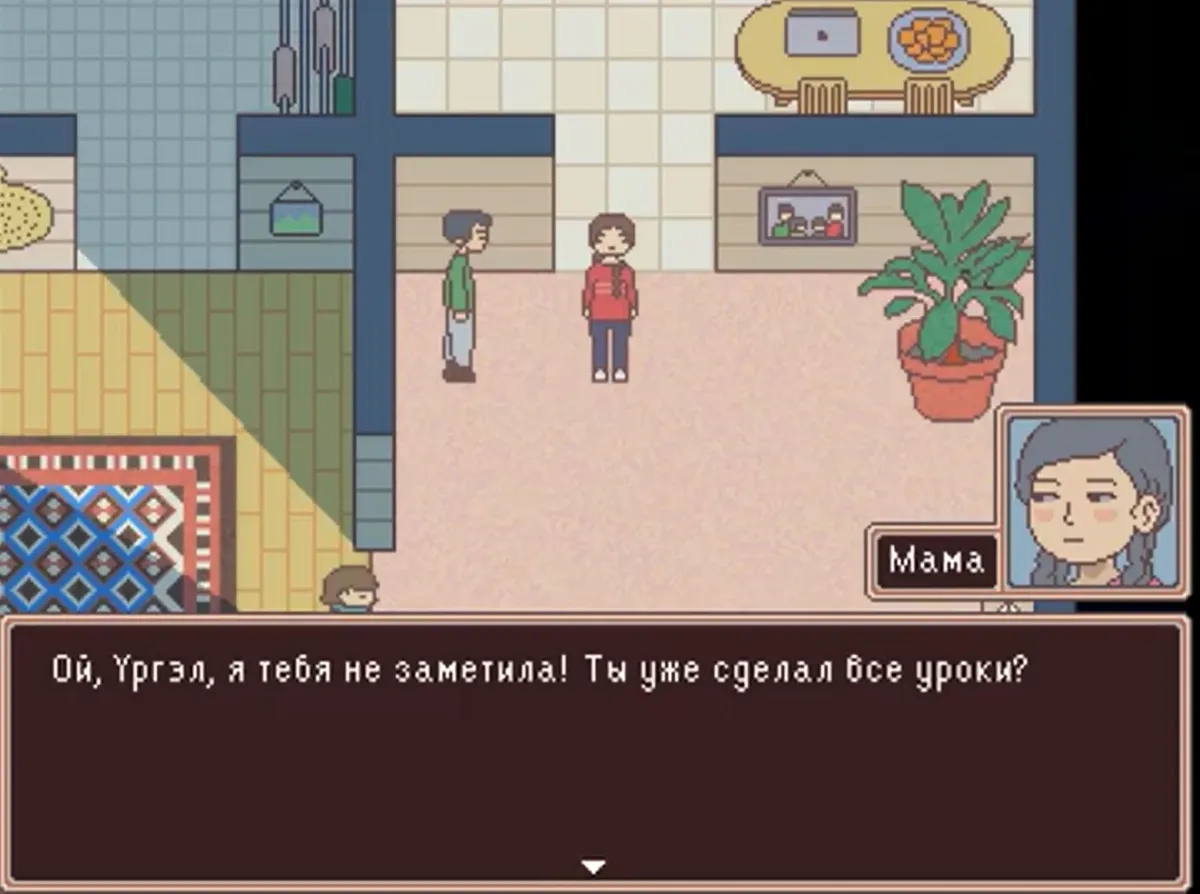
The plot centers on the adventures of young Urgel. Together with his family, he lives in a remote village in the middle of Yakutia. The natural changes occurring around also affect the house of Urgel itself: the melting of permafrost leads to subsidence of the soil. The hero goes on a journey - first through his native village, and then through the three worlds of Yakut cosmogony - in search of a solution to a problem that threatens not only his family, but also the future of all of Yakutia.
Made in the genre of exploring everyday life, the game combines elements of a detective story, a quest and even a dating simulator: the player’s choice affects the development of the plot and the ending. Artistically, “Irbet Ton” is designed in a pixel art style, referencing the golden era of Japanese video games in the 90s. The soundtrack from the Yakut electro-ambient band YYS BYDAAN ("Impenetrable Fog"), who also wrote the music for "Lost Letters", creates an enchanting, spatial sound in which disturbing and melancholic notes are intertwined.
Urgel's adventures take us into the very depths of the Yakut cultural code, into the space of myth and its conflict with reality. Trying to unravel the causes of the natural disaster, the hero comes to questions of existence and again returns us to the theme of everyone’s responsibility for the common future, which is impossible without a connection with nature as its basis.
Yakut animation is formed from grassroots initiative, born from the desire of the authors themselves to visualize their native context, using a variety of methods - from three-dimensional to experimental forms. Existing in the modern digital world and working with its technologies, the authors, relying on the cultural language of the Sakha people, go beyond exclusively local topics and address global issues of environmental conservation, using their own visual and artistic language.