
Translated material
"Of course I'm not a saint." The ex-head of Serpukhov, Alexander Shestun, was hospitalized after a hunger strike. His condition is still serious
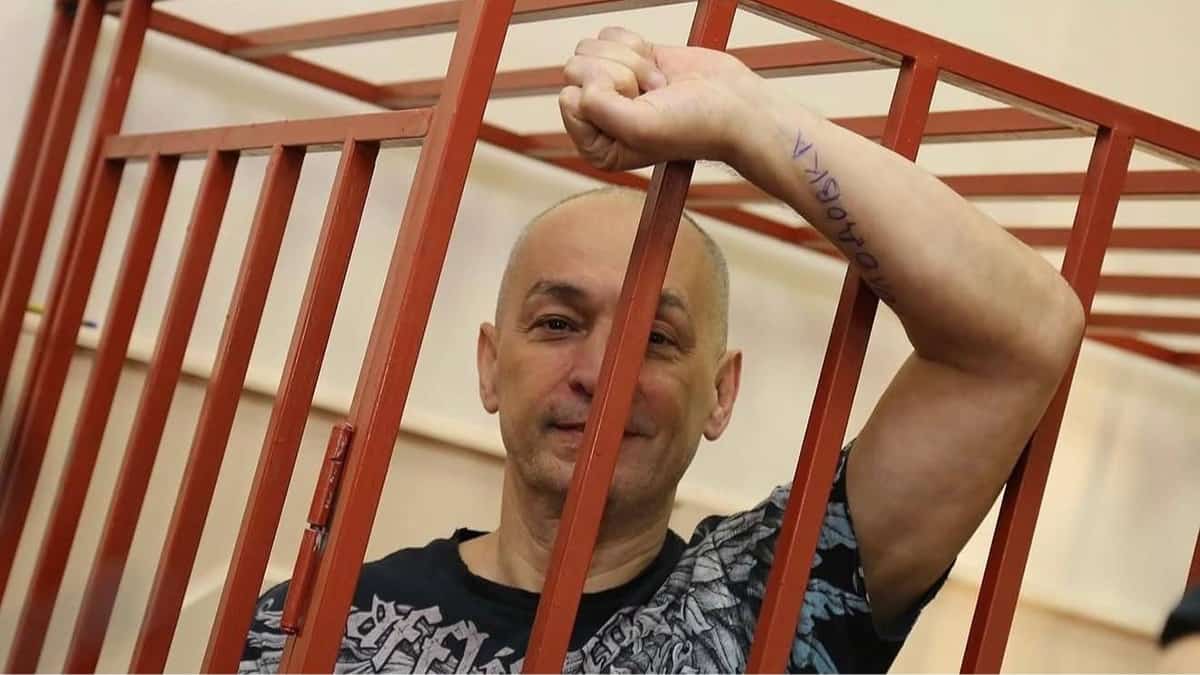
The ex-head of Serpukhov, Alexander Shestun, was hospitalized after a hunger strike. His condition is still serious
On May 12, Alexander Shestun’s support group reported that he was transferred to the Torzhok hospital due to his serious health condition. According to activists, he has lost more than twenty kilograms and suffers from severe cramps in his ankles and hands due to his polyneuropathy. His health is threatened by critically low sugar levels - in the range from 2.4 to 2.9 mmol per liter. “Even 3 for a type 2 diabetic is a risk of hypoglycemic coma,” its supporters emphasize.
Right now Shestun is in the hospital, his condition is serious. As an activist close to Shestun’s family told Veter, the politician stopped his hunger strike in the hospital because “they began to treat him and promised him permission to visit, that is, they fulfilled his demands.” However, “he looks very bad, takes painkillers and has lost a lot of weight,” the source says.
The former head of the Serpukhov district, Shestun, has been in prison for almost eight years. He lost all his property, suffered physically, and even attempted suicide in the colony - but he did not stop fighting and even found the strength to follow publications in the press.
Recently, Alexander Shestun, whom Memorial recognized as a political prisoner in 2021, went on a hunger strike, protesting against his placement in a punishment cell before visiting with children. For the sake of this meeting, he, in fact, had previously refused hospitalization. Even earlier, in December last year, Alexander Shestun, serving a sentence in IK-6 in the city of Bezhetsk (Tver region), attempted suicide. The reason was the eviction of his 89-year-old mother. In a letter to his supporters, Shestun said that when he received the news about his mother’s eviction, he “cried with hopelessness like a child.” He also complained about bullying from the colony administration and refusal to provide medical care.
The colony staff, who found a bloodied prisoner in a cell with a disposable razor in his hands, tied him up and took him to the first-aid post. An investigation into the incident was carried out twice, initiated by the Investigative Committee for the Tver Region, but it did not produce results. The first attempt ended in a refusal to initiate a criminal case under the article on incitement to suicide (Article 110 of the Criminal Code of the Russian Federation) - due to the absence of a crime. The second is probably still ongoing. At least, nothing is known about its results.
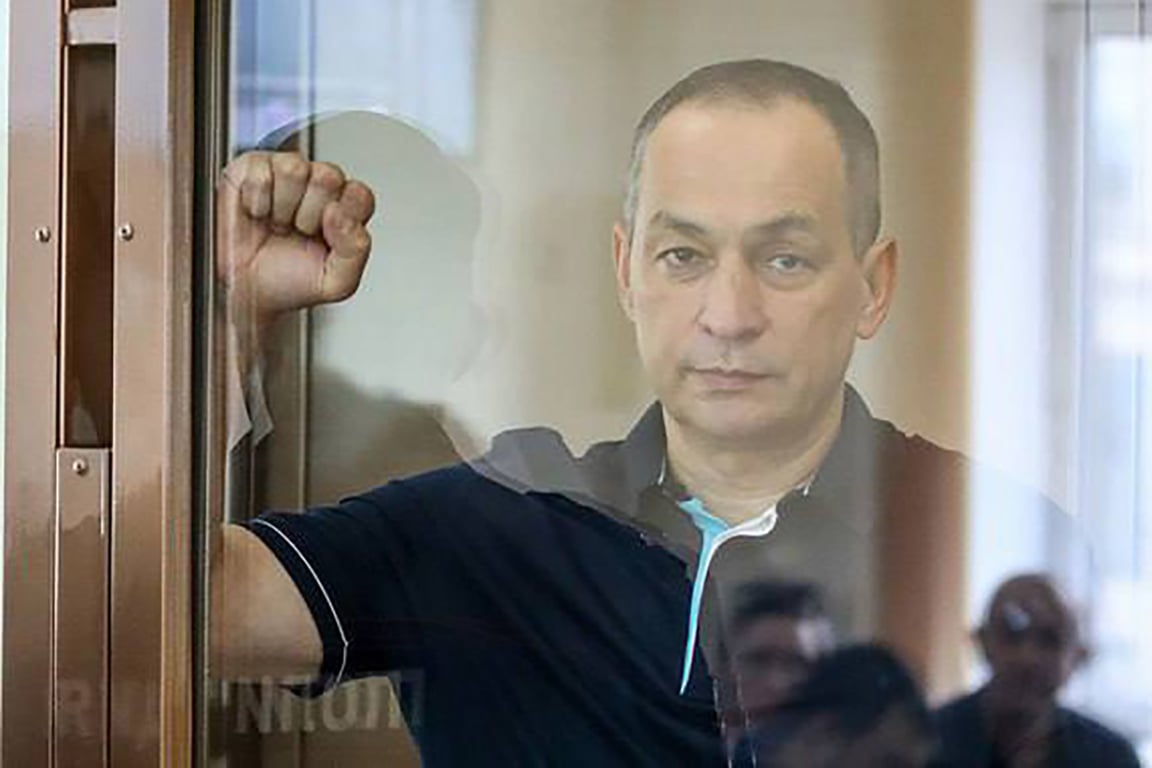
Shestun has come a long way from a major systemic politician of local importance to a political prisoner who publicly attacked the Presidential Administration and the top of the FSB. Publications about this reached Alexander himself, and he considered them inaccurate.
Before Shestun was hospitalized after a long hunger strike, the publication “Veter” obtained a letter in which the disgraced politician outlined in detail all his complaints about the publications. “Of course, I’m not a saint. But the criticism must be substantive,” he insists. So “Wind” decided to re-look at the story of Alexander, taking into account his own optics and his comments.
Novaya Gazeta Europe is forced to admit: when preparing the previous publication, we did not have the opportunity to talk with Shestun himself and find out his position on the specific circumstances of the case. The editors have read the publication of the publication “Wind”, where Alexander’s version is presented, and are publishing the material in its entirety.
The investigation into the suicide attempt of the former head of the Serpukhov region Alexander Shestun has been resumed
The investigation into the suicide attempt of the former head of the Serpukhov region Alexander Shestun has been resumed
Shestun's political career began back in the 1990s, when he was a deputy of the district council. Well, in 2003 he became the head of the entire Serpukhov region. Until that moment, he was a provincial businessman, trading in building materials and securities, exporting metals, and importing food from France and Poland. He didn't live poorly at all. In his letter, Shestun explains that he made his fortune even before he became a politician. This alone has already irritated some local residents:
“I built my first cottage with an area of 500 m2 in the early 1990s. Passers-by shook their fists at the overweight businessman and threatened to take him away from the kindergarten. Subsequently, [I] got a new house of 900 m2 along with a basement, which was shown on the ICR video [when a criminal case was opened],” the politician writes.
Shestun’s fight for the post of head of the Serpukhov district was not at all an easy walk with colorful leaflets and street festivals: the office of the then governor Boris Gromov worked against him, supporting his candidate in the elections, little-known in the region Roman Gorbunov.
According to Novaya Gazeta columnist Leonid Nikitinsky, who personally knew Shestun, he was “friends” with people from a criminal background. In particular, he was credited with having connections with the mayor of neighboring Chekhov, Gennady Nedoseka, nicknamed Big Gena. In the press, Nedoseka was called a crime boss associated with organized crime. In particular, the story of how in 1996 the group of the Korchagin brothers, who were considered opponents of Big Gena, was defeated .
According to one version, ten members of a rival gang were kidnapped by unknown people (possibly Gena’s people) and taken to an unknown direction. Three of them were able to survive, the rest were allegedly rolled into concrete. Nedoseki’s involvement in this incident was never proven, but he (unexpectedly for everyone) died tragically in 2004, burning out in his Hummer under strange circumstances. These contacts between Shestun and the bandit from Chekhov were actively used by his opponents. However, Nikitinsky believes, this even played into Shestun’s hands:
“Friendship with Big Gena, on which the black PR against him was built (Shestun himself did not even think of hiding it), as well as the war with all Serpukhov’s brothers during the commercial period, only added to him, who already had charisma, a romantic aura in the eyes of the residents of the region:
they preferred to vote for the “bandit” rather than for the unknown appointee of the then governor of the Moscow region, Boris Gromov,”
— Leonid Nikitinsky wrote in 2020.
This “romantic aura” was also supported by the fact that Shestun himself was almost killed during the election campaign. On December 5, 2003, a grenade was thrown at his car. There were no casualties.
However, Shestun himself always disavowed “criminal romance.” “Sometimes they throw grenades at candidates undesirable by the authorities, or from unscrupulous competitors. Nemtsov was shot…” he now writes in his letter, hinting that calling him “from a semi-criminal environment” is incorrect.
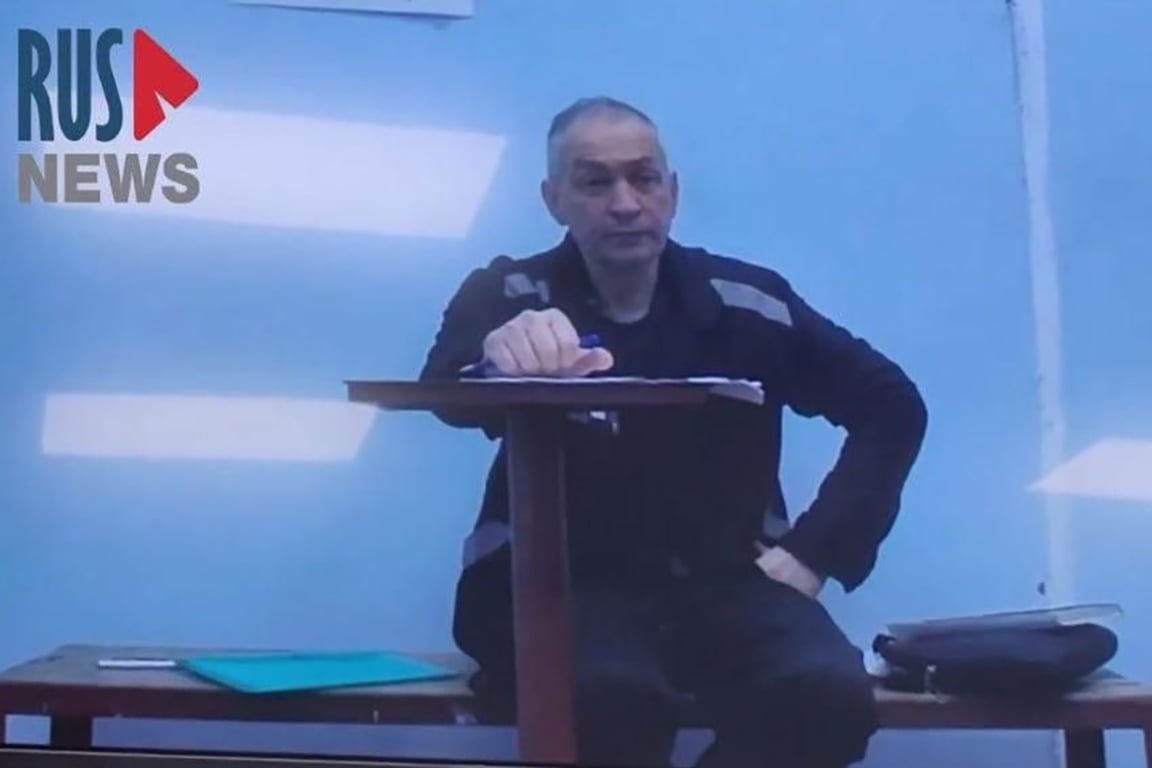
Having become the head of the district, Shestuna proved himself to be a smart manager and even established relationships with regional authorities. Under his leadership, the region developed , its business went uphill, economic indicators and salaries grew rapidly. Shestun's second victory in the elections was no longer an accident. “Gangster romance” has long since faded away; the “brothers” have been replaced by people in uniform, with whom, whether you like it or not, you have to deal.
Today Shestun denies that, while in power, he was on friendly terms with the security forces. In his letter, he writes that he communicated only with Colonel Ivan Tkachev, who at that time worked in the 6th service of the FSB. And only twice, at a volleyball match, did he meet with FSB General Mikhail Shekin. “But I didn’t communicate with him, I just said hello,” says the former politician.
And yet, judging by the TVC report filmed many years ago, Alexander Shestun did not just see FSB men somewhere on the podium. It just so happened that both Colonel General Shekin and the former head of the FSB Patrushev are big fans of volleyball. The latter even played with Shestun in his native Serpukhov. The game became the reason for another unexpected acquaintance. The fact is that the head of the district repeatedly flew to Chechnya, where he personally communicated with Ramzan Kadyrov, and even “sheltered” the Grozny volleyball club in his district. However, the politician claims, he did this not out of love for Ramzan Kadyrov, but for the sake of the region:
“I did not receive any invitations from Ramzan Kadyrov to Grozny, but flew through the Grozny volleyball club, which was based in the Nadezhda Sports Palace in the Serpukhov District. We built it for our women's volleyball team, but after 10 years of playing in the major leagues, the governor denied us tax breaks to support it. So that the palace would not be empty, I rented it out to VC “Grozny” at a commercial price for performances in the super league. Residents went to matches for free.
Nikolai Patrushev was the honorary president of the Volleyball Federation. Nothing but volleyball connected me with Kadyrov and Patrushev,”
- writes Alexander.
Maybe so. But in 2011, Shestun became embroiled in interdepartmental disputes between the FSB and the prosecutor’s office, which resulted in the “case of casinos near Moscow” and culminated in the defeat of the “prosecutors.” This story made Shestun famous and, for some time, invulnerable to enemies. Here is what he himself says about those events:
“In 2011–2012, at my request, 10 high-ranking prosecutors from the Moscow region were placed under arrest, who were accused in a high-profile “gambling case” of protecting illegal casinos under the leadership of the son of the Prosecutor General, Artem Chaika. At that time, I literally lived in Ostankino and other venues, participating in various talk shows and news programs. For more than a year, reports were published daily on TV and in newspapers. People recognized me on the streets of Moscow. In terms of the number of citations in the media, Shestun was the most recognizable among the heads of municipalities, with the exception of iconic mayors of regional centers like Roizman.”
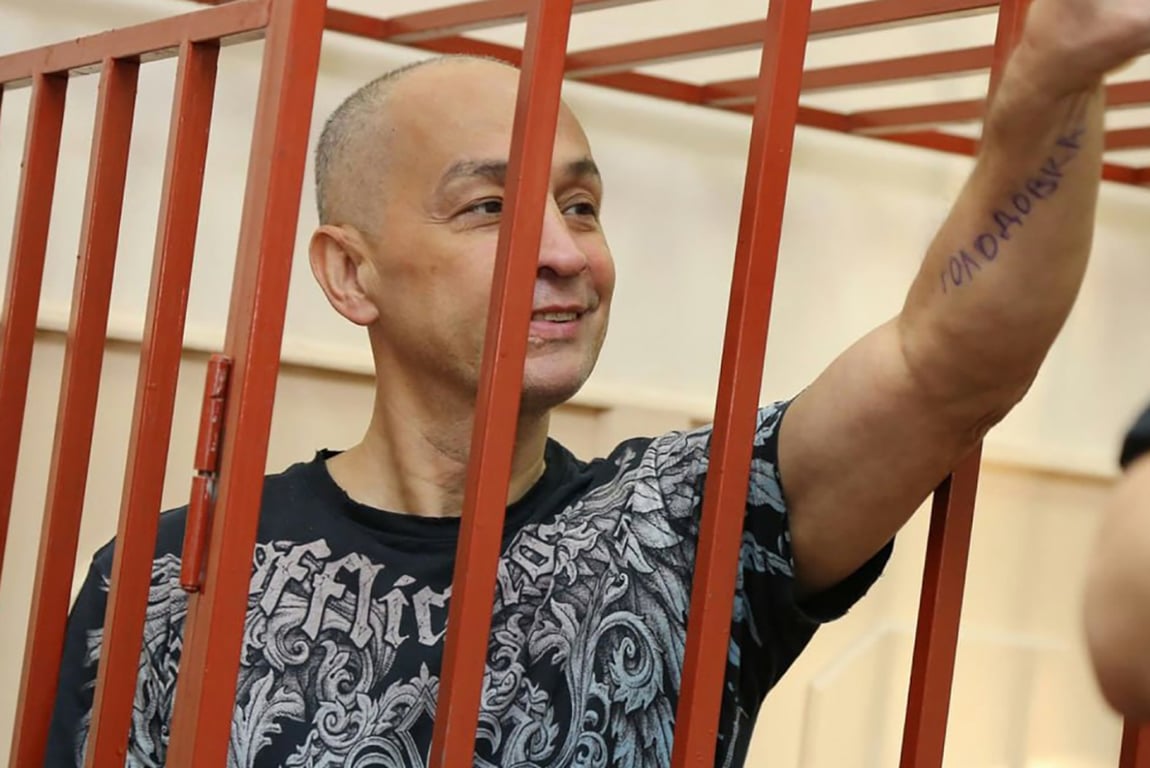
On this wave, Shestun became increasingly independent from the leadership of the region. He openly criticized the municipal reform initiated by the new governor Vorobyov and allowed rallies demanding the closure of landfills near Moscow. The politician was confident that he would be protected, if not by the security forces, then by the people. “I feel safe with you. Governor Vorobyov will not be able to put pressure on me,” he said at one of these “anti-garbage” rallies.
The disobedience of the district head obviously irritated the new governor terribly. In 2018, Vorobiev, through the head of his administration, Mikhail Kuznetsov, demanded that Shestun leave his post. This issue, obviously, had already been agreed upon at the very top. Of course, no one needed such a thorn an hour and a half drive from Moscow.
Shestun, of course, had no intention of doing this. Even now he is confident that he would have won the election even if he was in prison. Well, then, shortly before the next election campaign, the politician made a video message in which he spoke about his visit to the Presidential Administration, where he was openly threatened, in particular, by his long-time acquaintance, at that time already a general, Ivan Tkachev. Shestun published a recording of this conversation:
“How old are you?
— I'm 52.
“You don’t want to live, is that all?”
- Don’t you feel sorry for [me]? I have five children.
“I’m sorry, but that’s not what I’m talking about.” Don’t let them just run over you.”
That's how it all happened. The head of the Serpukhov district was soon arrested on suspicion of violating a number of articles of the Criminal Code: fraud (Part 4 of Article 159 of the Criminal Code of the Russian Federation), receiving a bribe by an official (Part 6 of Article 290 of the Criminal Code of the Russian Federation), legalization of property acquired by criminal means, and illegal participation of an official in business (Article 289 of the Criminal Code of the Russian Federation). Two years later, Shestun received 15 years in a maximum security colony and a fine of 49 million rubles, although today he denies even the idea that his criminal case could have any real basis:
“The case consists of 70 volumes. I was sure that the investigation had at least a drop of evidence, but it turned out - zero! I learned every line by heart."
- he claims.
According to investigators, the former official criminally acquired 678 real estate properties and 25 cars, which he registered in the name of other people. In total, according to the Prosecutor General's Office, 10.5 billion rubles. The department demanded that this money be returned to the state. True, Shestun claims, his vehicle fleet consisted mainly of small cars, and “hundreds of real estate properties” were small plots of land for gardening.
The family of the ex-official and some of his friends were actually divided. Shestun’s wife and children left their spacious house, which, according to the politician, was their only home. They also tried to evict their mother, 89-year-old Zoya Mikhailovna, for several years. The house from which she was eventually asked, as Shestun himself explains, was a cottage of about 200 m2 on a small plot of land. And this was the pensioner’s only home.
Shestun comments on the situation, insisting that all the property was acquired legally: “My brother worked for many years as the director of a drama theater, I was one of the largest businessmen. Should we live like homeless people?