
Translated material
We moved to Germany and are happy
Until 2022, Alfiya Aisitulina lived with her family in St. Petersburg and ran her own small business: she sewed dresses from vintage Soviet fabrics. The products turned out to be unusual, local media wrote about Alfiya, and her brand’s Instagram blog became popular among lovers of eco-friendly fashion. After the announcement of “partial mobilization” in Russia, Alfiya, her husband and son moved to her sister in Berlin. She told Kholod about how they received a freelance residence permit, how small businesses feel in Germany, and what expectations she had about this country were met and which were not.
It's not easy for creative freelancers here, but we were able to get legalized and are building our business again 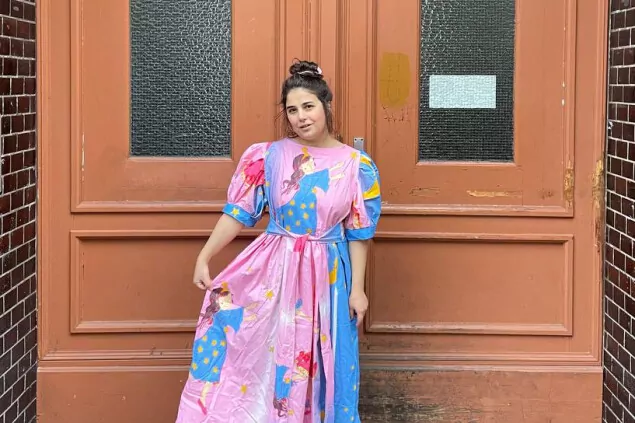
Magic kick
Our move was spontaneous. After February 2022, of course, there were a lot of thoughts about how to live through all this further, but we thought that we would live in our “internal emigration”, and that’s all.
When mobilization began in September, my sister - she has lived in Berlin since 2014 - called and asked if my husband could go to Germany right now. I asked him, and he said: “Yes, easily.” I answered him: take the child and go, and I’ll stay here to finish things off. And the two of them left. From St. Petersburg we went by land to Finland - then it was still possible to enter Europe with a Schengen visa, stayed there for a week with my subscriber, and after that moved to my sister.
If she hadn’t invited us to her place, I don’t know whether we would have left somewhere or not. But she promised that we would have a place to sleep and something to eat, and it was such a magical kick. We didn’t have savings that would be enough to live in a foreign country for the first time, until we found a job and got legalized, that’s absolutely certain. But we always had ready-made documents - foreign passports and Schengen visas - and this helped us leave quickly.
About three weeks later I came to my sister after my husband and child. I already had to fly through Turkey, because on September 30, 2022, Finland banned Russians from entering the country on a tourist visa.
We agreed that we would live with our sister until we legalized ourselves in Germany. The prospects were vague: my husband and I had neither work offers, nor even education that could guarantee these offers. We decided that we wanted to continue to pursue our activities: I - sewing, and my husband - furniture restoration. So the most suitable scenario was to apply for a freelance visa. To increase our chances, we decided to apply separately - this life hack was suggested to us by a migration lawyer. If one of us received the document, the other could be legalized as a family member.
We ended up living with my sister much longer than we had planned. Of course, we had food and shelter, but we still had to spend money. From Russia I took with me about six thousand euros. We left without any belongings, and winter was just around the corner. I had to buy warm jackets, that’s all. Just in December my phone crashed and I had to buy a replacement. Plus I needed to buy some sewing machines for work. In general, the money I took with me disappeared quickly.
Linguistics and dress sewing
The story with the residence permit dragged on for several months, and all this time we were afraid that they would not give it to us. At first we spent a long time collecting documents, then we added something to the already collected package, and sent something. By that time, our Schengen visa had already expired - but we could stay in the country while waiting for an answer regarding the residence permit.
To get a freelancer visa in Germany, I needed a lot of documents: a business plan, preliminary calculations of profits and costs, some photographs of products. You also need to submit your diploma to the department for consideration. There is an important point here: freelancing activities should coincide with your education. In my case, the connection, frankly speaking, was not obvious. I am a linguist by training, and my business is sewing dresses. And I applied for a residence permit as an artist and dress designer. To explain to German officials how education would help me in business, my sister and I wrote cover letters about how linguistics relates to blogging and how I sell my products through a blog.
I also needed letters of intent - my potential clients had to write them, saying that they were ready to buy my products. I collected about 20 such letters. At that time, one dress cost me 120–140 euros, that is, with the help of these papers I was able to confirm a rather small amount of my potential income. We also needed a certificate about the presence of a “financial cushion” in a bank account - in my case, an amount of about 18 thousand euros was required. I didn’t have that much money, but in the end what I had was enough.
We collected all this, attached information about our savings - I had some left in rubles, although this money could not be withdrawn, everything looked nice on paper - we sent the documents and began to wait. The Office for Foreigners responded to us only in January 2023 and invited us for an interview in April. This invitation does not mean that a freelance visa will be issued - we could have been refused at the last moment. So we were pretty worried all this time.
My husband Pavel’s application for a freelance residence permit turned out to be more understandable to German officials. He graduated from a restoration school and is now professionally engaged in the restoration of wooden products - for example, furniture, antique frames, decorative items - and creates his own artistic projects. That is, everything in his career path is quite logical. So, in the end, a residence permit was issued to him - and my son and I were “attached” to him as family members.
Initially, our plan was the opposite: we thought that the main residence permit would be given to me, and my husband would be “attached” to me. The fact is that when you are given a freelance residence permit in Germany, you can only engage in the activities that you indicated in your application. We assumed that I would sew dresses - because I am good at it and know how to make money from it - and Pavel would have the opportunity to be hired for various jobs, even those that he didn’t really want to do. If it were necessary, he would go, conditionally, to work at a construction site. But the German bureaucracy decided otherwise.
I only took scissors and a ruler
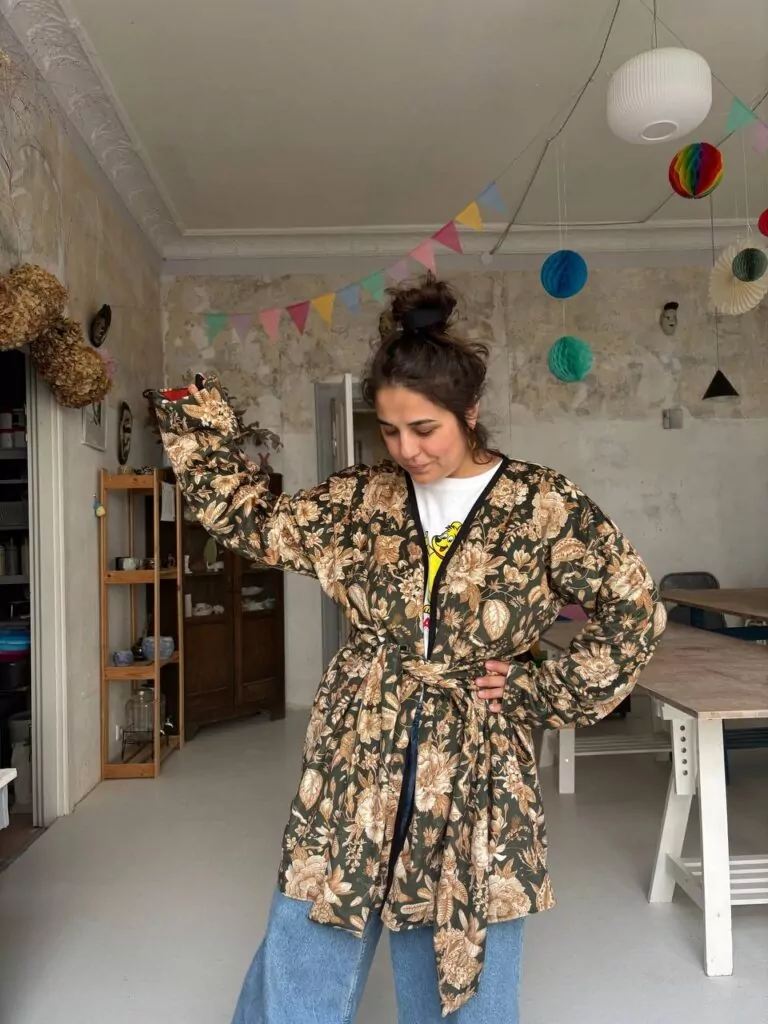
Before the move, neither Pavel nor I worked for hire. We did the same thing: I sewed, and he restored wooden products: windows, doors and other interior items. Since this is a manual job, no expensive equipment or materials are needed at the start. When moving, this turned out to be a huge success: in fact, we only had to move ourselves: this was enough to start a business in a completely new place. I only took scissors and a ruler with me to Germany. I don’t even need any patterns - I work without them. My sister already had a sewing machine, so I bought an overlocker (a machine for processing fabric cuts. - Kholoda’s note) and could get to work.
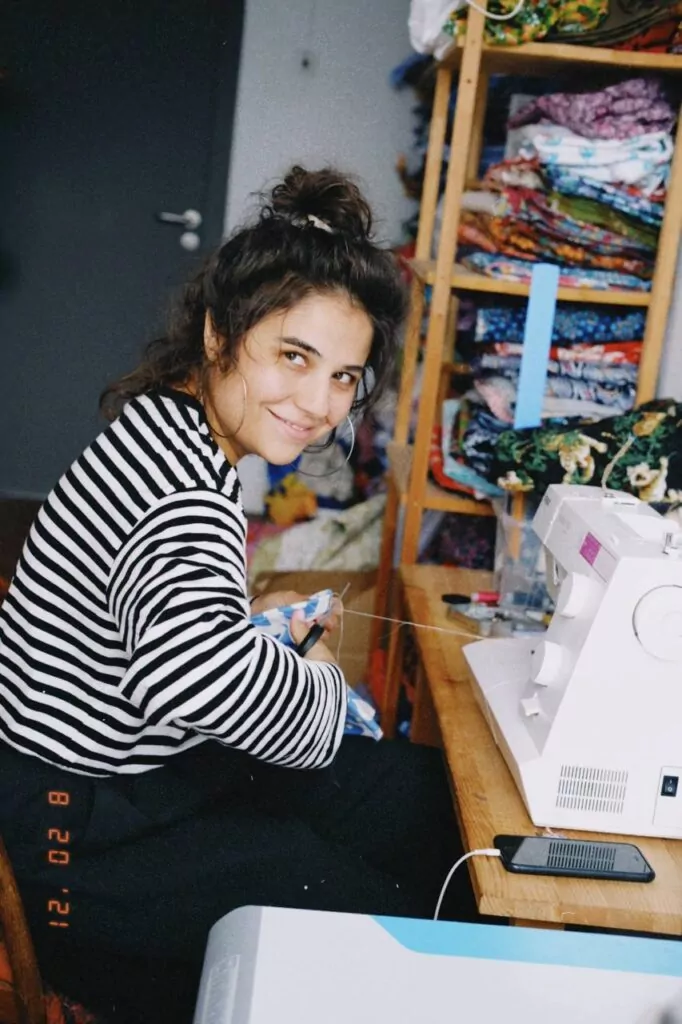
My husband needed more tools, so he often went and still goes to some flea markets, looking for some antique chisels, wood carving knives, and so on. He acquired large equipment and his own workshop only when we had already settled well enough in Germany.
In my case, it was more difficult to transport the very concept of my work. When I lived in St. Petersburg, I sewed dresses from vintage Soviet fabrics. This made it possible to do very interesting, unique things - and without large investments. It was all super eco-friendly, and every item was one of a kind. When we arrived here, I discovered that there are fewer such fabrics here and they are more expensive.
In Russia there were women from Avito, from whom I bought fabrics in bales of 700–800 meters. Finding similar “suppliers” here is much more difficult. At first, I thought about changing the concept of work a little and switching to upcycling - that is, sewing things from home textiles: I went to second-hand stores, bought tablecloths and bed linen there and sewed from them. But in the end I had to move away from vintage fabrics: it’s not so easy to get them in Berlin, and they’re not that cheap.
However, this experiment was not in vain. I myself was interested in working like this, and I filmed a lot of content that went viral on social networks. For example, a video where I sewed dresses from duvet covers or curtains .
Now I sew from regular store-bought fabrics. At first, I went to the textile market, met the sellers there, they began to recognize me and give me some discounts, because I often bought their goods. Then I found a lot of nice online stores and started ordering there. Now I can already understand from the photo and description what the fabric will feel like and how it will look.
Many of my clients, of course, remained in Russia. But not all. I have subscribers who, just like me, moved somewhere in 2022. I think it was obvious to everyone from the very beginning what my values were, and clients who share my views continue to order from me. That is, fortunately, I didn’t have to start my own business in Berlin completely from scratch: I had some kind of client base and an understanding of how to grow it.
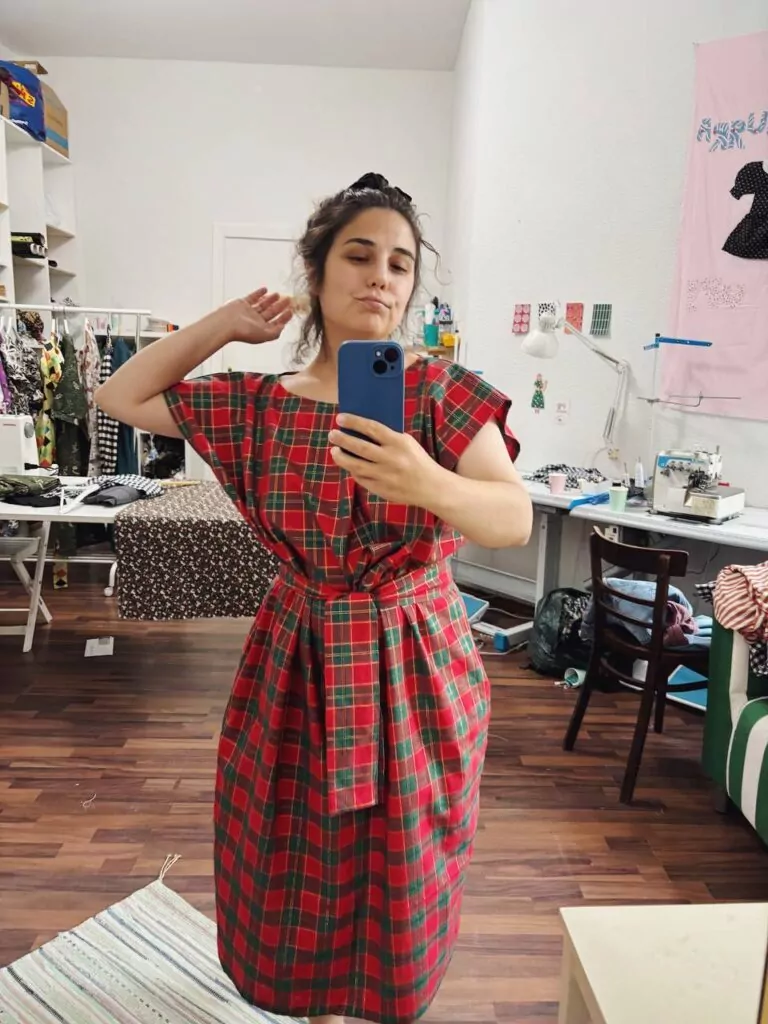
I work mainly with Russian-speaking clients and also maintain a blog in Russian. That's enough for me. I can’t say that there is a huge queue for my dresses, but there are enough orders, and the blog played a big role here.
Customers living in Berlin sometimes write to me: “I was here at the presentation and saw a girl in such and such a dress of yours.” Some people even start making friends thanks to this. When I was still living in Russia, I remember two of my clients from Dublin met because they recognized each other’s dresses.
I also have German-speaking customers, but very rarely. Usually they come to me because they saw my dress at one of my colleagues or at an event. German women usually write by email, not on Instagram. Once, at some market, a German woman bought a dress from me - but markets here are not very popular, people are not used to going there, so I do not consider them as a successful channel for sales.
High taxes and complex accounting
In my opinion, Germany is certainly not the best choice for creative freelancing. The state here cares primarily about hired workers: it offers jobs and works to improve working conditions. On the one hand, freelancers are also good, since they provide services and work without particularly straining the system and pay for their own vacations, insurance, and sick leave. On the other hand, the income of freelancers who want to work in Germany is checked very carefully. Nobody wants us to come and hang around here without money or work.
The income tax rate for freelancers here is the same as for employees. That is, the administrative work that you do additionally as an entrepreneur and which people do not have in their employ is simply not taken into account. For example, you do the accounting yourself, or you hire a separate specialist for this.
Filling out and submitting a tax return on your own is very difficult, especially when you are just starting out in business. The services of an accountant or tax consultant in Germany are not cheap. To this is added a quarterly VAT return (I need to submit it four times a year). All this takes time and effort. Either you do this work yourself for free, or you pay for it out of your own pocket.
The VAT return requirements, for example, change if your income from other European countries (not Germany) exceeds a certain threshold. That is, you have just mastered some rules - and then the structure of your income has changed, and you need to master new ones.
And every time this paperwork reaches a completely new level of complexity. In our case, there is no provision for sick leave or vacation. We have private health insurance - it is quite expensive.
The level of digitalization here is such that, for example, passwords for virtual accounts often need to be received by regular mail. You register on the website for taxes : everything is fine, it’s convenient - but you receive the password by mail. Somehow my banking application didn’t work—I couldn’t log into it. I wrote to them and said: “Okay, let me just come to the bank and you will do everything for me.” I felt terribly incompetent. And they answer me: “What are you talking about, you don’t need to book any meeting, this can all be done very easily through the phone, ATM and mail.” I do all these steps through the phone, ATM and mail - but by that time I had already forgotten what I entered in each of these units, and I still can’t get into my Internet banking. In the end, I still couldn’t do without a visit to the bank’s office: I went there, they gave me all the passwords again, and I was finally able to log into my account.
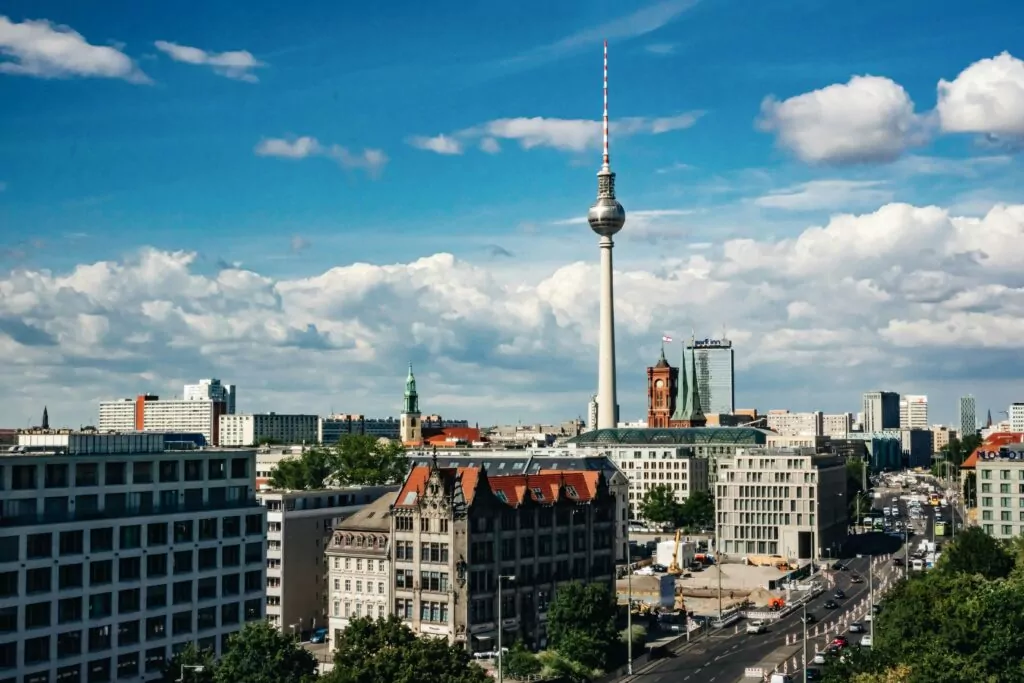
They also take the protection of personal data very seriously. For bloggers and bloggers, this means that practically nothing can be filmed on the street so that strangers do not get into the frame. This is great for passers-by, of course, but it makes the activities of bloggers very difficult, because it is almost impossible to shoot content about the city in which you live.
In general, right now it can be really difficult to do creative freelancing in Germany. But I think that perhaps the situation will change if there is more demand and if more people come here who want to work this way.
Landlords ask for a whole package of documents
We lived with my sister and her family longer than we had planned. We moved to Germany in the fall of 2022, but found our home only in the spring of 2023. By that time, our families were very tired of each other: we were simply tired of living together, there was no personal space. Everyone pissed each other off and swore terribly. I don't know how we didn't go crazy.
As soon as we received a work permit, we immediately began looking for an apartment. Renting a house in Berlin is quite a quest; it’s difficult to even just get in for a viewing. Landlords often ask potential tenants for a bunch of documents: a work contract, a letter from a previous landlord, proof of savings, a letter from guarantors. And at that time we only had a residence permit and a very rough idea of how much we would earn. But there was nothing to do, I had to look like this. They started inviting me to view apartments when I began indicating good potential income in my letter to landlords. So that helped a lot.
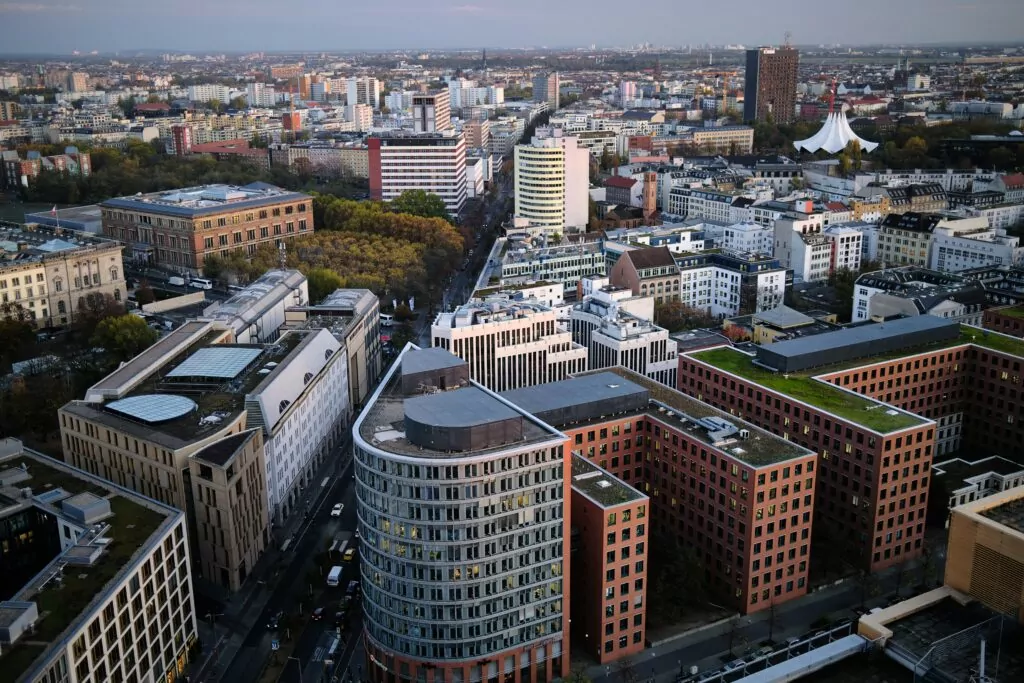
I looked, probably, only a couple - and very quickly found the apartment in which we now live. The location was not bad: only six metro stops from my son’s school. The area is quiet and pleasant. Well, in general the apartment was good, clean, it was clear that it had only been renovated. And she just had the vibe of our first apartment in St. Petersburg! Overall, I really liked it. My sister and I came to the viewing, asked the representatives of the management company some questions, and I quickly decided that I wanted to rent this apartment.
I wrote to them, but they answered that they were already signing an agreement with other residents. It was a shame, of course, but what can you do? And a few weeks later I received a letter: “If you are still interested, send documents.” But we didn’t have a credit history or anything like that before. I write to them: “So and so, we are just starting our business in Germany, we have nothing to show you yet, but this could be our potential earnings. And if that’s not enough for you, I also have a sister in Berlin who can be our guarantor.” They answered me: “Yes, everything is fine, send your passports, we will sign an agreement with you electronically.”
I still don’t understand how we managed to rent this apartment. When we got to signing the agreement, it turned out that Russia was not in the electronic signature application.
I thought: “Well, that’s it, now they’ll definitely send us away, we’re inconvenient.” I wrote to this company: “You know, we can’t sign in the application.” They answered us: “Well, then sign by hand and throw the agreement in the mailbox.”
We printed it out - and there are 60 pages. Everything is spelled out: how to ventilate, when you can stomp, when you can’t. Signed and sent to the management company. They didn’t answer for a long time, and I began to doubt that we had succeeded. But right before check-in, they contacted us and told us to come to hand over the keys. We got there and in the front door we saw our names on the intercom - only then did I believe that it was true.
Earnings are about the same, but quality of life is lower
The apartment, when it was rented to us, cost 1,400 euros per month including heating and cold water. Before moving in, you also had to pay a deposit - payment for three months without utility bills. That is, in total we paid about 3,300 euros at a time.
When we moved in, we had to pay another 105 euros per month for electricity, but every time at the end of the year we had to pay something extra after the supplier recalculated. One time we paid an extra 250 euros, another time - 300. Then the price was raised, and we started paying 125 euros a month, but still, after recalculation, it turned out that we needed to pay extra. I think an important role here is played by the fact that we have an instantaneous water heater, and it requires a lot of electricity.
In addition to renting an apartment and utilities, we also pay for the Internet - it comes out to 70 euros per month. Medical insurance - about 1200 euros for three per month. Also, my husband and I rent workshops for ourselves: he pays 200 euros per month, I pay 250 euros. Well, I allocate about a thousand euros a month for groceries.
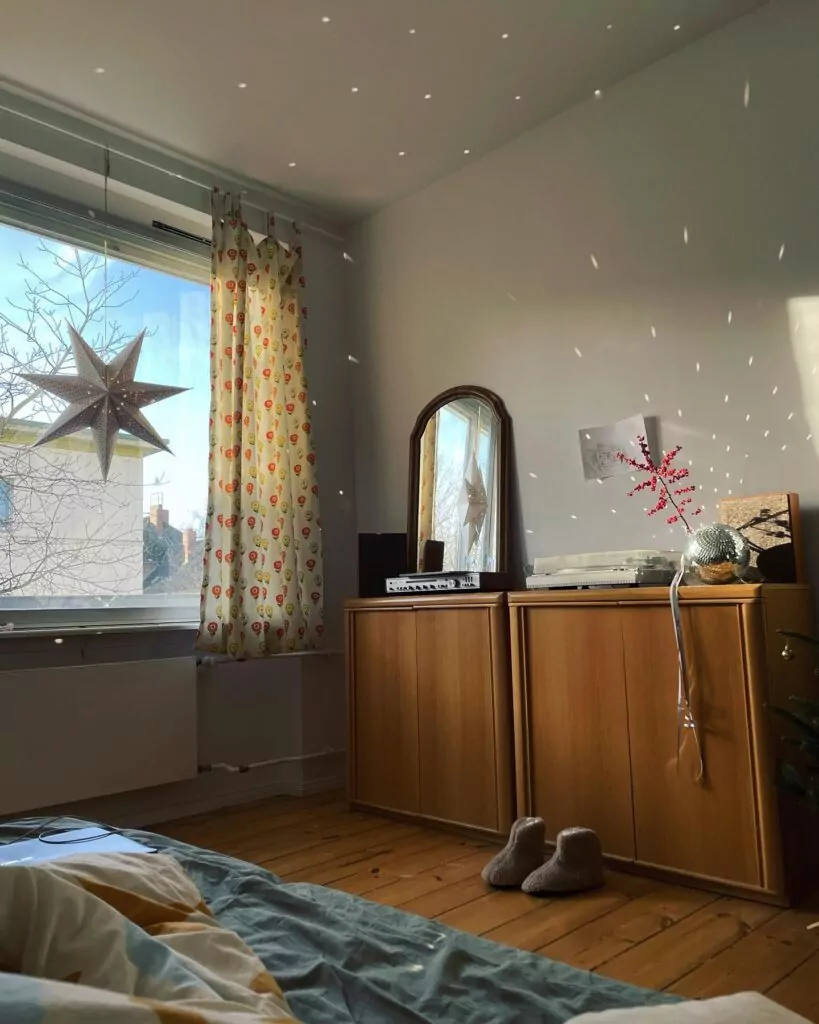
Naturally, there are also some expenses such as buying clothes, cafes and entertainment. If we add it all up, it turns out that my husband and I together earn about the same amount per month as we spend. It’s difficult for us to somehow scale our business and increase income, because we both work with our hands and our capabilities in this sense are limited.
I once talked about our earnings and expenses on my blog on Instagram. They immediately started writing to me that I was deceiving everyone, that it was impossible to make money by freelancing in Germany at all. They wrote that my husband is actually an IT specialist, or that I actually married a German and moved here. I don’t know where they get such fantasies.
We don't have any fun here at all. Yes, we recently were able to afford to go on a three-day vacation for the first time in three years and we go here to get our teeth treated. For some, this is probably just a luxury life, but I don’t think so. We now earn about the same as in Russia, only there we did not pay 140 thousand rubles for an apartment. And we were not the main rich people with that kind of money - but in St. Petersburg our quality of life was definitely higher than here.
Some illusions about Germany have been destroyed
Adaptation to Germany was not entirely easy for us, although it would seem that European culture and seasonality here are quite understandable to us. In many places the architecture is just like in St. Petersburg. Again, my sister has lived here for many years, we visited Berlin several times before moving here, and we always liked it here.
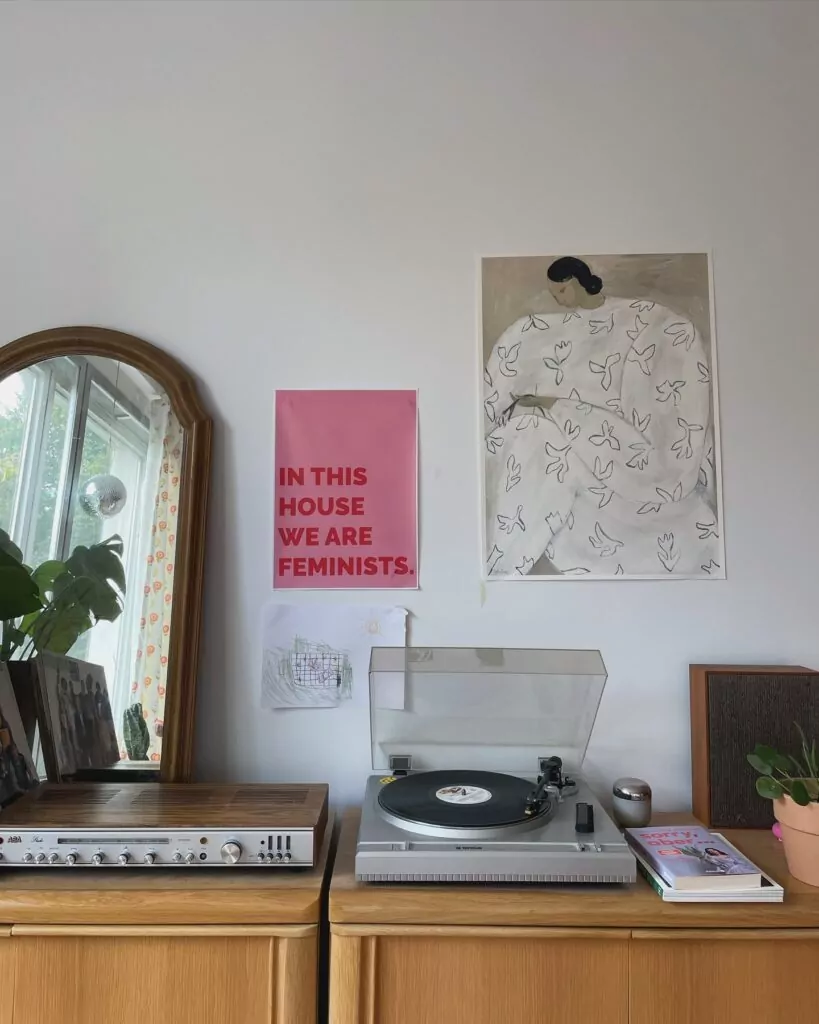
I arrived already with knowledge of German: I studied it at school, lessons were seven times a week, and then at the university. Since we had regional studies at the university, I knew about local holidays, cultural features, that shops are not open on Sundays, that’s all. So, of course, there was no culture shock. I was shocked, it seems, only because of the destruction of some of my illusions about Germany. Before moving, I thought that this was a country of victorious feminism, freedom and leftist views - but it turned out that feminism has not won everywhere here and the reality is very different.
My son goes to a regular public school here, and this was his first experience like this. In Russia, he was homeschooled: he attended small private schools, but by law this is still formalized as homeschooling. Here, in December 2022, we were invited to meet at a public school and told to prepare documents for admission.
Integration classes are common here, which consist of foreign children, where they basically learn the language for a year and a half. Then you can go to a regular class. The son was first sent to a class with Ukrainian children, where everyone spoke Russian or Ukrainian and where there was a Russian-speaking teacher. He stayed there for two months. So it cannot be said that he was immediately thrown directly into the German language environment. Since 2024, he has been transferred to a regular class, and now studying in German does not cause him any particular problems.
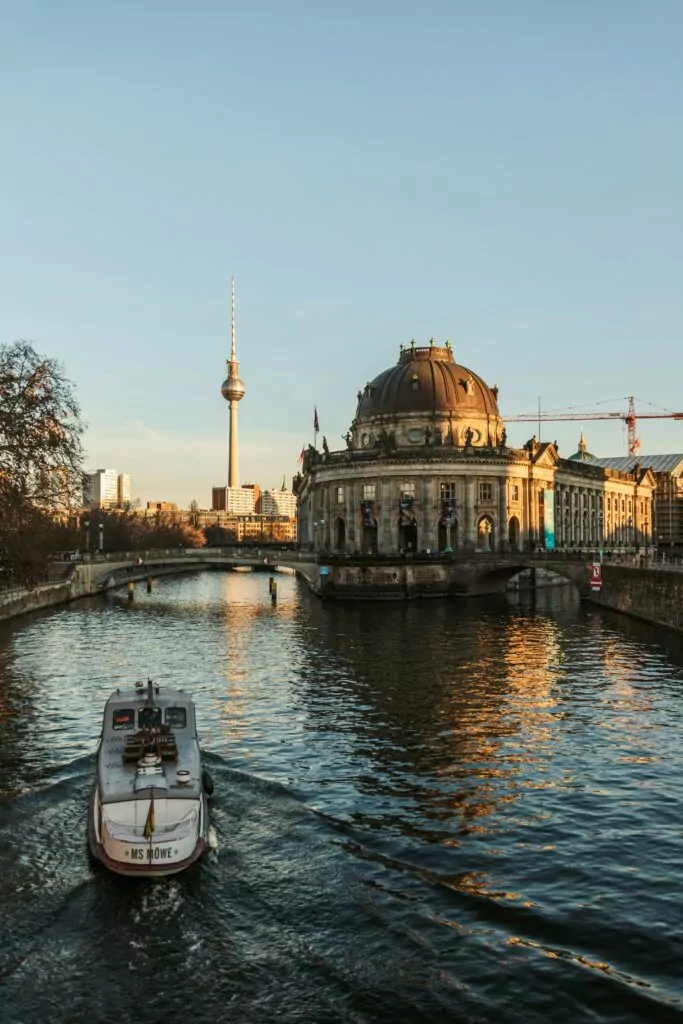
In general, our adaptation is still ongoing. When problems arise, you think: “Damn, I don’t know what to do, how to do it right.” But we are still glad that we decided to move. It was a difficult step - but very interesting. Sometimes I think about how I ended up here. Could I have imagined this 10 years ago? At the age of 14, I went on exchange to Hamburg and smoked my first cigarette there. And now my child goes to high school in Berlin.
My husband and I’s parents remained in Russia. We rarely see each other, unfortunately - my mother came to see us only once. But more often than not it doesn’t work out right now. I correspond with my girlfriends, but maintaining close relationships at a distance is difficult, and often this communication is very formal. Many of my friends, and especially my husband’s friends, also left Russia - but, unfortunately, not for Berlin. They are now scattered across different countries, so we see each other when we travel. Once I met a friend in Montenegro, and I already have a whole list of places where I need to go next time to meet friends.
Therefore, it is especially important that now my sister and I live in the same city. She and I have always been friends. When she left for Germany, I took it hard. I really had to learn to live without her. She was my friend, my parent, my older friend. To be in the same city with her now, to have the opportunity to see each other, to meet with our children together is very valuable. And the parents are calmer that we are all here together.
Author: Katya Shubina
Photo: @hello_kookaburra / Instagram