
Translated material
Garden on the secret floor
A story about a secret feminist library in Yerevan: why its creators continue to believe in the best, despite raids and war

Photo by the author
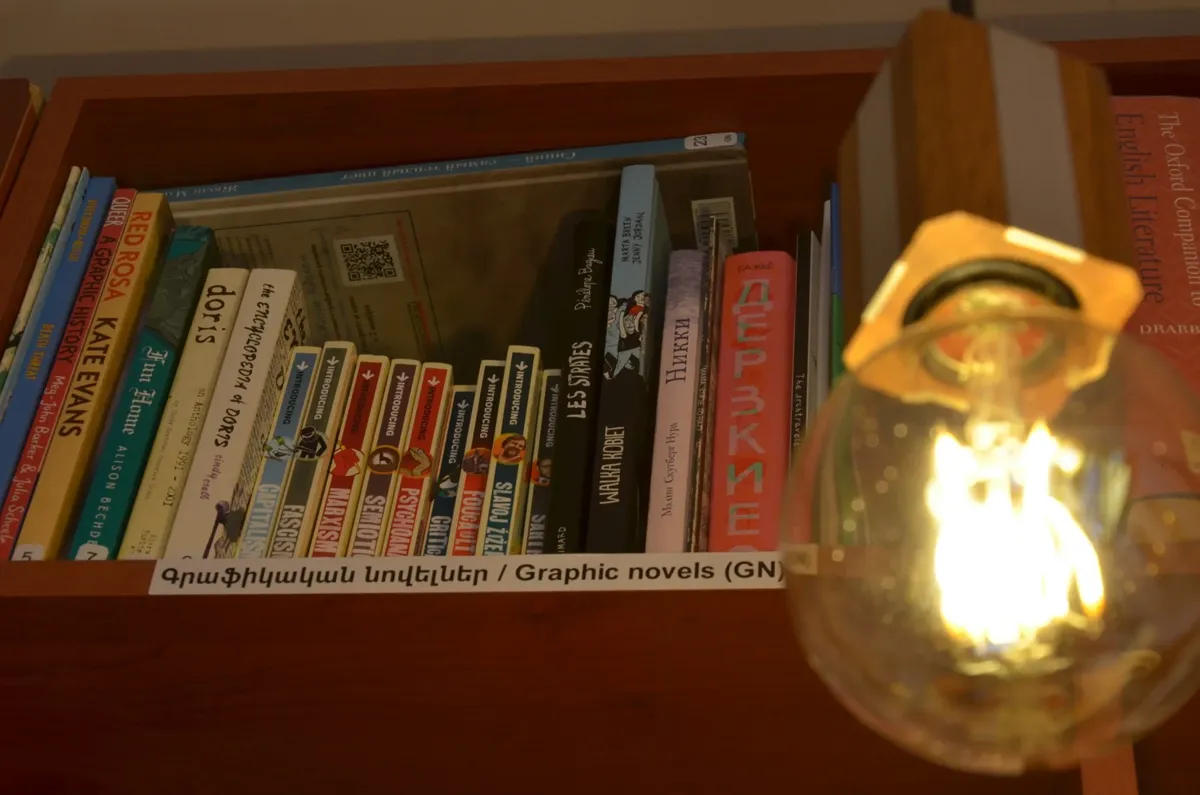
In the very center of Yerevan, on the tourist Pushkin Street, there is an unremarkable residential building. You would never guess that in one of his apartments there are more than one and a half thousand books on feminism, gender theory, anti-capitalism, decolonialism, queer studies and LGBT* rights. Getting to this place is not easy: it is not on the maps, you can find the floor and apartment number only by receiving passwords from the organizers, or if someone introduces you. I had neither when I first went here to discuss Iranian director Shirin Neshat's film Women Without Men. According to the plot of the film, four Iranian women escape from the patriarchal world during the 1953 military coup in Tehran in a mysterious garden - a space where weapons cannot reach them.
To find the FemLibrary headquarters, I had to go through all nine floors of stairs several times in search of at least some clue, catch residents coming and going, and knock on other people's doors. And finally I got to the right place, finding it by sound. They quietly opened the door for me, as if letting me into someone else’s house, and not into a library. There was almost no light, only a projector screen, the hall was so packed with people that some spectators were sitting on the floor. In the darkness, I studied the attentive faces facing the projector - I came across people of all genders and ages, and even one friendly Labrador who approached everyone to be scratched.
The bright lights came on in the hall, and people gathered in a discussion circle after a smoke break. The awkward silence was broken by a young man with shaggy black curls - in excellent English, he said that the film “too noticeably conveys a Eurocentric view of the problems of Iranian society and was filmed for a Western audience.” A girl sitting in the corner with folded arms grinned and added in Armenian: “If the director wanted to show feminism, then she failed - the women in this film are completely dependent on men.” Some of the participants shared their thoughts in English, and it was translated into Armenian, others vice versa - that evening people from different countries gathered, and it was important for everyone to hear and understand the other. I felt like I was visiting a company of friends I had known for a long time.
It was my first evening at FemLibrary, a space that its creators call “the only radical feminist place in Armenia.” It started a conversation about what it means to fight for women's rights in a country that has experienced genocide, war and centuries of patriarchal silence.
underground club
“We are a collective, we don’t have a hierarchy,” says Armine, one of three organizers sitting in front of me in a bright room lined with bookshelves. She is a social worker in the health sector, co-founder of a library, and teaches community yoga and other wellness practices. “We have areas in which we are strong, but usually everything is very fluid, we help each other and do everything together,” explains Maria, a journalist, artist, designer and art critic who recently joined the library.
The space we're sitting in is the fourth space in the library's ten years, says Arpi, an interdisciplinary artist and co-founder of the library's early days: "We didn't renovate this space because it was intended to be a warehouse, but suddenly we were stuck here for six years." The library is open to the public three days a week: Monday, Wednesday and Friday from 13.00 to 20.00.
Here you can come to read literature and take a book home, do some cooking, go to a film screening, take part in a workshop, a meeting with authors, listen to a lecture or reading, do yoga, go to a support group, get help, exhibit your works - everything is absolutely free.
On the project website there is a feedback form in which you can offer to buy a certain book for the collection, the organizers will make a decision and order it on Amazon.
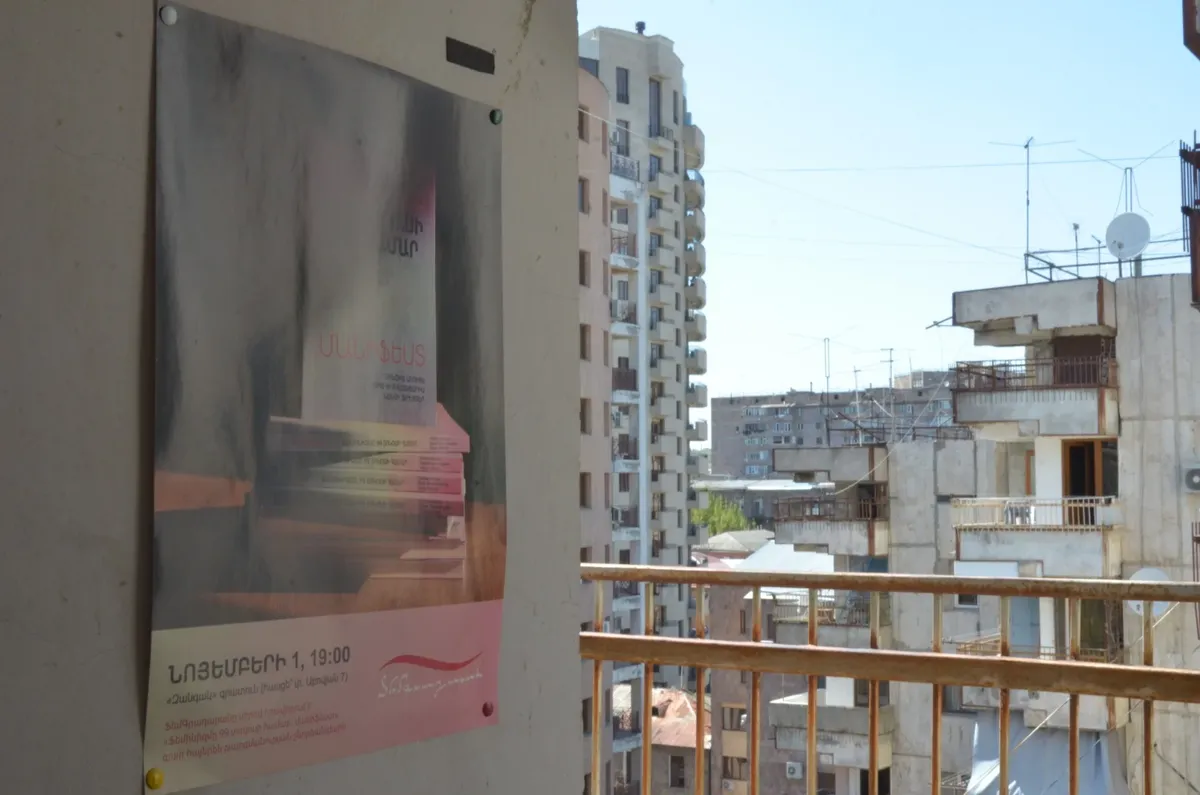
On the last day of the Armenian “women’s month” - it lasts from March 8 to April 7 - we stand on the balcony, squinting at the spring sun. I ask the girls: what would a real women's month be like for Armenians? “We don’t need a month. We need it every day, all year!” - Arpi exclaims. “Women’s month is basically discounts in beauty salons,” Armine says ironically, grinning.
Born into the revolution
The library was born in 2015 as the idea of two friends - Anna and Arpi. “Anna studied at the University of Manchester, and I studied at the Institute of Contemporary Art in Yerevan,” recalls Arpi. “The library started just from a shelf in Anna’s apartment on Tumanyan Street; she brought the first books in a suitcase from America.” The country was then in mourning after the April clashes in Karabakh. Talking about anti-militarism and women's rights against the backdrop of war was dangerous. One pro-Russian resource purposefully collected information about feminist activists, their personal data, photographs, and harassed them on the Internet.
For two years the girls tried to get a grant, but without success. “Our ideas seemed too radical to the foundations,” shrugs Arpi. Everything changed three years later: “We organized protests and blocked streets during the so-called Velvet Revolution in May,” recalls Arpi. — Anna approached me on Republic Square, which was filled with protesters in those days. She was so excited, she started screaming, “Do you know what happened?” There were a lot of people around, a crowd, I didn’t hear anything. She screamed in my ear: “We got a grant and we will have our own space!” I didn't believe it. And then it dawned on me, and we started looking for a place.”
They found the first premises in the Aygestan region. “It was a wonderful place,” Arpi sighs. — A two-story house with a garden, spacious rooms, and a gallery on the second floor. We lived there for exactly a month." In August 2018, a scandal occurred: a group of queer activists went to the village of Shurnukh in the Syunik region, where they were attacked by local residents and pro-Russian provocateurs. The faces of the activists were scattered across the Internet, and neighbors of the first library premises recognized the same visitors as the same ones. “They started putting pressure on the landlord, and we were evicted,” says Arpi.
The second room is in the Cascade area, spacious, next to a queer cafe. “Everything was vintage, the community renovated the place,” Armine recalls. “There was a sense of community there.” But the neighbors here turned out to be homophobic and sexist. “The store employees on the ground floor attacked our participants, booed them, and engaged in catcalling. One day, the residents of the house called the police, says Armine. “We lived there for two years, but it was unbearable to work every day expecting a fight.”
At the beginning of 2020, the library moved to a third location - again with a garden, but a few months later Covid began. “Paying huge rent for a closed space made no sense,” says Armine. The girls found a cheap shelter apartment on Pushkin Street - as a temporary storage for books: “We thought: a couple of months, and then we’ll see. But then the war, the world collapsed, rent soared. Now it is impossible to move. The local residents are also unhappy with such neighbors, but so far they haven’t bothered us.”
Patriarchal time zone
Armenian feminism exists in a state of constant conversation on hold. After the genocide of 1915, this is not the time. After the Karabakh war this is not the time. After the revolution, Covid, escalation of war, this is not the time again. In this “later” women give birth, die, remain silent and wait for this long-awaited day to come, which never comes. I ask how girls contend with this narrative. “We don’t argue anymore,” Arpi answers wearily. — Ten years ago I argued, constantly. I don't have the strength for this now. Sometimes, if I'm in a good mood, I try to explain that all social problems are interconnected and that you can't fight war without fighting inequality. But we are not obliged to educate anyone. This is not our responsibility."
When I ask about women's right to bodily autonomy, there is a heavy pause in the room. “After the war of 2020, a woman’s body has again become a national resource,” Arpi says, looking into space. — The government has launched programs to increase the birth rate, a surrogacy program, which is very problematic. They openly tell us: we need to reproduce more soldiers.” Armine continues: “I have heard this hundreds of times in my life: “We are at war, what are women’s rights, what are feminist issues, now is not the time.” They always answered me: “Later, later.” As feminists say, “later” is a patriarchal time zone. When will that “later” come?”
Arpi admits that after the “velvet revolution” of 2018, when women stood on the barricades shoulder to shoulder with men, many were waiting for a breakthrough. But there was no breakthrough.
“I look back at the revolution and it was mostly men who occupied the stage,” says Arpi. — Activists were on the streets, but they did not get into parliament. Of the twelve ministers, two are women.” They say about the two ministers of education and internal affairs, Armine and Arpi, without hiding their skepticism: “They reproduce the same inequality, just in a different guise.”
According to the Ministry of Health, over the past 30 years, about 80,000 girls were not born in Armenia due to selective abortions. “Gegharkunik region once ranked first in the world in terms of femicide,” adds Armine. “This is one of the most conservative, patriarchal regions of Armenia.”
Translate feminism into Armenian
Why is so little known about Armenian feminists even in Armenia itself? “Because they don’t teach about it in schools and universities,” Arpi answers. — And because this is an anti-system story. Institutions do not fund anything that challenges the accepted order.” “Research about Zabel Yesayan and Shushanik Kurginyan has only recently begun to come out,” says Arpi. “We are still discovering names for ourselves.” One of our friends found a book by Maro Nazarbekyan in the National Library, which no one had ever opened - the pages were not even cut.” Armine adds: “We dream of republishing the works of Tanya Hovhannisyan, a poetess who wrote about the war in Soviet times and in independent Armenia. Her legacy is almost invisible, we want to give them a rebirth.” Now the library is helping to republish a book by Shogik Avakyan, a prominent Armenian researcher and translator, published 20 years ago; the circulation has already sold out.
FemLibrary not only collects books, but also translates them. In 2025, they released an Armenian translation of Cinzia Arruzza, Titi Bhattacharya, and Nancy Fraser's manifesto, Feminism for the 99%, an anti-capitalist, intersectional theory linking women's oppression to class inequality, racism, and ecology. “Translation itself is a political act,” Maria is convinced. — You are translating the experience of women, which has been silent for centuries. But we are faced with a huge problem - there are simply no many terms in Armenian. “Intersectionality” - how to translate this? The translator, editor, and consultant endlessly discussed every word. It’s a huge responsibility—we’re essentially inventing a new language.”
A region where it's hard to breathe
Armenia, Georgia, Azerbaijan - three countries, three different regimes, three different feminisms. “Azerbaijani feminists are perhaps in their most vulnerable position,” says Armine. “Even institutional NGO feminism is dangerous there.” In Georgia, after the latest political events, it is also becoming increasingly difficult for feminists - the influence of the church and the ultra-right has increased. After the 2020 war, a rift emerged between Armenian and some Caucasian activists. “We expected support from our colleagues. At least write and ask how we are. Some took the other side instead, we felt isolated,” recalls Armine.
I ask about Iran's Women, Life, Freedom movement of 2022—if they sensed its resonance in Yerevan. “Yes, Iranian activists came here, we met, held meetings,” says Armine. “But they are very busy with their local activism, and the internet blockade in Iran makes communication difficult.” Now a new wave is coming to Armenia: queer people, activists, refugees. “There is no state systemic support - they are only transported from the border to Yerevan, and then they are left to their own devices. Opening a bank account, finding a job when you don’t speak Armenian, Russian or English is almost impossible.” She falls silent.
Closure and survival
I ask if there was a moment when they seriously thought about closing everything down. Arpi does not answer immediately. “After the war of 2020,” she finally says. - A very short period. There were only three of us then: me, Armine and Anna. We were completely exhausted, emotionally and physically. And they are very disappointed in activism in general. When you’ve been involved in human rights advocacy for almost your entire adult life, and then a war happens, what’s the point now? What else could we have done to prevent this war? “And there were endless quarrels between activists,” adds Armine. “War is the ugliest thing that can happen.” It destroys everything and everyone goes into survival mode. We decided to close for a couple of months and went on vacation.”
“When we rested, we realized that if we stop now, there will be nothing left,” says Arpi. “At that moment, so many initiatives collapsed. If we fall apart, where will the community gather? Where can we ourselves feel hope and not be completely broken? Without unnecessary pathos, we had no choice.” Maria, the youngest in the team, quietly adds: “For me, losing this place is a disaster. I am a queer person and I don’t know what I will do if I lose friends and people who think the same way and share the same values. This is tantamount to losing yourself."
Even on days when the library is closed to the community, one of the participants always comes here just like that - to read, be silent, drink coffee in silence. “For some of us, this is the only place where we can feel safe,” Armine says simply.
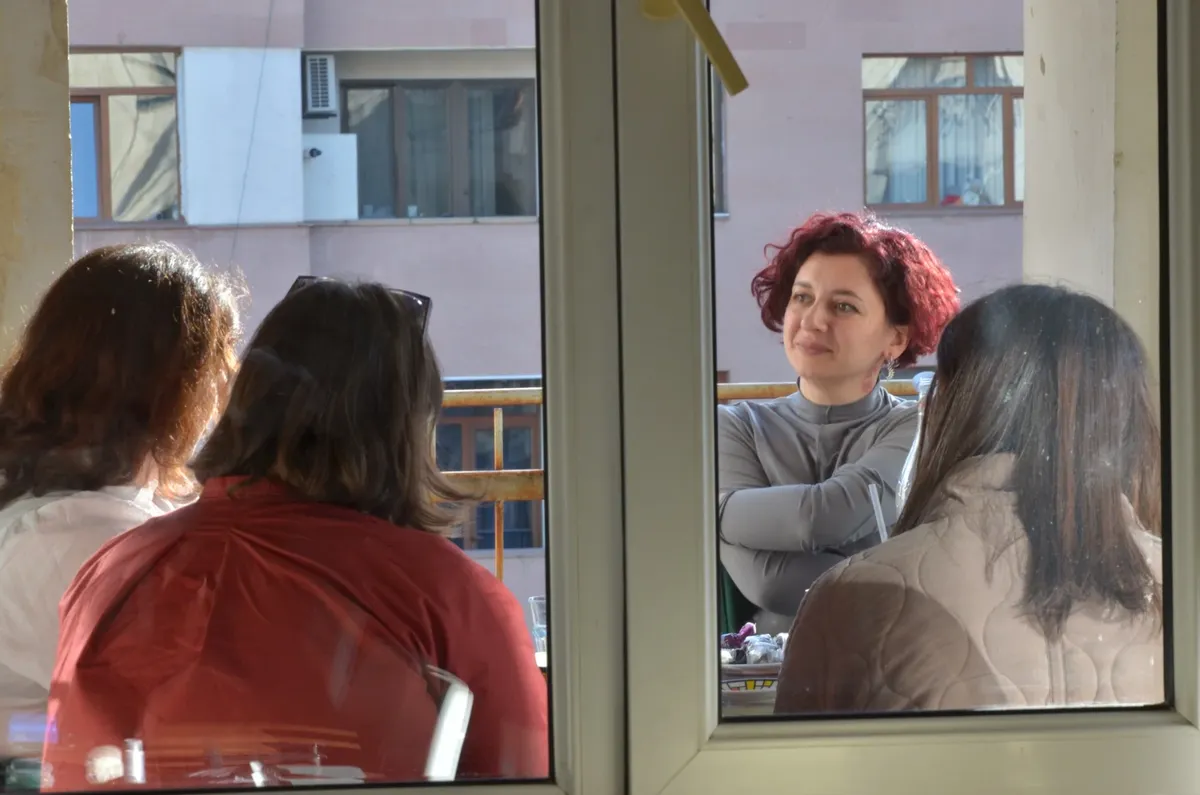
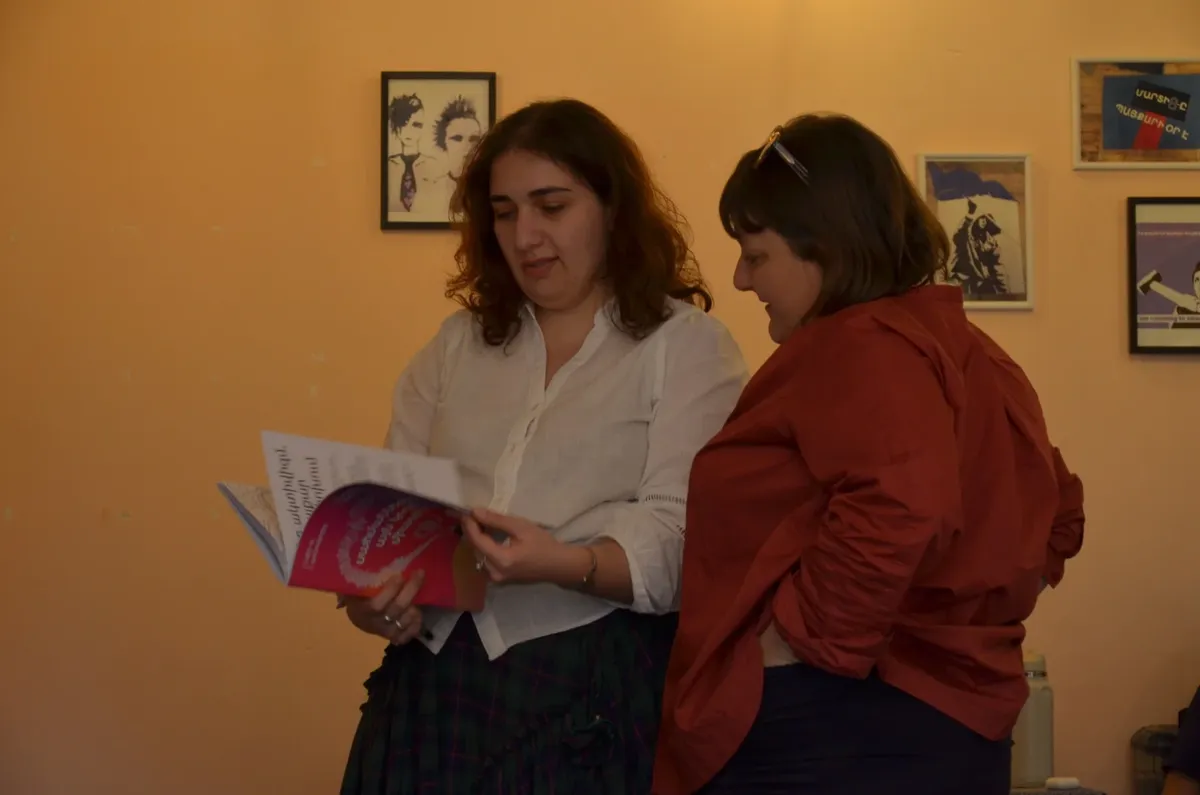
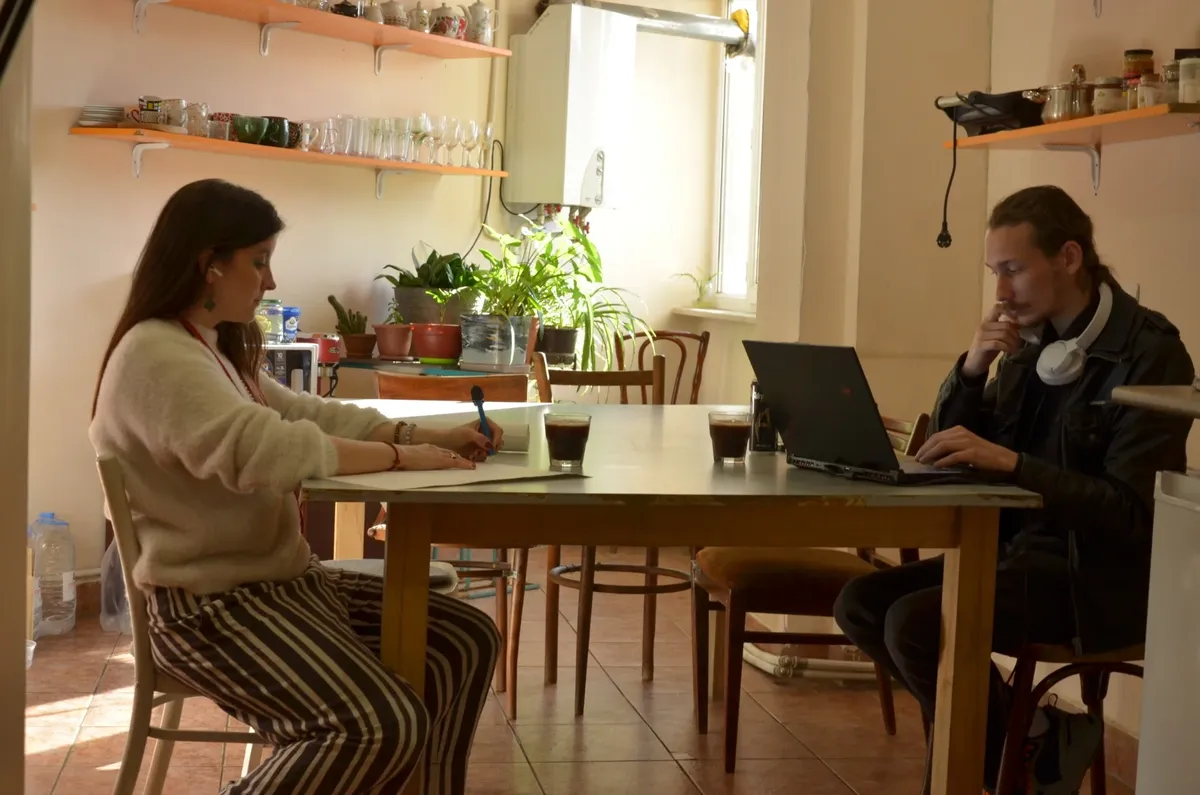
We have been talking for four hours and are noticeably tired of communicating in English. Arpi makes coffee in the cezve, I treat everyone to homemade brownies. The girls go out to smoke on the balcony, and I, left alone, look at the sun-drenched apartment: in the kitchen there is a mini-plantation of indoor plants, in each corner of the large hall there is a soft Soviet chair with a pillow, next to it there is a storage room - a recording studio, posters on the walls are full of phrases: “Long live the Armenian resistance!”, “The struggle for liberation is the struggle for life!” I take Judith Butler’s Who’s Afraid of Gender from the shelf labeled “Feminist Gender Theory,” sit down on the sagging red sofa and get distracted by reading.
Armine returns from the balcony and smiles: “You know what I love about us? We love to reflect. About everything - including well-being. When someone burns out, we talk about it. Someone needs a vacation - please take it.
We try to be as attentive as possible to each other. I think this is one of the secrets why we have been working for so many years and not falling apart, unlike many horizontal initiatives.
Even if we have conflicts - and they are inevitable - we are very open to each other. Our relationship itself is already a huge feminist statement.”
House with garden
In parting, I ask how they see the ideal space for a library. "ABOUT! - Maria perks up. — We are now collecting crowdfunding. We want our own large space with a garden. To have an art studio, a residence for artists from other countries, space for an archive, a gallery.” Armine picks up: “And the pool!” Everyone laughs. “And no neighbors who attack,” adds Arpi.
I remember the film by Shirin Neshat, which began my acquaintance with the library - a mysterious garden in which heroines escape from the patriarchal world. Today I met girls who have been looking for their own house with a garden for ten years - and in the meantime they are gathering in an apartment without a number, packing things every time they move out and unpacking them again, building bookshelves and carefully preserving the voices of feminists.
I walk out of the entrance into the Yerevan twilight, where the bars are full of people who do not know that above them, on the ninth floor, a garden is blooming, created by Armenian women who in the dark hour say “we have no choice but to continue.”
Anna Velvet