
Translated material
Drone instead of a stork
At the Cannes Film Festival they talk about death, lambs and life after life

Still from the film "Lamb in a Box".
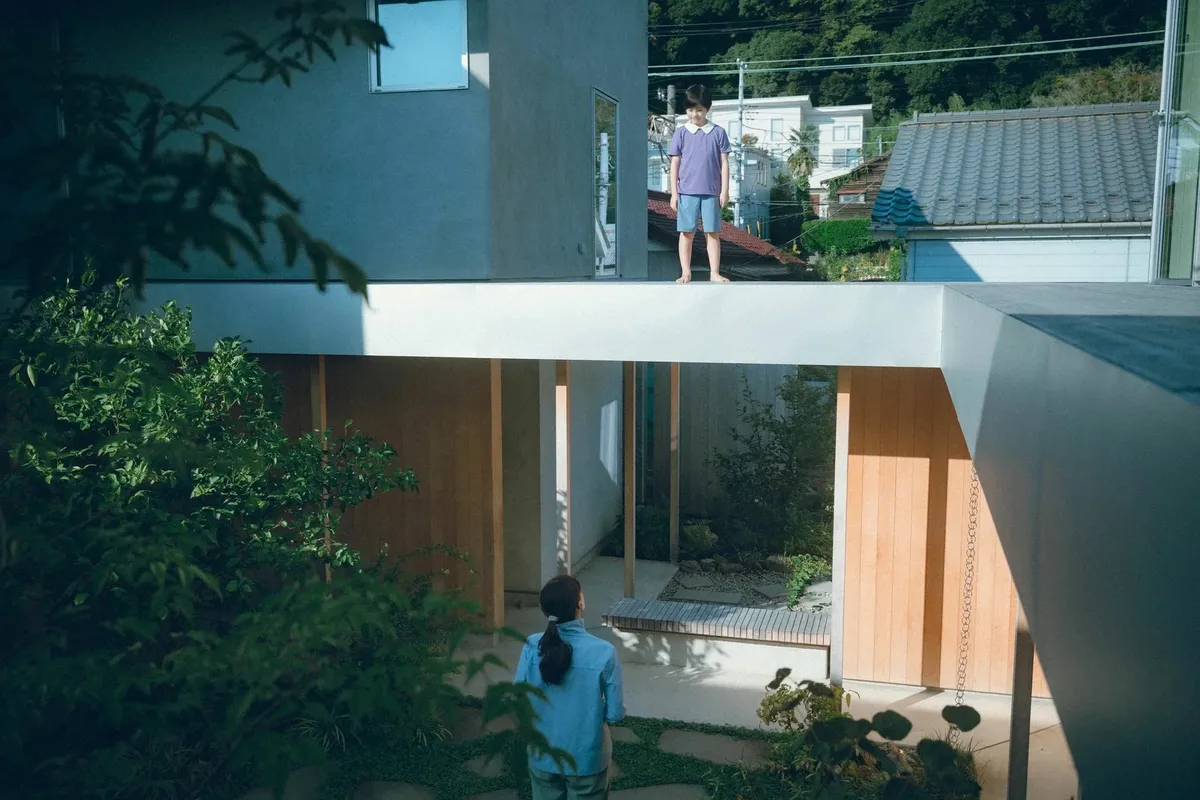
On May 16 in Cannes, the premiere of the film “Lamb in a Box” took place in the main competition program. This is the high-tech utopia of Cannes winner Hirokazu Kore-Eda (“Shoplifters”). A couple, devastated by the tragic loss of their seven-year-old son, enroll in a robotics program that recreates the remains of victims as lifelike "humanoids." Instead of a stork, the delivery drone brings a child “in the image and likeness”, a “little prince” - an android. Kore-Eda, as always, tells a chamber story about a family; fantasy here is just an optic for exploring grief, memory and forgiveness. “Completed” reality helps to cope with loss and trauma.
The story itself is on an eternal topic: about the fact that in the not very distant future, robots will surpass humans not only in the intellectual and physical sense, but also in the moral,
will create their own, more humanistic communities (a big question here). And there will probably be a big “cancellation” of a person - as unnecessary. However, Kore-Eda is optimistic and over-sentimental. For now, humanity and AI are still in a sweet-bouquet period of relations. And the film itself is partly “candy-bouquet”.
After “Moulin,” a French-language drama by the talented Hungarian director Laszlo Nemes (“Son of Saul,” Oscar for Best Foreign Film), which was also shown in the main program, it was a strange feeling. The film is about the legendary French Resistance leader Jean Moulin (the reserved, buttoned-up Gilles Lellouche), who literally drops from London into occupied France by parachute in 1943 to begin uniting the warring factions of the Resistance. But soon, following a denunciation, Moulin is taken to the Gestapo headquarters, he falls into the clutches of Klaus Barbie (it must be the name of the sophisticated monster nicknamed the Butcher of Lyon! As always, a luxurious, but somewhat deliberately theatrical performance by Lars Eidinger, who again played the role of a scumbag), on his hands are the lives of tens of thousands (!) of innocent people.
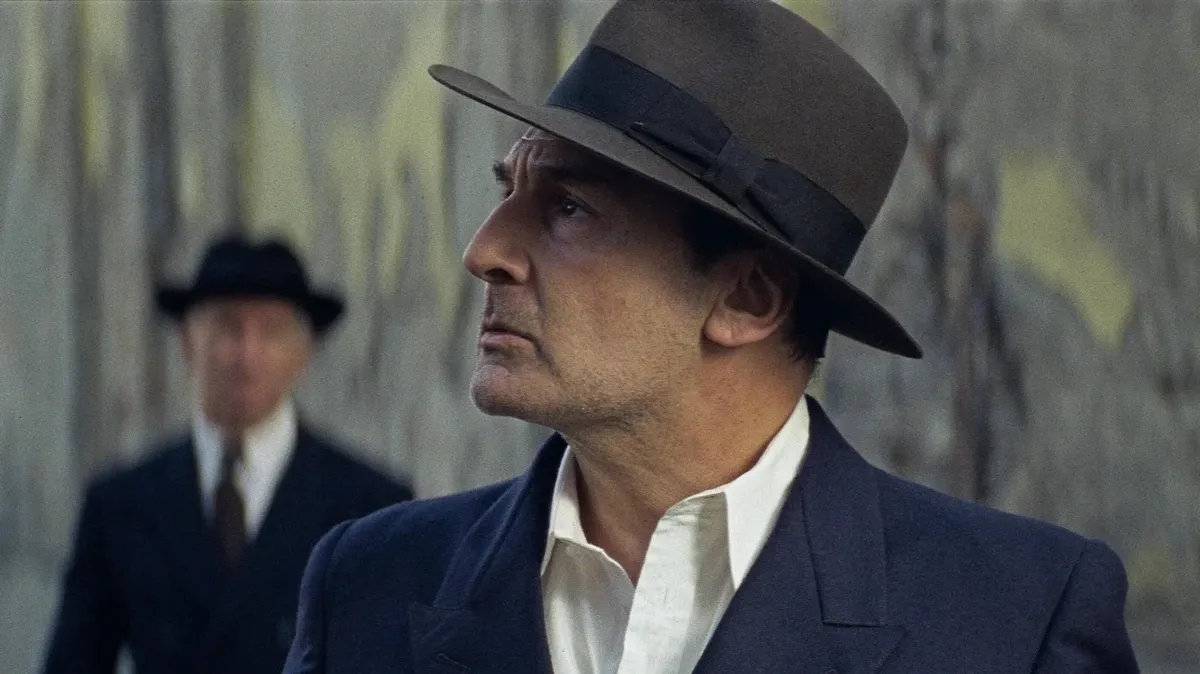
The first half of the film is an undeniable noir: night scenes with warm lantern light, high contrast, anamorphic images, long shadows. Growing tension when every silhouette next to Moulin is perceived as a pursuer. The second part is torture. Sophisticated. Not for the faint of heart. Not only physical, but also moral. Probably all this is fair from the point of view of fact. But it's unbearable. Mercilessly. And predictable.
For me, the highest boiling point of Nemes’ talent still remains “Son of Saul,” also a rather merciless film about a concentration camp, a closed cycle for the production of death towards the viewer. A film that echoes the novel “Benefactors” by Jonathan Littell, written from the perspective of the fictional SS officer Maximilian Aue, one of the performers and implementers of the “Final Solution to the Jewish Question” scenario. But the gloomy inflexibility of that picture, based on biblical motifs, lies in the absence of any desire to “captivate”, “ignite” and even frighten the viewer. Suspense is pumped up by cinematic means slowly, methodically, mercilessly, like the Moloch himself of imminent murder. There was an effect of presence, a feeling of chronicle - like a documentary from the underworld. A report “filmed” through the eyes of the main character.
And here again Nemes shows that the attempt to illuminate the darkness with the light of humanity is doomed from the very beginning, but necessary. Unlike Saul, who tried to remain human in hell, Moulin becomes an image of unprecedented internal resistance.
Having gone through inhuman torture, he shows the world the triumph of the spirit, winning a quiet but absolute moral victory. In circumstances created to erase all life, a person remains. And this is his triumph. Yes, all this is most convincingly shown on the screen, and taking into account the fact that Moulin is an emblematic character, all this is known from the very beginning. However, unlike Son of Saul, the story does not go beyond predictability.
The longest and most surprising film of the festival is Suddenly by Ryusuki Hamaguchi (Take the Wheel of My Car, three prizes at the Cannes Film Festival) - 3 hours 16 minutes. Walks, dialogues, a leisurely pace - everything as the famous “architect of silence” likes. And at the center of the film is a lecture (just under an hour) about the problems of capitalism mired in consumerism, with a graph on a blackboard.
In the poetic short story “Get in the Wheel of My Car,” grief was refracted through Chekhov’s text “Evil does not exist” and recorded how human greed hurts and mercilessly destroys nature. "Suddenly" places philosophical questions in the context of humanities geriatrics. At the same time, the director’s beloved image of the double here loses its alarming symmetry: from a symbol of duality it becomes an instrument of non-ostentatious—genuine communication.
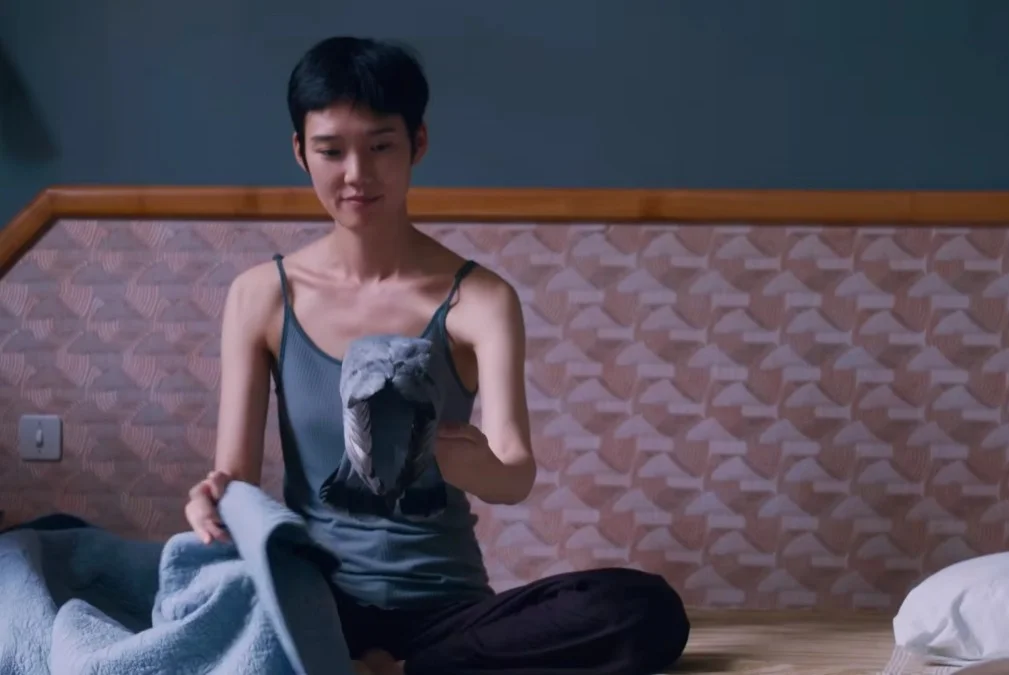
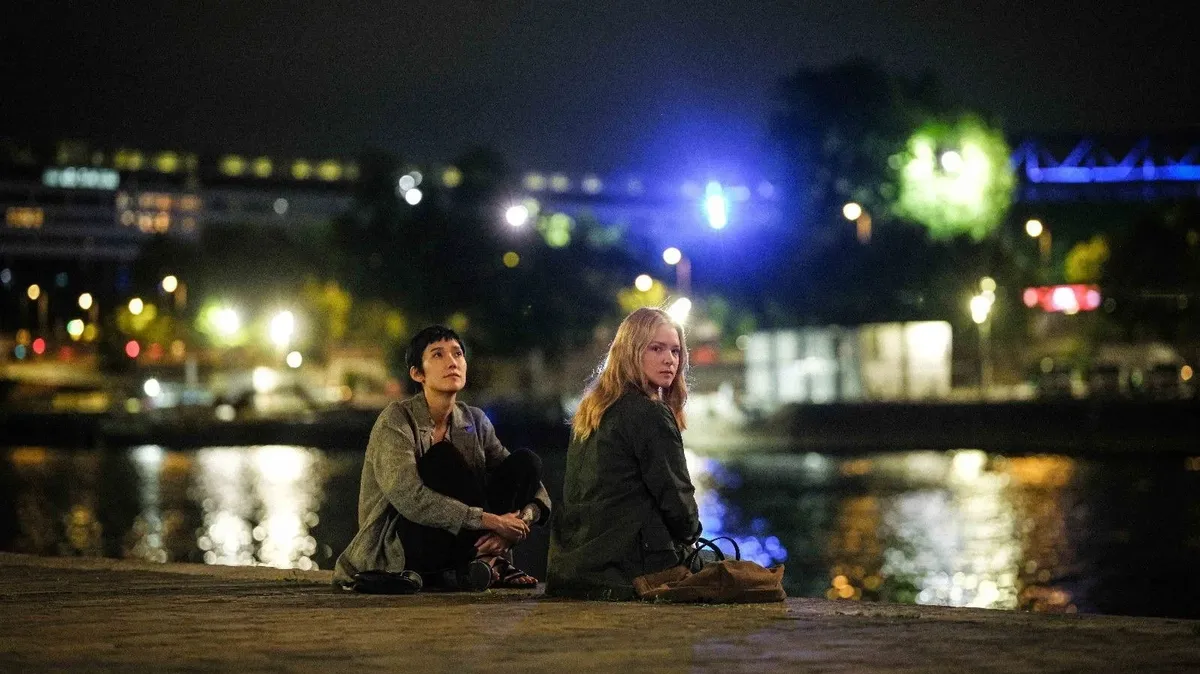
The film is about the “sudden” meeting of two women: Marie-Lou (Virginie Efira) - the headmistress of the private boarding house for the elderly "Garden of Freedom" - and philologist, director Marie (Tao Okamoto), who also stages inclusive performances. A French woman who speaks fluent Japanese and a Japanese woman who speaks fluent French. Marie-Lou is trying to radically change the way she interacts with “residents in a nursing home.” She promotes an approach in which human dignity is not subject to schedules, budgets and impersonal medical standards. However, its idealism and large-scale initiatives are forced to break through institutional inertia: a catastrophic shortage of employees, fatigue and skepticism of staff, and the logic of survival in conditions of underfunding. That is why external support becomes a necessary counterbalance to systemic pressure for Marie-Lou and gives her strength.
And fragile Marie has cancer, stage four. And with the help of theater she speaks out her fears and herself. “I have terminal cancer, but it doesn’t reflect who I am,” she says. “I resist. This is my essence."
Their endless nightly conversation, changing the destinies of not only themselves, but also those around them, is the key and basis of the poetic and philosophical picture.
The semantic foundation and creative tuning fork for the film was the book “You and Me: The Illness Suddenly Aggravates” by Makiko Miyano and Maho Isono. This correspondence between a philosopher and a doctor about love and mortality gradually turns into a study: how a sincere conversation can resist isolation, illness, decay and the very fear of death, which is usually hidden from prying eyes. The philosophical director believes that it is necessary to talk about death, because silence does not protect, but isolates. Dialogue about finitude is not preparation for leaving, but a way to feel life more deeply and rethink values. But above all, continue yourself in something else. This movie shows how talking about death can become an act of love, resistance and hope.
MORE ABOUT CINEMA
Larisa Malyukova runs a telegram channel about cinema and more. Subscribe here .