
Translated material
“He’s your man. He can handle it." Russia is forcibly sending hundreds of wounded to the front. After this they often go missing.
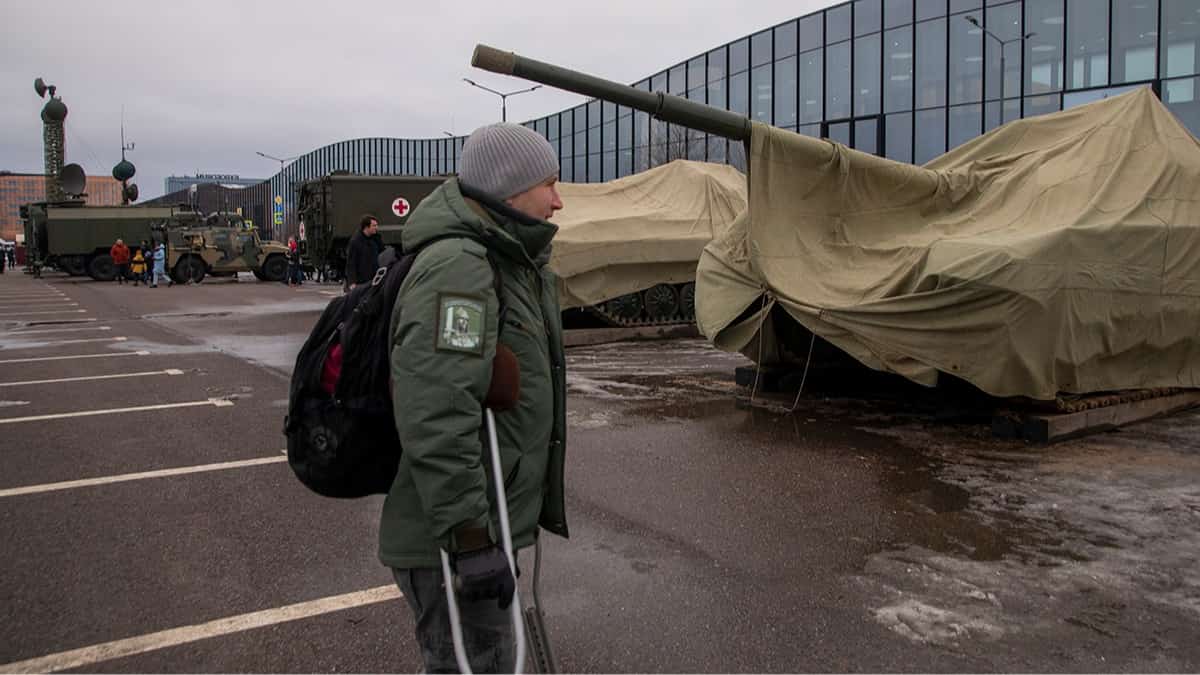
Russia is forcibly sending hundreds of wounded to the front. After this they often go missing.
During the full-scale invasion of Ukraine, hundreds of thousands of Russian soldiers were injured. In a normal situation, severe injury means that a person is no longer fit for military service, but the situation in Russia, which is losing hundreds of thousands of people at the front, is far from normal. Based on messages in telegram channels alone, Veter found several hundred cases where the wounded are taken back to the front even before they finish their recovery: this is a minimum estimate, since only the most high-profile stories make it into the media; in reality there are probably tens of times more such incidents. In most cases this does not happen voluntarily. Military lawyers call this practice illegal, but admit that after 2022 it is extremely difficult to protect your rights in the Russian army. “The Wind” tells how the crippled are sent to the battlefield and whether there is a chance to avoid this fate.
The text was first published on the Wind project website.Ivan D. signed a contract with the Ministry of Defense in May 2023. Before that, he lived in Yekaterinburg, where he worked at a factory on a CNC machine, and decided to join the army to fight “for the Motherland.” In September 2024, he was hospitalized for the first time - with a blind shrapnel wound to his right leg. The man underwent surgery, but he could only move with a crutch. He had a referral for further treatment, but, according to his wife Karina, Ivan was sent on a combat mission instead: “It was said that he, as a man, should come [to the unit’s location].”
In March 2025, Ivan received a second wound - a shrapnel hit his stomach, damaging his left kidney and small intestine; doctors had to remove part of the intestine (the results of the medical examination are at the disposal of the editors). The soldier was assigned category "G", meaning that he is temporarily unfit for military service. From the hospital in Rostov he went on vacation to Krasnodar to continue his treatment.
A - fit for military service; B - fit for military service with minor restrictions; B—limitedly fit for military service; G - temporarily unfit for military service (they are given time for treatment or recovery); D - not fit for military service.
At the same time, the family turned to a lawyer, trying to get a “write-off” - dismissal from military service for health reasons. As Karina recalls, her husband did not want to fight anymore, and the lawyer assured that he would almost certainly be written off. After completing treatment, he had to undergo a second military medical commission (MMC) to officially confirm his state of health and the existence of legal grounds for dismissal from military service.
As noted by Sergei Krivenko, director of the human rights group “Citizen. Army. Right”, there are several difficulties in passing the IVC.
“The first problem is that all this is expert stuff,” he explains. — A person may believe that he has not yet been cured, but doctors think the opposite. The second problem is that now the hospitals are overcrowded, and the level of service for military personnel is very low. They try to patch [the person up] faster, free up the bed and send him back to the front.
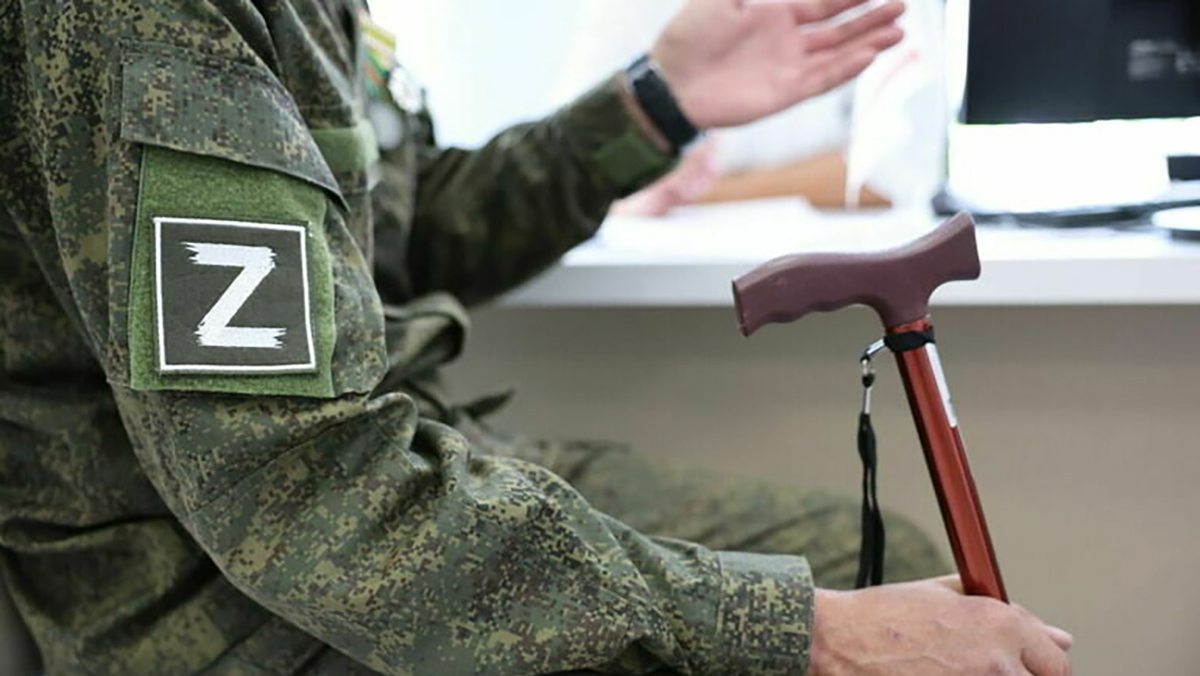
To prove that a military man was not fully treated, you need to undergo an independent examination and after that, with all the documents, go through the IHC again. If it doesn’t work out again, go to court. However, there are nuances here too.
After being wounded, a serviceman may be given leave during which he must undergo treatment. If, at the end of his vacation, he does not return to his unit on time, he may be declared a draft dodger and a criminal case may be initiated - the article on unauthorized leaving a place of service provides for up to 10 years in prison. The case is transferred to the Investigative Committee, which puts the person on the wanted list.
This is exactly what happened to Ivan D. In December 2025, police from the Ministry of Internal Affairs of the city of Enakievo, Donetsk region, came to pick him up in Krasnodar - the reserve battalion of his military unit was located there.
“I was at work, he was at home with the children,” recalls his wife Karina. “He wrote to me that someone knocked on our door and pulled the handle. I told him not to open it to anyone.
When I returned home in the evening, two policemen were standing at the entrance with his identikit.
I ask: on what basis? And they say: “He is registered with us.”
It turned out that Ivan was given the status of SOC (who left his unit without permission). The police picked him up and took him to Yenakievo to the reserve battalion. There he was sent to a doctor, who gave Ivan a referral to undergo VVC at the city hospital in Gorlovka. However, after a couple of days, he and three other men were still sent to the combat zone in the direction of Pokrovsk.
“The longer a person is absent, the worse part of the [criminal] article becomes,” explains Artem Klyga, head of the legal department of the Conscious Objector Movement. “Therefore, if you want to resign, then after leaving the SOC you need to immediately—within two to four days—come with a lawyer to the investigative department so that the charge is minimal. Then petition against the suspension of the criminal case, this will give the opportunity to go through the IHC again. This is a working scheme if there is an understanding that there is a really serious health condition.
It is difficult to pass an independent military military commission in a combat zone, notes Klyga. It is unlikely that medical experts at a military unit will classify him as “D” - unfit for military service.
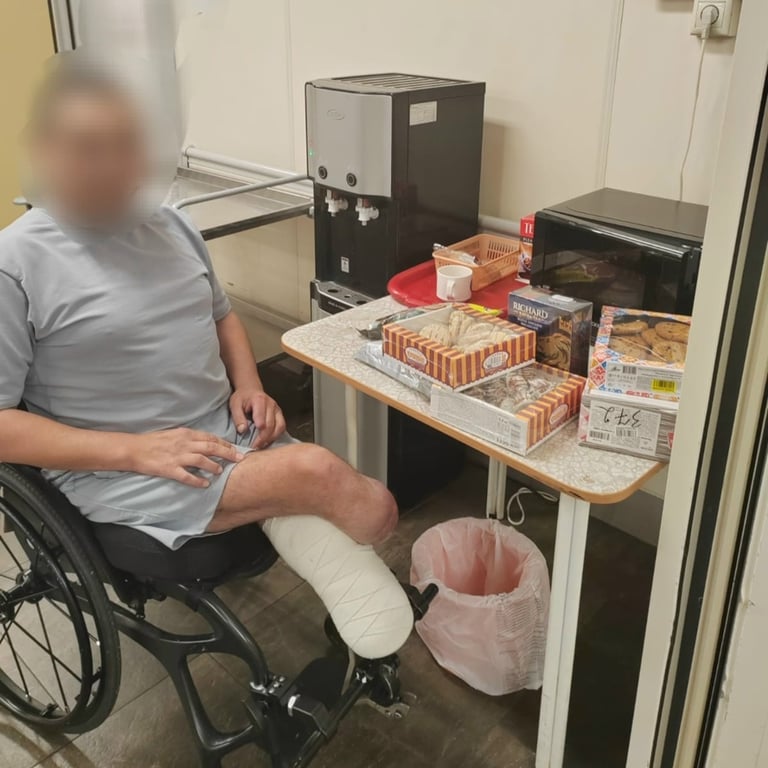
“But I’m glad that you can go through several military examinations, including at the place of residence at the military registration and enlistment offices, if a person went on vacation. That is, now it is not necessary to return to a military unit and, in conditions of hostilities, wait for the commander’s decision to receive a referral to the Military Military Command,” the lawyer adds.
However, Ivan was unable to defend his rights, despite the fact that his health condition, it would seem, clearly did not allow him to fight.
— He has three hernias along the seam [on his stomach]. A second operation is needed on the leg,” says Karina. — He walks with a crutch, how will he run away from drones? I told the political officer all this, showed all the documents and photographs. But he only answered: “He’s your man, he can handle it.”
After that, Ivan no longer contacted me. He has been listed as missing since December 14, 2025. His wife is now seven months pregnant and has an appointment with the Presidential Administration in June. Before that, I went to Moscow to the military prosecutor’s office and the Investigative Committee to get at least some information about my husband, but to no avail.
“They tell me: “This is a military secret,” Karina is indignant. - That is, how to sign a contract - they need two minutes, but how to find a fighter is a military secret.
According to Artem Klyga, after February 2022, it is generally difficult to talk about the processes in the Russian army from a legal point of view:
- I can describe to you how it should be. But then you should go to any telegram news channel, and there will be a lot of stories that show that the law does not work.
Indeed, news about seriously wounded people being sent back to the front before completing rehabilitation appears very often. Since 2022, Veter has found 319 such cases in telegram channels alone. Of these, 218 say that the wounded man has already returned to the front, while the rest talk about plans or threats. The sample included both cases where it is known that people are forced to return to the front (more than 80% of them), and situations where a wounded person goes to the front without completing treatment or having a disability, voluntarily. This is a minimum estimate; in practice, there are probably dozens of times more such cases.
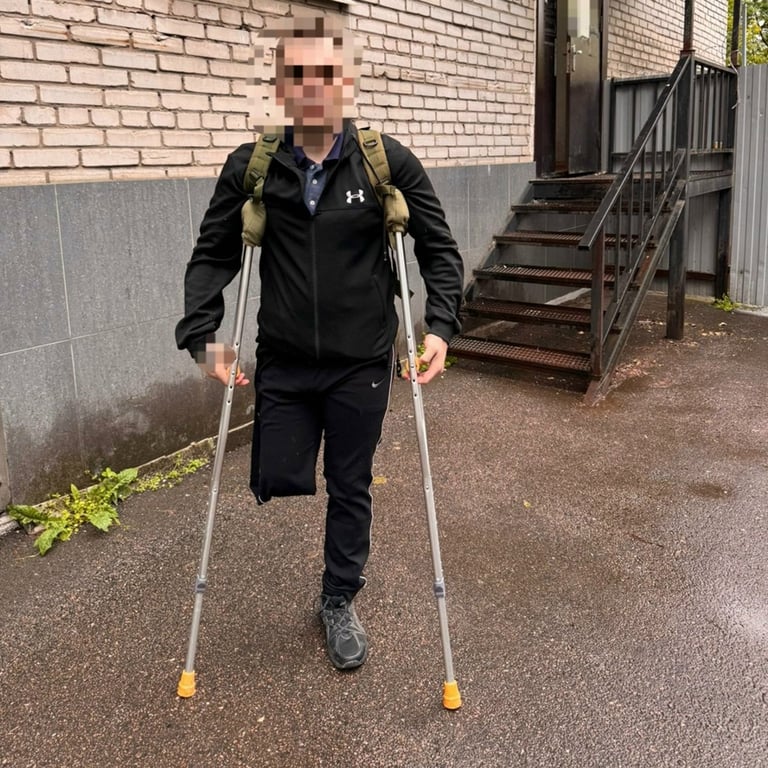
So, for example, in 2024, Dmitry Mishin from Krasnoyarsk was sent back to the front, whose hand was “blown off by shrapnel.” At the Military Military Command, Mishin was classified as “temporarily unfit” and given leave due to injury.
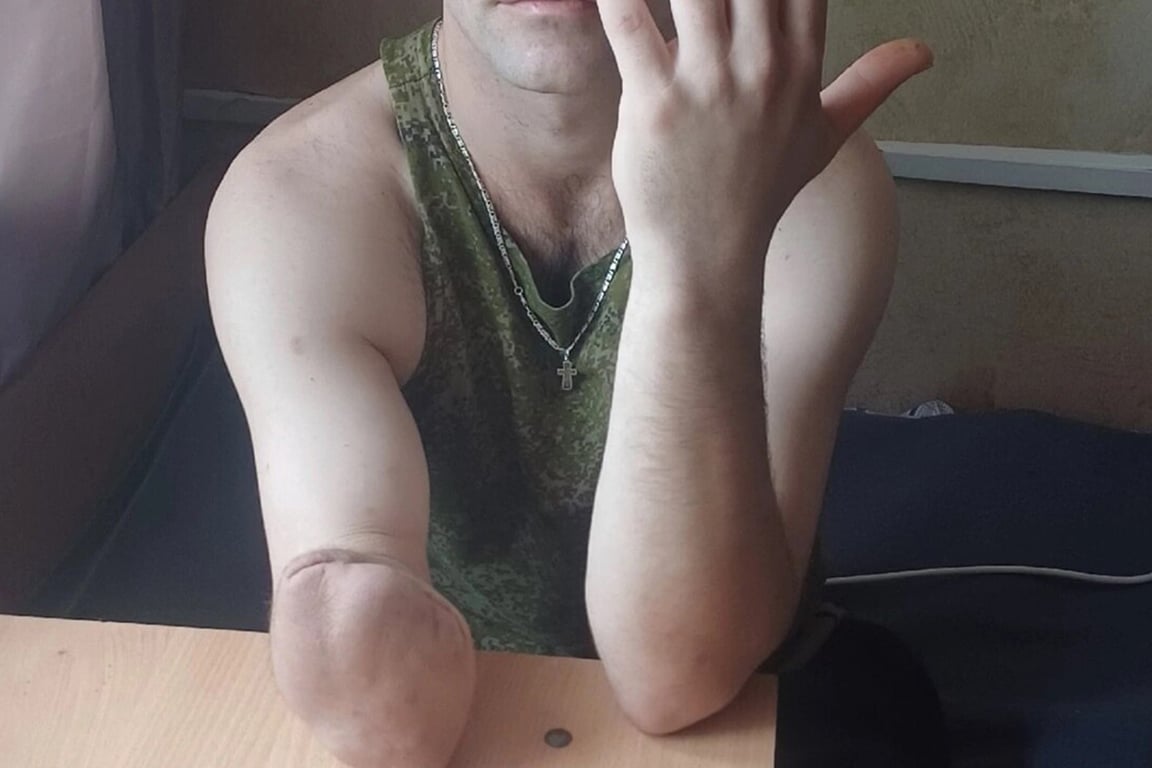
“Will I grow a new arm during my vacation, or what?” - Mishin was indignant. He soon learned that he, like Ivan D., had been reported to the SOC and a criminal case had been opened. The man was taken to a military unit, after which he stopped communicating.
Some news reports immediately report a group of wounded people being sent into battle. At least 14 military personnel from the Chelyabinsk region, who were preparing to be “written off” from the army due to injury, were sent for an assault in August 2025 in the Novoselovka area of the Volnovakha district of the Donetsk region. Some of them had injured arms, some were on crutches, some had a plate in their head. “Veter” tried to contact these people, but messages on social networks remained unread.
32-year-old Daniil K. entered into a contract with the Ministry of Defense in January 2024 - according to his wife Victoria, after a summons arrived at his place of registration in Magnitogorsk. Daniil himself lived with his wife in Gorlovka, Donetsk region, and voluntarily went to the local military registration and enlistment office “so as not to be put on the wanted list.”
In the summer of 2025, Daniil was sent on a mission near Pokrovsk, where he came under fire from Baba Yaga, a Ukrainian heavy drone. The result was multiple gunshot shrapnel wounds, as well as fractures of the left humerus and left ischium. Seriously wounded, Daniil crawled to the nearest field orderly for three days. Due to the heat, the legs began to rot.
The soldier was then evacuated to Rostov-on-Don, and from there he was transported by helicopter to the Murmansk region, where he spent several months in naval hospitals. As a result of the examinations (the documents are at the disposal of the editors), it turned out that Daniil’s vertebrae had also shifted, and the traumatologist forbade him to lift weights, and also warned that the pelvic bone would not fully recover. He was given category "G" - temporarily unfit.
“We thought that they would write him off, because he could just sit in a wheelchair at any moment,” recalls Victoria.
Returning to Gorlovka, Daniil went to the temporary deployment point in the village of Ilyinka to undergo the Military Military Examination: he hoped that he would be declared unfit. A couple of days later, on December 22, 2025, soldiers from his unit arrived there and took Daniil away.
“He wrote to me that he was being transferred somewhere, but he didn’t understand where. They weren't allowed to call. Then about an hour and a half passes, he calls from some completely different number, and I remember only one word: “Sturma.” That was the last time I heard him,” says Victoria.
The political officer did not answer her calls and messages. The woman started calling the unit's hotline. On December 31, she was told that her husband was in service and active. But when she dialed January 7, he was already listed as missing.
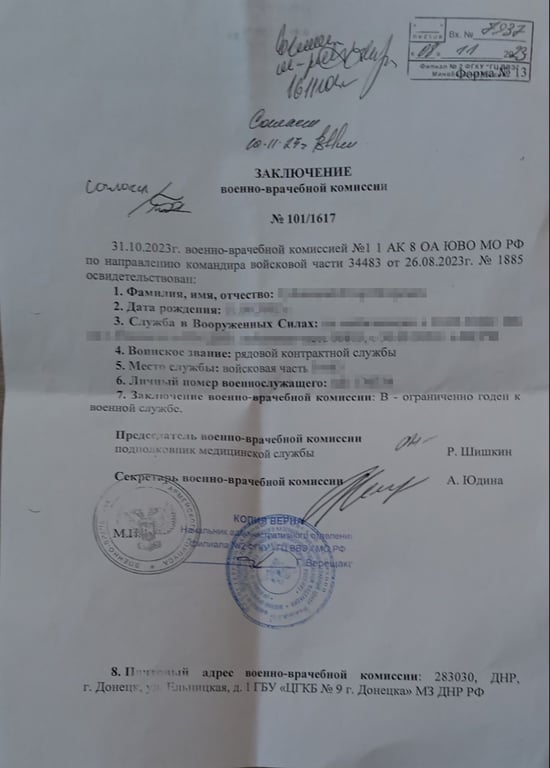
“That is, he was simply sent for “zeroing,” concludes Daniel’s wife. - Because where did they take them with crutches, broken and broken? It is clear that they will not return from there.
There was no news from my husband for four months. At the end of April 2026, in response to her next message, the political officer called back and said that Daniil was most likely dead - but they could not evacuate his body while the fighting was going on.
Director of the human rights group “Citizen. Army. Right" Sergei Krivenko believes that the mass sending of the wounded to the front is the result, in particular, of the rigid bureaucracy that existed in the Russian army even before the full-scale war in Ukraine.
“In the army, everyone only looks at documents, certificates,” explains the expert. — If there is a certificate from the military medical commission that he has undergone treatment and is fit, then that’s it. Nobody is interested in the real situation. In addition, there is very little control over this now. Even if the category is “limitedly fit,” they can still be sent to attack aircraft or anywhere else.
Therefore, the only way to avoid military service, according to Krivenko, is resistance:
it requires the active position of the serviceman himself, who must contact the military prosecutor's office and undergo an independent examination.
— In a good way, of course, the prosecutor’s office and the military investigation department should protect the rights of servicemen. But now this is not happening, they are mainly concerned with carrying out the will of the state, with coercion. Therefore, saving drowning people is the work of the drowning people themselves,” the lawyer concludes.
The reluctance of the military to send the wounded for examination may also indicate that the authorities want to save on payments. It is the Military Military Commission that makes decisions on whether military trauma has become the cause of injuries and illnesses. According to the law, military personnel who have received a military injury may qualify for several payments, including a one-time payment (about 3 million rubles), monthly payments and insurance. But, according to the observations of “Vetr”, which studied military complaints on social networks, this is one of the most common problems: it is quite difficult to prove to the Military Military Commission that the injury was sustained precisely because of the war, and not just during it.
Artem Klyga believes that the reason for the situation with the wounded may be the reluctance of the Russian authorities to create a precedent, a mechanism that allows one to get fired.
“In the army, it’s not that it’s beneficial to have a person who, for example, doesn’t have an arm or a leg,” he reasons. “But it is unprofitable to create at least some illusion that it is possible to be freed from military service duties.” So that people do not have the motivation to fight for their rights.
Yulia Myagkova