
Translated material
Expose the imperial superiority complex. PEN Languages of Russia is a new literary organization challenging the hegemony of the Russian language. Ilya Azar spoke with the founders

PEN Languages of Russia is a new literary organization challenging the hegemony of the Russian language. Ilya Azar spoke with the founders
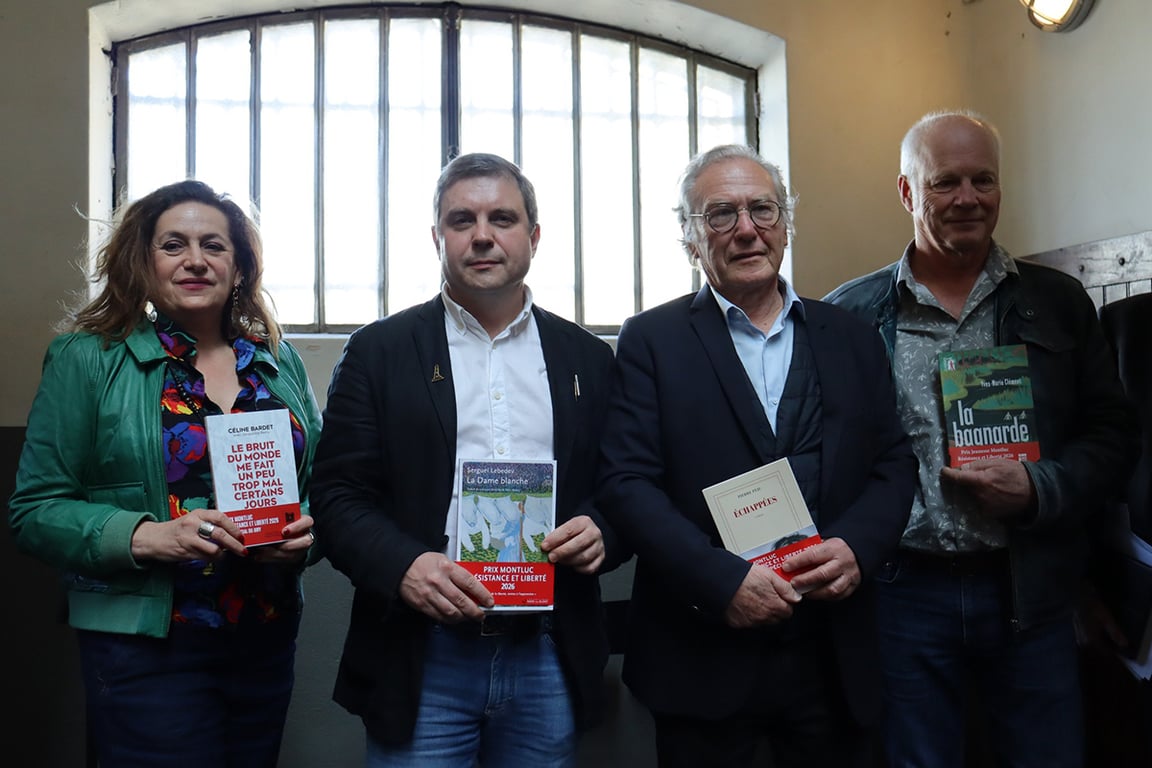
One of the most translated Russian-language writers, Sergei Lebedev, after the start of the war in Ukraine, together with his colleagues, came up with the idea of making PEN (a network of human rights NGOs uniting writers), but not a Russian speaker or a Russian in exile, but PEN Languages of Russia , which he himself calls “an innovative idea.” The project will help people learn the languages of the peoples of Russia and write in them.
Journalist Ilya Azar spoke with Lebedev and the head of the new PEN, Tatar writer Dinara Rasuleva. They are confident that their project will help “break the mono-greatness of the Russian language and Russian culture”, and will also contribute to the understanding that the peoples of Russia “were connected not of their own free will, but because of violence”, so that in the future “it will be easier to steer towards a truly federal model.”
— How did your project come about?
Sergey LebedevwriterIt has a rather long backstory: in 2016, a cultural exchange project appeared between young writers and writers, translators and translators from Russia and Sweden. We met several times in two countries and published brochures devoted to the development of authoritarian tendencies in Russia.
Quite by chance, our first post-Covid online meeting was scheduled for the morning of February 24, 2022. Well, can you imagine the mood in which everyone met?
“It’s strange that we met at all.”
Lebedev : It seemed important to see each other, to look into each other’s eyes against the background of what was happening. At the same meeting, it was decided that the Russian part of the group would think about whether it needed some other, more formalized project. We started looking for people - we invited Dinara Rasuleva, then [feminist anti-war resistance participant, writer] Dasha Serenko, [journalist] Elena Kostyuchenko, [writer] Nikolai Kononov, [director of Komi Daily, activist of the Komi people] Lana Pylaeva and others appeared. The question was: do Russian writers and writers in exile need an organization, do they need some kind of interface to interact with the world literary community?
Quite quickly it became clear that we should not reinvent the wheel and call ourselves some kind of free artists, but create a PEN center. After all, in the global cultural context, everyone understands what it is and what it serves.
The PEN Center brings together writers, journalists, poets and translators and is associated with the international organization PEN International, created in London in 1921. The abbreviation PEN is derived from the English words poet (poet), essayist (essayist) and novelist (novelist) and means “pen” or “pen”. PEN centers around the world support authors who face censorship and persecution by authorities. PEN's work is based on the principles enshrined in the charter. One of them is that literature must maintain connections between peoples even in times of conflict and war. The organization advocates freedom of speech and the free exchange of information. PEN members emphasize the importance of mutual respect between cultures and opposition to hatred and discrimination.
In February 2024, we met in Berlin and realized that we were not doing exclusively Russian-language PEN or Russian PEN in exile, but specifically PEN of the languages of Russia. This was quite an innovative idea!
- In general, anyone can do PEN?
Lebedev : The international PEN Center has a special, God forgive me, subcommittee for the creation of new centers. Over the course of a year, we were “trained” on how to create a center, what documents were needed, and in September 2025, at the congress of the International PEN Club in Krakow, we were voted for.
— The Russian PEN Center is excluded from the international structure, but continues to operate in Russia, although it seems to consist exclusively of supporters of Putin and the war in Ukraine. There were also PEN-Moscow and the St. Petersburg Russian PEN-club. Now yours will replace them all?
Lebedev: Each country can have up to five PEN centres. The old Russian PEN who went crazy and turned into Z was eliminated. PEN-Moscow is part of the international PEN, and the St. Petersburg one was declared a “foreign agent” and, accordingly, dissolved itself .
The Russian PEN Center was created during perestroika, in 1989. Its first president was the writer Anatoly Rybakov, and from 1991 to 2016 this position was held by the writer Andrei Bitov. Public squabbles at the Russian PEN Center began in 2013, when Lyudmila Ulitskaya became the organization's vice president and emphasized human rights activities, including statements in support of people and organizations persecuted by the authorities. Many did not like this, and after signing a letter in October 2015 against the destruction of the Moscow Library of Ukrainian Literature, the leadership of the PEN Center began a decisive struggle against liberalism within itself. In 2016, journalist Sergei Parkhomenko was expelled from the PEN Center “for provocative activities.” After this, Boris Akunin, Vladimir Sorokin, Svetlana Alexievich, Lev Rubinstein and others left the PEN Center. In the same year, the writer Yevgeny Popov became the president of the PEN Center, who, in particular, signed an appeal from writers in 2022 in support of Russia’s invasion of Ukraine. In 2018, Popov registered a new organization with the same name, which still exists, and the original Russian PEN center was liquidated in December 2023 by the Ministry of Justice.
I don't think we can replace everyone and everything. There are probably neither resources nor coincidence of goals for this. I don’t think that our goals will be interesting and acceptable to everyone, so it may very well be that someone will want to create a classic Russian PEN center in exile. There is a procedure for this and the road is open.
— Let’s ask Dinara then, what are the goals of the PEN Languages of Russia project? The ones that not everyone will like!
Dinara RasulevawriterWhy?
- That’s how I understood Sergei.
Rasuleva: To answer this question, I’ll first tell you how I came up with the idea that it is important to focus on non-Russian literary languages, that is, the languages of the indigenous peoples of Russia, and not only the small ones.
I have been writing and speaking Russian all my life, although my native language is Tatar, and in my childhood it existed in parallel with Russian. But I was born in Kazan, where most schools and all university departments except those that focused on teaching the Tatar language were in Russian. Therefore, when I went to school, the focus switched to Russian, and Tatar remained in the family bubble, in which I communicated with relatives when I went to their village.
When I started writing stories in high school, it immediately turned out to be in Russian, and it was as if I had no internal choice in what language to write. Simply because everyone around me communicated with each other in Russian, including my friends, even those who, like me, were Tatars.
Russian was the default language, so later, when I started writing poetry, they were also in Russian...
And so at the end of 2014 I moved to Berlin.
— For personal reasons? Not for political reasons?
Rasuleva: No, why not! I have been planning to emigrate from Russia since 2012 due to the political situation in the country. My dad has always been politically and historically educated, and from childhood he instilled in me the idea that it was necessary to leave. He himself did not have such an opportunity - we lived very poorly.
But in 2014 I found an opportunity to do this and left.
While I lived in Tatarstan, my Tatar identity was invisible, if only because the number of Russians and Tatars there was approximately the same. In Berlin, when I say that I am from Tatarstan, people from Europe or the USA are surprised and clarify: from Kazakhstan? For them, Tatarstan doesn’t seem to exist, so it’s easier to say that you’re from Russia. But when you say this, you are automatically mistaken for a Russian, because for everyone this is a natural association, and many have no knowledge at all about the other peoples of Russia.
This is where I started asking questions about identity, including language. I thought: “Why have I been writing all my life not in my native language, although I know it?” It’s just that Russian has always occupied a huge space. For example, since childhood I read a lot of books, but most of them were in Russian and English, and only children’s books were in Tatar. When I began to grow up and became interested in Banks and Palahniuk, it turned out that such literature was almost never translated into Tatar.
Despite the fact that we were a Tatar family, our huge bookcase contained books only in Russian.
What is an identity crisis in emigration and why is it especially strong in the third or fourth year? Psychologist tells
What is an identity crisis in emigration and why is it especially strong in the third or fourth year? Psychologist tells
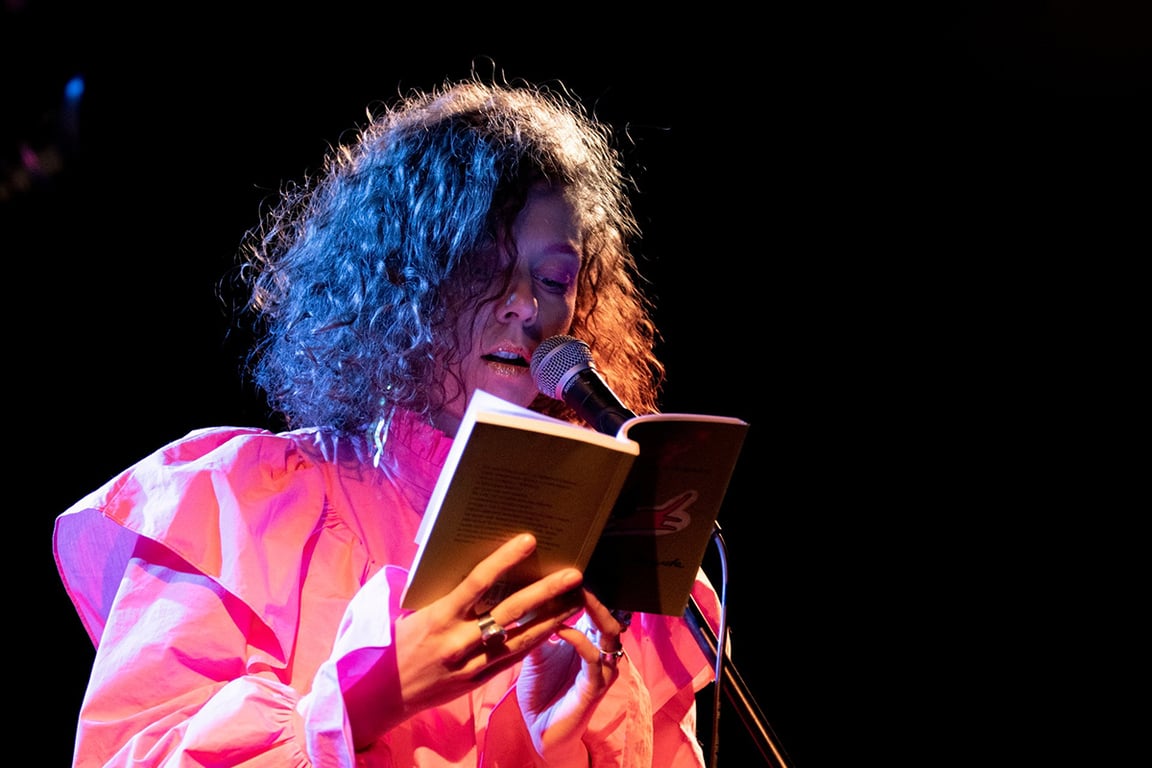
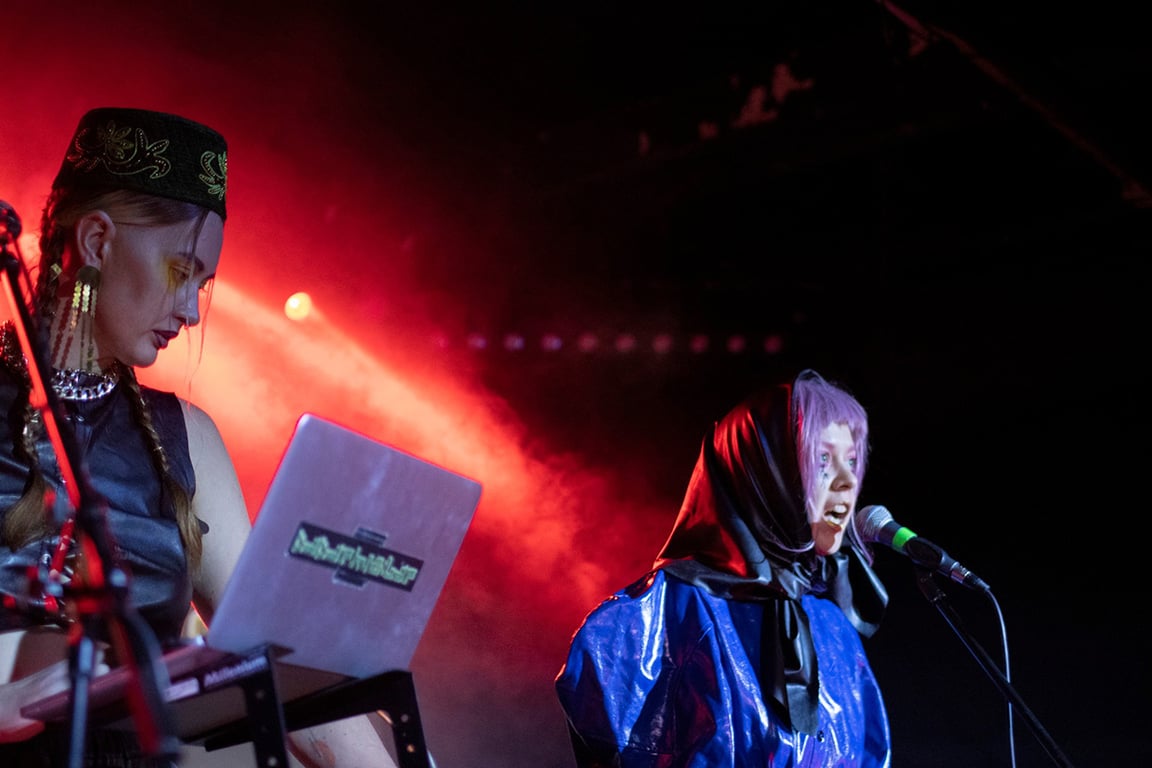
In 2015–2016 in Berlin, lines in the Tatar language began to appear in my texts for the first time. When I first performed there with a poem containing Tatar words, I realized that all my life I could not afford to say something in the Tatar language in front of my Russian-speaking friends. There was some kind of internal shame, or something, as if this was something prohibited...
I became interested in studying the topic of language and its loss in more detail, and gradually I came to the conclusion that I launched Lostlingual - an experimental poetry project about the loss of language, within the framework of which I am trying to start writing in Tatar again.
Over the several years that I was involved in the project, I met a lot of people with similar stories. They were from different countries and with different levels of proficiency in their native languages - from zero to perfect.
But we were united by the fact that the Russian language replaced our native languages. And even those of us who spoke our native language well wrote in Russian.
Actually, what united us was that we spoke Russian among ourselves.
— I visited Tatarstan after your departure, including writing about the problems of the Tatar language. And then your like-minded people began to appear in the republic, and I don’t know whether they translated Palahniuk, but they definitely began to revive interest in Tatar among the masses. Didn’t it seem to you then that it would be better to return and do this in Tatarstan?
Rasuleva: Yes, after my departure, the rise of Tatar culture and language began in Tatarstan, but not from the literary side. Modern musical groups began to appear - AIGEL, Juna, USAL, Taraf, qainar - singing in Tatar in modern genres, which did not exist before when I was a teenager. At that time, Tatar music was only pop, so it was very far from me as a teenager who wanted to listen to alternative rock music.
And it is still flourishing, new groups in the Tatar language are appearing. The MON Theater has also appeared, which stages performances in Tatar and Russian. A huge number of fashion designers have appeared who are reinventing Tatar ornaments and Tatar fashion.
But literature is the most complex cultural aspect, because to listen to a song in the Tatar language, you don’t have to know it, but in order to read a novel, you need a completely different level of language, but also a different infrastructure.
About returning to Tatarstan. It doesn’t seem to me that in our virtual time, in order to study a language, you need to be in a certain territory. In addition, many Tatars live in Berlin, and I found like-minded people with whom, for example, we created the group TATAR KYZ:LAR in 2020. There are even more of those who started in Tatarstan, but left after 2022, for example, Aigel Gaisina ( co-founder and vocalist of the group “AIGEL” - Ed. ). Remember the Tatar writer Gayaz Iskhaki, who published the Milli Yul newspaper in Tatar in Berlin at the beginning of the 20th century.
- Yes, now, it seems to me, young people don’t read novels at all, they only listen to music and watch Netflix!
Rasuleva: In my circle they still read a lot of novels. Maybe we are talking about different novels? In my understanding, a novel can be either 100 or 200 pages.
- This is without a doubt! But people generally read less. You probably paid attention to this?
Rasuleva: You know, no. Because I exist in the literary circle...
Free libraries, closed clubs, prohibited collections. Irina Kravtsova talks about Russian book partisans
Free libraries, closed clubs, prohibited collections. Irina Kravtsova talks about Russian book partisans
“The task, it seems to me, is to go beyond this circle to where people, as I’m telling you, have stopped reading...
Lebedev: Can I join in? Do you know Olgerd Bakharevich?
- To be honest, no...
Lebedev: This is a Belarusian writer who recently received a prize from the Leipzig Book Fair. Well established european author. A person who also works with the topic of acquiring and losing language. When we talked to him 10 years ago, he was one of the few at the European level who wrote large books in Belarusian. It looked hopeless.
— I know Viktor Martinovich, and he also wrote in Belarusian.
Lebedev: Maybe there were two or three of them. Olgerd then told me: “Seryozha, you understand that you and I can write equally high-quality texts, but your text is 20 times easier to translate, because you write in Russian, for which there is infrastructure.”
So, in 10 years the Belarusian language has developed an infrastructure. From the effort of a few people, translators emerged, as well as publishing houses in Europe who are interested in texts written in Belarusian. Contrary to the general trend, which, indeed, is that the reading field is shrinking, the Belarusian language, which has received a second wind, is experiencing such a flourishing.
— The Belarusian language may be struggling, but we are talking about the languages of Russia. How are they doing?
Rasuleva : You interrupted me, and I was approaching this. After the story about Lostlingual, people from Belarus also approached me, but many were from Russia, representatives of indigenous peoples. I, like my Belarusian ( Rasuleva asked me to write this way. - Author's note ) friends, see a very clear parallel. The replacement of the language with Russian, Russification, the lack of infrastructure to support literature - it’s all similar, everything has something in common.
— So, your PEN center will be engaged in repeating the path of the Belarusian language in exile, do I understand correctly?
Rasuleva: Wait! But yes, including. What other structures are missing? There are a huge number of different writing courses, workshops in Russian, and there are awards for books in Russian. All this now exists outside of Russia, because many publishing houses have opened in exile.
— This is understandable, because many people read in Russian...
Rasuleva: Yes, yes, absolutely, but therein lies the rub. Let's say I want to start writing in my native language. And although Tatar is the most widespread language in Russia after Russian, even in it it is very difficult to find writing courses. There are several publishing houses in the Tatar language, but they are concentrated in Tatarstan, and they do not publish books, for example, of the type I write - feminist prose or experimental poetry - because they are not interested in this kind of literature. Things are even worse with other languages.
Lebedev : In fact, the first story is about representation, because the space of non-Russian languages and cultures in Russia is not visible to anyone from the outside. People from the international PEN club came to the formal founding of our organization and admitted that they thought this was a story about the languages of the former Soviet republics.
For them, the internal space of Russia is completely closed, painted with only pink paint, like in an atlas. The very fact of representation is important, that Russia is not a linguistic monolith, that there is a diversity of languages and cultures here.
The second is about cross-border connections, because many internal Russian languages - the same Finno-Ugric group - have much more in common with languages outside the Russian Federation than with Russian.
And PEN itself is a large network that also connects us with the global South, which still sees Russia as a great bastion of anti-colonialism and anti-imperialism, so we will have the opportunity to engage in political education. After all, people’s eyes, again, pop out of their heads when they understand what the real state of affairs is in Russia.
- What are you talking about in this case?
Lebedev: About the fact that for the political leadership of the Russian Federation, denationalization and Russification is a completely understandable political agenda. For me, for example, it was an absolute wake-up call when in 2019 the Udmurt scientist Albert Razin burned himself , protesting against such a language policy .
It is clear that our strength is not enough to turn everything around, but this is a long game. If you try to build an infrastructure at least for those languages in which literature is still possible - and it is possible, as knowledgeable experts say, in about eight-nine languages - then this will still change the picture, including the political one.
Because the national formations that exist within Russia do not have political subjectivity, and language remains their last resort and method of political existence. Therefore, I think that we will move in this direction.
We have a specific first project - an anthology of modern texts in the languages of Russia, which is focused on the topic of acquiring and losing language. We are going to make a bilingual publication with the simultaneous publication of these texts in the native language and in English, thus creating a minimal but representation of these languages and cultures.
How the languages of the small peoples of Russia during the war turn into a voice of resistance
How the languages of the small peoples of Russia during the war turn into a voice of resistance
— Does anyone even need this inside Russia? It seems that even in the national republics in Russia, people want to integrate their children into existing social elevators and consider education in their native languages unnecessary. There are problems with the work of native language classes since it ceased to be compulsory.
Lebedev: This is what Razin protested against!
- I remember, I remember. There is no grassroots request, unfortunately.
Rasuleva : Absolutely, unfortunately, but yes, it is so. In many schools, even the small number of parents who wanted their children to learn their native language were often not given this opportunity, because for the sake of a few people the school either did not hire a teacher or could not find one. Because in Kazan, for example, back in 2016, the faculty training teachers of the Tatar language was closed.
And my brother, by the way, also didn’t choose Tatar language lessons for his son, because it’s easier.
I am very grateful to my mother for giving me Russian, because thanks to this I can, for example, speak to you now. But this does not exclude a second language. And this is exactly what young people understand now. That is, the answer to your question is that it is the generation younger than us... what is it called?
- Zoomers!
Rasuleva : Yes, it’s the 20-year-olds who are interested in their native languages! Instagram has a huge number of public pages with memes in native languages, a lot of reels - both educational and simply made in native languages, which has never happened before.
Among my friends there are people whose parents never taught their native languages, but they are now trying to find Tatar courses themselves. There are several different platforms where you can learn Tatar, but other languages, such as Tuvan, are much worse at this. But, nevertheless, people themselves find teachers, tutors and learn their native languages, and try to do something in them.
So I see hope in this. I myself gave birth to a daughter 11 weeks ago, my brain was completely turned upside down, children are our future.
— Why do native speakers living in Russia need your organization? Firstly, they will hardly know about you, and secondly, how can you help them? Or is this an attempt to do something for those abroad?
Lebedev : I think that first of all this is an attempt to do something for those who were able to leave. Because legal cooperation with us at some point can probably become dangerous or problematic. Everything that relates to national politics is extremely important for the Russian government, and all people who affect it are either extremists or terrorists.
“I think the fate of an undesirable organization awaits you.”
Lebedev : But at the same time, there are already enough people in emigration who work with languages. We just need a platform that will create a space where these texts can be created, published and distributed. A platform that would serve as a magnet, because for now everyone is a little on their own.
I, as a person who has written many books in Russian, see my task as investing my symbolic capital, my connections in this and giving others the opportunity to write.
At the same time, we understand that texts created now will still travel very far in digital form, and they will certainly be read both outside of Europe and in Russia.
— Why are you personally, Sergei, doing this at all?
Lebedev: I write about the past and for quite a long time I saw my family as victims of the Soviet regime, especially since they were such.
But at the same time, in the pre-Soviet period of history, this was a family of professional military men and professional priests; these two lines were classic agents of the empire, people who, from about the 17th century, built it with their lives, with their efforts - relatively speaking, with the cross and the sword. And this is a completely different optics when you see the same people, whose descendants later became repressed, those who did a lot to make today’s Russia what it is, including participation in the Caucasian wars of the 19th century, the occupation of Poland, and so on.
Therefore, for me this is a rethinking of myself, a rethinking of family history. Because I understand that over generations we have built this country the way it has become.
My ancestors built an empire, were its zealous, and probably partly talented agents. They invested a lot so that the languages of the peoples of Russia would disappear, so that these peoples would not live the way they lived. And I would like, firstly, to admit this to myself and, secondly, to do the little that is in my power in the opposite direction.
Rasuleva : I wanted to add about people inside Russia. People who still live in Russia will join me in the laboratory online. Because of the possibilities of online, I see that initiatives like book clubs for reading texts or writing in native languages, which also do not exist or are very few [in Russia] now, can be carried out from abroad.
— It turns out that people in Russia don’t even do this themselves?
Rasuleva : Surely every language has its own initiatives, but if a person lives in a small town or village, then it may be easier for him to find us. In addition, I dream of creating a multilingual exchange space, a place where people can communicate and share with each other.
In my laboratories ( Author's Writing Courses - Ed. ), because people come from so many different cultures, everyone has an incredibly enriching experience. For example, I lived in Russia until I was 26, side by side with Bashkortostan, my village was on the border with Mari El, but I knew nothing about these cultures, about their languages.
I didn’t even know that I could understand the Bashkir language, because they are similar to Tatar. Many people live like this for years and don’t know anything about each other.
And in my laboratories we began to find out what we have in common in traditions, ancient legends, folklore, or even in the languages themselves. This is one of the elements of what I want to do.
This is a thing that breaks the mono-greatness of the Russian language and Russian culture precisely at the level of communication, unity, community and camaraderie. The fact that we are beginning to learn better about each other, to understand how similar our stories are and how diverse we are, from my point of view, can break this empire.
— Among the founders of your project there are many representatives of the empire that needs to be broken. Lena Kostyuchenko, Nikolai Kononov, Alla Gutnikova... Will they do this?
Rasuleva : Many founders have remained anonymous; they are in vulnerable situations with insufficient documents. I understand this position of vulnerability. But among them there are representatives of 11 Russian languages.
In addition, PEN is the second direction, which is not related to languages. And this is what the people you listed will do.
Lebedev: Yes, PEN always has a classic human rights agenda - censorship, cultural repression, related monitoring and advocacy. This direction is also planned, and I assume that we will prepare an annual report on trends in Russia - censorship, repressiveness, and so on.
— There is a feeling that most of the persecution and censorship restrictions concern Russian-speaking writers, and there are no special repressions against literature in their native languages.
Lebedev : Against There are, of course, language activists. But the problem is that they are not nearly as noticeable. They are not monitored as actively. I spoke with several European experts who analyze processes in Russia. They admit in conversation that repressions against people who write and work in their native languages exist. But no one can yet quantify it. This is the gray invisible area.
The effect is that, of course, we know media cases and names, we know about searches in publishing houses, which really exist, because this is a mass product. But our separate task will be to answer your question and try to show what repressive practices are specifically in relation to those people who are trying to do something in their native languages. We will try to give you an answer!
Rasuleva: The fact that now you see a huge amount of persecution of representatives of Russian-language literature is proof of how invisible literature in non-Russian languages is, how small it is compared to literature in Russian.
— There are obvious repressions against queer literature, because of this, almost heads of publishing houses are already being imprisoned , and authors are afraid to publish samizdat on queer topics, and certainly no one does it under their own name. This topic seems even more important for the PEN Center?
Lebedev: We are not going to give it up.
Rasuleva: This, in fact, is the second - human rights - direction.
— You talked about a bilingual collection of works, but why will there be a translation into English and not into Russian? It seems that the main task is to make other languages noticed in Russia, doesn’t it?
Lebedev: Even purely for translation, we will still need intermediate translations into Russian. After all, if, for example, we have 20 texts in different languages for translation into French, it will always be a manual assembly, because it may well turn out that there are no such translators.
Rasuleva: It may not quite turn out that way, but it is so. From my work with Swedish literary organizations, I know that only translators into indigenous languages are not easy, but until recently there were no translators from Belarusian and Ukrainian! Such people began to appear after 2020 and 2022, respectively.
— Maybe this is an incorrect question, but is there anything to translate or do I need to write it first?
Rasuleva : Modern literature in different languages is at very different levels now. Some texts need to be written, most need to be developed and given an impetus.
Here’s an example: I wrote in Russian somehow unconsciously, but actually it’s easier, because many more people will read me in Russian. When I switched to Tatar, my audience shrank.
Now I have published a novel in Russian by the Shelf publishing house. With the help of our PEN, I want to create a space that will arouse desire in people and make them aware of the possibility of literature existing in the space in their native languages, and not just in Russian.
— This turns out to be a bit of an artificial task, no? The writer is primarily interested in being read by as many people as possible. Therefore, it is logical that your novel was published in Russian. And if a writer is interested in the development of his culture and language, then he no longer has literary tasks, but cultural and educational ones, or something.
Rasuleva : I I don’t agree that anyone, because I now see a huge number of modern texts in very rare languages, written by young women writers. There are languages in which very few people actually read, but people still write their first story in this language ( we are talking about Dolgan. - Author's note ). But what happens next? This story is being translated and made available to a wider range of readers.
Lebedev: I understand that there are many languages, we cannot cover them all, we cannot help everyone. We don’t have some huge pathos that we will save everyone.
This is just a chance for those who want to try. If someone wants to write in Russian or English, then God help.
At this historical stage, when all trends are aimed at ensuring that the languages of the peoples of Russia finally disappear due to globalization and due to the policies of the Russian government, we will try to say: “The words in these languages are still alive. Let’s try to make these living words sound.”
No more, but no less.
With every language, something important leaves this world. It’s not for nothing that the Russian-speaking community now only says that the space of the Russian language is shrinking, that the Russian language needs to be saved. Look how alarmed everyone is, because they feel that because of the attack on Ukraine, cultural capital is decreasing, that many cultural ties are no longer possible. But there is no mortal situation for the Russian language!
- Doesn’t this bother you at all?
Lebedev : I'm not here.
Rasuleva : And I’m not there. It seems to me that there are a lot of opportunities for literature in Russian even after a full-scale invasion. Some doors may have closed, but something new is constantly emerging and growing.
— The decolonial agenda obviously divides the Russian opposition in exile; many try to avoid this topic. Do you think your project will be supported by its leaders?
Lebedev : Practice is the criterion of truth. Let's see. We just want to make the invisible visible, because there are those who have no representation. This is how you look at a large meeting of the Russian opposition and ask yourself: “Does this opposition really represent a multinational country?” Until there is a feeling that it fully and fully represents it.
— Do you see your PEN in the beautiful Russia of the future?
Lebedev (grins): It seems to me that the political structure of Russia, which arose over centuries of expansion, sometimes creeping, sometimes completely military, is its curse. Because too many groups of peoples and ethnic groups are brought together by violence of one kind or another. And, in general, you can still keep them together only through violence - institutionalized or direct, but violence.
Any democratic government, whatever it may be, will still be faced with the question that Yeltsin faced in 1994 [in Chechnya], and will choose - tanks or conversation.
It seems to me that the more we understand about each other, about the fact that we ended up here together not of our own free will, but because there was violence and coercion, the easier it will be in the future to steer towards some truly federal model,
in which there are not only certain ethnographic formations, which for some reason are called republics, but also completely political formations.
If we talk about some kind of bridge to the future... This is the fifth year of open war. Ukrainian women writers are dying in the occupation, at the front, in the rear, like Vladimir Vakulenko or Victoria Amelina . But I don’t feel that in Europe and, more broadly, in the world, there is a general clear understanding that this war is not just a crazy whim of Putin, but that it has common roots and causes with the two wars against Chechnya, and this is a complex of imperial superiority, a refusal to recognize the right of others to be subjects of their own destiny. And our task in this sense is to talk about these rooted structures of violence, to expose their continuity.
The Ukrainian “Executed Renaissance,” accused of nationalism and executed in 1937, lies in Sandarmokh, in Karelia, more than a thousand kilometers from Ukraine. And there lies, for example, Kuzebay Gerd, an Udmurt classic, also accused of nationalism and executed. This is one pattern, and we must reveal it.
Rasuleva : I will give an example of the Tatars, who emigrated to Finland at the end of the 19th and beginning of the 20th centuries and have since lived there in a fairly small community. They preserve culture and language at a completely different level than the Tatars who remained in Russia. For example, they have retained the Latin script, they are developing their own music, all this would have been impossible without the institutional support of Finland.
This shows that it is very important to free ourselves from Russification, from repression aimed at languages, in order for languages to survive and flourish.
- This is only possible with separation from Russia!
Rasuleva: I am not a politician and I can only do what is in my literary strength. I hope that policy experts will too.
— What is needed here is not experts, but revolutionaries, but they are treated harshly in Russia .
Lebedev: Yes, it would seem, well, there are some languages, so what? Why such a hyper-reaction to real attempts at cultural emancipation? This betrays what the Kremlin feels: all this is stolen. And as soon as real cultural emancipation arises, a very harsh response arrives, not to mention a political one.
— Move away from the separatist theme, although you yourself started it...
Lebedev: Well, yes, we are talking about literature, texts and culture. This is a question about the future that is impossible to answer now, because now we cannot say what will happen in a year. I think that if artificial barriers are removed, then the situation may change for some languages and cultures. In the same republics of the Caucasus, native languages are now actually a means of resistance.
All these stories are different from each other. We cannot give a general recipe and say how it will be. But we can give a minimal idea to the outside world that in Russia everything is not so monolithic, that everything is not painted with the same pink paint.