
Translated material
Brooklyn Central. The drama “Paper Tiger” was shown in Cannes, where Adam Driver and Scarlett Johansson clash with the Russian mafia
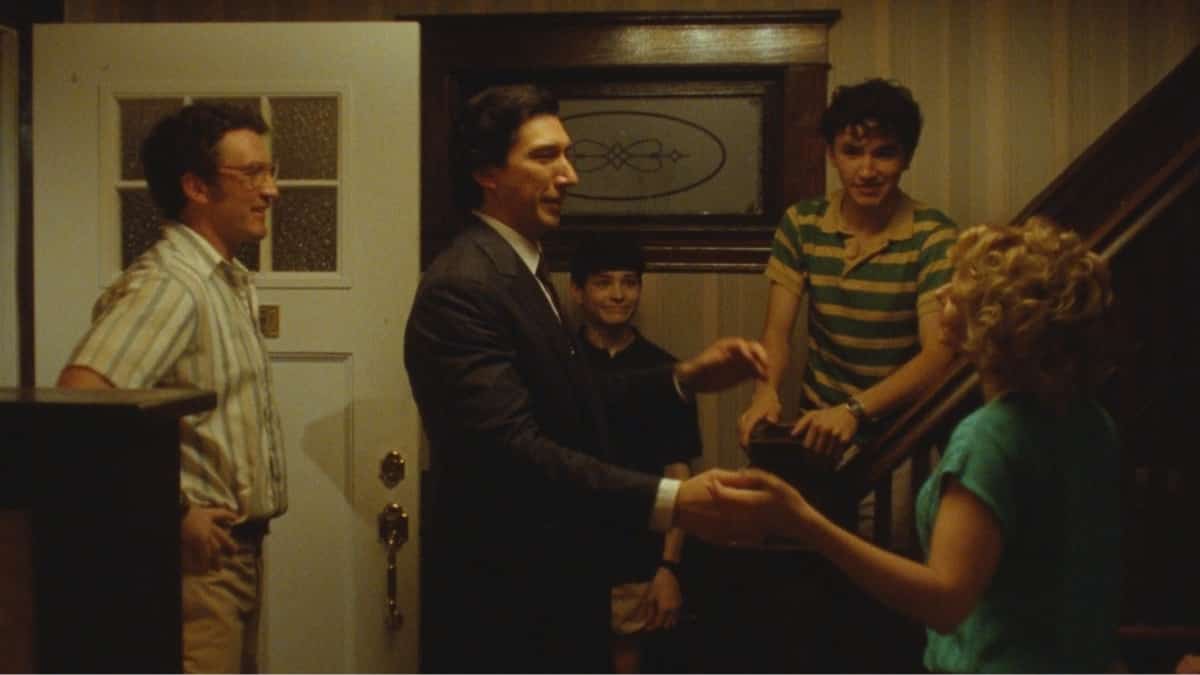
The drama “Paper Tiger” was shown in Cannes, where Adam Driver and Scarlett Johansson clash with the Russian mafia
In Cannes, they showed “Paper Tiger” by American director James Gray about two brothers from New York who are trying to establish a business in an area protected by bad Russians. Gray's ancestors emigrated from the Soviet Union to the United States in 1923, so the topic is not foreign to him. Scarlett Johansson did not come to the premiere due to filming, but film critic Irina Karpova watched the film and believes that the actress simply did not want to watch her suffering for two hours in a dubious wig.
The Cannes Film Festival and its artistic director Thierry Fremaux are very fond of the American director James Gray (“The Immigrant,” “Armageddon Time”) and regularly take Gray’s films into the main competition year after year. "Paper Tiger" is his sixth attempt to compete for the Palme d'Or. Gray's films stand a little apart in modern American cinema - prestigious American awards like the Oscars or professional guild awards ignore his work. American audiences don’t really like him either; most of Gray’s films failed at the domestic box office. Even “Ad Astra” (2019) with Brad Pitt, which grossed $135 million at the box office, is more likely to be considered a financial failure. In Europe and especially in France, James Gray, on the contrary, is perceived as a director of auteur cinema with his own special style, the heir to the golden generation of the 70s - Coppola, Scorsese and Lumet. The Godfather and The Godfather Part II were huge influences on Gray, and his films explore similar terrain - family dramas where feelings and duty intersect in fields of violence and power. The older generation of Gray's family emigrated to the United States from Ukraine at one time, and the themes of emigration and adaptation to a new country and its order affect almost all of his films - his first film was actually called “Little Odessa.”
A kind of mascot for James Gray is Elena Solovey - the actress appeared in episodic roles in several of his films, Paper Tiger is no exception (here she shares one frame with Adam Driver).
1986, Queens, New York. Security engineer Irwin Pearl (Miles Teller), his wife Hester (Scarlett Johansson in that infamous wig) and their two teenage sons are the perfect nuclear family in both form and spirit - living their best life and, step by step, realizing the American dream - a job, a home and their sons attending Ivy League colleges. 10 seconds after the start of the film, Irwin’s brother, Gary Pearl (Adam Driver), appears on stage and offers him a dust-free job - for big money, to advise the Russians, who, by order of the city and state, must properly dispose of waste from an oil refinery on the canal between Brooklyn and Queens. Irwin agrees and is so excited by the idea that he decides to make an impromptu foray with his sons into a fetid backwater, which used to be protected by the mafia, and now, according to brother Gary, everything is run by completely different Russians - emigrant engineers. But they really don’t like strangers. Irwin's night outing turns into a clash with shaven-headed men who prefer a knife to conversation. Gary, a former police officer himself, promises to delete everything and asks his brother not to contact the authorities. It soon turns out that the Russians with whom Gary agreed are no longer in business, and now it is necessary to negotiate with a man named Semyon Bogoevich (Viktor Ptak), he tells the brothers that they entered foreign territory at the most inopportune time for this, and for this they will have to pay - 125 thousand dollars.
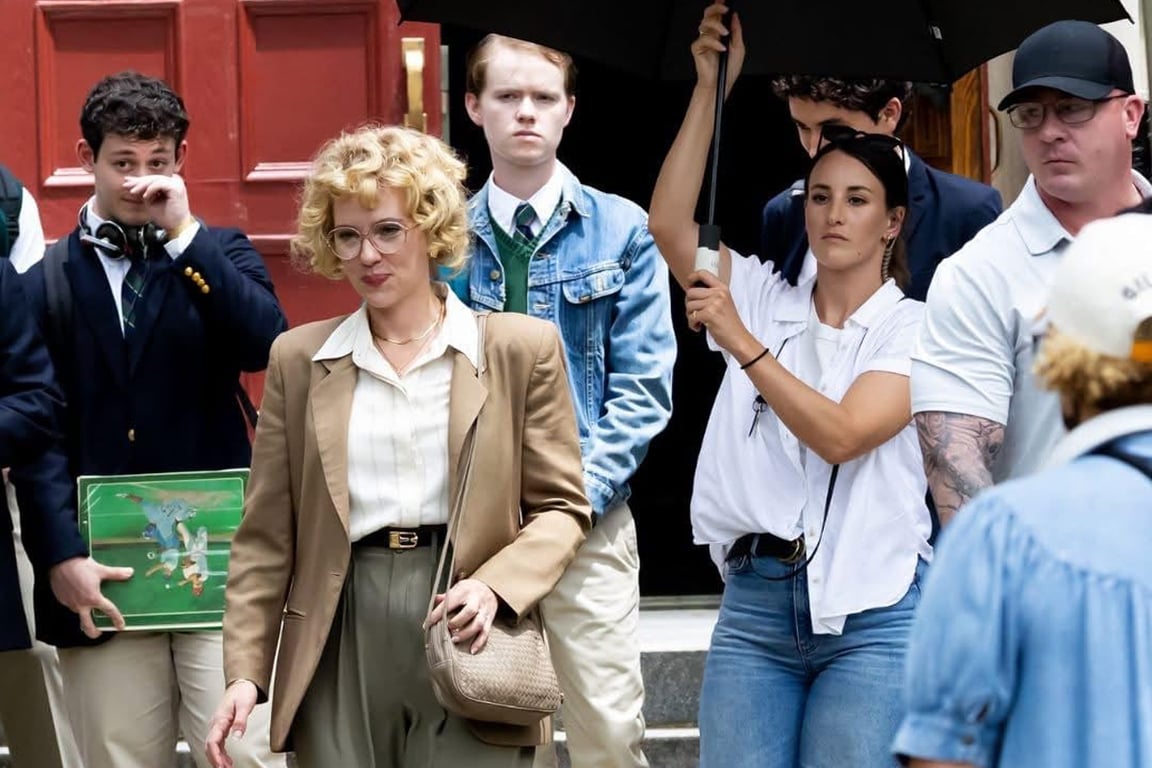
Gray's film explores how greed warps the fabric of human relationships—in this case, between brothers. Irwin is unable to see his brother's true intentions and submits to his demands, the main one of which is not to go to the police, so his wife Hester has to take matters into her own hands.
Gray's film is tightly put together and moves energetically from one mafia threat to the next trick of the dastardly Gary, but in all of this there is a too high dose of secondary and disproportionate excess of the trials that befall them - Scarlett Johansson's heroine suffered not only from her disfiguring perm, she also has a brain tumor.
The Russians in “Paper Tiger” are present as a fetid, toxic background (with the exception, of course, of the heroine Elena Solovey), dragging the hero Adam Driver into their depths. Gray certainly wanted to tell an epic story about the choice between good and evil, between ambition and big money, like his beloved Akira Kurosawa.
But retro is an acceptable choice for the aesthetics of a frame stylized in the 80s, otherwise straightforward patriarchal retro does not convey any new meanings, evil and good do not mix, but each exist in isolated vessels.
But the worst thing - and this is not even the director’s fault - 2026 seeps into his 1986, and in a very comical form,
and along with the fabric of family relationships falling apart in the plot, the fabric of artistic convention is also destroyed - that is, the most important support of any author’s fiction. On TikTok, YouTube and Instagram there is a fictional actress Paloma Diamond , who was nominated for an Oscar many times, but never received it (this is the character of comedian Julian Sewell). Sewell parodies the Oscars, where they always show the most heartbreaking part of the actresses' performances and the reaction of the nominee present in the audience. So, in Paper Tiger, Scarlett gives Paloma Diamond a 96, which is such a fat Oscar bid, with a wig, an illness and violent outbursts of anger that it gives her heartburn. Moreover, this is a good acting job by Johansson, but the circumstances in 2026 are such that it falls apart into skits for showing at the awards ceremony.
And the poetic final chase of the corrupt policeman, Adam Driver's hero, from the mafia thugs does not save Gray's film. He plays a simple melody of an understandable and well-known story, but it is completely drowned out by the noise of our time, not yet expressed, questioning and buzzing, turning the patriarchal debate of brothers into a set of banalities.