
Translated material
Exhaustion and Luxmaxing
Masculine and feminine in the world of politicized appearance
Jokes about the recession are no longer jokes. The war in Iran, cucumbers are becoming more expensive, RAM is now priced somewhere between Tiffany and Cartier. Businesses are closing, taxes are rising, and somewhere in distant Spain a new pandemic is emerging. But for a couple of years now we have clearly seen a new trend, which is still being discussed openly rather modestly. Heroin chic is back - in the form of Ozempic and food campaigns at famous fashion houses. The Euphoria star Alexa Demie appeared on the red carpet with sunken cheeks and visible chest bones, and everyone already knows about Ariana Grande in Wicked.
The trend of women's bodies getting smaller in times of crisis is not new. It’s just that now it’s taking on new shades, especially with the popularity of weight loss products like GLP-1. According to KFF , 1 in 8 Americans now takes such drugs (that's 12% of the population).
I want to discuss several aspects of this discourse. Let's start with a good old Kate Moss quote:
"Nothing tastes better than thinness."
Feminine: the pro-ana mentality is back
The 2010s passed under the auspices of “If you are hungry, eat an apple; If you don't want an apple, you're not hungry,” especially on social networks like Tumblr. I honestly didn’t sit there, but I was an avid visitor to similar VKontakte groups. Diets for 300-400 calories a day, thinspo (i.e. inspiration for losing weight, photos and videos of thin celebrities and bloggers) and quotes from the TV series “To the Bone” were published there.
Here's an excerpt from Lela Mottley's Vogue article :
I wanted to be seamless, perfect, invulnerable. And to achieve this, I was sure that I had to lose weight.
Then the pendulum swung in the opposite direction - with Kardashian silicone implants, body positivity and all-consuming self-acceptance. Closer to 2017, it was somehow no longer fashionable to lose too much weight. At the head of the cultural wave were “plus-size” models at Victoria’s Secret shows (pay attention to the quotes!).
But after the pandemic, as they like to joke on the Internet, something happened. Kim and Kylie got their implants out, Serena Williams is suddenly advertising Wegovy at the Super Bowl, and diets for less than a thousand calories a day are going viral on TikTok. It’s probably worth noting that the culture of anorexia itself and the justification of clearly unhealthy eating habits did not go away - it simply hid. For example, in the “Korean wave”, in the diets of idols, in the “one size” policy of the popular American brand Brandy Melville (the owner of which, by the way, maintained his acquaintance with Epstein).
But now the changes are more noticeable than a couple of years ago. Yes, toxic headlines from the 2000s are no longer considered normal, but a new kind of insult is toxic compliments. You know, that feeling when an incredibly beautiful girl posts her photo, and in the comments they write to her:
- "You have the body of a Greek goddess"
- “Damn, you’re so brave. I wish I had the courage to wear something like that too.”
- "You look like someone with a cool personality"
God. It would be better to say directly that they think she’s fat, wouldn’t it? Yes, toxic positivity can be like that. Abroad, this is called an “act of microaggression,” which, in my opinion, is very woke, but it does exist.
And being thin is in fashion again. Body modifications are also in fashion, for example, Botox in the triceps to give yourself skinny arms. Or, for example, “Barbie Botox” - have you heard of this? These are injections into the trapezius (the muscle that connects the neck and shoulder) to make the shoulders appear more “angular” and straight.
A little about marketing
It’s quite interesting that people are now losing weight with the help of the so-called “Ozempic” - that is, not in particularly natural ways. This creates a large marketing niche for people who physically cannot eat (drugs of this nature often sharply reduce appetite or even cause aversion to food), but they really want to.
Take Hailey Bieber's Rhode brand campaign from 2025. The advertising campaign for new skin care products uses food: fresh vegetables and fruits, lettuce. The promotion was appropriate: Hayley in a casual look with paper bags of food.
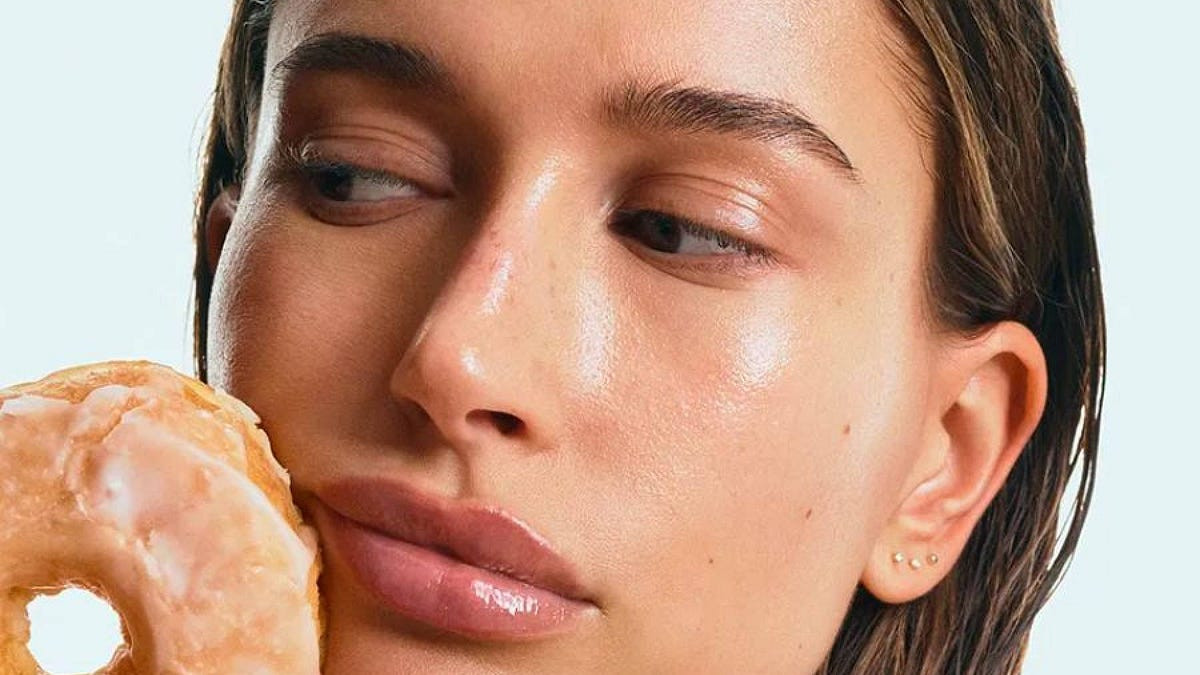
Or, for example, their skin milk - it came out back in 2023. The advertising campaign used associations with the glossy finish on donuts - and promises that the consumer's skin would be shiny, too.
Moschino at the spring 2026 show showed a bag that looks like a package of fresh apples. By the way, it costs almost 2 thousand euros.
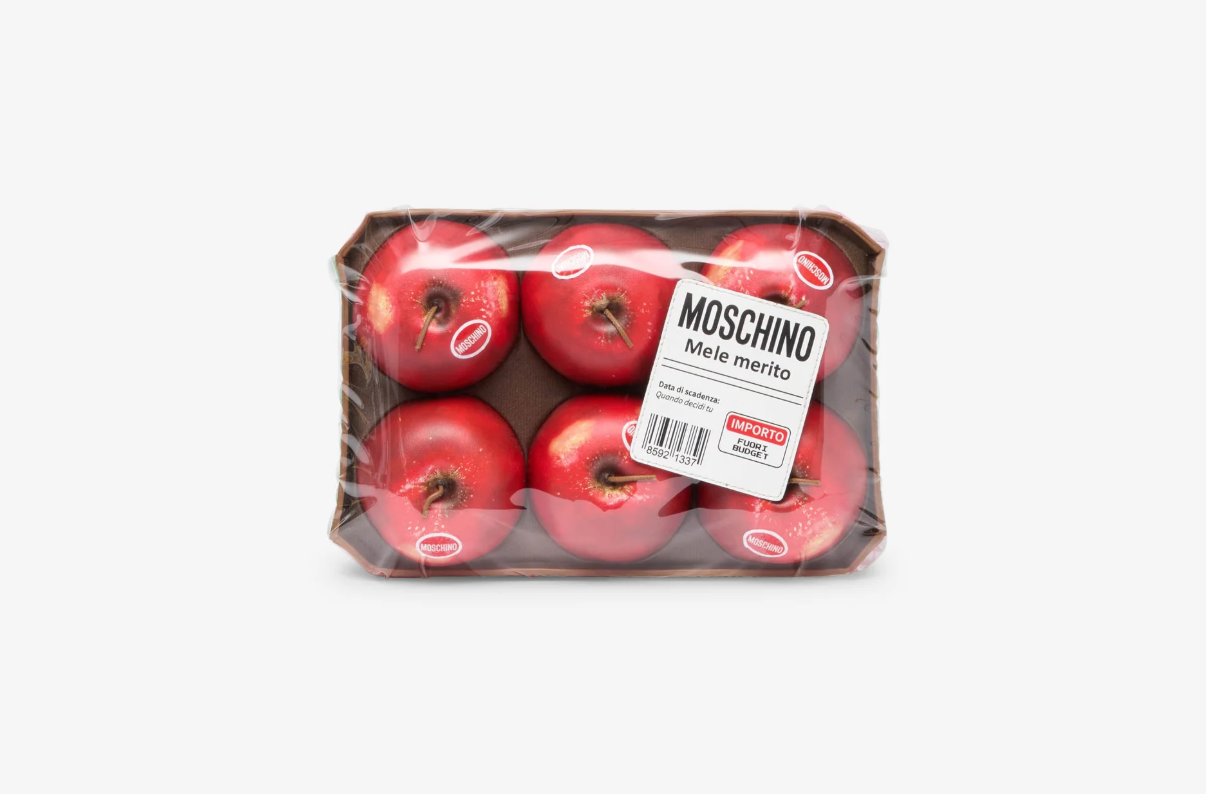
In general, this seems a little ironic, given fashion trends. Be thin, almost to the point of emaciation - but buy products that are associated with food on a sensory level. Look but don't touch policy - in the context of look but don't eat.
I really liked the thoughts of Tiktok blogger Miranda Shanahan. In her opinion, food is becoming not only a tool for weight control, but also a tool for positioning brands. Here's a direct quote from her video:
Previously, all the fashionable girls were photographed with pizza and other fast food. […] This helped them to be relatable for us all - but now, due to rising prices, fresh food is becoming a luxury. Junk food was playful and ironic for brands when the economy was doing well. Now fresh vegetables have become something inspiring.
Masculine: why jocks in the gym are also not an ideal of beauty
What, you and I thought we’d only talk about skinny celebrities? Everyone will get it. What do you, dear readers, know about Luxmaxing? I'll give you a definition because it's funny.
Luxmaxing (from the English looks - appearance and maximizing - increase) is an Internet trend aimed at radically improving appearance in order to achieve maximum attractiveness. Originally born in online communities of men (incels), today the trend covers a wide range of methods: from skin care to dangerous physical manipulation .
Thank you, Wikipedia, the most reliable source of information in the world. So, lookmaxers are usually young people who “correct” their appearance by any means at hand. Reddit user vindictaratemethrow offers his guide on how to become a better person. Brief summary: the text covers everything from haircuts, skin care and going to the gym, to clothing, proper nutrition and diets.
The most famous representative of this subculture is blogger and streamer Clavicular. He became famous for his method of improving facial structure using a small hammer - what he called “bone-smashing,” literally “beating bones.” According to him, this helped him achieve his preferred appearance.
The trend has become so popular around the world that it has even reached Russia - RBC wrote about it.
“The approaches that Luxmaxing combines can be divided into two areas: softmaxing (from the English word soft - “soft”, “light”) and hardmaxing (from the English word hard - “heavy”, “difficult”). Both methods are aimed at pumping up the facial muscles and supposedly correcting the bone structure. Despite their popularity on the Internet, there is no reliable data confirming their effectiveness,” the publication says.
Another offshoot of the male desire to improve oneself is the “gym bro” culture. For the most part, it comes down to extreme training, aseptic nutrition brought to the ideal, and constant body checks (that is, checking whether the biceps are growing). Anything that would describe an eating disorder in its classical sense - for example, orthorexia, a subtype of anorexia with a focus on “healthy food”.
Both Luxmaxing and gym bro culture are united by one desire - to be more attractive. Masculinity is elevated to an ideal, but what does “being masculine” mean? These guys think it's a well-defined jaw and good biceps.
I will quote Ali Nishekawa’s material for NSS Magazine, which will help tie up the male and female aspects of improving your appearance:
The “gym girl” concept also exists among women, but is not as widespread as its male alternative. This can be explained by the relationship between “gym bro” culture and toxic masculinity. In our patriarchal society, toxic masculinity exacerbates the “gym bro” culture that defines physical and political dominance as one of the only ways men can exist.
Trying to make a conclusion
It seems to me that the male-female issue is two sides of the same coin. While girls are losing weight and injecting Ozempic, men are reinventing the wheel - and also dealing with eating disorders.
In the current unstable economic and political climate, people's desire to move on to smaller problems (I'm fat, I'm not muscular enough, and I don't have the right face shape) is a mechanism for rationalizing what's happening.
If you and I put on our tin foil hats for a minute, I would even say that this is a strategy to distract the masses from larger problems. Journey from macro to micro - with the help of Ozempic and hammers for setting bones. And the female trend for extreme thinness fits perfectly into the current patriarchal standard (remember the trend for “traditional wives” and life in the village). Our girls are supposed to be modest and fragile, don’t forget about it.
In the meantime, you're trying to lose weight, here's donut-scented cosmetics and a bag in the shape of an apple tray.