
Translated material
When beauty is medicine
On the question of freedom: philosophy of value versus philosophy of good. Why Human Survival Depends on More than Biology

Photo: Moscow Agency
Does beauty bring us freedom?
The question of whether a person is free and what freedom is is one of the most important in philosophy. For philosophical anthropology and ethics, this is the main question: since the concept of freedom is not correlated with the physical and biological world, it correlates exclusively with the idea of man.
In different historical eras, philosophy answered the question of whether man is free in different ways. The first concept of freedom in the context of his materialist teaching was given by Democritus, and, in fact, it was the concept of unfreedom: man exists in a world of strict determinism. Epicurus and all the materialists continued this line with varying degrees of relaxation.
In Marx’s dialectical materialism, man is understood as an ensemble of social relations, which means that his freedom is made dependent on social matter (matter here is everything that is outside the consciousness of man).
The opposite view of freedom is that of idealists, including religious philosophers (except Luther). Already in Plato, a person can choose a way of life that contributes to the speedy return of his soul to the world of ideas and, accordingly, ending the cycle of its incarnations in the physical world. (I’ll make a reservation, without going into details, that Plato’s freedom is not so simple, since the soul does not choose which person’s body to inhabit, that is, the law of Adrastea, it is formulated in the dialogue “Phaedrus.”)
The basis of the Christian type of culture is already quite definitely laid down the idea of a person’s personal responsibility for the choice between good and evil, sin and virtue. Despite the contradictory nature of the biblical texts, this vision was shaped by the thought of Augustine, Boethius (although in style of thinking this is a non-Christian author who lived in the patristic era), Thomas Aquinas, Erasmus of Rotterdam, and most importantly, Giovanni Pico della Mirandola.
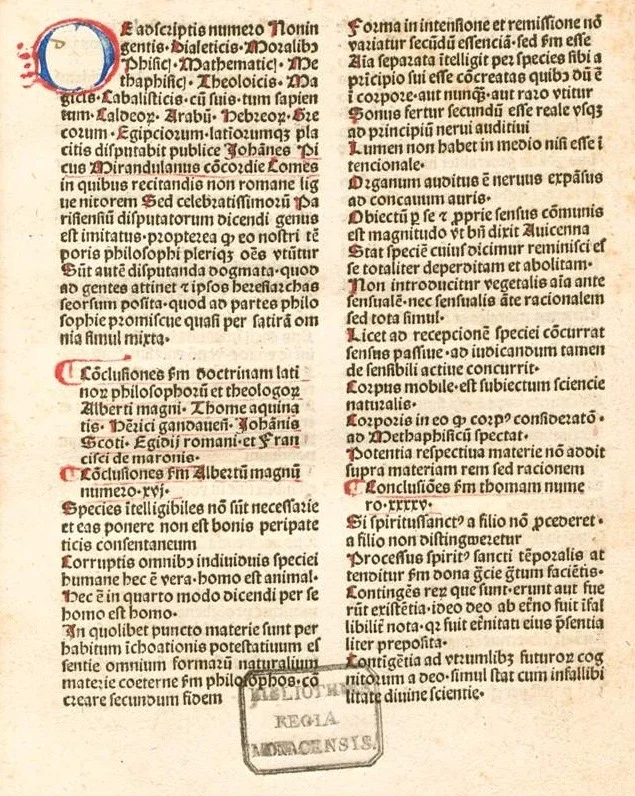
Mirandola’s short text, written as an introductory speech to his scientific work “Nine Hundred Theses” (“Nine Hundred Theses on Dialectics, Morals, Physics, Mathematics for Public Discussion”) and published after the author’s death, presents in a brief, convincing form the concept of man, which reveals itself both in the ethics of autonomy of Kant and in the existentialists from Kierkegaard to Berdyaev. Its essence boils down to the fact that man is a unique creation of God: he is endowed with freedom of self-determination. Mirandola thereby ignores the doctrine of Divine Predestination, but at the same time highlights the meaning of spiritual freedom:
a person is responsible for what he does to himself. Will he follow the path of theosis, deification, or descend to the vegetative state?
Yes, the Italian humanists of the Renaissance looked at man with optimism. An important emphasis of Mirandola is the definition of moral purification as a condition for a breakthrough to true metaphysical knowledge. In his teaching the second greatest ideological correlation in the history of Europe was established. We see the first in Plato, who in the Symposium combined the idea of immortality with creativity, the second in Mirandola, who combined the idea of creativity with spiritual freedom.
In order for this sketch of the history of the philosophy of freedom to be as complete as possible, it is worth mentioning how elegantly the dialectician Hegel combines two contradictory ideas of freedom, external and internal, calling the expansion of the sphere of freedom the measure of historical progress (freedom is an attribute of reason, that is, spirit). In other words, the growth of spiritual freedom naturally leads to the expansion of political freedom, enshrined in law: in turn, it guards the personal freedom of each individual citizen.
Naturally, such an approach could only be formed during the period of New History, after the Enlightenment, and was impossible in an archaic society and even among the ancient Greeks, who, although they invented democracy, were very far from articulating such a key meaning for European culture as personality.
Personality, persona, enters the historical arena quite late, in the Renaissance, and we see more of its prerequisites in the teachings of Augustine and Aquinas than in the Hellenistic ideals of the sage. This is a philosophical paradox. It would not have occurred to Plato to call Socrates a personality, but we are accustomed to talking about the personality of the god-man Christ, who sacrificed himself for the sake of people.
The choice in favor of altruism is truly the highest manifestation of personal freedom as liberation from the biological shackles of egoism.
This idea is the core of Christian ethics and is manifested in Kant's teaching on the categorical imperative: moral meaning is present only in the free choice to follow a moral duty. In short, for Kant it is the moral act that has liberating meaning.
And if we focus specifically on “liberating” meditations, then we cannot help but talk about how Kant understood aesthetic cognition in this context. The paradox of his teaching is as great as the aforementioned paradox of the cultural situation of the Hellenes. Kant connects the feeling of beauty with the hope for the unprovable integrity and meaningfulness of the world, and therefore, translating theological arguments into the language of the philosophy of culture, as well as the moral idea, connects aesthetic knowledge with freedom. Hope frees you from despair, from the dead end into which pure reason comes when it thinks of freedom, but is unable to prove its existence at the empirical level. In this sense, the basis of freedom lies primarily in hope.
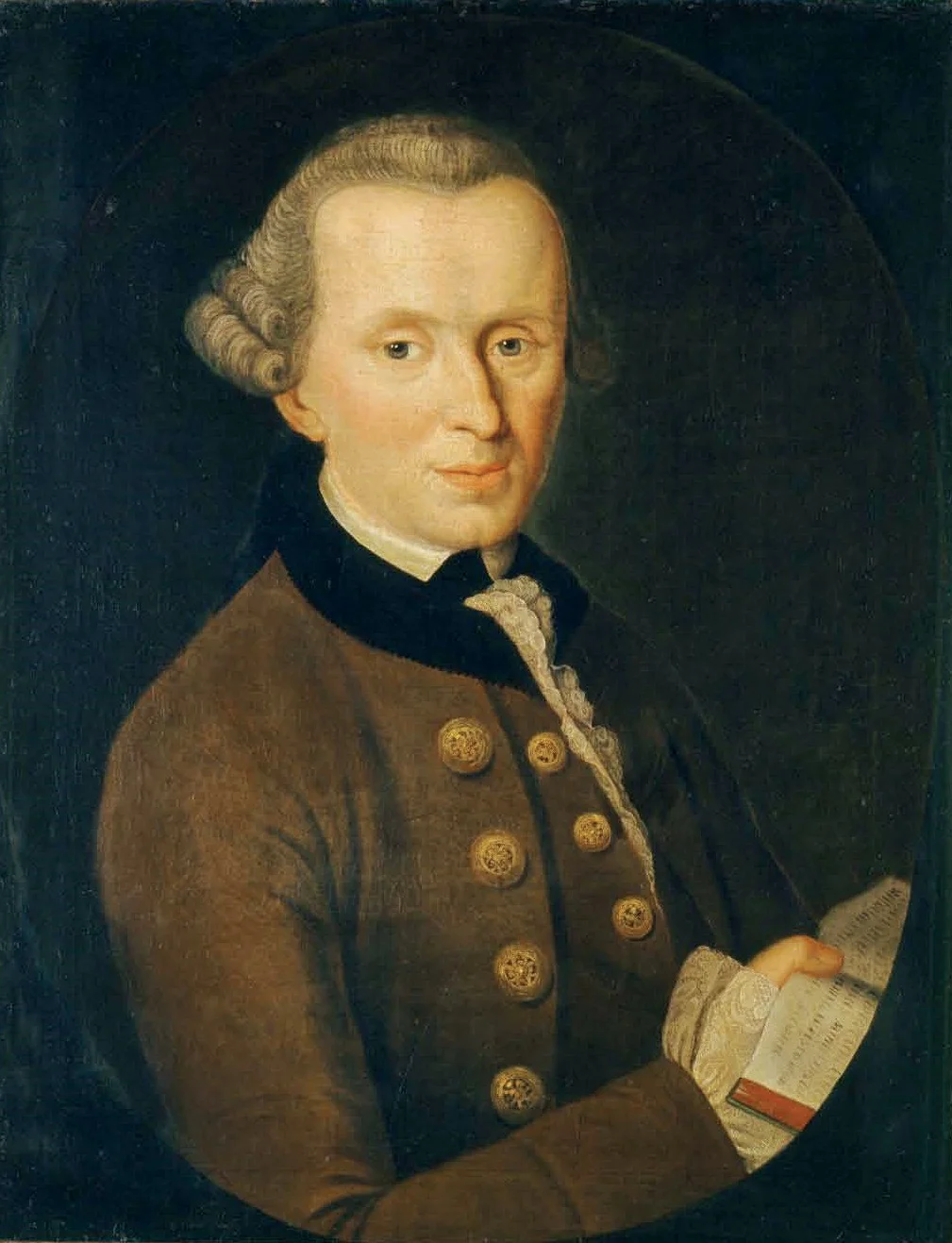
At the same time, the entire course of Kant’s thoughts about the epistemological prerequisites of aesthetic evaluation suggests the opposite, which distracts interpreters from the obvious result that Kant comes to in the “Critique of Judgment”: knowledge of the beautiful - hope - freedom.
Indeed, not being a great connoisseur of art, Kant offers a very vulnerable concept, connecting the feeling of beauty with a feeling of pleasure and displeasure, and therefore with egoism. He uses this fact to demonstrate the subjectivity, that is, the relation to the subject, of aesthetic evaluation. But at the same time, in essence, dividing moral and aesthetic knowledge, it sharpens, without naming them, the conflict of ethical and aesthetic values. (Their articulation in European philosophy is still a long way off.) In the monograph of the famous Russian historian of philosophy P.P. Gaidenko shows how this idea (the inevitability of the conflict between “good” and “beauty”), following Kant and the romantics, was picked up by philosophers.
But what about the final articulation of hope as the result of aesthetic knowledge? That is, again, freedom as its result? So maybe aesthetic knowledge has no less liberating meaning than moral knowledge? And perhaps even bigger?
In modern realities, we talk a lot about freedom in its political sense, but we lose sight of the obvious. Freedom has a personal source (it is impossible to deprive a person of spiritual freedom). And if the knowledge of beauty is subjective, accordingly, a study of how things are in the modern world with the knowledge of beauty, with artistic creativity, will give the key to understanding why we find ourselves in a world where freedom has turned out to be unnecessary.
And insofar as aesthetic cognition is expressed in the concept of aesthetically valuable, that is, correlated in the act of evaluation with what is meant by aesthetic value, the study of the possible essential connection between aesthetic cognition and freedom should begin with the role that value cognition, in principle, plays in modern society.
Philosophy of value and philosophy of history
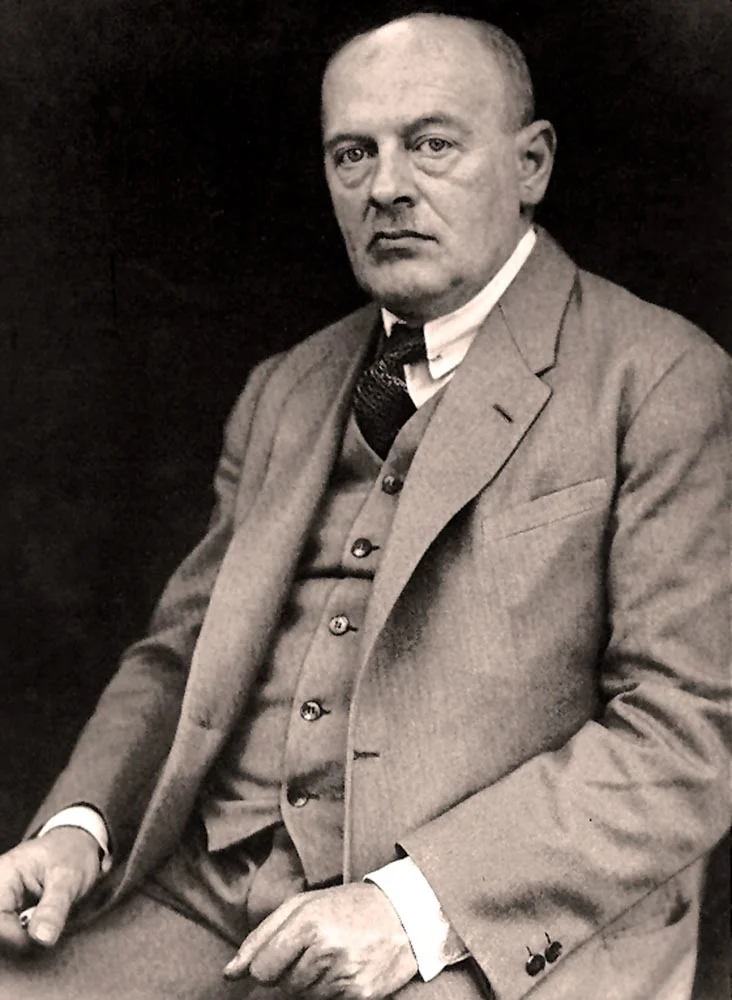
In the first third of the 20th century, classical axiologists (Baden neo-Kantians, sociologist Max Weber, representatives of objectivist material axiology Max Scheler and Nikolai Hartmann) created one of the most important methods for socio-humanitarian knowledge - value-based.
The theory of value, proposed by M. Scheler and developed by his student N. Hartmann (objectivist material axiology), made it possible not only to resolve a number of significant contradictions associated with determining the source of value knowledge and the ontology of values, but also became the basis for a new view of the world thanks to the formulation of the concept of the kingdom of values. The doctrine of the hierarchy of values was originally proposed by Eduard von Hartmann. Scheler, relying on phenomenology, connected this concept with the definition of value as a potentially conceivable, intelligible object. To put it simply, values that are ideal in nature exist objectively, but not as Plato’s ideas, but as mathematical and logical laws.
The hierarchy of values is described by Scheler in a sequence of four series: 1. the value series of “pleasant” and “unpleasant”; 2. vital values (all qualities that cover the opposition of “noble” and “low”), this also includes values such as “well-being” and “well-being”; 3. spiritual values: aesthetic, moral, cognitive; cultural values are derived from them; 4. religious values (“holy” and “unholy”, etc.). The values of the “sacred” are comprehended in the act of love, therefore, an independent value in the sphere of the “sacred”, according to Scheler, is the value of the individual.
Each of these four value modalities has its own “pure personality types”: the artist of pleasure, the hero or “guiding spirit,” the genius and the saint. They also correspond to communities - simple forms of “societies”, the state, the legal and cultural community, the community of love (church) [*].
Within the realm of values, everything is valuable: within the realm, and therefore within the framework of integrity - integrity presupposes certain subordinate connections, hierarchy, in other words. For this reason, as Scheler writes, there is a certain “order” of love, of “valuation.” Only a low level of personal development allows a person to give preference in terms of value to an object not to the extent that it deserves it: “There is precisely a subordination of everything that can be loved in accordance with its internal, appropriate value.” And therefore, a cultured, spiritually developed person is able to “love things, if possible, as God loves them, and rationally empathize in his act of love with the meeting-coincidence of the divine and human act at the same point in the world of values,” writes Scheler in his treatise “The Order of Love.”
According to his views, each individual nation or entire era plays or has already played its historical role in the knowledge of individual fragments of the value universe and the inclusion of corresponding values in social practice. The conceivable universe of values is objectified by a person’s cultural attitude to the historical empiricism and his actions. This means that the expansion or narrowing of the channel of value cognition should be considered as a measure of spiritual progress or regression of society.
This concept, which played an important role in the development of the philosophy of culture, is the best theoretical tool in studying the role that our modernity plays in the development of value cognition.
The ideological core of the doctrine of the pyramid (hierarchy) of values is opposition to simplification of all kinds, not declared, but included in the value view of the world as such.
If we develop these ideas into the field of philosophical anthropology, then
The ideal human type should be understood as a “universal connoisseur,” that is, a person capable of the most complete knowledge in all areas of the “realm of values.”
Such is a man of culture: his view of modernity and sense of social and existential reality is formed on the basis of the achievements of people belonging to all types of cultures and all previous eras that have become his personal property.
It follows from this that the opposite, that is, the reduction in human consciousness of value series that have already been revealed to cultural consciousness in previous eras, gives rise to a cultural crisis and indicates the process of degradation of the individual and society as a whole.
Our “scarce time” is a product of the philosophy of good
The situation of the modern world as a whole is the result of the transition of Western civilization to the stage of super-capitalism, based on the fusion of politics and technology. Digitalization, used as a tool for establishing control rather than expanding the sphere of freedom through increasing the level of education and intelligence among the population, is a natural result of predatory management strategies at the global level. Today we see how the struggle for an information resource is becoming the pinnacle of a clash of political and geopolitical interests.
However, something in these realities has nevertheless moved. The global crises of the last five years, from the pandemic to the current armed conflicts, have brought closer the clear realization that the postmodernist ideology of the equivalence of cultural opportunities and phenomena was yet another “opium of the people,” fed to the poorly educated masses.
Within the social process, just as much as humanity is driven by the instinct to preserve its species, there is invariably a conflict between value and anti-value. On the one hand, in this conflict stands the individual and his opportunity for creative self-expression in line with current values, on the other hand, cultural non-existence, and therefore, as a result, biological death.
We are still observing (due to historical inertia) in social life the negative consequences of value indifference and cultural anemia - we are reaping the fruits of dehumanization in its negative sense. It was considered as a strategy for improving the artistic sphere in the essay “Dehumanization of Art” by José Ortega y Gasset. In this case, we are talking about the dissolution of the subject in automated systems.
In fact, the anthropological conflict outlined above (to survive biologically is possible only with a clear awareness of the insufficiency of purely biological methods of survival) reached its maximum severity with the spread of artificial intelligence, which equally carries within itself both the possibility of a person reaching a new level of creative possibilities, as well as his enslavement and the final impoverishment of his capabilities. The withering away of a number of professions and the public protests associated with them manifest this conflict in social terms.
This conflict, the desire of states for geopolitical and economic dictatorship, due to the limited and fundamental exhaustibility of energy resources and, probably, the impending global struggle for survival if humanity fails to develop new sources of energy, is an attribute of recent history.
At the same time, the cult of consumerism and the desire for economic growth are not a direct consequence of such a policy of determination. It is unlikely that the desire of the average person to exchange high-quality household appliances for even better ones is directly related to geopolitics.
This type of social behavior is formed by the influence of ideology, the goal of which is the spread of a social type that is not interested in and does not affect anything other than utilitarian values and primitive social self-affirmation - increasing consumer power.
As a result, in the modern world, values are not learned or created; the social subject masters only certain series of the value universe - primarily basic, utilitarian ones. The materialism of modern culture blocks access to knowledge of the highest positions of the conceivable value hierarchy - the values of the sacred, aesthetic, truthful, ethical.
Of particular importance in this regard is the obvious fact that the level of economic development in the civilized world, with the possible exception of third world countries, makes it possible to achieve more: from satisfying utilitarian needs to move on to mastering the values of freedom and humanism, to take advantage of the cultural opportunity that backward societies are still deprived of.

To understand that refusal of this opportunity, given to a modern civilized person as a matter of course (and meanwhile suffered in the struggle for a better life by previous generations), is a spiritual crime; it is enough to imagine that the majority of even the most prosperous geniuses of the past were deprived of all those everyday blessings that modern civilization puts at the disposal of the most primitive, but sufficiently socialized individual. Kant did not travel outside of Koenigsberg, Tsvetaeva did the laundry and washed the dishes with her own hands. These people, destined by nature to only feel and think, had neither the Internet, nor personal computers, nor the ability to travel around the world comfortably.
Such a transformation of the socially preferred human type determines the changes occurring both with language, the basis of humanitarian knowledge, and with the aesthetic idea.
To the extent that the life process is expressed in actual value systems, we can talk about corresponding conditioning. Values are both the product of life and guide it, influencing the definition of personal and social goals.
I believe it would be interesting to move from a general overview of the ideological foundations of the modern cultural crisis to a consideration of its manifestations, taken, so to speak, in close-up. It is worth noting that for all its value poverty (“meager time,” in Hölderlin’s words), the modern moment has its own clearly defined historical type.
Mechanistic principles, ideals of simplicity tending toward primitiveness, displace both existentially and culturally the value of originality, knowledge of the whole as a whole; the value of freedom and spontaneity, without which creativity is impossible - neither life (life creativity), nor artistic and aesthetic.
Artistic art especially suffers from this: originality, organicity and integrity constitute the essence of artistry. Also, artistry is in the closest connection with the ability for free imagination, with the formation of such a social type as personality, and freedom in its true, cultural sense. It is significant that it is precisely the mechanistic nature of perception that develops into necrophilia - dislike for all living things, in his work “The Soul of Man. Erich Fromm considers her capacity for good and evil as one of the signs of an unproductive human type.
Even without touching on specific facts, we can consider today, as a clear profile that casts a contrasting shadow, a clear and quite actively discussed by thinking people asymmetry of cultural value along the axis of technologism - humanitarianism.
If we accept the assumption that the quintessence of humanism is aestheticism in its universal understanding, then we should be talking specifically about the asymmetry of technologism - aesthetic knowledge, technologism - cultural freedom.