
Translated material
Scientists and darkness
Why did the Soviet government come up with “sharashkas”?

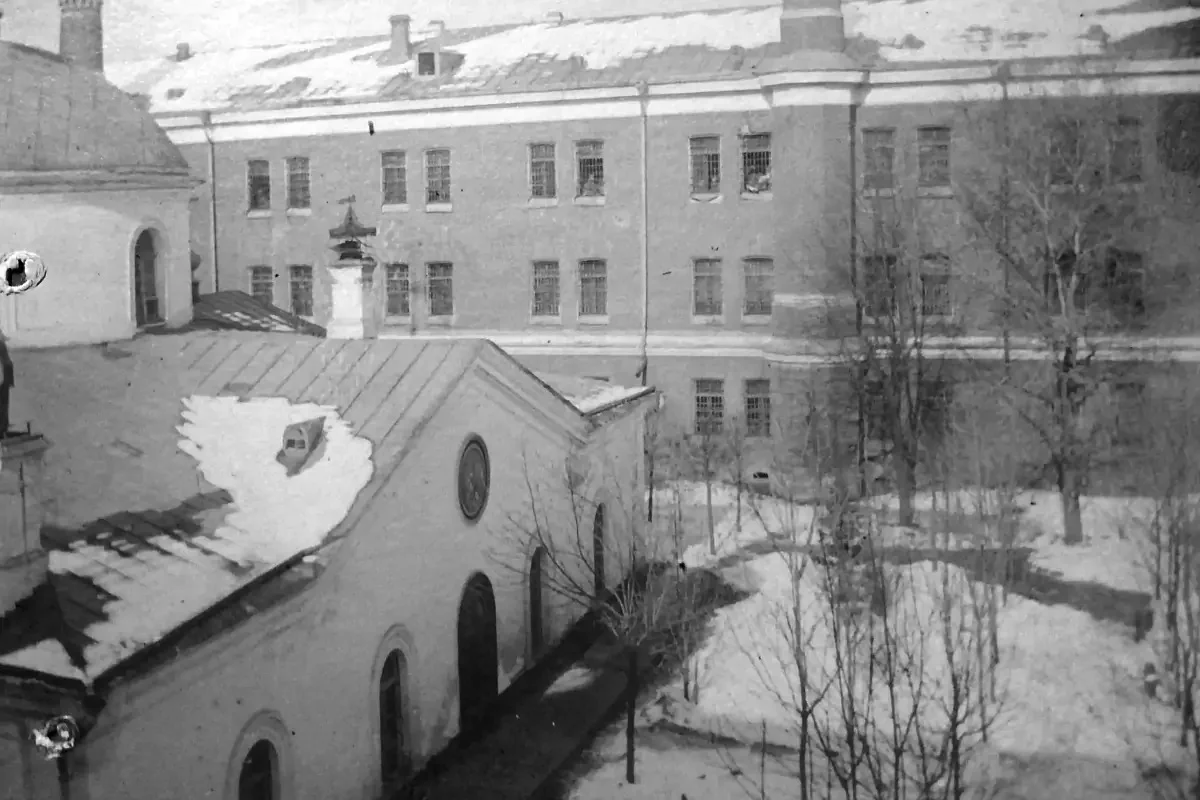
Team of TsKB-39 OGPU. Prisoners and guards. Photo: archive
“The prisoner entered the office and, without being asked, sat down opposite the minister. Abakumov... did not shout to him: “get up!”, but, believing that he did not understand shoulder straps and did not guess from the enfilade of vestibules where he was, he asked almost peacefully:
- Why are you sitting down without permission? Can you imagine who I can be?
Leaning comfortably in his chosen chair, Bobynin now examined Abakumov and made a lazy assumption:
- Well - by whom? Well, someone like Marshal Goering?
- Like who???
- Marshal Goering. He once visited an aircraft factory near Halle, where I had to work in the design bureau. So the generals there walked on tiptoe, and I didn’t even turn to him. He looked and looked and went into another room.
A movement vaguely resembling a smile passed over Abakumov’s face, but immediately his eyes frowned at the incredibly impudent prisoner. He blinked with tension and asked:
- So what are you doing? Don't you see the difference between us?
- Between you? Or between us? — Bobynin’s voice boomed like disturbed cast iron. “Between us, I can see perfectly well: you need me, but I don’t need you!”
<…>
- Listen, prisoner. If I’m gentle with you, don’t forget...
“And if you were rude to me, I wouldn’t even talk to you, Citizen Minister.” Shout at your colonels and generals, they have too much in life, they feel too sorry for it all.”
The minister needed engineer Bobynin to find out from him “first-hand” how much time it would actually take to fulfill the promise he had rashly made to Stalin himself to immediately complete the installation. It looked like the deadlines would be missed. Subordinate generals and colonels seemed to lie shamelessly.
As much as you need, we’ll make you do it.
- You are mistaken, citizen minister! “And Bobynin’s strong eyes sparkled with open hatred. - I have nothing, you understand - I have nothing! You won’t be able to get my wife and child - the bomb took them. My parents are already dead. The only property I have on earth is a handkerchief, and the overalls and the underwear under it without buttons (he exposed his chest and showed) are government-issued. You took away my freedom a long time ago, but it is not in your power to return it, because you yourself do not have it. I’m forty-two years old, you gave me twenty-five years of imprisonment, I’ve already been to hard labor, I’ve been in rooms, and in handcuffs, and with dogs, and in a high-security brigade - what else can you threaten me with? What else to deprive? Engineering work? You will lose more from this. <…> In general, understand and convey to those who need it above that you are strong only insofar as you do not take everything from people. But the person from whom you took everything is no longer subject to your control, he is free again.
- But the reasons? Who is to blame for missing deadlines? Tell me, don't be afraid! Name the culprits, no matter what shoulder straps they wear! I'll rip off their shoulder straps!
- You were given a deadline - a year! - the minister was indignant. And Bobynin exploded:
- What does it mean - a deadline has been given? How do you imagine science: Sivka-Burka, prophetic kaurka? Build me a palace by morning - and a palace by morning? What if the problem is stated incorrectly? What if new phenomena are discovered? The deadline is given! Don’t you think that in addition to the order, there should also be calm, well-fed free people? Yes, without this atmosphere of suspicion. <...> Everyone says that we are making secret telephony for Stalin. Stalin personally presses on - and even in such an area you cannot provide technical supplies: either there are no necessary capacitors, or radio tubes are of the wrong type, or there are not enough electronic oscilloscopes. Poverty! Disgrace! "Who is to blame"! Have you thought about people? They all work twelve hours a day, some sixteen hours a day, and you only feed the leading engineers with meat, and the rest with bones?.. Why don’t you give Fifty-Eighth visits to relatives? It’s supposed to be once a month, but you give it once a year. <…> On Sundays you used to be able to walk all day, but now it’s prohibited. Why is this? To work more? Are you collecting sour cream from the shit?”
Alexander Isaevich Solzhenitsyn described this phantasmagoric conversation in his novel “In the First Circle.” Probably exaggerated, after all, Minister of Internal Affairs Abakumov was not the right person to allow himself to be talked to like that...
However, Minister Abakumov will also be shot.
About the benefits of “pests”
On May 15, 1930, the “Circular of the Supreme Council of the National Economy and the United State Political Administration” about “the use in production of specialists convicted of sabotage” was published. The circular was signed by Kuibyshev and Yagoda . This is how the first system of scientific and technical prisons appeared - “sharashkas” for the use of “pests” in the interests of military production.
In September 1938, by order of Yezhov, during the reorganization of the structure of the People's Commissariat, a special Department of Special Design Bureaus of the NKVD of the USSR was organized, which was not part of the departments and sectors (NKVD order No. 00641 of September 29, 1938).
On October 21, 1938, in accordance with NKVD order No. 00698, this unit received the name “4th Special Department”.
The main tasks of the Department (from the “Brief report on the work of the 4th special department of the NKVD of the USSR from 1939 to 1944”):
“The main tasks of the 4th Special Department are: the use of imprisoned specialists to carry out research and design work on the creation of new types of military aircraft, aircraft engines and engines of naval vessels, samples of artillery weapons and ammunition, chemical attack and defense means, provision of radio communications and operational equipment.”
The tasks, as you can see, were outlined as broadly as possible.
TsKB-39 , the first prison design bureau in the history of aviation, was organized in December 1929 and was initially located in Butyrka prison.
TsKB-29 , or “Tupolev Sharaga”, or special prison No. 156, was the largest aviation design bureau in the USSR in the 1940s, from 1941 to 1944 it was located in Omsk.
OKB-16 is a special prison in Kazan at the aircraft plant No. 16, or “rocket engine charade.” Since November 1942, S.P., transferred from the Omsk “sharashka”, worked here. Korolev. The development of the RD-1 rocket engine was carried out by prisoners V.P. Glushko and D.D. Sevruk.
OTB-82 , or “Tushinskaya sharaga”, is a prison design bureau for aircraft engines in Tushino. Chief designer of OKB A.D. Charomsky. With the beginning of the war, the sharashka was relocated to Kazan. In 1946 - to Rybinsk (then the city of Shcherbakov). From September 27, 1946 to February 21, 1947, Solzhenitsyn worked in the Rybinsk sharashka.
The Suzdal Intercession Monastery is a center for microbiological weapons, or Bureau of Special Purpose (BON) of the Special Department of the OGPU.
Atomic sharaga in Sukhumi (1940s and 1950s), where specialists brought from Germany worked on separating uranium isotopes.
Laboratory “B” of the USSR Ministry of Internal Affairs was created in May 1946 by order of the USSR government on the basis of the Sungul sanatorium in the Chelyabinsk region, in 1948 it was renamed “Object 0215”. The laboratory was closed in March 1955, after which an institute was built in its place, and the closed city of Snezhinsk (Chelyabinsk-70) arose around the institute, not indicated on any maps. Scientific leadership was entrusted to the German scientist N. Riehl . The radiochemical department was headed by chemist S.A. Voznesensky (prisoner since 1941), biophysical - geneticist N.V. Timofeev-Ressovsky .
After Stalin's death, the liquidation of the sharashkas began. On March 30, 1953, the 4th Special Department of the Ministry of Internal Affairs was disbanded, but some sharashkas continued to function for several more years.
The complete list of “sharashkas” and the exact number of people who worked in them are unknown to the public - this information is still classified.
“Well, with God!”
On October 21, 1937, aircraft designer Andrei Nikolaevich Tupolev was arrested on charges of sabotage and belonging to a counter-revolutionary organization. Along with him, many leading specialists from TsAGI and the Design Bureau, directors of most aircraft factories, were arrested. The case was led by Gabitov, an employee of the 2nd Investigation Department of the NKVD.
On May 28, 1940, Tupolev was sentenced by the Military Collegium to 15 years in prison and five years of loss of rights, as well as confiscation of personal property. According to the verdict, he “headed a sabotage anti-Soviet organization in the aviation industry and, both personally and through accomplices, carried out sabotage and sabotage work aimed at weakening the defense capability of the Soviet Union. In addition, since 1924, Tupolev was an agent of French intelligence and passed on information to it that “constituted state secrets of the Soviet Union.”
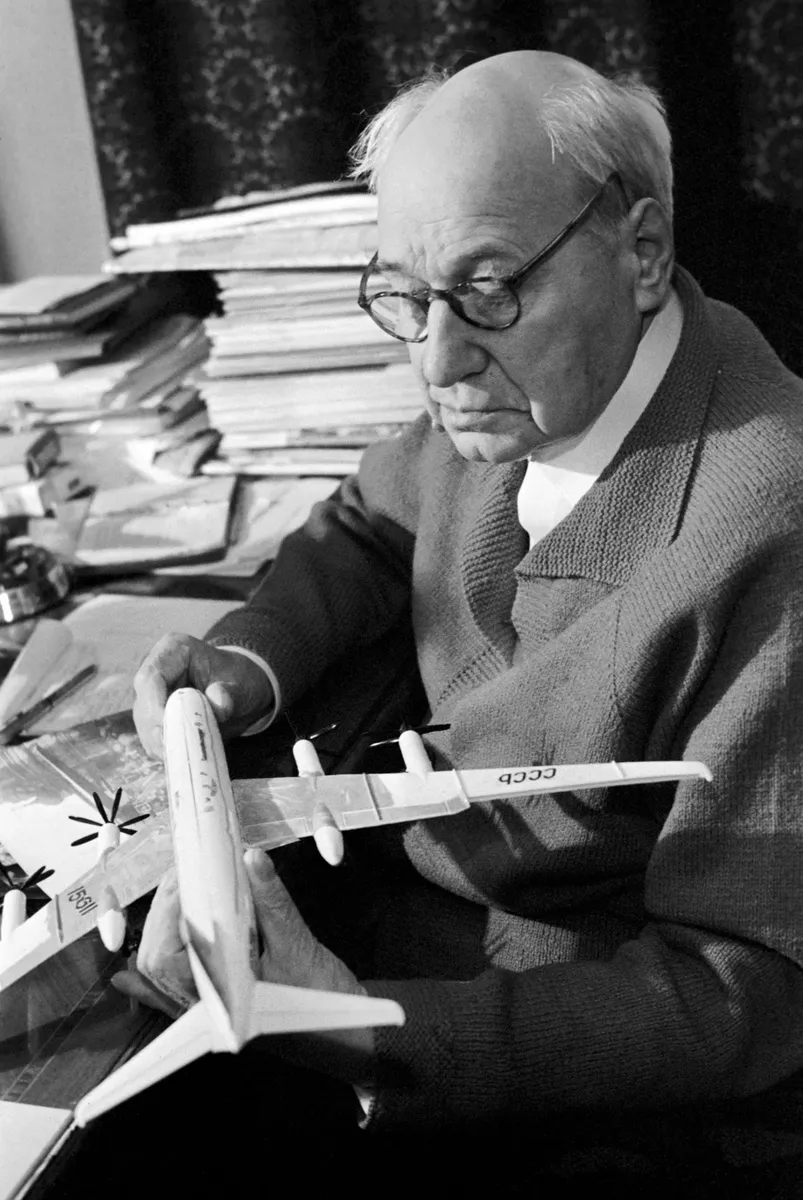
Pensioner Vyacheslav Molotov already in the 1970s told his confidant, poet Felix Chuev:
“Tupolev is from that category of intelligentsia that the Soviet state really needs, but at heart they are against it, and through personal connections they carried out dangerous and corrupting work, and even if they didn’t, they breathed it. Yes, they couldn’t do otherwise! They are dangerous not by propaganda, but by their personal influence. And one cannot ignore the fact that at a difficult moment they can become especially dangerous.”
Tupolev will later be “forgiven” for the Tu-2: the car turned out to be of very high quality. Andrei Nikolaevich would subsequently become a Hero of Socialist Labor three times - one of fifteen throughout the country.
In 1938–1939, the following people found themselves on prison bunks: the Italian communist emigrant Bartini, the chief designer of the Civil Air Fleet Research Institute, the author of several aircraft, “a personal friend of Mussolini, an agent of Italian intelligence,” Kalinin, the creator of the first mass-produced civil aircraft and the combat “flying wing” VS-2, the chief designer of BOK aircraft and stratospheric balloon gondolas, Chizhevsky, helicopter designers and gyroplanes Cheremukhin and Izakson, author of the AN-1 aviation diesel engine with a power of 900 hp. Charomsky, head of the TsAGI Research Sector, academician Nekrasov, “recruited by the FBI” during a trip to America...
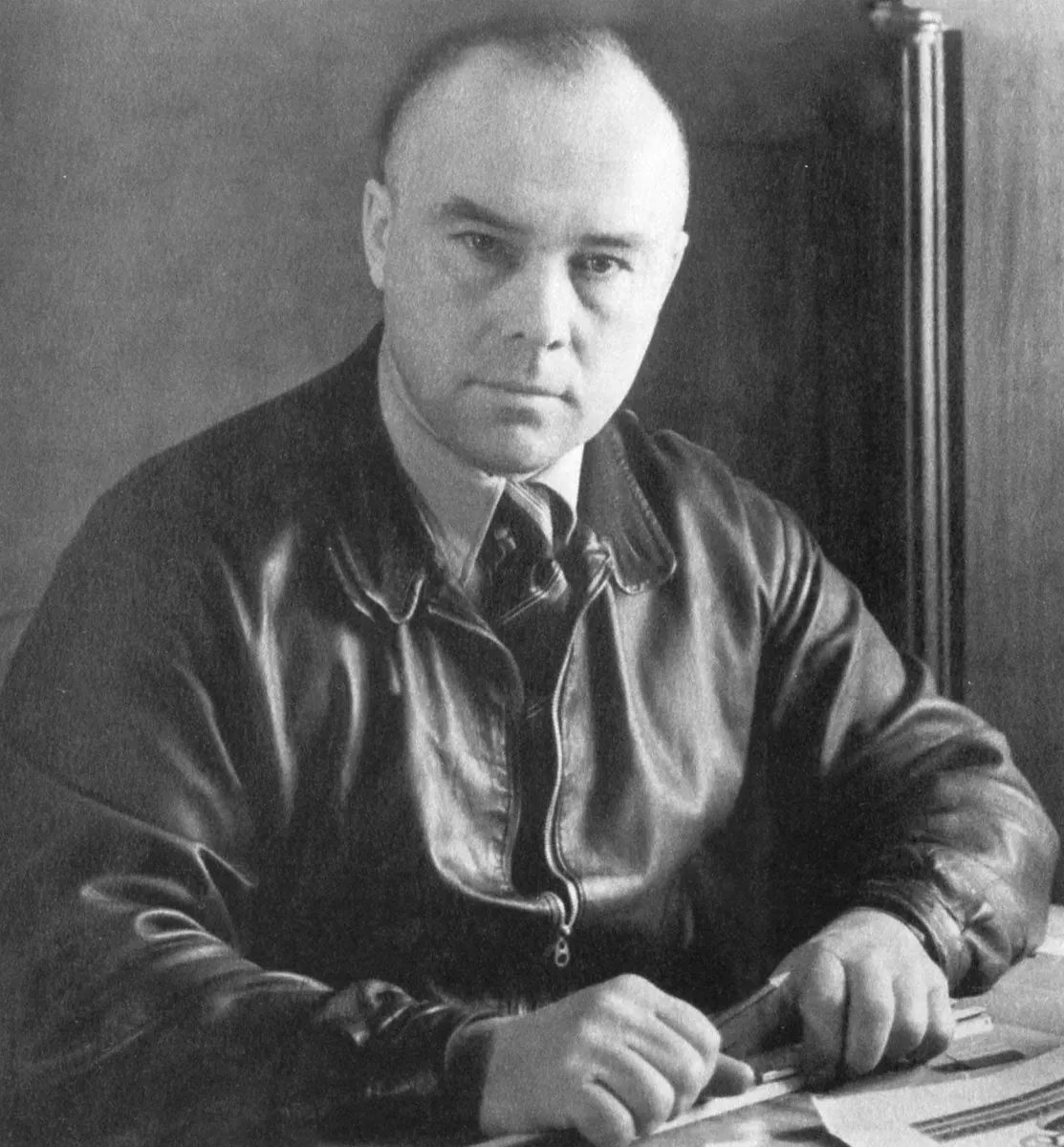
In October 1929, aircraft designer Nikolai Polikarpov was arrested, accusing him of “participation in a counter-revolutionary sabotage organization,” sabotage and disruption of experimental work, for which evidence of errors and shortcomings in design activities was given out. Polikarpov was suddenly reminded of everything: that he was the son of a priest; that he graduated from seminary; that before the pilot took off on a prototype he often openly blessed him: “Well, with God!”... Also, the designer had incredible courage to defend his position - even if it differed from the opinion of the Leader himself.
Nikolai Nikolayevich was sentenced to death; he was 37 at the time. The designer’s daughter, Marianna Polikarpova, later recalled: “Mom brought him parcels and after the meeting she came home not herself: when he was taken to her, he kept looking around and hiding his head in his shoulders: apparently, they beat him.”
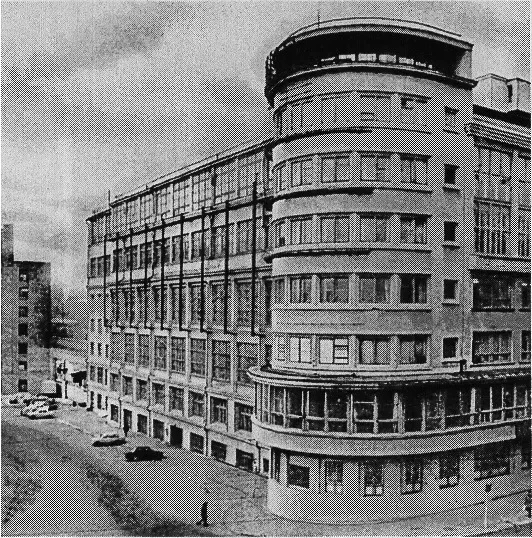
It was then that the idea of “sharashka” was born. The Moscow “air Gulag” was placed right on Khodynka. As those who lived and worked in the “7th hangar” recalled, it was divided by a partition. In one part there were beds along the walls, and in the middle there was a large table; in another there were drawing boards and office tables.
As Genrikh Yagoda brilliantly formulated: “Only working conditions in a militarized environment can ensure the secrecy and effective activity of specialists in contrast to the corrupting environment of civilian institutions.”
The territory of TsKB-39 was surrounded with barbed wire, and guards were posted along the perimeter. They fed decently: white bread, sugar, butter... Polikarpov bought oranges and tangerines, inaccessible to mere mortals, in the prison store and treated them to the visiting family. Polikarpov’s daughter recalled: “Dad, knowing how difficult life was for us, always prepared something tasty for us when we came.”
Seeing that the “enemies” were coping with the task, the OGPU decided to complicate it. Aircraft designer V. Corwin-Kerber recalled: “One evening the authorities arrived... They brought baskets and boxes into the room. Immediately wine and appetizers appeared on the tables. We were invited to the table. Everyone was wary, we could not understand what purpose the banquet was pursuing.”
Clarity soon appeared: “Gai ( the head of one of the departments of the Economic Directorate of the OGPU, who oversaw TsKB-39. - P.G. ) took the floor. He praised those present for their work and added that by decision of the command, the construction deadline for the fighter aircraft from June 1 was postponed to May 1, and the mock-up should be presented on March 26. It was impossible to challenge the new deadlines. I had to assure the management that the team would cope with the task.”
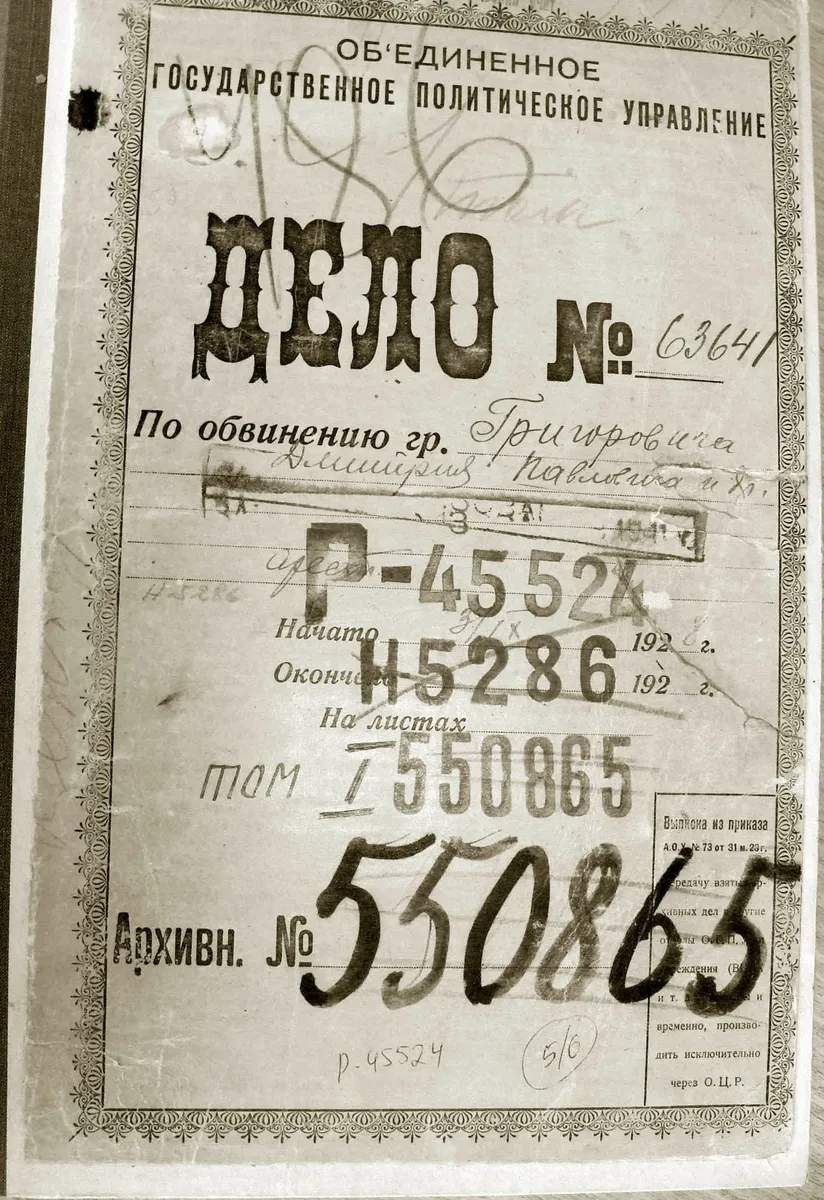
They “coped it”: in total, the creative team under the leadership of prisoners Grigorovich and Polikarpov designed 13 versions of the new fighter: with different engines, weapons, etc. The first prototype received the marking VT-11 (VT - internal prison). The VT-11 was first flown in April 1930 by pilot Buchholz - he reported that the machine was beyond praise; after which the leadership of the OGPU was finally convinced of the effectiveness of the methods practiced by the department.
It was decided to reward the prisoners. Visits are now allowed as much as once a week. Grigorovich was even given leave and allowed to go to Yalta with his family. On the trip to the sea they were accompanied by a guard.
The OGPU decided that it was too early to part with the imprisoned aircraft designers - they were working well! - and set new tasks: to create (in an even shorter time) a two-seat fighter, a four-engine bomber for naval aviation, the first domestic cannon fighter, etc.
In addition, prisoners received relief. For Polikarpov, for example, the “tower” was replaced with 10 years of camps. And a couple of weeks later, the OGPU board decided to consider the sentence against Polikarpov suspended, and he was amnestied. What should a person have to endure from such somersaults of fate? It is not surprising that at fifty-two Polikarpov died.
If German aircraft engineers had been told that their Soviet colleagues were creating new aircraft on bunks, between interrogations and executions, the Germans would probably have considered this too far-fetched propaganda.
The successful experience of TsKB-39 was not forgotten: in 1938 they returned to it - in Bolshevo, near Moscow, they organized TsKB-29 (Tupolev Sharaga), the largest design organization of the Union.
Characteristic features of German aircraft
At the end of April 1940, aircraft purchased (from friendly Germany) and piloted by German pilots began to land in Moscow. Among them were Bf-109E and Bf-110C fighters - five units of each brand, two Ju-88 and Do-215B bombers, two Fi-156 communications aircraft - a total of 38 aircraft of 12 types, most of them manufactured in 1939.
German aircraft were sent for study to the Air Force Research Institute, the Flight Test Institute, TsAGI, CIAM and other organizations. A scrupulous study and testing of the arriving aircraft lasted from May to October. In December 1940, the head of the Air Force Research Institute A. Filin prepared a special report in which it was noted that German fighters were significantly faster than the I-16, but were 40–60 km/h inferior to the latest Soviet aircraft.
Initially, fears were caused by the He-100, which the Germans presented as a serial fighter; it could reach 650 km per hour. But it quickly became clear that this record-breaking aircraft was a dummy and “not in a reliable condition for combat operation.” As for the bombers, there was not much difference at all, and the new Soviet models, in comparison with the German ones, “had better speed qualities.”
Another thing is that German aircraft were significantly superior to domestic ones in terms of performance, were convenient for maintenance personnel and crew, were easy to learn, were distinguished by a thoughtful design, a high degree of unification, and were rich in instruments and automation.
In terms of the number of operational aircraft, Soviet aviation was many times greater than the armed forces of potential opponents. At the same time, the quality of the aircraft was steadily declining.
But even today it may seem to some that the idea of “sharashkas” has generally justified itself. Well, yes, we had to “spur people on” a little: it was such a harsh time, there was no time for sentimentality: it was urgently necessary to “catch up and overtake.”
So I had to use a whip. But if it weren’t for the whip, the cars would probably have been better, and they would have cost much less blood.
Monstrous production plans led to simplification and disruption of technology. The noted “gap between the ability to design an aircraft and produce it very poorly and for a long time” only grew, or rather, they were now doing it poorly, but quickly. Therefore, the point is not that the Germans had better planes - the Germans made them better, without Stakhanovism and National Socialist competitions, and for some reason they did not have pests. Aircraft were not built in the dungeons of the Gestapo. And Hitler’s generals somehow knew that “from the moment the drawings of the aircraft began to be drawn up until it was put into service, it took from 4 to 5 years, and the corresponding period for aircraft engines was 5–6 years.”
On the eve of the invasion of the USSR, the Air Force of the Third Reich had 6,852 aircraft at its disposal - both in the West and in the East. This is ridiculously low.
More than that. In the German “air armadas” allocated to participate in Operation Barbarossa, there were only 3,909 aircraft of various types.
And the “peace-loving and trusting” Stalin had “only” 2363 “new types of combat aircraft.” Together with the “old” ones - 24,488 aircraft, including 18,759 combat vehicles (the French or British fought on the same - or worse! - aircraft). In five border districts alone, the aggressor was confronted by more than eight thousand vehicles!
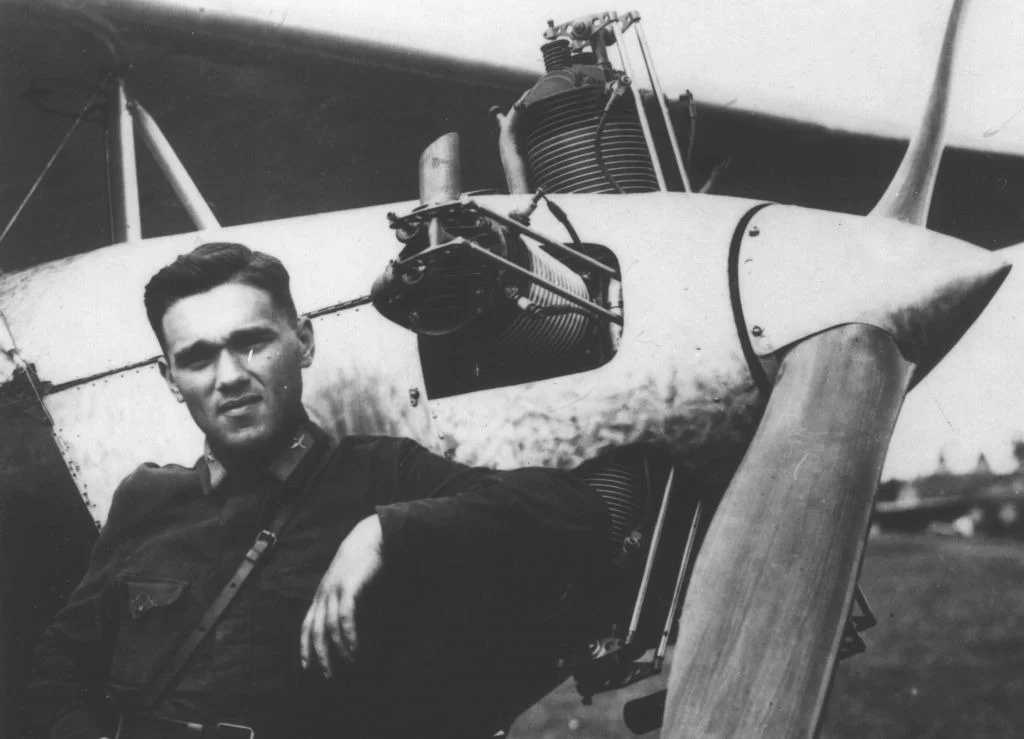
Stalin’s favorite aircraft designer A. Yakovlev, who suddenly became deputy people’s commissar, happily cites in his memoirs the following words of the Boss: “We believe you, even though you are young. You are an expert in your field, you are not associated with the mistakes of the past, and therefore you can be more objective than the old specialists, whom we really trusted, but they led us and aviation into a swamp.”
Yakovlev believed that this was a flattering and justified assessment.
Stalin, as accustomed to focusing on young enthusiasts, experts in their field, “not associated with the mistakes of the past,” continued to focus on them.
And being disappointed, he mercilessly shot.
"Humanity" of the system
Nobel laureate, academician Zhores Alferov knew the German nuclear scientist Nikolaus Riehl well and spoke about his meetings with him:
“Nikolai Vasilich ( as Alferov called Ril. - P.G. ) made a very significant contribution to the creation of our atomic bomb. He was engaged in the purification of uranium metal. Worked in the city of Elektrostal. I met and talked a lot with Beria. In total, three hundred German specialists took part in our atomic project somewhere. When the atomic bomb was successfully tested, there was a big reward. The winners of the Stalin Prize were von Ardenne, Thyssen, and Steinbeck. And only Nikolai Vasilyevich Ril received the Hero of Socialist Labor, and he not only received the Hero of Socialist Labor, he received a car, he received a flying carpet. A flying carpet means the right to free travel for himself, his wife and minor children under age throughout the entire territory of the Soviet Union by air, rail and steamship transport in first class or in luxury cabins and so on. And he received a house in Moscow as personal property and a dacha in Zhukovka.
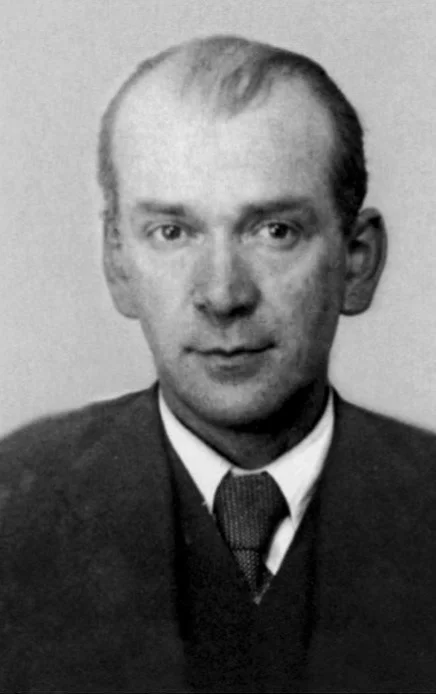
Riehl very highly appreciated the work of Avram Pavlovich Zavenyagin, who supervised the German specialists. But for a long time there were no results, and one day Avram Pavlovich told Ril that, you know, I can no longer protect you. Time passes, but there are no results, they begin to think that the Germans are sabotaging. Then, says Riehl, I did the following thing, and never gave such arguments again. We brought from Germany, he said, a lot of materials, some equipment that was captured, including rubber for fore-vacuum pumps, and this rubber ran out. And for the nuclear project, they assigned the Red Triangle, which actually made galoshes, to make hoses for forevacuum pumps, and they made it so that the cross-section looked like a pig’s tail, and not the normal round internal one. And I cut off, he says, a piece of this hose and brought it to Zavenyagin. I say, look what they give us. He took it. Later, Riehl learned that the director of the Red Triangle received a prison sentence. And I, he says, understood. Further, if something didn’t work out for us, I never blamed it on others, I always said: we are to blame, we didn’t understand something.”
But there is also such an opinion.
“Obviously, the decision ( about sharashkas - P.G. ) was not ideal. However, it was much better than if scientists had built roads or cut down forests.
Of course, you can criticize the decision of Beria and Stalin to create “sharashkas”, shout about the ruined destinies of people, as liberals like to do. However, you can listen to the opinion of those researchers who believe that thanks to the 4th special department of the NKVD-MVD of the USSR, many, many Soviet scientists and scientific specialists were saved.
The activities of the special technical bureaus of the NKVD during the Great Patriotic War confirmed the viability and high efficiency of this system.
We can say that in the “sharashkas” the creative potential of Soviet scientists was realized with maximum benefit for the Soviet Union and the people (at that time).”
This is what the Military Review website wrote on October 11, 2012.
Amazing country! The people she raised are amazing! It is proposed to compare the benefits of a scientist doing his job in a prison cell, and him doing his job in a logging camp! There is no third option! “Many, many Soviet scientists and scientific specialists were saved (in sharashkas!).”
Contempt for a person (anyone: a great scientist, writer, mechanic, peasant), for his aspirations, thoughts, abilities, possibilities - as opposed to the “state interest”, as self-appointed leaders and their lackeys understand it.
Vladimir Beshanov in the last paragraph of his book “Stalin’s Flying Coffins” makes a conclusion that you cannot argue with:
The “system” that had absorbed Lenin’s contempt for mental work, that cultivated violence as the universal key to solving any problem, that operated on the “masses” and ignored the “units”, was convinced that fear was the best motivation, prison and barracks were the best forms of organizing any activity, a system that believed that there was not much difference between the collective farm and the Air Force, and that a cook could rule the state, had a chance to win any war only in numbers.”
Slave labor cannot be comparable in efficiency to the labor of a free person. Its efficiency is completely different. Therefore, despite the fact that the arrested designers did everything possible and impossible, the designers of Germany, England, and America, working in completely different conditions, at the same time produced cars no worse (and even in some places much better!) and in a much shorter time than those created in the “sharashkas”: even by such geniuses as Polikarpov, Tupolev and their comrades.
I'm not even talking about the fact that their tasks were set by those who were infinitely far from the same aviation - Abakumov and others like him: they, apart from beating with a stick and bullying, did not know how to do anything in principle.
Colonel Mikhail Rebrov, a columnist for “Red Star”, wrote for many years about the “conquest of outer space”, was personally acquainted with the heroes and creators, the real leaders of this secret industry, and had frank conversations with them - Kuznetsov, Ryazansky, Barmin, Pilyugin, Glushko, Korolev...
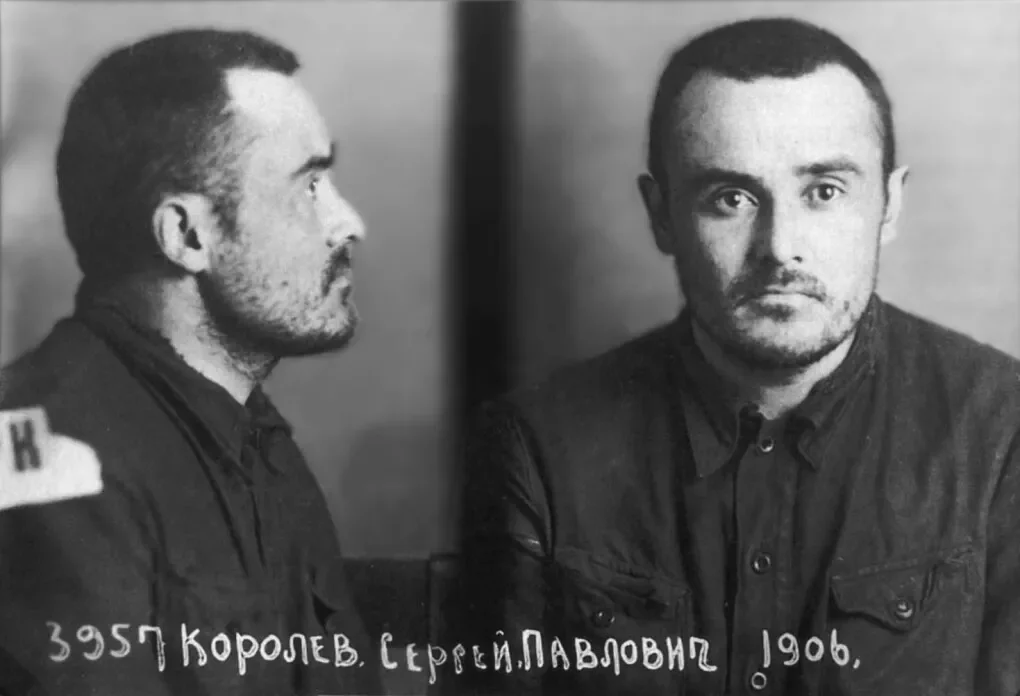
Rebrov left the manuscript “Council of the Chiefs”, in which he included his essays about the people thanks to whom we still retained our place in space. Relatives published this book - “for themselves”, with a circulation of 15 (fifteen!) copies. What were the six great designers, members of the “royal” Council, and Sergei Pavlovich himself forced to go through?!
I will cite only one fact from Korolev’s conversations with Rebrov. Sergei Pavlovich, who was also beaten during the investigation, sentenced to ten years, served as a result of denunciation in a death camp in Kolyma and escaped from there to Tupolev’s “sharashka”, was rehabilitated only in 1959, having already headed the Soviet space program. But until the tragic death of the Chief Designer, NO ONE even apologized to him!