Report from the Valaam Monastery, where worker Natalya Prostakova died
18+ This material (information) was produced, distributed and (or) sent by a foreign agent Media project “New Tab” or relates to the activities of a foreign agent Media project “New Tab” Author Olesya Ostapchuk May 19, 2026 read: 39 min.
At the end of January, 36-year-old Ekaterinburg resident Natalya Prostakova disappeared and was then found dead on the island of Valaam. Before that, she spent six months as a worker at a local monastery. The versions of the circumstances of her death are extremely contradictory: some say that Natalya hanged herself under the influence of demons, others say that she froze to death in one of the most tourist monasteries of Valaam. Journalist Olesya Ostapchuk from Reporter Stories spent two weeks as a laborer in this monastery to understand what Natalya Prostakova went through and why none of the people nearby could help her. New Tab is publishing this report in full.
From the text you will also learn:
What is labor in an Orthodox monastery?
How to understand that demons are approaching you?
Why are workers on Valaam fed with trout steaks and red caviar?
Why do raccoons live in the monastery?
Should you look for a husband in the church?
Do they monitor the mental state of workers on Valaam?
Do they sell alcohol in the monastery?
Demons are approaching
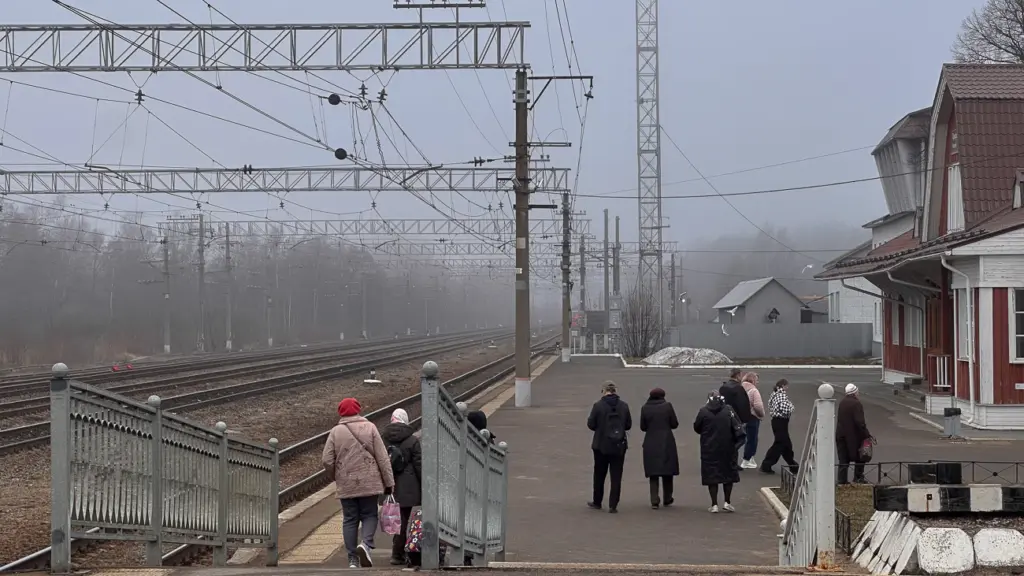
At the station in Priozersk, the working women are immediately visible: a dozen women in headscarves with suitcases, large backpacks and bags get off the train. I notice two people quickly moving towards a taxi and ask to get into the car with them. The car will take us to the monastery pier on Lake Ladoga, and from there the ship will take us to the island of Valaam.
One of my companions looks just like you imagine church elders - small, nimble, wearing glasses and a headscarf. This is not the first time she is going to Valaam and not as a worker, but because of a vacancy. For her, such trips are a way to make good money. They pay more here than in her native Belarus, and you eat and live at the expense of the monastery.
Do they pay for work at the monastery?
There are several categories of workers on Valaam. The first to respond to vacancies and perform some functions for a salary. The second are laborers , they work “for the glory of God,” that is, for free. The minimum period of work is three weeks in winter and two weeks at any other time of the year. The monastery provides workers with food and accommodation. Some workers later find a vacancy and remain to work full-time in the monastery. The third category is volunteers , they are also provided with housing and food; they are distinguished from workers by the fact that they may not be churchgoers, and they also work fewer hours.
“And I’m actually from Siberia, the city is in the middle of nowhere,” says the second, 45-year-old Sveta. Looks well-groomed: blepharoplasty, rhinoplasty, lip augmentation, tattooing of eyebrows, eyelashes and winged eyes. “I also have breasts done,” she adds. “I just took off my hair extensions before the trip.” You never know what will happen to them here.” Sveta has earrings with diamonds in her ears. When she left home, her adult son joked: “The whole entrance is wondering where you’ve gone again: back to Bali? To Egypt? To Turkey? And Sveta - to the monastery...”
Working women come either to Priozersk or to Sortavala to get to the pier from there and sail to Valaam by boat
Upon arrival on the island, the novice who deals with workers in the Deanery Service assigns us to work in the refectory on the farm and accompanies us to the cell - the room where we will live. From this moment on, I am beginning to get used to the fact that in the coming weeks I will be wearing a scarf and a long skirt, and at the same time to the monastic vocabulary: everything around is “brothers and sisters,” many activities require blessings, a room is a cell, work is obedience, instead of gratitude - “God save” or “God bless,” the result of actions is “as the Lord wills,” and instead of “good night” - “angel to bed.” After several long services, the prayers remain in the head and fall on the tongue.
The monastery on Valaam appeared in the 15th century. For a long time the island was part of the Russian Empire, after the revolution of 1917 it went to Finland, and during the Soviet-Finnish war of 1939–1940 it found itself in a combat zone. In the fall of 1944, Soviet power was finally established in Valaam, which began to use the monastery complex for economic needs. Labor was imported from the mainland and settled there. And only in the late 1980s did the monks return to Valaam. After the monastery was transferred to the Russian Orthodox Church, ordinary people began to flee from the island. Those who did not agree to move to the mainland were evicted through the courts. It was important for the monastery to remain on Valaam alone. The former apartments of local residents are now housing workers. We were placed in one of these apartments.
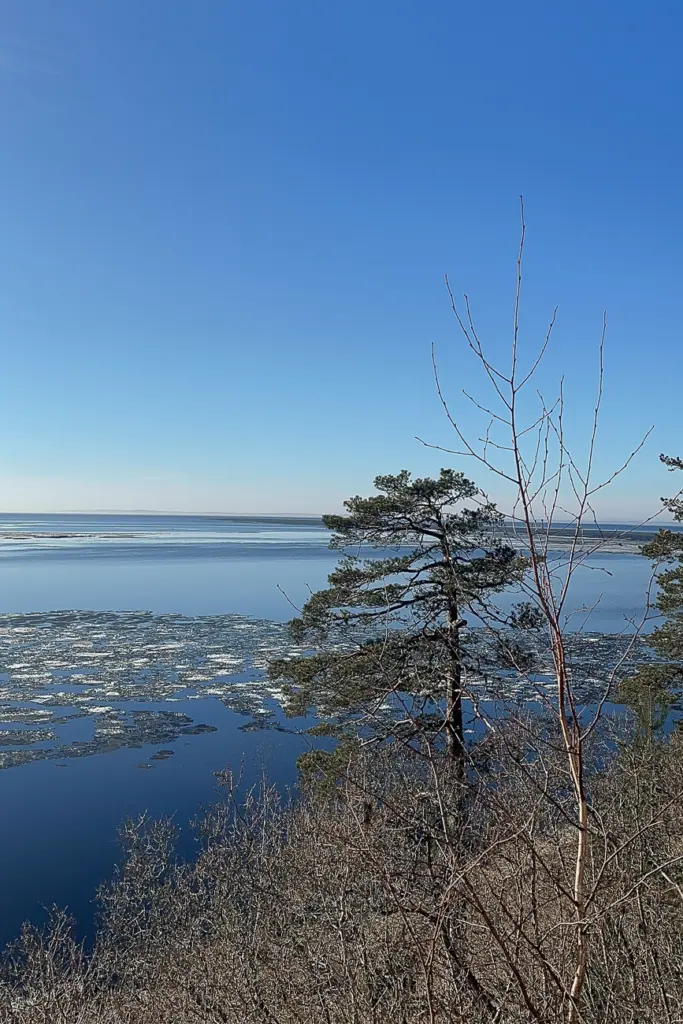
Ladoga completely froze this year in mid-February, so when Natalya Prostakova disappeared, many were worried that she could walk on the fragile ice and fall through. The minimum period for arrival of workers in winter is 3 weeks; the monastery does not accept shorter periods due to difficulties with navigation
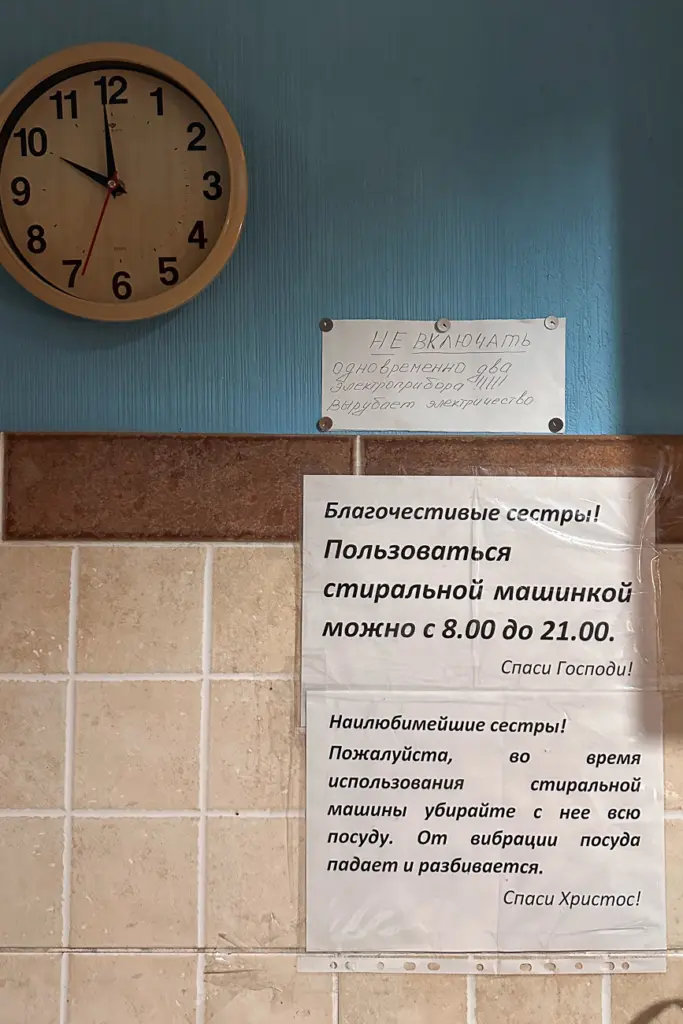
One of the workers meets us in the cell. Reluctantly, trying to finish the story quickly, she explains the basic rules of the hostel. Later I will understand this state when, on my day off, I myself will be forced to conduct such a tour of the cell. There is no separate person for such an activity in the monastery, and most sisters do not have the resources to be kind to newcomers.
In addition, as soon as we arrive, we, without meaning to, cross someone’s path. Because of our arrival, another difficult worker, Dasha, whose stay was about to expire, has to move to a bed on the second tier, which she is not happy about. For us, who came here for two weeks, the struggle for a place in the sun in the monastery seems strange: for where to sleep, and in what conditions to be. But for those who have been living here for several months and know that they will stay for a long time, this turns out to be fundamentally important.
On Valaam you often have to hitchhike to get between monasteries. You pray: “Lord, send the car.” A minute later you turn around, some monk is driving and takes you to the desired temple
— Have you never worked in a women’s team, where there is constant intrigue? - 47-year-old worker Yulia, with whom we will work on the same shift, asks me in response to my bewilderment.
“No,” I answer.
“Then you won’t understand.”
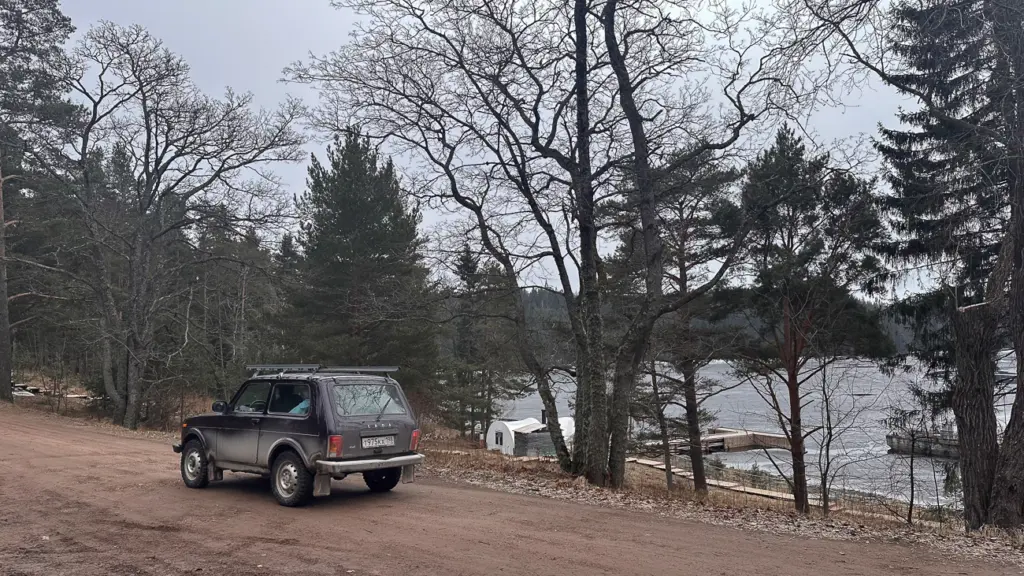
Valaam has a northern island climate. Even in summer it can be quite cool here
At night, Dasha will come, grab her things left under the bed that Sveta occupied, and run away somewhere, slamming the door. The next morning Yulia will say that the monastery is the place where there are the most demons, and the sisters have many temptations.
- And how do you understand that demons are approaching you? - I ask.
“When the sisters start attacking you, then you’ll understand,” she answers.
Subscribe to the New Tab channel in Telegram. There we talk about how people, animals, and plants live in the regions of Russia
What is more important than prayer?
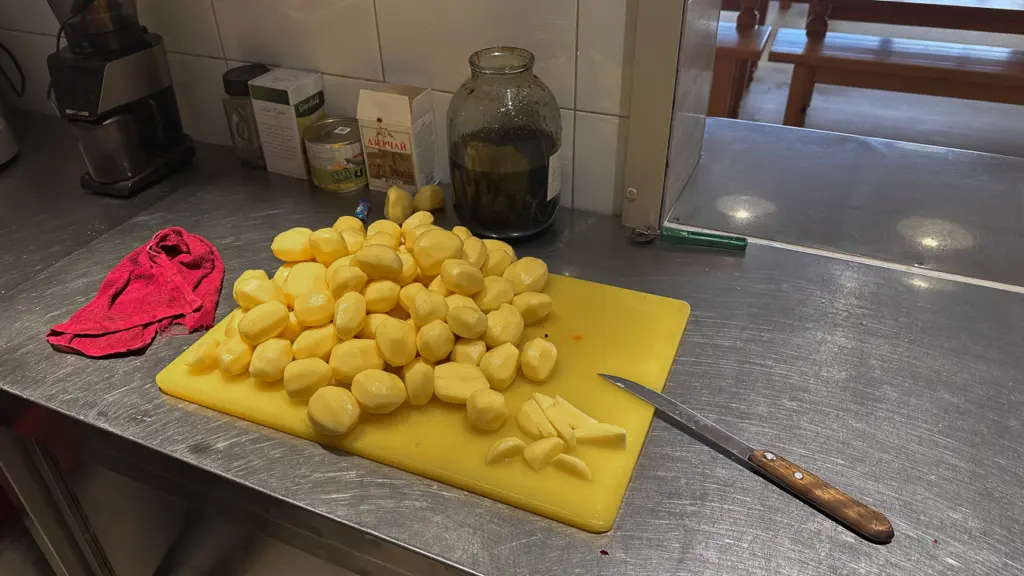
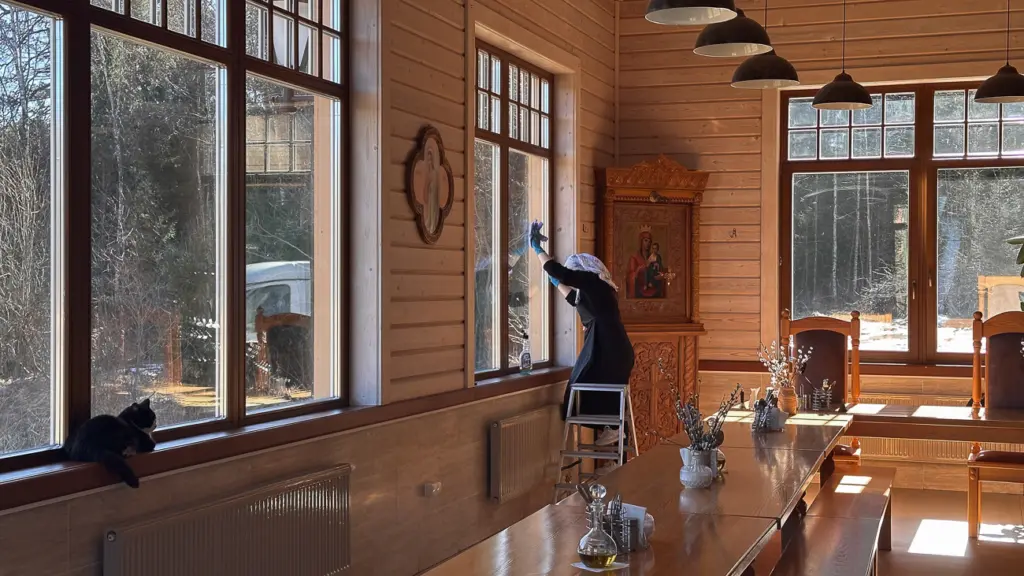
Every morning on obedience days, around nine in the morning, a car comes for us and takes us to the farm. Unlike weekends, when there are only two meals - at lunch and in the evening - during obedience in the morning we have time not only to pray, but also to have breakfast. Afterwards, we distribute obedience. The main task is always the same - to feed about 50 monks and workers twice a day. Typical catering work: cleaning, cutting, cooking, frying, setting tables in the refectory, washing dishes, floors and other surfaces. To do this, you have to work 10 hours with minimal breaks, mostly on your feet.
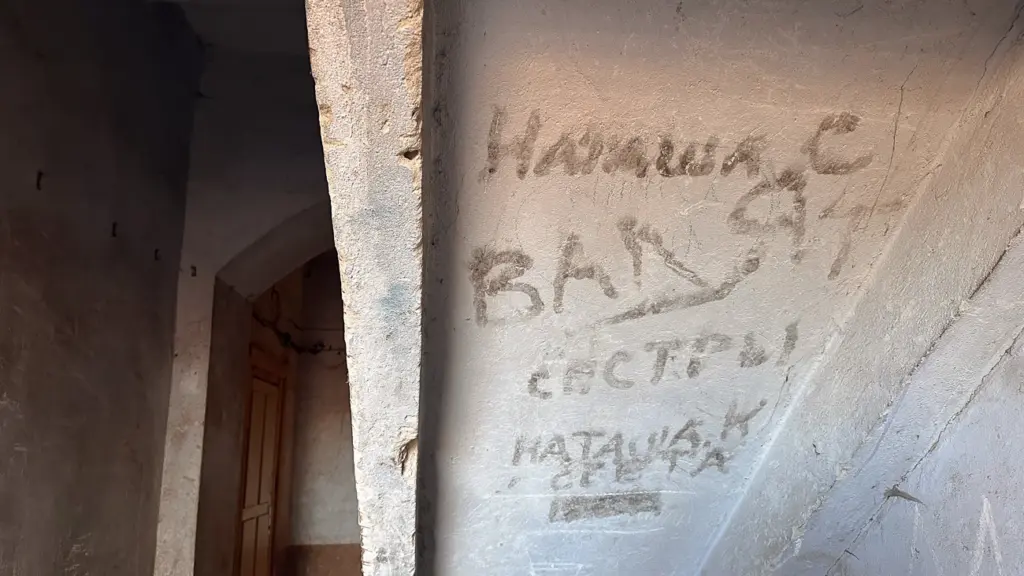
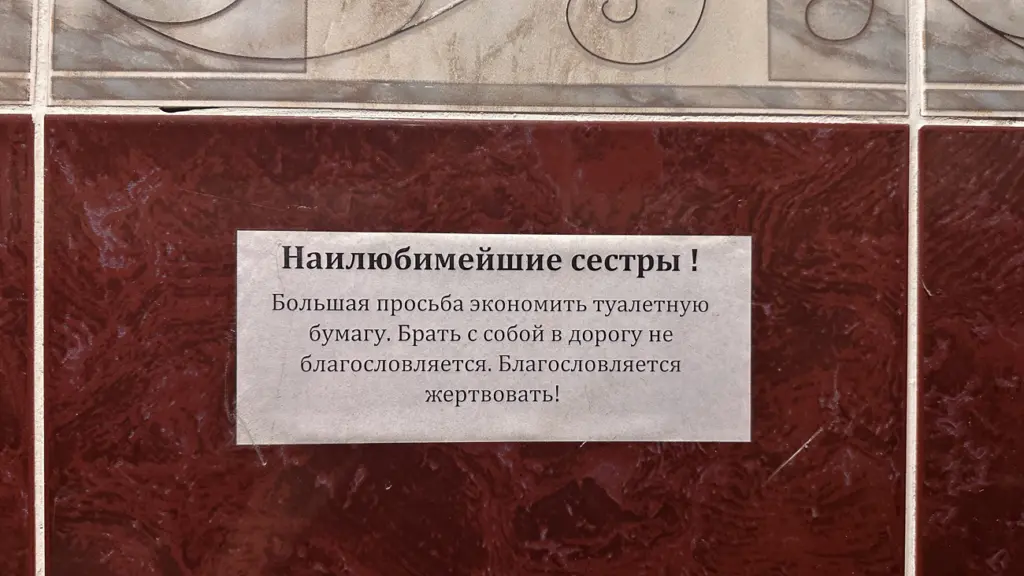
The inscription is on the wall at the entrance of our cell. It’s hard for many to leave here because you become attached to your sisters, like friends in a pioneer camp. The strictness of the rules of community life is always balanced by Orthodox linguistic constructions. Many people hide passive aggression behind them.
On the first day of work there are four of us on shift. Sveta is sent to wash the dishes, Yulia takes on the functions of a cook, and my cellmate Anya and I work in her support. During the first few hours I need to finely chop several kilograms of onions. I try to cut faster, but because I’m not used to such volumes, I’m not good at it. Yulia urges me on, scaring me that we won’t have time to feed the men. Tears from onions blur my eyes.
“Read the Jesus Prayer,” advises Yulia. — Obedience is very important, girls. Obedience is more important than prayers. It is important to do everything with love, not to be lazy, to try, and then the Lord will accept obedience!
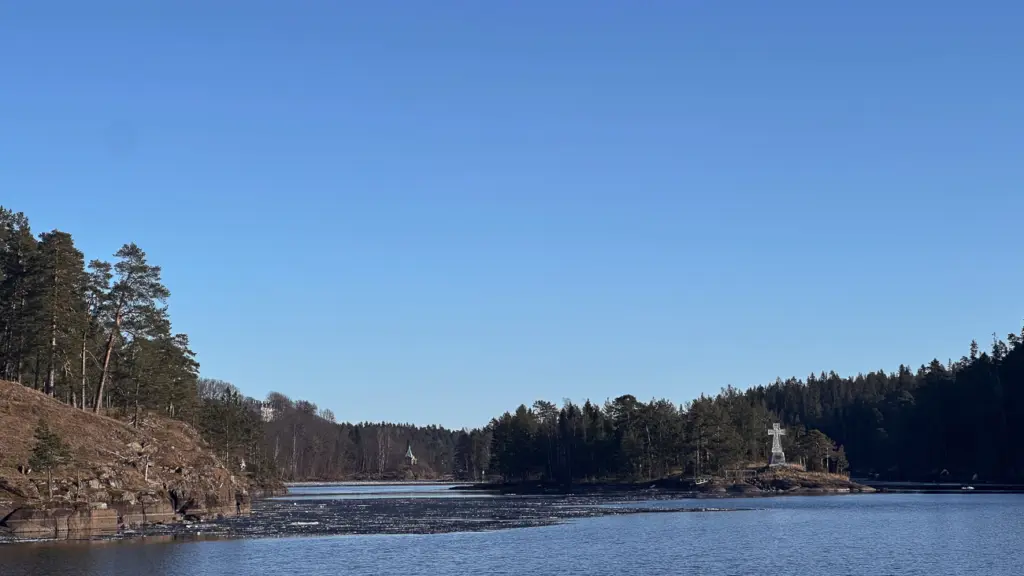
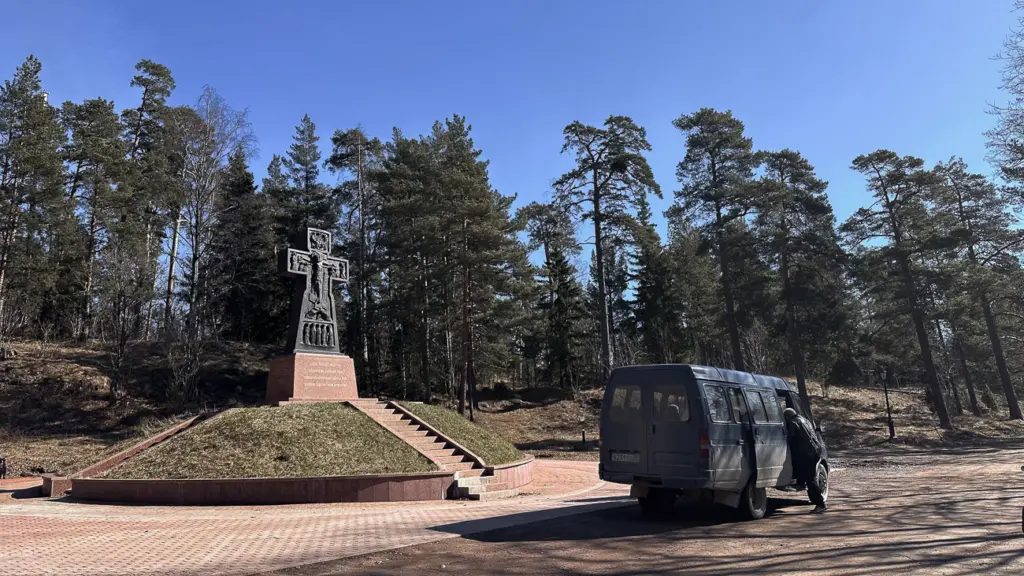
Many people race on Valaam. In August 2007, one of the monks lost control of his scooter and died in an accident. There is now a cross at the site of his death, but even next to it many do not slow down
After several hours of high-speed cutting of garlic, onions and potatoes, everything is already floating before my eyes. Next up is a big trout, still alive. Yulia asks who will clean the fish. Sveta refuses. Then Julia shouts to me:
- Olesya-ah-ah, go clean the fish!
“Olesya, don’t,” Sveta stops me. - I'll clean it, where is the fish? — she clarifies and leaves for the workshop.
“I just hate this,” Sveta will explain to me later. “She sees that you cannot answer her aggressively, you are all so polite, so she presses on you, and in general on those who are weaker.” And I don’t like that. You go and attack the strong like that. As a child, I always fought only with the strongest boys in the yard, and protected the weak! I hate cleaning this fish. But I see that you’ve never cleaned fish either. Well, of course I'll go. If someone offends you here, tell me right away!
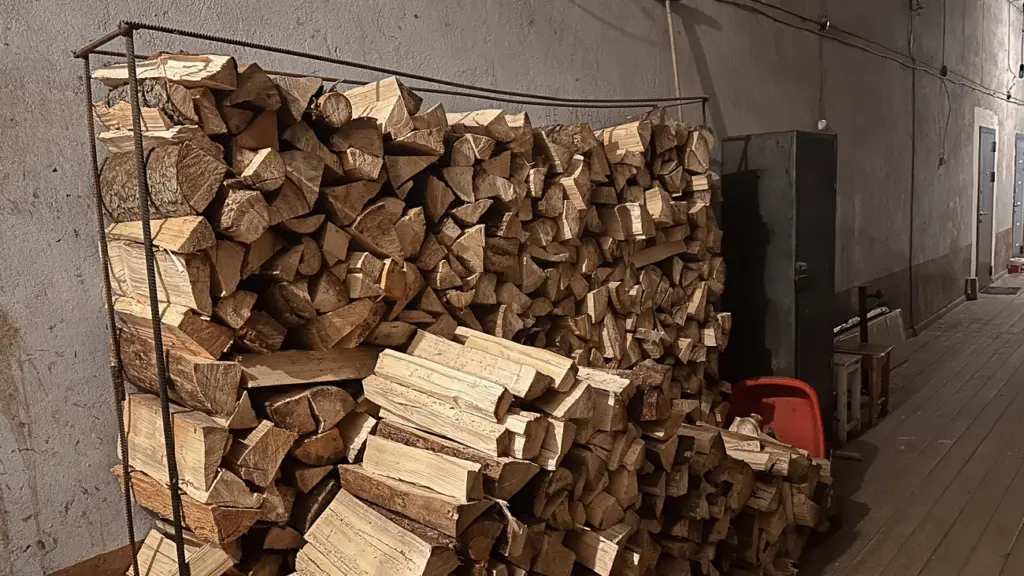
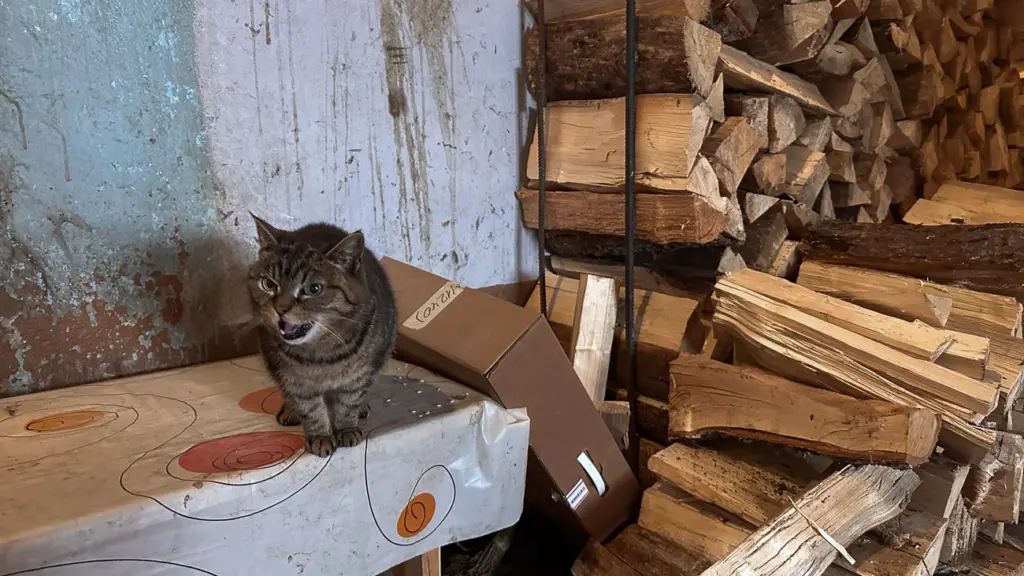
Many cells are heated by stoves. Behind the firewood in the entrance, someone wrote a commandment: do not steal In the entrance, as in many other rooms of Valaam, cats live. The sisters feed them whiskey
At dinner, Yulia assures that she behaves carefully with us - much better than her sisters treated her when she came to obedience in the refectory a month before us.
“When I first came here, they persecuted me like that!” I was always “bring it, serve it, move on, don’t disturb me.” And I’m a normal, loyal person, mind you. That is, I don’t shout, I don’t insult, I don’t swear, nothing. And they shouted at me: “Run! Why are you standing? Come on quickly!” Yulia imitates other people’s screams so authentically that it becomes uncomfortable.
— Did you hit anyone in the face here? — Sveta is interested.
There is a deathly silence among the sisters.
“No,” Yulia answers.
“I can,” says Sveta.
The sisters fall silent and continue to eat.
Valaam is sometimes called Northern Athos because of the monastic tradition, strict spiritual life and the system of monasteries - small secluded monastic settlements scattered across the islands
“It’s not normal to work like this: four people set a table for 50 people.” Here, many of the priests have cars, but couldn’t they buy a food processor for the kitchen? - Sveta is indignant.
“Father blessed exactly this number of people to obey in the refectory,” explains one of the workers.
“Girls, obedience is very important,” Julia begins again.
- Are you wiretapped here or something? Why can't you talk normally? - Can’t stand the Light.
"The Lord will rule"
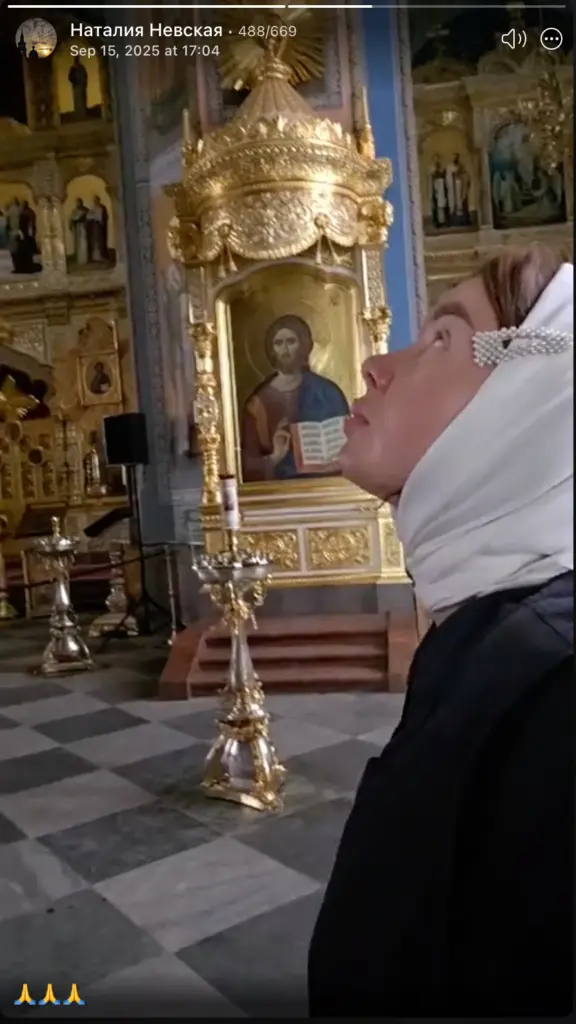
Here in the refectory on the farm in the fall of 2025, Natalya Prostakova also passed obedience. She, like Sveta, cannot be called a typical worker. In her “worldly” photos, she is blonde with bright eyebrows, eyelash extensions and red lipstick on her pumped lips. However, even in the monastery many called her a “doll.”
In Telegram stories, the contrast is striking. First, travel: the opening of the drag racing season in Altai, safari in Sri Lanka and Kenya, hookah against the backdrop of sunset in the Maldives. And, suddenly, Valaam: videos with cats (there are really a lot of them here), reasoning that on the island she loses interest in the opposite sex, photos with religious literature from the monastery library.
Cat on the farm. Some cats have been blessed to visit the kitchen and can easily walk around the refectory
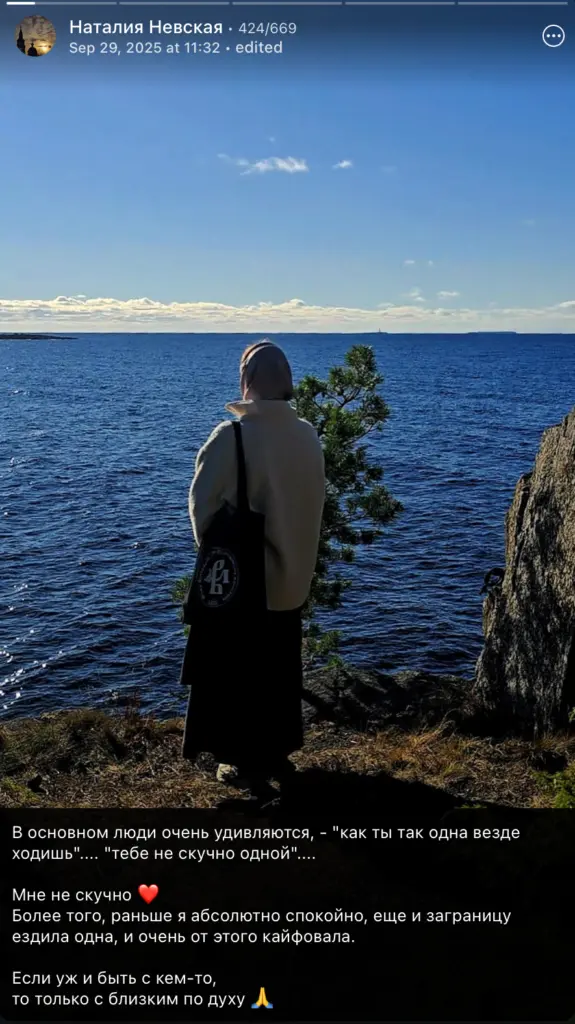
In September 2025, Natalya posted in her story how she drinks “brotherly coffee” overlooking the lake and walks alone through the forest in a pink scarf, a white plush cape and fashionable glasses, trying to find the rock, which is called “The Master of Valaam” . Now she talked about how miracles were happening to her on Valaam and her “pious desires” were coming true. That same fall, after reminiscing about a luxurious holiday abroad, Natalya wrote: “We dreamed of warm lands and that’s enough, we’re heading to our favorite Valaam service. All-night vigil. Because it is more valuable than all this worldly vanity.” Then she will post a photo of the prosphora and write that this now pleases her more than a watch for 200 thousand rubles: “perhaps it’s all about who these or those gifts are from.”
The sisters assure you: on Valaam you need to be careful with your words, because here God and the angels immediately hear you. Various miracles are discussed here all the time. “One of the workers left here because her relationship with her daughter was not going well; it was as if the daughter didn’t care about her mother,” says one of the sisters. “And so, imagine, while she was here, her daughter began to call her, write to her, worry, and in the end she also came here to undergo obedience.”
After several hours of peeling and cutting vegetables, everything floats before my eyes. Even before one task is completed, a new one immediately appears, sometimes we work without a break The farm's refectory has good quality food and is always clean. You rarely see cockroaches here
The extent to which some people here begin to rely on God is sometimes extreme. To half of my questions from one of my neighbors Anya, I get the same answer: “I don’t know, we’ll see how the Lord manages.” This applies to whether she will go to work in the morning, and when she will leave the island, and in which city she will live and where she will work.
“There’s a lot of pasta, the Lord has multiplied them,” one of the sisters rejoices in the kitchen.
“Once the Lord multiplied our rolls so much,” adds another.
“Well, don’t fly away,” Sveta tells me after I start playing along with them. - We already have everything around us: “The Lord sent coffee”, “The Lord helped me prepare the pie”... Let’s do without this, huh? Whatever you can handle on your own, you don’t need to ask the Lord.
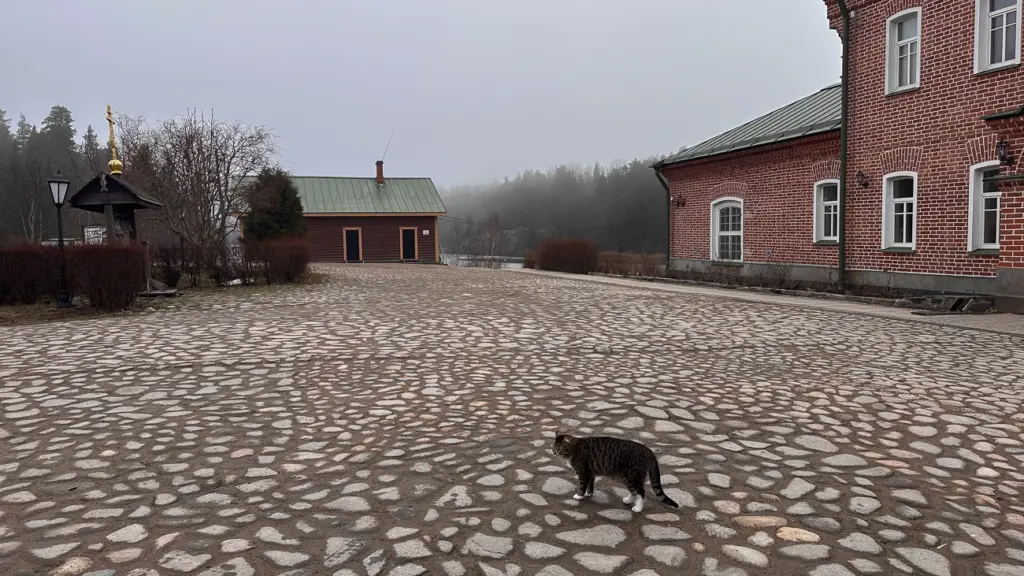
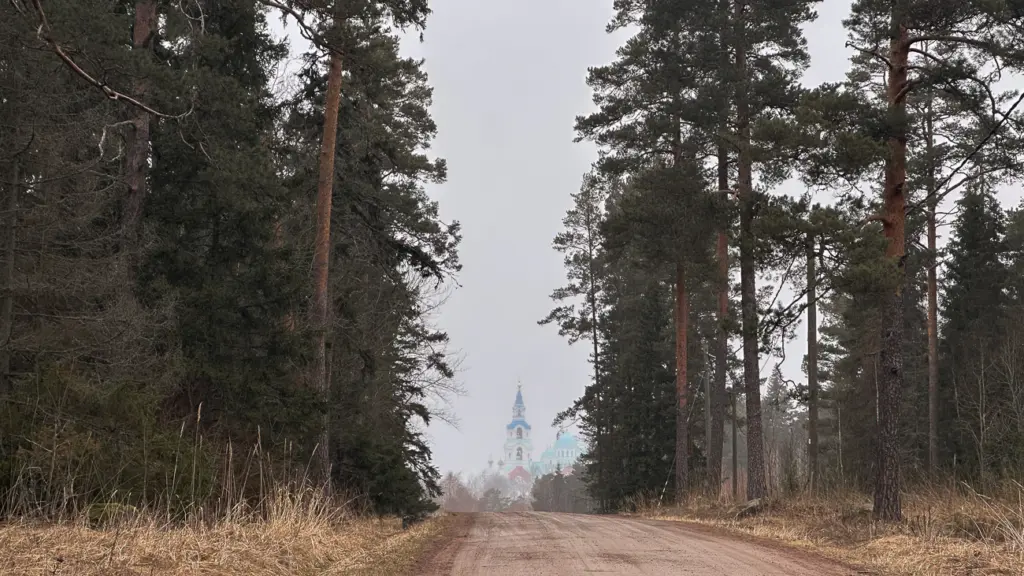
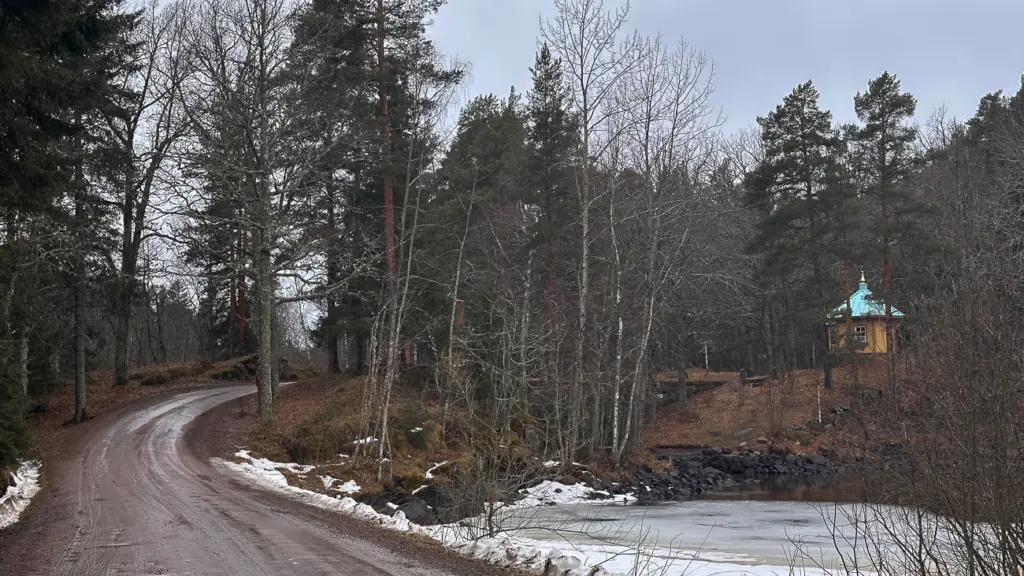
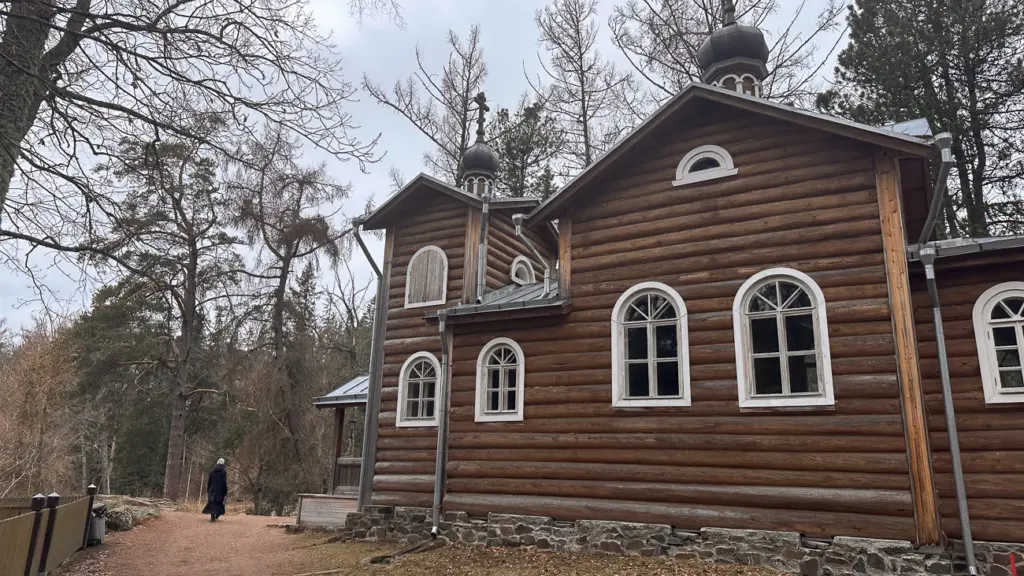
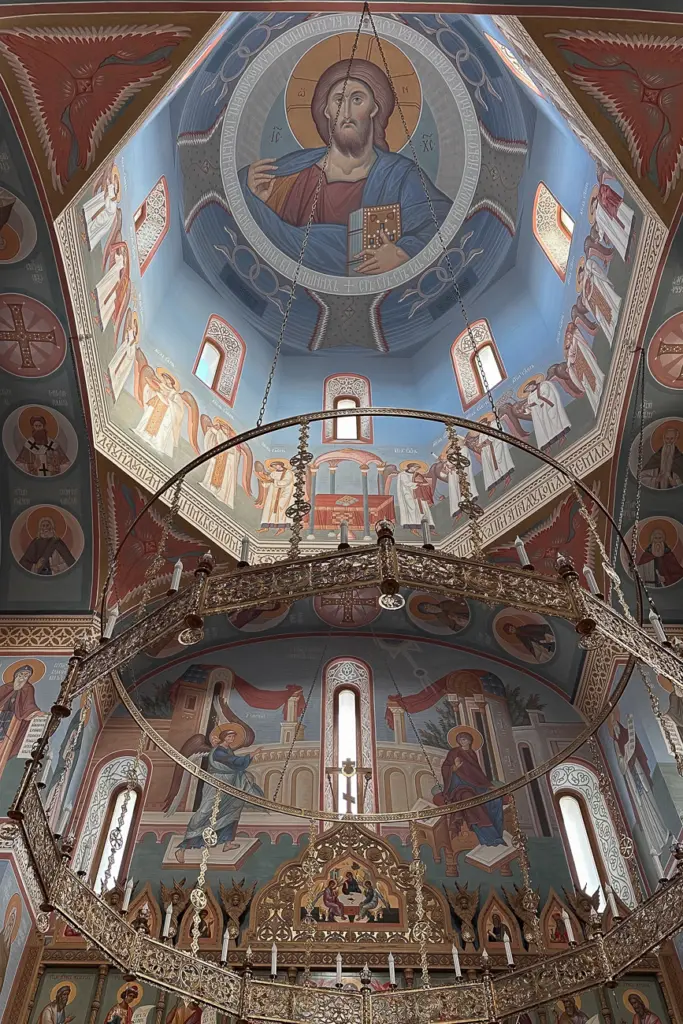
Valaam is both a monastic territory and a natural park. The main cathedral of the monastery was built in the 19th century
Sveta herself, with all her irony, tries to go to all services and considers herself a believer. From her stories it becomes clear that life was not sweet: a lot of violence and injustice, although she almost never feels sorry for herself.
“I just want to believe that at least somewhere in the world there is still at least something bright and real,” she answers when I ask why she needs faith.
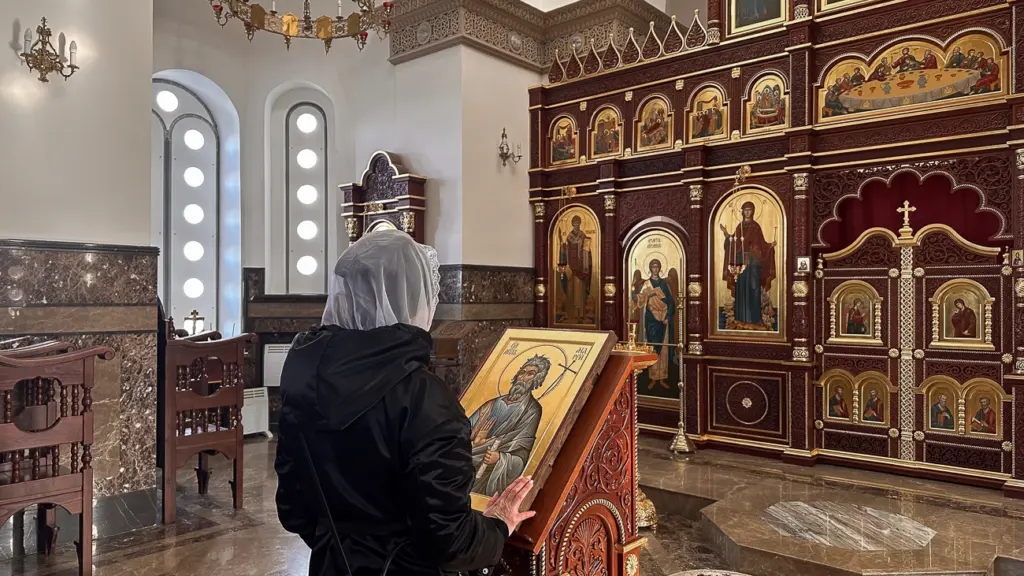
During services, women stand on the right side of the temple, men on the left. Many people sit under the icons if they are tired. At the end - at the entrance to the temple - the sisters are sitting on benches. Anya jokingly calls them “Radio Sisters” - gossip quickly spreads throughout the monastery Unlike ordinary Orthodox churches, local churches have somewhere to sit if you are tired
Sveta herself constantly prays for the war to end. In one of the chapels, where visitors leave notes with wishes, I take out from the wall pieces of paper that someone had put in a zip bag so as not to get wet, and look at what people are asking for. Almost everyone asks for health, freedom from diseases - some from acne, some from cancer - and, like Sveta, “for the war to end.”
After almost two months on Valaam in September 2025, Natalya Prostakova will write in her story that finally “this world has become completely clear to her” and if she were a man, she would go to this monastery forever.
Curse or blessing
Natalya was born in Reftinsky, an urban village of 15 thousand in the Sverdlovsk region, 110 kilometers from Yekaterinburg. A friend of the family said that Natalya’s mother Tatyana worked at a bakery. In the early 2000s, her eldest daughter died in a car accident. “And so, the second daughter disappeared...” shared a friend.
In the 2010s, Natalya moved from Reftinsky to Yekaterinburg, got married, studied at university, took out a mortgage on an apartment and opened her own manicure studio. Then she got divorced, started a new relationship, and, according to her mother, quit her job. "She lived with a young man, well, too, how did she 'live'? Either they live, or they don't. Everyone is on nerves, depressed and all sorts of things, then they broke up with him,” Tatyana described her daughter’s personal life.
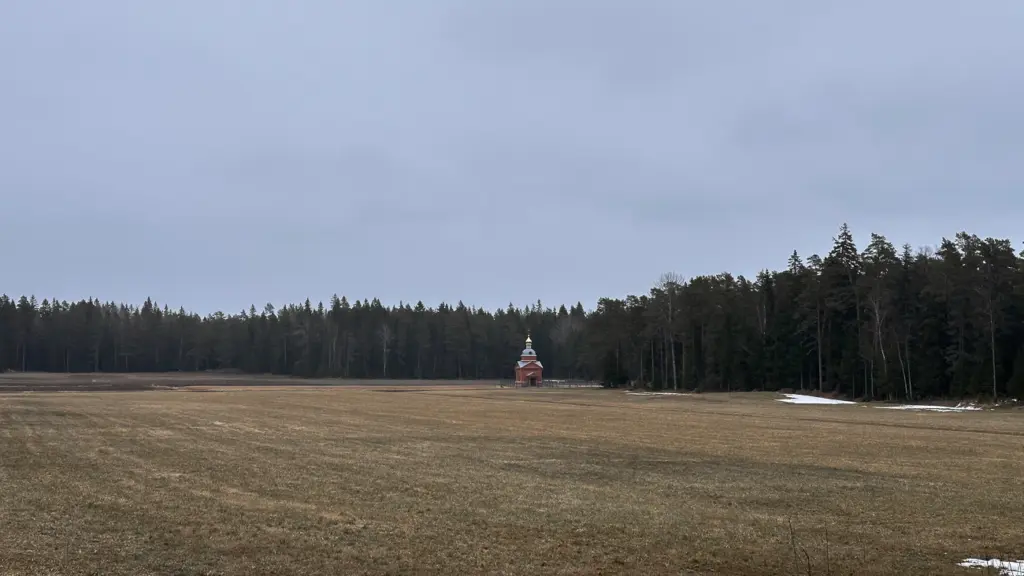
At St. Vladimir's Skete. Valaam inspired artists: Shishkin, Kuindzhi, Roerich. This is not only a place of pilgrimage, but also one of the main landscape images of the Russian North
For some time, judging by social networks, Natalya tried to work in the tourism industry: she sold tours to foreign resorts. In October 2024, an ambulance was called for her. According to a source familiar with the situation, the call card included a diagnosis of F23 - this is how acute and transient psychotic disorders are marked: those characterized by the sudden and short-term development of delusions, hallucinations, and confusion.
“This relationship exhausted her, she became completely different,” Tatyana said. “That’s when she joined the church, was on Ganina Yama , was in the Sredneuralsky monastery , then she went to Diveevo and lived for a month and a half. And then I went to Valaam as a volunteer.
During the tourist season, Valaam has an active life, working infrastructure and various events, including concerts. Much of this is closed in the spring. Many people in Valaam are shocked by the availability of alcoholic beverages here. Every second man, most often from among the workers, leaves the store with beer
After F23 episodes, most patients make a full recovery, according to the International Classification of Diseases (ICD-10). Therefore, it is not surprising that many of Prostakova’s acquaintances on Valaam did not notice any oddities in her.
Natalya’s first obedience in Valaam, where she arrived in the summer of 2025, was in the gardens of the All Saints Skete - picking currants. In the monastery, not all facilities are accessible to working women: on the island where the monastery in the name of All Saints is located, women are allowed once a year for the patronal feast; on the Predtechensky Island with the monastery of the same name, the presence of women is generally prohibited. These restrictions are motivated by the old Valaam tradition.
What types of obedience are there on Valaam?
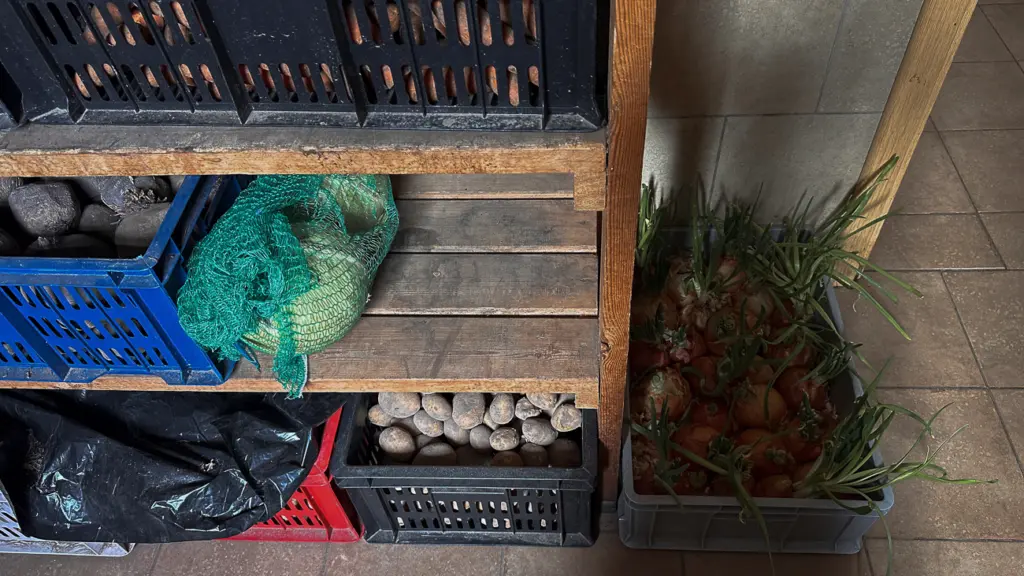
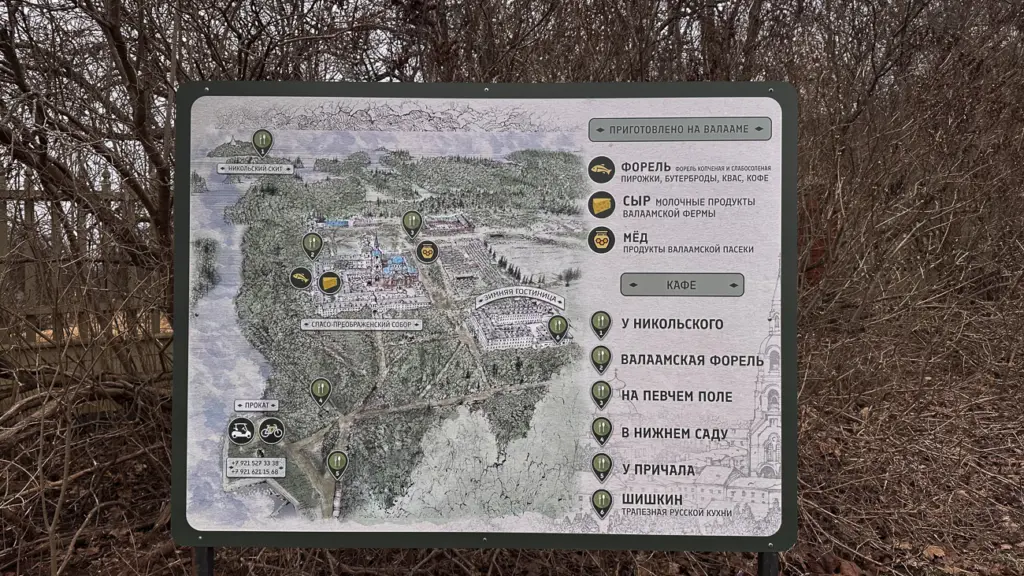
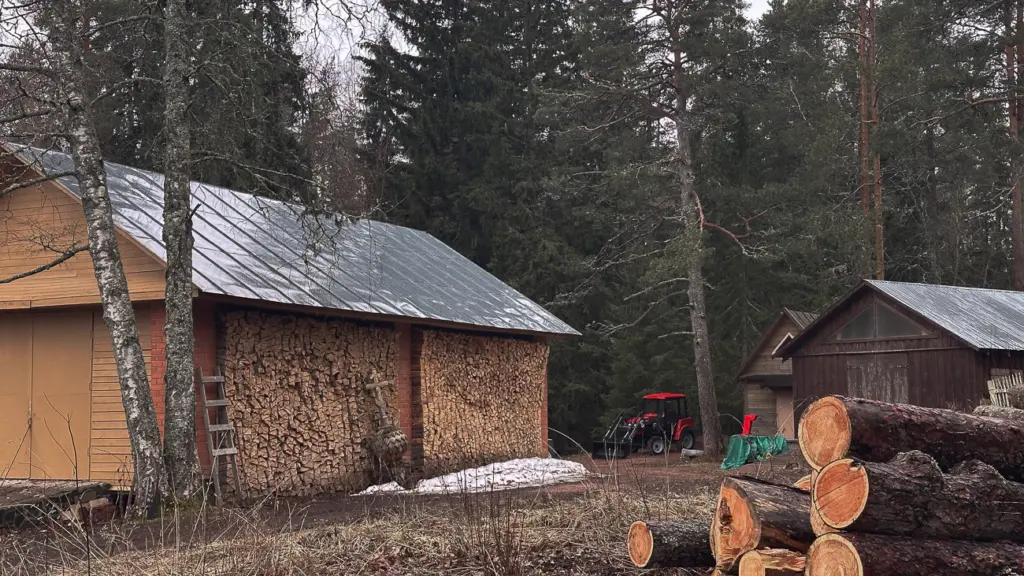
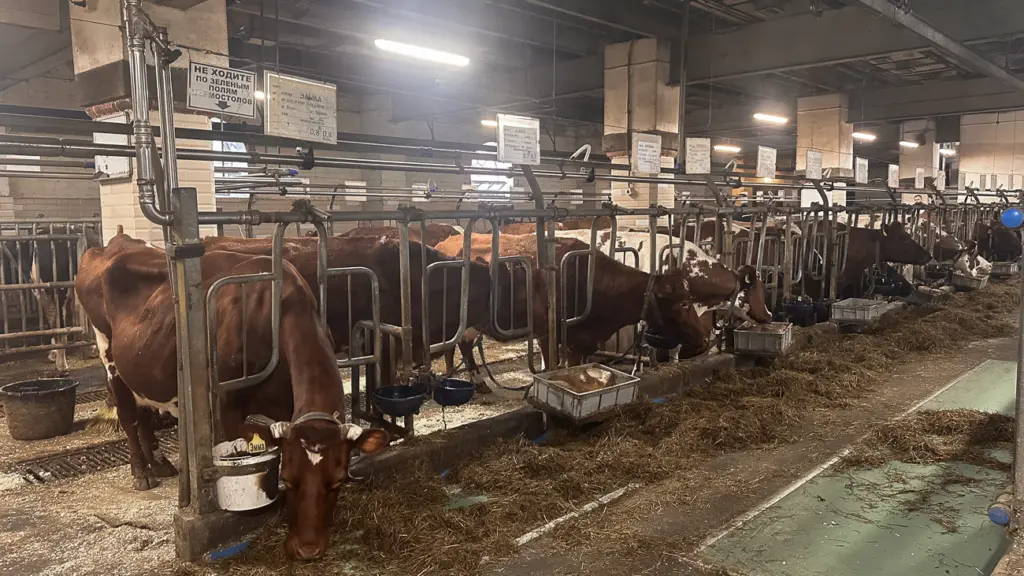
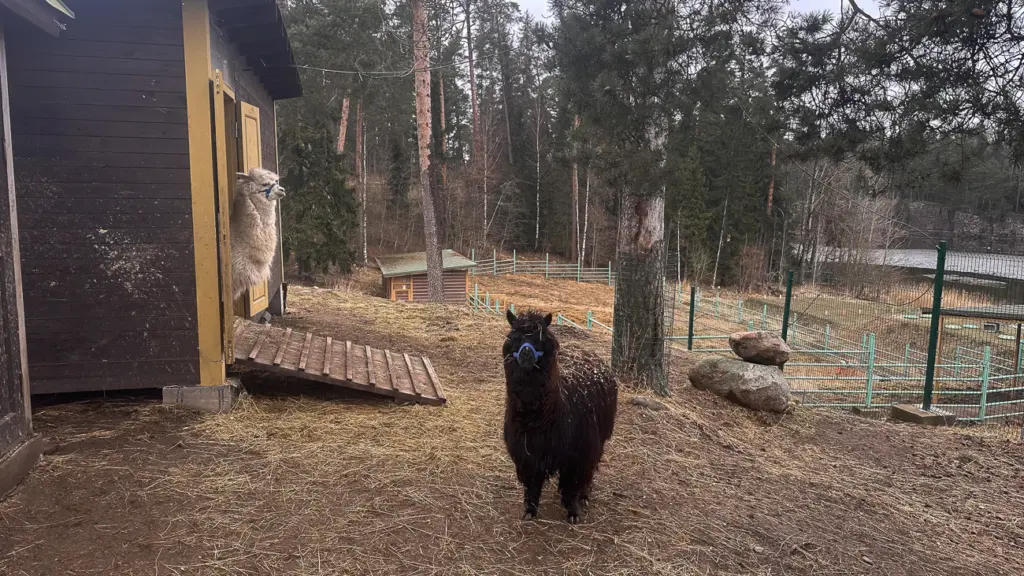
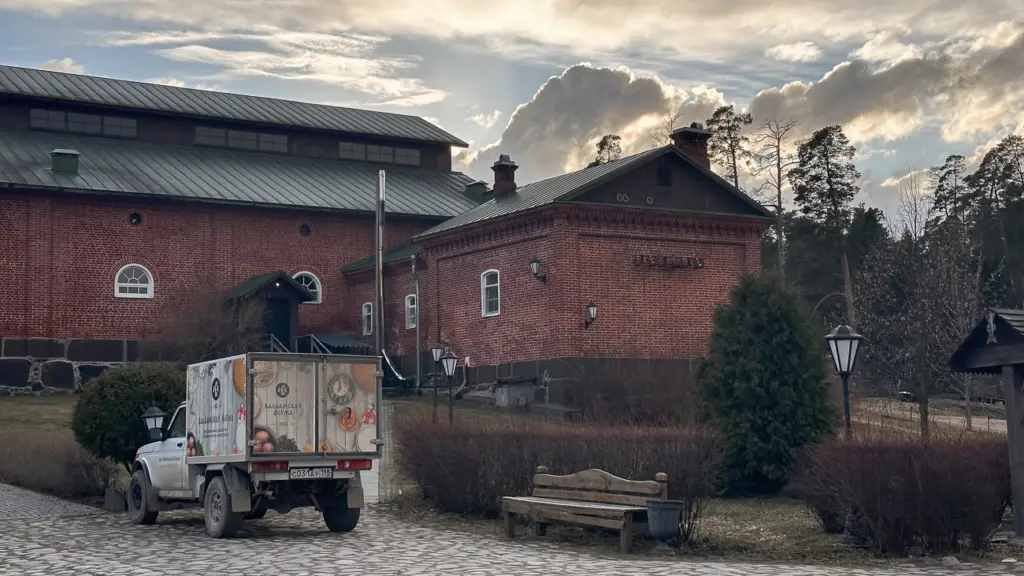
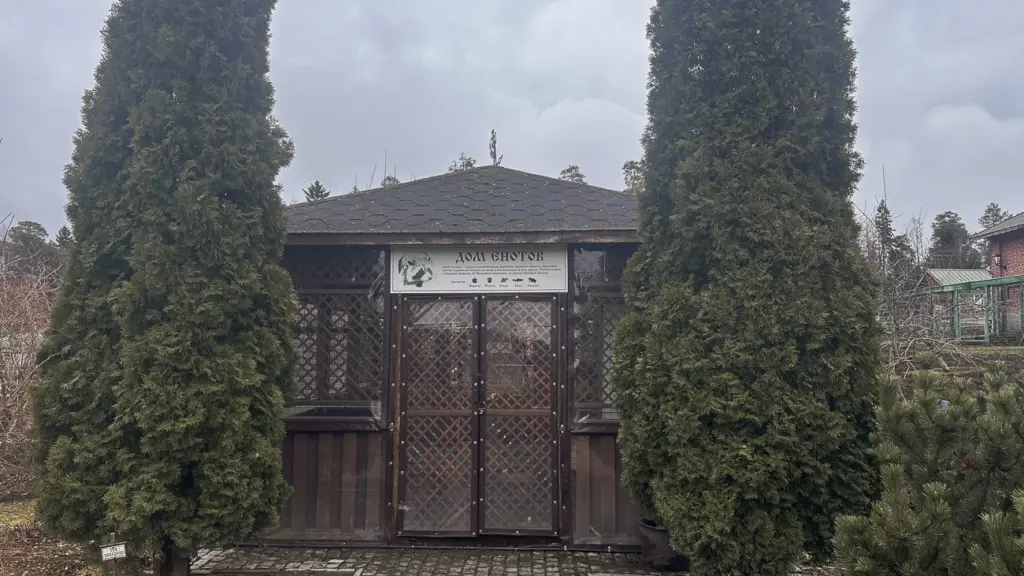
The monastery has a practically autonomous economic system. There is its own dairy farm, cheese factory, apiary, bakery, fishery, farmland and workshops. The farm has a cowshed, a sheepfold, a cheese factory, greenhouses, a carpentry shop, administrative and fraternal buildings, a refectory, a raccoon house and enclosures with goats and alpacas. In almost any of these places, a worker can undergo obedience.
Mostly men are involved in heavy household work: this could be unloading a ship, cleaning fish, clearing snow, or working in a sawmill. Women can serve as a cellarer, or as a worldly supply manager: for example, in charge of food storage, warehouses, and in charge of supplies. They can also work in the kitchen in the refectory, in the bakery and sewing workshop, take care of some animals, work in gardens and greenhouses, prepare the temple for services and clean up after it.
- And what is the most difficult of all obediences? — I ask one of the experienced workers who managed to work for everyone.
“People,” she answers. — If the sisters are good and you can agree, then all obedience is normal.
The Skete of All Saints, where women are prohibited for most of the year. Here in the summer of 2025 Natalya Prostakova picked berries in obedience
On September 11, Prostakova, judging by her blog, was assigned to listen to the refectory on the farm. “The view is pretty wrinkled, since there has been incessant bustle since five in the morning,” Natalya wrote a story on the second day of her stay at the farm. — By the end of the sixth week, the first fatigue came, but no longer physical. All this is covered only by grace after services and prayers.”
I see a lot of familiar things in this story. The legs and back of both me and the other sisters began to hurt after the first shift in the refectory. On their days off, many working women rested in their cells because they had no energy left for active leisure. Sveta and I walked around the monasteries - usually 25-30 thousand steps a day.
“Natasha also loved to go for walks around the island and often went alone,” says her pilgrim friend, also Natalya. - Moreover, she had conflicts with her sisters. Apparently, this is also why she was often more comfortable alone.
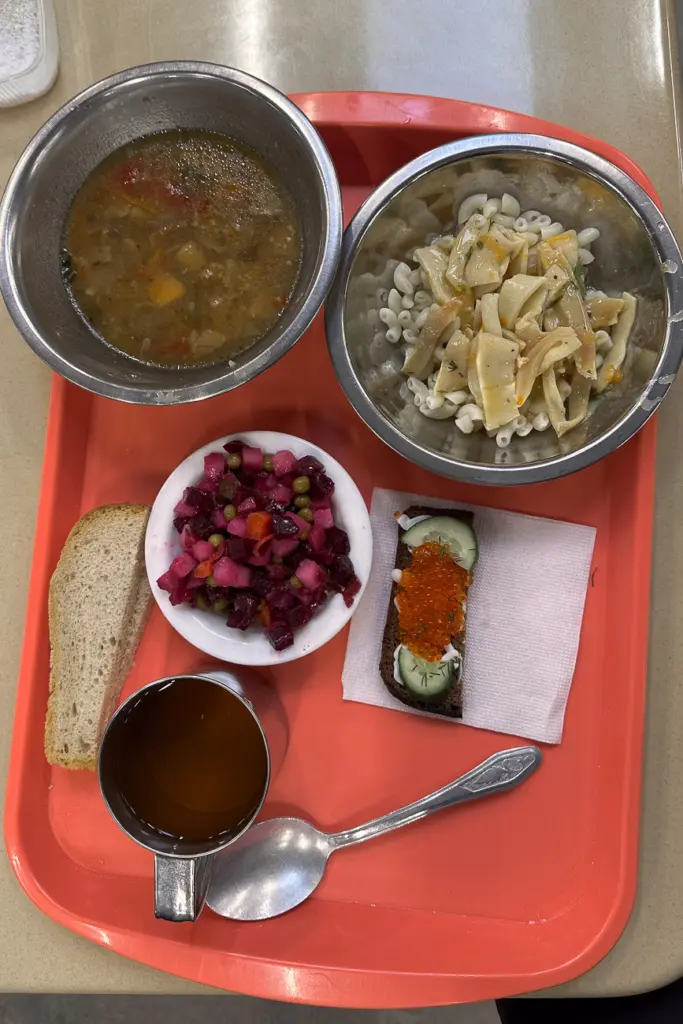
Lunch on Valaam during Lent, on the day when eating caviar is allowed. The most common dish here is squid with a side dish Valaam has its own trout farm, so red fish is often served here
Prostakova constantly attended services, just like us, although none of the monasteries keep track of this. There are many services in the monastery and they are conducted, accordingly, “according to the monastic rite” - that is, they last much longer than the usual ones “in the world”: midnight office at five in the morning with dozens of prostrations, matins, hours, liturgy, vespers, compline, prayer services. I didn’t go to all of them, but after a week of such a prayer marathon, I collapsed from fatigue: my brain could no longer stay awake and wanted to sleep, and my body could not fall asleep due to overexertion.
Adding to the discomfort was the fact that the sisters could often say something harsh in passing: one would reproach you for being spoiled, the other would scold you for not being able to cope with something at your age that she had already coped with. Sometimes after such words I wanted to cry, but to do this I would have to go into solitude, and doing this in a monastery, where everything is in plain sight, like in a pioneer camp, is not so easy.
On Valaam, 11 out of 13 historical hermitages have been restored. In total, taking into account the new ones, there are about 16 of them. Two weeks of work is not enough to see everything.
After a week of our obedience, Sveta reported that she had a panic attack while we were driving in a gazelle after work.
- What is this? - Julia was surprised. “Next time come to me, I’ll read a prayer to you.”
“No, I know how to cope,” Sveta, who once began studying to become a psychologist, tried to move away from the topic.
- No, you come to me, we’ll say a prayer.
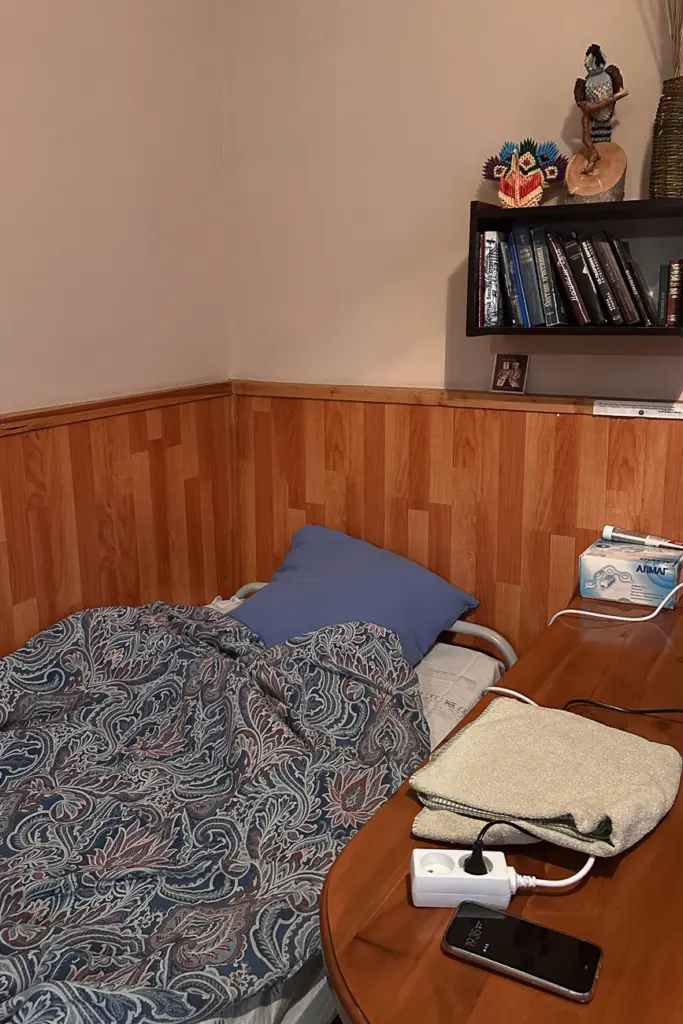
A bed in a cell in the apartment of farm workers. During the Soviet years, lay people lived in these apartments Some cells, like ours, even have a washing machine
About ten days later, due to the lack of personal space, I began to feel very irritated towards my neighbors. In the monastery this is usually called temptation and is associated with demons.
Natalya Prostakova has repeatedly hinted in her blog that she does not get along with her sisters. But she explained it to herself differently. “I thought it was a curse, but it turned out to be a blessing,” she wrote under a quote from St. Pimen the Great that it is not good to please everyone and that “if you seek human love, you will be deprived of God’s love.”
Woman in black
“I saw her in the summer of 2025, she was such a barbie: pink scarves, beautiful hairpins, pouty lips,” says one of the workers about Natalya Prostakova. “And then she moved from the farm to the Holy Gates and became a churchwoman. And now I see her six months later, and I didn’t recognize her at all: there’s a nun standing in a headscarf, all in black.
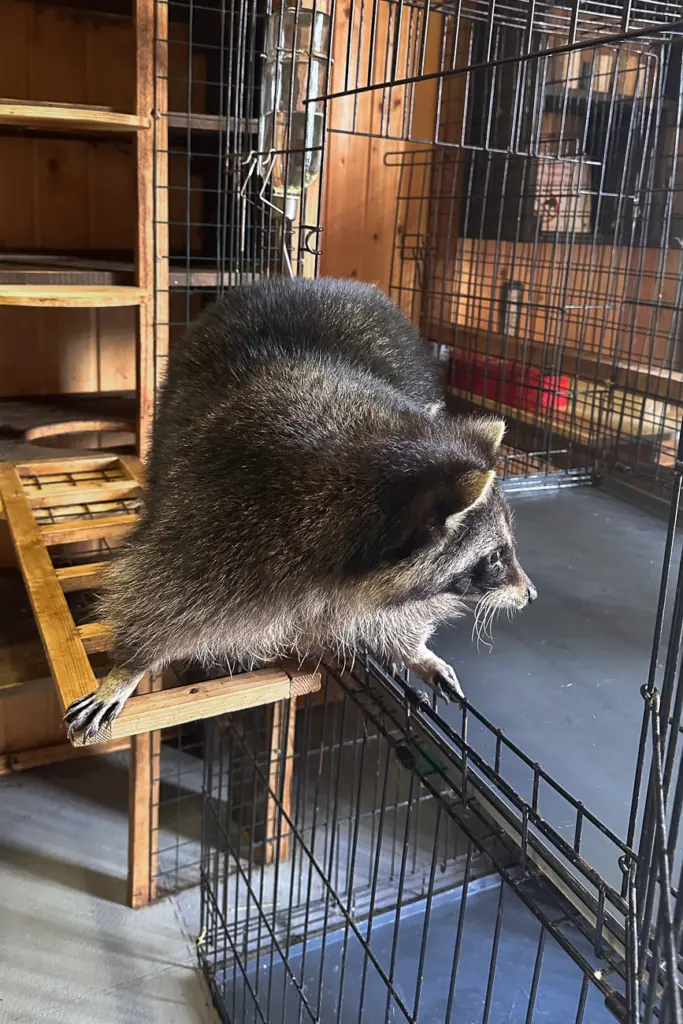
This is the worker Lena, she has been obedient on the farm for three years now. When meeting her, she asks to call her “Lena Raccoons” and adds: “I had a task: to bring raccoons out of aggression and lead them to offspring.” Caring for these animals is perhaps the most atypical type of obedience for a monastery. It was her boss, Father Agapius, who came up with the idea of placing raccoons on the farm. The monastery waited a long time for the appropriate blessing. And in 2021, two babies raised by Krasnodar breeders were delivered to Valaam. The couple were named Rocky and Smokey.
Now, as soon as Lena sees someone has something suitable for her animals (for example, grapes), she immediately asks: “Will you give it to me? This is for raccoons." Before the monastery, Lena had never worked with animals. She is a violinist by profession and says that she studied at Gnesinka. She worked in Moscow in the office, in sales, until the company closed at the beginning of the war.
Before Easter, the stoves in our cell were painted; the caustic paint made it impossible to breathe; we had to open the windows
When Lena was assigned to the raccoons in April last year, they were absolutely unsociable. According to her, the animals were mistreated and not given enough affection and love. Because of this, they behaved aggressively both with people and with each other. The monastery had hopes that the raccoon would become pregnant, but Smokey wouldn’t let Rocky get to her within a cannon shot.
Lena began to read a lot about how to make the life of raccoons better, spend more time with them, made toys so that they had something to splash out their aggression on, brought treats - in general, she actively became involved in their animal life. And it gave results. This year, on Forgiveness Sunday, raccoons destroyed half of their house in an attempt to conceive offspring.
Lena tells all this while sitting in the kitchen and lubricating deep bites on her legs with iodine and brilliant green. It turns out that when raccoons become pregnant, they become even more aggressive towards their mate. Lena was injured while breaking up a fight between Smokey and Rocky, after which the raccoons were placed in separate enclosures.
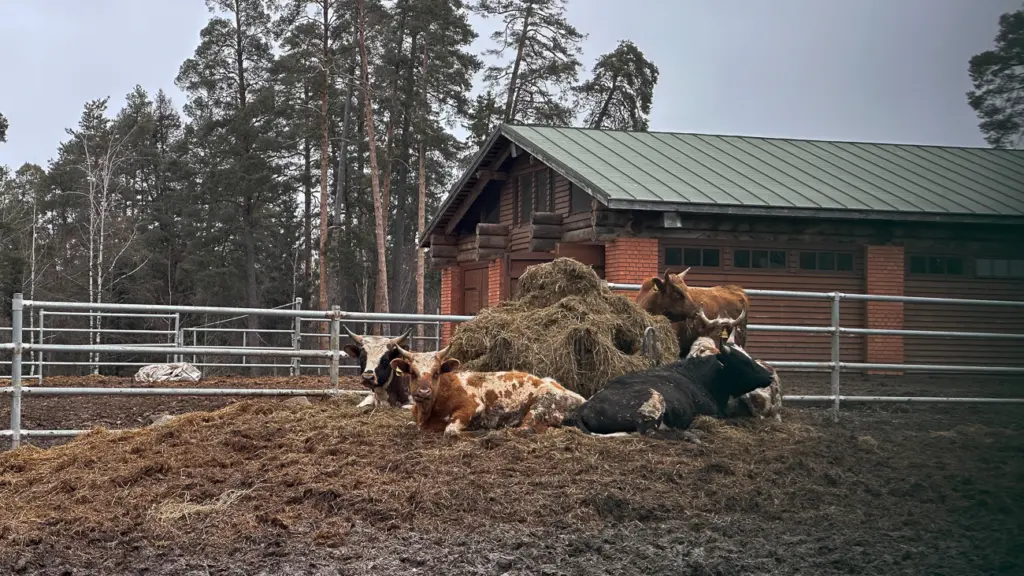
Male workers look after the cattle in the monastery Cows, bulls, calves, goats, sheep and chickens live in the monastery
After obeying, Lena goes to work.
“When I came here, I was an ordinary office worker,” she says. “But when you start living here, you slowly get involved, start going to services, taking communion, confessing. But no one is forcing me to do this: I have lived here for five years and only the last two years have I begun to actively attend services. I came to obey, obedience is higher than prayers! It’s one thing when you come for two weeks, and another when you start living here for months. And for some reason Natasha, who disappeared, has changed so much - she moved to the “Holy Gates” from the farm! But everything is different there.
Some of the animals - alpacas and raccoons - are used for petting zoos due to tourism. The black alpaca is called Moor, the white alpaca is Desdemona.
The hotel “Holy Gates”, where the working women live, is said on Valaam to be the strictest place in terms of rules. The obedience itself of those who live there may be different: some of the sisters from there carry out obedience in the church, some work in the gardens, some even work on the farm, like us. But if our cell is just a room in an apartment, then the “Holy Gates” is more like a hostel. There are 12 beds in the cell, and the strictness of the routine depends on the specific commandant. In the refrigerator, the commandant checks that the sisters have only lean food; other food immediately raises questions. In the morning, the commandant turns on the lights and, as in a barracks, shouts: “Rise!” Sisters from the Holy Gates gather for collective prayers. The curfew is also strict; some people were not even allowed to brush their teeth after 11 p.m.
“I, too, like, you know, have been to the island, I got there and obeyed.” I ran away from there immediately. Because there is such a zombie thing there, girls, it’s just crap! In general, all these sisters who live there, they are all like nuns. They all start dressing the same, walking the same. In short, there is such hazing inside,” says one of the workers. — When new people arrive there, they are immediately sent to clean the toilets almost with toothbrushes. And only young girls are accommodated so that they do not snore. So that everyone is beautiful, everyone is dressed up! And you sit down to drink tea with them, and they have such thoughts, they say, my grandmother sent me from heaven that I should live here on the island. I say: “Girls, who will give birth? You are 20 years old! You’re not nuns, you’re not in a nunnery, what are you?” Why hazing? I think young people have nowhere to put their energy, so they do this.
Konevsky monastery, where Aref’s elderly father lives. Some sisters go to him for advice or blessings and consider him visionary. When I ask why my personal life is not going well, Arefa replies that there is a war going on now, men are unstable, “when necessary, God will send a husband,” but for now we need to live in peace according to Christian commandments and pray
It was in the “Holy Gates” that Natalya Prostakova’s tension with her sisters worsened.
“When she obeyed on the farm, she became friends with Father Agapius there, he was important to her in a spiritual sense, she turned to him for advice, even when she began to live in the “Holy Gates,” she still sometimes went on foot to the farm to visit him,” says pilgrim Natalya, who is familiar with Prostakova. “And so the sisters began to spread rumors that since she went to the farm, it meant she was not very happy with the obedience of the churchwoman. She was very worried about this. And, as I understand, she was also worried about some conversations there, because she is 36 years old, and no, no, one of her sisters will say that she has no children and her personal life has not worked out.
“Women love to give advice when they haven’t been asked for it. Don’t do this,” Natalya wrote on October 6 in her stories. — Advice of the day from my spiritual father: “Listen to what the hieromonks tell you, don’t listen to women.”
The monastery has a practically autonomous economic system. There is its own dairy farm, cheese factory, apiary, bakery, fishery, farmland and workshops. Trout is also sent to restaurants in the Leningrad region, cheeses are sold to tourists, and coffee is sold on marketplaces
Judging by what another pilgrim who knew Prostakova says, she really had conflicts with her sisters.
“She somehow stayed late after the evening service, prayed with another girl in the temple, and the sisters did not let her into the hotel. She said she was screaming and banging on doors. But she was simply ignored. It's cold outside, she had to spend the night in the temple. In the morning she asked why they didn’t open it for her. They replied that they were somehow afraid,” the pilgrim recalls.
Sveta begs her man in the monastery of the Apostle Andrew the First-Called
Even without any hazing, the old-timers in our cell do not like the appearance of a new person.
- Who makes space shake so much? From the new girl? — a neighbor asks me after the arrival of another laborer.
-Have you seen her packages at all? Everything there has been treated for bedbugs, judging by the smell. She was leaving another obedience, and she brought us some insects! – adds another.
- Girls, what are you doing? - Sveta is perplexed. — The girl doesn’t have a suitcase, so she put everything in bags. She’s been living here on the island for many months now, well, of course, she’s settled into things.
Male contingent
“Every new man is a new sorrow,” I hear in the morning as soon as I wake up. The sisters in the cell are already discussing their past.
“But I lived and lived with an alcoholic,” says Sveta. “All my life I’ve had such high-status men who helped me financially. And he is ten years younger than me, he clung to me, and said: “I love you so much!” And it’s all with such a feeling. But he went on drinking bouts and acted weird there. I told his parents for a year: “We need to put him in a rehab center,” and they: “Well, later, later.” I went to see him on February 14th, he gave me the latest iPhone. And then I feel the fumes from him, I say: “Is it starting again?” I got ready for the train and left him for home. I look after some time, he doesn’t get in touch. And then his friend called me early: “Sveta, he’s lying dead.” Drunks, when they come back from heavy drinking, their blood pressure jumps, and he started to go into fibrillation. And somehow no one saved him.
“Very familiar,” Anya echoes her. Her husband went missing on SVO. Her confessor advised her to come to Valaam.
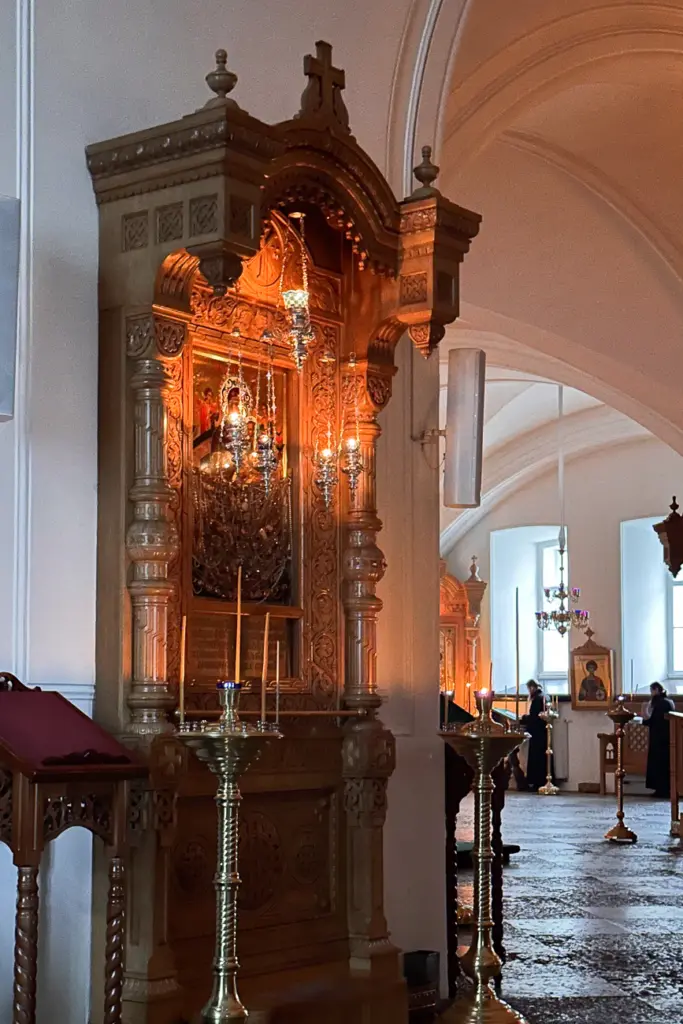
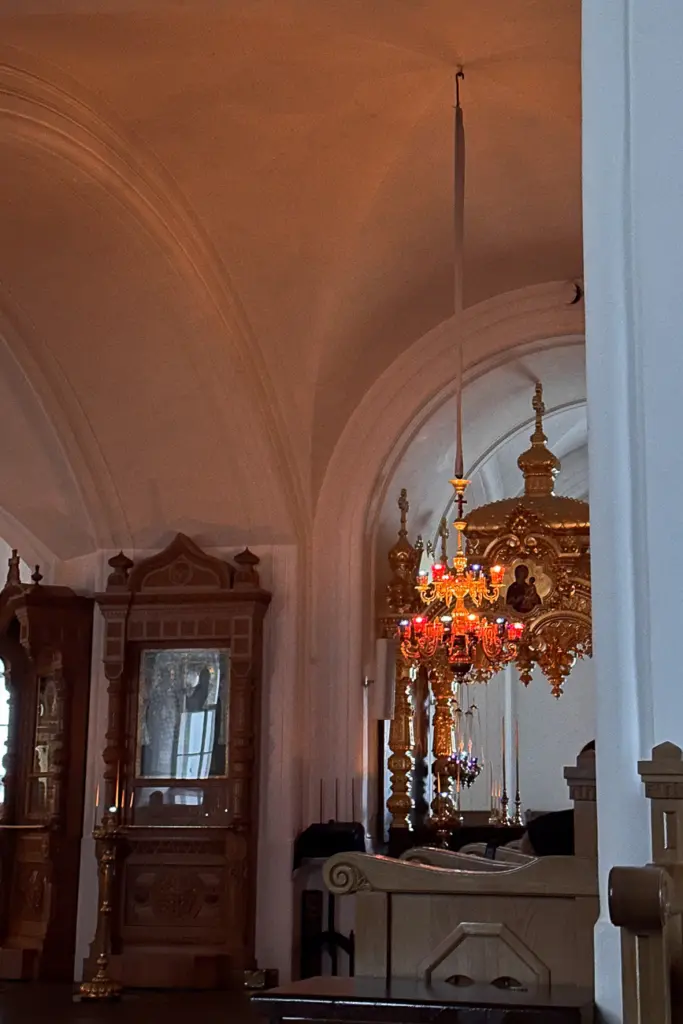
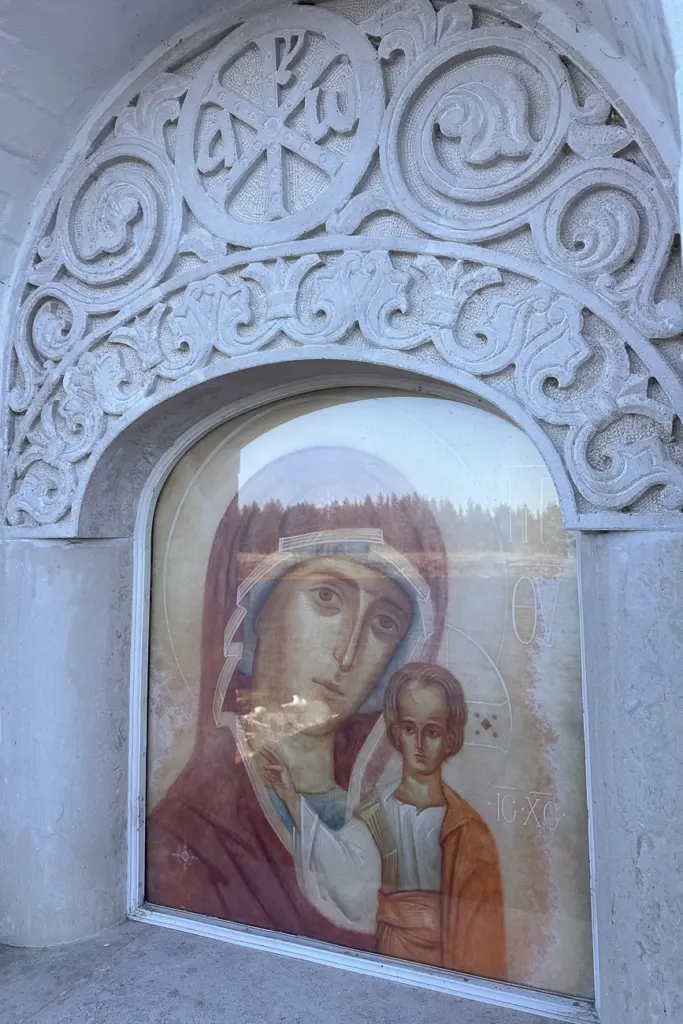
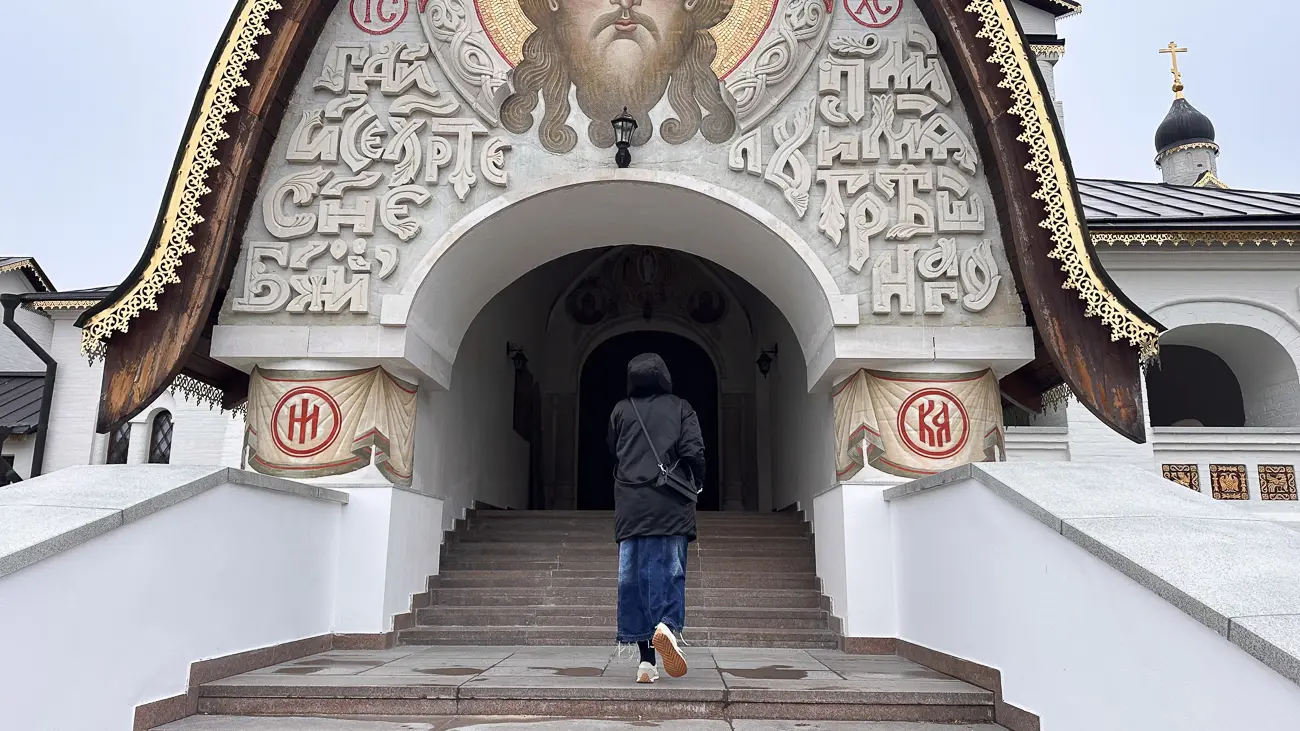
There are no ancient frescoes on Valaam, like in Novgorod or Pskov. The iconography here is late 19th-century monastery painting or a remake You can’t just go into many of the temples of Valaam. But even from the outside they can be interesting to tourists
Julia, who so aptly expressed herself about the new grief, is already divorced, all the years of marriage, the woman says, her husband beat her - even while she was pregnant. And her only son is now fighting in Ukraine.
“Olesya, but this is not for you,” Yulia immediately corrects herself. - Don't listen to us. You need to get married. It’s just that when I joined the church, girls, I realized: not one man has made me as happy as the Lord! With no one have I felt such grace as after the services, such a feeling of true happiness... By the way, you can find a husband here on Valaam among the workers. So what? Firstly, the man will be a church member...
In summer, raccoons live in a separate house
The first person I meet among the workers is Dima, a former drug addict. He says he was on cocaine, but he always hides his wrists. The second, Sasha, is surprised that he was sent to communion immediately after confession.
- Isn’t it like that for everyone? - I ask. I was given communion immediately after confession.
- No, many of us have such sins behind us that they don’t admit it right away. I was surprised to myself that they let me in.
- Do you have many serious sins?
- Well, what do you think, by the age of 35? Of course, a lot.
The third, an elderly man, comes up to me during obedience in the refectory and discourages me: “There are bright people like you, but I, as a person, am shit,” after which he turns around and leaves.
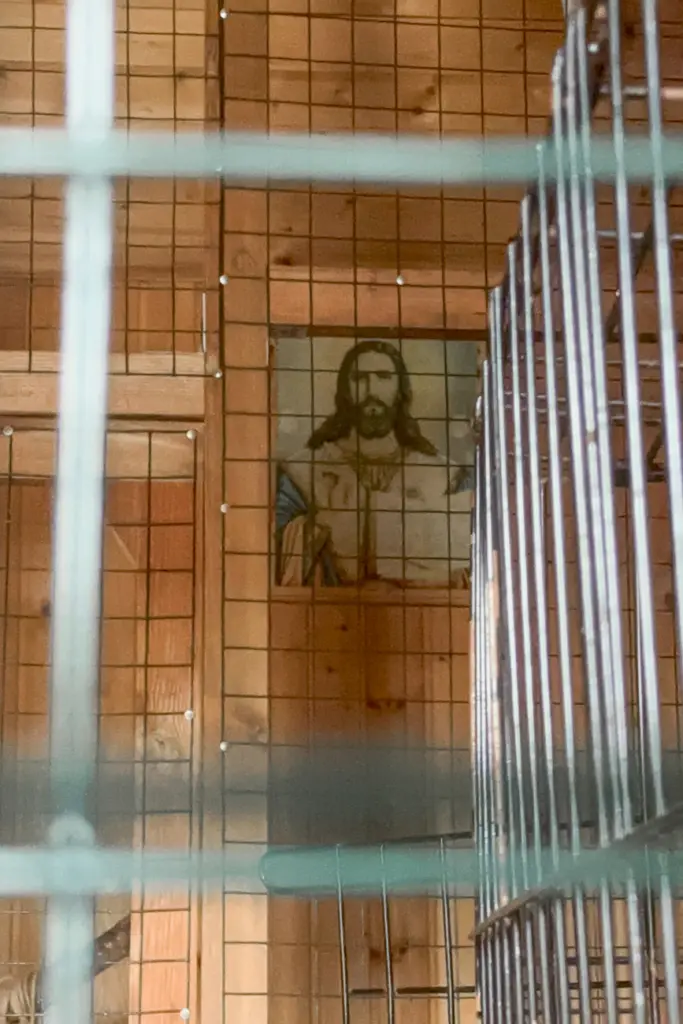
During pregnancy, raccoons become aggressive towards males. Therefore, Rocky and Smokey were seated and a partition was made between them. Fertilization in raccoons takes five days, and the Canadian raccoon carries offspring for 73 days. Now the monastery is waiting for Smokey to give birth. Raccoons also have an icon of Christ in a cage
Having learned that I speak several foreign languages, the cellarer invites me to meet the “Australian,” 27-year-old Zhenya. We start chatting in English, but after a couple of sentences it turns out that Zhenya speaks Russian well. This is his native language. The guy was born in St. Petersburg, in junior school his mother moved with him to Australia, Zhenya lived there until he was more than 20 years old, and a year ago he decided to return to Russia.
“It’s not worth the money, it’s kind of rotten,” he explains his decision.
- Is it better here? I can tell you: in the coming years it will clearly not be better in Russia! - says Sveta.
- Well, I just think that it will be better in Russia.
—What was your job before the monastery?
- Yes, in different ways, I have never worked in one place for a long time. Well, he could be a tractor driver. But when I don’t want to work, I do business.
— Do they also sell drugs on the territory of the monastery? - I’m surprised.
“Well, not here on the farm, but there you can find it near the temple where you live,” Zhenya assures.
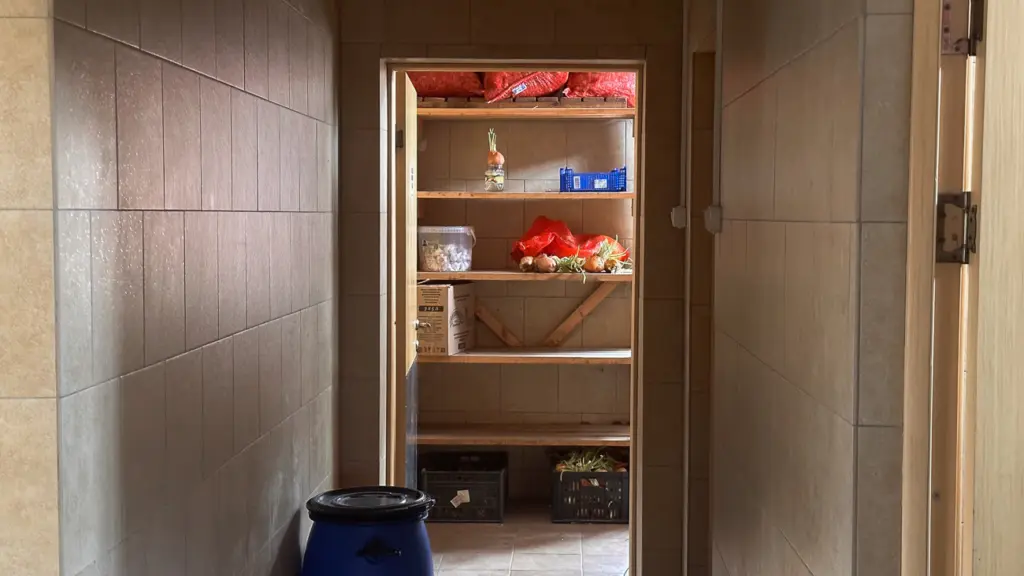
In the refectory pantry. When I can’t get sauerkraut from the bottom of the barrel, Yulia scolds me: “You can’t get cabbage at 28 years old, by that time I had already given birth to a child!”
Hypothetically, buying drugs in Priozersk and transporting them to Valaam is not a problem; luggage on the ship is not inspected. In 2020, however, one man was caught this way: a 38-year-old plumber brought with him a bongo, inside of which there was a foil package with brolamphetamine powder, a strong hallucinogen. The plumber himself was repeatedly convicted of crimes related to illegal trafficking in weapons and drugs. The media also wrote about workers who were former drug addicts.
В Пасху, когда мы снова встречаем Женю, от него несёт перегаром.
— Ну да, немного пива выпил, — признаётся он. — Да у нас [в кельях] многие по вечерам пьют.
— И Дима, с которым ты живёшь, тоже?
— Не, он из молитвенников, — оговаривается Женя. — Вместо алкоголя молитвы читает постоянно!
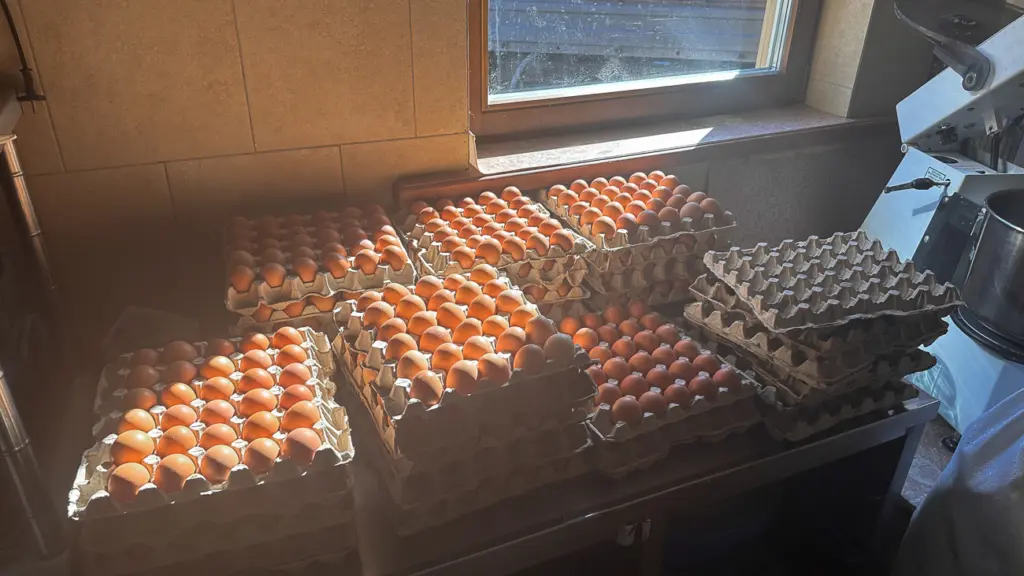
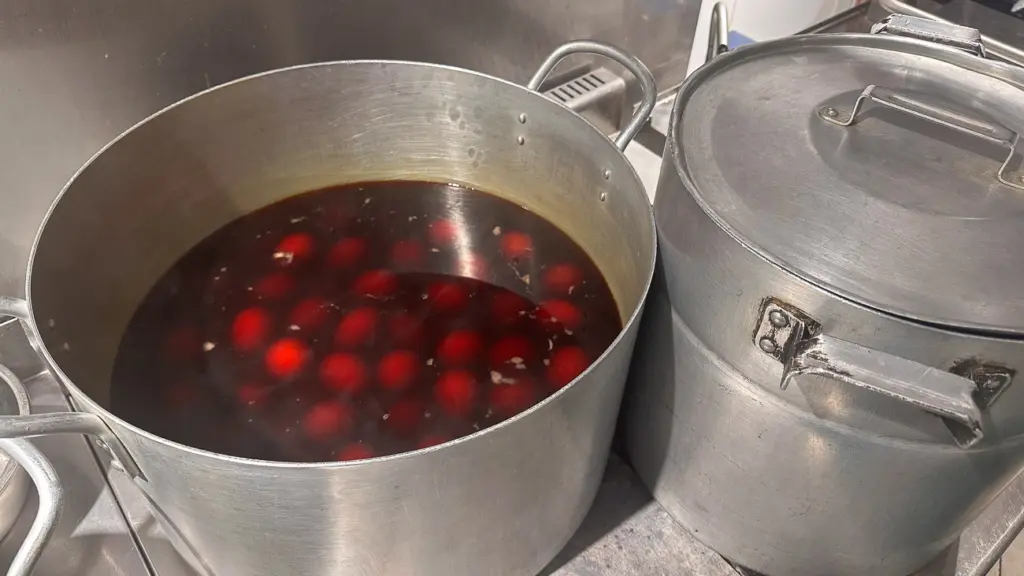
На Пасху нам нужно было покрасить около 500 яиц Яйца красили традиционно — луковой шелухой
Купить спиртное на Валааме не проблема, даже в Великий пост. Неподалёку от храма есть магазин. В первый день, когда мы заходим туда, чтобы купить себе что-то к чаю, ассортимент шокирует. На полках не осталось ни хлеба, ни фруктов, ни сладкого. Зато есть все виды алкоголя. Каждый второй мужчина в очереди берёт себе пиво. Так некоторые вахтовики и трудники расслабляются после рабочего дня. Позже в другие дни в магазин завозят сырки, печенье и другую еду, но ассортимент алкоголя и сигарет никогда не оскудевает. Раньше аналогичный магазин на территории монастыря принадлежал местному жителю, но его закрыли . Поводом как раз было то, что Церкви не нравилось соседство с алкогольной продукцией.
— Монастырь обычно отгораживается от этого со словами, что это частный магазин и они не могут его контролировать, — объясняет мне одна из трудниц, которая уже несколько месяцев живёт на острове. — Но все же понимают, что на Валааме не может происходить ничего без ведения монастыря. Думаю, Церкви просто это выгодно: они знают, что мужчины, не будь тут алкоголя, к ним бы не приехали. А рабочая сила монастырю нужна.
Распальцовка у отца Никона
— Я много где жила в монастырях и могу вам сказать: Валаам — это Рублёвка среди монастырей, — говорит мне одна из сестёр.
Насельники здесь соответствующие. В Свято-Владимирском скиту находится резиденция патриарха Кирилла. Там же дом для высоких гостей, который называют резиденцией Владимира Путина.
Своя роскошь здесь, безусловно, есть и для обычных насельников: у монастыря своя форелевая ферма, поэтому на обед трудник спокойно может получить увесистый кусок красной рыбы или даже бутерброд с красной икрой. Слабосолёная форель в местном кафе стоит 3600 рублей за килограмм, форель горячего копчения — 2200.
Помимо приготовления еды в наше послушание входило уборка помещений в трапезной
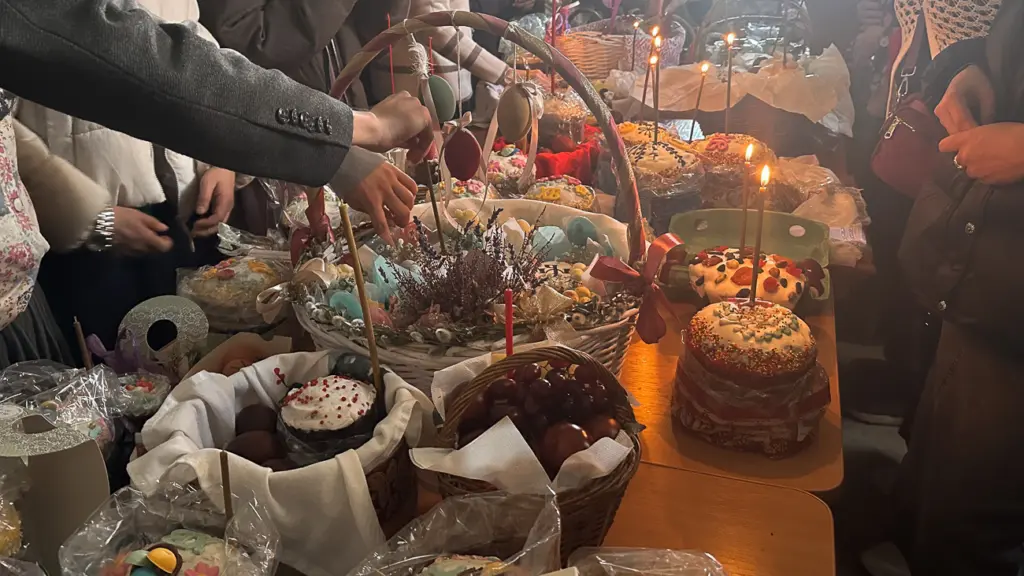
На Пасху приезжают туристы в брендовых вещах и стильных аутфитах и катят свои чемоданы к «Зимней гостинице». Девушки покупают на ресепшене куличи, чтобы освятить их в храме. Цены на куличи начинаются от 800 рублей. В церковной лавке — широкий ассортимент православных ювелирных украшений. Есть браслеты и за 50-60 тысяч рублей, крестики с изумрудом или сапфирами за 10 тысяч. Заказать в монастыре упоминания в молитвах можно даже дистанционно: проскомидия на 40 дней стоит 500 рублей за имя, Неусыпаемая Псалтирь на 1 год — 2000 рублей за имя.
Некоторые прихожанки посещают службы с яркой помадой на губах, которую монахам потом приходится оттирать со стекла, защищающего иконы. В очереди на исповедь нередко стоят мужчины брутального вида, которых больше ожидаешь увидеть на бандитской разборке или во главе похоронного бизнеса: гопнические повадки, кожаные куртки, золотые цепи на шеях.
— Сегодня на службе было очень пафосно. Я подхожу на исповедь, а там такая «распальцовка» у отца Никона, — делится впечатлениями соседка по келье Аня. — Мужики эти ко мне поворачиваются, окидывают взглядом и такие: «Ну мы тут надолго».
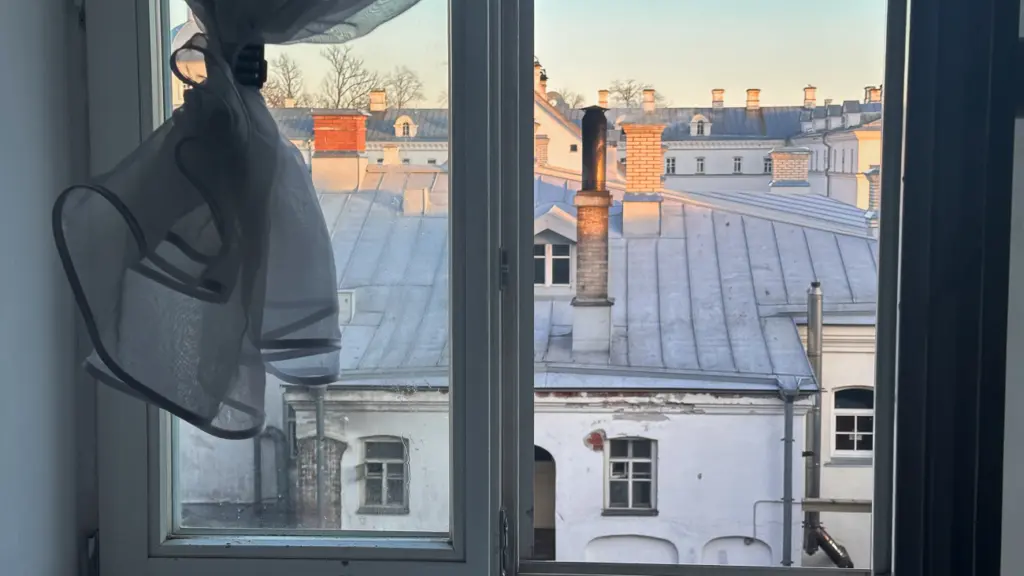
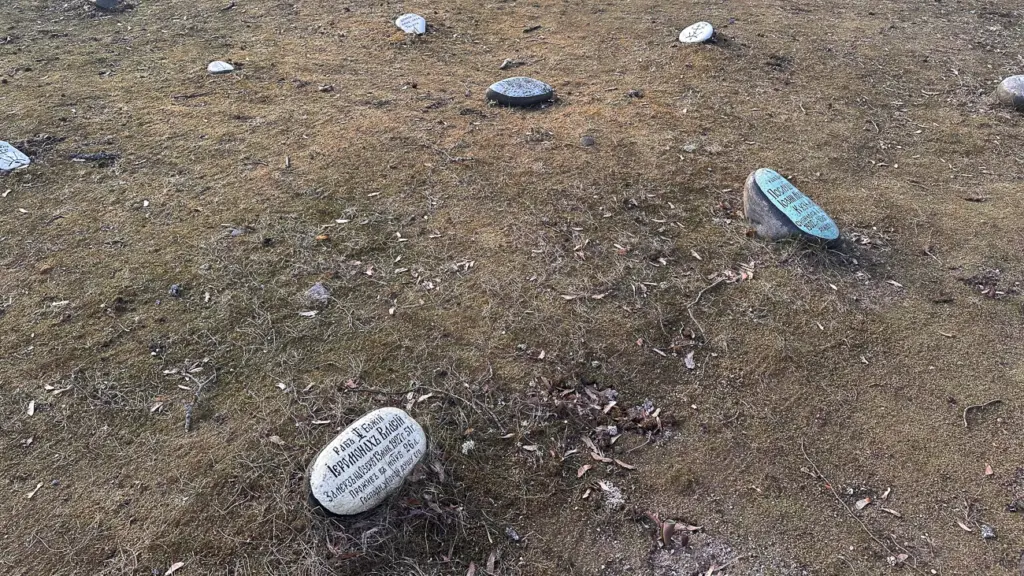
Из окна нашей кельи открывался вид на Старое братское кладбище. У многих монахов вместо памятников и крестов — один лишь круглый камень с именем и датой смерти. Это результат того, что в советские годы кладбище было разрушено: кресты разбивали, плиты вырывали из земли, часть плит пустили на мощение дорог и хозяйственные нужды
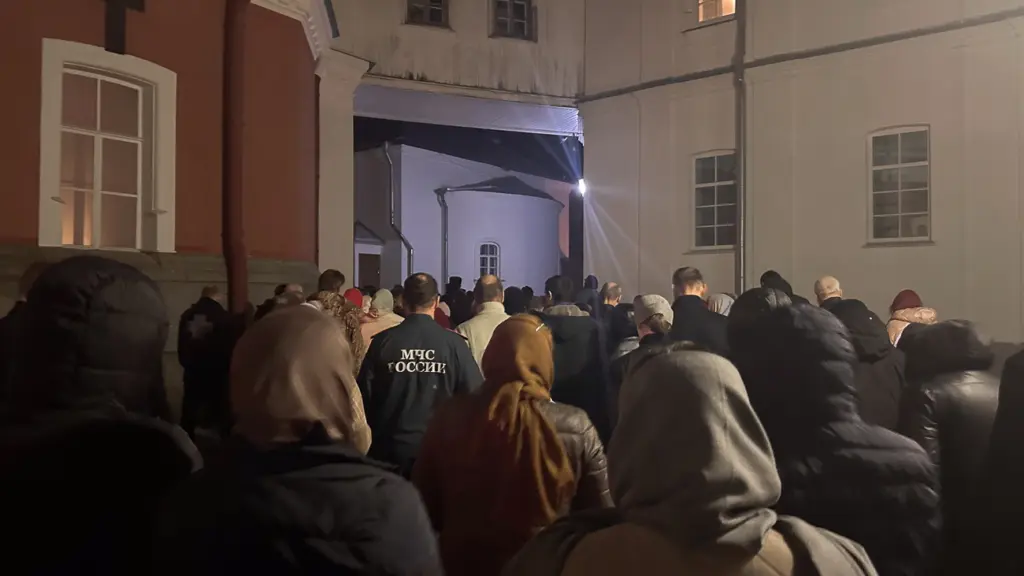
Когда мы заходим на службу в Пасху после Крестного хода, нас оттесняют в сторону сотрудники службы безопасности — для кого-то важного и высокопоставленного в этот день в храме выставили телохранителей. Большая часть служб снимаются с нескольких камер. Всё это транслируется в соцсетях монастыря.
Наталья Простакова даже снимала для своего блога румтуры из Дома паломника, подчёркивая, что раньше она показывала своим подписчикам так дорогие отели за границей, а теперь — номер на Валааме.
Брошенный котёнок
В январе 2026 года Наталья Простакова уехала с Валаама, но вместо того, чтобы вернуться домой, осталась в Санкт-Петербурге. «Чувствую себя котёнком, брошенным на произвол судьбы в этом большом городе», — написала она 23 января в сторис. В Петербурге, судя по соцсетям, она ходила по ресторанам и, по-прежнему публикуя цитаты схиархимандритов и протоиереев, засматривалась на дорогие шубы и машины, о чём тоже сообщала в блоге.
29 января под репостом очередной картинки про мужчин и расставание, она написала: «Всех простила». А 30 января опубликовала сторис, как судно вновь швартуется у острова, затем видео с заснеженного Валаама, где на фоне она говорит: «Наконец-то, мы в сказке, мы в раю». 31 января 2026 года женщина опубликовала сторис с подписью: «Валаам, как сложно мне тебя покинуть». Вскоре после этого Простакова пропала.
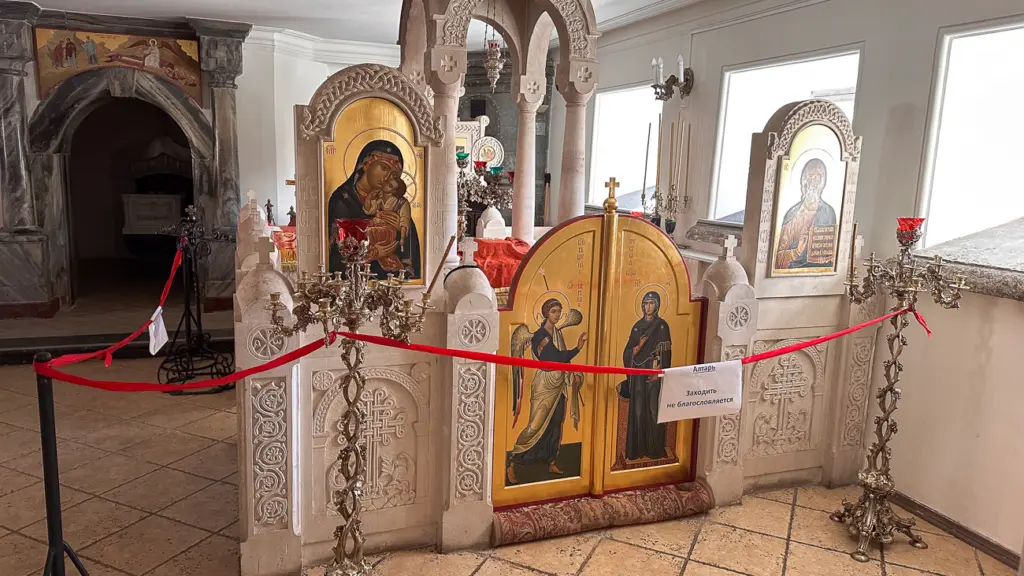
Алтарь в нижнем храме в Воскресенском скиту
Многим, кто пожил на Валааме, действительно не хочется уезжать отсюда, потому что здесь у тебя появляются новые социальные связи и предсказуемая жизнь. В СМИ это явление даже назвали «валаамкой» — необъяснимой тягой и острой необходимостью постоянно сюда возвращаться.
— Когда с острова надо уезжать, аж щемит, тяжело, — поясняет одна из сестёр, — как будто растерянный такой весь, как в мир возвращаться. Мне пророчат, что если три года тут прожить, то не захочется в мир возвращаться вообще.
На Пасху на Валаам приезжает много туристов. Монахи освещают куличи и пасхи Крестный ход в Пасху на Валааме У Валаамского монастыря активные соцсети, службы снимают на несколько камер, монахи к этому привыкли и знают, что во время служения нужно попасть в кадр
Исчезновение Натальи Простаковой до сих пор вызывает много вопросов. «Мы же даже точно не знаем, когда она пропала, — говорит знакомая с ней паломница. — Я уже уехала тогда с острова, была на связи с её подругами. И никто мне не мог объяснить, в какой момент она исчезла. Кто-то говорил, мол, она была на службе и вела себя там неадекватно. Но что имелось в виду? Как себя надо вести, чтобы люди заметили неадекватность? И почему, тем более, если заметили, что ведёт себя неадекватно, оставили её одну?». Другая трудница сказала мне, что Простакова в день пропажи якобы зашла в алтарь, что строго запрещено женщинам.
Хронология жизни и смерти Натальи Простаковой на Валааме
Лето 2025 — Наталья приезжает трудницей на Валаам.
Осень 2025 — проходит послушание в трапезной на ферме.
Декабрь 2025 — переходит в «Святые врата» и становится «церковницей».
Январь 2026 — уезжает с Валаама, остаётся в Петербурге.
30–31 января 2026 — возвращается на остров.
2 февраля 2026 — пропадает.
19 февраля 2026 — волонтёры «ЛизаАлерт» сообщают, что Наталья найдена мёртвой.
В ориентировке волонтёров «Лизы Алерт» говорилось, что о местонахождении Простаковой ничего неизвестно со 2 февраля. Одни очевидцы говорят, что видели её в последний раз на утренней службе, другие — что на вечерней.
«Друзья, 2-го февраля пропала моя подруга Наташа, которая жила на Валааме. Она просто испарилась с острова, — писала её подруга, трудница Серафима. — Уехать она никуда не могла. Конечно, маловероятно, но всё же здесь много людей с острова, и если кто-то что-то видел, знает, но вдруг боится рассказать, я очень прошу, дайте знать». Серафима тогда заметила, что хоть на острове и есть камеры, говорят, что Наталью они не зафиксировали. «Уже все посмотрели, ничего нет. Собаки ищут, спецслужбы с дронами. Её нигде нет», — переживала девушка.
Перед пропажей Наталья успела написать матери.
Котов можно встретить даже в отдалённых уголках архипелага
— В ночь на второе от неё приходили сообщения, но я спала, только утром их увидела. Она пишет: «Мама, на тебе что, проклятье?» А дальше: «У меня бессонница уже пять дней». Я спросила, почему она не спит, посоветовала купить «Глицин». Она ответила: «Хорошо». One word. Я писала ей, что хватит мотаться, чтобы ехала домой, мы её очень ждём. Это сообщение ещё прочитано, а потом связь прервалась, — цитировало мать Натальи издание Е1.ru.
Татьяна тогда утверждала, что сумочка и документы её дочери остались в келье. «Люди на службе заметили, что состояние у неё было нестабильное. Ну так вы остановите человека, поговорите, оставьте её в храме! Но никто внимания не обратил или не захотел обращать», — говорила она.
Когда я читала эту статью, равнодушие сестёр меня удивило — но ровно до тех пор, пока мы сами не оказались в похожей ситуации.
Воет, как мужик
— Ты слышала ночью, как Аня рычит? Она же воет, как мужик, хотя в жизни у неё голосок тонюсенький, — скажет мне утром Света, которая спит с ней рядом.
— Так у неё же муж пропал на СВО, может, это он через неё воет? — предположит другая сестра.
— Вообще такое бывает при ментальных расстройствах, что у человека так преломляется голос, — отвечу я. Для меня Аня выглядела вполне адекватной, разве что фанатично верила в Бога, но это тут в порядке вещей.
Одна из версий связывает слово «Валаам» с финно-угорским корнем со смыслом «высокая, горная земля». Это очень подходит месту: остров действительно скалистый, с устремлёнными в небо берегами и резким северным рельефом
Всей кельей мы встревожились, только когда Аня сказала, что встретила своего пропавшего без вести мужа тут, на Валааме: «Представляете, он шёл с другой женщиной и сделал вид, что меня не знает». Спустя день оказалось, что её муж тут не один, а с братом-близнецом, и в военной части — «наверное, перевели сюда с СВО». Спустя ещё несколько дней она сообщит, что муж подошёл к ней в церкви, а она гордо отвернулась. Ещё он якобы сказал, что будет венчаться на Валааме с другой трудницей, с которой Аня познакомилась на теплоходе по пути в монастырь. На Валааме никогда никого не венчали, в монастыре нет такой опции.
Только присмотревшись к Ане внимательнее, мы заметили, что она врёт о том, с кем встречалась и на каких послушаниях была, имитирует телефонные звонки, говоря, что ей звонят сёстры или послушник из Службы Благочиния. На кухне Аня порой делала одни действия вместо других. Например, когда пекли куличи и ей нужно было натереть цедру, сначала почистила апельсин. Но такие странности на послушании можно было бы списать и на простую усталость.
Основа фауны Валаама — хвойные леса. Сосны и ели растут прямо на гранитных скалах у воды На острове много мест, где можно потеряться, даже несмотря на наличие камер видеонаблюдения
Накануне отъезда я написала в Службу благочиния письмо о том, как Аня себя ведёт, и попросила обратить на это внимание: вдруг ей нужна психиатрическая помощь. В письме я подчеркнула, что у меня нет оснований наговаривать на сестру и мы с ней в хороших отношениях, к тому же завтра я уезжаю. «Спасибо за заботу», — ответил мне послушник. После этого он навестил нашу келью и, пока меня не было, упрекнул Свету в том, что мы не сказали ему раньше.
— Было видно, что он тебе не поверил, подумал, что ты плетёшь какие-то интриги, — сказала мне она.
Тем не менее, Аню отправили вместе с нами с острова, на несколько дней раньше, чем должно было окончиться её послушание. Мы хотели проконтролировать, чтобы она спокойно доехала с нами до Петербурга, рядом с которым вроде бы жила. Но ещё на причале Аня попрощалась с нами, сказав, что поедет с другими новыми знакомыми и не на электричке, а на автобусе.
Follow New Tab on X (Twitter). There we write about how the regions of Russia live. We're still mumbling and swearing
Не тревожьте!
19 февраля, спустя больше двух недель после пропажи Простаковой, поисковый отряд «Лиза Алерт» сообщил, что её нашли мёртвой. Накануне 18 февраля волонтёры продолжали просмотр видео с камер, расположенных на острове, в который раз надеясь, что хоть на какую-то из них могла попасть пропавшая девушка.
«И неожиданно обратили внимание на необычное поведение человека на записи. Предположили, что это может быть она», — говорила участница поисков Юлия. В тот же день волонтёры пошли осматривать участок, попавший на камеру.
— Темнело быстро. Осмотрели первый небольшой участок, затем второй. Замечаем почти заметённый снегом след. Похож на человеческий, но ещё сомневаемся. Еле различимый след человека теряется под свежими следами лосей и их лёжек. Дальше даже с фонарями сложно разобрать направление. Ночью здесь делать нечего. Ставим метку в навигаторе и сообщаем в чат поиска, — описывал старший на месте волонтёр Денис. — Утро, час до трансфера на материк. Найденный вечером след не даёт спокойно уехать. Мы в попытке «распутать» эти следы углубляемся в лес. Через некоторое время Виталий (позывной «Север») сообщает: «Стоп. Нашёл». После этого на место вызвали правоохранительные органы.
Один из монахов, отец Давид после этого сказал РИА Новости, что у Простаковой были «психологические проблемы». «Она в последние дни перед исчезновением не спала, насколько знаю, перестала употреблять таблетки, которые ей прописывали», — говорил он. Уже после отъезда с острова я пишу журналистский запрос в монастырь с просьбой рассказать про это дело и дать свою точку зрения, но мне не отвечают.
На Валааме многие теперь объясняют произошедшее с Натальей происками бесовской силы.
— Она последние ночи не спала вообще, а в тот день, когда пропала, она вообще просила сестёр, чтобы они её к кровати привязали, — говорит мне одна из трудниц. — Отец Наум, кстати, серьёзно к этому отнёсся, к нему так просто быстро не попадёшь, а её, говорят, он согласился исповедовать, но пришёл, когда она уже пропала. Так бесы крутят! Я тоже раньше не верила. А когда пожила здесь год, когда зиму здесь провела, и все, с кем я общалась, разъехались, такое тут у меня началось. Никто же из нас не думает, что это бесы нападают. Но вот когда ты вообще лежишь и не можешь ни уснуть, ничего — тебя крутит всю, ты вот в этих мыслях каких-то дурацких, ужасная штука вообще. И после случая с Наташей у нас в монастыре даже отдельное послушание ввели — следить за человеком, которого бесы атакуют, быть с ним.
На таких подушках-аэролодках можно уехать с острова зимой, если не попадаешь на теплоход. Стоимость поездки 4-6 тысяч рублей
Тело Простаковой нашли возле заброшенного здания неподалёку от Никольского скита, без куртки, в лёгкой одежде. Признаков насильственной смерти, по словам матери, на теле не было.
В монастыре многие сёстры говорят, что Наталья повесилась. «Её нашли, она стояла на коленях, и на ремешок сумочки сама себя привесила, — говорит одна из трудниц, которая сама не видела тело Простаковой. — И вот, не верьте ничему, что её там убили, потому что следы туда были одни».
Экспертиза, по словам матери Натальи, показала, что девушка замёрзла насмерть. «К сожалению, всё очень печально. Не нашёлся там, в монастыре, человек, который бы смог её поддержать, поговорить с ней. Или хотя бы врачей вызвать. Сидела замёрзшая в снегу, в таком положении её и нашли. Настоящий ужас. Ни деревьев, ни сарая рядом не было, — сетовала Татьяна. — Похоронила её рядом с сестрой, бабушкой и дедушкой. Осенью поставлю Наташеньке памятник».
Разговаривать со мной мама Натальи не стала. Сказала только: «Девочка моя дорогая, я ни о чём не хочу говорить. Мне это всё очень тяжело, я не могу ещё отойти. Вот то, что есть, оно то и есть: моя дочка погибла, замёрзла. Больше ничего не могу говорить, не надо, не тревожьте, мне очень тяжело».
Report from the Valaam Monastery, where worker Natalya Prostakova died • Novaia vkladka • RIMA — Russian Independent Media Archive


 Subscribe to the New Tab channel in Telegram. There we talk about how people, animals, and plants live in the regions of Russia