
Translated material
Cry of Theseus. The premiere of Andrei Zvyagintsev’s new film at the Cannes Film Festival: “Minotaur” was shown with resounding success, and it has every chance of winning the Palme d’Or
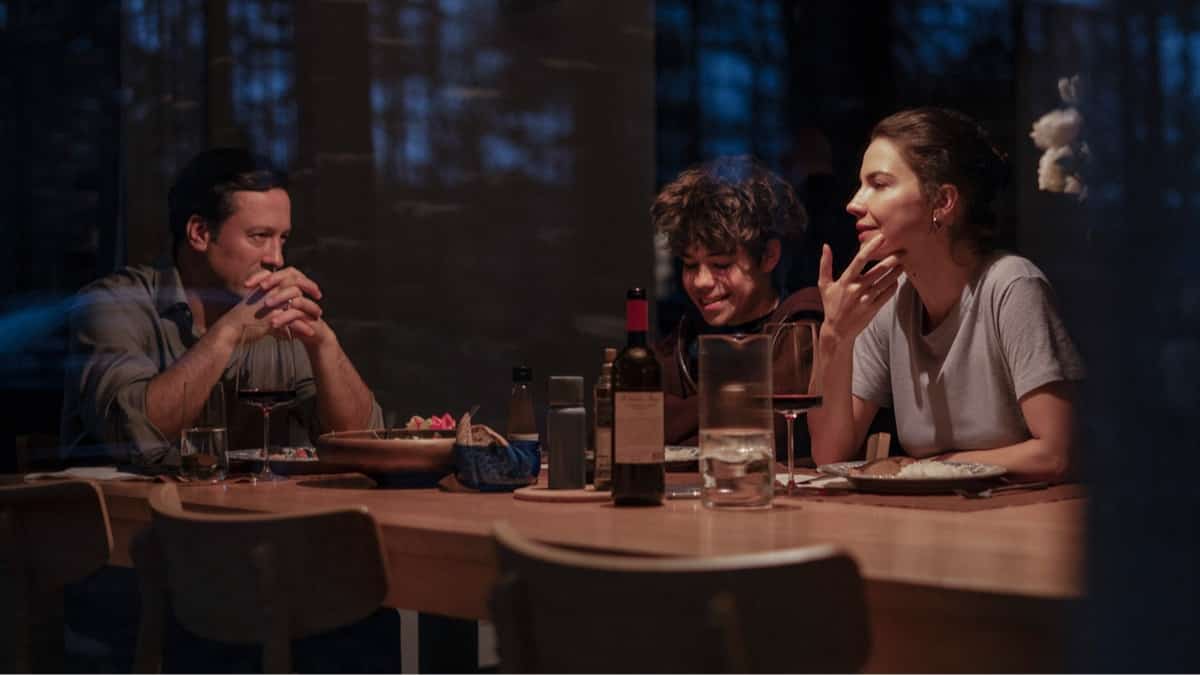
The premiere of Andrei Zvyagintsev’s new film at the Cannes Film Festival: “Minotaur” was shown with resounding success, and it has every chance of winning the Palme d’Or
Yesterday, May 19, when three days remained until the end of the 79th Cannes Film Festival, the long-awaited premiere of Andrei Zvyagintsev’s “Minotaur” finally took place. Film critic Irina Karpova attended it and believes that the Russian director in exile, who made his first film since 2017, will definitely not be left without prizes, and his film has every chance of receiving the main award of the competition - the Palme d'Or.
“Minotaur” is Andrei Zvyagintsev’s first full-length film, for which he wrote the script without his regular co-author Oleg Negin. Let me remind you that the Zvyagintsev-Negin tandem created “Exile” (2007), “Elena” (2011), “Leviathan” (2014) and “Loveless” (2017), and the script for “Return” (2004, authors - Vladimir Moiseenko and Alexander Novototsky-Vlasov), which made Zvyagintsev famous, was brought to the director by the producer at one time Dmitry Lesnevsky. In “Minotaur” Zvyagintsev has a new co-author - Semyon Lyashenko (who previously wrote a book about the director’s creative method), and by and large there are two of them, because the plot framework of “Minotaur” is borrowed from Claude Chabrol, this is a new reading of the film “The Unfaithful Wife” of 1969. Zvyagintsev and Lyashenko reassemble history in such a way that from a very French one it becomes our and very native history of the year 2022, the time of the beginning of partial mobilization in the “North Military District”. You shouldn’t talk about the film as a remake, but I’ll quickly say to the side that even as a remake, it was a success.
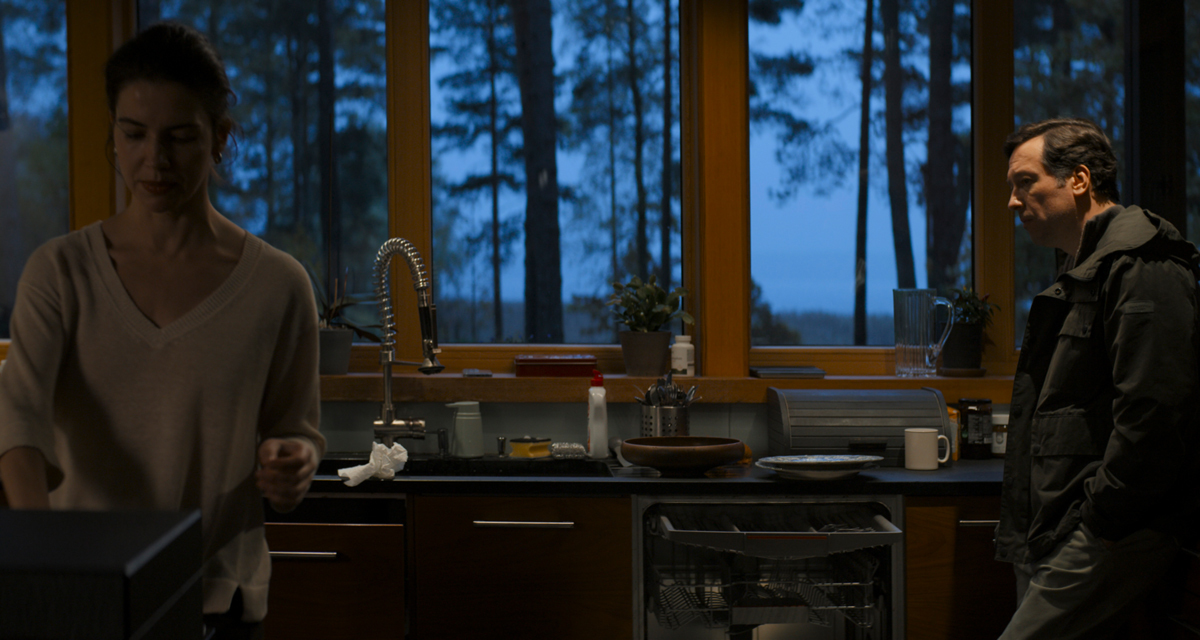
As always with Zvyagintsev, behind the camera is the magician Mikhail Krichman, filling the space of the frame with purity and as if adding air to it. In the frame—and I must say a special thank you to Zvyagintsev for this—are new faces for auteur Russian cinema. With “Dislike,” Zvyagintsev launched the film careers of today’s incredibly popular Maryana Spivak and Alexei Rozin, and in “Elena” he gave the main role to theater actress Nadezhda Markina. In “Minotaur,” Zvyagintsev gave the main roles to the star of daytime TV series on “Russia-1” Dmitry Mazurov and Iris Lebedeva, who also has work in television projects behind them. And they didn't disappoint. Zvyagintsev gave supporting roles to stars who left Russia because of the war - Varvara Shmykova, Anatoly Bely, Artur Smolyaninov. Riga plays the role of Moscow, and yes, some buildings and views are so similar to Moscow that they feel a slight prick in the hearts of those to whom that city was close.
“Minotaur” is not the first film where one city pretends to be another, but it is here that the realization comes that filmmakers in exile will create phantoms of Russia in order to talk about it, without being able to film at home.
In contrast to the gagged cinema , but among native aspens and panels, we get the cinema of those who left - with a phantom Russia, assembled, as in “Minotaur”, from pieces of Latvia, but with the opportunity to speak openly on topics taboo in modern Russia. In the discussion of those who left after 2022 and those who remained, the thesis often slips that those who left cannot say anything about what is happening in the country, they are not there, and they have not felt the pulse of their homeland for a long time. “With Minotaur” Zvyagintsev proves the opposite. The director met the beginning of the war in Germany, while in the hospital with severe consequences of COVID-19. Now he lives in France.
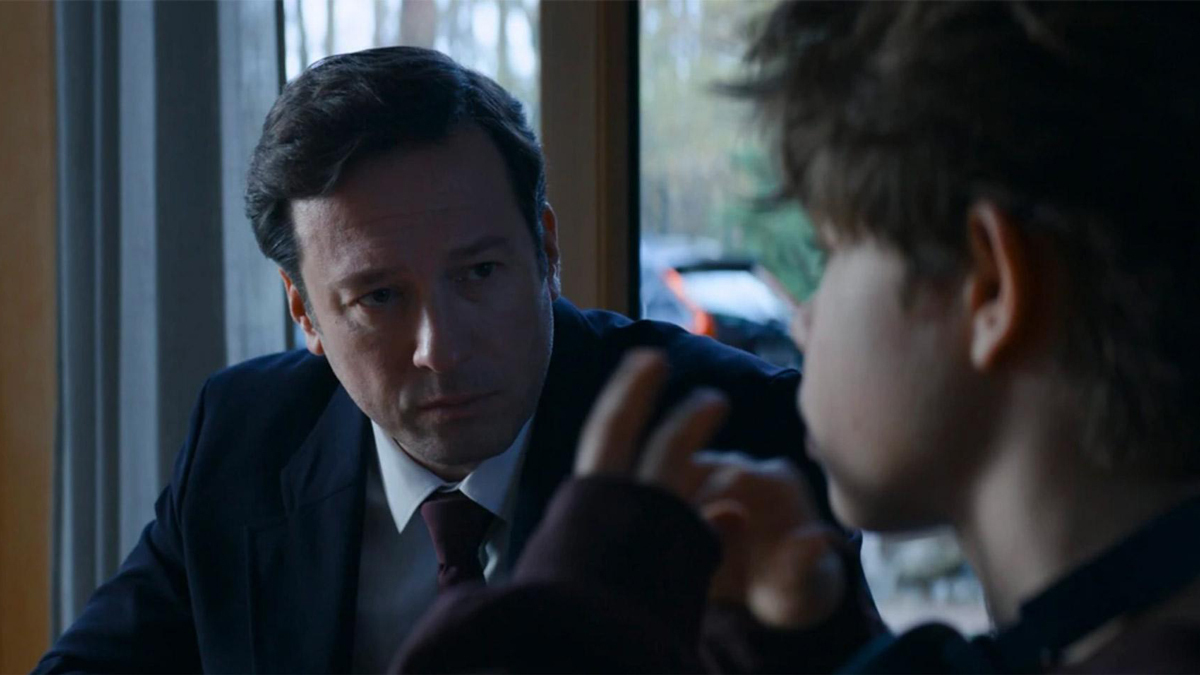
Gleb (Dmitry Mazurov) is a businessman, nouveau riche, the owner of a large enterprise somewhere not very far from Moscow, who seems to have everything in life. He has a wonderful, beautiful wife (Iris Lebedeva), a wonderful son (Boris Kudrin), respect within the company and established connections at all levels. But, like Chabrol, the mother-in-law’s forgotten glasses and the husband’s unwanted appearance during his wife’s telephone conversation - and we learn that there is a crack in the façade of the protagonist’s well-being. Gleb instructs the security chief of his company (Juris Žagars) to find out with whom his wife is cheating on him. Iris Lebedeva manages to create a very human portrait of a woman who, fed up and tired of the role of mother and trophy wife, rushes headlong into adultery. Meanwhile, partial mobilization begins - Gleb’s friends, drunk, discuss the fate of their homeland: times are difficult, we must wait it out. The head of the district administration calls the directors of enterprises to the carpet: orders have come from above, 150 people must be sent to the “SVO”, fourteen souls are demanded from Gleb. Gleb has a fatherly attitude towards his employees, so he orders Varvara Shmykova’s heroine to urgently find 14 new drivers, strong ones with a mark of military service. 14 is the number of the Minotaur, once every nine years the Athenians sent 14 people to Crete as a sacrifice to the half-man, half-bull and the dominance of King Minos.
Meanwhile, the name and address of his wife’s lover are revealed (remember another new name - Yuri Zavalnyuk), and Gleb decides to pay him a visit. At this point, from the SVO chronicle, shot by Krichman’s impeccable camera, a poisonous flower sprouts - Patricia Highsmith’s character suddenly emerges from the hero, crushed by his wife’s betrayal. Isn't it a coincidence that Chabrol adapted her novel The Cry of an Owl? But Zvyagintsev has even more Highsmithian dark energy than Chabrol, and his obsession with his rival revives Gleb, who had previously been sleepwalking through the narrow space of a marriage that was comfortable for him, but had become unbearable for Galina.
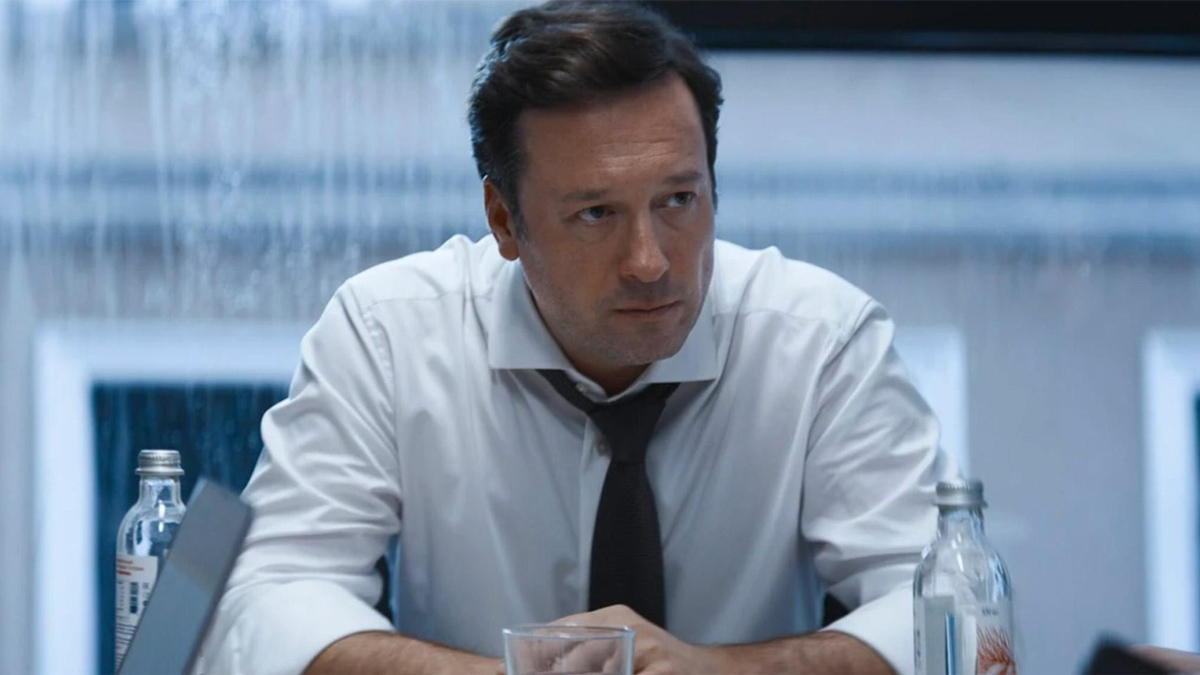
Zvyagintsev leaves just enough space for suspense as needed. How will Gleb behave? How will Galina behave? What about the police? But, like Highsmith, what is important is not the denouement, but the depth of the black hole in the chests of the heroes and the intensity of the roar of inevitability from there. When it grows to an unbearable degree, the heroes - like Gleb in “The Minotaur” - begin to commit strange eccentric and most often monstrous acts, throwing off all masks and surrendering to the energy of feeling.
Zvyagintsev shows that the people who started the war in Ukraine and send packs of cannon fodder there are so selfish and thick-skinned that even when the existential alarm clock of death is ringing right above their ears, they still find the strength to pull a sleep mask over their eyes.
After all, then you won’t even have to turn away from what’s happening around you.
There is a moment in the film when two police officers have the following dialogue at the police department: “Why are we even doing this? - Does *** know? “Let’s go have lunch.” At this point, the huge hall of Louis Lumiere roared with laughter and applauded - the only time in the entire film. It was one of the most terrible moments - I won’t say why - and with this comic touch Zvyagintsev seemed to pat the Russian citizens in the hall on the shoulder, giving them a short burst of laughter: to laugh at helplessness, at injustice, at everything that we are not able to change. It’s good that we retain the ability to laugh at this, but how sad it is that we only laugh.