
Translated material
‘We want to make the invisible visible’. A new initiative aims to challenge the dominance of Russian by supporting literature in the country’s numerous indigenous languages

A new initiative aims to challenge the dominance of Russian by supporting literature in the country’s numerous indigenous languages
PEN Languages of Russia, a new initiative co-founded by Russian writer Sergey Lebedev, aims to support "independent, anti-authoritarian, anti-war literary figures" writing in the many languages indigenous to Russia — from Avar to Chuvash to Tatar. An official member of the PEN network, the organisation hopes to build infrastructure for literature in Russia's minority languages and, in so doing, "break the singular dominance of Russian language and Russian culture". Journalist Ilya Azar spoke to Lebedev and the organisation's head, Tatar writer Dinara Rasuleva, about the origins and ambitions of the new initiative. Below is an abridged translation of their conversation.
— Where did the idea for this project come from?
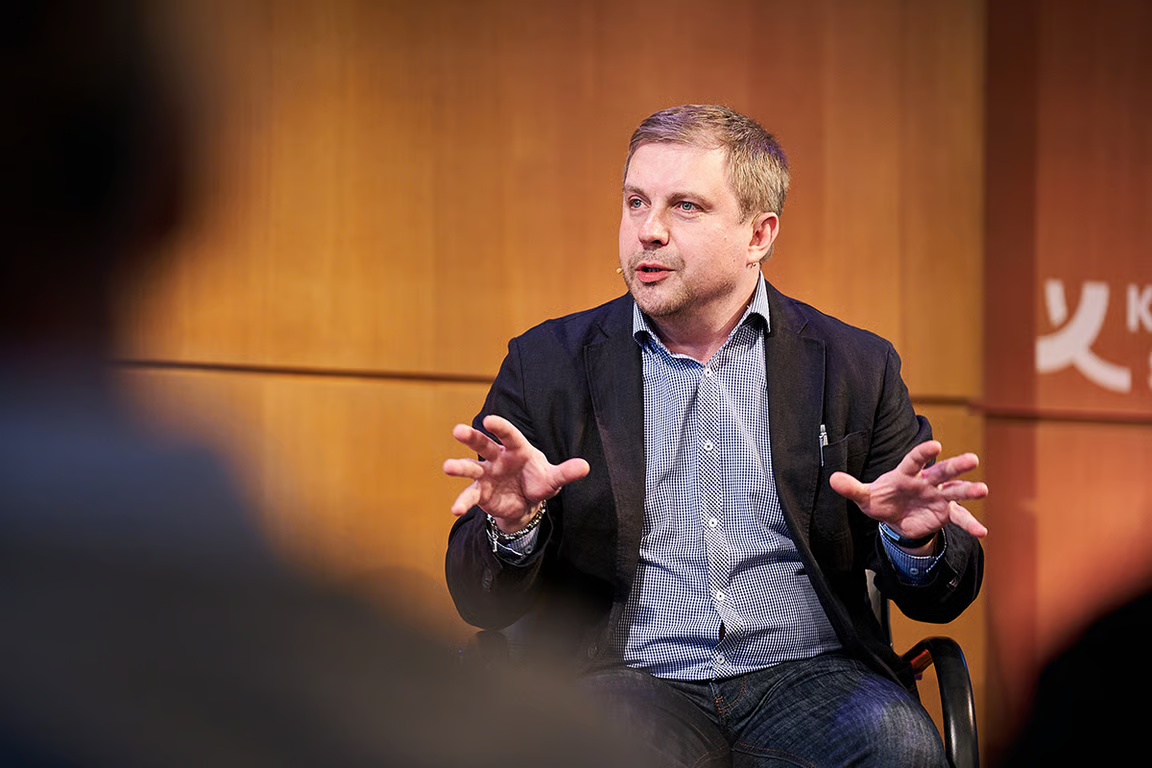
Sergey LebedevWriterSergey Lebedev: It has a fairly long backstory: in 2016, a cultural exchange project was created between writers and translators from Russia and from Sweden. We met several times in the two countries and put out brochures about the developing authoritarian tendencies in Russia.
By complete coincidence, our first post-COVID-19 meeting was planned for the morning of 24 February, 2022. You can imagine the mood of that meeting.
— It’s surprising that you still met at all.
Lebedev: It seemed important to see each other and look one another in the eye in light of what was happening. At that meeting, we made the decision that the Russian side of the project would consider whether some different, more formalized project was needed. We started to look for people: we invited Dinara Rasuleva, then Dasha Seryenko joined, as well as Elena Kostyuchenko, Nikolai Kononov, Lana Pylaeva, and others. The question was this: did Russian writers in exile need an organisation, something to serve as an interface for interacting with the global literary community?
It became clear fairly quickly that rather than reinventing the wheel, the best option was to create a PEN centre. After all, in the global cultural context, everyone would understand what it is and what its purpose is.
In February 2024, we met in Berlin and determined that what we were creating wouldn’t be an exclusively Russian-language PEN or a Russian exile PEN, but PEN Languages of Russia. It was a fairly groundbreaking idea!
— Now a question for Dinara: what are PEN Languages of Russia’s goals?
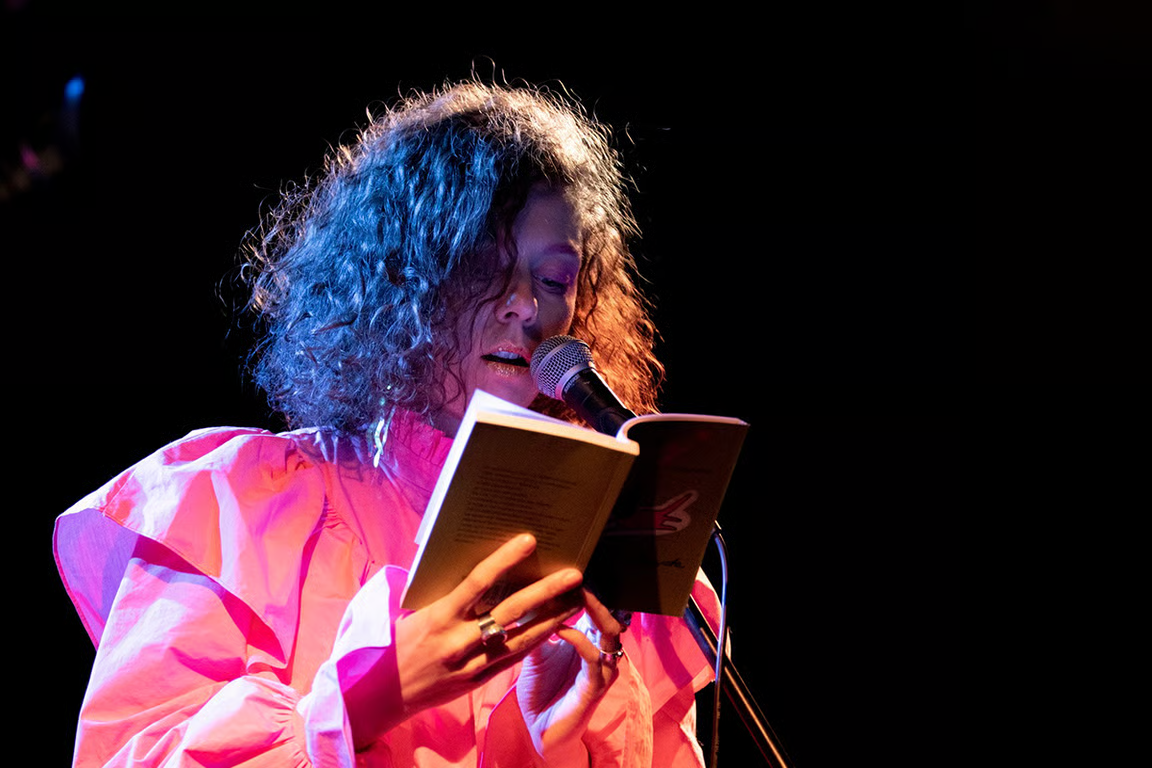
Dinara RasulevaWriterDinara Rasuleva: To answer that question, first I need to tell you how I actually came to the idea that it would be important to focus on non-Russian literary languages — in other words, the languages of Russia’s indigenous peoples, and not only the endangered ones.
I’ve been writing and speaking in Russia my entire life, even though my “native” language is Tatar; when I was a child, I used it in parallel with my Russian. But I was born in Kazan, where a majority of schools and all university departments other than the ones focused on teaching Tatar specifically were in Russian. For that reason, when I went to school, my focus shifted to Russian, and Tatar became only for the family context, the language I would use with my relatives when I went to visit them in the village.
When I started writing stories in middle school, they were all in Russian from the very start, and it was as if I didn’t even have a choice, on the inside, what language to use. Just because everyone around me was communicating in Russian, including my friends, even those who were Tatar like me.
Russian was the default language, so later on, when I started to write poetry, it was also in Russian.
And then in late 2014, I moved to Berlin.
— For personal reasons? Not political ones?
Rasuleva: No, political! Since 2012, I had planned to emigrate from Russia due to the political situation there. My dad was always politically and historically educated, and from the time I was small, he instilled in me that I needed to leave someday. He hadn’t had the chance to himself — we were very poor.
But in 2014, I got the opportunity and I took it.
When I lived in Tatarstan, my identity as a Tatar was invisible, if only because the number of Tatars and the number of Russians there is roughly the same. In Berlin, when I say I’m from Tatarstan, people from Europe or the U.S. are surprised and asked: “From Kazakhstan?” For them, Tatarstan might as well not exist, so it’s easier to say I’m from Russia. But when you say that, people automatically take you for a Russian, because that’s the natural association for everyone, and many people know absolutely nothing about the other peoples of Russia.
This is where I started asking myself questions about identity, including language. I thought, “Why is that my entire life, I haven’t been writing in my native language, even though I know it?” Russian had just always taken up a huge amount of space. For example, starting in my childhood, I read a huge number of books, but most of them were in Russian and in English; in Tatar, there were only children’s books. When I started getting older and became interested in [Scottish writer Iain] Banks and [American writer Chuck] Palahniuk, it turned out that literature like that just didn’t get translated into Tatar.
Even though we were a Tatar family, the giant bookshelf in our home contained exclusively Russian-language books.
It was in 2015–2016 that I first started putting Tatar-language lines in my work. When I first published poetry with Tatar words, I realized that my whole life I’d been unable to let myself say anything in Tatar in front of my Russian-speaking friends. I had some kind of internal shame, like it was off limits.
I became interested in the topic of language and its loss, and that gradually led me to launch Lostlingual — an experimental poetry project about language loss. That’s when I started writing in Tatar.
For the several years that I was working on that project, I met a lot of people with similar stories. They were from different countries and spoke their “native” languages at various levels, from not at all to perfectly.
But what united us all was that Russian had displaced our native languages. And even those of us who spoke our native languages well still wrote in Russian.
Of course, another thing we had in common was that we communicated with one another in Russian.
— I’ve spent time in Tatarstan since you moved away, including to write about the problems facing the Tatar language. At that time, other people were beginning to speak up about the same issues as you. I don’t know if they’ve translated Palahniuk, but they definitely inspired some interest in Tatar language among the wider population.
Rasuleva: Yes, after my departure, Tatarstan started to see a rise in interest in Tatar culture and language, but not from a literary perspective. Bands began appearing — AIGEL, June, USAL, Taraf, qaynar — that play music in modern genres while singing in Tatar, something that didn’t exist when I was a teenager. At the time, the only Tatar-language music was corny pop music, so it didn’t interest me, a teenager who wanted to listen to alternative rock.
And this renaissance is still ongoing: there are more and more new bands playing in Tatar. There’s also now the MOÑ theatre, which puts on plays in Tatar and Russian. And there are a lot of new fashion designers incorporating Tatar symbols, Tatar fashion, in their work.
But literature is the most difficult cultural component. After all, to listen to a song in Tatar, you don’t have to know it, but to read a novel, you need not only a different level of language proficiency but also a completely different infrastructure.
— What’s the value of your organisation for minority language speakers still living in Russia? First of all, they barely know about you, and second of all, how will you be able to help them? Or does the organisation exist more for those living abroad?
Lebedev: I think this is first and foremost for those who’ve managed to leave. Because at some point, legal cooperation with us could become dangerous or problematic. Everything related to national politics is extremely important to the Russian authorities, and anyone who touches it is dubbed an extremist or terrorist.
— Why did you, Sergey, decide to participate in this project?
Lebedev: I write about the past, and for a fairly long time, I’ve viewed my family as victims of the Soviet regime, which there’s no doubt they were.
But at the same time, in the pre-Soviet period, this was a family of professional soldiers and professional priests. Both sides were classic agents of empire, who, from about the 17th century, built it with their lives and their own efforts — by cross and by sword, so to speak. And this is a completely different lens, when you view these same people whose descendants would be repressed as people whose actions played a major role in making Russia what it is now, including participation in the Caucasian wars of the 19th century, the occupation of Poland, etc.
So for me, this is a reimagining of myself and my family history. Because I understand that for generations, we played a role in making this country what it is today.
My ancestors built an empire and were zealous and, probably, somewhat talented agents of it. They invested a lot towards making Russia’s indigenous languages disappear and changing the way their speakers lived. And I want, first of all, to acknowledge this for myself, and second of all, to do what little is in my power to counteract it.
Rasuleva: I want to add something about people in Russia. People who still live in Russia have been joining me in my lab online. The opportunities to connect with them remotely have allowed me to see that initiatives like clubs for reading and writing in indigenous languages that have already disappeared [in Russia] or are spoken only by a small few is possible from abroad.
— Decolonial discourse is clearly divisive within Russia’s exiled opposition, and a lot of people try to avoid the topic entirely. Do you think this project will find support among its leaders?
Lebedev: We’ll see. We simply want to make the invisible visible — after all, these are people without any representation. You look at these big gatherings of the Russian opposition and ask yourself: “Does this opposition really represent a multi-ethnic country?” So far, I don’t have the feeling that it’s doing so fully and completely.
— Do you see a role for your project in the “beautiful Russia of the future”?
Lebedev (chuckling): It seems to me that the political structure of Russia, which arose over centuries of expansion — sometimes a creeping expansion, sometimes all-out military expansion — is the very thing cursing it. Because there are too many peoples, too many ethnic groups forced together through violence of some kind or another.
Any democratic government, whatever kind it may be, will eventually be faced with the question Yeltsin was faced with in 1994 [in Chechnya] and will have to choose: tanks or discussions.
It seems to me that the more we understand about one another, about the fact that we all ended up here not of our own free will but through violence and coercion, the easier it will be in the future to transition to a truly federative model that has not just some ethnographic divisions that are called “republics”, but full political entities.
If we’re speaking about some kind of bridge to the future… We’re now in the fifth year of an open war. Ukrainian writers are dying under occupation, on the battlefield, and on the homefront, like Volodymyr Vakulenko and Victoria Amelina. But it doesn’t feel to me that Europe, or the wider world, has a clear understanding of the fact that this war isn’t just some crazy whim of Putin’s, and that it has the same roots and causes as the two wars against Chechnya: an imperial superior complex, a refusal to acknowledge others’ rights to define their own destiny. And our job is to talk about these deep-rooted structures of violence, to expose the continuity.
Rasuleva: Take the example of the Tatars who emigrated to Finland in the late 19th and early 20th centuries and have maintained a small community there ever since. They’ve maintained their language and culture on a completely different level from that of the Tatars who stayed in Russia. For instance, they still use the Latin alphabet [instead of the Cyrillic one], they’ve kept their musical culture alive, and all of this would have been impossible without the support of Finland.
This shows that it’s very important to free oneself from Russification, from language repressions, if languages are to survive and thrive.
— Is that possible without seceding from Russia?
Rasuleva: I’m not a politician and I can only do what’s in my literary powers. I hope there are political experts who can do their part as well.
— What we need isn’t experts but revolutionaries — but they’re treated pretty harshly in Russia.
Lebedev: Yes, you might think, why should anyone care about these languages? Why such an overreaction to real attempts at cultural emancipation? It reveals how the Kremlin feels: that all of this is stolen goods. And as soon as a true cultural emancipation occurs, the response will be brutal — and that’s to say nothing of true political emancipation.