
Translated material
“Europe cannot talk to Russia if Russia does not want to talk.” British Ambassador to Russia Nigel Casey - about the confrontation with Putin and love for Russian culture
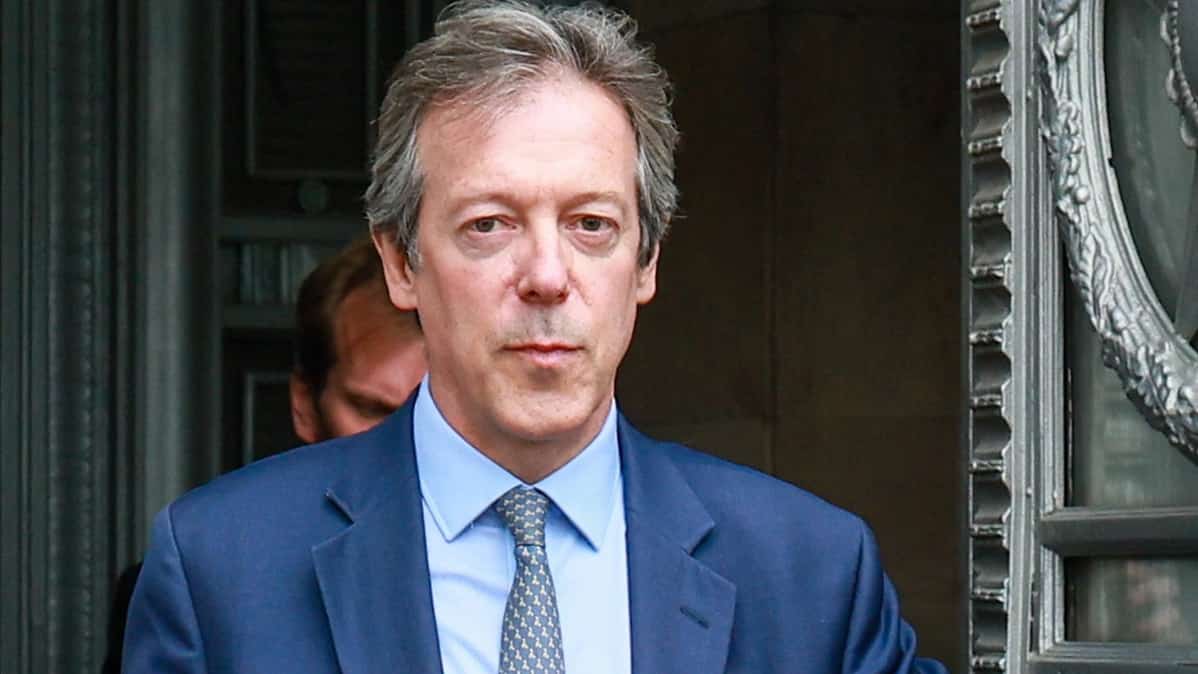
British Ambassador to Russia Nigel Casey - about the confrontation with Putin and love for Russian culture
Nigel Casey is a British diplomat and has been the British Ambassador to Russia since November 2023. He already worked at the embassy in Moscow at the beginning of the 2000s and then, for example, helped organize meetings between Tony Blair and Vladimir Putin. Editor-in-Chief of Novaya Gazeta Europe Kirill Martynov spoke with Nigel Casey about Russian-British relations, the war in Ukraine, sanctions, Russian culture and the future of the two countries.
— Dear Ambassador Casey, it is our great honor and privilege to speak with you. And I think this conversation is of particular importance in the current conditions - with such a high level of tension and mutual mistrust between our countries. For our part, we are trying to do everything possible to preserve peace and democracy in Europe, trying to build bridges between our countries and our peoples. And I think this conversation can be really important.
I would like to start with a topic related to Russian propaganda. In recent years we have heard many attacks on the British government and even on the British people. Some television figures from Putin’s circle even call Great Britain and its government enemy number one for Russia. As far as I understand, some British officials also spoke about Putin’s attitude. Last year, Defense Secretary John Healey said Putin considered Britain his main enemy. Do you share this assessment? Do you really believe that Putin perceives the UK as his main enemy? And why? And maybe you could indicate who occupies second and third place on this list?
- Thank you, Kirill. First of all, thank you for inviting me to this interview. I appreciate this opportunity to explain our position and policies to your viewers and listeners.
I think today such a statement is true. I heard this directly from Russian government officials in recent contacts with them: we are indeed singled out in a special category and considered the most hostile state from Moscow's point of view. When I came here in November 2023, this was not the case. There was a different American administration at the time, and much of the Russian criticism—propaganda, if you will—was directed at Washington as much as London.
Now the American administration has changed, and the rhetoric has also changed. We almost no longer hear about the “collective West”; the term “Anglo-Saxons” has almost disappeared from use. Official Russian statements make a clear distinction between the UK and the US. And there is clearly an intention to drive a wedge between Europe and America - this is absolutely obvious.
Why is the edge directed specifically against us? When I ask Russian officials this question, they say that the UK, in their opinion, is being particularly hostile towards Russia. They talk about it openly - we are talking about our support for Ukraine. In response, we are equally candid in reminding them of the threats posed by Russia’s actions, most notably the invasion of Ukraine. But if we talk directly about our national security -
we are forced to take seriously the presence of Russian warships off our coasts, Russian research vessels and submarines near our coasts and critical infrastructure,
flights of Russian strategic bombers in the direction of our airspace, sabotage within the country. All European countries feel all this to one degree or another. We are no less than others.
And finally, as you know, there is also a historical aspect to this. Many appeal to old stereotypes about British-Russian rivalry in the 19th century and the Russian Revolution. I think all this is fed from a certain historical layer of memory, which has now been deliberately brought to the surface.
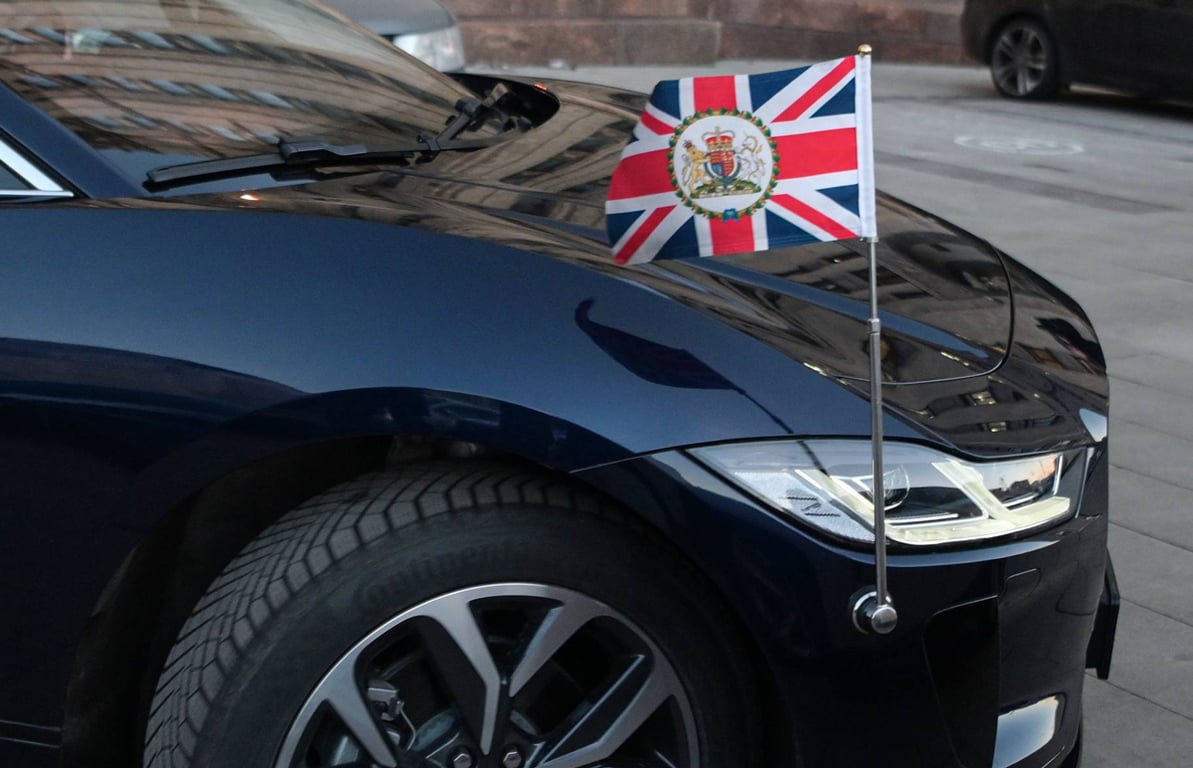
“ This seems rather strange to me, because Putin so loves to appeal to the history of the Second World War, and we were allies in that war - the worst war in the history of mankind. It’s strange that people now remember some of the contradictions of the 19th century. By the way, I wanted to ask about your personal experience: you worked in Moscow twenty years ago, heading the political department of the British Embassy. What has changed since then? And maybe you even met with the same people - for example, Lavrov - at a time when things were going even differently?
— Yes, I worked here from 2003 to 2006. And this, of course, was a completely different time - both in our bilateral relations and in Russia’s relations with Europe as a whole.
I met with Sergei Lavrov. I remember how I went to see him with the then ambassador when he was just appointed Minister of Foreign Affairs, replacing Igor Ivanov, returning from New York. I also participated in negotiations with our Prime Minister Tony Blair and President Putin. The context was different. In 2003, Putin made a state visit to London. That same year, BP and Shell announced major investments in the Russian energy sector, and this was just one example: British companies showed keen interest in Russia across the board. I would call that time the heyday of our relationship. We had a large-scale program of joint cultural events. The British Council was doing a number of projects in Russia, and on both sides there was a huge request for contacts - human, cultural, educational, scientific.
But if you look at that era from today, even then you can discern some trends that made themselves felt later: changes within Russia, which, in my opinion, predetermined changes in how Russia builds relations with Europe. History, if you read it backwards, is sometimes easier to comprehend - you can see where and when certain processes began. Some of them originate precisely in that period, even when our relations were still quite prosperous.
— I believe that your embassy works in Moscow under very serious pressure. One of the episodes of such pressure occurred in March, when Russian intelligence services accused the second secretary of the embassy of so-called intelligence activities. As evidence, the Russian side claimed that the diplomat allegedly tried to obtain “secret information” during informal meetings with Russian experts in the field of economics. This sounds absurd to me, because such contacts with experts are common practice all over the world. Could you explain to our viewers - most of whom have never been to embassies or spoken to diplomats - what the real purpose of such meetings is? And what are the true motives of the Russian special services, the FSB, when they make such accusations?
- This is a good question. Look, one of the key functions of any embassy - be it ours here or, say, our embassy in Paris, in Washington, or, for that matter, the Russian embassy in London - to give its own capital an accurate picture of what is happening in the host country: in politics, economics, public life. So that our policy is based on a real understanding of the situation and a real understanding of the position of the government of this country. And, as you rightly noted, meetings with specialists in various fields have been a completely normal practice for many years - and for most embassies of so-called Russia-friendly countries they remain so to this day. This has nothing to do with espionage.
In the case of our employee, who was unfairly asked to leave the country, it was about a discussion about processes in the Russian economy. No secret information, as you said, only public information. One of his interlocutors, by the way, represented the American Chamber of Commerce. Calling this espionage is simply ridiculous. When I raised this issue in a conversation with representatives of the Ministry of Foreign Affairs, they were quite frank:
it is a reflection of how they see Britain and the current state of our relationship, all of which is directly related to our support for Ukraine.
That's the whole story. It is in this spirit that it needs to be understood - then everything falls into place. This is not a story about espionage. This is a story about the state of our relations and about the tension that arose in them as a result of this war. And the same war, as we saw from the new attacks on Kyiv, unfortunately, is becoming more and more cruel.
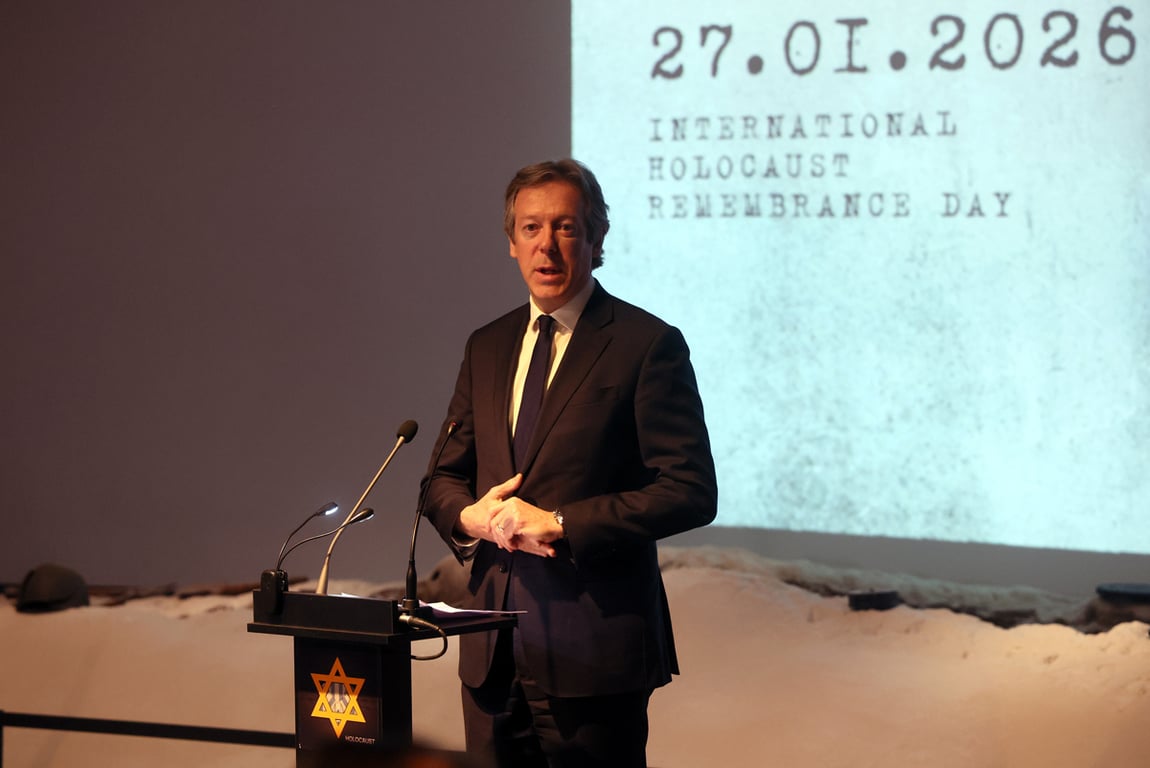
“ I mentioned at the beginning of the conversation the privilege of talking to you - and this is not just politeness. I know that many of my colleagues in Russia are deprived of this opportunity: it is simply dangerous for them to talk with British diplomats. I’m interested: how is this work on communication with Russian society organized today? Do you still have any access to official Russian media? Is it possible to meet with experts in Moscow?
“It has become much more difficult even in the two and a half years that I have been here. We understand perfectly well that we must avoid creating any additional risks for the Russians with whom we communicate, and this factor constantly has to be taken into account.
The situation here has changed - clearly for the worse. What is happening is quite obvious: there is a special emphasis on opposing Great Britain, but it is not just about us. There is a broader effort by intelligence agencies to cut off Russian citizens—or at least significantly limit their access to information that has not passed the official filter. To objective sources of information - be it foreign or domestic. This is evident both in the tightening of Internet restrictions and in the targeted intimidation of Russians, designed to discourage them from communicating with foreigners from countries recognized as “unfriendly.”
I find this deeply regrettable. This is very bad for the long-term health of society and for the future of Russia. This is Russia’s business, not ours, but I personally, as a person who spent a lot of time here, sincerely regret it.
— To be honest, I don’t understand the idea at all: how can the government prohibit a citizen of a country from talking to people who have a different passport? This is something from the realm of absurdity. Russian propaganda and intelligence services can probably classify this conversation of ours almost as high treason.
I would like to move on to the topic of sanctions. The UK, unlike the EU, where it is necessary to coordinate the position of 27 countries, can pursue an independent sanctions policy. London recently announced a new package of sanctions, and two-thirds of those newly included in the list are associated with Russian propaganda - this directly affects the media sphere. There are, on the one hand, experts who insist that sanctions are not working at all: the Russian military machine continues to operate, and the Russian economy is supposedly thriving. On the other hand, there are a huge number of people who are trying to circumvent these sanctions. So what is the current logic of British sanctions policy?
“The goal of our sanctions has always been the same - to contribute to a speedy end to the war in Ukraine. The main mechanism of their influence is depriving the Russian government of the financial resources necessary to continue the war. This is inevitably a cumulative, step-by-step process, and equally inevitable that it encourages the search for workarounds. We have seen how in recent years Russia has adopted the experience of Iran, which has a long history of evading sanctions. Therefore, we constantly have to identify and close loopholes and stop new schemes. We are developing sanctions tools in response to new ways to circumvent them - this is an iterative work.
If you look at the state of the Russian economy today - and it is essentially an economy in recession, especially outside the defense sector - it is impossible to say that sanctions have no effect. This is not true. And this is why Russia complains so much about sanctions.
As for other aspects of Russia's unacceptable behavior, a number of sanctions packages have been linked specifically to disinformation - and the package we announced this week is not the first of these during my tenure here. We see that there are still a huge number of people working here who spend their full time working to interfere in our political life, in the life of our societies, spreading disinformation. We want this to not go unpunished. If you are sitting in a troll farm in St. Petersburg or Moscow, you should not think that we will not notice you. This is the signal these sanctions are intended to send.
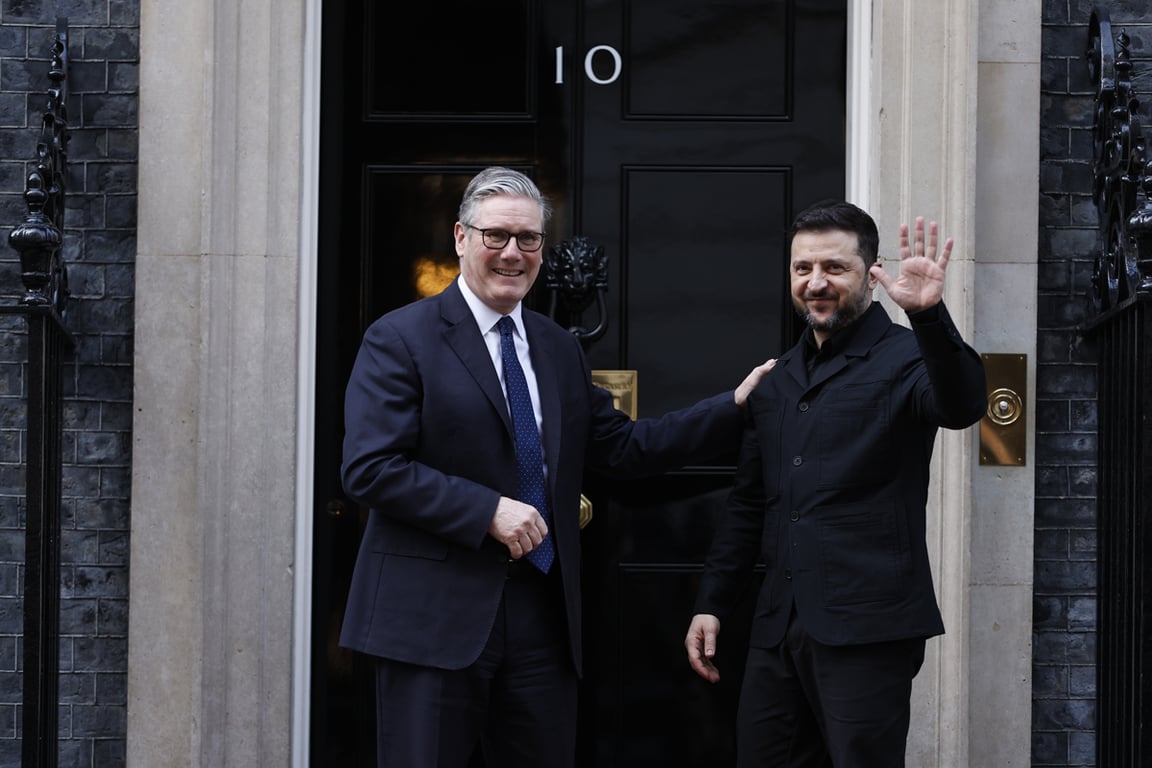
— Another part of this sanctions package concerns persons involved in the deportation and indoctrination of Ukrainian children in the occupied territories. I think this is one of the most heinous crimes committed by Russian forces in the occupied territories. President Zelensky has already expressed gratitude to London for this decision. What's next? What is the British approach to the problem of child deportation?
— As you rightly said, Kirill, this is one of the most disgusting elements of a highly disgusting, illegal war. And the Russian government goes to great lengths to deny it, downplay it, or even present it as a humanitarian gesture—which, in our opinion, is the height of cynicism.
We are trying, firstly, not to let this topic leave the public space, and secondly, to find practical ways to help with the return of Ukrainian children home, with their reunification with their families. Including
We finance a verification center and search mechanism located in Kyiv: it helps to identify and search for Ukrainian children taken from their homes.
This is important because there are endless disputes about the real numbers - there are claims that they are many times inflated. But the goal of this work is to consider each case separately and clearly establish: the child was taken to Russia, he has living relatives in Ukraine, he wants to be reunited with his family. This is painstaking work - each case is unique. But this is a fundamentally important issue for us.
And it, again, is connected with a broader understanding of the goals of the Russian war - the denial of Ukrainian identity and sovereignty. It is in this that we see the most sinister meaning of what is happening. That's why we take this issue so seriously.
- Let's talk about the peace process - this is a difficult topic. How do you assess the situation: have negotiations between the Russian and Ukrainian sides reached a dead end or are they on pause? What is the US role in this process? What is the UK's role?
— Judging by the statements of the Russian government, the negotiations seem to have taken a break. We regret this. We support the current negotiation process. Contrary to popular belief, we are not trying to undermine it - it’s exactly the opposite: in contacts with American and Ukrainian colleagues, we try to promote progress, offer ideas, and share considerations.
But real progress is not visible. The fundamental reason is that Russia continues to make a demand that is as unreasonable as it is impossible to fulfill: Ukraine must surrender the remaining part of the Donetsk region, which Russia has not yet seized by force and where more than one hundred thousand Ukrainians live. This is not some unimportant piece of land - these are the living destinies of a huge number of people. As long as Russia insists on this, I do not think that any significant progress in the negotiations is possible. These are the signals coming from Russian officials. The situation does not suit us at all - and I think that is why in recent weeks voices have become increasingly louder about the possible direct involvement of Europe in the process.
— It seems to me that in recent months we have observed a certain shift in Russian public opinion. I understand that in conditions of censorship and restrictions it is difficult to conduct full-fledged polls, and yet Levada Center recently published data: 67% of Russians are in favor of peace negotiations. For the Putin government, I think this is a new situation. At the same time, there are indeed calls in Europe for direct negotiations with Russia - for example, Finnish President Alexander Stubb said that if the United States is not ready to defend European interests in negotiations, Europe should take it upon itself. How do you assess the prospects for direct dialogue between the EU and the UK with the Russian government? And can this bring peace closer?
- You are right that you capture a different mood. I really feel: in the fifth year of the war, deep fatigue is growing here, and the overwhelming majority of Russians really want it to end, and not to continue fighting for the sake of fighting. This feeling is really different this year. It coincides with a clear deterioration in the economic situation and a slowdown in the advance of Russian troops on the battlefield. All this, I think, has formed into a stable demand from society to end the war.
So far, these sentiments, however, have not been translated into official Russian policy. As for the dialogue with Europe, I also do not see the slightest signs of a change in the Russian position. Europe cannot talk to Russia if Russia does not want to talk. The response to European signals of readiness for more active participation is still very vague: one can recall Putin’s rather vague statement on the evening of May 9, after the parade.
I think the current interest in European participation in the negotiations is due to the fact that there is no real progress in the negotiations under American leadership.
And also because some of the issues discussed will inevitably require the participation, consultation and consent of European governments. If we are talking about serious commitments about the future of relations between NATO and Russia, the EU and Russia, Europe broadly - including the UK - and Russia, then no agreement reached between Kiev, Moscow and Washington will be valid without European consent. This is obvious. Therefore, there are issues where more active European involvement could be useful - both in terms of preventing escalation now and in terms of finding a sustainable settlement. But I think we are still at a very early stage, and much will depend on Russia’s own readiness to talk with Europe.
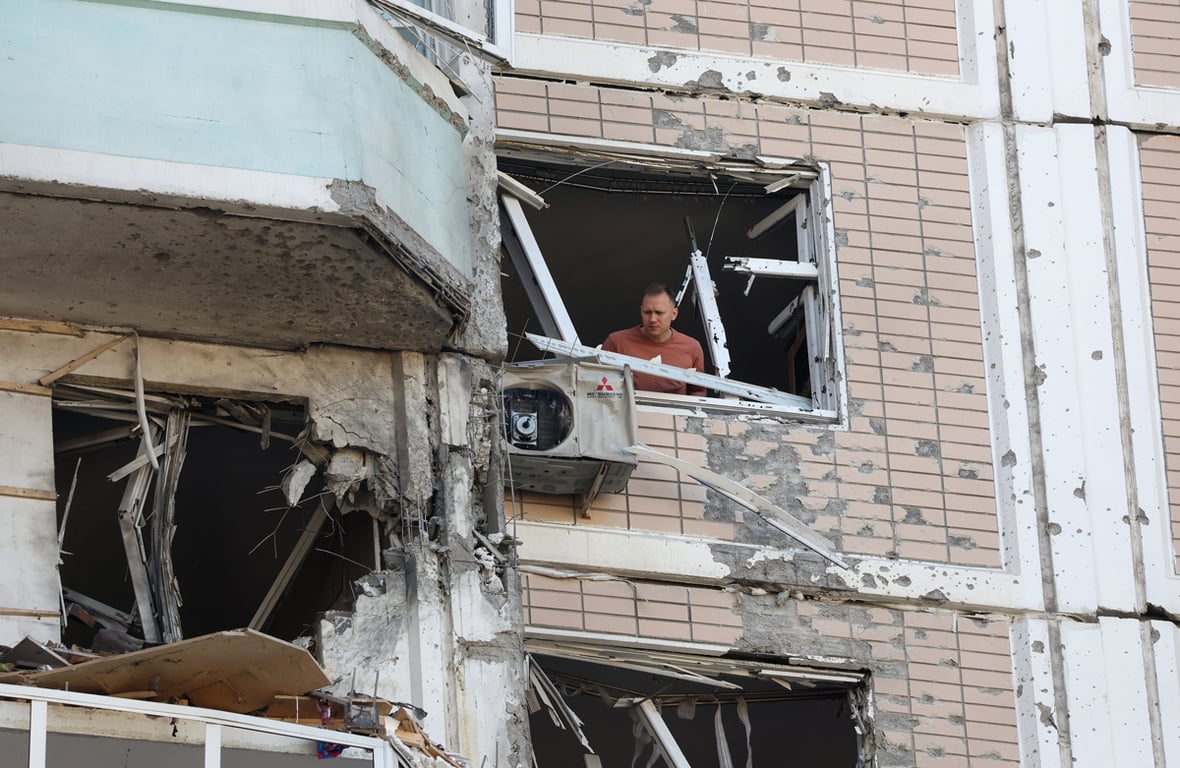
— One question directly about the war. The UK recently announced the largest supply of drones to Ukraine in its history - more than one hundred thousand in a year. Are there any restrictions on the use of these drones by the Ukrainian army? And what do you think about the Russian side’s assertions that the use of Western weapons to strike targets on Russian territory is illegal?
— Here I would note two points. The first is context. We are seeing a steady escalation in the use of drones and cruise missiles, primarily by Russia. Just last week, in one day, Russia launched a record number of drones - almost one and a half thousand - into Ukrainian cities, including Kyiv, destroying civilian objects and killing civilians. It is in this context that European countries, including the UK, supply Ukraine with weapons for self-defense in accordance with international law. The supplies include drones, both for defense against enemy drones and for conducting defensive operations at Ukraine's discretion. The main limitation we place on all military equipment we supply is that it must be used exclusively against military targets.
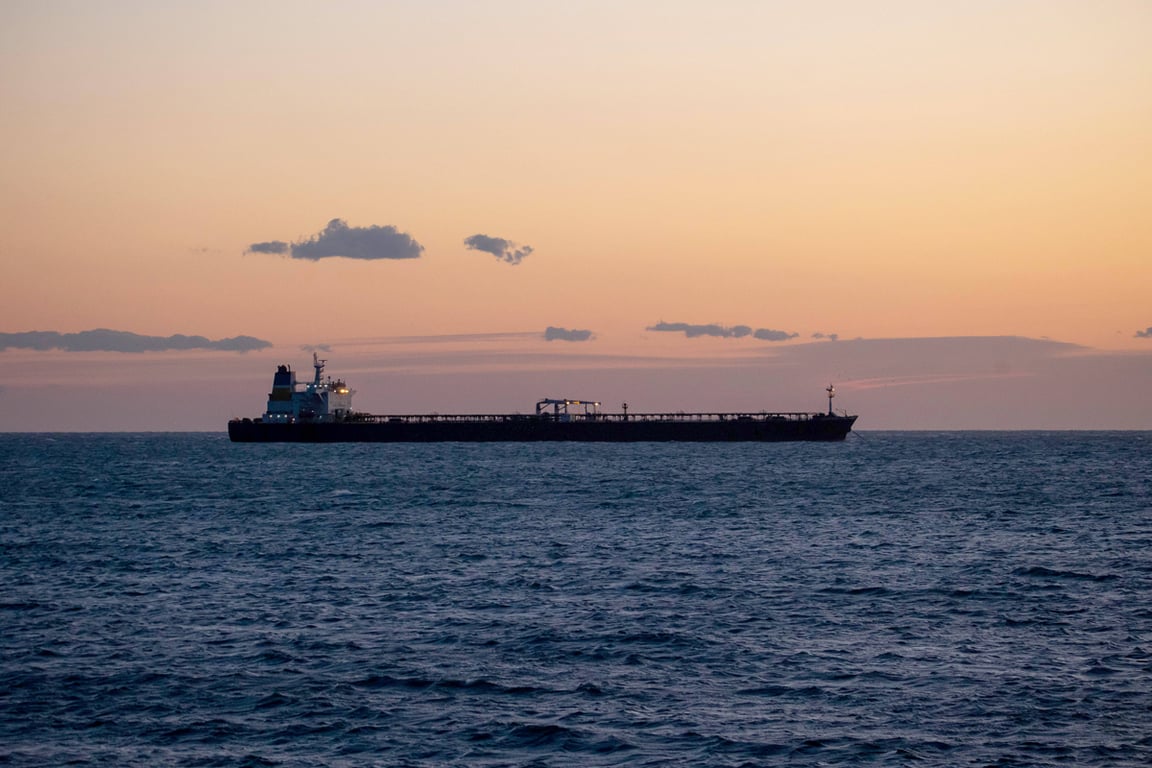
— Another important topic is the so-called shadow fleet. In March, Prime Minister Starmer announced that the British armed forces had been given powers to inspect sanctioned vessels passing through UK territorial waters. This was big news - in fact, a statement about the blockade of the Russian shadow fleet in the North Atlantic. Meanwhile, Reuters reports that at least 98 ships on the sanctions list have passed through British territorial waters, about the same number as before the announcement. Why does the fight against the shadow fleet in practice fail?
— First, let’s clarify what we are talking about. We are talking about ships sailing under so-called “flags of convenience”, and sometimes without a flag at all. As a rule, these are very old, poorly maintained vessels, often without proper licenses. Therefore, we - like a number of other maritime states in the region - are absolutely clear: we have the right to detain such vessels in our waters and check the compliance of their activities with the norms of international law and our sanctions legislation. However, we are very careful to ensure that our policies are based on international law and UK domestic law - without exception. This is a principled position that determines everything we do - internationally and domestically.
In practice, we are indeed seeing a change in the routes of a number of these vessels - they are leaving the English Channel for detours along the coasts of Great Britain and Ireland. This, I think, suggests that those who operate these vessels illegally are afraid of inspection. In other words, our very willingness to act already has an effect. Let me just add that we take this issue seriously—as do other maritime nations—and will be prepared to take further action as necessary.
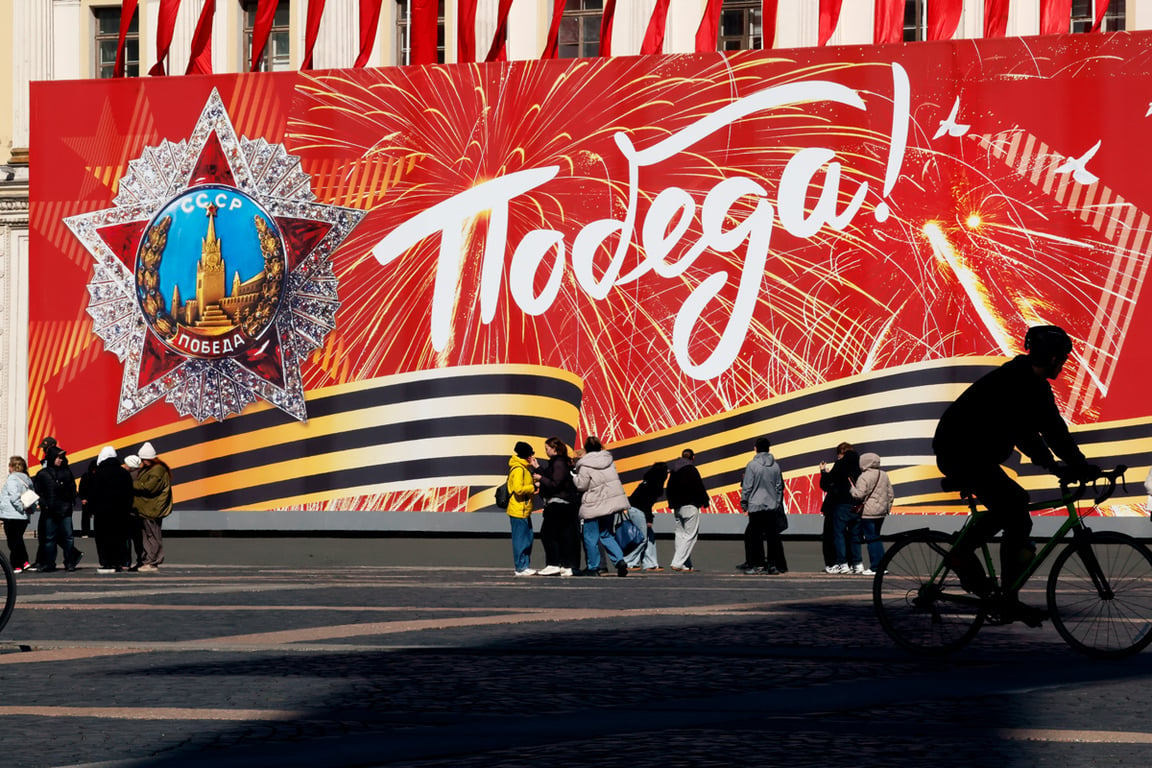
— Finally, I would like to ask more personal questions. Do you have hope for a better, peaceful future for Europe, for our countries? Do you see a fair scenario for ending the war for Ukraine? Is there still room for cooperation between the British and Russian peoples - perhaps through culture? One last thing: what do you think about this so-called “cancel Russian culture” - a topic that Russian propaganda loves to exploit?
— You know, I think that you can become a good diplomat only by being a professional optimist. Without optimism, you can’t do this work—and you can’t love it. Therefore, every day I look for reasons for it and ask myself: what exactly can I do today, no matter how small, that will bring a better future at least a little closer - for us and, perhaps, for our relations with Russia.
I've seen this relationship go up and down - just like others. And without wanting to downplay the current seriousness of the situation, I must say: historically, we have experienced bad periods and experienced good ones. If you look from a sufficient distance, there are grounds for optimism.
But the first and main condition is sustainable peace in Ukraine. Without this, everything else becomes incomparably more difficult. This is where our efforts are focused.
As for culture: as I already said, at one time it was one of the most powerful resources in relations between our countries and created real human connections. For me, this was one of the most vibrant and joyful aspects of our relationship, and I really hope that we will return to this.
I know from representatives of leading British cultural institutions: they want to restore cooperation with Russian colleagues in the future. Their position - and ours too - is this: Russian culture is part of European culture. And talk about the “cancellation of Russian culture” is complete nonsense. In London - see for yourself - even today there are productions of Chekhov, Tchaikovsky’s ballets, and the whole diversity of Russian culture, including the most modern, is heard. It lives on - because we consider it part of our common European heritage. Russian artists and performers continue to perform in the UK and receive the warmest welcome. What we refrain from doing while the war is ongoing is official cooperation with Russian state institutions, especially those that are openly associated with the war. But this is completely different - this is not the abolition of Russian culture.
And you know, when I’m in London, I hear Russian spoken on the street every day. I feel the presence of the Russians - one of the many communities living in Great Britain today completely freely and without any fear. This is, perhaps, a note - albeit small, but optimistic - on which we can end.