
Translated material
Academician of the Russian Academy of Sciences Vadim Pokrovsky has died. He dedicated his career to the fight against AIDS in Russia
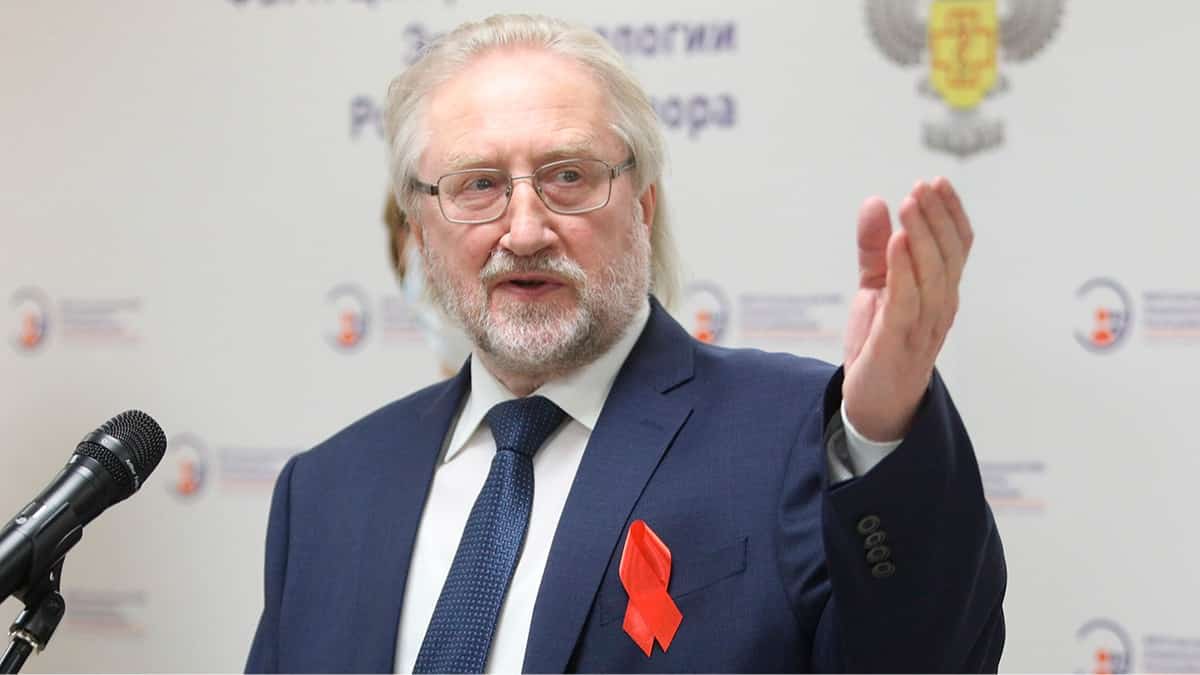
He dedicated his career to the fight against AIDS in Russia
Russia's top AIDS specialist, Vadim Pokrovsky, has died at the age of 71. The death was reported to Rospotrebnadzor without specifying the cause.
Pokrovsky was at the forefront of identifying HIV in the USSR as the person who found the first significant cases, investigated chains of transmission of infection, showed that the virus was already spreading within the country, and participated in the creation of a system of recording, testing, surveillance and treatment.
How Pokrovsky devoted more than 40 years of his life to the study and fight against AIDS in the USSR and Russia - in the material of Novaya Gazeta Europe.
In 1985–1987, the scientist was the first in the country to identify foreigners and Russian citizens with HIV and at the AIDS stage. At the time, AIDS was considered a disease of gay men and sex workers—both were denied and punished.
The first HIV carrier in the USSR, as it turned out, actually had same-sex sexual contacts. The man worked in 1981 as a translator in Africa, where he had sexual contacts with the local population, and after returning to the USSR he entered into contact with 25 conscripts who, after demobilization, dispersed throughout the country. The soldiers were found and persuaded to take an HIV test - five of them were infected. Then it turned out that one of the infected from Smolensk was a blood donor, which was transfused to five patients. In addition, the soldier's wife became infected during sex, and their child was born with the virus.
“Before this, no one believed that there could be HIV in our country too. The chief sanitary doctor even stated that there could be no AIDS in the USSR, because homosexuality is prohibited by law in our country,”
— Vadim Pokrovsky recalled in a conversation with AIDS.Center.
Pokrovsky subsequently repeatedly explained that HIV is transmitted not only through homosexual contacts.
“HIV was transmitted through sexual contact between women and men, and through blood transfusions, and through injections performed with unsterile instruments,” he explained in an interview with TASS in January 2025.
We explain how criminalizing HIV transmission actually hinders the fight against the epidemic
We explain how criminalizing HIV transmission actually hinders the fight against the epidemic
In 1988, the first large mass outbreak of HIV in the USSR occurred in the children's hospital in Elista (Kalmykia). More than 75 children and four adult women were infected with the human immunodeficiency virus. Based on this story, the series “Patient Zero” was released on the Kinopoisk streaming service in 2023.
It was possible to identify the source of infection, where small children were dying for an unknown reason, thanks to Pokrovsky’s investigation. It turned out that nurses used the same syringe for different children without disinfecting it.
“Since the children are small, and they needed to administer a fairly small volume of medication, one syringe was enough for the entire department. The nurses simply filled a syringe with penicillin and gave everyone injections. The training of medical personnel was very poor. They simply did not understand that they were violating something. Following HIV, a hepatitis epidemic swept across the country, and the technology for its spread was the same: it turned out that syringes for Soviet hospitals were a systemic problem,” said Pokrovsky.
The scientist also found out how HIV ended up in a hospital in a region that does not border with other states. It turned out that in May 1988 a child died there with symptoms similar to those of AIDS, and both of his parents were subsequently diagnosed with HIV.
In Kalmykia, it was possible to identify a “zero patient” - he turned out to be a man who in 1982 served in the navy. The ship on which the young man served stopped at a port in the Congo, where the soldiers had the opportunity to use the services of local sex workers. After demobilization, the sailor returned home to Elista, where he got married and had two children. The couple's first child was born healthy, and the second was born with HIV.
“This man died 3-4 years later from AIDS, there was no cure for HIV, and in addition, this whole situation also affected his mental health,”
- Pokrovsky explained.
The scientist said that many of the children infected in the hospital in Elista grew up, live on antiretroviral therapy and even gave birth to healthy children themselves.
But about half of the patients infected in the hospital in the late 80s died - effective antiretroviral therapy will be invented and become available only in 1996, notes the AIDS.center.
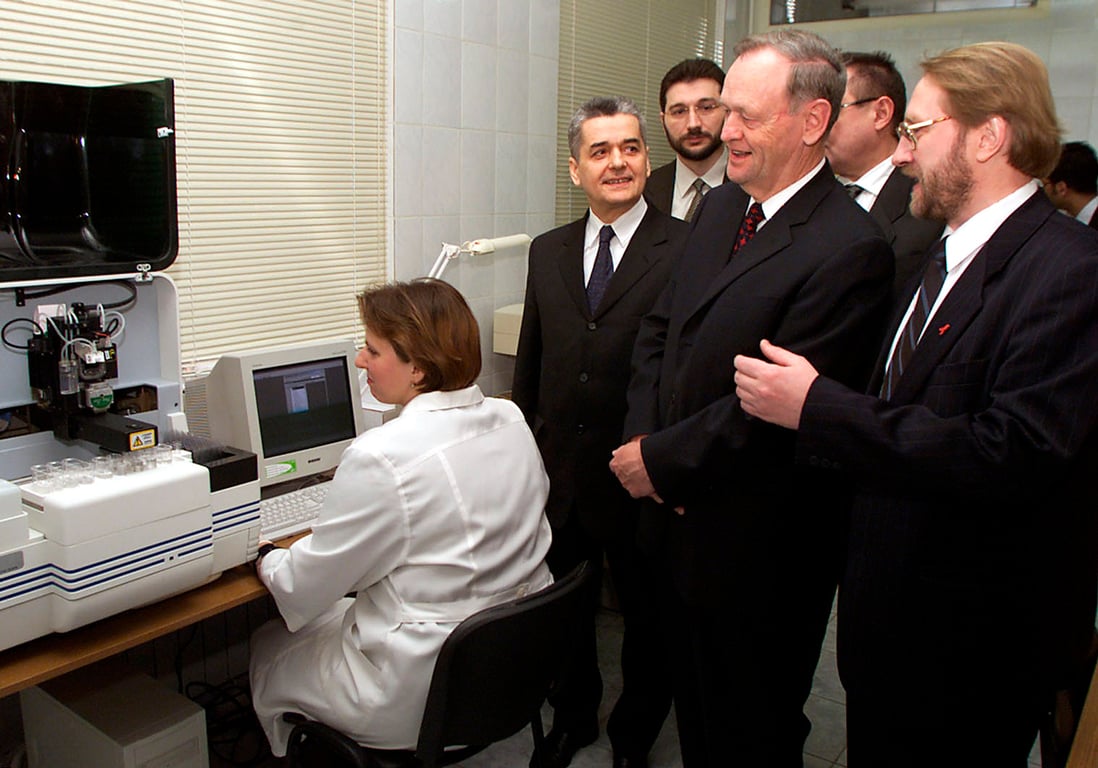
According to the Ministry of Health, by December 1994, 196 HIV-infected people were registered in the Stavropol Territory, Volgograd and Rostov regions, 162 of whom were children.
Since 1995 in Russia, every citizen with HIV has the right to free medical care. However, already in 2000, the number of HIV-infected people in the country increased by more than 40 times compared to 1996.
“We hear from officials that our incidence rate has decreased by 40% compared to 2016. But in fact, in 2016 there were about 100,000 cases of HIV infection. We register almost half of the new cases in the European region. This means that insufficient measures are being taken,” Pokrovsky said in 2024.
In December 2025, the scientist said that more than 1.2 million people in Russia live with HIV, every hundred is infected with the virus.
“Everyone must understand that the epidemic has not stopped, the risks of infection are very high. In our country, if we take only adults from 15 to 50 years old, this is more than 1%.
That is, every hundredth person is infected with the virus,” Pokrovsky said, noting that the treatment methods available in Russia prolong the life of people living with HIV.

The scientist noted that HIV infection most often occurs among 25–40-year-old Russians who feel fine for a long time and do not seek medical help.
Therefore, anyone who has had risks of contracting HIV, such as sexual intercourse or drug use with syringes, must
o go get tested for HIV yourself. This can be done anonymously in Russia, he recalled.
“The dominant ways of spreading HIV in Russia are sexual intercourse and the use of illicit psychotropic drugs, and not only intravenously - many such drugs provoke sexual behavior that is dangerous in terms of HIV transmission.
In addition to exhortations, it is necessary to expand coverage and ensure accessibility of medical care for all citizens and introduce preventive measures. For example, more actively recommend the use of condoms to protect against sexual transmission of HIV and take measures to increase their availability. In addition, the use of drugs for ART (antiretroviral therapy) by healthy people to prevent infection in the presence of risks of infection has been proven to be highly effective <…> Special measures must be taken to ensure that all people with HIV strive and can freely receive ART drugs everywhere. Special programs are needed for drug users and men who have sex with people of the same sex,” Pokrovsky said.
In total, 40 million people in the world live with HIV, he specified.
Russian propaganda claims that an HIV and hepatitis epidemic is brewing in the Russian army. In reality the situation is even worse
Russian propaganda claims that an HIV and hepatitis epidemic is brewing in the Russian army. In reality the situation is even worse
Pokrovsky was born on January 17, 1955 in Moscow into a family of doctors. His father Valentin Pokrovsky was the chief epidemiologist of the USSR. In 1978, Vadim Pokrovsky graduated from the Moscow Medical Dental Institute with a degree in general medicine. In 1983 he defended his PhD thesis on the topic “Immunobiological properties of artificial Salmonella 0-antigens”, in 1990 he defended his doctoral dissertation on the topic “Epidemiology of infection caused by the human immunodeficiency virus.”
In 1988, Pokrovsky headed the specialized laboratory of epidemiology and AIDS prevention at the Central Research Institute of Epidemiology, and in 1989, on its basis, the All-Union Center for the Prevention and Control of AIDS was created, which he headed. Later the center became the Russian and then the Federal Scientific and Methodological Center for the Prevention and Control of AIDS.
Under the leadership of the scientist, test systems for diagnosing HIV and viral hepatitis B, C and D were developed and put into practice. He also participated in the preparation of laws on preventing the spread of HIV in Russia and on the sanitary and epidemiological welfare of the population.
Pokrovsky also continued to monitor the spread of HIV and related diseases and work on new drugs for therapy.
He explained that antiretroviral therapy is a very effective treatment, with constant use of which a person infected with HIV can live as long as other citizens. And the sooner it starts, the more positive the forecasts. Additionally, if treatment results in complete suppression of HIV, then HIV transmission from that person is extremely unlikely.
The scientist received a state prize in the field of science and technology in 2000 “for developing a strategy for obtaining inhibitors of the human immunodeficiency virus and the creation of phosphazide, a new drug for treating people,” as well as a prize from the Russian government in the field of science and technology in 2003.

In 2005, he was awarded the honorary title “Honored Scientist of the Russian Federation.”
Pokrovsky is the author of more than 700 scientific publications on the topic of HIV. He wrote books defining scientific approaches to the surveillance of HIV infection and the provision of medical care to HIV-infected people: “Epidemiology and Prevention of HIV Infection and AIDS”, “HIV Infection: Clinic, Diagnosis, Treatment”, “National Guidelines for HIV Infection and AIDS” and others.
“For more than 40 years, V.V. Pokrovsky led a specialized research department for the prevention and control of AIDS, which during this time has transformed from a small specialized laboratory into a leading scientific institution in our country, comprehensively dealing with problems related to monitoring the spread of HIV infection, the development and implementation of new methods of prevention, diagnosis and treatment, and other issues in the fight against the HIV epidemic. The scientific school he created is known not only in our country, but throughout the world. His students implemented scientific ideas and research on HIV infection in many foreign countries, and acted as experts in the development of basic documents on HIV infection published by WHO and UNAIDS,” says the obituary on the Rospotrebnazdor website.