
Translated material
Restoring balance. After seeing Trump out of Beijing, Xi Jinping also received Putin. What is hidden behind their assurances of unbreakable friendship?
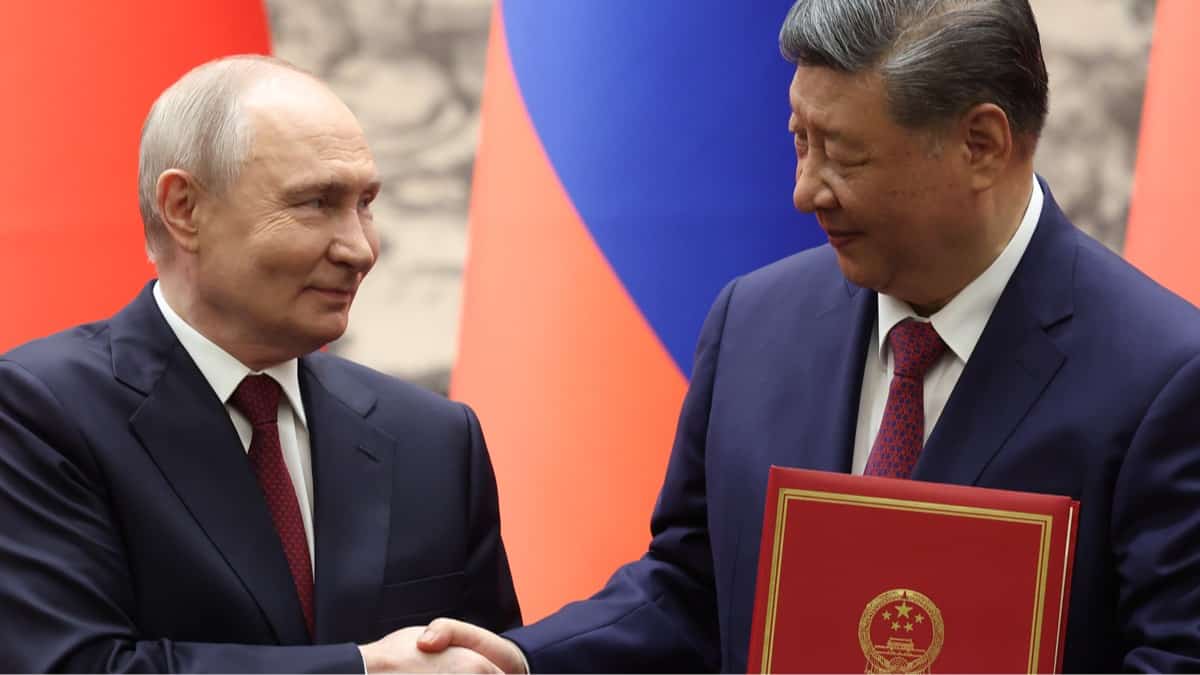
After seeing Trump out of Beijing, Xi Jinping also received Putin. What is hidden behind their assurances of unbreakable friendship?
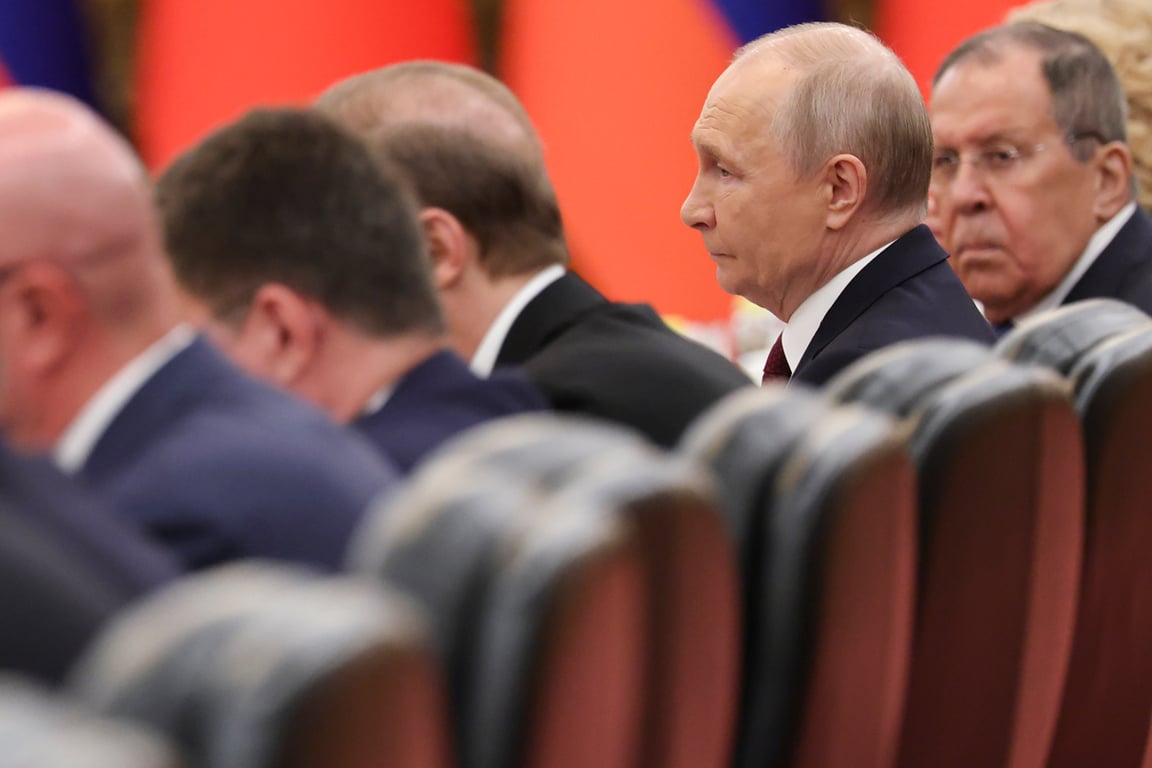
Vladimir Putin’s trip to Beijing on May 19–20 was even more filled with phrases about “great relations” than the recent visit there by US President Donald Trump. At first glance, the trip of the large-scale Russian delegation turned out to be much more productive: 42 documents were signed. However, none of them can be called breakthrough. And we are talking, for the most part, about memorandums that do not have legally binding force. At the same time, it was not possible to agree on the main thing - the price of gas supplies through the future Power of Siberia - 2 pipeline.
Read about why China can still be pleased with Putin’s visit in the material of Novaya Gazeta Europe.
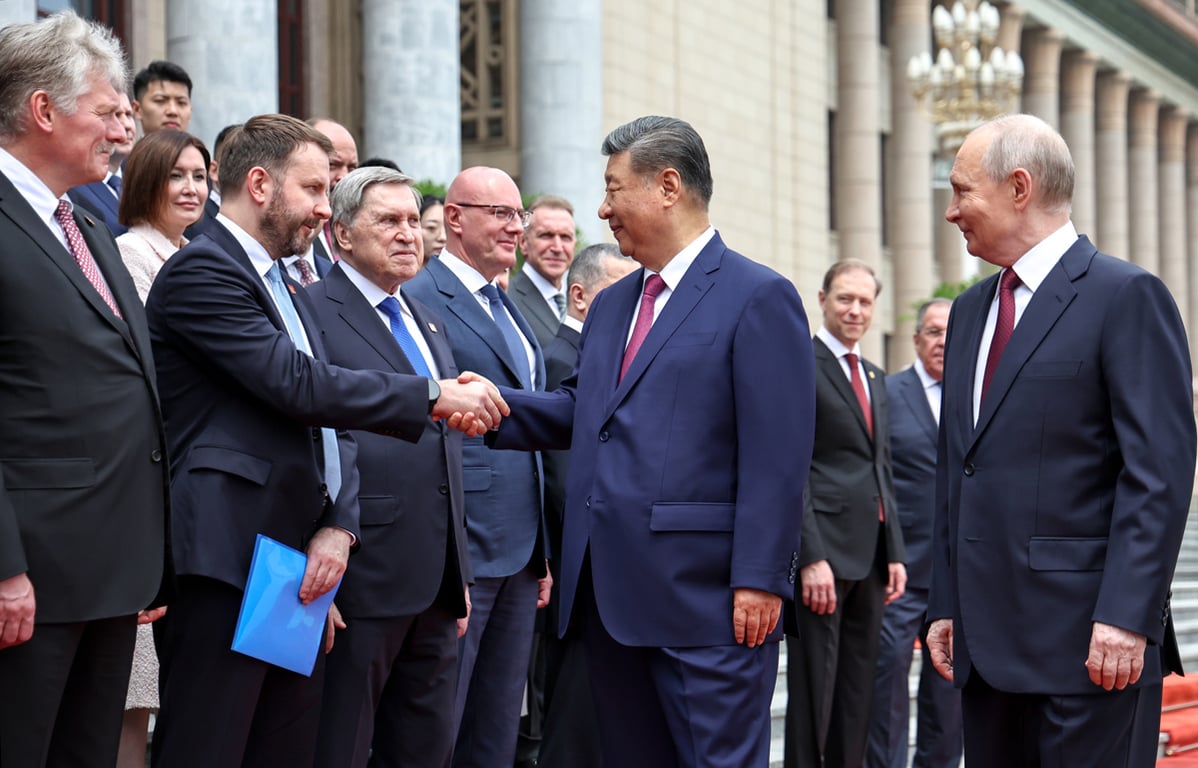
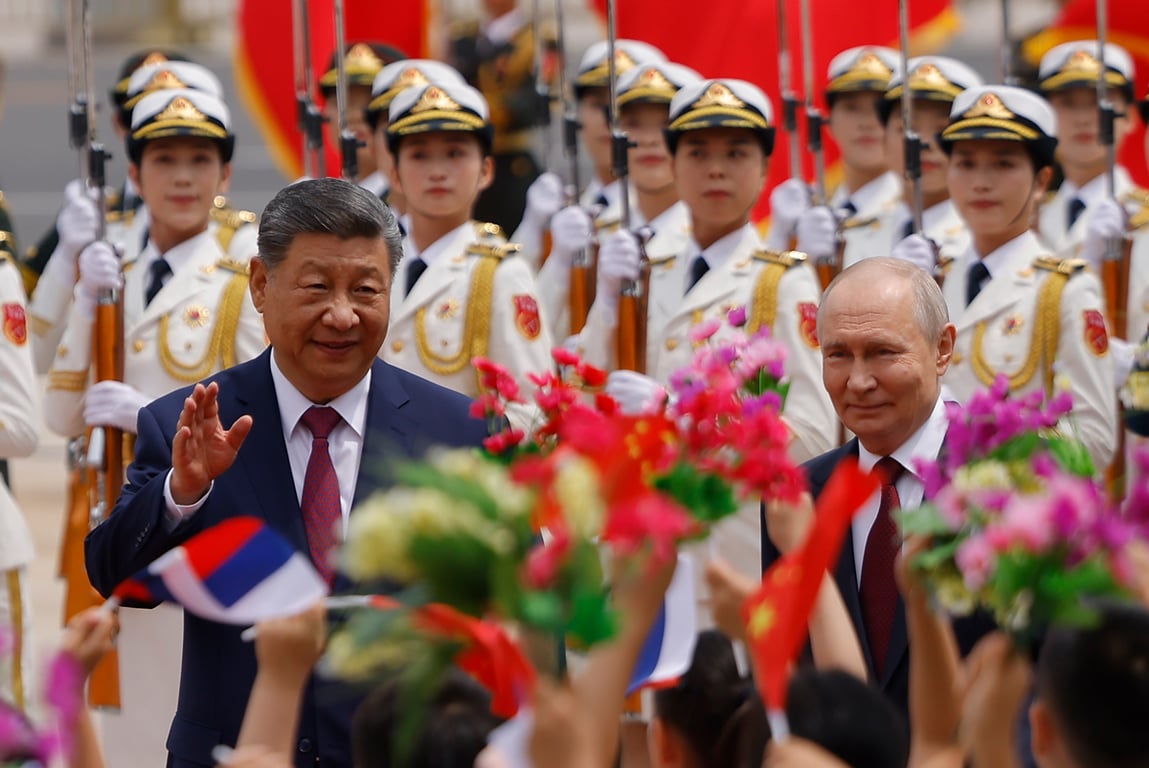
Vladimir Putin flew to Beijing, which Donald Trump had left four days earlier, on the evening of May 19. While the American president was met by Deputy Chairman of the People's Republic of China Han Zheng, Putin was greeted by Foreign Minister Wang Yi. Formally, as an official, Han Zheng is higher in the state hierarchy, but de facto, Wang Yi's influence as a party functionary is incomparably greater: he, unlike Han Zheng, is a member of the Politburo of the CPC Central Committee.
The rest of the ceremony was the same: an honor guard, a military band and children in matching outfits waving flags and chanting in Chinese: “Welcome!”
In Moscow and Beijing, many words were said in advance about the significance of the Russian leader’s visit. Thus, on the eve of the trip, Putin spoke in a genre that is not entirely typical for himself: he recorded a video message to “dear Chinese friends,” reminding them of the “truly unprecedented level” of bilateral relations and the “limitless potential” for their development.
Trump arrived in China, where Putin will soon arrive. The US President promised to “separate” Beijing and Moscow, but, it seems, he only brought them closer. What to expect from these visits?
Trump arrived in China, where Putin will soon arrive. The US President promised to “separate” Beijing and Moscow, but, it seems, he only brought them closer. What to expect from these visits?
Russian propaganda also tried to maximally develop the thesis about the “indestructible friendship” of the two peoples. For example, RIA Novosti released the message “Residents of China highly appreciated Putin’s appeal to the Chinese people,” retelling the comments of “Chinese Internet users.” The mood of society, according to the Russian state agency, could allegedly be boiled down to the phrase of one of the users: “Let the Chinese-Russian friendship last forever.” “Long live the friendship of the PRC and the Russian Federation! Users of social networks in China welcome Putin’s visit,” the Russian state agency then continued to work in the same genre.
And the “talking heads” - experts and deputies - argued that relations between Moscow and Beijing, “of course, frighten the Americans.” But, as Putin peacefully assured in his video message, there is actually nothing to be afraid of: there is no talk of “friendship against anyone,” according to him.
From Beijing, meanwhile, even more flowery statements were heard. For example, English-speaking
The Chinese government newspaper Global Times in an editorial told readers that the Russian Federation and the People's Republic of China, “standing shoulder to shoulder, have achieved deep mutual trust and comprehensive cooperation.”
And the Chinese Foreign Ministry expressed confidence that “under the strategic leadership of the heads of the two states, the Chinese-Russian friendship, passed on from generation to generation, will take even deeper roots in people’s minds.”
Propaganda fuels the narrative that Putin is adored in China. This is only partly true: the Russian president was interesting to Beijing 10 years ago - but not now
Propaganda fuels the narrative that Putin is adored in China. This is only partly true: the Russian president was interesting to Beijing 10 years ago - but not now
A demonstration of the continuous connection between generations was supposed to be Putin’s meeting with an unexpected interlocutor - Chinese engineer Peng Pai. As assistant to the President of the Russian Federation Yuri Ushakov said , Vladimir Putin saw him as a child in 2000, “subsequently this boy grew up, received a university education in Moscow and now works in one of the large companies of the PRC.” “We believe that this will be a very symbolic meeting,” Ushakov noted on the eve of the visit.
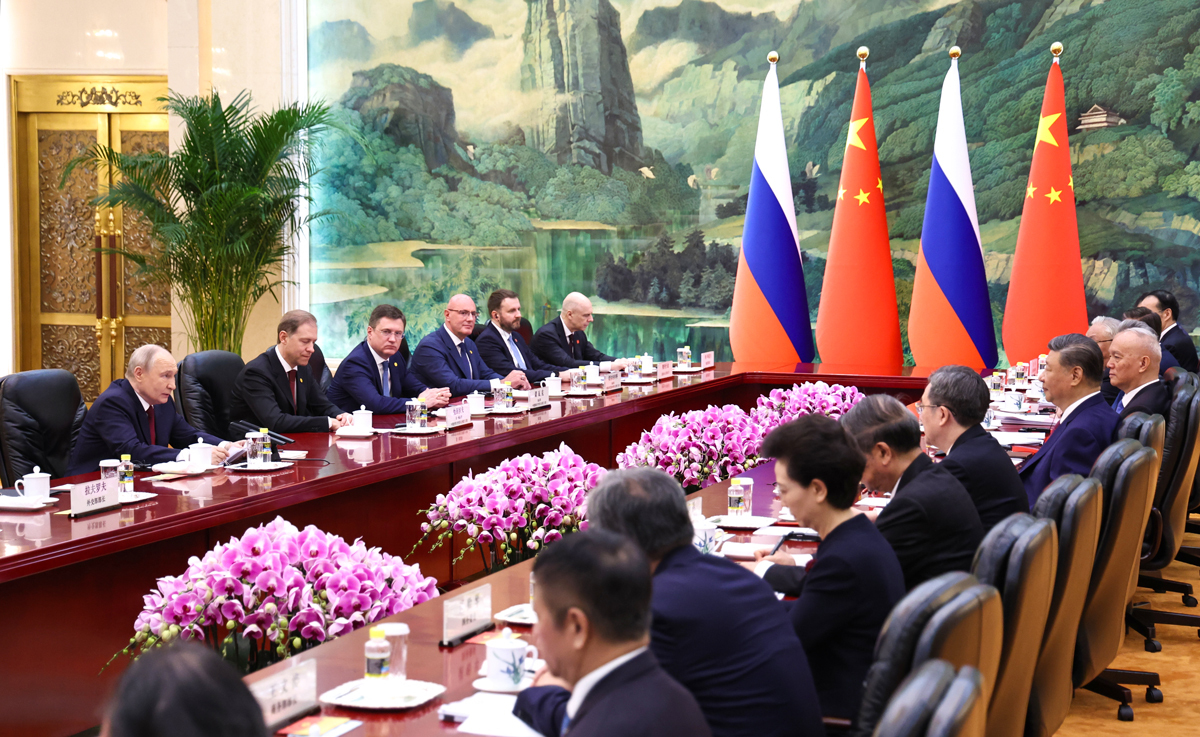
During the talks - in a narrow and wide format - Xi and Putin also said a lot of words about the “constant rapprochement of the two peoples” and “unshakable will in the process of continuously deepening political and strategic interaction.”
The scale of the Russian delegation should have demonstrated that this friendship is truly limitless. According to Ushakov, the Russian delegation included 39 people. Among them are 13 members of the government (during Putin’s last visit to the PRC, in September 2025, he was accompanied by 12 deputy prime ministers and ministers). And each of them had their own interlocutors and their own tasks in Beijing.
The delegation of American officials who visited Beijing on May 13–15 was not so representative: in addition to Trump himself, the negotiations included Secretary of State Marco Rubio, Pentagon head Pete Hegseth, Treasury Secretary Scott Bessent, Trade Representative Jamison Greer and a number of less prominent administration officials. But the business part of the delegation looked as impressive as possible: along with Trump, Beijing was visited by the heads of Tesla, Nvidia, Apple, Boeing, BlackRock, Goldman Sachs, Citigroup and a number of other companies.
An unspoken competition also developed around which negotiations were more effective. Although both Trump and Xi verbally praised the results of their meeting, no breakthrough or even significant agreements between the authorities of the two countries were recorded on paper. In any case, they were not publicly reported.
In an interview after the talks, Trump particularly focused on oil cooperation, but he also spoke about it with reservations and in the future tense: “I think that on one issue we will definitely make a deal: they agreed to buy oil from the United States. They're going to work with Texas. We will start sending Chinese ships to Texas, Louisiana and Alaska... this is a very important thing.” Other agreements - for example, on China's purchase of American agricultural products (in particular, soybeans) - were also not finalized. And China's promise to buy 200 Boeing aircraft can only be assessed as a partial success: the market was expecting a deal for 500 aircraft, so after the news appeared, the company's shares began to decline.
“A lot of pomp, a lot of show, a lot of symbolism, but little substance or concrete results,”
— experts described the results of Trump’s visit.
Meanwhile, the Kremlin announced in advance the signing of about 40 documents. In the end, there were 42 of them. This is more than according to the results of previous meetings: in September 2025, 22 documents were signed in Beijing, and during Xi Jinping’s visit to Moscow in May 2025 - 28 .
The SCO summit and military parade confirmed Beijing's claims to the role of world leader. I managed to make an impression. But how strong is anti-Western unity?
The SCO summit and military parade confirmed Beijing's claims to the role of world leader. I managed to make an impression. But how strong is anti-Western unity?
After Putin’s previous visit to China, the head of the Carnegie Berlin Center for the Study of Russia and Eurasia, sinologist Alexander Gabuev, noted that “among the dozens of signed documents, semantic blocks have already been formed that wander from summit to summit - and often new agreements become additions to those signed only recently.” For example, the expert drew attention to “consistent memorandums of cooperation between state propaganda agencies.” We couldn't do without them this time either. For example, TASS and Xinhua agreed on media tours: reporters from the two countries will visit the cities of the Russian “Golden Ring”, and in China the routes will go along the economic belt of the Yangtze River and the Greater Bay Area.
Documents were also signed regarding cooperation in the industrial, trade, transport, construction, educational and cinematographic fields, as well as in the field of nuclear energy. Among them are agreements on phytosanitary requirements for Russian animal feed, the creation of the Russian-Chinese University of Advanced Technologies, joint film production, and the expansion of the Zabaikalsk-Manchuria railway. More than a third of all documents are related to education and activities of universities.
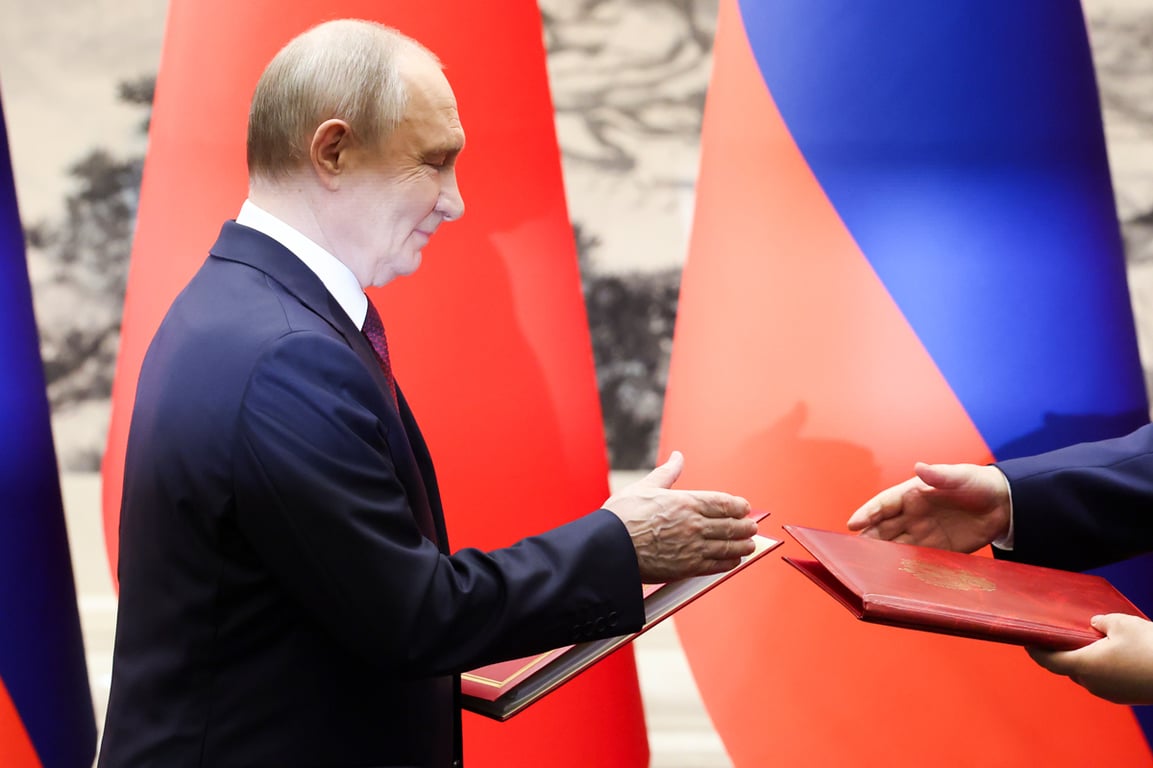
In a conversation with New Europe, a research fellow at the Carnegie Berlin Center for the Study of Russia and Eurasia, sinologist Temur Umarov, drew attention to the fact that most documents are memoranda (unlike treaties, they are not legally binding documents). “And they are not that significant. In general, the whole point of signing so many documents is simply to demonstrate that there are many of them, and cooperation “is moving forward by leaps and bounds,” the expert added.
Particular emphasis in Moscow was placed on documents with the most loud and pretentious titles: “ Joint Declaration on the establishment of a multipolar world and a new type of international relations” and “ Joint Statement on the further strengthening of comprehensive partnership and strategic interaction, as well as on deepening relations of good neighborliness, friendship and cooperation.” The wording used there has also been wandering from statement to statement for several years now.
For example, the first document categorically stated that “attempts by a number of states to single-handedly manage world affairs, impose their interests on the entire world and limit the possibilities for the sovereign development of other countries in the spirit of the era of colonialism have failed.” But on the other hand, as the document stated further, “the situation in the world is becoming more complicated”: “Negative neocolonial trends such as the practice of unilateral force approaches, hegemonism and bloc confrontation are growing. The basic generally accepted norms of international law and international relations are regularly violated.” And it was clearly not about Russia or China - a country that, according to Trump’s advisers, could attack Taiwan in the next five years.
As for the “Joint Statement...”, it seems that all the key aspects of interaction between Moscow and Beijing were listed there. The Ukrainian crisis in the large document is given one paragraph towards the end of the text - after, again, veiled criticism of the United States (more precisely, “the confrontational policy and rhetoric of individual countries and their associations”).
Without much clarification, the text states that the Russian Federation and China “are convinced of the need to completely eliminate the root causes of the Ukrainian crisis.”
At the same time, Moscow praised Beijing for its “objective and unbiased position.” Thus, nothing new has been said on this topic compared to the statements published since 2022.
There was no breakthrough news on the key issue - the development of the project for the construction of the Power of Siberia-2 gas pipeline. Let us recall that last year Putin and Xi agreed to increase gas supplies to China by 8 billion cubic meters along existing routes, and also signed a memorandum on the construction of a new gas pipeline. In March this year, Chinese authorities mentioned such construction for the first time in their five-year economic development plan. But the issue of price has not yet been resolved.
Beijing insists on conditions close to domestic Russian ones: about $50 per thousand cubic meters. And these would be significantly more favorable conditions for China than those that apply now. As Bloomberg noted , this year China will pay $258 for each cubic meter of gas from Russia, which is more than 38% lower than the average price offered to the few remaining buyers in Europe.
The PRC seeks not only low prices, but also a minimum mandatory gas take-off in the contract (take or pay). That is, explains Alexander Gabuev, “China would like to undertake to buy only 10–20 billion cubic meters per year through this pipe, and have the remaining 30–40 billion as an optional option, depending on market conditions and as a lever of pressure on other foreign suppliers.”
Beijing understands that Russia is driven into a corner: it does not have many alternative buyers.
China is developing renewable energy and has large coal reserves. In addition, there remains a theoretical possibility of implementing the long-frozen project to build the fourth line of the gas pipeline from Turkmenistan.
“In the short term, Russia’s importance as an exporter of energy resources to China has indeed increased. But China usually does not like to make decisions that affect the long-term situation at moments like now, Temur Umarov notes in a conversation with Novaya-Europa. — The Chinese negotiating position is now not as strong as it was before the crisis with the blocked Strait of Hormuz. And I don’t think that, based on this position, China will now make decisions with potential consequences for decades to come.” According to the expert, “the PRC’s strategy is to wait for the moment when conditions are at least the same as before the war in Iran, or even better.” And then China will be able to extract the most favorable conditions for itself.
Issues of developing trade turnover in general were also discussed in Beijing. In his video message, Putin emphasized that trade “continues to grow, long ago exceeding the $200 billion mark,” while “mutual settlements are almost entirely carried out in rubles and yuan.”
However, Putin did not mention the obvious imbalance: China accounts for more than a third of all Russian imports and more than a quarter of Russian exports, but China's dependence on Russia is only about 5% of imports and 3% of exports.
Although bilateral trade declined slightly at the end of last year due to lower oil prices, this year the indicators began to grow again. Mainly oil, coal and natural gas come from Russia. According to estimates by the Center for Research on Energy and Clean Air (CREA), since the start of Russia's full-scale war against Ukraine, China has purchased more than 319 billion euros ($372 billion) worth of Russian fossil energy resources. China, in turn, ensures the flow of electronics, equipment, and cars to Russia.
In addition, as Bloomberg noted , Russia imports “more than 90% of the technologies subject to sanctions” through China. Such support allows Russia to increase production of many types of weapons, including missiles and drones. And right on the day of Putin’s visit, Reuters, citing sources in European intelligence, disseminated new information about secret cooperation: China directly helped Russia train the military for the war in Ukraine. It was reported that about 200 Russian soldiers secretly underwent training in the PRC and then returned to the front. The main emphasis of the classes was on the use of drones. The Russian military also received training in electronic warfare, army aviation, and armored group operations. One of Reuters' European intelligence sources said the findings indicate China is more involved in the war than previously thought.
The topic of the war in Ukraine was not raised publicly during Putin’s visit (with the exception of a brief mention in the “Joint Statement...”) - Putin only said that he exchanged “opinions on current international issues” with his interlocutor. How and in what key was not specified.
The topic of the Russian war with Ukraine was not publicly discussed during Trump’s visit to Beijing. At the same time, the results of closed Chinese-American negotiations were not without leaks. The Financial Times reported, citing knowledgeable sources, that Xi Jinping allegedly said at a meeting with Trump that Putin “may end up regretting” the decision to start a war in Ukraine. Naturally, after this Beijing issued a refutation: the Chinese Foreign Ministry called this information “pure fiction.”
During the visit of the Russian delegation, there was no time to discuss the problem of the residents of the Berezovy microdistrict of the Irkutsk region. The day before, they recorded a collective video message to Vladimir Putin, also suggesting that Russian Foreign Minister Sergei Lavrov appeal to Xi Jinping with a request to finance the construction of a new school. “We are ready to start learning Chinese, because we believe that we really need it, and the active development of cultural ties with China is the only possible path of development for us in conditions when our country’s priorities are somewhere in the zone of construction of new metro stations in Moscow and new schools in Tajikistan,” residents noted. True, they later admitted to the Wind project that it was a kind of provocation, and they did not count on a real response from Xi Jinping from the very beginning.
Irkutsk residents asked Putin to turn to Xi Jinping for help in building a school. Officials have been ignoring residents for years
Irkutsk residents asked Putin to turn to Xi Jinping for help in building a school. Officials have been ignoring residents for years
Despite the lack of breakthrough agreements, analysts note that the visit was important for China from a symbolic point of view: by hosting Trump and Putin just a few days apart, the Chinese side sought to show itself as a central balancing force in a rapidly changing world order. “Beijing is rapidly consolidating itself as the epicenter of global diplomacy,” noted one Global Times article.
“The fact that Putin arrived immediately after Trump was an accident, because the US president’s visit was postponed due to the fact that the war in Iran had gone too far. It wasn't originally planned this way.
- Temur Umarov recalled in a conversation with “New Europe”. “But on the whole it turned out well, because China now looks like a country where everyone is rushing, coming after each other and trying to win them over.”
Is it true that Beijing is using Russia in its fight against the West? And how did Xi Jinping subjugate all of China to his personal power? Interview with sinologist Temur Umarov
Is it true that Beijing is using Russia in its fight against the West? And how did Xi Jinping subjugate all of China to his personal power? Interview with sinologist Temur Umarov
The message for Washington was clear: China is always ready to engage in dialogue with the West, but has no intention of abandoning Russia or accepting a global order designed according to Western rules.
It is no coincidence that Xi Jinping, when meeting with Putin, assured that China “will continue to promote the construction of a strong power and the revival of the Chinese nation through modernization, steadily expand openness to the outside world at a high level, and share development opportunities with Russia and other countries of the world for the benefit of a wonderful future for humanity.” And speaking to reporters following the meeting, the Chinese leader diagnosed the planet - again, without naming the culprit, but quite transparently hinting at him:
“This world is not at all calm. The damage caused by unilateral actions and hegemony is off the charts. There is a threat of a return to the law of the jungle.”
Russia and China, Vladimir Putin happily picked up the topic, “jointly stand for the protection of international law and the provisions of the UN Charter in their entirety, totality and interconnectedness.” Xi Jinping did not object to this rather controversial thesis.
From the same point of view—balancing between the Russian Federation and the United States—one can consider an indicative moment during Trump’s visit. On May 15, Xi Jinping walked with him through the gardens of Zhongnanhai, the complex where the Chinese leadership is located. Trump asked the Chinese leader whether he often brings foreign leaders there. “Very rarely,” Xi replied, before adding with a slight grin: “For example, Putin was here.”
It is likely that this equidistance between Xi Jinping will eventually lead to Trump and Putin meeting on his territory. In November, China will host the Asia-Pacific Economic Cooperation (APEC) summit, where both leaders have already promised to attend. The Kremlin made it clear that negotiations between Putin and the head of the White House on the sidelines of this event cannot be ruled out.