
Translated material
University conflict of interest. Volga State Medical University: medical university or family contract?
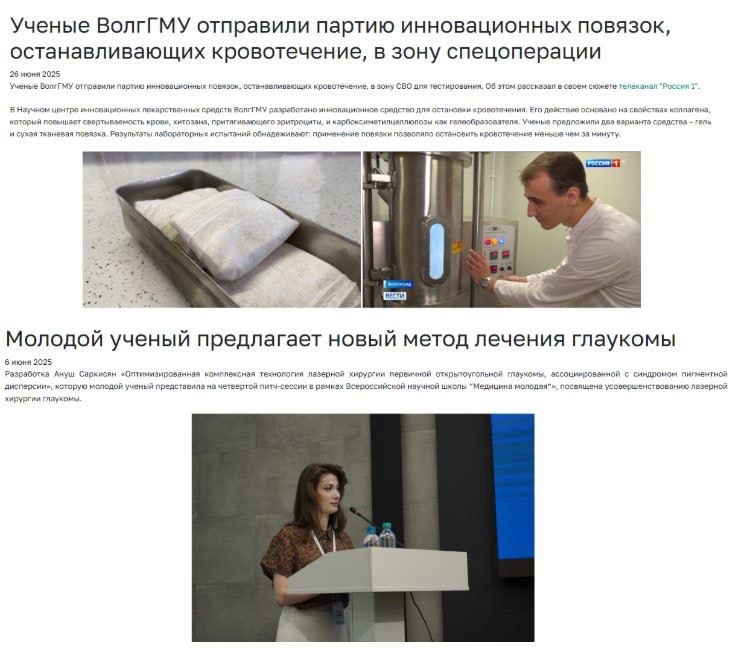
Innovative bandages, a breakthrough oncology drug, a cure for diabetes - Volgograd State Medical University is trying its best to create the image of a breakthrough university. In fact, the university has been embroiled in scandals more than once. “Protocol” found out what was hiding behind the façade of the Volgograd medical university.
In recent years, Volgograd State Medical University has been actively positioning itself as one of the key centers of medical and pharmaceutical innovation in the country. The university claims to have more than a thousand educational programs, international recognition and thousands of graduates working abroad. On its basis there is a Scientific Center for Innovative Medicines , where drugs against COVID-19, cancer and neurodegenerative diseases, anti-aging and nootropic drugs, as well as neurotechnologies are being developed. Volgograd Medical University is included in the development strategy of the pharmaceutical industry until 2030 and received almost a billion rubles of budget funds for the creation of an innovative implementation center.
Team of authors,
with the participation of Elizaveta Tsybulina
Young and promising
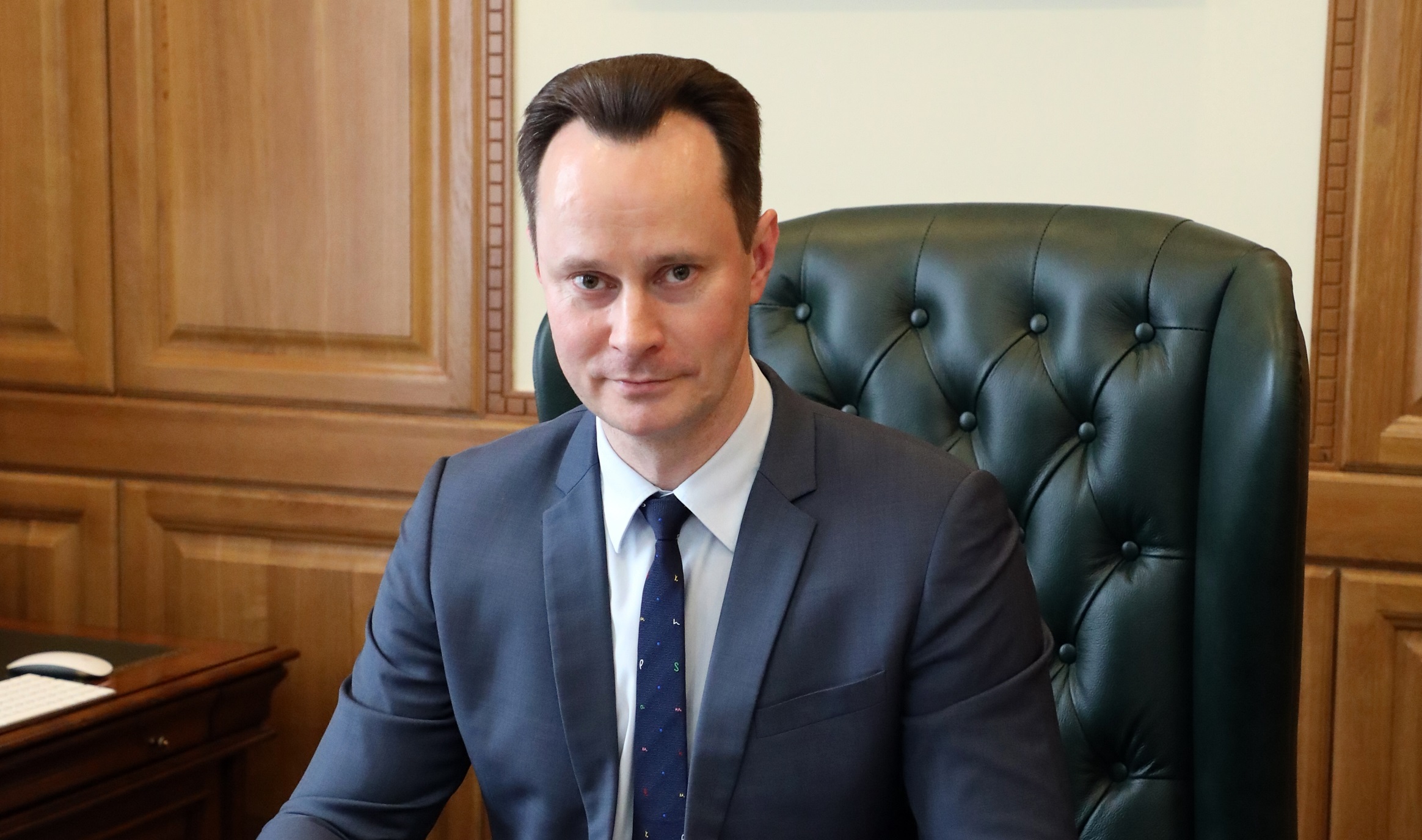
Rector of Volgograd State Medical University Vladimir Shkarin is a native Volgograd resident. His alma mater is Volgograd State Medical University, where he graduated from the Faculty of Dentistry. Nine years later, he will return here, first as an associate professor of the Department of Orthopedic Dentistry, then as the head of the Department of Public Health and Healthcare, and in 2019 - as a rector.
Until 2002, Shkarin worked by profession as a laboratory assistant at the Department of Orthopedic Dentistry of Volgograd State Medical University, and then changed his doctor’s coat to a business suit. After completing his residency in 2002, he worked as deputy chief physician for medical work at the Leninsky Central District Hospital until 2008. From 2008 to 2011, he served as head of the health department of the Volgograd administration.
In 2011, he briefly became deputy to the disgraced head of the city of Volgograd, Roman Grebennikov. Due to constant accusations of corruption, the mayor was first disowned by Business Russia, then by United Russia, and at the end of February 2011, the then governor of the Volgograd region, Anatoly Brovko, signed a resolution to remove Grebennikov from power. By that time, most of the mayor’s team was under close surveillance by law enforcement agencies: 15 employees of the Volgograd administration were brought to administrative responsibility, and criminal cases were opened against some of them for corruption.
At that time, Vladimir Shkarin not only stayed afloat, he moved to the chair of the head of the Volgograd Health Committee Kravchenko, which had not yet had time to cool down. In 2012, Shkarin was appointed Minister of Health of the Volgograd Region. After the reorganization of the department in 2015, he continued his work, heading the health committee of the Volgograd region, and from 2017 to 2019 he was deputy governor of the Volgograd region Andrei Bocharov. In 2019, Shkarin won the elections to the Volgograd Regional Duma from United Russia. In the same year he became rector of Volgograd State Medical University.
Since 2021, he has held the position of co-chairman of the regional branch of the pro-government all-Russian public movement “People's Front “For Russia””. The ONF combines the patriotic education of youth, assistance to Northern Military District soldiers, and anti-corruption investigations.
Now Shkarin combines two positions - deputy of the Volgograd Regional Duma and rector of Volgograd State Medical University. In addition, in the Duma he is deputy chairman of the commission on healthcare and public health. However, this is not just a combination - it is a potential conflict of interest, because as an MP he votes on laws regulating health care and education, including the funding of universities. And as a rector, he manages a budget amounting to millions of rubles. He determines how the money allocated by the region is spent, in the allocation of which he himself participates.
Although such a combination is formally possible, citing the industry competence of the rector, the key risk that the Dumabingo team points out is the direct impact on the distribution of money. Volgograd State Medical University was established by the Ministry of Health, and its main funding probably comes from the federal budget, not the regional one. However, lobbying risks remain: parliamentary status theoretically helps the university receive grants or “push through” narrow amendments to specific criteria that are beneficial only to Volgograd State Medical University. For this, according to the expert, one needs either the exceptional influence of a deputy in the region, or the ability to quietly push through a beneficial change.
Formally, combination is not prohibited, but the Dumabingo team confirms: the fact itself creates risks of conflict of interest, and the reasons why the mechanisms to prevent it in the regional Duma do not work remain a question.
His wife, Irina Likhodeeva, graduated from Volga State Medical University and is now developing as a motion designer. In 2021, the Volgograd News publication placed Shkarin’s wife in 21st place in the ranking of the richest wives of local officials. In 2023, Irina Likhodeeva disappeared from his anti-corruption declaration - this indicates that the couple divorced. However, Shkarin and Likhodeeva continue to travel together. In the same year, Irina Likhodeeva spent almost 262 thousand rubles at the Central Department Store, although when registering on one of the sites she indicated that she was not working. The salary of her “ex-husband” would also not allow such shopping - judging by the anti-corruption declaration, Shkarin earns a little more than 80 thousand rubles a month, excluding five bank deposits.
Shkarina's brother-in-law, Alexander Likhodeev, the pride of the Faculty of Pharmacy of Volgograd State Medical University. In 2013, he worked as deputy head of the pharmacy at the city clinical emergency hospital No. 25. In 2018, Likhodeev was a medical representative of the company Bionorica, a German company that produces herbal medicines. In 2020, Likhodeev managed to work at the Volgograd Region Health Committee in the department for regulating pharmaceutical activities. Then he went to the State Unitary Enterprise Volgopharm , a state-owned pharmaceutical enterprise and one of the most important suppliers of pharmaceutical products in the Volgograd region and surrounding regions. Now Likhodeev works as Deputy Director for Development of Novgorod Pharmacy LLC. His wife, Yulia Likhodeeva, works as an ultrasound specialist at the Volgograd Regional Clinical Oncology Center, and his mother is a professor in the department of medical and biological disciplines at the Volgograd State Academy of Physical Culture.
Written off works
Although Vladimir Shkarin himself was not found to have forged his dissertation, he acted as a scientific consultant for at least one work, which was mostly copied. The Dissernet project found 87 works with signs of plagiarism, protected within the walls of Volga State Medical University.
The topics of such dissertations are most often related to pharmacology, healthcare organization and clinical medicine. The authors borrow materials from other works defended at the same university. Among the scientific supervisors, consultants, and opponents of such dissertations are well-known pharmacologists, doctors of medical sciences and honored scientists. The anti-rating of “Dissernet” is headed by the ex-rector, now the president of Volga State Medical University Vladimir Petrov (six dissertations with signs of borrowing were defended with his participation), professor of Volg State Medical University and director of the Research Institute of Clinical and Experimental Rheumatology of the Russian Academy of Medical Sciences Irina Aleksandrovna Zborovskaya (14 such works), head of the department of philosophy, bioethics and law of Volga State Medical University Natalya Nikolaevna Sedova (12 works), as well as the head of the department of social work with a course in pedagogy and educational technologies of Volgograd State Medical University Valeria Mikhailovna Chizhova (7 works).
One of the most outstanding cases is associated with the former head of the department of the Ministry of Health and Social Development of Russia Diana Mikhailova. Her doctoral dissertation consists almost entirely of fragments of other people’s texts, mainly works previously defended at the same Volgograd State Medical University.
Mikhailova took tables, statistics and even factual data from materials of authors who had neither joint publications nor scientific connections with her. Her work was carried out under the leadership of rector Vladimir Petrov.
Petrov, being both the scientific advisor and the chairman of the dissertation council, systematically supervised work with massive borrowings. Other suspicious dissertations were defended under his leadership: for example, Tatiana Lysenko and Vladislav Statsenko were found to have borrowed from works in which Petrov also appears as a supervisor or opponent. The dissertations were completed in the field of pharmacology and clinical pharmacology, that is, in the priority areas of activity of the Scientific Clinical Laboratory of Clinical Medicine and Volgograd State Medical University, where Petrov occupies key positions and on the basis of which the defense of dissertations and the development of medicines are carried out. In effect, a circular system is being created for the reuse of scientific texts and data, reproduced in different works with minimal changes.
His son Andrei Petrov defended a duplicate dissertation, and his late wife published studies with data substitution. Confessions of the user “A.V.” have been preserved on the forums. (presumably Andrei Petrov), confirming the appearance of his work on the Dissernet , and in student chats and reviews of applicants there are regularly statements about the possibility of “resolving” issues with tests and work for money.
Chapter about government procurement
Possible conflicts of interest and dishonesty of university employees concern not only unoriginal dissertations, but also government procurement.
In 2023, journalist Victoria Shkarinova discovered dozens of technical specifications for Volgograd State Medical University for the purchase of medical goods, from suture materials to endoprostheses, which were created by the user “Ryazantsev”. Moreover, in all these purchases the winner was either entrepreneur Natalya Ryazantseva (515 government purchases worth 652 million rubles over the entire period) or the Volgomedinvest company (56 contracts worth 71 million rubles). Probably the supplier himself wrote the terms of the tenders, which he then won. Victoria Shkarinova sent a statement to the FAS with a request to check the conspiracy.
First, the FAS confirmed our guesses and also saw signs of a violation of antimonopoly legislation, and the actions of VolgSMU, Volgomedinvest and IP Ryazantseva became the object of an official antimonopoly investigation.
However, at the end of May 2024, the FAS dropped the case, declaring that there were no violations. In the decision, the service referred to the fact that files with technical specifications were created on the computer of the former deputy head physician of the Volgograd State Medical University clinic, Svetlana Ryazantseva, who was fired back in 2016, and individual entrepreneur Natalya Ryazantseva allegedly turned out to be a simple namesake. However, this argument raises many questions, because the technical specifications under the name “Ryazantsev” were formed in 2023, seven years after the employee’s dismissal. According to the current FAS methods, the totality of such indirect signs can be considered as evidence of a cartel conspiracy, but in this case the service refused to take into account systemic anomalies.
“Protocol” found out that the Volgomedinvest company was not without reason the winner of the tenders along with Natalya Ryazantseva. According to personal data leaks, Ryazantseva’s niece Elena Lastkina is the director of Volgomedinvest. Both Ryazantseva herself and her sister, Olga Lastkina, also work there. Ryazantseva is also connected with Volgograd State Medical University - her husband Igor Mikhin, who heads the department of faculty surgery, works there.
Svetlana Ryazantseva, who apparently really turned out to be a namesake, received 6.5 years in a general regime colony in 2018 for bribery. As the deputy chief physician of Clinic No. 1 of the Volga State Medical University, she registered those wishing to relax at the state expense in a sanatorium. She charged from 10 to 20 thousand rubles for issuing vouchers, and if there were no medical indications at all, for an additional fee she sent her for treatment to the neurological department of the clinic, which she supervised.
“Protocol” analyzed other purchases of the university and found out that IP Ryazantseva and Volgomedinvest are not the only ones whose actions contain elements of collusion.
In the field of supplying medicines to the university, the pharmaceutical companies Extrempharm-S, Ecopharm and Polimed most often win tenders. They often participate in tenders together, which is why the price reduction is minimal. “Extremfarm-S”, “Ecopharm” and VolgSMU indicate the same phone number. The companies are also connected by family ties: Extremfarm-S is owned by Inna Simukova, and her eldest son Igor works at Ecopharm. Another company that actively carries out state contracts, Extremfarm, belongs to Pavel Simukov, Inna’s husband and father of Igor Simukov.
A similar situation can be observed in the field of construction and repair contracts. Spetspriborbezopasnost LLC receives million-dollar contracts for the repair and installation of equipment. The founder of this company, Alexander Sorokopudov, also owns NPF Medbiofarm-2020, the second co-founder is the university itself. Thus, Sorokopudov is directly connected with the university, from which he regularly receives government contracts.
No less indicative is the situation with individual entrepreneur Olga Fedorovna Pletneva, who for years has remained the only provider of cleaning services for the entire university. The estimates reveal strange standards - for example, the purchase of one hundred dustpans per year or one mop per month. Part of the procurement was carried out without mandatory justification for the initial maximum contract price. At the same time, in many cases, the university took the opportunity to avoid competitive procedures by concluding an agreement directly with Pletneva under 223-FZ.
As Irina Charikova from the Tenderscope project explains, it is procurement under 223-FZ that creates a breeding ground for such practices. The law allows budgetary institutions in a number of cases, for example, using income from paid courses, to purchase goods in circumvention of 44-FZ and independently determine the terms of contracts. This reduces transparency and opens up opportunities for manipulation: data on contracts and contractors in the EIS is minimally published, and there is no full public control. When there is no competition, there is no pressure to reduce prices, leading to budget overruns and potentially deteriorating service quality.
Comparative analysis confirms this logic. In 2018–2019, Volgograd State Medical University entered into monthly direct contracts with IP Pletneva without reducing the price. However, in 2021, when the purchase of similar services was carried out under 44-FZ, nine companies took part, and the contract went to another contractor with a cost reduction of 32.5%. The savings amounted to almost 8 million rubles per year. This example clearly shows: competitive procedures work, while procurement under 223-FZ allows the university to avoid competition and systematically inflate the price.
Thus, the collected data indicates a whole network of affiliated structures around Volgograd State Medical University, which, through direct connections and lack of competition, form a closed market for supplies and contracts. This leads to systemic risks: inefficient spending of funds, conflicts of interest and undermining the transparency of public procurement.