
Translated material
The professor was dismembered and dissolved in Voronezh
Six years ago, the famous scientist Vyacheslav Kuznetsov disappeared without a trace in Voronezh. By all indications it seemed that a crime had occurred. However, the teacher was adored by both students and friends - who could plot anything against him? When the truth came out, it turned out that the story involved drugs, the dissolution of the body in acid, greed and the betrayal of a close friend. "Cold" tells a story that shocked the whole city.
Like Breaking Bad, but in real life 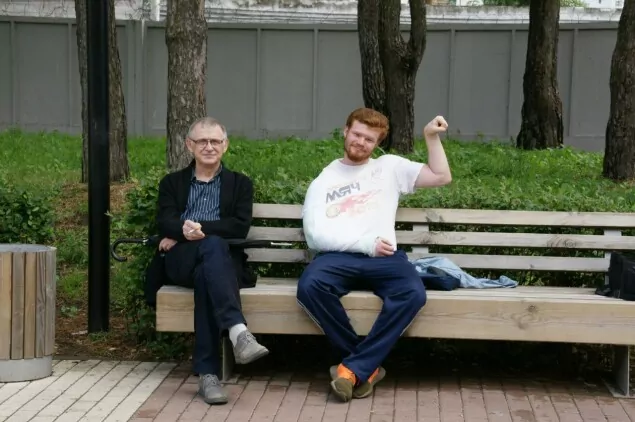
Many were alarmed by this news. Kuznetsov was a fairly famous person in Voronezh. Doctor of Science, he had worked for many years at the chemistry department at the main city university, and was also involved in an important scientific project: he and his colleagues developed the so-called “solid water”. These are granules that can hold liquid for a long time and release it as the soil dries. This technology helps combat drought .
“He helped everyone, like a mother or father.” Kuznetsov’s former student Sergei Ermak recalls that the professor adored his work, “lived for science” and “did not reach for regalia.” He also says that Kuznetsov had a very good reputation at the university: he knew students by name and treated even truants with humaneness and understanding. He gave extra lessons to those who were lagging behind; they said that he didn’t even charge money for these lessons.
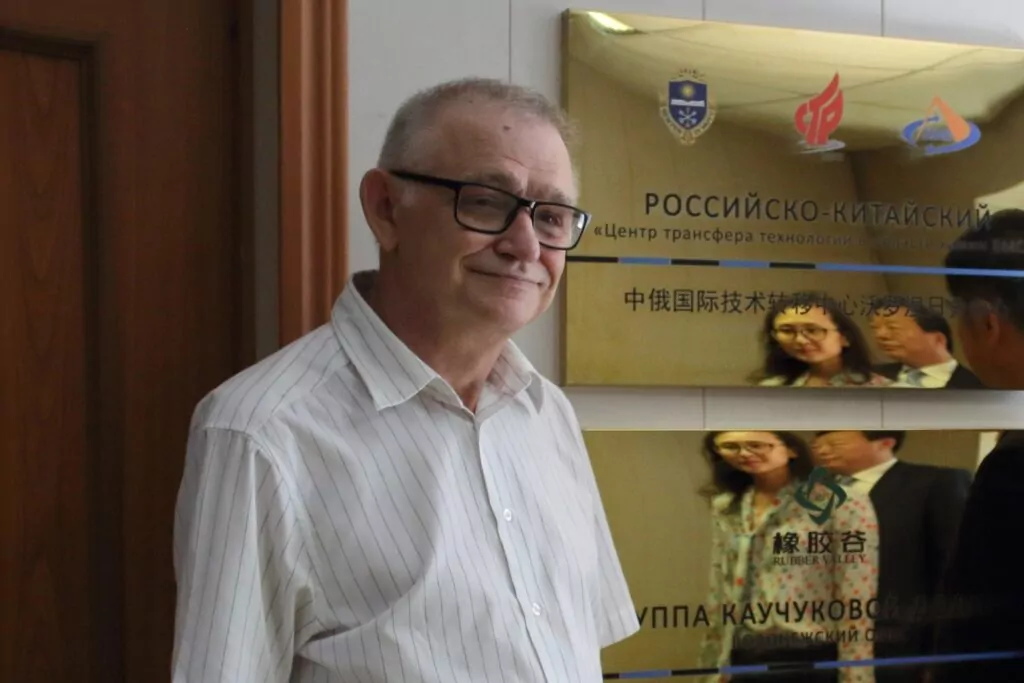
“A bunch of students came to see him every day,” says Ermak. - He helped everyone. Either with a diploma, or with something else, like dad or mom.”
The disappearance of the professor did not look like an accident - Kuznetsov seemed to have fallen through the ground, and this usually happens with intentional crimes. However, it seemed that he had no enemies, and it remained unclear who he could cross the road with.
Strange circumstances
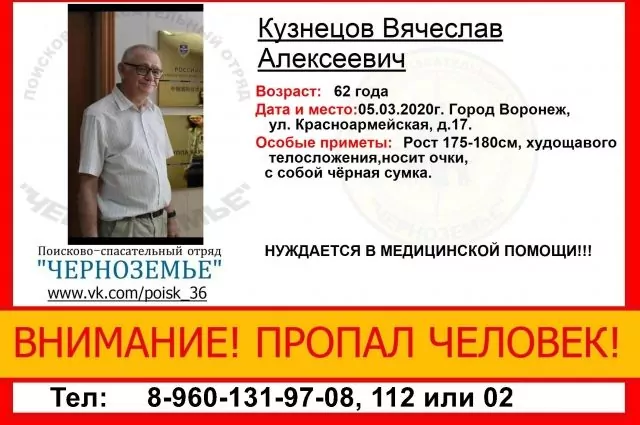
The professor lived in an apartment in the center of Voronezh, on Krasnoarmeyskaya Street. He had neither a wife nor children, only two cats . Friends recalled that the closest person to Kuznetsov was his sister, Tatyana Selezneva. They called each other every day.
In recent years, the professor has had many health problems. He suffered from diabetes and depended on constant insulin injections, and in August 2019 he underwent stomach surgery, after which he became noticeably thinner and weaker.
“I came to see him after the operation,” recalls Sergei Ermak. “I come in and look, but there’s no face on him, he’s so thin.” I hug him, and he says: “Seryozha, be careful, lightly.” I feel like he can barely stand on his feet.”
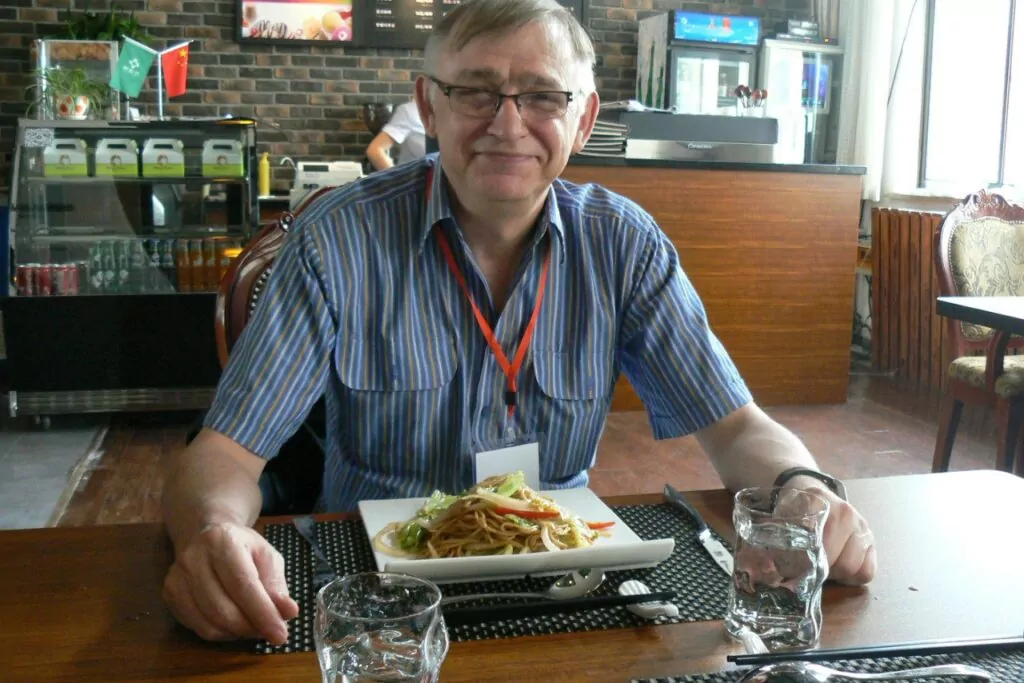
Tatyana Selezneva, the professor’s sister, recalled: on March 4, she stopped by her brother’s house to cook food for him and clean up. He himself was at work at the university at that time.
In the evening, as usual, they called each other - it was approximately 21:30. Kuznetsov told his sister that he was very tired and was going to drink tea and go to bed.
The next morning - March 5 - he did not come to work and did not answer phone calls. Selezneva became worried: she thought that her brother became ill and lost consciousness at home or on the way to the university. She lived quite far away, so she asked Alexander Yakovlev, a close friend of the professor, to look into his apartment. Yakovlev had a duplicate key: he fed the cats when the teacher went on business trips.
It soon became clear: Kuznetsov was not at home, and he was not found on the street either. Then Tatyana decided to go to her brother’s apartment herself and carefully examine it to see if there were any clues. After examining the room, she realized that the situation was becoming truly frightening.
Creepy cleanliness
At first glance, everything in the professor’s apartment was as usual. But two clean towels were missing from the kitchen - Tatyana noticed this because she herself had cleaned her brother’s house the day before and remembered perfectly where everything was. There was a glass on the table, it smelled of corvalol, and there was an open window in the kitchen. The professor’s bag, his bank cards, medicines and documents, as well as the money that he kept in the closet, disappeared somewhere. His home sweatpants and T-shirt also disappeared - according to relatives, the professor only wore them in the apartment, and almost always left the house in a suit, even to the store.
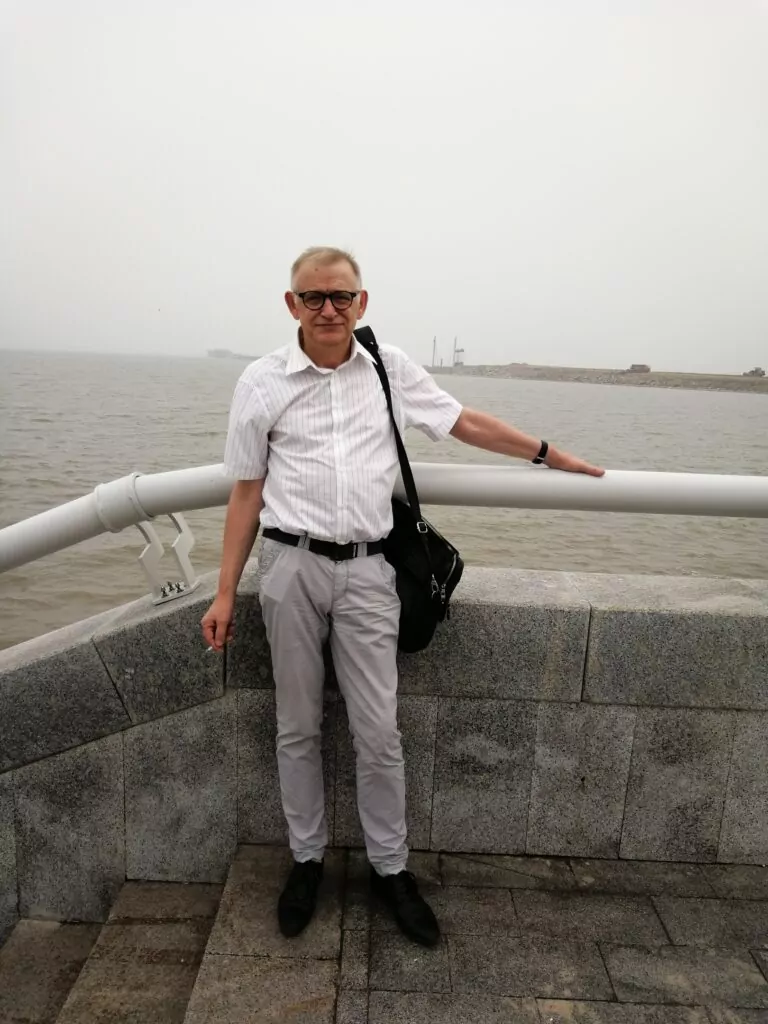
His mobile phone was also missing. In the morning, when they tried to call the professor from work, he still received a signal, but later the device turned off. One of the local newspapers wrote that Tatyana went to the police that same evening, but they didn’t accept her statement - they said they were worried early that the professor might just go somewhere. Although this behavior was atypical for him - he loved work and did not skip work without a good reason.
“If he was not at home, then his relatives and friends knew where he was,” says his former student Sergei Ermak. “But for him to miss lectures and classes—this never happened.” Everyone immediately realized that something was wrong here.”
The next day, his sister’s application was accepted. Investigators examined the apartment. They were surprised by the strange cleanliness there - there were no biological traces of anyone in the room at all, as if someone had specially disinfected it.
Investigators opened a case under the article “Murder”: sometimes they do this, even if a person has simply disappeared and may still be alive - because the investigators then have greater freedom of action and it is easier to conduct an investigation. But it was not possible to find the professor either alive or dead. The further it went, the clearer it became: a crime had occurred.
Found via digital trail
Local media continued to write about the strange disappearance of the professor for some time, and then it gradually disappeared from the public sphere. In March 2020, the covid epidemic was still spreading around the world and the news was mostly about it.
However, Kuznetsov’s relatives and friends continued their search, and so did the investigators. They soon had a lead.
$21,000 was kept on the professor's card. Law enforcement officers suggested that the motive for the crime was money. Kuznetsov had savings on his personal bank cards. In addition, he had another card in his hands, registered to a legal entity that he created together with Chinese colleagues - they were engaged in joint scientific projects. The account contained a large sum intended for organizing conferences. The balance was about 21 thousand dollars - that is, at that time more than one and a half million rubles.
Along with the professor, his bank cards disappeared, and someone withdrew money from his accounts. Investigators followed the digital trail: it turned out that funds from the currency card were withdrawn through bitcoins. The security forces found the seller of bitcoins - it turned out that he lives very far away - in Magnitogorsk, in the Urals.
He was questioned. He said that he was fulfilling an anonymous order to buy digital currency - his buyer was hiding under the nickname Best Benny. The search for this person again led investigators to Voronezh - it turned out that this nickname was used by a local resident named Saprykin.
They tried to write and call him, but he did not answer or dropped calls. His phone was tracked, Saprykin himself was found and summoned for questioning. He said that he actually bought bitcoins from Professor Kuznetsov’s card - at the request of his friend Alexander Kharlamov.
Now, finally, a suspect has appeared in the case - a certain Voronezh resident Alexander Kharlamov, who, through several intermediaries, withdrew funds from the professor’s card.
Having tracked him on his mobile phone, on July 10, they came to the apartment he was renting and searched him. But no one could have predicted what exactly would be found at Kharlamov’s house—the discovery shocked not only the security forces, but the entire city.
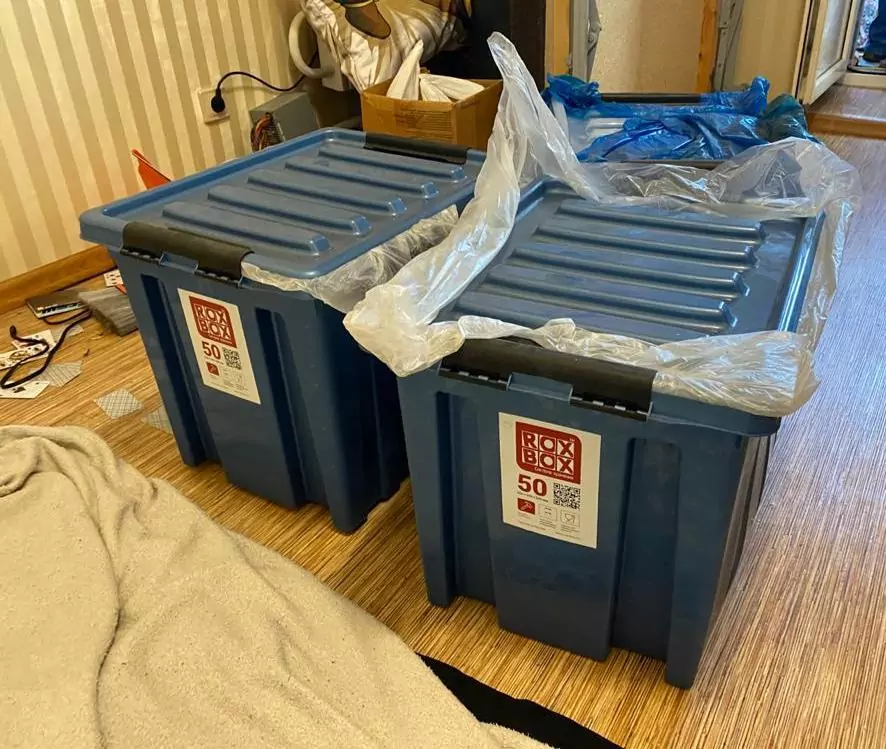
the body was laid out in containers with acid. On July 13, residents of Voronezh learned: on the balcony of one of the high-rise buildings in Olkhov Lane, the body of a professor was found - dismembered, laid out in plastic containers with hydrochloric acid.
The first shock was followed by another. It turned out that not only Alexander Kharlamov was involved in the murder of the professor. The second suspect turned out to be a person close to Kuznetsov, in the past one of his favorite students, Dmitry Bykovsky.
"A little red-haired boy in a robe"
Bykovsky has bright red hair and a kind expression on his face. Now his page on VKontakte is closed, but previously it was possible to find footage from the TV series “Breaking Bad” - this is a show where a talented chemist becomes a major player in the drug business and begins to brutally deal with those who interfere with him. And he often does this in brutal ways - many viewers remember the episode from the first season, where a man was dissolved in a bath of acid.
“You look at a person - God’s dandelion, it wouldn’t hurt a fly.” Even on Bykovsky’s page there was a quote from “The Little Prince”: “Never ignore the person who cares about you most. Because one day you might wake up and realize you lost the moon while counting the stars.”
Friends say: Bykovsky always seemed to be a very kind and polite person. He was a student of Kuznetsov, then a graduate student, and often appeared at the department.
“A small, red-haired boy in a dressing gown,” is how Sergei Ermak describes him. - Curious. Whatever you say, it does everything. Do this, wash this, move it here. Great respect for elders, no red flags. You look at a person - God’s dandelion who wouldn’t hurt a fly.”
Bykovsky, like other graduate students, often came to visit the professor - to help with household chores, to fix something, to bring groceries from the store. Friends say that they had close, even friendly relations.
But for some reason they have deteriorated sharply in recent years. Sergei Ermak, a former student of Kuznetsov, says that he did not know the exact reason. The professor, according to him, was generally not the kind of person who would talk bad about others. But from the hints, there was a feeling that Bykovsky had undermined his trust.
“When we called each other, Kuznetsov said about Dima: “I don’t want him to come to visit,” recalls Ermak.
“I don’t want him to come visit” This was confirmed by the professor’s sister. At the trial, she said: Kuznetsov used to treat Bykovsky very warmly. But at some point he suddenly forbade the graduate student from entering the department and ordered the lock there to be changed.
Some claimed to know the cause of the discord. They say Bykovsky was engaged in drug production right at the department. Upon learning of this, the teacher became angry and stopped communicating with the former graduate student.
Sergei says: he had the feeling that Bykovsky had made some dubious acquaintances. He recalls: “When visiting, Bykovsky said that his friend was injecting himself with drugs. I say: "Why are you communicating with such people? This is absolutely some kind of bottom." And from different sides some talk about drugs appeared. I got the impression that he used it himself. Because the person I knew couldn't do that. This is an altered consciousness."
But even though Bykovsky had a conflict with the teacher, many did not believe that he could be involved in his murder. Friends recalled: when the professor disappeared, Bykovsky and everyone else walked around the city, looking for him, posting directions.
“He asked me for a long time: “Sergey, haven’t you seen where Slava is? Where could he have gone?” says Ermak. “He conducted an investigation, called everyone, posted advertisements.”
However, during the investigation and trial, there was no longer any doubt about his guilt. Bykovsky and Kharlamov either changed their testimony or shifted the blame onto each other, but in the end, based on their stories and the evidence found, they managed to restore the full picture and understand how they planned the murder of the professor and why.
Bogged down in debt
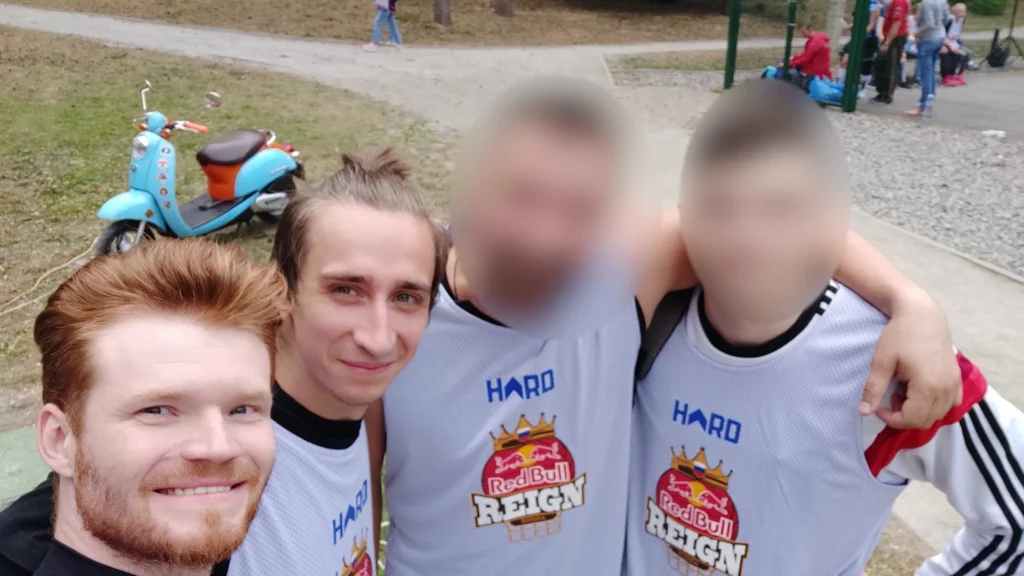
Bykovsky loved to play basketball - many acquaintances recall that they often saw him on the sports ground. It was there that he met with IT specialist Kharlamov. They probably met when Bykovsky was 32 years old and Kharlamov was 28. Both were having financial difficulties.
People who knew them said that Bykovsky once ran two souvenir shops in a local shopping center. At some point, he even did business with Sergei Ermak.
But Bykovsky turned out to be an unsuccessful entrepreneur, he accumulated debts - in 2017, bailiffs collected almost 150 thousand rubles from him through the court, and more than 40 thousand accumulated over the next two years.
They said about Kharlamov that he was also full of loans - he allegedly took them for a wedding. Moreover, his marriage did not last long - the couple divorced, and their three-year-old daughter remained with his wife. Later at the trial, Kharlamov said that he wanted to “give the child the maximum” - this is how he explained his crime.
700,000, approximately the same amount of rubles Kharlamov owed to his accomplice. Although both men had no money, at the trial Bykovsky said that Kharlamov constantly borrowed large sums from him and eventually owed his friend almost 700 thousand rubles. It was unclear how he was going to give them away.
And so, in 2019, after one of the training sessions, Kharlamov proposed to rob Professor Kuznetsov. From his friend’s stories, he realized that the scientist had money.
Judging by the testimony in court, they initially did not intend to kill the professor. They just wanted access to Kuznetsov’s accounts. For some reason, the criminals were sure that Kuznetsov’s earnings with the Chinese were illegal, and they decided that he would not contact the police if his ill-gotten gains were stolen.
Accomplices' plans
So, Bykovsky and Kharlamov decided to get into the professor’s computer and find the login and password for his account. Kharlamov claimed that Bykovsky did this using a flash drive with virus software. Bykovsky himself said that everything was simpler - they climbed into the professor’s apartment together in his absence and found all the information on the computer manually.
Be that as it may, in December 2019, accomplices gained access to Kuznetsov’s accounts and became convinced that one of them contained more than 20 thousand dollars.
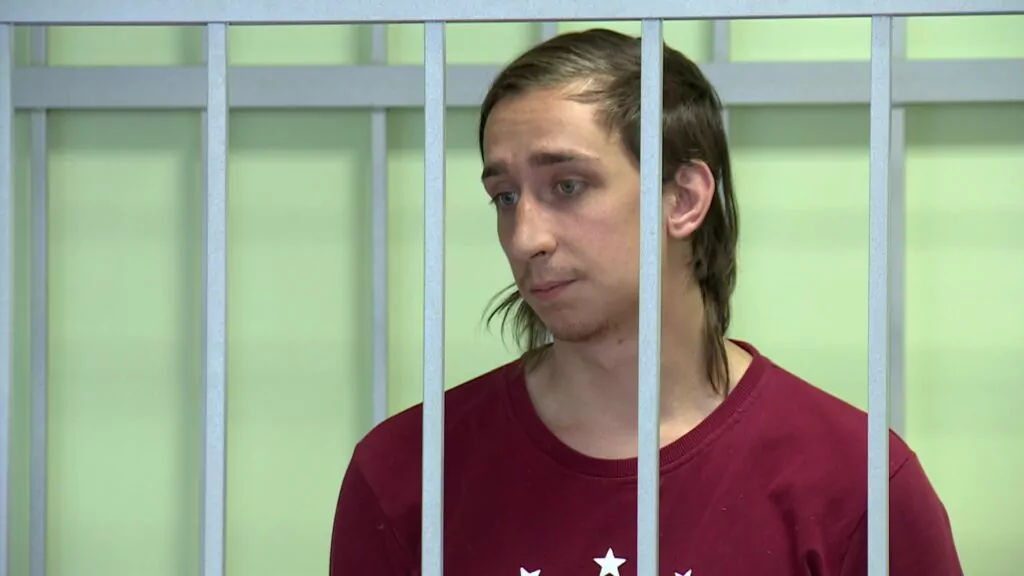
Kharlamov wanted to exchange them for bitcoins, but it turned out that to purchase such a large sum, Kuznetsov’s phone was needed - a code would have to be sent to it to confirm the operation.
Then, as the criminals said in their testimony, they decided to come to the professor, tie him up, euthanize him with chloroform, take the phone and withdraw the money. After that, they allegedly planned to release him.
agreed to dismember the body. However, they did not deny that they had a backup plan in case Kuznetsov died. According to the accomplices, they agreed: if the professor resists strongly or dies from too much ether, they will dismember him and dissolve his body in acid. And yet, during the investigation, they insisted until the very end that they initially intended to leave Kuznetsov alive.
A terrible find on the balcony
They prepared for the crime for a long time. Kharlamov rented an apartment in advance in the building opposite the one where Professor Kuznetsov lived, and observed who came to him and at what time and at what time there were the fewest people on the street. He and Bykovsky prepared chloroform, tape and a hacksaw.
On March 4, they came to the professor and rang the doorbell. Bykovsky already had a handkerchief soaked in chloroform at the ready. Kuznetsov opened the door, saw his former graduate student and his friend, and let them into the apartment. And then Bykovsky pressed a handkerchief to the teacher’s face, and Kharlamov grabbed him from behind and squeezed his neck. Kuznetsov resisted for some time, but after 5–7 minutes he lost consciousness. Then they tied him up, and taped a handkerchief with chloroform to his face so that the scientist would not come to his senses.
Kharlamov remained in the apartment - he sat down at the computer to withdraw money from the professor’s accounts. Bykovsky went home around 10 pm - as he explained in court, to provide himself with an alibi for the evening. At about one o'clock in the morning, Kharlamov finished withdrawing funds and saw that the scientist was dead. Then he called Bykovsky to get rid of the evidence together.
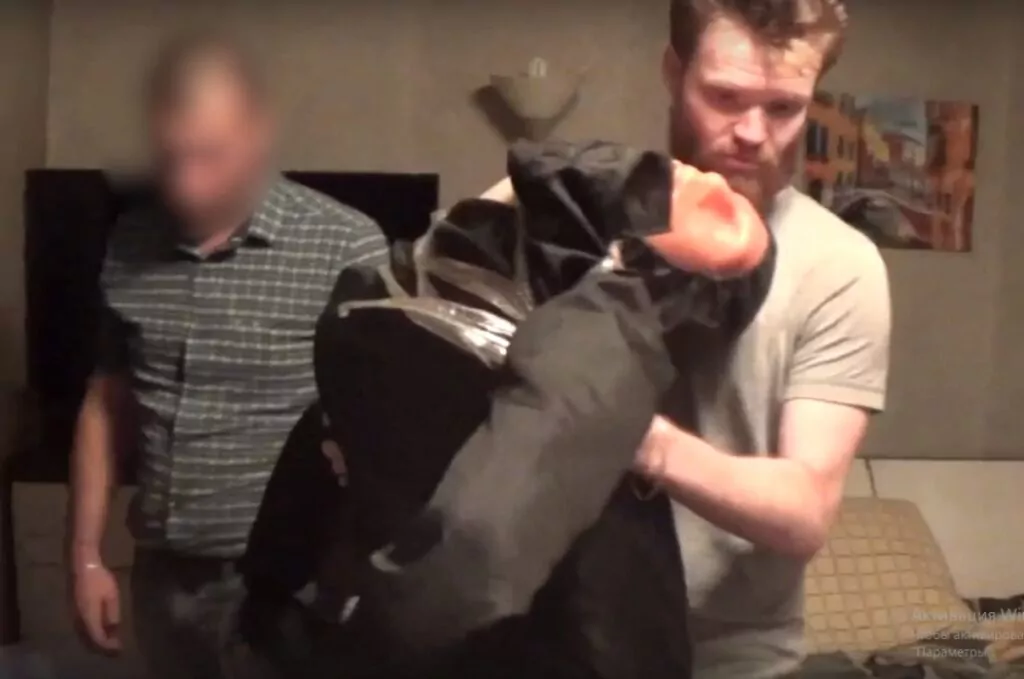
At around four in the morning, the accomplices moved the scientist’s body to an apartment in the building opposite and left it. It stayed there for several days. During this time, Kharlamov bought hacksaw blades, garbage bags, detergents, gloves and chlorhexidine. On March 9, he dismembered the corpse and, together with Bykovsky, put its parts in garbage bags.
There were several plastic bags in the room. In several steps, the accomplices transported fragments of the professor’s body to Kharlamov’s apartment. Even their unsuspecting acquaintance took part in this. He arrived at the apartment and saw open detergents in the kitchen and several plastic bags in the room. The criminals did not explain what was inside, and only asked to drag some of the packages to a taxi.
After some time, the same friend noticed that Kharlamov suddenly had money from somewhere - he bought three pairs of new sneakers and expensive spare parts for a computer. But it never occurred to him that this could be connected with those strange packages.
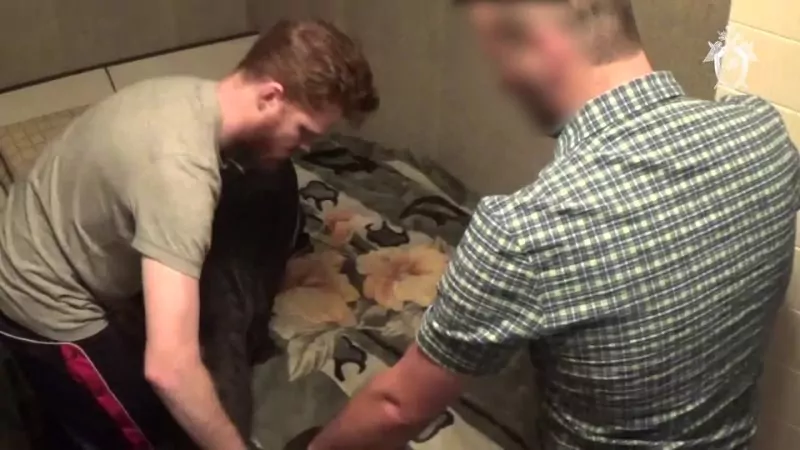
As it turned out later, in total, the accomplices stole more than two million rubles from the professor - these were funds from the legal entity’s account and Kuznetsov’s personal savings.
After the professor’s remains were transported to Kharlamov’s apartment, they simply lay in the closet for some time, but soon there was a strong smell from there. Then Bykovsky brought plastic containers - they put parts of Kuznetsov’s body in them, filled them with hydrochloric acid and chlorine and put them on the balcony.
Neither the neighbors nor the apartment owners had any idea what Kharlamov kept on his balcony. The owners even managed to sell this property to other owners - but Kharlamov was not evicted; he, as a tenant, passed on to the new owners of the apartment. When purchasing, they inspected the property and did not notice anything strange. So these containers stood for several months until they were discovered during a search.
Paid for kindness
At the trial, the professor’s sister Tatyana Selezneva asked that Bykovsky and Kharlamov be given life sentences. They themselves refused to admit guilt in the murder, repeating that they only wanted to put Kuznetsov to sleep with chloroform. Tatyana was especially outraged that Bykovsky was trying to blame everything on his friend.
“Not a shadow of remorse!” “Bykovsky still denies everything! - she said. - Everything blames Kharlamov. At first he confessed, and then backed down. He said: “The law enforcement officers extracted the confession.” His only fault, they say, is that Slava opened the door for him, he brought Kharlamov, and then left. How so?.. These two brought the containers in advance and prepared the acid. They had a bunch of gloves there, some means... At first, Kharlamov stood up for Bykovsky and called him a friend. And now it turns out that Bykovsky actually wants to pin everything on him. At the same time, without him, Kharlamov would not have known Slava! Not a shadow of remorse!”
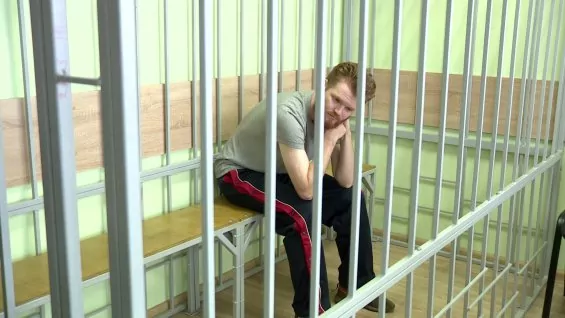
In the end, the court ruled that the main fault lay with Bykovsky. After all, it was he who was Kuznetsov’s friend and student, and it was he who took advantage of his trust. He received 21 years in prison, later reduced to 20 years. As for Kharlamov, he received 19 years of strict regime. Now both are probably still behind bars - if they haven't gone off to war. There are no ways to check this in Russia.
As for the professor, the students still remember him. Sergei Ermak told Kholod that for years he kept a plate from the professor’s apartment, which Kuznetsova’s sister gave to him at the funeral as a memorable gift. Recently the plate broke, and Sergei was very upset.
Remembering the professor, former students said that he paid for his kindness.
Author: Oksana Gribkova
Editor: Yulia Dudkina
Photo: Kuznetsov’s social networks