
Translated material
Fico with a scar
How the Slovak leader is adjusting to European loneliness after the departure of Viktor Orban

Robert Fico. Photo: AP / TASS
“When you enter the room, you won’t notice him. But he will notice and remember everyone,” this is how an acquaintance from his student days once described Robert Fico. The Prime Minister of Slovakia, who resigned from his post several times, was written off from political accounts and returned victoriously each time, is generally described as a person who avoids unnecessary attention and prefers calculation to charisma. However, it becomes increasingly difficult for him to remain in the shadow of himself. Especially after the defeat of Viktor Orban in the Hungarian elections. “After” is largely “as a result of.” But not in everything.
Translated from Hungarian
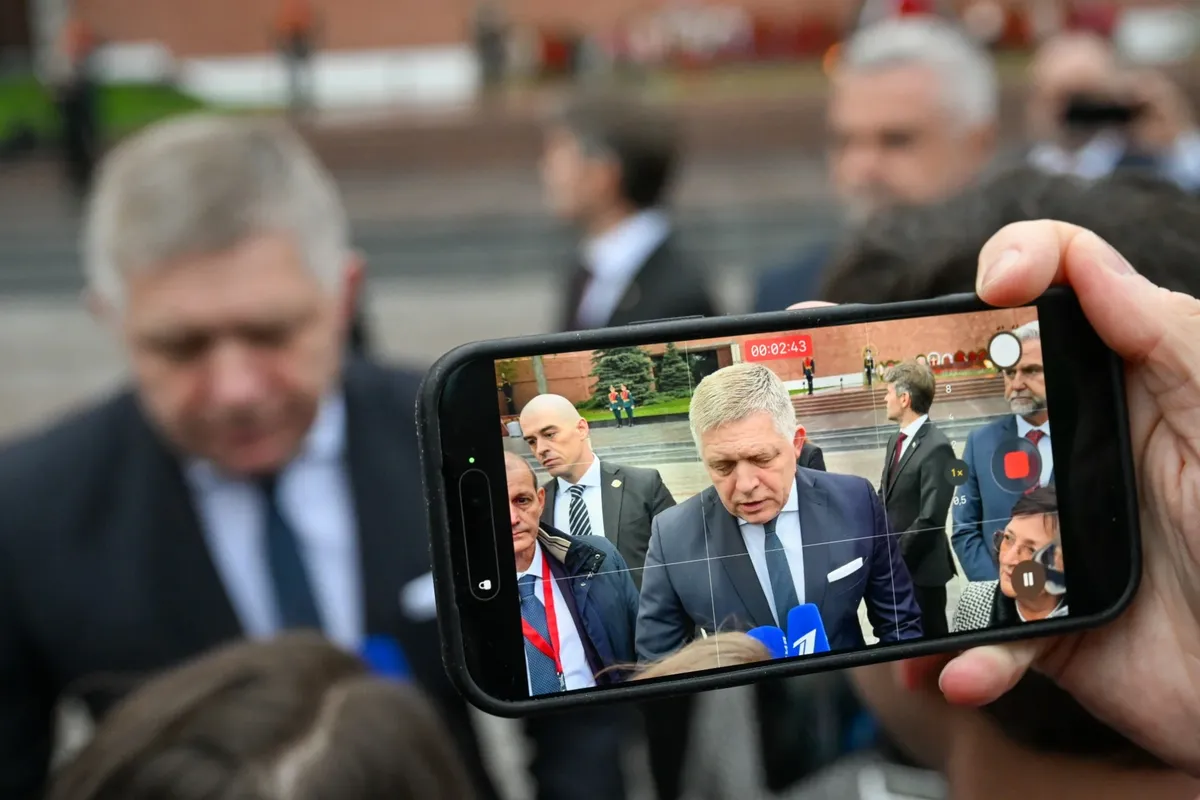
On the sidelines of the European Political Community in Yerevan, Donald Tusk joked about maintaining confidentiality: “There are no Russians here...” And, looking at Robert Fico as he passed by, he winked with feigned contrition. Meanwhile, following the results of the summit, Robert Fico published on his social network page a joint photo with the same Donald Tusk and his Czech colleague Andrej Babis: “The three musketeers are waiting for the fourth...” - hinting at the absence of the Hungarian triumphant Peter Magyar, who by virtue of his position will become another leader of the Visegrad Four. A few days later, Robert Fico went to Moscow, met with President Putin, dodged the parade and laid wreaths alone at the Tomb of the Unknown Soldier. A year ago, his visit to Moscow followed approximately the same program.
But this time the context turned out to be a little different. On the eve of the meeting in Yerevan as part of the European summit, Robert Fico received a call from Ukrainian President Vladimir Zelensky, and this conversation was continued in Yerevan in person. No revolutionary things were said, but the very tone of the conversation did not in any way remind of the depressing background of the previous relationship.
Of course, much can be explained by the changing milestones in Hungary. But even in this plot there are two red threads.
The first is Orban’s departure itself. A place in his orbit as the main junior partner in the Eurosceptic coalition was an ideal ecosystem for Robert Fico. Orban took on the role of the main fighter against the “Brussels liberals”, the herald of all anti-Ukrainian initiatives: from blocking loans to refusing military assistance. He did all this so confidently and harshly that all Bratislava needed to do to get its bonuses was to be nearby and indicate solidarity. However, behind the unity of manifestations there were different motivations. Orbán could be called a virtuoso of political bargaining with Brussels if his approaches were not so simple: any compromise on issues of war, peace and European unity had a specific price - another EU tranche, on which the Hungarian financial system increasingly depended.
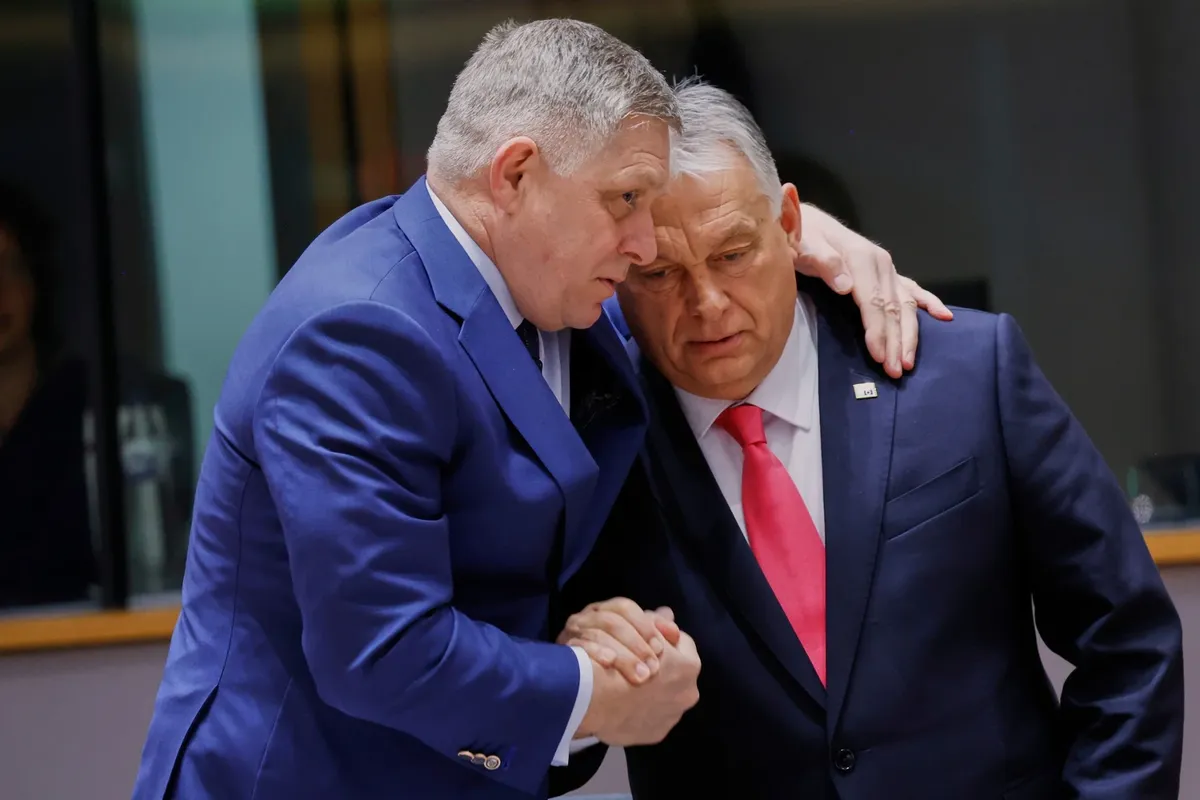
Orban broke the taboo in relations with the European Union, and Fico entered the door he opened without unnecessary noise.
Bratislava itself could not afford such determination, but it did not need it. It is much more deeply integrated into the European economy than Hungary. This is the euro zone, which prevents financial improvisations. This includes involvement in European production chains, primarily the German auto industry. Slovakia is a country of industrial exports that provide tens of thousands of jobs in dozens of factories owned by the world's largest automakers. Thanks to this, Slovakia has long been the world leader in car production per capita.
Lose an ally, gain an opponent
Slovakia is much more involved in NATO than Hungary, especially after 2022, when Slovakia, in addition to active participation in infrastructure initiatives on the eastern flank of the alliance, also increased its multinational military presence. The border with Ukraine makes the country a front-line territory, and this situation is becoming increasingly alarming. Shortly after Fico’s May visit to Moscow, the border with Ukraine was closed, not because of difficulties in relations, but due to shelling of the Ukrainian border areas. What the opposition immediately pointed out to the prime minister was that somehow friendship with Moscow does not help in the promised security.
But Peter Magyar himself, Orbán’s successor, poses no less of a problem for Fico. For him, his Slovak colleague is a friend of his enemy, and he has proven this friendship more than once with deeds. Orban was one of the few who supported Fico in a critical situation for him after the crisis associated with the murder in 2018 of journalist Jan Kuciak, who was investigating corruption in the Slovak government (this help, however, did not save Fico, and he still had to resign as prime minister). Orban defended Fico with all his political weight from pressure from Brussels, blaming the “liberal Brussels elites” for everything.
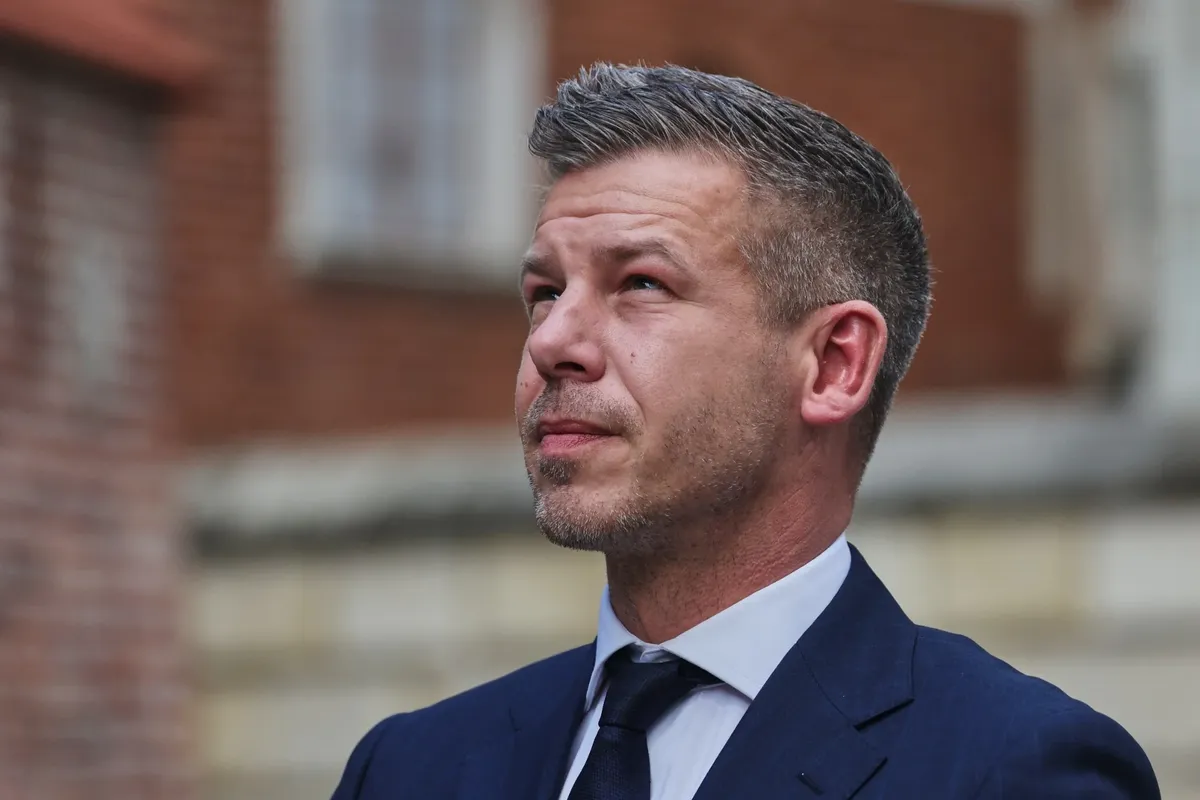
Fico not only lost a friend, but also gained an opponent. Magyar plays in many ways on the same fields that Orbán played on, including patriotic ones. Moreover, he is expanding them, and at the expense of Slovakia. Previously, Budapest, in its concern for compatriots abroad, excluded Slovakia from the zone of special attention. Now Magyar reminded Bratislava of the so-called “Benes Decrees” adopted in Czechoslovakia after World War II, which legalized the deportation of Hungarians, with the actual confiscation of their property. After attempts by the opposition, who thus tried to win over the Hungarian minority, to challenge the legality of these decrees, their criticism was officially declared a criminal offense. Orban, by the way, was criticized by the Hungarian opposition for his softness towards such Slovak undertakings. Now Fico has to pay these bills too.
In a word, Orban challenged Brussels, trying to dictate his own rules of the game to both the European Union and Hungary itself. Fico, rather, is adapting to a reality that sometimes puzzles observers: Slovakia, deeply integrated into European structures, is not afraid of the reputation of a pro-Russian country. Slovak journalist Mirek Toda, however, corrects: not so much pro-Russian as anti-war.
Sociologists also do not note active pro-Russian sympathies. But the fear of war is skillfully exploited by the authorities, and therefore Fico’s trips to Moscow become part of the theme of security, rather than political sympathy, and, therefore, part of the political norm.
And only a political gourmet will find the difference between a pro-Russian position and the desire for peace at any cost.
It is in this niche that Robert Fico seeks political happiness. But a continuation of the Slovak originality is the extreme limitation of this niche. And now, a little over a year before the elections, it is shrinking even more. And not only because of Hungary.
Far right, and more extreme
According to March data from the sociological center IPSOS, his party Smer (“Course”) would lose the elections, if they were held not in the fall of 2027, as expected, but today, to the opposition democrats from “Progressive Slovakia.” So far, almost within the statistical error: 20 versus 20.6. But even this ratio cannot but worry the authorities, since the political space is extremely fragmented, coalitions are unstable, and sociologists promise an eight-party parliament, in which in such situations it will not be easy to find allies.
The first partner, the Hlas-SD party (Voice-Social Democracy), which is associated with President Peter Pellegrini, largely repeats the rhetoric of Smer - left-wing populist, dosed anti-Western and pro-Russian. And although Hlas has long been considered a moderate, even almost centrist, party, their relations with Smer are built according to the rules of intraspecific struggle for the same voter.
And Fico has nowhere to move in the other direction - there the Overton window towards the ultra-right is being expanded even without it by the Slovak National Union (SNS), the junior partner in the coalition, and only for this reason Fico is still restrained in his criticism - for insufficient toughness towards Kyiv and Brussels. The excessive determination of the nationalists may call into question the fate of the coalition, and with it the prospects of the party itself: SNS is not entering the new parliament. And, perhaps, he completely disappears from the political spectrum, giving way to like-minded people from the Republic party, but such that calling them right-wing radicals would be an unnecessary political delicacy. Sociologists today already give these people more than 11 percent, third place, and this is clearly not the limit.
In a word, it won’t be possible to take away votes here - even SNS is too moderate for this type of voter. A coalition with such strength still looks like a form of indecency. This means that only one thing remains - to act according to the situation, and, as people who know Fico believe, in this discipline, few people in Slovakia can compare with him, not burdened by any ideologies.
Armistice formula
But so far the situation does not require any drastic changes. Just as before Fico did not make any extra efforts to strengthen the bastion of Euroscepticism, now it is possible to live without effort and without a bastion.
In relations with Moscow, the framework is also quite flexible. Bratislava, without much loss, adapted four years ago to the abandonment of Russian gas, receiving it from Germany, Austria, Poland and Croatia, and gradually switching to liquefied gas. With oil it is more difficult. For example, the main Slovak refinery Slovnaft, the main shareholder of which, by the way, is the Hungarian MOL, is set on Russian oil. There is no obvious and painless alternative to the Druzhba oil pipeline. A candidate for this role, the Adria oil pipeline passing through Croatia, may, according to experts, not be able to handle simultaneous supplies to Hungary and Slovakia. And finally, too many business infrastructures, including those close to power, are involved in Russian fuel chains, and any changes can cause unnecessary misunderstandings.
But the main thing is that no one really demands these changes.
For the European Union, Orban's defeat was a double victory - Orban disappeared, and Fico became less inspired.
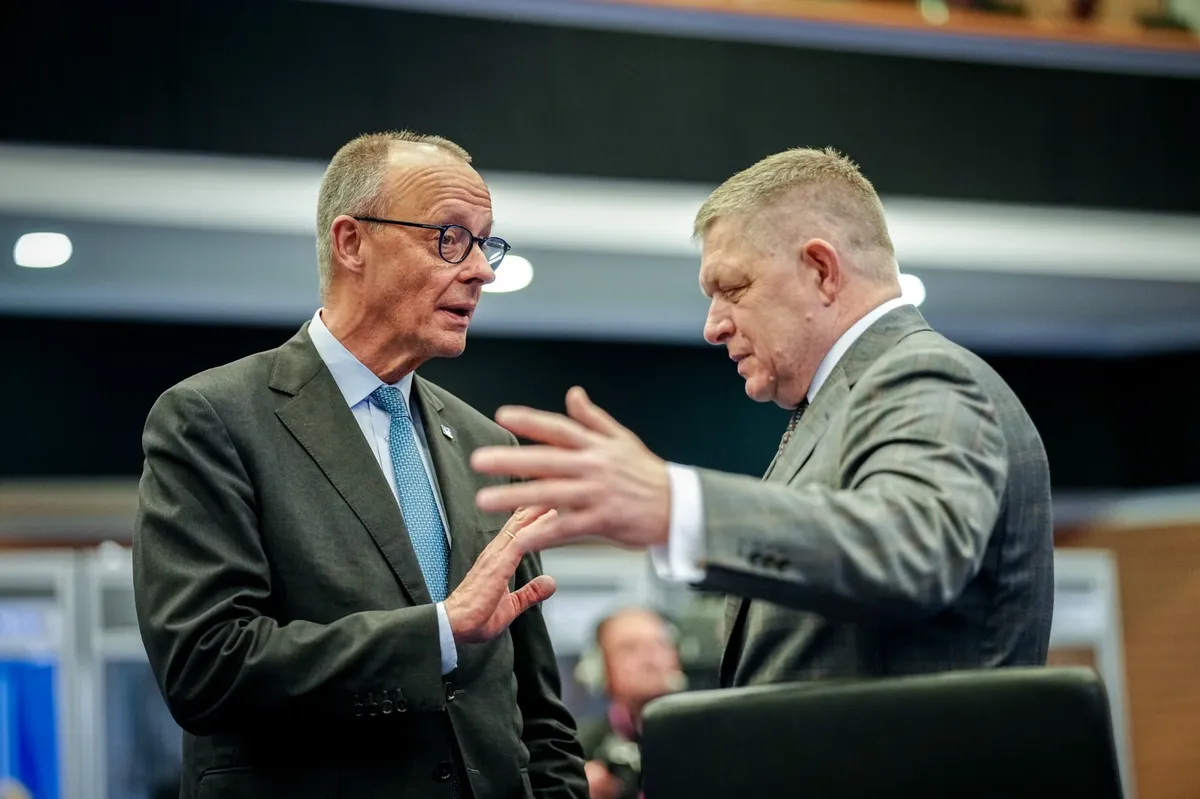
Some Eurosceptics tried to find solace in the victory in Bulgaria of General Rumen Radev, the ex-president who won the parliamentary elections, but his pro-Russian sympathies are a very pale shadow compared to Orban, and in his dependence on the EU and pragmatism, the Bulgarian ex-NATO aviation general is rather closer to Fico. In short, on this flank there are fewer headaches for Brussels.
Meanwhile, Zelensky was not the only one who had such a constructive conversation with Fico within one week. Before this, he had a difficult but clearly meaningful conversation with Magyar, and after negotiations with Fico, Zelensky met with Georgian Prime Minister Irakli Kobakhidze. That is, with all the main antagonists of recent times, who have made anti-Ukrainian neutrality and fear of war the basis of their political strategy. This hardly means a revolution, but it probably shouldn’t be considered a coincidence either.
Orban's departure may help the European Union at least partially overcome the ambiguities of recent times and open the way to a certain reformatting. One can only guess what compromise formulas Brussels could offer to Kyiv and its opponents, but perhaps this is not so important. It is important that such formulas are indicated. Fatigue from solidarity, a premonition of economic difficulties associated with Iran, the Middle East, and the United States, an attempt to seize the initiative in contacts with Russia - even at the level of a signal of readiness for it - all this can prompt Brussels and those who argue with it to soften their mutual rhetoric. Kyiv, for example, has not been reminding about immediate and full accession to the EU for a month now. Fico, in response, supports this accession as a process, and perhaps, as part of this softening of morals, it will be easier for Bratislava and Budapest to achieve from Brussels at least part of what Orban fought so desperately for.
But, as journalist Mirek Toda believes, all this is not the main thing for Fico. The most important lesson he could draw from Orbán's collapse is that everything should not be staked on the geopolitical map, on the struggle between Brussels evil and traditional values. Voters are still much more concerned about prices, social services and corruption scandals. Here, Fico, like Orbán, has few reasons for optimism. And there may not be partners for the required coalition at a critical moment.