Date
Author
Татьяна Брицкая, Светлана Виданова
Source

Preserved copy
Translated material
Gays, demons and Navalny
Judge Oleg Nefedov is fighting them - we tell his story

Judge Oleg Nefedov during the announcement of the verdict on suspending the ban on the activities of the Taliban movement in Russia. Photo: AP / TASS
On May 26, the High Qualification Board of Judges will consider (and probably approve) the candidacy of Oleg Nefedov for the post of head of the board for civil cases.
This will be a significant but expected step in the career of the 51-year-old judge, whose decisions have led to the closure of dozens of NGOs. We tell you who Judge Nefedov is, who single-handedly criminalizes civil society in Russia.
Chief of Phantoms
Judges usually have specializations. Some people understand fraud, some are being charged with cases under popular “narcotic” articles, some are considering claims for damages in road accidents, and some are serially fining “foreign agents.” Judge Nefedov has developed a specialization - he is the only one in the whole country. It was Oleg Nefedov who recognized as extremist non-existent movements, the phantoms of which the Prosecutor General’s Office considered dangerous for the state: “International LGBT Movement”*, “Anti-Russian Separatist Movement*”, “International Satanism Movement*”...
Along with the non-existent decision of Judge Nefedov, the “International Public Movement “Memorial**” was also declared extremist...
In addition, Nefedov’s signature is on the decisions to liquidate the PARNAS party, deny access to Duntsova*** and Nadezhdin to participate in the presidential elections, recognize FBK**, the “Anti-War Committee of Russia”**** and the “Congress of People’s Deputies”**** Ilya Ponomarev*** as terrorist organizations. Not only prohibit and not allow, there is also the opposite solution:
Nefedov suspended the ban on the Taliban in the Russian Federation after it came to power in Afghanistan, cutting off the public’s mocking jokes about Russian officials shaking hands with bearded men “banned in Russia.”
Where did such a valuable specialist come from? From the prosecutor's office. Oleg Nefedov, born in the Penza region, graduated from the Ulyanovsk branch of Moscow State University, now Ulyanovsk State University. His wife Svetlana, a graduate of the same university and faculty, worked in the press service of the regional government, and now works as a journalist in the local publication, writing about culture and tourism. After studying, Nefedov went to work as an investigator (at that time the investigation had not yet been taken away from the prosecutor’s office). He worked for only 3 years - in 1999 he was already a legal adviser to an insurance company. And then he returns to the law enforcement system - he gets a job in the Leninsky District Court of Ulyanovsk. From there - to the regional one, and already in 2017, just 13 years after the start of his judicial career, the provincial judge was transferred directly to the Supreme Court. There, the Ulyanovsk resident considers mainly land, environmental and material disputes. He has been entrusted with political affairs since 2023.
But first, in the spring of 2023, the judge and his household, as follows from open sources based on real estate data, take ownership of an apartment with an area of almost 200 square meters and worth more than 100 million rubles, acquired by the administrative department of the President of the Russian Federation.
"Limited space in the cell"
And then political affairs began. The first was the liquidation of the People's Freedom Party (PARNAS). Nefedov made the corresponding decision on the claim of the Ministry of Justice on May 25, 2023. Reason: the party has branches in less than half of Russian regions. The decision was formal, but not without guile - several branches were recently closed by the courts of the constituent entities on bureaucratic grounds, officials stubbornly did not register new ones in their place, PARNAS still had 44 branches, and until recently this was enough. But the judge noted that Russia has grown with new territories, and after the well-known events in its Constitution there are no longer 83, but 89 subjects, including Crimea, Sevastopol, Donetsk, Lugansk, Zaporozhye and Kherson regions. And he closed the party.
Thus ended the history of one of the oldest opposition forces, which actually began in 1990, if you count from the founding of the Republican Party of Russia, whose successor was PARNAS. It was from her that Boris Nemtsov was elected to the legislative assembly of the Yaroslavl region. The party's declaration directly emphasized opposition to Vladimir Putin.
Nefedov’s next prominent case is the refusal of Alexei Navalny’s claim against the Ministry of Justice of the Russian Federation to challenge two points of the Internal Regulations (IRR) of correctional institutions, which limit the use of paper and pen in punishment cells and PKT.
The PVR states that writing materials are issued by the administration in accordance with the daily routine. And the schedule changes - the administration every now and then changes the time allotted for writing complaints.
“The head of the colony constantly reduced the amount of time. At first I could get a pen and paper for 2 and 3 hours, and then the time began to shorten. In my personal time, they give me a pen and paper, but at this time I want to borrow a book from the library or write a letter to my family,” Navalny, who by that time had spent more than 6 months in the IK-6 high-security penitentiary in Melekhovo, said in court. The Ministry of Justice explained that “those held in the punishment cell do not have a place to store writing materials.” No place to store it.
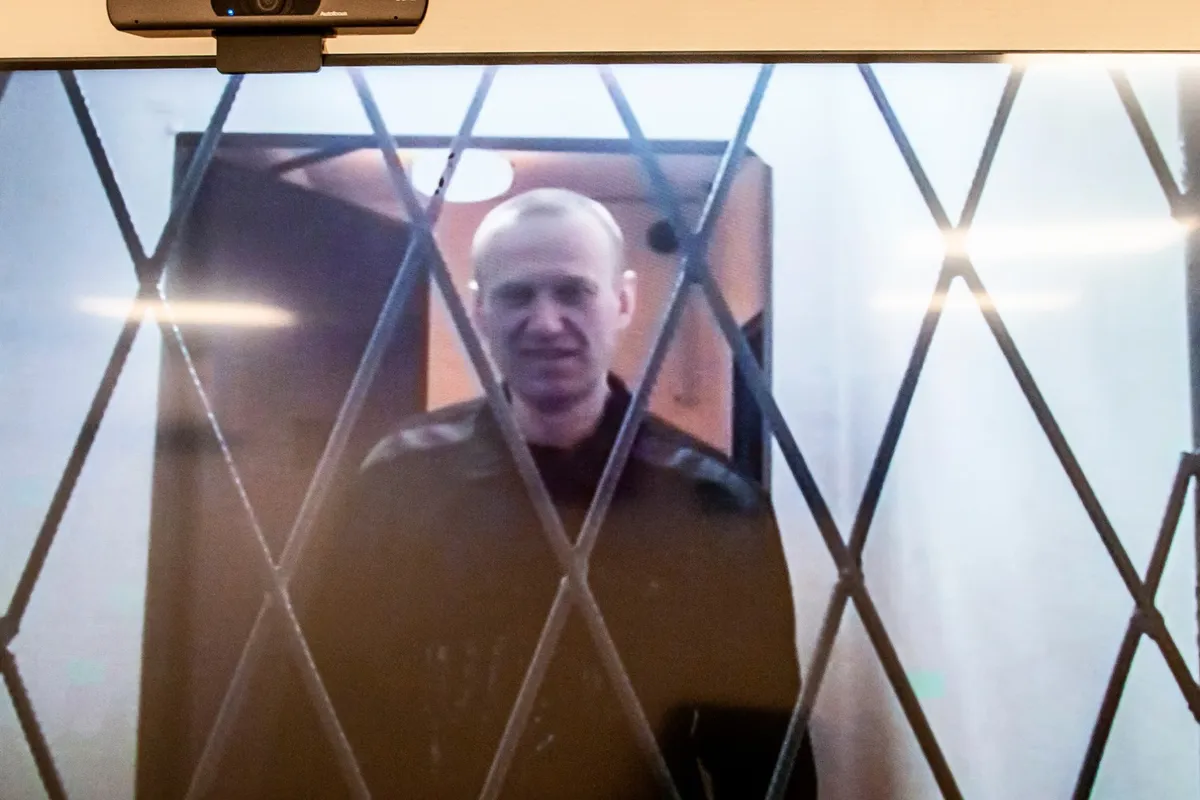
Nefedov denied the claim. His decision states that temporary temporary detention centers were adopted in compliance with all formalities, and the restrictions challenged by the convicted person “arise from the conditions of limited space in the cell.”
Six months later, Nefedov will consider two more claims from Navalny - with the same result. In January 2024, the politician challenged the rule that allowed him only 15 minutes to eat and the ban on having more than two religious books in a PKT cell and a punishment cell. Navalny referred to Soviet times - according to the memoirs of dissidents, then more books could be kept. The judge was not convinced.
“What is generally prohibited?”
In November 2023, Nefedov considered the most famous lawsuit in his career - the Ministry of Justice’s demand to ban the International LGBT Movement. What kind of animal this was then remained practically unknown - the case was heard behind closed doors, and even the LGBT activists who were directly affected by it were not allowed to attend the hearings. The claim was reviewed within 4 hours and satisfied. The UN, EU, major Russian and global human rights organizations criticized the decision as discriminatory and leading to a violation of human rights.
The secrecy of the verdict outraged even some loyalists. For example, deputy and TV presenter Evgeniy Popov noted : “It is not very clear what is prohibited and what is specifically recognized as extremist... There is a sufficient set of laws banning LGBT propaganda, why this decision was made by the Supreme Court, we need to figure it out. This was a closed trial classified as “secret”, which is also strange. I would like to understand what is generally prohibited.”
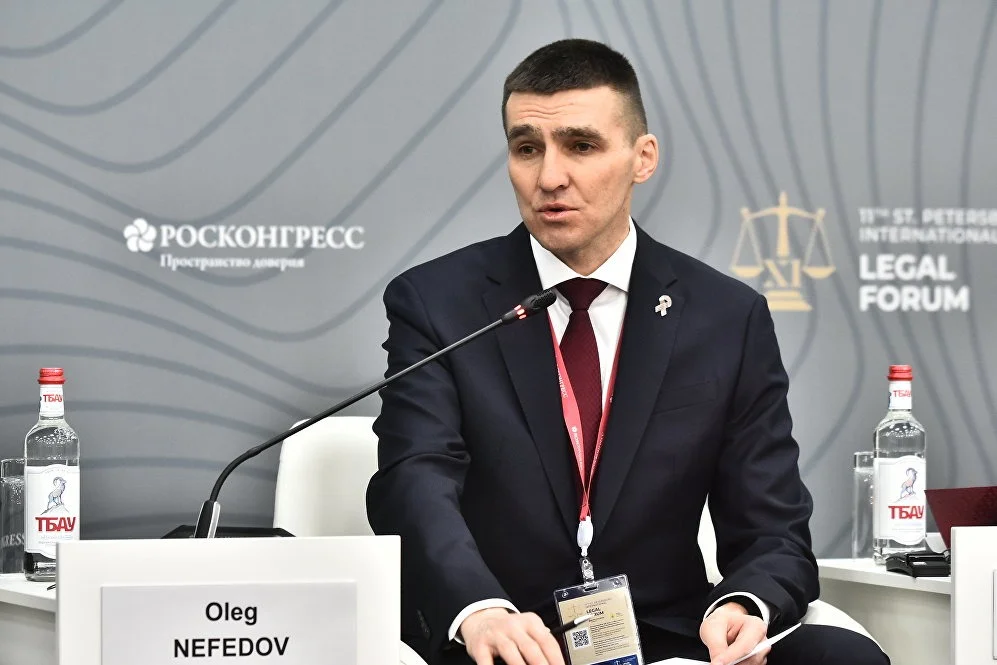
Soon, Nefedov’s secret decision came to light. The police attached his text to one of the administrative protocols drawn up against a resident of the Saratov region because of photos of rainbow flags on the social network. The text turned out to be remarkable: Nefedov writes that LGBT people have a “specific language,” namely feminives. They are also united by “the presence of certain morals, customs and traditions,” for example, holding gay pride parades.
The judge also points out that the LGBT movement arose in the 1960s in the United States and has existed in Russia since 1984. How it was possible to establish such precise dates for the birth of an unregistered movement, what happened in Russia in 1984, and how Russian gays managed before this date is unclear. Perhaps the date was simply taken from Wikipedia, where one of the articles says that “the LGBT human rights movement in Russia dates back to 1984.”
All this would be funny if people weren’t imprisoned.
The first person deprived of liberty in connection with Nefedov’s decision was Nizhny Novgorod resident Anastasia Ershova. She was given 5 days of arrest for earrings with rainbow striped frogs. However, the colors on the decorations did not match the colors of the LGBT flag.
By the end of 2025, Russian courts had issued more than a hundred convictions in extremism cases for alleged participation in the “international LGBT movement.” One after another, criminal cases are being initiated, including, for example, against employees of the publishing house Individuum. Books suspected of containing LGBT references (even a cookbook) are being removed from store shelves. They are fined for a photo of the group Queen (a still frame from the video I Want to Break Free, in which the band members appeared in women's clothing). They conduct raids on clubs.
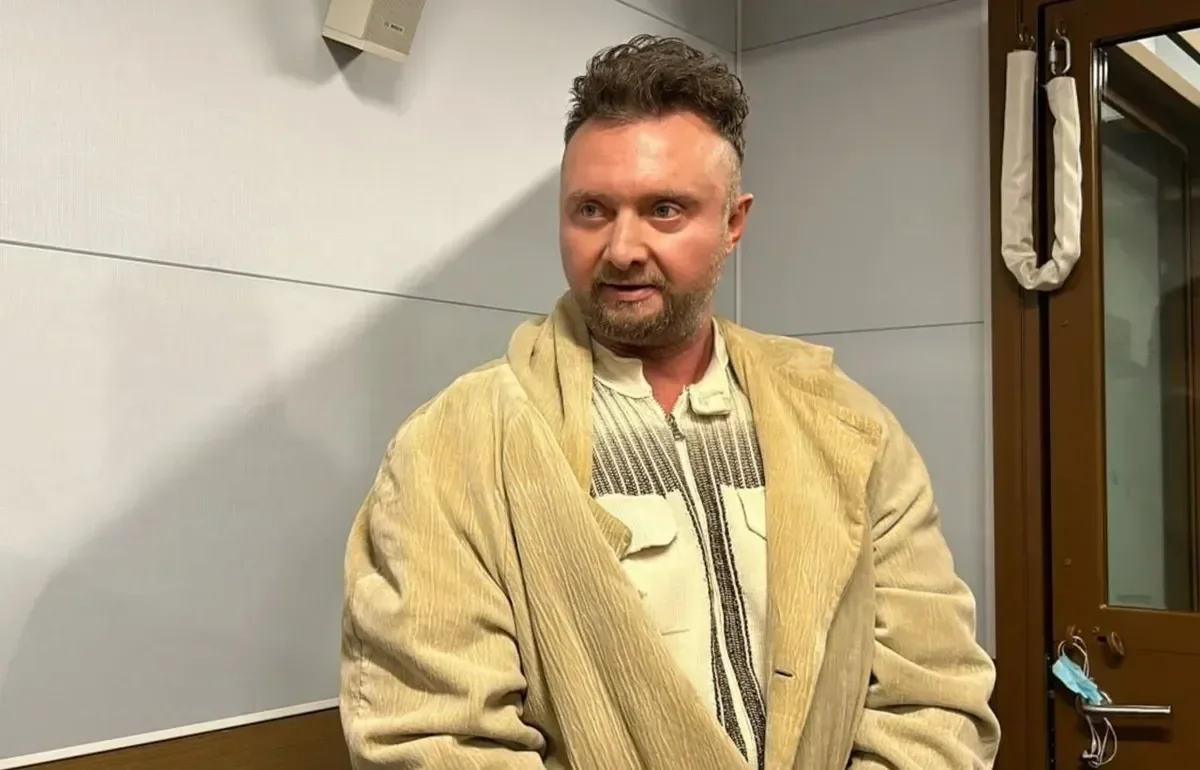
The director of a Moscow travel agency that organized gay trips, Andrei Kotov, who was detained on extremist charges, dies in a pre-trial detention center. He spent less than a month in captivity - on December 2, 2024, Kotov was arrested by the Golovinsky court, and on December 29 at 4 am he was found dead in his cell. Kotov’s relatives claim that unbearable conditions were created in the pre-trial detention center for Kotov, both directly by the staff and through other prisoners.
Silence is a sign of consent
If gays, according to Russian officials and church radicals, are a threat to traditional values, then, apparently, their complete opposite is the Taliban!
Nefedov, who banned LGBT people, gave permission to Afghan fundamentalists, who had long been banned in the Russian Federation as a terrorist organization. The ban, of course, did not prevent the Taliban from meeting with Lavrov in Moscow or participating in SPIEF. But Nefedov also had to harmonize the form and content. In April 2025, he suspended the ban on the activities of the Taliban movement in Russia at the request of the Prosecutor General's Office. At the same time, in most Western countries the Taliban continues to be officially considered terrorist. And in the 90s, the movement recognized the independence of Chechnya from the Russian Federation and did not withdraw this recognition. But - no extremism!
And this is understandable: after all, the Taliban also stand for traditional values. Their ideology is a conservative mix of rigid dogmas that deny modernity and demand a return to the practices of early Islam. In practice, this was expressed in the adoption of a new Code of Criminal Procedure, which legalized gender discrimination, slavery, and the murder of non-believers. There is a lot in the code that is close to the current Russian policy: the Taliban deny equality before the law, competition between the parties, and the presumption of innocence, since any norms legalized later than the 9th century are heresy.
The Criminal Procedure Code also protects the traditional family: a husband can be punished (up to 15 days in jail) for beating his wife only if serious injuries are caused, for example, fractures or deep wounds.
The Taliban also recently published a new family law that recognizes marriages involving minors as legally valid, with the girl's silence being considered consent to the marriage. After reaching adulthood, the girl will be able to try to annul the marriage in court, but according to the law “On the Promotion of Virtue and the Prevention of Vices,” a woman cannot appear in court without being accompanied by her husband.
Now girls are prohibited from studying after the sixth grade, women are prohibited from receiving higher education, working in non-governmental organizations, or visiting parks and other public places.

By the way, the Taliban punishes any activity related to Satanism* or witchcraft with death penalty or imprisonment. And here is harmony. Nefedov, merciful to the Taliban, unleashed the power of justice on the Satanists in the summer of 2025. Now fans of Lucifer are also extremists. And the solution is secret, like a spell. So, who is banned and whether Halloween can be celebrated actually depends on the law enforcement officer. It is only known that Roman Silantiev played a significant role in the case, the founder of destructology, which was recognized by the commission for combating pseudoscience of the Russian Academy of Sciences as not meeting the requirements of the scientific method, and the author of the examination in the case of Berkovich and Petriychuk. In a commentary to TASS, he assured that there are tens of thousands of Satanists in Russia who support Ukraine and raise money for the Armed Forces of Ukraine.
And things started to go again. A court in Voronezh sentenced Roman Maltsev to a year of correctional labor for a photo in which the police recognized the symbol of the non-existent “International Satanism Movement”*. What was in the photo is unknown.
Kurgan resident Vladislav Pylkov also received fines for taking photos of something diabolical on social networks. The intrigue was added by his statement that the accusation of Satanism was an element of pressure on him in connection with the organization of a children's beauty contest.
In Khabarovsk, a court fined a woman for putting a sticker on her car with a goat's face. In Zelenograd - a girl in a jacket with a drawn pentagram. In Krasnodar, a fine was issued for a picture of a tarot card that depicted a pentagram. No matter how they get to the bottom of the Kremlin’s ruby stars...
Memory as a threat
Nefedov’s baggage includes a ban on another “international movement.” It is called bizarrely in the Justice Ministry’s lawsuit: “Anti-Russian separatist movement”*. This is a phantom association, which was accused of “destroying the multinational unity and territorial integrity of Russia.” As expected, the consequence of Nefedov’s decision was the inclusion of various kinds of ethnic associations in the lists of extremist and terrorist organizations (there are already 172 organizations of indigenous peoples on the list of prohibited organizations). And then the imprisonment - in the pre-trial detention center there are Selkup activist, UN expert Daria Egereva, and defender of the rights of indigenous peoples Natalya Leongardt. The decision has facilitated the persecution of national activists who are fighting to preserve the identity and various guarantees of the rights of indigenous peoples. Now the intelligence services have legal grounds to see separatism in this activity.
Reflecting on the personality of Oleg Nefedov, one might think: well, yes, they appointed a young judge from the provinces to sign unpopular decisions and risk his reputation. But it’s difficult to call him a faceless performer. No, it's a name. Whether he wanted it or not, this ghost fighter went down in history.
Nefedov’s high-profile decisions directly affect the lives of hundreds, if not thousands, of people. On November 27, 2025, he declared the American legal entity FBK**** a “terrorist organization.” Now a donation to Navalny’s supporters is already financing terrorism.
With consequences in the form of a large prison sentence and lifelong loss of rights after inclusion in the list of terrorists and extremists. RT propagandists recently announced criminal cases of this kind against 16 thousand people.
And finally, the crowning achievement of Oleg Nefedov’s activities: on April 9, the Supreme Court of the Russian Federation recognized the International Social Movement “Memorial” as an extremist organization and banned its activities in Russia. Also in closed mode. The plaintiff, of course, is the Ministry of Justice, which asserted that the movement’s activities “are anti-Russian in nature” and are aimed at “destroying the foundations of statehood” and “rehabilitating the Nazis.” What is meant by the movement (“Memorial” as an organization was liquidated long ago by the same court and at the request of the same Ministry of Justice) and who will be imprisoned in this way is unclear. It is clear, however, that any symbols of the organization are prohibited, and participation in its activities may result in criminal liability.
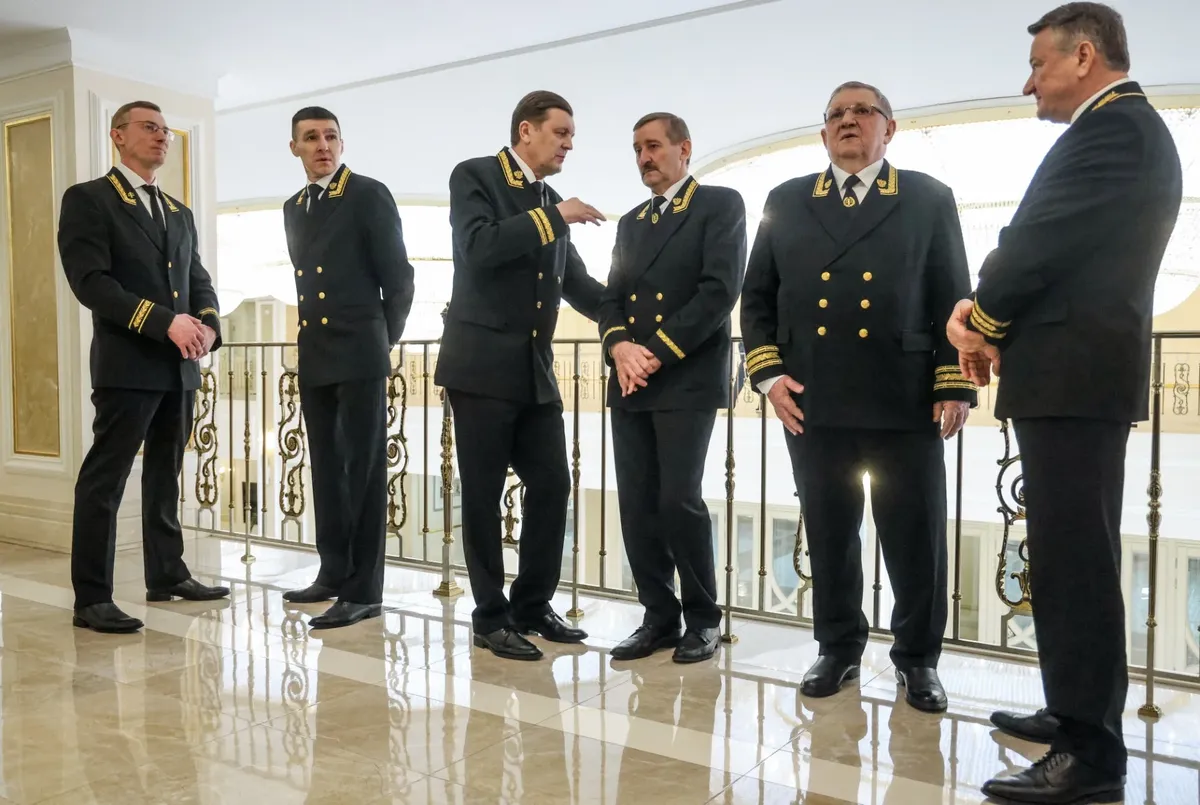
So, what did Nefedov consider anti-Russian activity? Restoring the truth about mass political repressions in the USSR, searching for execution sites and studying archives were declared attempts to level “historical, cultural and moral values.” And maintaining lists of modern political prisoners, it turns out, aroused social discord and justified the activities of persons convicted of terrorism. Well, yes, thanks to the efforts of Nefedov, among others, it is now much easier to get on the list of those convicted of involvement in terrorism or extremism.
Awarded the Nobel medal after its liquidation and inclusion in the proscription list of the Ministry of Justice, Memorial spoke too clearly about the rehabilitation of executioners instead of victims, about state terror.
If the security forces become the basis of statehood, then, of course, their exposure will shake the foundations.
There is no doubt that in a few days Oleg Nefedov will head the civil affairs board of the Supreme Court instead of the modest disciplinary board he now heads. It is the civil collegium that is directly related to the consideration of cases of nationalization and “deprivatization”. Another strategic direction of Russian litigation will be in good hands.