
Translated material
How a city in Primorye fights against an informer mayor.
html
This material (information) was produced and distributed by a foreign agent, Project Trait, or relates to the activities of a foreign agent, Project Trait. 18+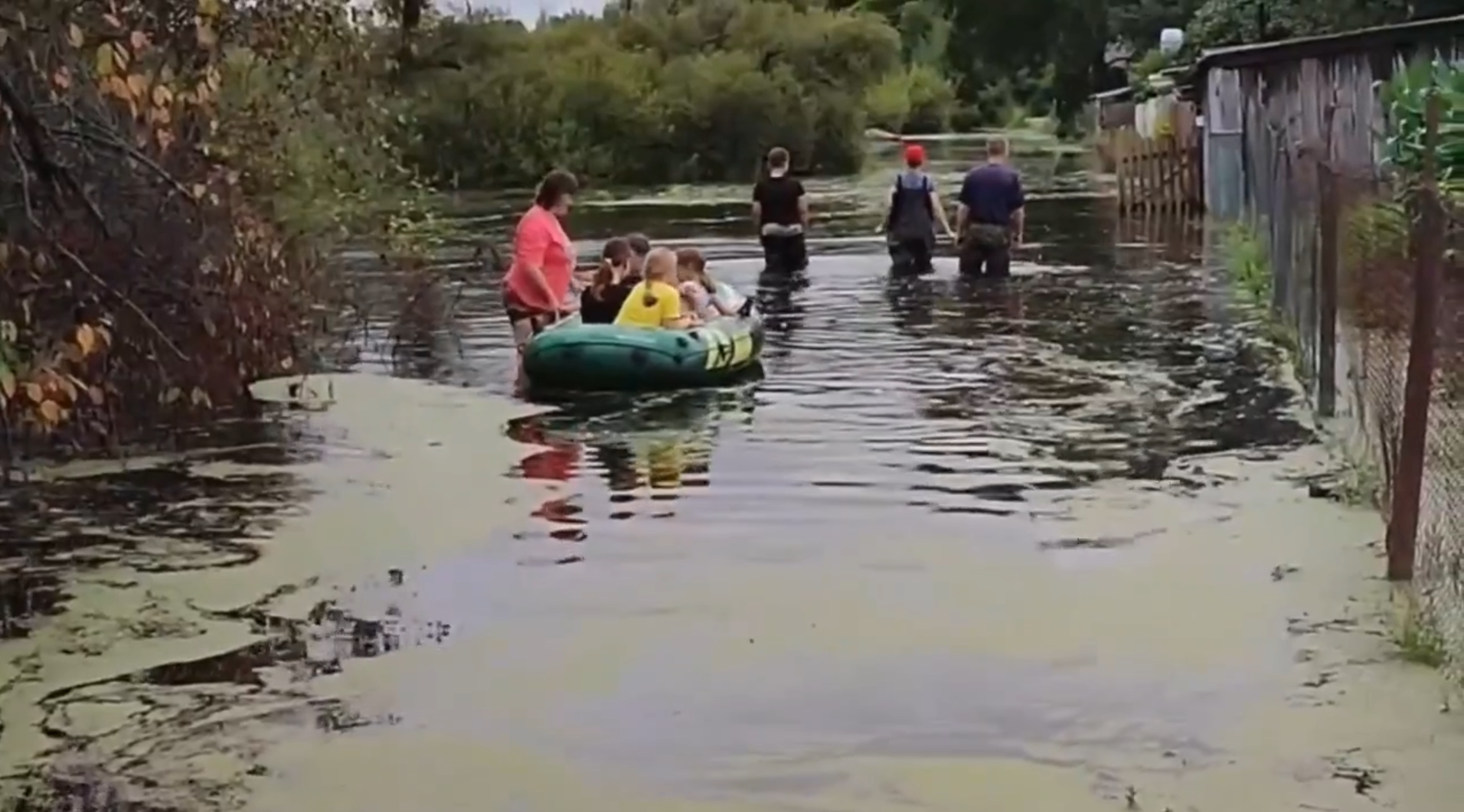
How a city in Primorye is fighting a scammer mayor
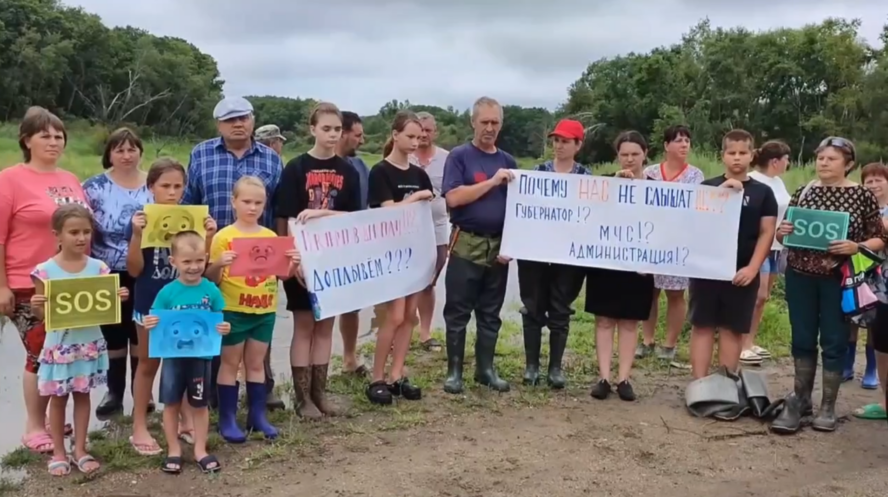
Residents of a small village near the border with China were tired of enduring the devastation and, in despair, recorded a video message to Putin. The mayor was offended and began to personally write denunciations against the dissatisfied. But the residents were not afraid: they announced a collection of signatures against the informer mayor and are now demanding that local deputies dismiss him.
“Cherta” talked to one of the participants in this struggle about how democracy is making its way even where, it would seem, institutions and feedback mechanisms between government and society have long ceased to work.
In August 2024, residents of the village of Markovo, Lesozavodsky District in Primorye, recorded an appeal to the president. As a result of the flood, the village was inundated, the crops were destroyed, and in some parts of the village the water stood knee-deep for months. Residents complained that local authorities refused to declare a state of emergency and build drainage systems.
After the appeal, the governor came to Markovo . He did not declare an emergency, and when asked by local residents what to do with the water, he advised them to “continue to live, work and study.”
He did not see the fault of the local authorities in what happened. The governor recalled that the problem of flooding is not new for the region. As proof, he cited Alexander Fadeev’s book “Spill.” The story is dedicated to how the fight against flooding in a Far Eastern village became a catalyst for the protest movement on the eve of the October Revolution of 1917.
During the governor’s visit, he was accompanied by the head of the Lesozavodsky district, Konstantin Bantseev. He probably re-read The Spill and drew conclusions. True, I decided to fight not the causes of the flooding, but the nascent protest.
The mayor personally contacted the prosecutor's office with a demand to check local activist Dmitry Ignatiev, who was covering the flood situation. He published the track “Municipal Blues” created with the help of AI, with the refrain: “Lesozavodsky asshole.”
“Sits at meetings with a smart face,
posing as if he were Jean-Paul Belmondo.
Lies to the governor and residents of the town,
that everything is fine with him, but he needs more dough.
And everyone repeats in unison: “Lesozavodsky asshole,” the activist sang .
Bantseev took the text personally. In his statement, he wrote: “The media file called “Municipal Blues” contains words such as “The new mayor came and everyone started calling him Lesozavodsky Asshole.” The content of these media files humiliated me, insulting my honor and dignity.” And he asked the prosecutor’s office to bring the musician to justice under Article 5.61 of the Code of Administrative Offenses of the Russian Federation - insult. According to Ignatiev, the police even ordered an examination of the track. But no insults against Bantseev were found there, and the case was closed.
 More on the topic “Every day you listen to advice from behind the fence”: a book has been published about the life of women in Russian villages
The mayor continued to fight the front and a few months later filed a police report against the initiators of the appeal to Putin. Including local activist Natalya Kozlova, who voiced the residents’ demands in a video to the president.
Bantseyev demanded that they be checked under Article 20.6.1 of the Administrative Code - failure to comply with the rules of conduct in case of an emergency or the threat of one. The violation, according to the mayor, was as follows: “citizens disseminate false information about ongoing events among other citizens, create a negative opinion among citizens, which can lead to a conflict situation in society.”
In April 2025, the mayor held a meeting about “reducing the provocatively increasing social tension” in the area. Bantseyev saw the problem in the fact that residents continue to complain about the authorities and post provocative messages on the Internet.
After this, according to an assistant to State Duma deputy from the Communist Party of the Russian Federation Alexei Kornienko, the administration put pressure on all residents of Markovo who participated in recording the address to the president.
“Over the phone they intimidated her [Natalia Kozlova] and all of us - they say, they will once again write a complaint to the officials - we will attract, and for starters, a fine. And then we’ll see, maybe we’ll put him in prison. There is no point in recording a video for Putin, they say. “You yourself repaired the road before the flood - so continue,” a resident of Markovo told reporters.
He did not rule out that the consequences could have been harsher, but because of the destroyed roads it was physically difficult for police to come to Markovo. According to residents, after the water left, the roads were washed away - even an ambulance could not get into the village. Markov residents believed that, in retaliation for appealing to Putin, the mayor deliberately did not help them with the restoration of the road.
“I don’t like idiots in power”
In November, pensioner Peteris Makarov came to see Bantseev. For many years he led the territorial public self-government of the village of Polevoe, which suffered from floods. At the reception, Makarov wanted to ask when the promised rainwater drainage systems would be built in the village. But the touchy mayor called the pensioner a “scoundrel”, a “liar” and a “bum”, and called the police.
“I have Makarov sitting here again, violating everything and walking around here, terrorizing.” Send a squad, pick him up,” the mayor told the police in an audio recording of the reception.
 More on the topic “This is some kind of accumulated historical schizophrenia.” Why is there so much devastation in Russia and what prevents us from taking care of our yard
In mid-December, the local branch of United Russia recommended reappointing Konstantin Bantseev to the post of mayor. His term ended in February. Natalya Kozlova and Peteris Makarov decided to act and began collecting signatures for the resignation of Bantseev in order to avoid his re-election. Despite the risk of becoming the next victim of denunciation by the mayor, residents began to leave their signatures - with names and addresses.
“Bantseev is such a figure, you can’t say a good word about him,” explains Dmitry Ignatiev, the author of the song about the “lumber mill bullshit” and local activist to Chert.
According to him, residents have accumulated many complaints against the mayor. Since 2020, floods have continuously damaged homes, plots and crops. But during this time, the authorities were unable to build a drainage system.
“They have a joint on a joint. If they start digging a canal, the area will be flooded. People constantly wrote to me and complained,” explains Ignatiev. “In the South-Western region they started digging - they dug up a cattle burial ground, then they broke the drinking water pipe from a new water treatment station worth about 200 million rubles.”
According to the activist, it was because of Bantseyev that the city was twice left without bus service. “The first time was in 2021, when by his decision he actually destroyed the local carrier - Lesozavodskavtotrans LLC. The second was in December 2023, when, due to his actions, another carrier, DalATP LLC, was forced to leave the city,” says Ignatiev. According to him, the city receives millions annually for the development of transport, but there are still not enough buses and residents freeze for hours at bus stops.
Questions were raised by contracts for road repairs, which too often went to the same contractor, owned by the family of the head of the timber department of United Russia, Evgeniy Tkachenko. And when residents were unhappy with repairs, contractors were not forced to correct the defects.
In a petition for collecting signatures, activists indicated that Bantseev never fulfilled the presidential adviser’s instructions from 2021 to eliminate the causes of the flooding, which ultimately led to the disaster in 2024. They also pointed out destroyed roads, the lack of container sites and untimely garbage removal, the emergency condition of bridges and other problems with housing and communal services and the environment.
In addition, the mayor was reminded of denunciations against his critics. The appeal states that instead of help, residents received “simply “terror” and revenge” from the mayor, as well as persecution for legitimate appeals to government agencies.
“It’s minus 30 outside, the New Year is approaching, people have no time for this. At first everyone laughed at them [the initiators of collecting signatures]. But within a few days we collected the first 400 signatures and stopped laughing,” recalls the activist.
Ignatiev is a visually impaired person of the second group, works as a watchman and in his free time investigates the corruption of local officials and sends complaints against them. “I don’t like idiots in power,” says the activist. “At least when they interfere with my life.”
For some publications they tried to initiate criminal cases against him. So, back in 2023, one of the heroines of his investigations into the resale of apartments allocated to displaced people, realtor Vera Barutskaya, demanded that his texts be checked under articles of inciting hatred and slander. The elements of the crime were not found in the texts then. But the woman managed to sue Ignatiev for 100 thousand rubles in a civil trial.
In September 2025, another heroine of his articles demanded that they be checked under several articles of the Criminal Code at once - including the rehabilitation of Nazism (Article 354.1 of the Criminal Code of the Russian Federation), discrediting the army (Article 280.3 of the Criminal Code of the Russian Federation), dissemination of fakes about the army (Article 207.3 of the Criminal Code of the Russian Federation) and insulting a government official (Article 319 of the Criminal Code of the Russian Federation).
One of the publications on Yandex Zen - about the Miss Lesozavodsk competition - was indeed checked under the article about discrediting the RF Armed Forces, but no negative statements about the Russian army were found there and the case was dropped.
Ignatiev joined the action and began publishing materials in support of the collection of signatures in a local channel . After this, the owner of the channel refused to post his posts. Then Ignatiev started his own channel and began covering the gathering there. According to him, residents responded very actively. Some entrepreneurs have placed subscription lists in their stores. Then administration workers began visiting retail outlets and checking that there were no signature sheets anywhere.
“They threatened with all sorts of punishments... To the point where they called the police and tried to take away the subscription sheets,” recalls Ignatiev. “Then we decided not to put them in stores, so as not to expose entrepreneurs.” We gathered a group of several people who, in their personal time, at their own expense, traveled and collected subscription lists from people throughout the district.”
As Ignatiev says, many people downloaded subscription sheets from the telegram channel, collected signatures from their relatives and neighbors themselves, and brought them to activists. “They even came home and brought several signatures, but, sorry, they couldn’t do it anymore,” he says.
Just before the New Year, having secured the first thousand signatures, activists sent an appeal to the logging council. They demanded that the deputies initiate the procedure for the resignation of the mayor.
A month later, activists received a response. The chairman of the Duma said that the collective appeal of residents “in itself is not a legal basis” for resignation. The issue was not even brought up at the meeting.
Authorities' reaction
A City Council meeting to elect a mayor was supposed to take place in February. By this time, residents had managed to collect more than 2,500 signatures for Bantseev’s resignation.
In total, about 40 thousand people officially live in the Lesozavodsky District, but, according to Ignatiev, it was almost impossible to bring signatures from the entire district, including villages, in the winter. Therefore, the activist considers the result serious. “This has never happened in Primorye,” he assures.
 More on the topic “The mainland doesn’t need them.” Travel halfway across Europe to end up in your hometown without communication or help
In recent years, signature campaigns against mayors have taken place in several regions. The largest results were in Chelyabinsk - 15 thousand signatures with a population of 1.2 million people, in Yaroslavl - 5 thousand signatures with a population of more than 500 thousand people, and in Rostov - about 5 thousand signatures with a population of more than a million people. Against this background, the results of the collection in Lesozavodsk, which also fell on the New Year holidays, look impressive.
They probably also impressed local authorities. Therefore, on the eve of the Duma meeting at which the mayor was to be elected, the initiators of collecting signatures were visited by the police. They were given warnings about the inadmissibility of violating the law. And they came to Ignatiev with a search as part of a criminal case. “I was just catching up on sleep after my shift,” he recalls. — And then seven people come in. But, really, everything was neat, they even put on shoe covers.”
The security forces took away all the computers and phones, including his work laptop and his wife’s smartphones, as well as a router, flash drives and memory cards. Materials from his investigations, court cases and appeals to law enforcement agencies were also seized.
“Then I scolded myself for not taking all the measures in case of a search. Because, among other things, I lost a large archive of my poems, music lyrics, and even my wife’s working documents. I helped create training programs. She was a primary school teacher and is now in private practice.”
The reason was an old criminal case at the request of realtor Barutskaya. She accused Ignatiev of publishing a certificate stating that she was registered at a psychiatric dispensary. According to the activist, there was no evidence of this, so no formal charges were brought against him - he is involved in the case in the status of a witness. And on the eve of the Duma meeting, Ignatiev believes, they decided to use this case to intimidate him and stop his civic activity.
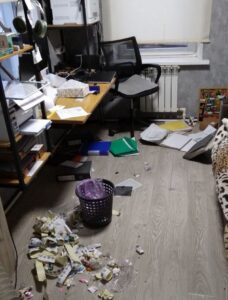
After the search, Ignatiev was taken to the police station, but was left in the status of a witness. In his opinion, this was done on purpose so that the criminal case would hang over him, but at the same time he could not receive the investigation materials and defend himself - a witness does not have such a right.
“There was specific pressure on me. They took me from the house and took me to the department after the search. Witnesses are not treated that way,” he notes. “At the same time, no one questions me as a witness.”
On the day when the election of the head of the district was scheduled, February 11, the deputies again refused to include residents’ appeals and signatures against the candidate Bantseev on the agenda. Ignatiev recalls that the chairman of the Duma made a funny clause - he proposed to announce the voting results before it began.
Despite the fact that deputies must vote secretly, according to the activist, no place has been prepared for this. “The deputies stood up, like schoolchildren when called to the blackboard by a teacher, and went to “vote” - in front of the venerable public from the logging prosecutor, the regional minister of internal policy, they put a tick in front of the candidate’s name and threw the piece of paper into the ballot box.”
A few minutes later the results were announced - Bantseyev was unanimously re-elected.
The activists decided not to give up and sent their appeal about Bantseev’s violations, along with digitized signatures, to the regional government. From there came an answer on 12 sheets: some of the facts that residents complained about were partially confirmed, but the signatures for the mayor’s resignation were ignored.
Then the activists sent an appeal to the presidential administration and the Prosecutor General's Office. But we received a response that the appeal was “sent down” for proceedings to the Primorsky Territory.
“Black mark” for deputies
Ignatiev did not forgive the deputies for so easily ignoring the signatures of residents and refusing to initiate the resignation of the mayor. “The deputy claims that he was elected by the people, but opposes his voters, refusing to vote for the resignation of the odious head,” explains Ignatiev. “4 to 11 times more people signed for the resignation of the head than elected each deputy.”
“A simple example: 251 people voted for deputy Basenko, and more than 2.5 thousand voted for the resignation of the mayor. This means that the opinion of the residents who left signatures for Bantseev’s resignation weighs as much as seven deputies like Basenko.”
To begin with, the activist sent everyone an appeal demanding to explain how the people's representative assessed the opinion of the residents who signed against the mayor, and why he did not consider this a reason to initiate resignation.
"The Line" studied the replies of the deputies. Most of them acknowledged the problems that activists mentioned in their appeal. But they explained that the SVO prevented them from raising the issue of the mayor’s resignation.
Deputy Yevgeny Bredun called “not to rock the boat” and doubted that “a change of power in such a crucial period” would benefit the district. The deputy explained the numerous problems with housing and communal services by the fact that the main forces of the government were “rushed to help the front.” His colleague Roman Busev agreed with this. “Primorsky Krai, being an outpost of Russia on the Pacific Ocean, is under enormous pressure,” he wrote in a response to Ignatiev.
Deputy Mikhail Samoshin said that “an endless change of leaders is counterproductive,” and his colleague Maria Perfilyeva said that “arranging a political swing” and wasting time on “swinging” during the SVO is an unaffordable luxury. “I am for constructiveness, not a change of power,” deputy Natalya Vasilyeva explained her position.
Ignatiev was not satisfied with these answers, and he promised to conduct an investigation into the activities of each deputy. “Every deputy who did not care about the opinions of residents and voted “for” Bantseev on February 11 will receive a personal “black mark,” he wrote in his Telegram channel. “The city should know its “heroes” by sight and by their deeds.”
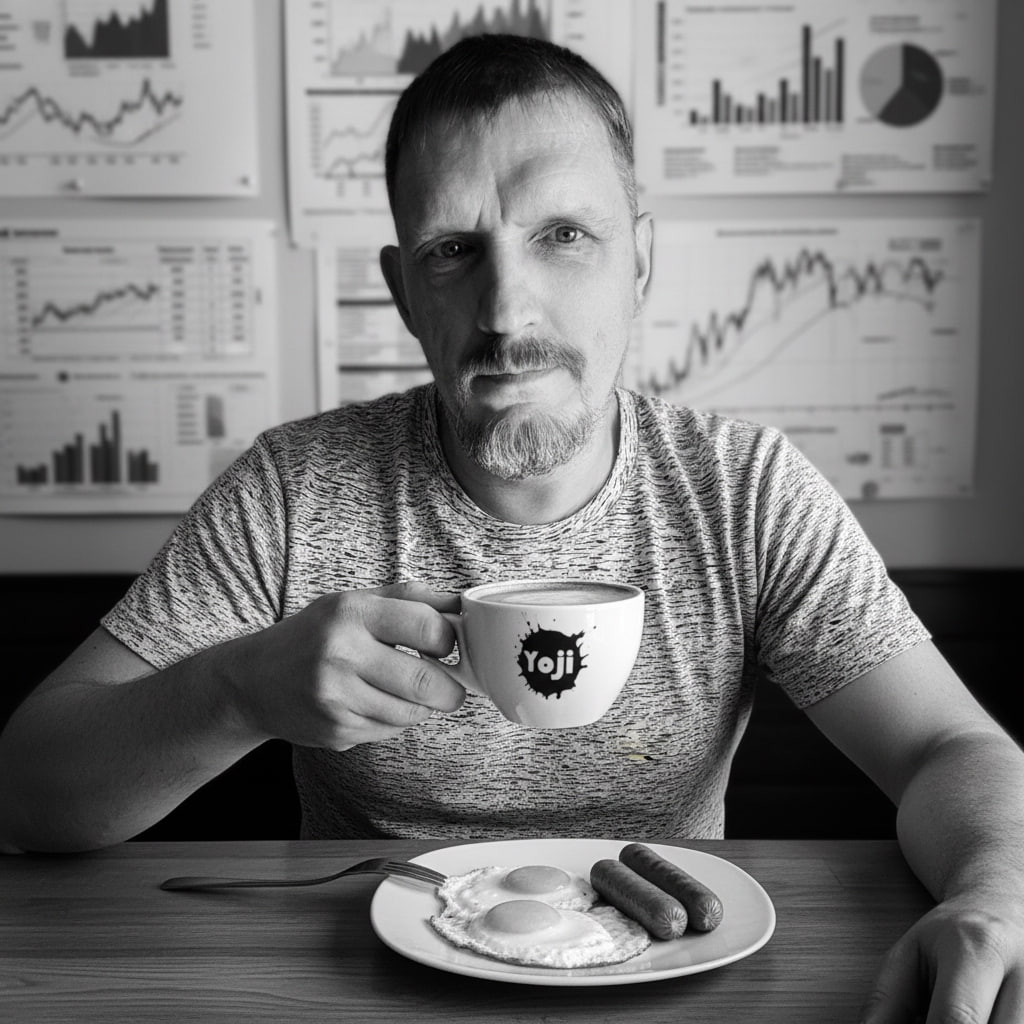
On May 21, it became known that one of the deputies of the Lesozavodskaya Duma, Roman Trubitsyn, filed an application for early termination of powers. “Regardless of the reasons, his action looks worthy against the backdrop of everything that is happening in local government and administration,” writes Ignatiev. The activist hopes that at least some of the deputies will also decide to “save face.”
The activist calls on residents to continue the fight “in the legal field.” For example, “flood the governor’s chat with short and clear demands” for each district issue, with photos and videos attached.
“I am categorically against any nonsense like rallies and all that,” says the activist. - It doesn't work. In my understanding, something else works. I always tell people: guys, I’m making a template for you. Write a complaint about it and send it. Here I am one of them, excuse the expression, but I fucked them. What if 20 people do this for each problem?”
Based on Ignatiev’s complaints, Lesozavodsk has already carried out several checks against officials. In January, the prosecutor's office demanded that a criminal case be opened against the deputy, and also the director of the Municipal Budgetary Institution "Housing, Communal Services and Improvement" Natalya Vasilyeva, for abuse of office (Part 1 of Article 286 of the Criminal Code of the Russian Federation). Ignatiev has long sought inspections for the demolition of a children’s skate playground in a city park and the construction of a cafe in its place.
 More on the topic: What is happening to the environment in Russia: water, air, earth and fire
The activist also got Vasilyeva checked because of her offensive statements towards residents who criticize the government. Ignatiev found out that a deputy was hiding behind the anonymous account and demanded that she be brought to justice.
In her explanations to the prosecutor, Vasilyeva admitted that from an anonymous account she called, in particular, Ignatiev a clown and weak-minded, but did not consider this an insult. According to the activist, the prosecutor deliberately delayed the investigation so that the deadline for administrative liability would expire and the deputy would avoid punishment.
Ignatiev admits that this struggle takes a lot of energy. “Every day the postman comes, brings packs of all these answers to requests, some kind of court documents,” he says.
“I am visually impaired, I had very serious health problems. I'm a heartbreaker. Now I’m back from my shift, I need to sleep, and then do all this again.”
The activist complains that he would like to devote more time to music and poetry, but the attitude of deputies to the opinion of two and a half thousand residents does not allow him to calm down.
Ignatiev recently learned that he was being investigated in a new criminal case. The prosecutor of Lesozavodsk considered his publication an insult and demanded that he be charged under Article 319 of the Criminal Code of the Russian Federation (“Insulting a representative of the authorities”). In his post, Ignatiev was outraged by the prosecutor’s inaction regarding a cafe illegally built on the site of a children’s skate area. Despite the fact that back in August the regional prosecutor's office saw this as a violation and demanded that it be eliminated, the supervisory authorities in Lesozavodsk never responded.
According to Ignatiev, the prosecutor was offended by the picture in the post - it depicts a rooster in a blue uniform, reminiscent of a prosecutor's uniform. The activist is confident that in this case, too, they will not find evidence to initiate a case.
According to him, local residents, including law enforcement officials, treat his activities with respect and sympathy. Perhaps that is why numerous checks, according to statements from local authorities, ended in nothing. The activist adds that it is not so easy to put pressure on him - his children have lived far away for a long time, his wife left school and is running a private practice, and he himself, he hopes, will not be fired from his position as a watchman.
“I’m pretty relaxed about all the pressure,” he says. - I have my own small role, perhaps there is some kind of small jester. And I use it. Everyone knows that I can answer officials in such a way that people will laugh for a long time. And as a result, none of the local authorities publicly argue with me anymore.”
Ignatiev intends to continue investigating the corruption of local officials, ridiculing them on social networks and writing complaints. He also plans to again send appeals about Bantseyev’s violations to the presidential administration and hopes that once again this will end not with an unsubscribe, but with the real resignation of the mayor.
Anna Petrova