
Translated material
The traitor is insidious
Two-time Olympic champion and quasi-patriot Evgeni Plushenko announced that his 13-year-old son will compete for Azerbaijan

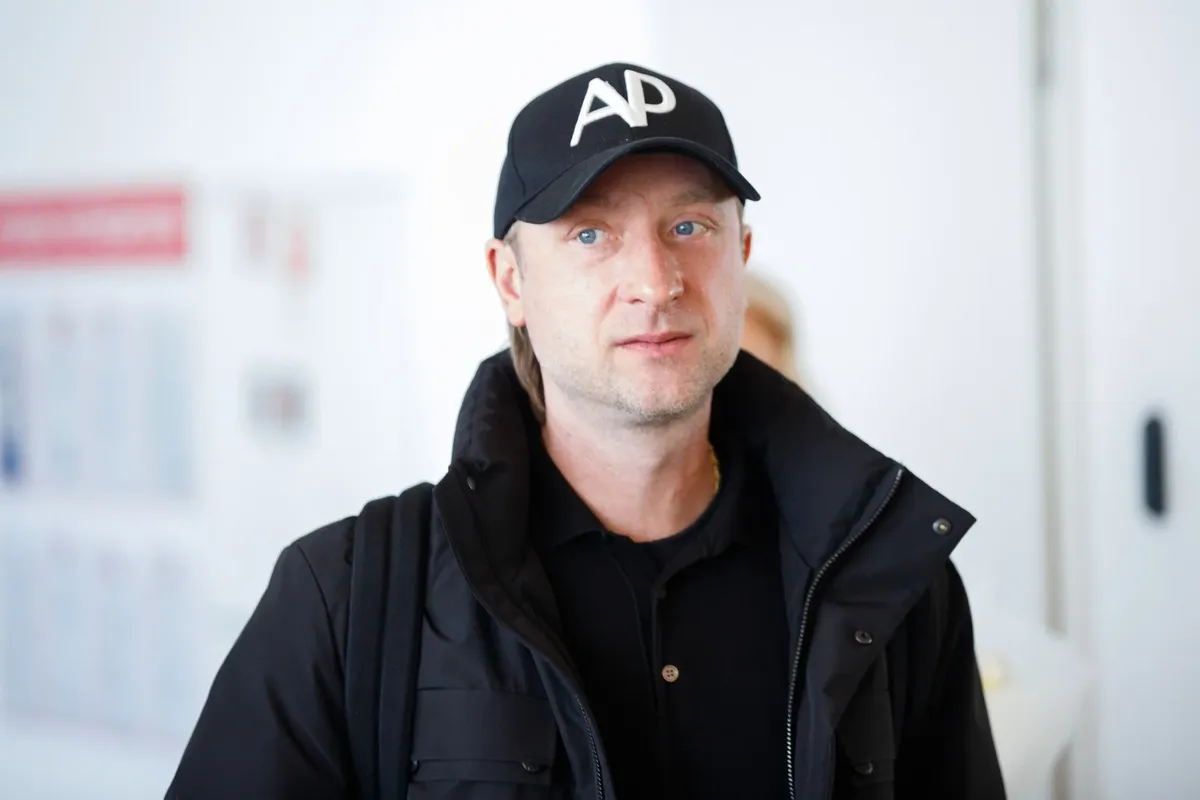
Alexander Plushenko (Gnome Gnomych). Photo: Ilya Moskovets / URA.RU / TASS
The scandal was expected, and I believe that Evgeniy Viktorovich and his wife Yana Rudkovskaya knew what they were getting into. They are not the first, they are not the last - at the recent Olympics in Italy, more than two dozen (!) ex-Russians - or rather, Russians who changed their sports citizenship - competed for other countries, including “unfriendly” ones, in figure skating competitions.
The overproduction of talent became the flip side of the development of a super-popular sport even under the Soviet Union - it was easier to fly to the moon than to make it to the national team. Dozens of names of athletes who did not get the opportunity to shine at the international level and never emerged from the shadow of the greats have sunk into obscurity. It is clear that competition is an immutable law, in many other forms it was the same, but in figure skating, as a sport with a powerful basis, elite and spectacular, they manifested themselves most clearly - the inability to show oneself to the world when fully prepared for it sometimes turned into real dramas.
When the doors to the world opened slightly, and Russia had no time for sports, a trickle of athletes and coaches slowly flowed to the West. When the potential of Russian figure skating was restored and overproduction again almost reached a critical point, the year 22 happened. One problem sharply overlapped with another in connection with the total international ban on Russian sports,
and the trickle of those changing sports citizenship turned into a river.
This caused some concern among the top, in some cases giving rise to sluggish public discussions, but it was impossible to legally stop the process, as evidenced by the number of figure skaters who have changed their sports citizenship in recent years and have already realized the dream of becoming participants in the Olympic Games and other international competitions. The fact that the state will not accept massive losses is evidenced by recent statements by the head of Russian sports, Mikhail Degtyarev, about paying compensation for switching to a foreign flag and creating other barriers for those who want to leave sanctions in a radical way.
“The case of Plushenko Jr.” does not seem to have anything to do with the transitions of other athletes and sportswomen, including those brought up at Plushenko Sr.’s academy: Sasha is only 13 years old, he is not a candidate for the youth team, and the parents’ desire to transfer their son under the wing of Azerbaijan does not cause visible damage to Russia. Here Plushenko-Rudkovskaya is no different from other parents who care about the careers of their child athletes - the decision is based on pure pragmatics:
representing another country is practically the only option for this boy, so that at international competitions he is almost guaranteed to grow into the elite of world single figure skating.
And no one would open their mouth in condemnation, as is now happening en masse (less than a day has passed since the announcement, and Plushenki have already closed their online accounts under the pressure of thousands of indignant comments). But the point is not at all in the fact of the transition of the young athlete, but in the position of the initiator, in the sports environment having the status of perhaps the main patriot, since the 22nd year of the first “slaughterer” both at pro-government rallies, and in his shows, and in numerous statements, especially abundantly quoted today. From the great champion, to whom his native fields, resources and the president are so dear (Evgeni Plushenko - Vladimir Putin’s confidant since 2024), who certainly condemned the change of sports citizenship and did not even want to hear about this “dirt,” no one, especially “patriotically minded” citizens, expected an affront.
But the signal sounded serious. Firstly, the sensational decision indirectly indicates that faith in Russia’s full and final return to the Olympic family is fading before our eyes. It was he who previously stated that when his son grew up, there would be no such problems, but the son grew up, but the problems remained, and Plushenko Sr. did not want to wait for them to directly affect the career of Gnome Gnomych.
Secondly, his desire to praise in every possible way the government and its main representative in the light of the current decision again indirectly suggests that this is just a ritual necessary for a more or less prosperous existence and obtaining some preferences. In Soviet times, this was mandatory for everyone, but it was performed with varying degrees of zeal. In the new Russian era, publicly falling at someone's feet still causes shock, but is gradually becoming the norm. If a person tries so hard, it means he doesn’t see any other ways to preserve himself and his business. Outstanding achievements and reputation in themselves do not open the necessary doors, and Evgeni Plushenko needed the support of the authorities to create and promote his academy.
It is possible, of course, that he was completely sincerely surprised and indignant at how one could “give up on your country, on our president, on our lands, on our resources, on mom, on dad,” but almost four years have passed since this historic statement, and something has apparently changed, including the attitude towards changing sports citizenship. This, however, does not fundamentally change anything:
Yes, he put the future of his figure skater son above principles, but the feelings and concerns of the parent can be understood, he confirmed his devotion to power and did not go astray at all - he simply, like many, was forced to act pragmatically, the son will only say thank you.
The authorities may grumble because of the openness of what they have done, but they will forgive, they will not squeeze the academy and will not call for public condemnation as long as the “apostate” benefits the country and her personally.
As for Plushenko’s not-so-long-ago personal statement that he would not change his citizenship, Evgeniy Viktorovich said this in April 2022 - with all the regalia and status, but if the unique Zhenya Plushenko at the end of the last century was faced with a choice - either to remain in medal-less obscurity, or to change his sports citizenship for the sake of continuing his international career, then...
Maybe I would choose the Olympics. No, four Olympics.