
Translated material
Law "for fun"
Are there hidden springs behind the bill on amendments to the “people's” article submitted to the Duma?
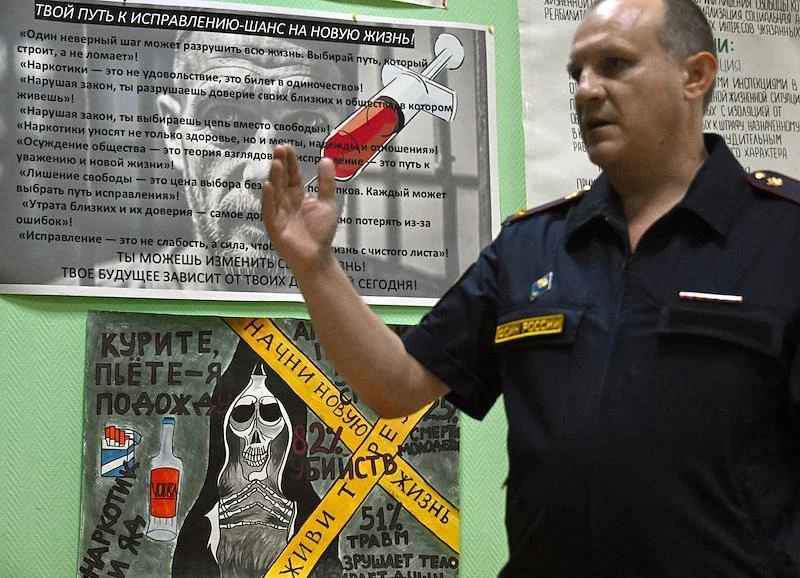
The Supreme Court introduced to the State Duma a bill on humanizing criminal penalties for possession of drugs without the intent to sell (Article 228 of the Criminal Code of the Russian Federation), which was previously approved by the Plenum of the Supreme Court and was not without difficulty supported by the government. The Prosecutor General's Office and the Ministry of Internal Affairs opposed it, as a result of which, by the second reading, amendments to the draft may appear that would exclude a reduction in the terms for storing drugs in large and especially large quantities (parts 2 and 3 of Article 228 of the Criminal Code).
At the same time, the XVIII Congress of Psychiatrists and Narcologists of the Russian Federation was held in St. Petersburg. One of its participants, at our request, asked drug experts what they thought about the initiative of the Supreme Court. First of all, it turned out that none of them had even heard of the project. This suggests that immediately before the approval of the project by the plenum of the Supreme Council and its submission to the Duma, consultations with practicing doctors were not held.
There is practically no disagreement among experts on the essence of the issue, and their point of view was not formed yesterday. Thus, back in 2010, the Vienna Declaration was adopted, which condemned the punitive drug policies of a number of states and called for the decriminalization of drug use without their distribution. A similar point of view on drug addiction as a disease is shared by the majority of Russian narcologists, including such an authority in this field as Vladimir Mendelevich, professor and head of the department of medical and general psychology at Kazan State Medical University.
One of the arguments of the security forces who objected to the project is that if the penalty for possession of drugs without the intent to sell, including in large and especially large quantities, is lowered, the law on this will have retroactive effect.
The courts will then have to review a whole wave of cases, and entire crowds of drug addicts may be released at once. But this is an exaggeration, because, as experts unanimously believe, the future law will not make any revolutions, but will only bring the legislation into line with current practice.
The trend of reducing penalties for possession of drugs without the intent to sell and without a formal change in the law has been observed in judicial practice for many years. So, according to Part 1 of Art. 228 in 2024, only 11% of defendants were sentenced to actual imprisonment, and in 46% of cases the courts limited themselves to a fine. According to Part 2 of Art. 228 (large size), about a third of those convicted receive actual imprisonment (10 years ago this was about half). In 2024, 85 people were sentenced under Part 3 (especially large scale), of which 78 were sentenced to actual imprisonment.
The legislative process in the State Duma is so openly cynical that behind every new project we tend to look for someone else’s benefit and lobbying. But it seems that this bill really only benefits those suffering from drug addiction. Ten years ago, Alexei Kudrin’s Center for Strategic Initiatives conducted a study and sent to the appropriate authorities, including the Supreme Court, a report that was strikingly reminiscent of the explanatory note to the current bill. The President gave instructions to develop this project in 2025 based on the results of a meeting with the HRC. But the Duma instantly turns prohibitive initiatives into laws, and deputies have nowhere to rush with humanization.
In conclusion, about what is missing in the project:
it still does not spell out the mechanism of probation, that is, in this case, the replacement of criminal punishment with treatment for drug addiction.
There are many centers for such rehabilitation in Russia, but, firstly, in most cases it is not cheap, and secondly, today you can only go to such a center, for example, for six months voluntarily. In practice, when assigning punishment, judges take into account certificates provided by rehabilitation centers to the defendant about their undergoing treatment or their readiness to undergo it. But it would be logical, since we are talking about anti-drug policy, to legislate a mechanism for replacing imprisonment with voluntary-compulsory treatment.