
Translated material
Brother 0.5. Or 0.7?
Serbia has decided to reassess the level of friendship and partnership with Russia

Ana Brnabic. Photo: AP / TASS
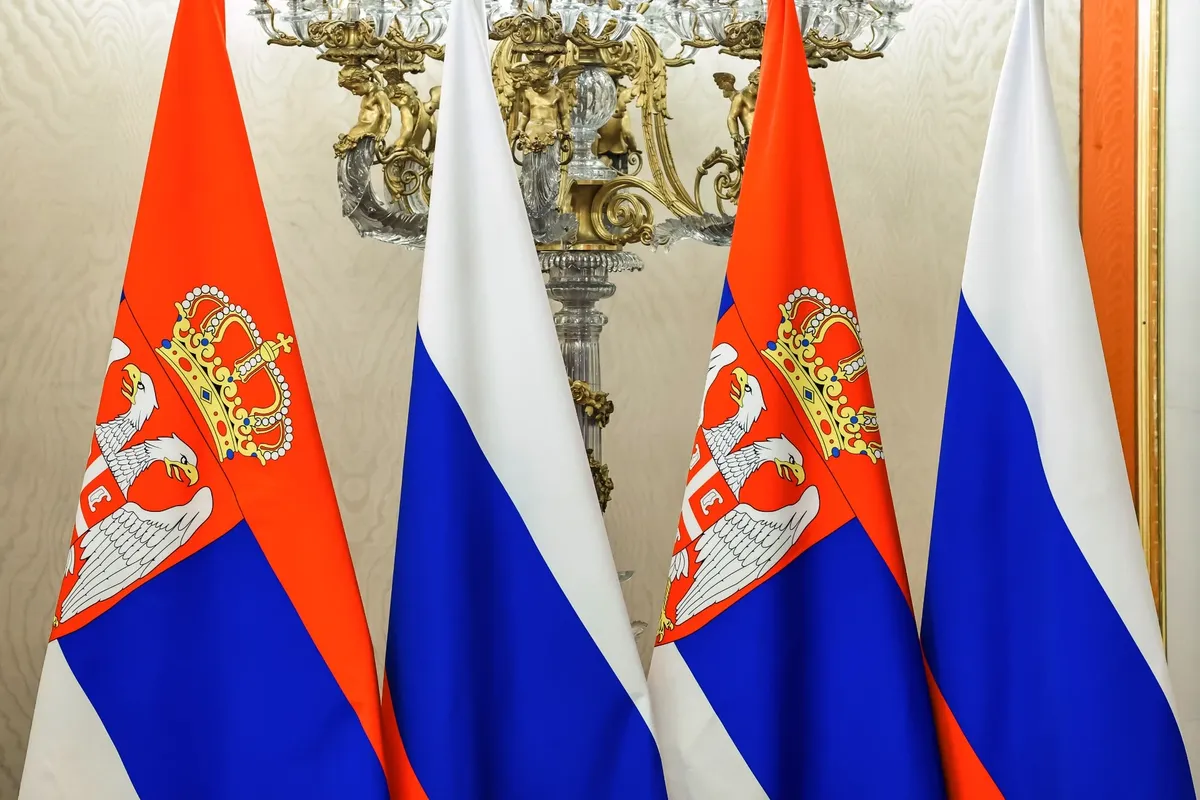
Serbian authorities appear to have begun to carefully distance themselves from the rhetoric of “brotherhood” with Russia. Speaker of the Serbian Parliament Ana Brnabic, speaking at the GLOBSEC Forum 2026 in Prague - one of the largest international platforms in Central Europe on security, geopolitics and relations between the West and Eastern Europe, where leaders of the EU, NATO, politicians, diplomats and military experts gather annually - said that she would not call the relations between Belgrade and Moscow fraternal, and explained Serbia’s refusal to impose sanctions against Russia solely by the memory of sanctions against Yugoslavia itself in the 1990s.
“I would not say that these are truly fraternal relations,” Brnabic said, commenting on contacts between Belgrade and Moscow and emphasized that Serbia supported resolutions at the UN condemning the SVO and “is one hundred percent in agreement with the EU in values.” Particularly noticeable was Brnabic’s phrase that the refusal to impose sanctions against Russia is “completely insignificant,” since Serbia’s trade turnover with Russia is less than with Bosnia and Herzegovina. For the Serbian government, which for years has built its internal rhetoric on the thesis of “traditional brotherhood” with Moscow, such formulations look, to put it mildly, atypical.
Special attention in the region was paid to Brnabic’s phrase that Serbian President Aleksandar Vucic was not in Moscow this year.
For Western audiences, this sounded like a deliberate signal to distance itself from the Kremlin, especially against the backdrop of constant accusations that Belgrade is trying to simultaneously maintain a European course and a special relationship with Russia.
At the same time, Brnabic again linked the Serbian position on Russia with the Kosovo issue. According to her, Belgrade respects the territorial integrity of Ukraine, including because Kyiv did not recognize the independence of Kosovo. At the same time, she emphasized that Serbian society has a negative attitude towards sanctions due to its own experience in the 1990s.
Serbian and Balkan media interpreted the speech as an attempt to soften the image of Serbia in the eyes of Brussels. The Euronews Serbia portal emphasized Brnabic’s words about “non-brotherly relations” and the recognition that it is ties with Russia that are hindering the opening of new negotiation clusters with the EU. Croatian and Bosnian publications saw in her speech an attempt to show that Belgrade is not an unconditional ally of Moscow in the Balkans.
Pro-Russian Telegram channels reacted nervously. Thus, the Russian-language channel “Serbia in Russian,” which disseminated Brnabic’s main quotes, included in its headline the words about the absence of “brotherly relations” between Serbia and Russia - which in itself shows how sensitive this phrase sounded to the pro-Russian audience.
How significant is what Ana Brnabic says? In Serbian politics, she is usually perceived not as a charismatic leader in her own right, but as one of the most disciplined and tough public operators of the Aleksandar Vucic system. Liberal critics have for years called her a decorative European face of power - a convenient figure for Brussels, able to project a modernized and pro-Western image of Belgrade without actually changing the political model.
At the same time, Brnabic’s political biography remains almost unprecedented for the Balkans. In 2017, at the age of 41, she became prime minister, becoming the first openly LGBT* politician of this level in the region.
The paradox is that Brnabic herself never tried to turn her sexuality into a political manifesto and even distanced herself from the role of an LGBT symbol. But this is precisely why her figure remains so characteristic of Vucic’s Serbia today:
conservative, nationally oriented, balancing between East and West - and at the same time capable of promoting a politician to the top of power, which would have looked completely impossible in Serbian politics just 20 years ago.
Taking all this into account, Brnabic’s statement that Serbia and Russia are “not exactly brotherly countries” sounded especially revealing: Vucic’s system chose to convey a sensitive signal to the West precisely the politician whose very appearance at the head of the Serbian government once became a demonstration of Belgrade’s readiness to break the usual Balkan patterns.