
Translated material
The heart is a lonely hunter. The film “Ulya” about the Latvian-Soviet basketball player Ulyana Semyonova turned out to be one of the most touching in Cannes. And her mother was played by Chulpan Khamatova
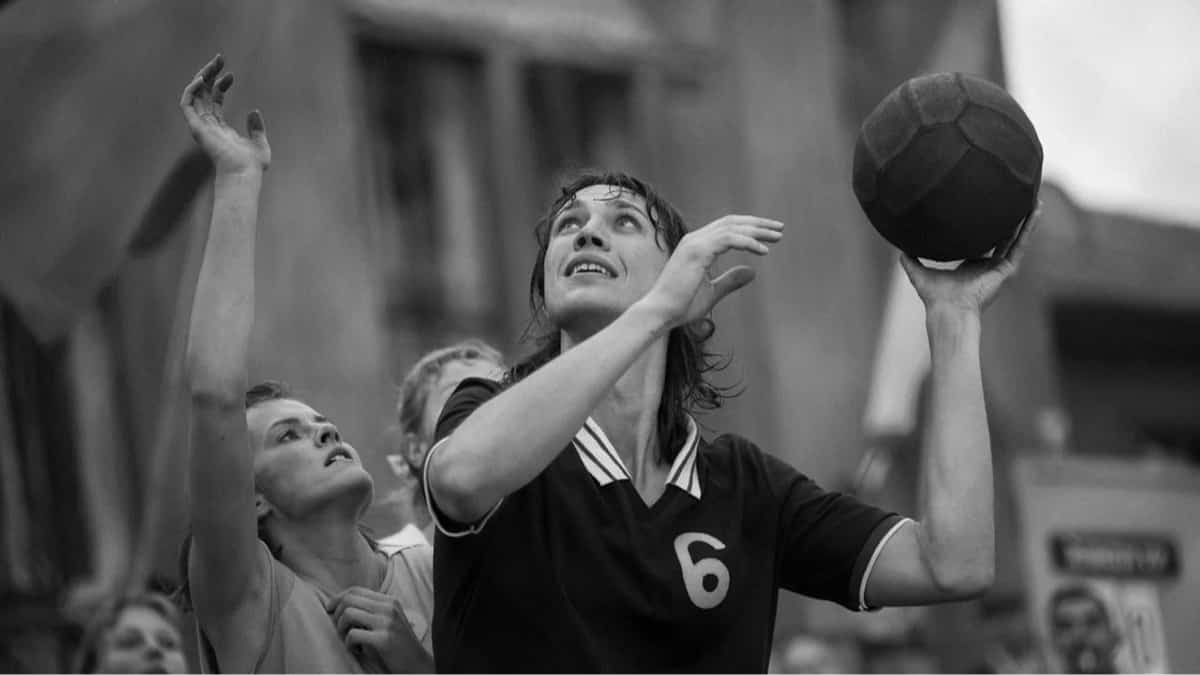
The film “Ulya” about the Latvian-Soviet basketball player Ulyana Semyonova turned out to be one of the most touching in Cannes. And her mother was played by Chulpan Khamatova
In Un Certain Regard, Cannes showed the Latvian film “Ulya” about the outstanding Latvian and Soviet basketball player Ulyana Semyonova. She was played by one of the most popular young actors in Latvia, Karlis Arnolds Avots. Film critic Irina attended the premiere and declares: Latvia has its own Pavel Pavlikovsky at home, and his name is Viesturs Kairiš.
Opening credits "1964. Latvia is under Soviet occupation" promises a clear political line towards the Soviet Union, but the space for clarifying relations with the Soviet past is limited to a couple of scenes. “Ulya” was made with the efforts and investments of four countries: Latvia, Lithuania, Estonia and Poland. Before the screening, theater and film director Viesturs Kairiš said that “Ulya” is a portrait of an extraordinary woman, but he hopes that their film is a little more than just a biopic, that it is a film about each and every one of us. After that, Karlis Arnolds Avots, who plays Ulya, rushed from the stage into the auditorium with such force that he almost pushed Cannes artistic director Thierry Fremaux, who was presenting the film. Nerve. In an interview with Baltic Film magazine, Avots admitted that he himself had not yet watched the film. “Ulya” is a very personal project for him, he wrote to Semyonova, looked for a meeting with her until he achieved the favor and permission to play her. The famous basketball player and Olympic champion died in January 2026 at the age of 74. A photograph of them and Avots was shown before the end credits. Avots is the author of the idea for the film; he also wrote it together with two co-authors: Livia Ullman and Andris Feldmanis.
Ulyana Semyonova was born in 1952 into a family of Old Believers in a small village near Daugavpils and the border with Lithuania. At the age of 13, the girl’s height was 190 cm. Her sister’s husband, a sports journalist, recommended sending her to basketball and invited coaches from the famous Riga team “TTT” to watch her. Ulya goes to Riga, learns to play and begins to play for TTT.
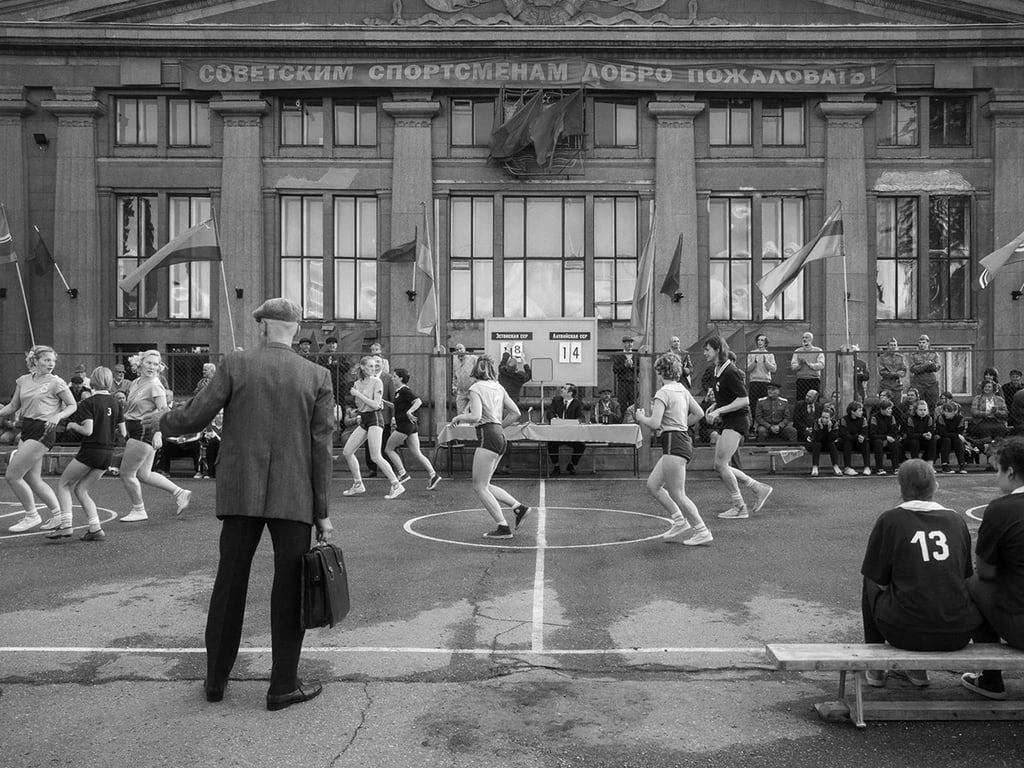
“Ulya” is about the same sports drama as “The Turin Horse” by Bela Tarr is a film about animals. It's closer to Jonathan Glazer's Walk in My Shoes than Leonardo DiCaprio's The Basketball Diaries. But if the alien played by Scarlett Johansson, for objective reasons, looked puzzled at the new world for her, then Ulya is excluded from the usual flow of life for her environment by the gaze of the people around her.
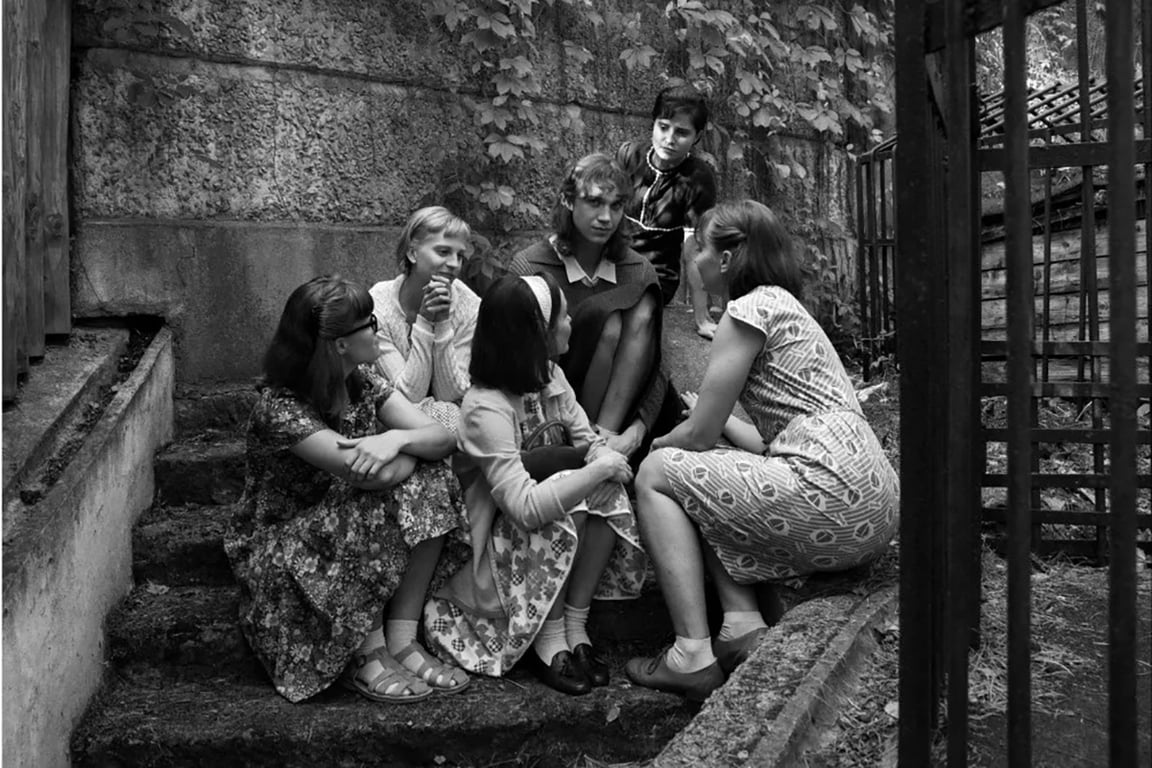
The point is not that she is tall, the point is that those around her cannot digest her otherness: they make way and fall silent when she comes to the village disco.
If in “Spring” by Rostislav Kirpichenko the slight accent of the Lithuanian actors added implausibility to the already stilted mise-en-scène, then in “Ula” Avots’ accent - and Russian is not his native language - not only does not interfere, but, on the contrary, emphasizes how difficult it is for the heroine to find a common language with those around her.
Visually, Kairisz and the film's cinematographer, Wojciech Staroń, combine harmonious and symmetrical shots that would be the envy of Fatherland author Paweł Pawlikowski, and the darkness of a shaky camera that evokes Béla Tarr himself and his experiments. One could say that “Ulya” is a film about finding one’s place in the world, but the main character is not looking for anything, she is waiting for the world to accept and love her, and this languid expectation and the feeling of simultaneous exclusion and rejection are conveyed to everyone here: by the camera, and by the sound and by Avots’ acting. Casting a man to play a very tall woman is a risky and controversial decision, and of course there will be those who will not accept Avots' interpretation. In the role of Ulyana, he is very similar to Mackenzie Davis, who played the androgynous cyborg in Terminator 4. Avots and his Ulyana seem to exist outside of gender, and she is a little embarrassed, although she also wants to try on his performativity: put on makeup, get a perm, etc. This does not cause rejection for two reasons: firstly, Avots is incredibly careful about Semyonova’s personality, and secondly, that part of us that seeks acceptance is devoid of gender.
The lights are reflected in the water and tremble, turning into lonely white lines, Ulya trembles, knowing that she has to leave home. Ulya stands on the ice, on which dry bare branches are scattered, and repeats memorized basketball movements. This year, Pawlikowski and his cinematographer Łukasz Žal made a smart but dry film called Fatherland that, for all its exquisite beauty, didn't break hearts. Kairis, Staron and Avots - they break it up.
A special pleasure is basketball matches, filmed through the optics of a slightly shaky camera, with blur and distortion of the frame: we are involved in the game and root for Ulya and her team with all our hearts, but suddenly the camera changes angle and sharpness, and we refuse to dance with ghosts, where victory or a medal becomes secondary, because only loneliness is strong and endless.
In life, Ulya is not alone, her family loves and accepts her, and over time, the girls from her team will also appreciate her; But Uli, whose height is 213 cm, is not doing well with his personal life. Uli's mother Natalya is played by Chulpan Khamatova - an undoubtedly successful, if slightly uneven, performance from the famous actress. In one scene she makes a cartoonish face, but in the next she literally transforms into a recognizable type of church-going older woman.
In the book “The Heart is a Lonely Hunter” by Carson McCullers, one of the characters says about himself: “I am one of those who sees everything. I am a stranger in a strange land." Ulyana Semyonova lived a long, successful and eventful life, and certainly deserves a standard film-admiration about her most important stages and victories. Semyonova is the first non-American woman to be inducted into the NBA Hall of Fame. But Kayrish’s film, based on Avots’ script, creates something more valuable, turning to her youth, years of fragility and vulnerability - not to rub the precious metals of her cups and medals in the ZhZL format, but to the innermost side of the quiet and shy Uli, to that painful part of us that always and everywhere feels like a stranger.