
Translated material
“I demand to be acquitted!” The artist Elena Karaniku returned from Greece to Russia and received a sentence on charges of treason for searching on the Internet how to go back
The artist Elena Karaniku returned from Greece to Russia and received a sentence on charges of treason for searching on the Internet how to go back
In February 2026, a military court in Khabarovsk sentenced artist Elena Karanika to 17 years in prison for correspondence with the Freedom of Russia Legion. As the prisoner herself told the publication “Veter”, she came to Russia from Greece to visit her sick father and looked for “helpers” on the Internet to renew expired documents, but came across scammers. Human rights activists consider them provocateurs from the FSB.
The text was first published on the Wind project website.Elena Karanik is 54 years old. She is a fashion designer by training. In 2000, being a 28-year-old Khabarovsk resident, she flew to South Korea to work under a contract. Later there were trips to China and the USA. In 2005, the woman received a residence permit (residence permit) of Greece and six years later married a Greek.
“At first I lived in Athens, worked in a bar. After marriage - in Yanitz, 50 km from Thessaloniki. I helped my husband, he has an agrotechnical business. I painted, sewed. I always came to Russia to visit my relatives. In August 2016, she arrived and was delayed due to the illness and death of her father. My husband has never come to Russia. He is an elderly man and does not like to travel. And his business is seasonal; he sold seeds and seedlings. Spring in Greece begins early, autumn is late, and in winter even Russians don’t really want to go to Russia, let alone a Greek who doesn’t have winter clothes,” says Elena Karaniku in correspondence with a Vetra journalist (copies of her letters from the pre-trial detention center are at the disposal of the editors).
In 2019, after the death of her father, Elena wanted to return to Greece, but the coronavirus pandemic began. The borders have closed.
“When the coronavirus started, I lost contact with my husband. In May 2021, [my] residence permit expired. I spent the summer in the village with my mother, and in the fall I got a passport, vaccinations and wanted to get a tourist visa to Greece in order to return and restore my documents. I didn't succeed. It takes a long time to describe, but time was lost, and then the “SVO” began , because of which Schengen became difficult to do and I was told to apply when the “SVO” ends. So everything dragged on,” she continues.
Elena emphasizes that she tried to leave Russia and even applied for a US green card, but she was denied a visa. In one of her letters to volunteers who correspond with political prisoners, she says that at that time she worked in the Leroy Merlin hardware store and learned to paint with acrylics. One of Elena’s acquaintances (according to Memorial, they lived in the same apartment) told the court that Karaniku often spoke negatively against the President of Russia and attended rallies in support of the former governor of the Khabarovsk Territory, Sergei Furgal.
In 2024, the second year of the war in Ukraine, Karanika began searching on the Internet for companies that prepare documents for traveling abroad.
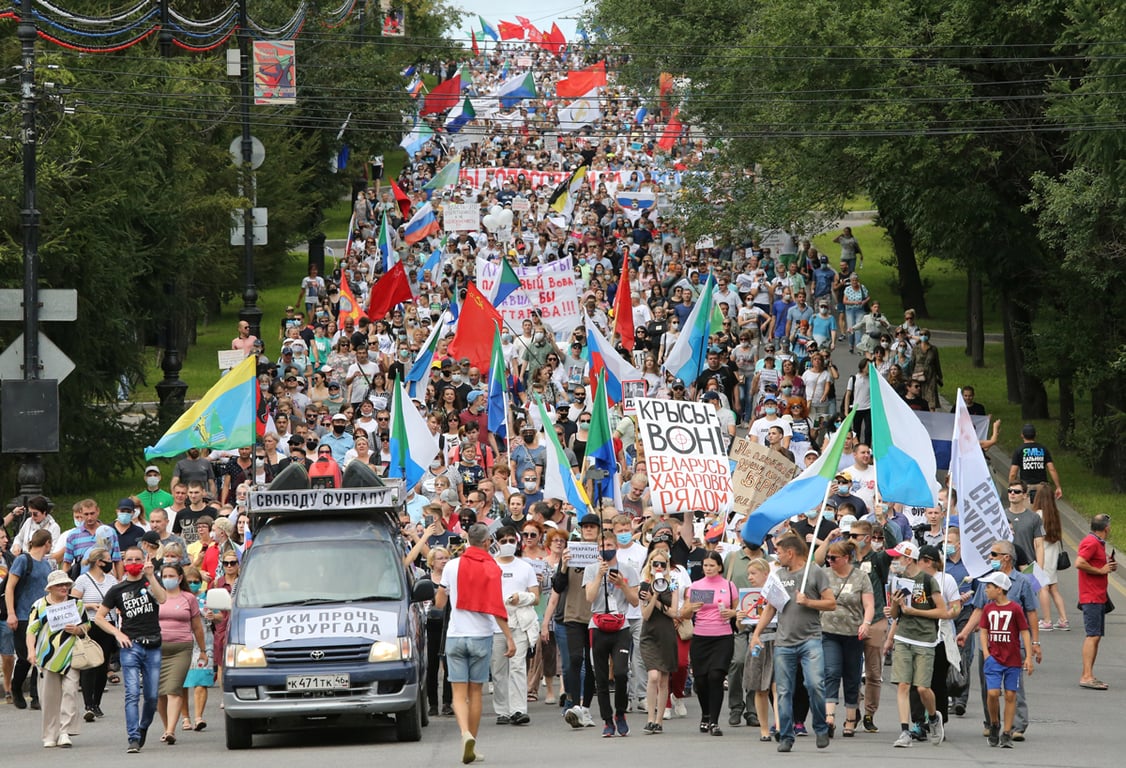
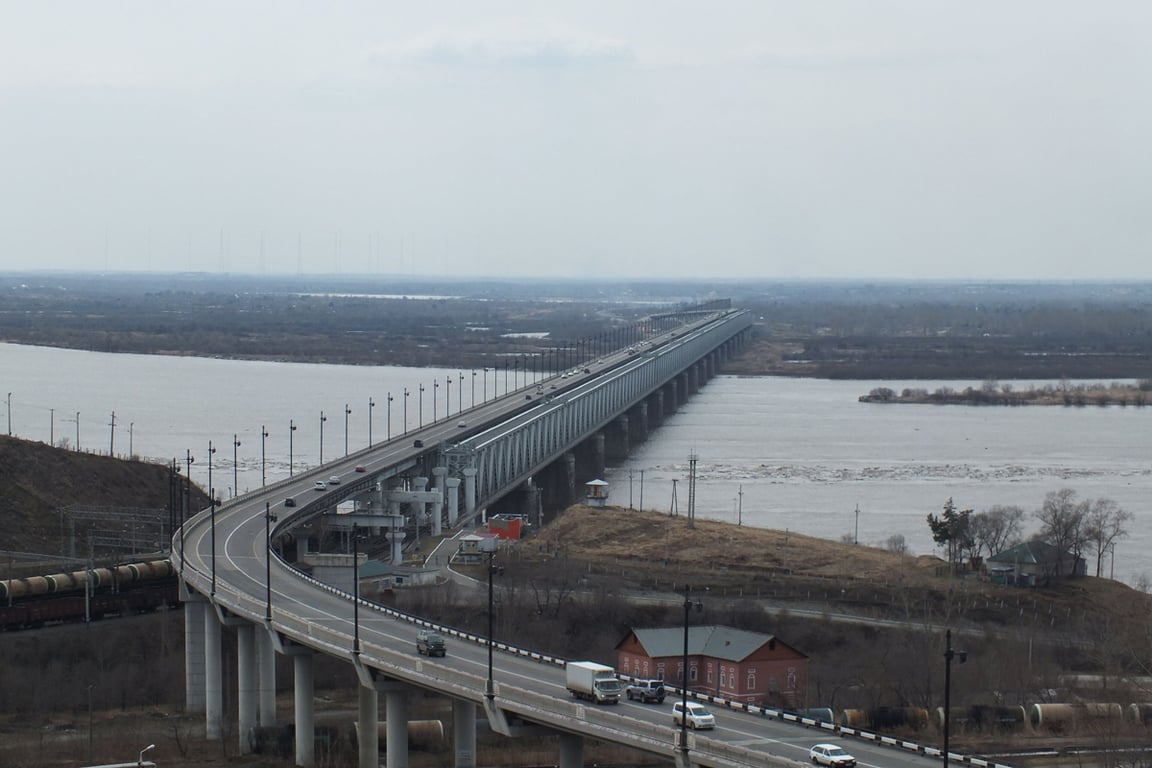
“In May 2024, they wrote to me in a telegram that they were helping those with an anti-war position to leave Russia. We corresponded sometimes until the New Year. I thought they would share useful information, but they gave some strange “tasks,” suspicious and ridiculous, which I did not carry out, since it looked like an obvious provocation. The tasks - I didn’t take them seriously: take photos of what is already on the Internet, in Google maps. And also the bridge over the Amur, which is on the 5000th banknote,” says Elena.
She notes that in correspondence she confirmed her anti-war position and spoke about her desire to return to Europe. According to the court , the woman also “sent to the representative of Ukraine” the personal data of the Russian serviceman, which she found on the Internet.
Later it turned out, Elena continues, that the correspondence was carried out with the Freedom of Russia legion. This is a banned and recognized terrorist association in Russia of the Ukrainian army, consisting of Russian volunteers. Novosibirsk activist Yuri Izmailov had a similar case, who was looking for ways to leave Russia and began corresponding with the legion.
On their instructions, he pointed out well-known city objects on Google maps, for which he received articles for treason and participation in a terrorist organization, as well as 18 years in prison.
Early in the morning of January 4, 2025, security forces broke down the door to Elena’s apartment in Khabarovsk. The woman was laid face down on the floor. As the convict explains, operational filming was carried out, but at the trial the investigators “lost” this recording.
“A search was then conducted for five hours, during which three brochures and one leaflet containing information about the contract service were discovered. They were lying at the entrance, on the shoe rack, along with newspapers and other advertisements. And one book with the same advertisement for payments in the Russian army is in the hall. I've been learning how to paint walls, I have an airbrush that I don't own yet, and I've been practicing on various scrap papers - I don't care what they're on. In Khabarovsk, this contract service advertisement is placed in unlimited quantities in public places: shops, hospitals, police, MFCs, and public transport. It is handed out on the streets. There is nothing illegal to take several advertising leaflets, booklets, brochures home. I didn’t spoil anything, didn’t tear it off, didn’t stick it up,” says Elena.
Later, the prosecution will prove that Elena got rid of advertising on the streets by order of Ukrainian military intelligence. “In total, she tore off at least 14 brochures,” said the Khabarovsk Territory prosecutor’s office. Karaniku insists that only one leaflet, three brochures and a booklet were found in her apartment.
“When the search was completed, the investigator read me a protocol in which it was written that I said that I work for the Main Intelligence Directorate of the Ministry of Defense of Ukraine ( Main Directorate of Intelligence of the Ministry of Defense of Ukraine - Ed. ), I am carrying out their tasks. I refused to sign it, but I had to... ( the word is blurred here. — Approx. ed. ). However, I wrote down a remark that I did not agree with the investigator’s note. Only after that I was allowed to get dressed and taken to the FSB building, where I refused to testify, using (accidentally!) Article 51 of the Constitution,” she continues.
Elena was accused of working for a terrorist organization (Part 2 of Article 205.5 of the Criminal Code of the Russian Federation) and cooperation with a foreign state (275.1 of the Criminal Code of the Russian Federation). Later, the convict notes, because of her refusal to admit guilt, the article on cooperation (the maximum term for it is 8 years) was changed to treason (275 of the Criminal Code of the Russian Federation, up to 20 years).
“Look at the criminal code, feel the difference! During the preliminary and judicial investigation, all my petitions were rejected. Witnesses for the prosecution were two witnesses (girlfriends of the National Guard) who were at the search. However, one of them did not appear at the “trial”. I stated that I wanted to see her. The “judge” answered, grinning: “You need it, go and bring it.” When the “trial” began, it was clear that there was already a verdict,” Elena continues.
At the end of February 2026, the 1st Eastern District Military Court in Khabarovsk sentenced Elena Karanik, sending her to a colony for 17 years. In April, Elena filed an appeal. Reading out her last word in court, she asked not to reduce her sentence, but to completely cancel the sentence. She also noted there that she is not a supporter of violence, and a “special military operation” in Ukraine could not have been carried out, but the issue could have been resolved through negotiations.
“I ask (I demand!) to acquit me under these articles 275 and 205.5, since my actions do not fit them in any way. They didn’t give me the sentence for treason - I can’t have it, they don’t even have evidence. This is a sentence for not admitting guilt and fighting the FSB. After moral and physical pressure, they expected me to sign what the FSB was making up, nonsense about Ukraine. The verdict begins with the words: “Karaniku was a citizen of the Russian Federation, expressing disagreement with the conduct of the SVO, having a negative attitude towards the president, the military personnel of the Russian Federation and their activities in the SVO zone.” I only expressed my opinion in personal correspondence and in a personal telephone conversation. The correspondence was with the “Freedom of Russia” legion, a Ukrainian organization banned in Russia and recognized as a terrorist organization (which I didn’t know about). I didn’t look for them, I didn’t write to them. I was looking for information about the possibility of returning to Greece,” she says.
Karaniku has a son living in Russia. After the arrest, she managed to call him once, after which the investigator banned calls due to the severity of the charge.
“I have no contact with my family, no letters from them. I have a designated lawyer, most likely, there will be a different one during the appeal,” she notes. Vetru was unable to contact Elena’s son and husband.
As Elena added, she is “exhausted, both physically and mentally.” In addition to drawing up complaints and petitions, in the pre-trial detention center she practices yoga, draws and writes letters to volunteers.
In March 2025, Karanika was included in the Rosfinmonitoring list of terrorists and extremists. In 2026, Memorial recognized the artist as a political prisoner. “We cannot unequivocally state that Elena Karaniku really provided assistance to the “Freedom of Russia” legion, and did not become another victim of provocation by the Russian special services,” the organization believes .
According to the First Department, in 2025 in Russia more than 230 people were put on trial under articles of treason, espionage and cooperation with a foreign state. In total, since the beginning of the war in Ukraine, 774 people have been convicted under these articles, whereas before 2022 these were isolated cases.
In July 2025, a Russian with Belgian citizenship, Mikhail Loshchinin, arrived in Russia on a motorcycle. At the Ubylinka border checkpoint in the Pskov region, border guards asked him for his phone number and found correspondence there with friends from Ukraine. He was accused of treason and financing representatives of a foreign state.
Teenagers are also involved in treason cases. In 2026, at least two people were convicted: in the Samara region, a young man was sentenced to 6 years for sending photographs of administrative buildings to the Ukrainian military; in Tomsk, a minor received a similar sentence for photographing railway tracks. Russians often receive assignments to photograph certain objects from scammers on the Internet.
Yulia Kulikova