
Translated material
"Survivor"
Why did the fugitive ex-FSB colonel come out of hiding and give an interview?

Dmitry Senin. Photo: telegraph.co.uk
FSB Colonel Dmitry Senin fled Russia on February 22, 2017. On October 25, 2023, in the 235th Garrison Military Court, his trial in absentia ended with a sentence of 9 years in a maximum security colony, deprivation of military rank and state awards. For mediation in receiving a bribe and leaving the place of duty without permission.
Nine years after fleeing Russia, Senin decided to come out of hiding. And he gave an interview to the British publication The Telegraph, presenting himself as an irreconcilable fighter against corruption, who was allegedly slandered and dishonored, forcing him to leave “Putin’s Russia.” Here, I think, we need to remind you who Dmitry Senin is and tell us when and what he became famous for in Russia.
Senin studied at the Faculty of Law of Kuban State University, and after receiving a diploma, he entered the service of the FSB department for Kalmykia. In 2000, he was awarded the rank of lieutenant. He was on long special missions in Chechnya and Dagestan. Volunteer. Was wounded. Awarded state awards.
From Kalmykia, Senin was transferred to Rostov-on-Don, from there to the central office of the FSB, to the “M” department (supervising the security forces), and then to the FSB Control and Inspection Service to keep an eye on all the security officers in Russia. The position he took in 2014 was called: senior inspector of the 5th service of the inspection department of the FSB Control Service. By the age of 35 he had risen to the rank of colonel.
In general, Senin made a rapid career in the FSB. And it’s quite possible that he would be a general by now. But in September 2016, Colonel of the Ministry of Internal Affairs Dmitry Zakharchenko was arrested - the same Zakharchenko in whose apartments they found deposits of dollars, euros, rubles totaling almost 9 billion in ruble equivalent.
For security officer Senin, policeman Zakharchenko was not a stranger. It was Senin, at that time still an operative of the “M” department of the FSB, responsible for “counterintelligence support” for the activities of law enforcement agencies,
helped Dmitry Zakharchenko move from Rostov-on-Don to Moscow. It was Senin who assigned Zakharchenko to serve in the Main Directorate of Economic Security and Anti-Corruption of the Russian Ministry of Internal Affairs.
Senin and Zakharchenko were friends. Their children went to the same kindergarten. And no, they didn’t find any money deposits from Senin, but they found two dozen apartments in Moscow and Sochi and eleven foreign cars. In March 2019, the Gagarinsky District Court of Moscow fully satisfied the claim of the Prosecutor General's Office and made a decision “on the conversion of the property of former FSB colonel Dmitry Senin and his proxies into state income” for 380 million rubles.
It must be said that the grounds for Senin’s arrest appeared back in 2016, shortly after Zakharchenko’s arrest - as part of the same investigation. Even then, retired General of the Ministry of Internal Affairs Alexey Laushkin testified that in 2014 he met with Dmitry Senin at least five times to solve the problem related to inspections of the La Marais restaurant. According to the general, the FSB colonel allegedly demanded 5 million dollars to be transferred to the Ministry of Internal Affairs Colonel Zakharchenko so that he would stop making the establishment a nightmare. But the parties bargained and brought the amount down to 800 thousand dollars, which the retired police general allegedly handed over to FSB Colonel Senin so that he would transfer the money to MIA Colonel Zakharchenko.
In fairness, it must be said that the Presnensky court considered the bribe of 800 thousand dollars unproven. Zakharchenko was sentenced to 12.5 years in prison just for a discount card for the La Marais restaurant, which was considered a bribe. And Dmitry Senin was named as the intermediary in obtaining this discount card. But the fact remains a fact. The protocol of General Laushkin’s testimony was a very serious reason for Senin’s arrest, but the arrest did not follow; the security officer was actually given the opportunity to leave Russia.
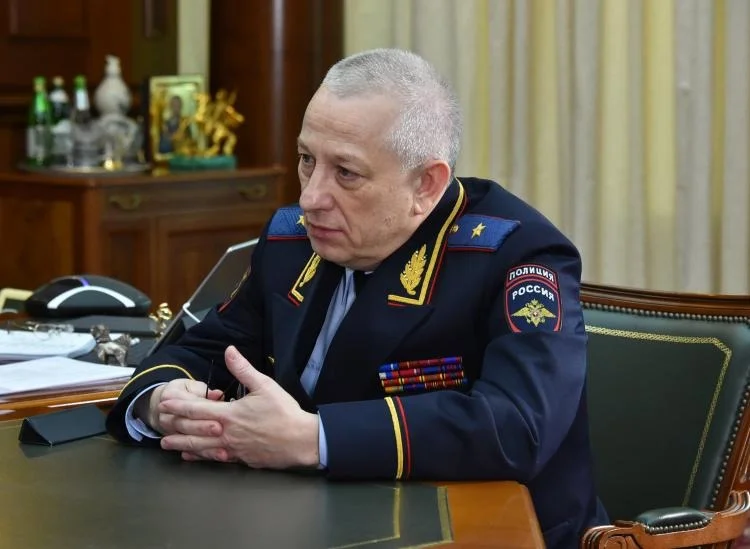
Today it is already known that the resolution to initiate a criminal case against Dmitry Senin for mediation in the receipt of a bribe by Dmitry Zakharchenko from the owner of the La Marais restaurant was signed on February 22, 2017. Senin learned about the criminal case that same day and immediately left the country.
All these oddities can be quite understandable if we remember that the policeman Zakharchenko was also not particularly asked about the fate of the billions; he was convicted, as just said, for a discount card, and not pallets of cash. And the cash was someone’s, but now it’s God knows whose.
...And then Senin hatched and told in an interview that he escaped from Russia for the first time in February 2017, passing the Upper Lars border crossing on the Russian-Georgian border in a car, but a few months later he returned and hid underground until he finally left Russia in September 2022. The reason is banal: he did not want to participate in a special military operation. I didn’t share with journalists why everything was so difficult with logistics.
During the partial mobilization in September 2022, Russia strengthened border security,
and the security officer had to cross the Russian-Kazakh border, according to him, in the carcass of a dead cow - in a rubber suit, wrapped in foil and wearing a gas mask - so that the border guards would not detect him with the help of thermal imagers.
Almost like Leonardo DiCaprio in the American western The Revenant.
After lying for about an hour in the corpse of a cow in no man's land, security officer Senin got out of the cache and crawled across the border on his belly. I washed myself in Kazakhstan, boarded a plane and for some reason flew to Montenegro. Where he was detained on an Interpol warrant. True, he was soon released from prison, refusing extradition to Russia. Moreover, the FSB fugitive was granted political asylum.
But Senin did not stay in Montenegro either. Because, according to him, “FSB agents” are hunting for him, and he is forced to hide, regularly changing his place of residence in European countries. The former FSB colonel did not explain to British journalists how much money he lives in secret in Europe.
For several years, the fugitive’s colleagues from the FSB allegedly could not establish where the deserter colonel was hiding. Only in December 2020, operatives of the FSB’s own security department established that Senin had a foreign passport in the name of Timur Kudasov, with the help of which he crossed the Russian-Georgian border. On June 28, 2021, Dmitry Senin was put on the international wanted list. And in May 2022, the trial in absentia of the fugitive security officer began in the 235th Garrison Military Court.
I had the opportunity to attend many sessions of this trial. For example, when Senin’s former colleagues were interrogated.
Nine FSB colonels and generals came to court and testified. Mostly they praised the defendant.
Sergei Gribanov, Senin’s friend from his student years and colleague in the M management, also came to the court and testified. He told the court that he also knew Interior Ministry Colonel Dmitry Zakharchenko. And he gave the following example: Zakharchenko with his wife and daughter were always invited guests at family celebrations of the Senin family.
Olga Senina, the wife of an FSB officer, and Irina Malokina, the sister of a security officer, were called to the court as witnesses. But they didn't come. Certificates were read in court that Malokina lives in Israel and cannot come to court because she is caring for a young child, and Olga Senina cannot come to court because she lives in Montenegro, and she also has no one to leave her three minor children with.
After the arrest of Colonel Senin in Montenegro, it became known that the couple decided to thoroughly settle down in this country. In any case, the local press wrote that on August 4, 2020, the Onlimonte company was registered in the city of Budva, the owners of which are 50 percent of the share - Dmitry and Olga Senin. According to the Central Commercial Register of Montenegro, the company’s office is located in the elite Harmony complex.
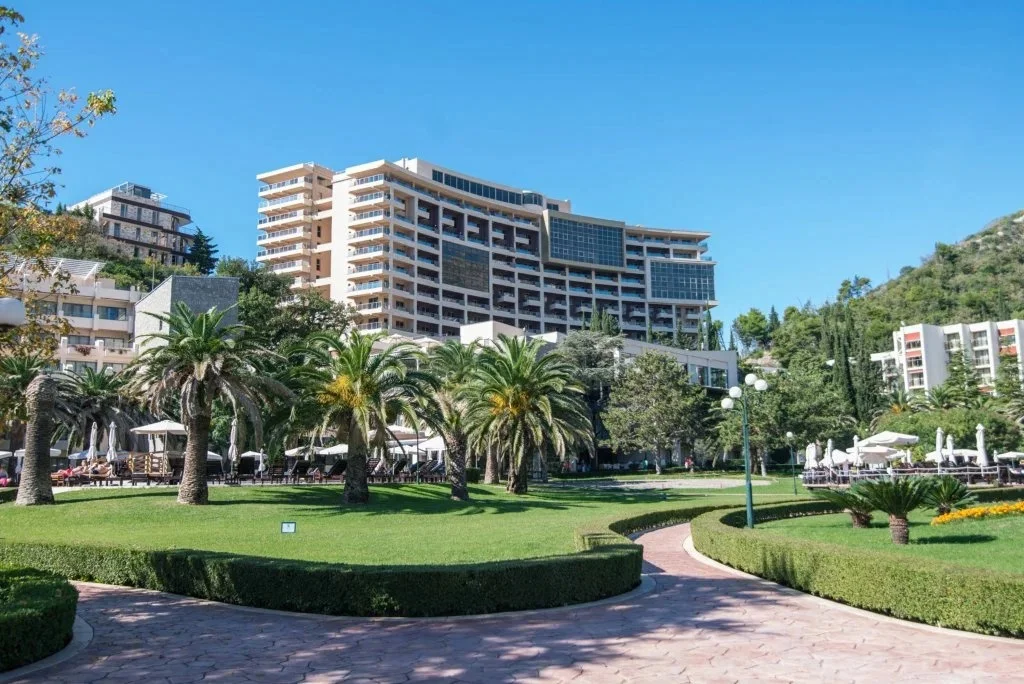
On October 25, 2023, the trial in absentia of Dmitry Senin in the 235th garrison military court ended. As I already said, the fugitive security officer was sentenced in absentia to 9 years in a maximum security colony.
As for the interview with British journalists that Dmitry Senin decided to give when more than nine years had passed since his flight from Russia, there are a lot of obvious inconsistencies in it. Here are just a few points.
Senin claims that in the fall of 2016, he received information from an informant about an apartment in an elite Moscow building, stuffed with money. And that it was Senin who conveyed this information to operatives from the “M” department, who carried out searches and arrested Colonel Zakharchenko.
Actually, it was an apartment registered to Dmitry Zakharchenko’s sister. And, as you know, Senin was friends with Zakharchenko. And he wasn't just friends. Together they were in close contact with the banksters. Several sources told me about this.
For example, Dmitry Tselyakov, who in Soviet times served in the 9th Directorate of the KGB of the USSR, in the personal security of Mikhail Gorbachev, then in the personal security of the Chairman of the Constitutional Court of the USSR, then in the anti-terrorist group "Alpha". After the collapse of the USSR, Dmitry worked in the tax office, from where he moved to the Ministry of Internal Affairs, to the department of economic security, rose to the rank of deputy head of the department, and was involved in investigations of crimes in the banking sector.
During one of the developments, he and his subordinates uncovered the murky schemes of banksters German Gorbuntsov and Pyotr Chuvilin, who worked at Incredbank. Chuvilin later received a sentence for fraud, and Gorbuntsov fled Russia and is now on the international wanted list. But in the second half of the 2000s, Tselyakov and his subordinates were unable to approach them, because the bankers, as Tselyakov claims, were “protected” by operatives of the “M” department of the FSB, Dmitry Senin and his comrades. Police officer Dmitry Zakharchenko was also hanging around somewhere nearby. As a result, Tselyakov became a victim of provocation, and in 2008 he was arrested and sentenced to four years in prison. And today Dmitry Tselyakov is much more surprised that in September 2016 only Zakharchenko was arrested, and Senin was allowed to escape from Russia.
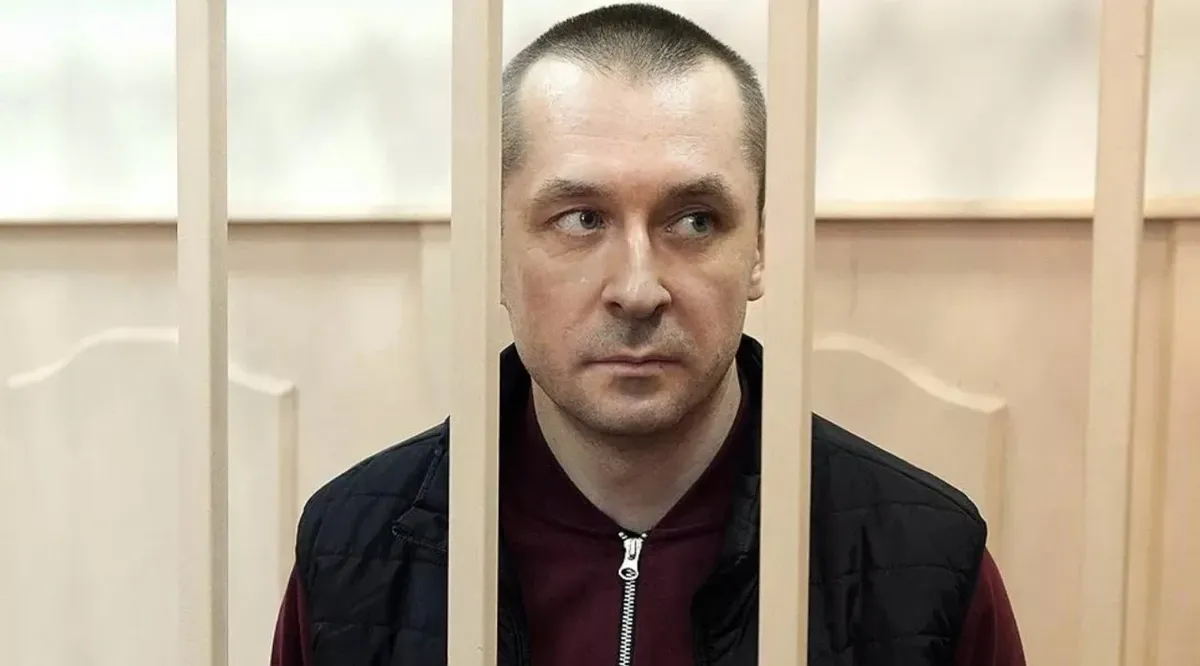
“Senin, Gribanov, Zakharchenko and other people protected Gorbuntsov, so telling journalists stories about Senin struggling with something is at least immoral,” says Tselyakov. “Today Senin lives over the hill with the money he earned covering up the dubious operations carried out by Gorbuntsov.
Another point that greatly surprised me in Dmitry Senin’s interview. He claims that the FSB is allegedly hunting him throughout Europe and that it was at the instigation of the FSB that in the fall of 2024, rumors began to spread in the Russian press that Senin was killed in a shootout between bandits in Montenegro.
I remember these rumors well. And I can’t help but remind you that these rumors initially spread in Europe. It was from there that they came to Russia. On December 11, 2024, I wrote in my telegram channel: “They write that colonel-deserter from the FSB Dmitry Senin “could have been killed in Montenegro on November 6.” ... I don’t believe that Senin was killed. Most likely, it was Senin himself who started the rumor that he was dead..."
And here, perhaps, is the main thesis of the entire interview with Dmitry Senin. For the sake of these lines, the fugitive security officer may have decided to come out of hiding and remind himself. Verbatim:
“Reflecting on the Zakharchenko case, Senin came to the conclusion that the former Interior Ministry official was merely a manager of the profits from a massive corruption scheme that involved some of the most powerful people in Putin’s Russia. He now believes that the cash found in the Moscow apartment was intended to be "transferred to the very top of the country at the end of each year."
The already mentioned Dmitry Tselyakov has his own version of why Senin decided to interview journalists.
— He might be running out of money. This is, firstly. Secondly, perhaps someone really is running after him. But not from the FSB. And from those who lost money. There is no longer any point in going on air and telling such nonsense about crossing the border in the corpse of a cow...” Tselyakov is indignant. “But he knows the whole system, he knows what Zakharchenko got for the money. Knows whose they are...
“That is, if he speaks...” I interrupt my interlocutor.
- Yeah, if he writes and speaks... the question about the money that was in the apartment will become clearer. But Zakharchenko, who is now serving a sentence in a colony in the Komi Republic, can also talk about the dark affairs of Senin himself.
It seems that fugitive security officer Dmitry Senin knows absolutely exactly what deposits of money were discovered in apartments associated with Dmitry Zakharchenko. And the interview is such a more than clear signal: I need money, otherwise I will talk. And I'll drown you all.
Here we just need to remind you that the money found in apartments associated with Interior Ministry Colonel Dmitry Zakharchenko had a very strange fate.
On September 9, 2016, 342.3 million rubles, 1.6 million euros, 124 million dollars and a half-kilogram gold bar were found in an apartment on Lomonosovsky Prospekt, registered to the police officer’s sister Irina Razgonova. On the same day, in another apartment - on Michurinsky Avenue, registered to Zakharchenko’s mother - 600 thousand euros, 20 thousand dollars and 19.5 million rubles were seized.
On September 10, 2016, about 9 billion rubles in ruble equivalent were added as material evidence to the materials of the “Zakharchenko case.” But a year later, on September 1, 2017, the acting deputy head of the Main Directorate for Investigating Particularly Important Cases of the Investigative Committee, Major General Sergei Golkin (now serving in the Prosecutor General’s Office) canceled the decision to include the deposits of money in the criminal case. Later this money was turned into state income.
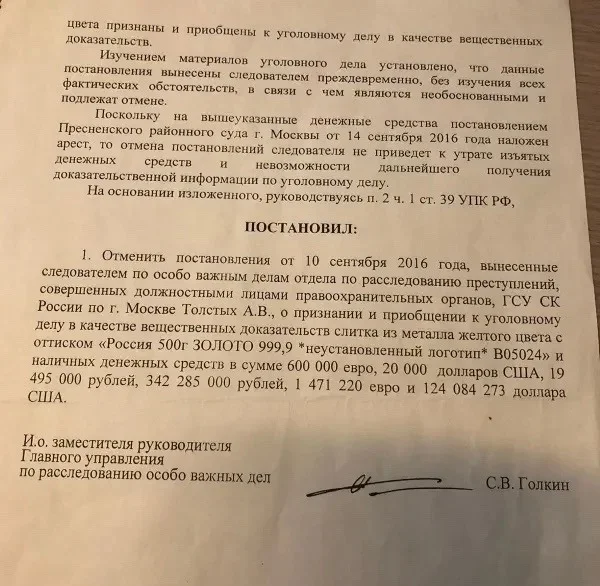
It turned out that cubic meters of money found and seized in apartments associated with police officer Zakharchenko turned out to be outside the criminal case against this very Zakharchenko. These were no longer material evidence, but simply ownerless money of unknown origin. And no one investigated the origin and purpose of these billions.
And now former FSB colonel Dmitry Senin seems to have clearly hinted that he knows both the origin and purpose of this money.