
Translated material
His obsession
What are Russian elites complaining about?
“The people who once defended Putin don’t do that anymore,” the British Guardian newspaper quotes a businessman close to the Kremlin. According to this and other anonymous interlocutors of the publication, there is a growing understanding among the Russian President’s circle that the leader is increasingly making “self-destructive decisions.”
“Officials and military officers paint rosy pictures for him,” and Putin convinces his inner circle that his army will capture Donbass by the end of the year. “He is obsessed with Donbass and will not stop sooner,” says the Guardian’s source.
The growth of anxiety and dissatisfaction with the authorities is also recorded by state sociology. Political scientists inside Russia are looking for a signal of impending changes in these figures and are waiting for an explanation from the presidential administration: what is the next plan. Alexander Kharichev, head of the AP department for monitoring and analysis of social processes, tells political strategists that in 2026 the state will treat the population from foreign influence and anxiety.
Against the backdrop of the war in Ukraine and the economic downturn, the Russian elite is increasingly disillusioned with President Vladimir Putin . Representatives of Putin’s inner circle told the Guardian about this. According to one of them, “there is a growing feeling that some kind of catastrophe is approaching, and there is no future.”
What are Russian elites complaining about?
by Radio Liberty Text copied width px height px The URL has been copied to your clipboard
No media source currently available
Political scientist Dmitry Oreshkin speaks about why representatives of the Russian elite are frank with journalists from foreign media and share their concerns with them:
This club of anonymous complainers indicates that something is happening within the country
“This club of anonymous complainers indicates that something is happening inside the country. I don’t think this is an element of some kind of pressure or political game. Most likely, this is not a high-level source, but not far from the people making decisions. It is difficult for a rational person not to realize that things are going badly. This can be seen in the economy, international situation, football, culture, science. They convince Putin that everything is fine on the front line. But in reality, there is no brilliant progress there. Therefore, out of powerlessness, why not complain to someone who is ready to listen? It is impossible to change this situation, and they know it. Therefore, these complaints are not considered as an element of political and technological pressure. It's just sadness. How good it was for them, and how bad it all became. The reasons are clear - this is a war that Putin started. Little by little the entire burden of responsibility is shifted onto him, and this is a completely predictable process.

The Oreshnik missile strikes that Russia has been launching on Kyiv and Ukraine in recent days indicate the weakness of Vladimir Putin. Apparently, they reported to him and showed him how a shopping center was burning. But Ukrainian observers write that it was a shot at the post. Z-military correspondents agree with this and also say that it did not turn out very well: one of the warheads from Oreshnik flew into a garage cooperative in the city of Bila Tserkva, and the second fell on the territory of the so-called DPR, somewhere north of Donetsk. Even the pro-Kremlin philosopher and political scientist Alexander Dugin says - where is the victory, why didn’t they kill Zelensky, where is the blow to the decision-making centers? Gradually, everyone is coming to the understanding that one person is to blame for this situation - Vladimir Putin. He is becoming an increasingly annoying target because he has started a war that he cannot win.
Putin said that Western sanctions are only good for Russia. Now he is saying that they need to be abolished, because they hinder the development of the economy. In fact, he is to blame for everything; another thing is that the country should not have allowed itself to do this. Putin is a man who has a heightened sense of danger, so he convinces himself that everything is fine with him, and Russia is winning this war. Accordingly, he forces his subordinates to speak this way. They understand this perfectly and draw him what he wants to see. Therefore, there was a ban on the Internet. This is also quite consistent and logical. He fervently believes that the so-called velvet or color revolutions are a product of the Internet or information-psychological warfare via the Internet. Therefore, it should be banned,” says Dmitry Oreshkin.
On the eve of the State Duma elections, the head of the department for monitoring and analysis of social processes of the Administration of the President of the Russian Federation, Alexander Kharichev, spoke about the challenges the country faces before the autumn vote. According to Kharichev, this is “a tightening of the information war, an exacerbation of terrorist threats, a sharp increase in the influence of new technologies and increased anxiety in society due to political and economic turbulence.”
What are the presidential administration and its officials preparing Russians for? Dmitry Oreshkin continues:
They are preparing the system for elections, and the general message is: stop rocking the boat, don’t scare people
“In a broad sense, they are preparing the system for elections, and the general message is: stop rocking the boat, don’t scare people, tell them something reassuring. The main threat, as Mr. Kharichev puts it, is “people’s anxiety.” At the same time, it is clear that the main source of concern is the war, and for the patriotic part of Putin’s electorate, the lack of progress in this war. The majority of the electorate is frightened by how this war affects living conditions, rising prices, people are frightened by the arrival of coffins. But we can’t talk about this, because in Russia there is no war, but only a special military operation. The product that Mr. Kharichev offers is uncompetitive; in equal and fair competition with the West, he loses.
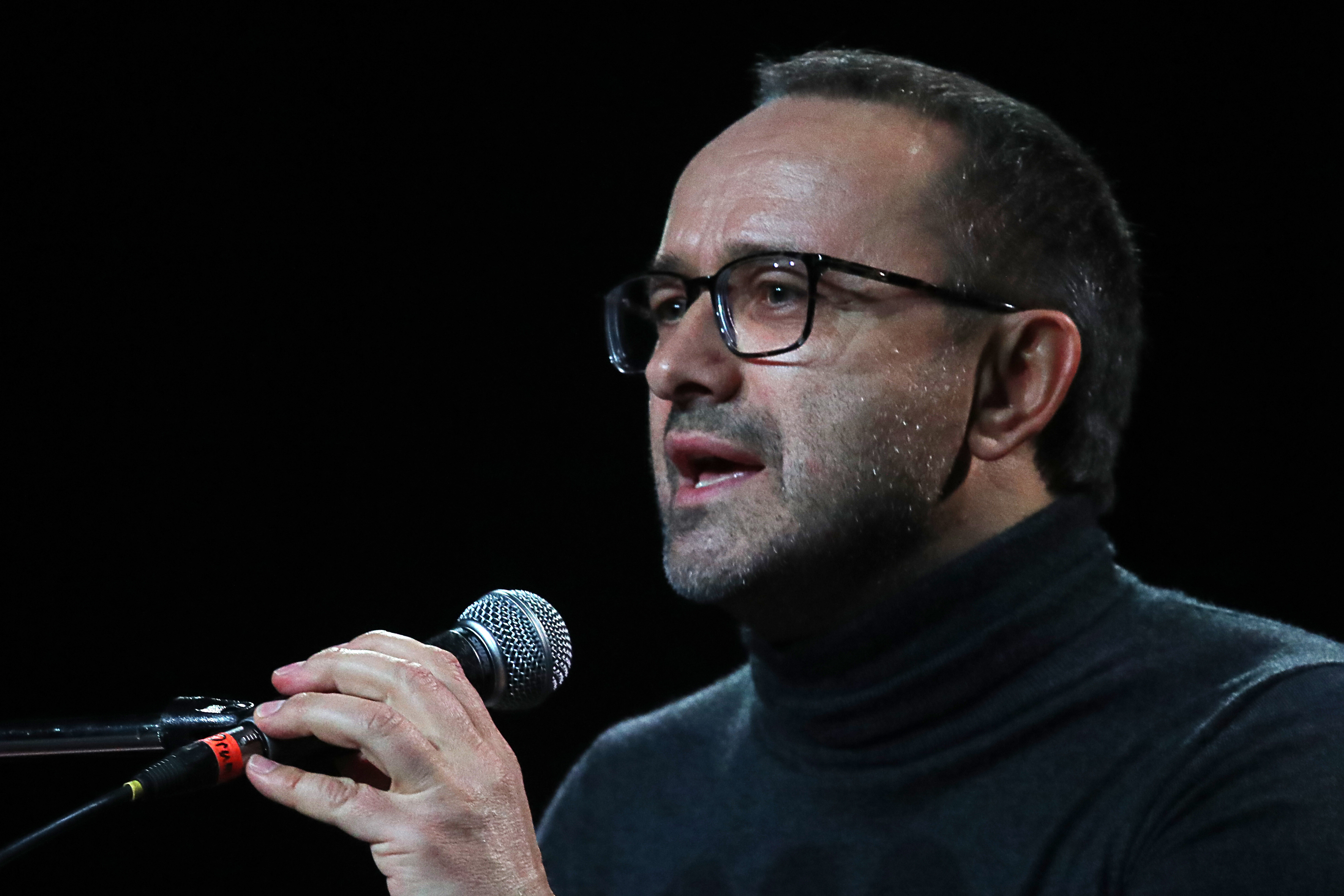
And there is a meaningful statement, such as the film “Minotaur,” which did not appear under the control of Mr. Kharichev and the presidential administration. It grew on its own, this movie received second place at one of the largest film festivals in the world. Russian director Andrei Zvyagintsev says what he thinks. But he says not what the authorities need. And it doesn’t shoot the way it should. Accordingly, people have no need to know about this. It is necessary to build an information wall, an information fence or an iron curtain. Russians don’t need good films, they don’t need high-quality information systems, they need patriotism, and this is what Comrade Kharichev teaches us in the framework of preparing the kind, good, smart, most reading Russian people for the next cycle of the electoral procedure.
If the actual results of the electoral procedure are not victorious enough, they will paint and correct them. But the possibilities for drawing are not unlimited, and for them it is like a one-time impression of the Russian situation. If the election statistics are bad, they will be reported to Putin before they are corrected. This will mean that the governors or political organizers on the ground did not work well. This is a serious threat for them. The main thing is that Comrade Putin sleeps peacefully after this electoral procedure and feels like a winner. Therefore, they will report to him in much the same way as the Chief of the General Staff Gerasimov reports to the president about military affairs,” believes political scientist Dmitry Oreshkin.
Read Freedom on Telegram Make Freedom a priority source on Google  Install the Mobile application
Radio Liberty